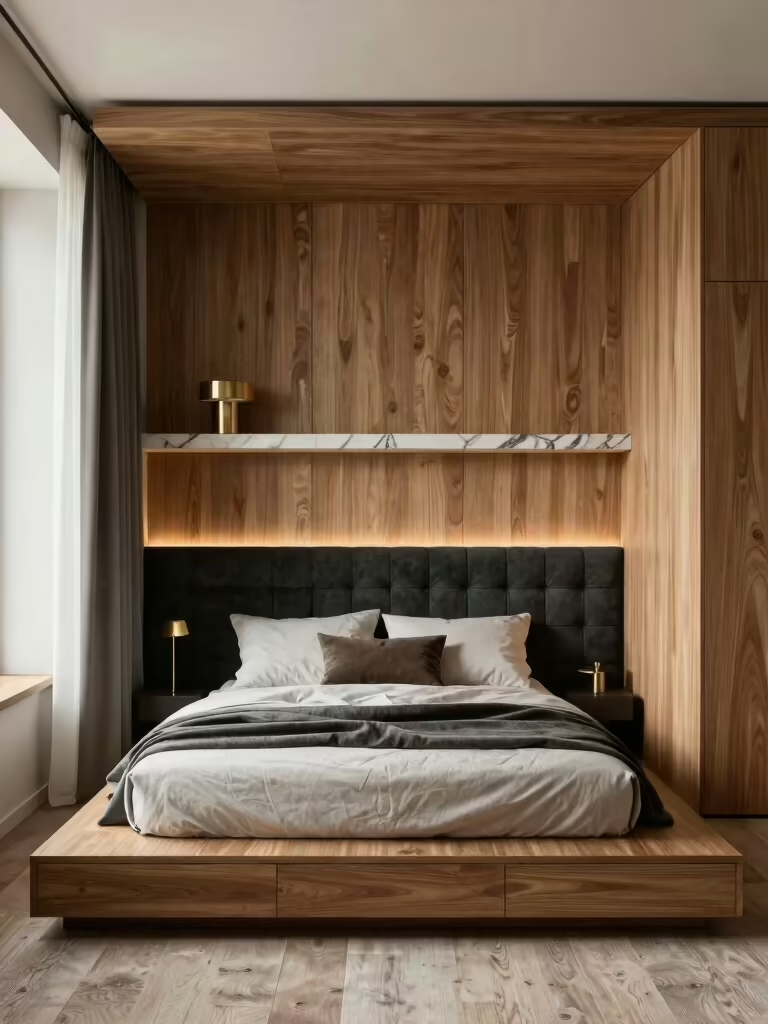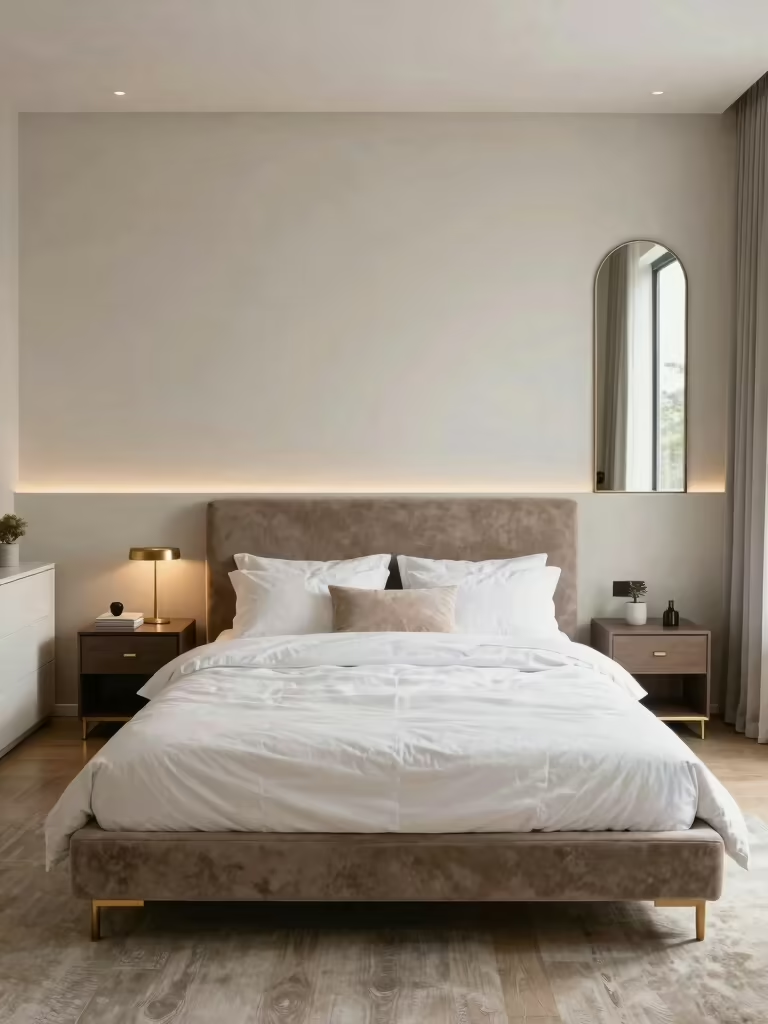


You can own beautiful furniture and still have a bedroom that feels wrong, and the culprit is almost always placement. A dresser two inches into a doorway, nightstands that float below the mattress, a chair stranded where nobody sits, these small misses are what make a nicely furnished room feel slightly off. Good placement is invisible. You only notice it when it’s missing.
This is a guide to where each piece actually wants to go: the bed first, then the nightstands, the dresser, the chair, and the storage, each with a rule of thumb that takes the guesswork out. Most of it costs nothing but the willingness to slide things a few feet, and the payoff is a room that finally feels as good as the furniture in it.
Placement Questions, Quick Answers
Where should a TV go in the bedroom? On the wall opposite the foot of the bed, or low on a dresser there. Keep it off the wall behind the headboard, where you can’t see it from the pillow anyway.
Do I need a bench at the foot of the bed? Only with about 30 inches of walkway left behind it. A bench adds a spot to sit and dress, but in a tight room it blocks the path more than it earns.
Where does a full-length mirror belong? By the closet or wherever you actually get dressed, angled to catch daylight. A mirror works where you use it, not parked on a far wall as an afterthought.
Optimize Bed Placement First
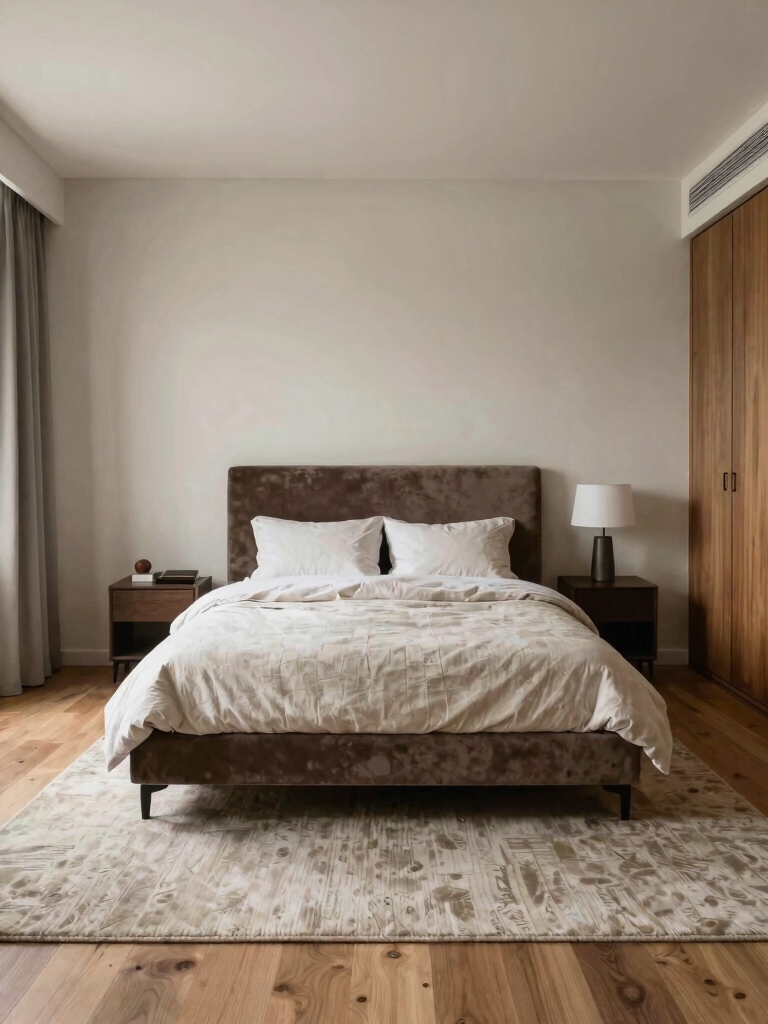
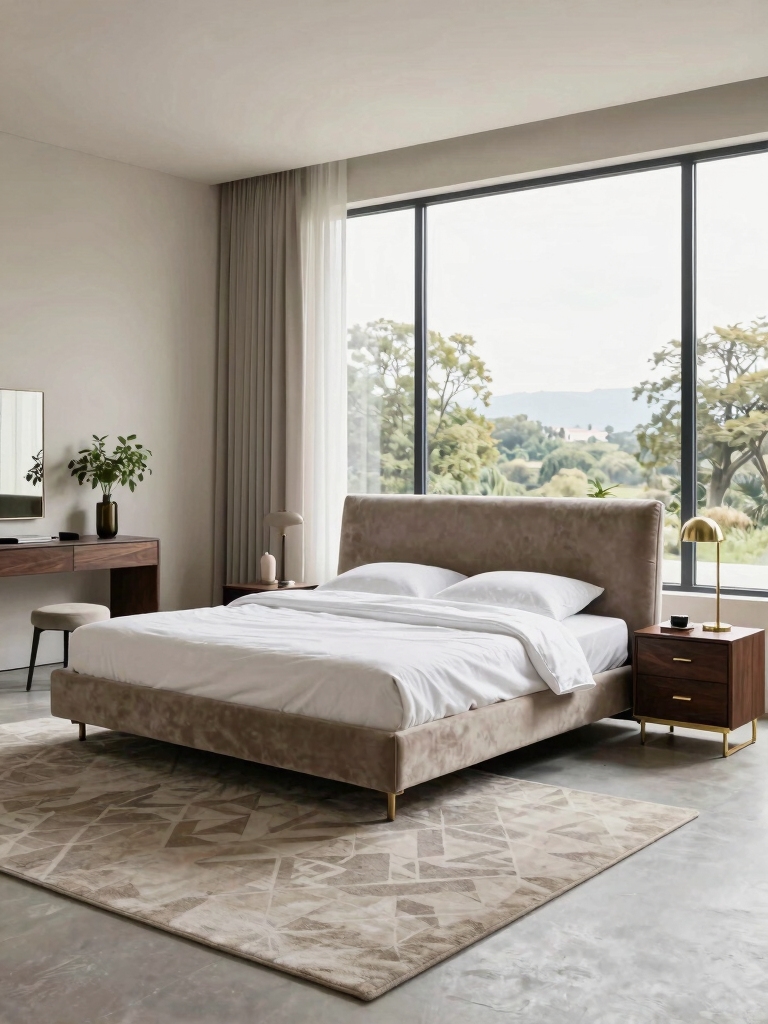
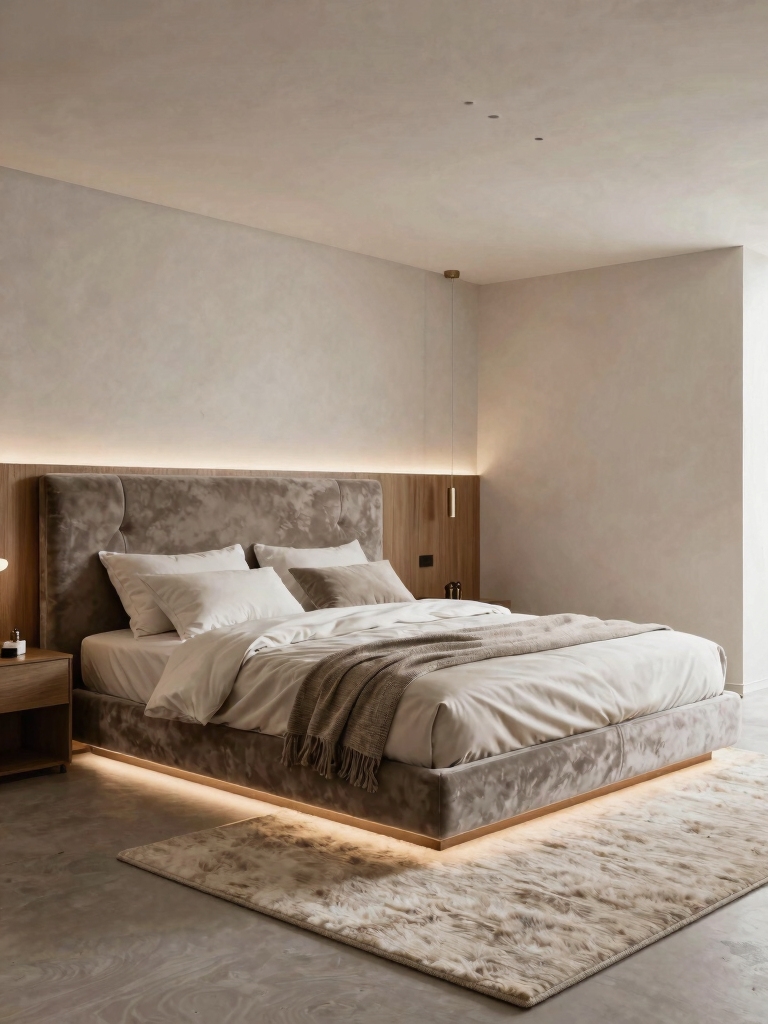
The bed is the first and most important call, because every other piece arranges around it. The default that works in most rooms is the bed centered on the longest solid wall, the one you see when you open the door. That gives you a balanced view on entry, room for a nightstand on each side, and a clear path around the foot.
Longest solid wall, clear of the door
Watch what the bed does to the doors and windows. A headboard under a window blocks light and looks unsettled, and a bed that swings into the path of a closet or a door creates a daily pinch. When the obvious wall has a window or a door problem, the next-best move is the longest wall that doesn’t, even if it isn’t the first one your eye picks.
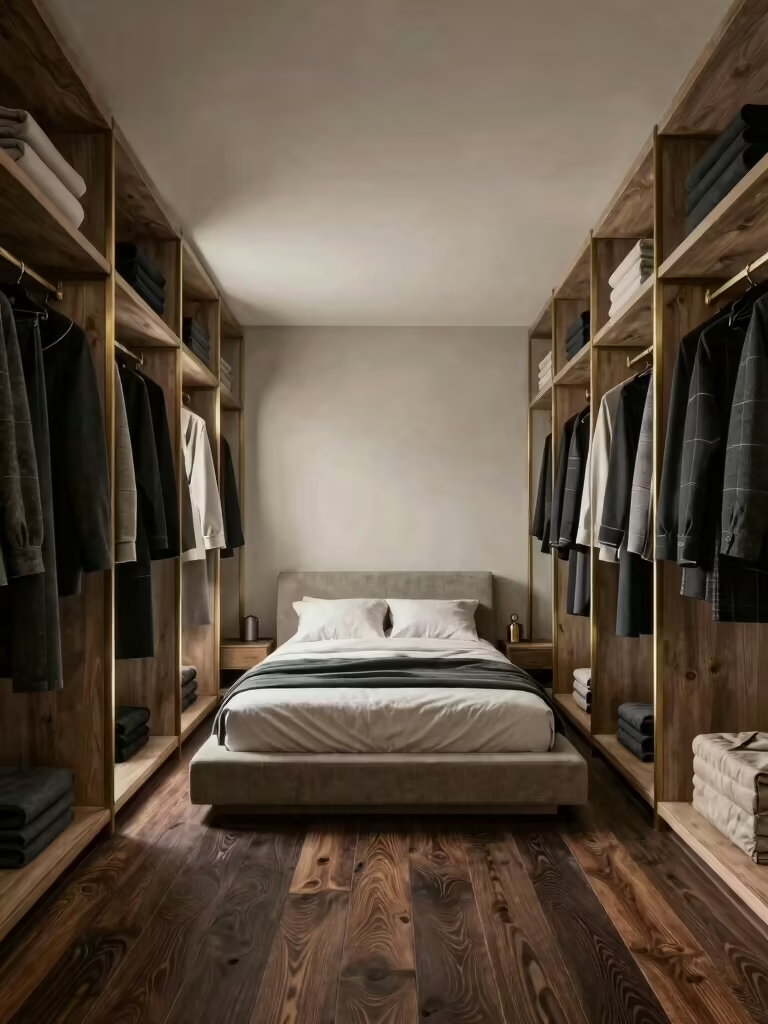
In a tight room, a one-sided bed beats crushing both paths. Push the bed into a corner and a whole wall opens up for a dresser or a desk; you give up access on one side to gain a usable room overall. After enough small rooms, I take the corner almost every time, the way these layout ideas for small rooms lay out.
Thoughtful Pairing That Enhances Symmetry
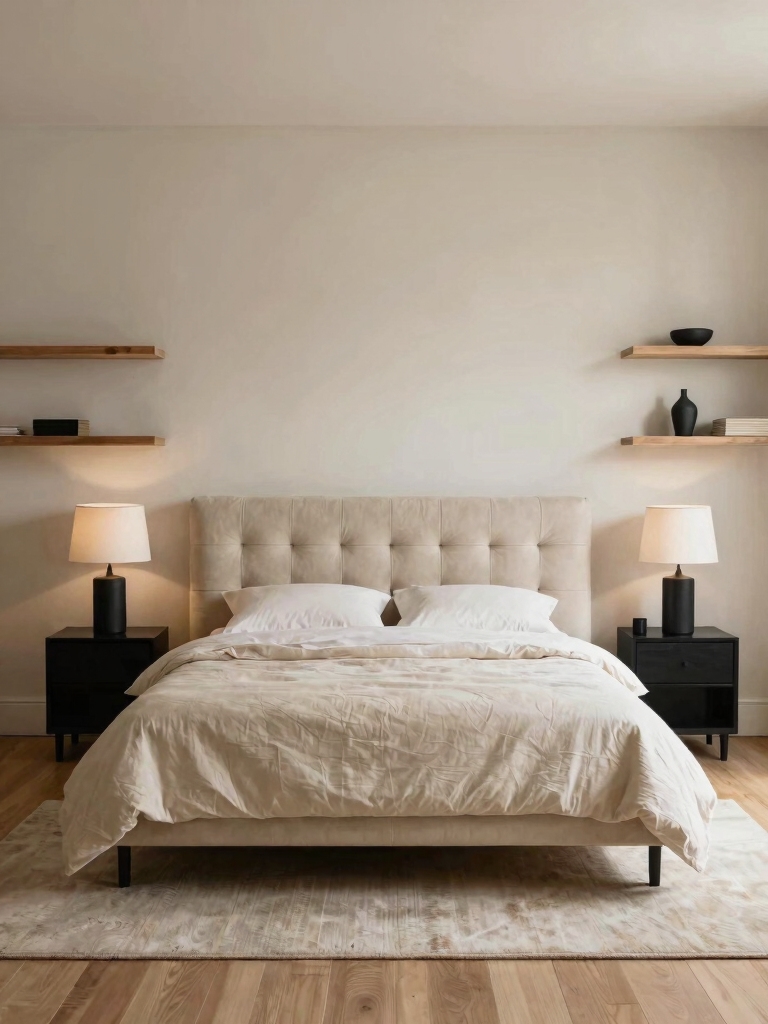
Symmetry is what makes a bedroom feel calm and resolved. It rarely requires two identical pieces. The eye reads balance from matched visual weight, so a pair of lamps, two similar nightstands, or even one nightstand answered by a chair of the same heft on the other side all land as balanced. Pairing is the quiet trick that makes a room look composed.
- Flank the bed with a matched pair of nightstands or lamps for the fastest sense of order.
- When a true pair won’t fit, balance by weight, a slim shelf on one side, a small dresser on the other.
- Repeat one material or color across the room, so the pieces feel collected, and lean on these decor ideas worth borrowing.
Place the bed first and let it set the rules. Every good bedroom layout is just a series of smart answers to where the bed already is.
Zoned Spaces for Everyday Efficiency
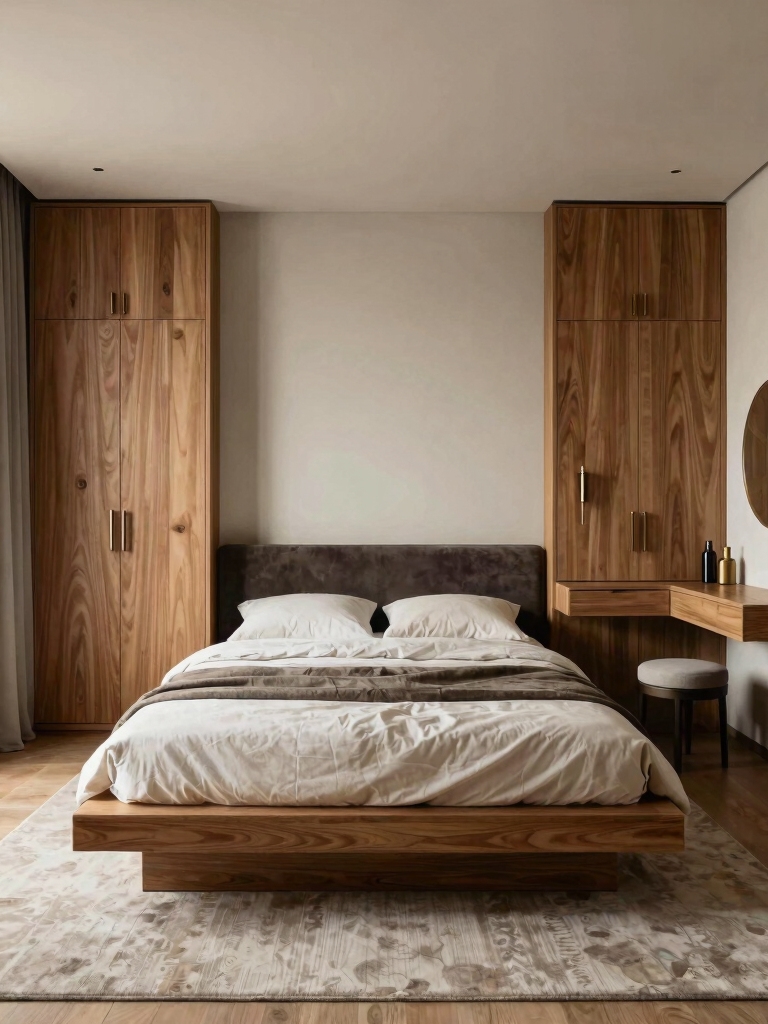
The rule for the rest of the furniture is adjacency: pieces used together should sit within a step of each other. Scatter them around the walls and the room feels busy and unplanned, no matter how nice each piece is.
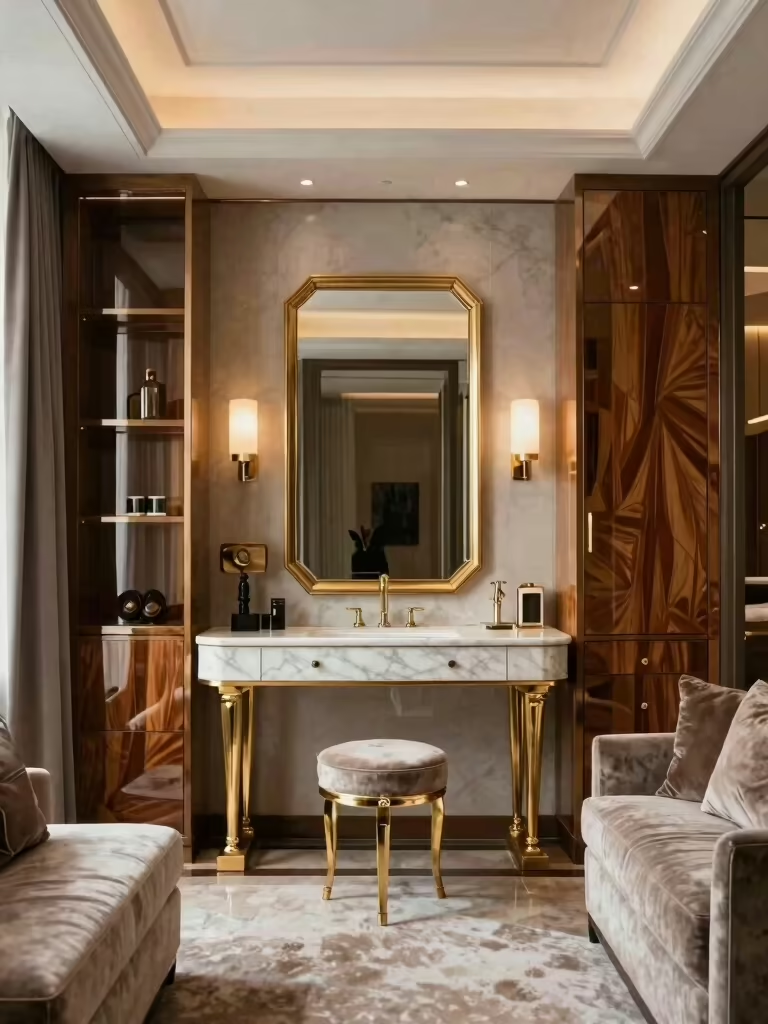
Keep the sleep pieces together, the storage pieces together, and the getting-ready pieces together, so each task has everything it needs in one spot. A vanity with its mirror and a lamp, a dresser beside the closet, a bed with its nightstands, each cluster works because the pieces that belong together sit together.
Place the clusters so you’re not crossing the room mid-task. The dresser wants to be near the closet, the vanity near the best light, and the nightstand within arm’s reach of the pillow. Get the groupings right and the room runs itself, with far less back-and-forth on a busy morning.
- Cluster the sleep pieces so the bed, nightstands, and a reading lamp all sit together.
- Put the dresser near the closet so dressing happens in one corner instead of across the room.
- Site the vanity by the daylight, and let these lighting ideas for mood handle the evening.
Maximize Under-Bed Storage Efficiently
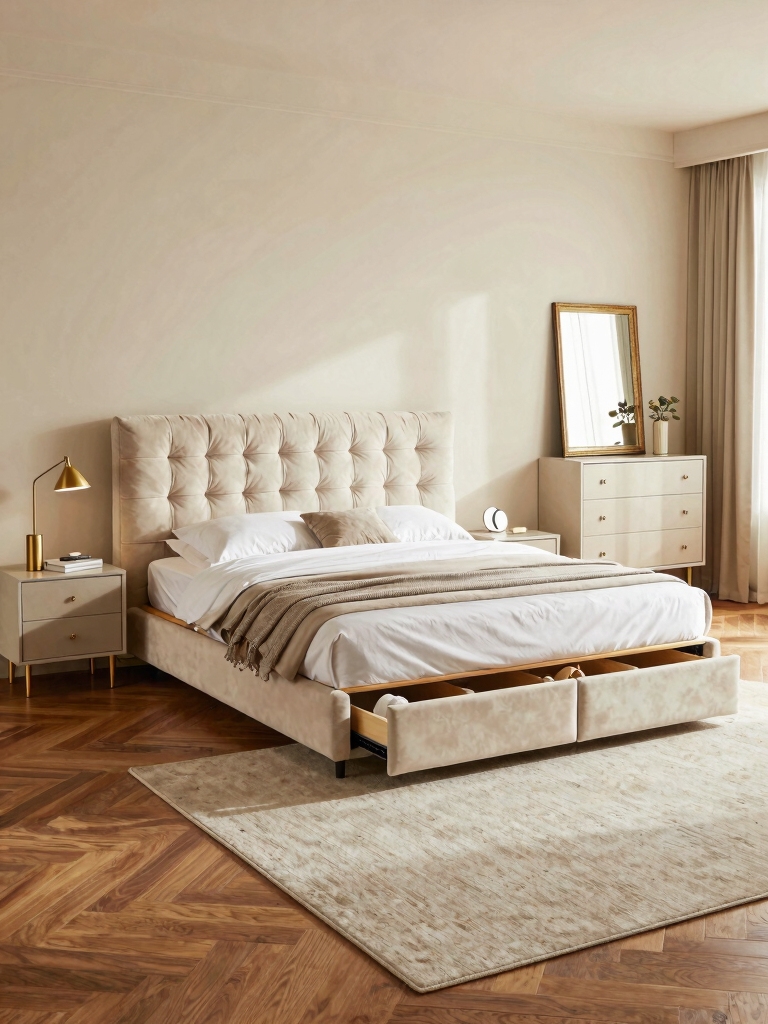
The space under the bed is the easiest storage to add and the most often wasted, so the trick here is access. Slide-out bins on the long sides, labeled and low, turn the whole footprint of the mattress into a hidden drawer for off-season clothes and spare bedding.
Keep what you reach for at the foot and the deep-storage stuff toward the headboard, where it’s fine to leave it until the seasons turn. Think of it as a wide, flat drawer. The bed is already paying for the floor, so the space underneath should pay you back.
- Use flat rolling bins, often $15 to $30 each, so the under-bed load slides out instead of hiding in the dark.
- Label the lids and keep a few inches of clearance so a too-stuffed bin never jams under the frame.
- Reserve under-bed for flat, seasonal things, and send daily clutter to these storage ideas for hiding clutter.
💡Placement Tip
Before you commit, photograph the room from the doorway. The camera flattens the space and shows imbalance your eye glosses over, so a lopsided pairing or a blocked path jumps out instantly. Rearrange, shoot again, and compare. It’s the fastest free way to judge a placement before you start dragging heavy pieces around.
Cohesive, Balanced Nightstand Design
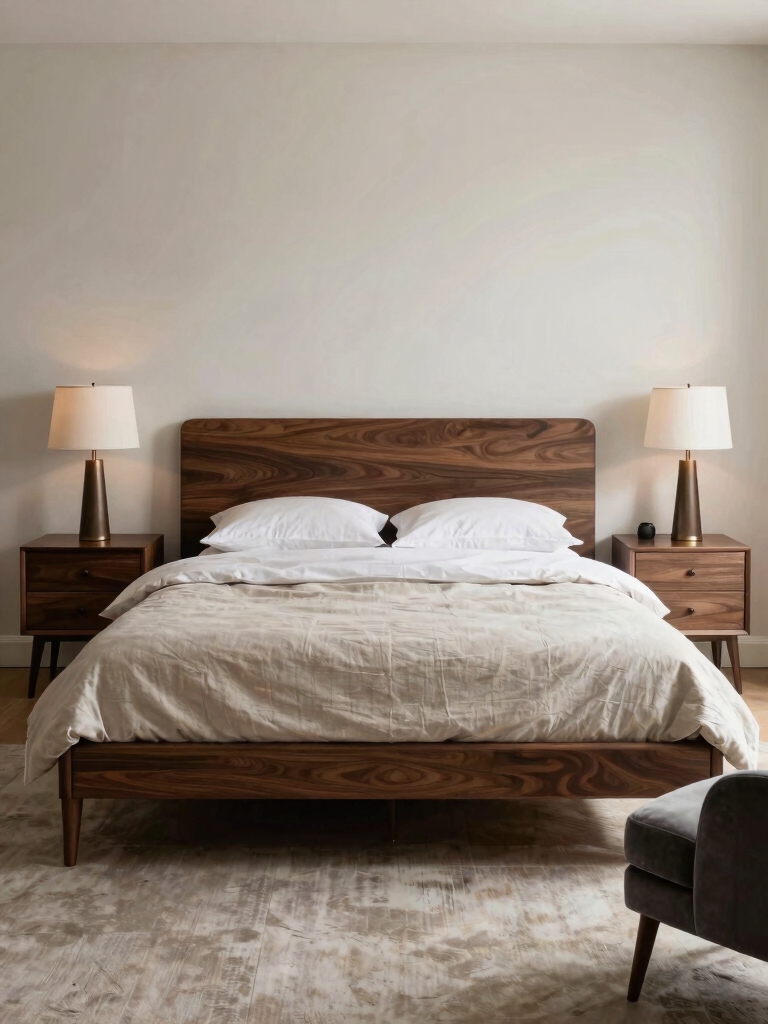
Nightstands punch above their size in a bedroom, so getting their position and scale right matters more than people expect. The height rule is the one to remember: set the surface within a couple of inches of the mattress top, so a lamp, a book, and a glass of water all sit at easy reach from the pillow. Set it too low and you end up groping toward the floor for your glasses. Set it too high and the table looms over the pillow.
Scale them to the bed it sits beside. A king bed dwarfs a tiny side table, while a chunky nightstand crowds a slim frame, so match the visual weight to the bed it serves. Width matters too. A surface roughly as wide as it is tall reads balanced beside most beds and still holds what a nightstand needs to. Aim for that square-ish footprint and you rarely go wrong on a piece this small but this visible.
When the room only fits one, lean into the asymmetry on purpose. A single nightstand answered by a floor lamp or a small stool on the other side keeps the balance without forcing a matched pair into a space that can’t take it. A good nightstand runs anywhere from $40 to $120, so a thoughtful pair rarely breaks the budget, and these paint ideas to refresh a room tie the finishes together.
Placement Mistakes That Throw a Room Off
A few placement slips show up again and again, and each one quietly drags down a room full of nice furniture. The bed shoved into a corner when the room had space for a centered headboard. Nightstands floating well below the mattress. A dresser parked where its drawers bang into the bed. A chair marooned in a spot with no light and no reason to sit. None of these are about the pieces themselves; they’re about where the pieces landed.
The good news is that every one is a free fix. Slide the headboard to the wall it belongs on, swap a too-low nightstand for one at mattress height, walk the dresser to a wall where its drawers clear, and either give the chair a lit corner or let it go. Spend an afternoon correcting placement before you spend a dollar on anything new, and most rooms come right on the moves alone.
The Dresser and the Chair: Where They Go
Two pieces trip people up after the bed is settled: the dresser and the reading chair. The dresser wants a solid wall near the closet, ideally one where you can pull every drawer fully without hitting the bed, and where a mirror above it can catch some daylight.
Set on the wall opposite the bed, a dresser also doubles as a low console and anchors that side of the room. It earns its spot twice over. A mirror and a lamp on top turn it into the room’s second focal point after the bed.
The chair is the piece most likely to end up as a coat rack. I see it happen in half the rooms I visit. It only works where you’ll actually use it, which usually means a corner with good light and enough room to swing your feet up. If the room can’t give a chair a real reason to exist and the clearance to match, skip it, because a stranded chair drains more flow than it ever adds in comfort.
Clearances Worth Memorizing
A handful of numbers take the guesswork out of placement, and they’re worth keeping in your head while you shove furniture around. Leave about 24 inches of clearance on a side of the bed you get into, 36 inches on the main walkway, and at least 30 inches in front of a dresser so the drawers clear and you can stand to use them. A door wants its full swing arc kept clear of any piece it could hit.
Treat those as floors to clear, not targets, and add to them where the room allows. When a measurement won’t work, the room is telling you the piece is too big, and a smaller piece fixes it faster than a tighter squeeze ever will.
Tape the footprints onto the floor and walk the gaps before anything heavy moves. Ten minutes with painter’s tape is all it costs, and I do it on every room I plan, because a clearance that looks fine on the page fails the second you stand inside it.
Furniture Placement Questions, Answered
?Should the bed always go against a wall?
Almost always, yes. A headboard on a solid wall anchors the room and gives you a calm view from the door. Floating a bed in the middle only works in a large room with a real reason for it. Keep the bed off the window wall so the light and the view stay open.
?Should I put a rug under the bed, and what size?
Yes, a rug grounds the bed and warms the floor underfoot. Size it so it runs about two feet past the sides and foot of the bed, framing it rather than floating like a postage stamp. An 8-by-10 suits most queen and king beds; a 6-by-9 works under a full.
?How do I arrange furniture in an odd-shaped bedroom?
Place the bed on the longest unbroken wall first, then work the quirks into storage. Angled walls, chimney breasts, and alcoves are where built-in or custom-fit pieces earn their keep. Keep the main path clear and let the awkward corners hold the things you reach for least, so the shape stops fighting you.
Place It Right, Then Enjoy It
Great furniture placement is mostly a sequence: settle the bed against the right wall, flank it with balanced nightstands at the proper height, group the rest by the job each piece does, and respect the clearances that keep a room walkable. Follow that order and a bedroom stops feeling vaguely off and starts feeling considered, calm, and easy to move through, all without buying a single new thing.
If your room feels wrong but you can’t say why, start with the bed and work outward one piece at a time. Slide, step back, and check the gaps, and you’ll usually find the answer was where a piece sat, not what it was, sitting there in furniture you already owned.