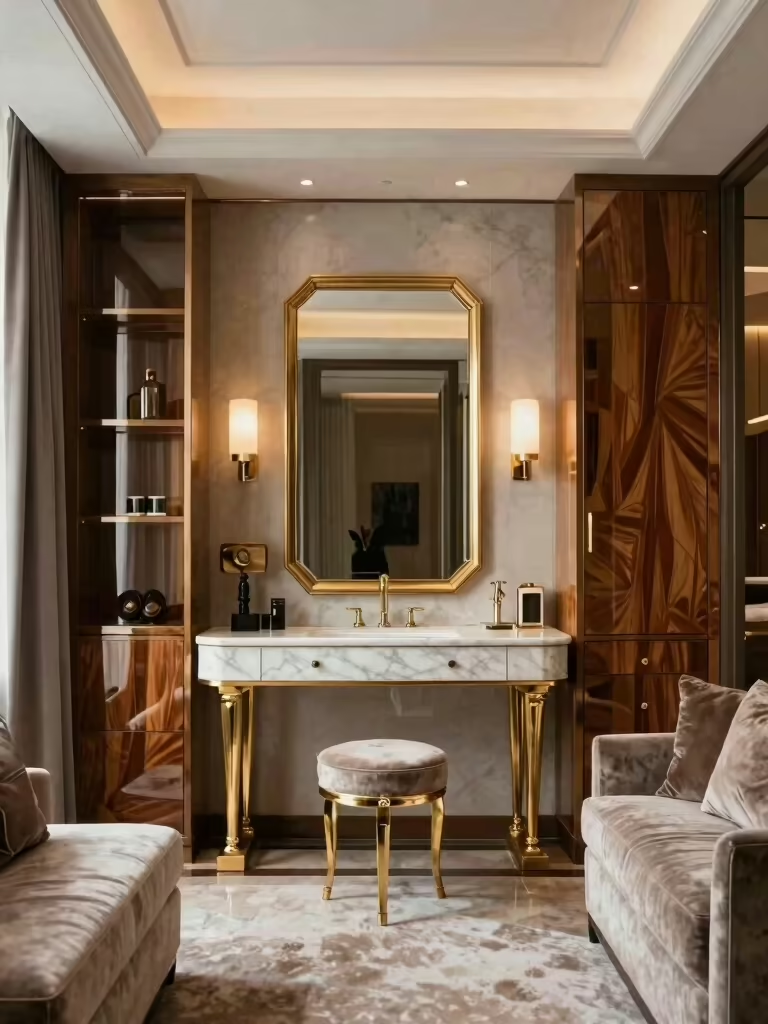

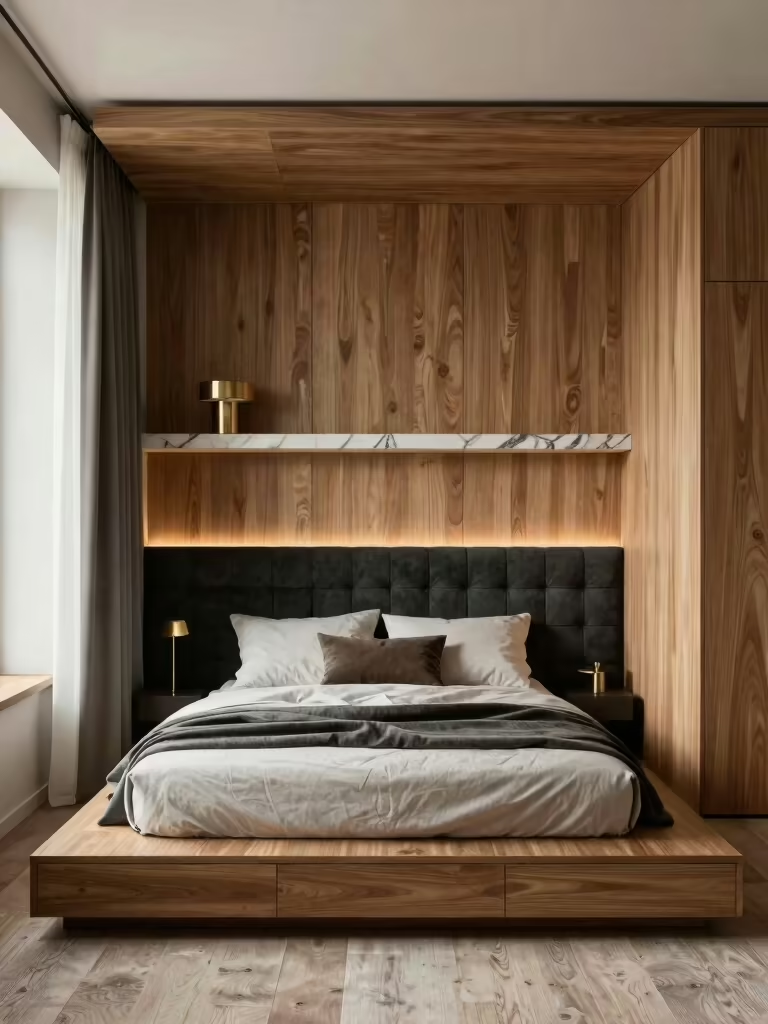
A 9×9 bedroom is about as small as a real bedroom gets, the box room, the smallest kid’s room, the city rental that calls a closet a second bedroom. At 81 square feet, there’s no room for the usual advice about feature walls and reading nooks. What a tiny room needs is honesty: a clear-eyed look at what actually fits and the discipline to leave the rest out.
Done right, though, a 9×9 can be a calm, complete little room. Cramped is a choice, and an avoidable one. The secret is restraint: the right bed for the space, furniture pushed to one or two walls, storage that climbs the walls, and a short, ruthless list of what earns a spot. Get those calls right and a tiny room stops feeling like a compromise and starts feeling deliberately, comfortably small.
Tiny-Room Calls, Quick Answers
Twin or full bed in a 9×9? A full fits but leaves tight margins; a twin leaves real floor. Let the sleeper decide, since who uses the room outranks any default.
Where does the furniture go? Along one or two walls only, with the open center kept clear, so the room reads larger.
What’s the first thing to cut? The second nightstand and any chair. In 81 square feet, both cost more floor than they return.
Maximize Small-Bedroom Space in a 9×9
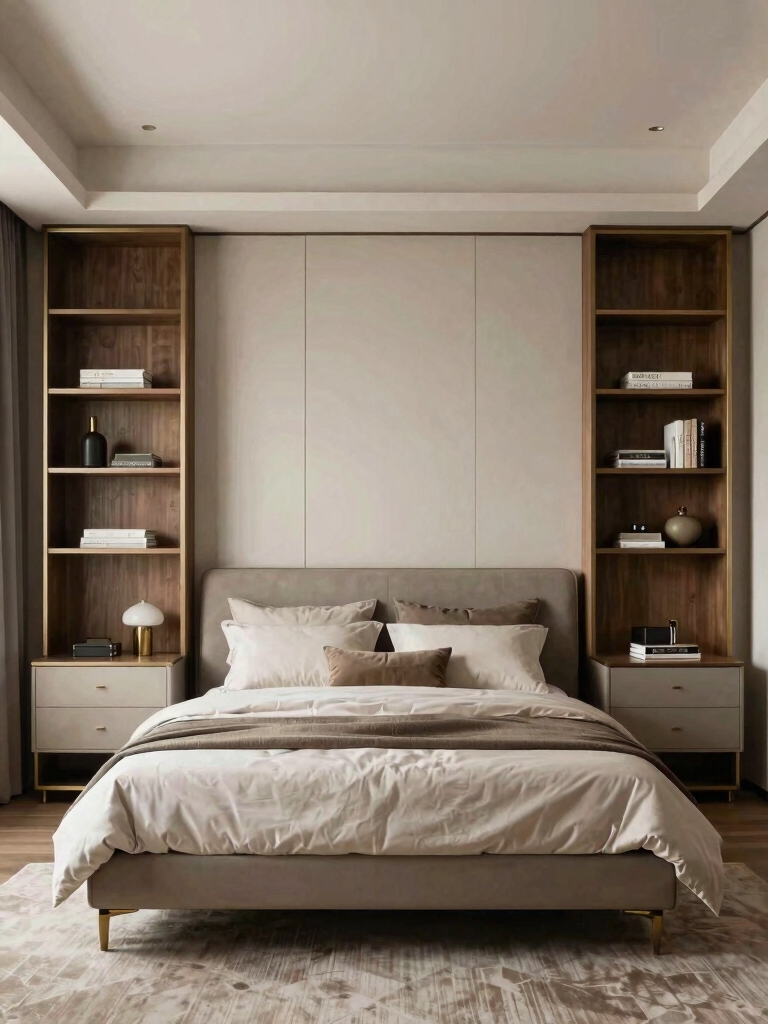
Everything in a 9×9 hangs on one early decision: the bed size. A full bed gives you a comfortable sleep but leaves barely two feet around it, while a twin opens up real usable floor and room for a slim desk or a dresser. The honest question is who sleeps here and how, because in 81 square feet that single call decides how much room is left for everything else.
- Match the bed to the sleeper: a twin for a kid or solo guest, a full only if an adult lives here nightly.
- Push the bed into a corner or against one wall so it claims the least floor it can.
- Decide the bed first, then plan the rest around it, the way these layout ideas for small rooms build outward.
Embrace Intentional, Compact Design
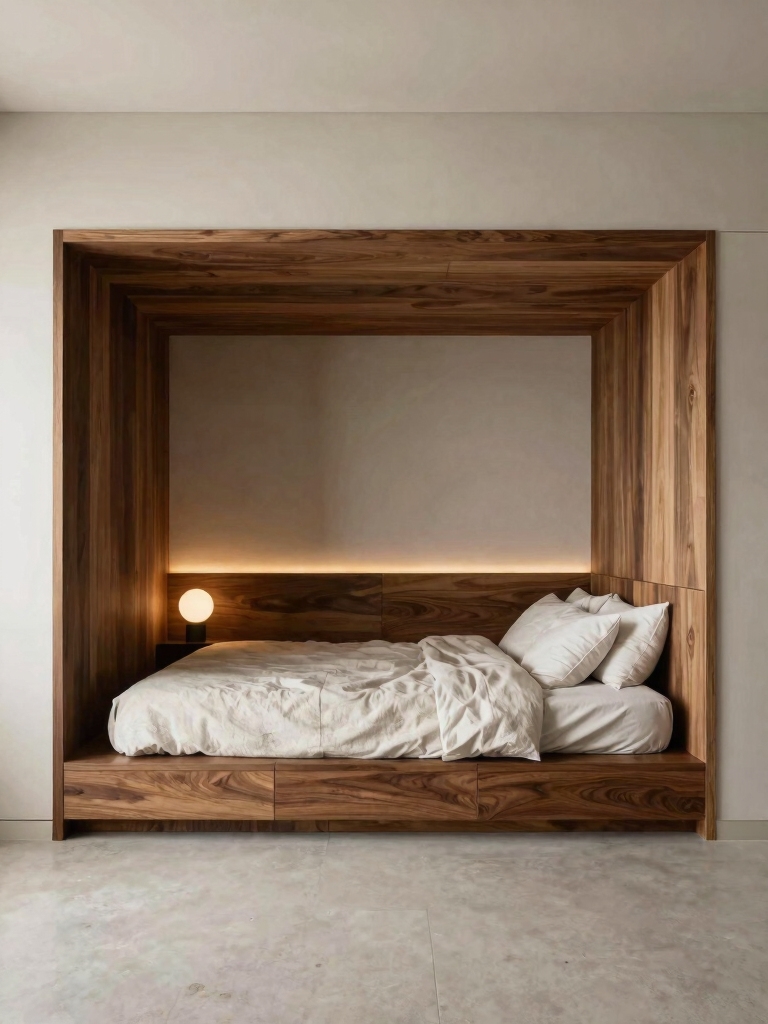
A tiny room rewards a different mindset than a big one. Compact done right is its own kind of design, where restraint reads as calm and every piece has a clear reason to be there. I treat a tiny room as a puzzle with a clean solution all its own. The most peaceful 9×9 rooms own their size and lean into a tucked-in, cabin-like coziness that a big room can’t fake.
Scale everything down on purpose
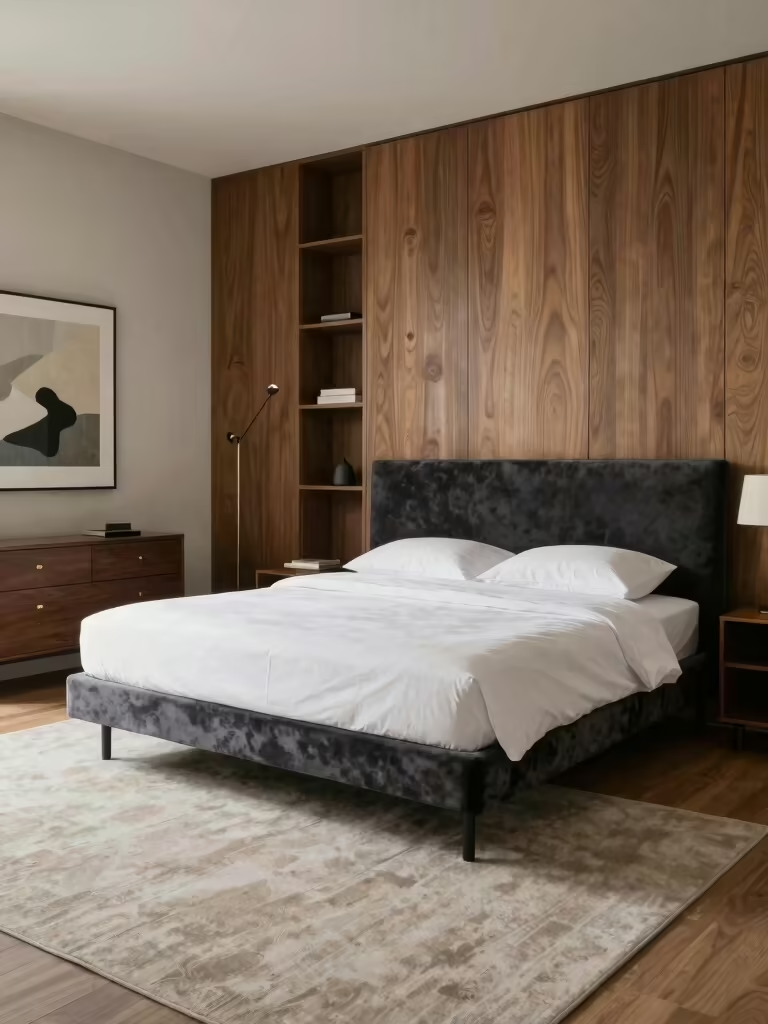
Scale everything down on purpose. A slim profile bed frame, a narrow nightstand, low furniture that keeps the sightline open, all of it tells the eye the room is calm and considered. One oversized piece, a chunky headboard or a deep armchair, throws the whole balance off, so keep the proportions small and consistent.
Then let a single choice carry the personality. A bold paint color on one wall, a good light fixture, or one piece of art does more in a tiny room than a dozen small touches, because there’s nothing competing with it. The restraint everywhere else is exactly what makes that one move land, and these paint ideas to refresh a room help you pick it.
Two questions that decide how a 9×9 comes together:
1Could a loft or bunk bed work in a kid’s 9×9?
For a child’s room, it’s the best floor-saver of all. A loft lifts the bed and hands the whole footprint underneath to a desk or storage; a bunk sleeps two in one footprint. Both want around 60 inches of clearance above the top mattress, so measure the ceiling before you buy.
2Can a tiny room still have a desk?
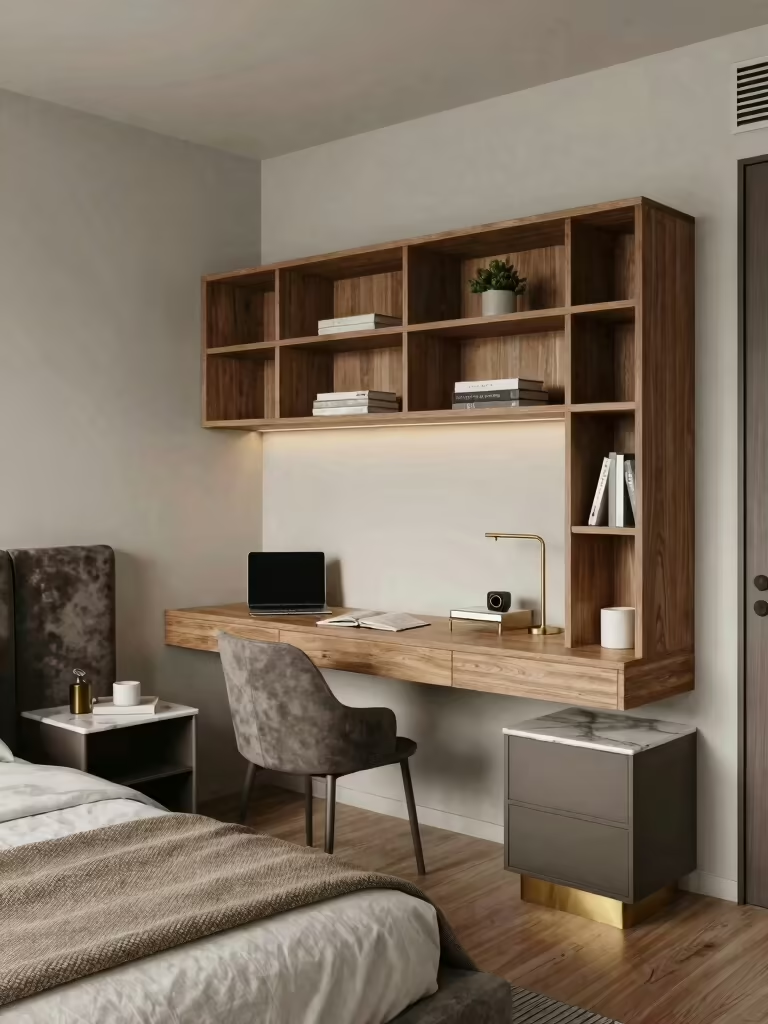
Yes, if you choose a twin bed and go vertical with storage. A fold-down or narrow wall desk tucks into the floor a twin frees up, and wall shelves keep it from needing a separate bookcase. With a full bed, the desk usually has to give way to the bed’s footprint.
Smart Bed-Placement Strategies for a Tiny Room
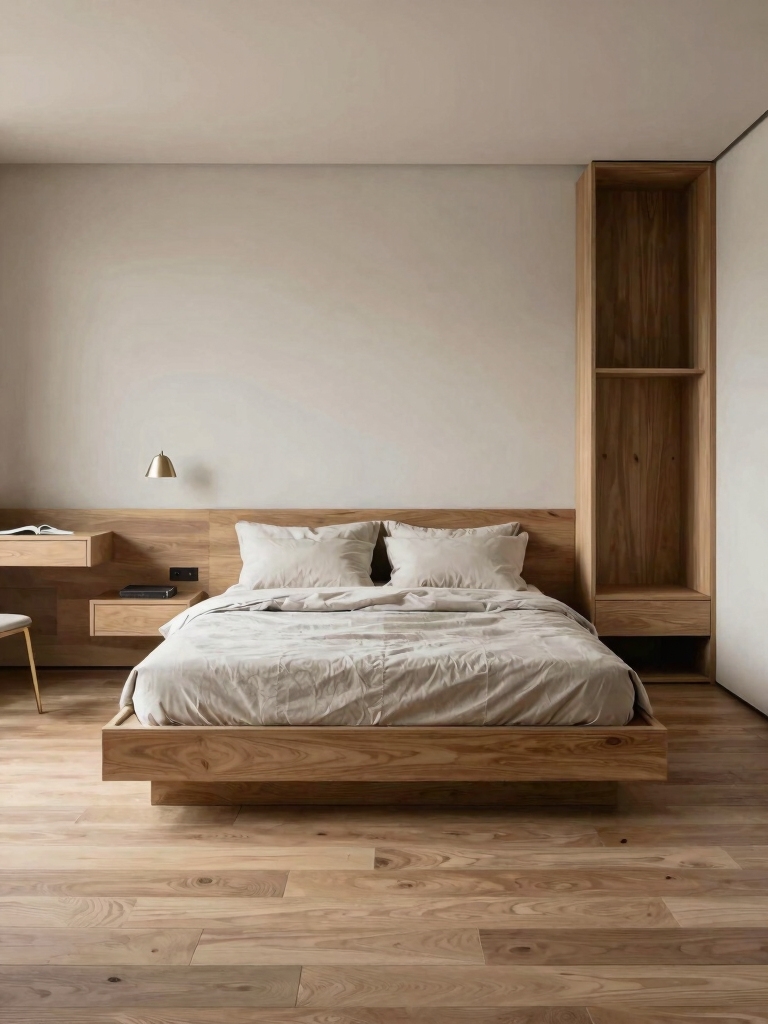
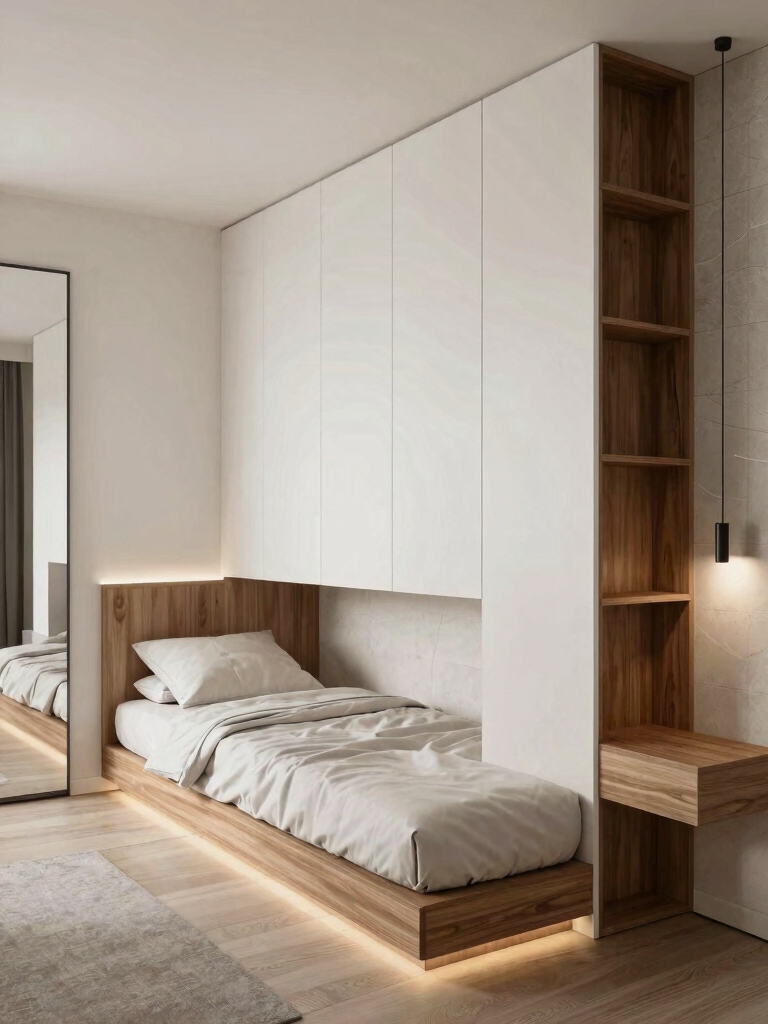
In a room this size, the bed almost always wants a corner. I land there on nearly every tiny room I plan. Pushing it lengthwise against two walls frees the largest single stretch of open floor, which is what makes a tiny room workable, even though it means climbing in from the foot or one side. For a kid’s room or a guest room, that trade is easy, and the recovered floor is worth far more than two-sided access.
Keep the headboard on a solid wall and the foot clear of the door swing. If a window is the only option behind the bed, a low frame under the sill keeps the light, and a narrow wall-mounted shelf replaces the nightstand you don’t have floor for. The whole goal is to let the bed take its space quietly and hand the rest of the room back to you.
Maximize Space and Minimize Clutter
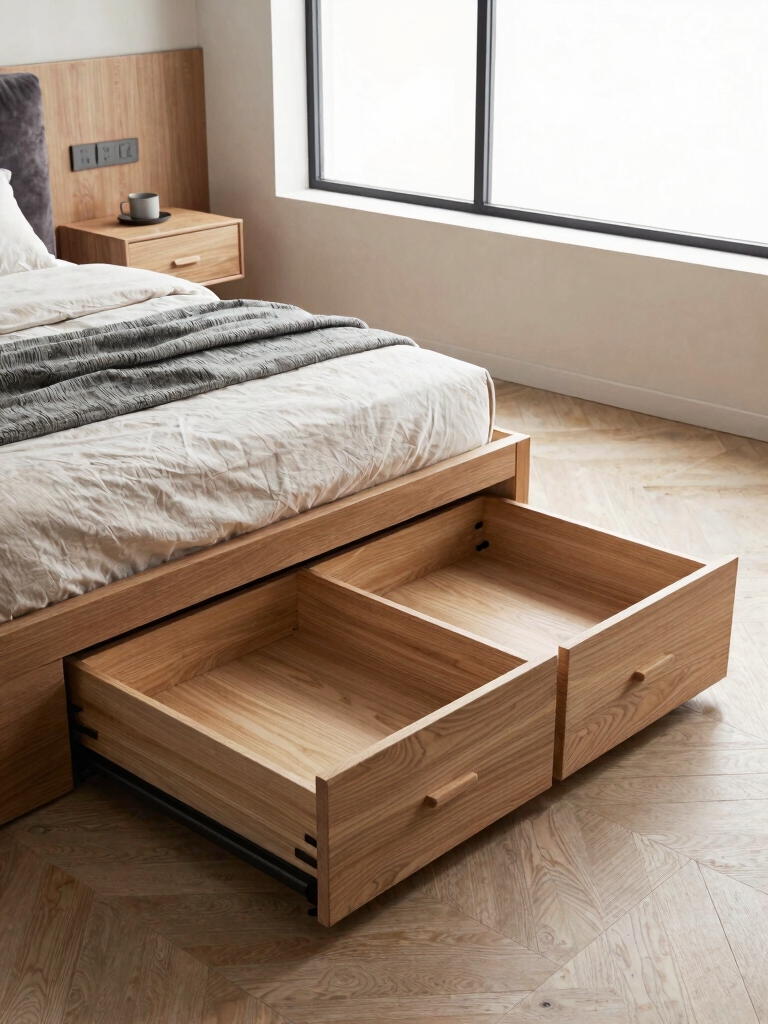
With the bed settled, the next job is keeping the floor clear, because in a tiny room visible floor is the whole illusion of space. Send the storage up the walls and under the bed, and keep the surfaces nearly bare. A 9×9 turns on this one rule: if the floor stays open, the room feels calm, and if it fills up, even a tidy room reads cramped.
Hunt down the storage that costs no floor. Under-bed bins, a high shelf running a full wall, hooks on the back of the door, a row of cabinets above the bed, all of it adds capacity while the floor stays free. The less the floor has to hold, the bigger 81 square feet lives. The walls do the holding here.
- Use under-bed bins, around $20 to $40 a set, to turn the space under the mattress into a hidden drawer.
- Run a shelf along a full wall above eye level for the things a tiny room has no floor for.
- Hang the daily stuff on the back of the door, and tuck the rest with these storage ideas for hiding clutter.
Organize a compact wardrobe in three steps:
1Edit to the season
Pull everything, keep only what you’ll wear this season, and box the rest for under-bed or top-shelf storage.
2Double the hanging
Hang a second rail about 40 inches below the first so two tiers of shirts and folded items fit where one rail hung.
3Work the door and floor
Add a clear over-door shoe organizer for small things and stack two lidded bins on the wardrobe floor so no inch sits empty.
Efficient Compact Wardrobe Organization
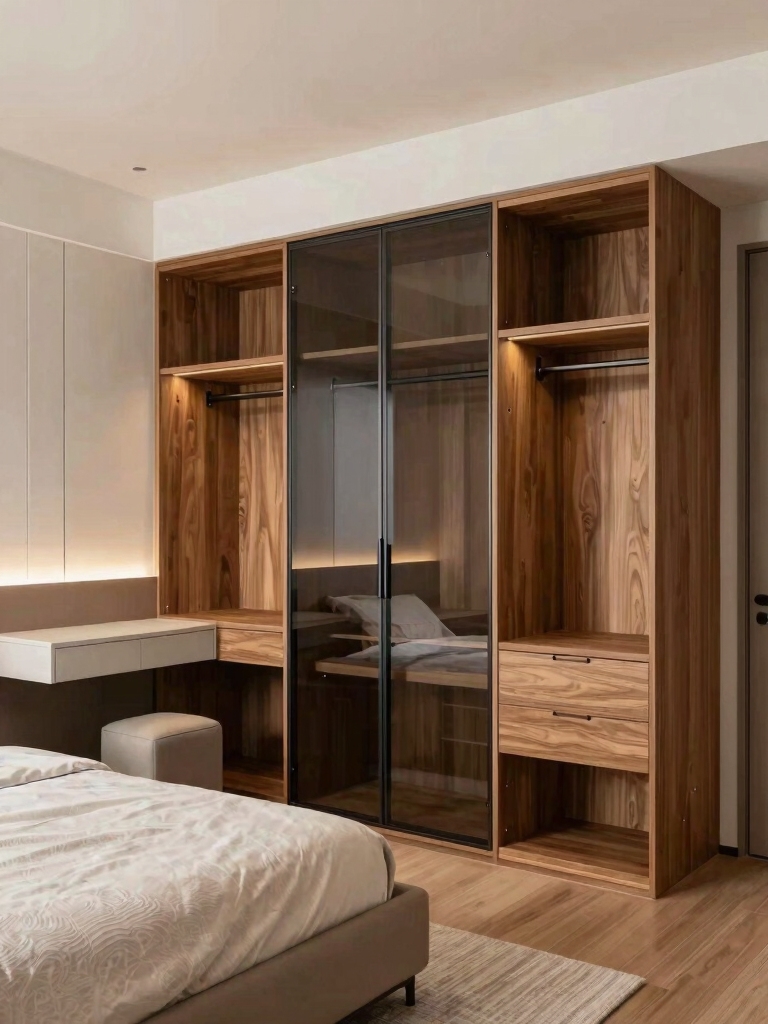
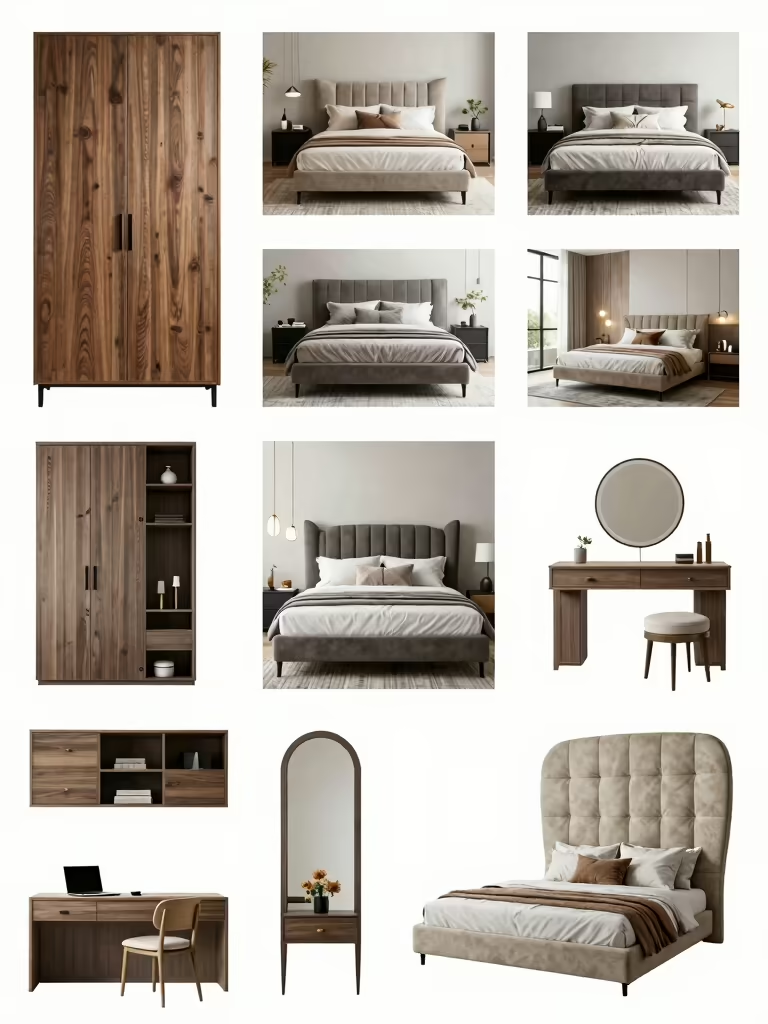
Clothes are the hardest thing to fit in a tiny room, because a standard wardrobe eats a wall the room can’t spare. The fix is to go tall and narrow: a slim, full-height wardrobe, often $150 to $400 for a flat-pack version, holds a surprising amount in a small footprint when you use every inch of its height. Double-hang rails and a shelf above the rod nearly double what a single rail holds.
Tall, narrow, and edited down
Edit the wardrobe down to what you actually wear. A tiny room can’t store a full seasonal wardrobe, so keep the current season accessible and box the rest under the bed or up high. A capsule of pieces you reach for beats a crammed rail you fight every morning, and it makes the small wardrobe feel generous rather than stuffed.
Use the back of the wardrobe door and any dead vertical inch. An over-door organizer, often $25 to $40, holds shoes, scarves, and small things that would otherwise sprawl, and a stacking set of bins on the wardrobe floor sorts the rest. These decor ideas worth borrowing cover the finishing touches once the storage works.
What to Cut From a 9×9 Entirely
The fastest way to make a tiny room work is subtraction, and a 9×9 has a short list of things it simply can’t hold. A second nightstand, a reading chair, a footboard, a full-size dresser, a rug that runs wall to wall, each of these costs floor a tiny room can’t spare, and cutting them buys back more space than any clever gadget. These are the pieces I strip out of every 9×9 first. The room gets bigger the moment they leave.
Be honest about the furniture you’re keeping out of pure habit. One nightstand serves a single sleeper fine; a wall-mounted shelf serves two. A chair becomes a coat pile in a week. When you strip a 9×9 down to only the pieces that earn their floor every day, the room finally has space to breathe. What’s left feels chosen. Every piece is there for a reason you can name.
Make a 9×9 Read Bigger Than It Is
A few visual tricks add the feeling of space that the tape measure won’t. Keep the walls pale and the trim the same shade, so the boundaries soften and the room feels less like a box. Choose furniture with legs over solid-to-the-floor pieces, since the slice of visible floor beneath them reads as more room. A large mirror on one wall throws the light around and adds a sense of depth in a way nothing else this cheap can.
Draw the eye upward to borrow height the floor can’t give. Hang the curtains close to the ceiling line, run a shelf or the wardrobe up to meet it, and keep the floor as clear as you can. A tiny room that leads the eye up and out feels noticeably larger than its 81 square feet, and these color palette ideas keep the backdrop light enough to help.
Keeping a Tiny Room Working Long Term
A 9×9 lives or dies by one surface. Pick the single spot where things land, a nightstand shelf or a tray by the door, and treat it as the room’s pressure valve: the moment it overflows, that’s your cue to put things away before the whole room follows. There is no slack in 81 square feet to absorb a stray pile, so catching it at one surface is what keeps the rest of the room clear.
The wardrobe is the other tripwire. A tiny room holds only so many clothes, so when the rail won’t close or the bins won’t shut, the answer is to let something go rather than let it creep onto the floor. Treat ‘full’ as a hard limit, not a suggestion, and the room keeps its shape. A 9×9 stays calm exactly as long as nothing is allowed to spill past the spot you gave it.
Tiny 9×9 Bedroom Questions, Answered
?What size bed fits in a 9×9 bedroom?
A full suits an adult who wants comfort over floor space, while a twin frees real room for a desk or dresser and suits kids or guests. Decide by who actually sleeps there, not by the biggest bed that squeezes in. The full section above walks through the trade in detail.
?How do I fit storage in a 9×9 bedroom?
Go up and under. A tall narrow wardrobe, a full-wall high shelf, under-bed bins, and the back of the door add real capacity without taking floor. The rule in a tiny room is that the floor stays clear and the walls do the storing, so the open floor keeps the room feeling calm and larger than it is.
?How can I make a tiny bedroom feel less cramped?
Keep the floor visible and the walls pale. Choose leggy furniture, push everything to one or two walls, add a mirror to bounce light, and hang curtains high to borrow height. Cutting the pieces the room can’t hold does more than any single trick, and leggy furniture with high-hung curtains carries the rest.
?Can a 9×9 room work as a real bedroom?
Absolutely, with honest choices. The right bed, wall-hugging furniture, vertical storage, and a short list of what earns a spot turn 81 square feet into a complete little room. Tiny rooms feel best when they own their size with calm, edited design rather than trying to act like a bigger room they’re not.
Tiny Room, Done Right
A 9×9 bedroom done right is one you’ve edited down to exactly what matters, with nothing in it you have to explain away. Pick the bed size honestly, push the furniture to the walls, send the storage up and under, cut the pieces the room can’t carry, and lean on a little light and a mirror to stretch the feel, and 81 square feet turns into a calm, complete little room that works as hard as you do.
Save this as your tiny-room blueprint and tackle it one call at a time: bed first, then storage, then the ruthless edit. The next time you stand in that little box of a room wondering where to start, you’ll have the order, and the room will come together far faster than its size would ever suggest.