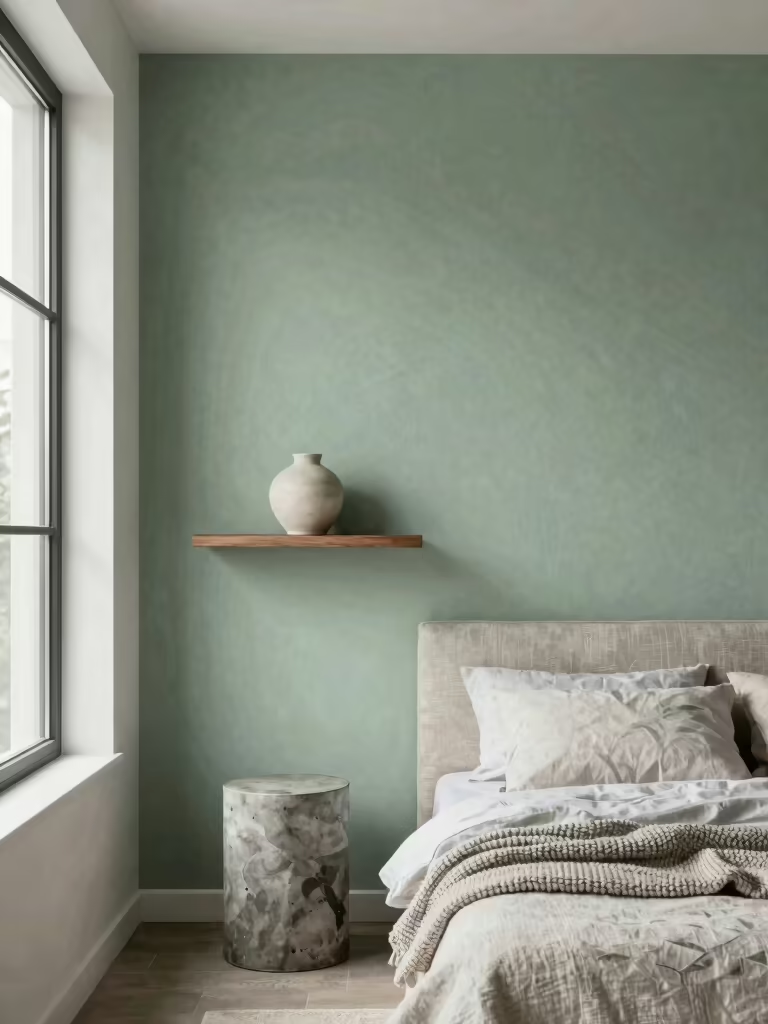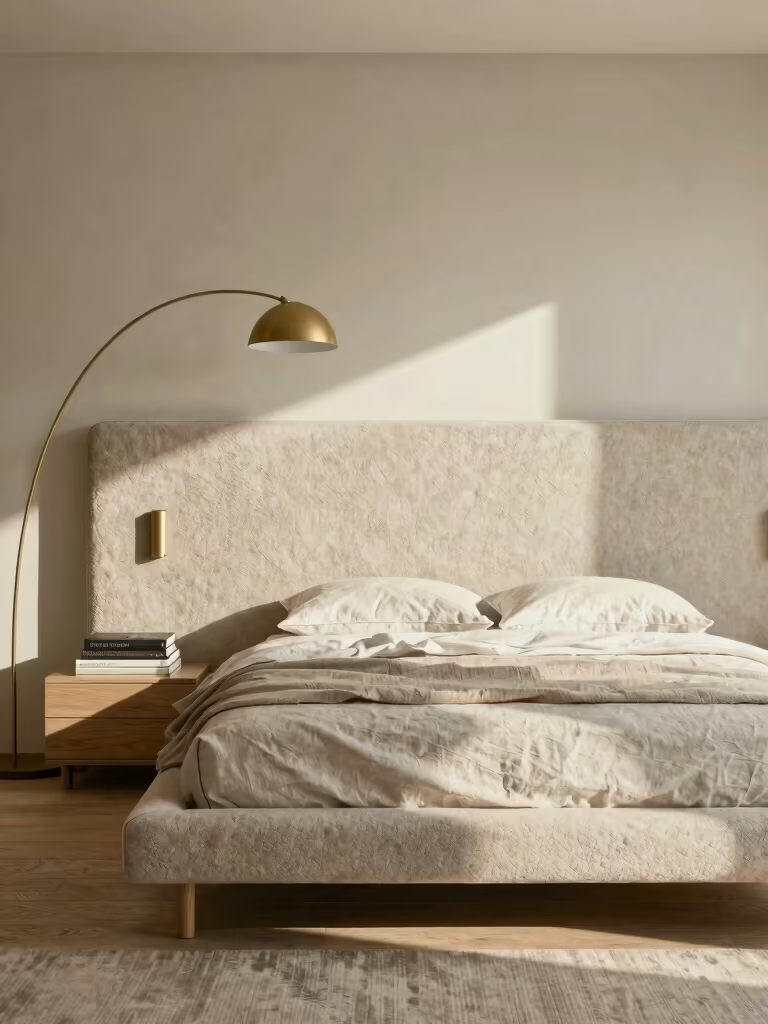

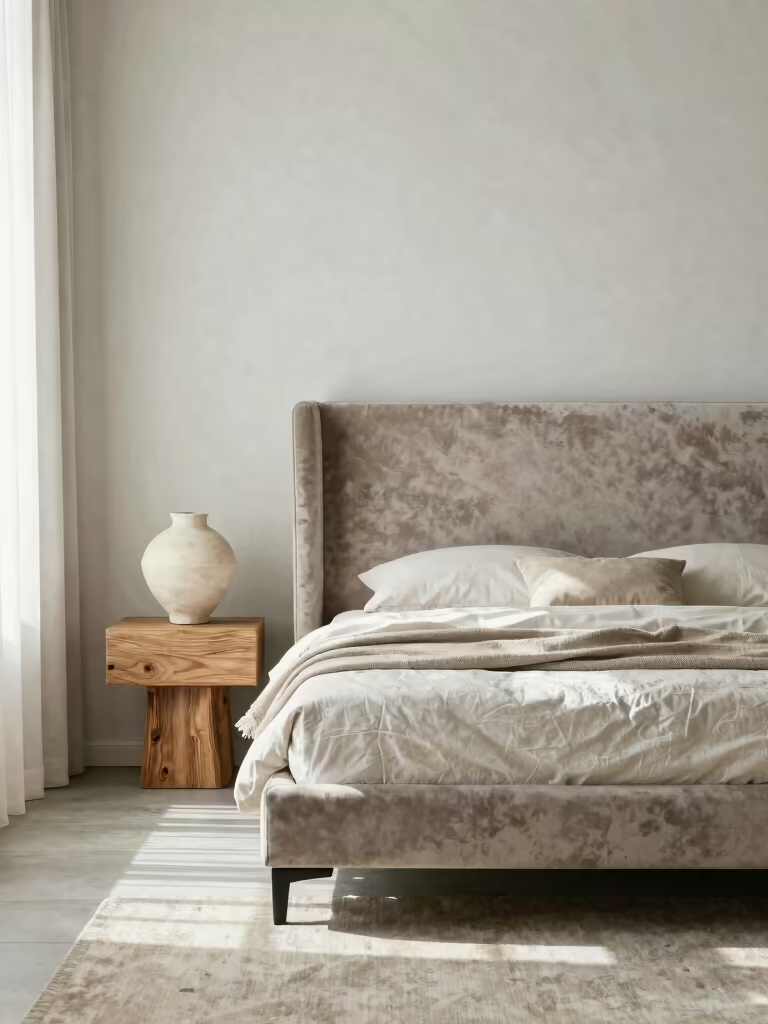
Ever walked into a friend’s bedroom and wondered how it looks so expensive when you know they did not spend a fortune? It is rarely the price tag that does the work. High-end bedroom decor leans on texture, restraint, and a few details done well.
You can fake that polished, hotel-suite feel on almost any budget. Below are the moves I use to make a plain bedroom look considered and rich, from the bed to the walls to the small finishing touches, with exactly how to pull each one off.
The Quick Path to an Expensive Look
- Restraint beats clutter. A calm, edited room reads more expensive than a busy one, every single time.
- Texture does the heavy lifting. Layered fabrics and natural materials add the richness a small budget cannot buy outright.
- Details sell it. Symmetry, warm lighting, and crisp styling are what make budget pieces look high-end.
Layer Rich Textures Top to Bottom
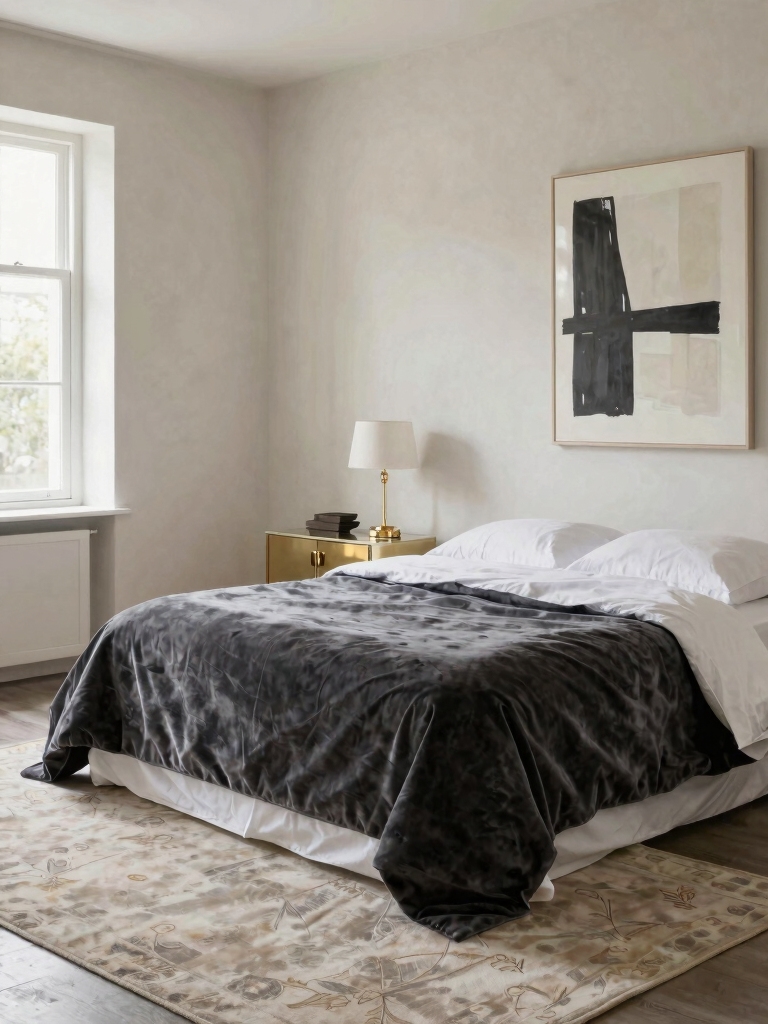
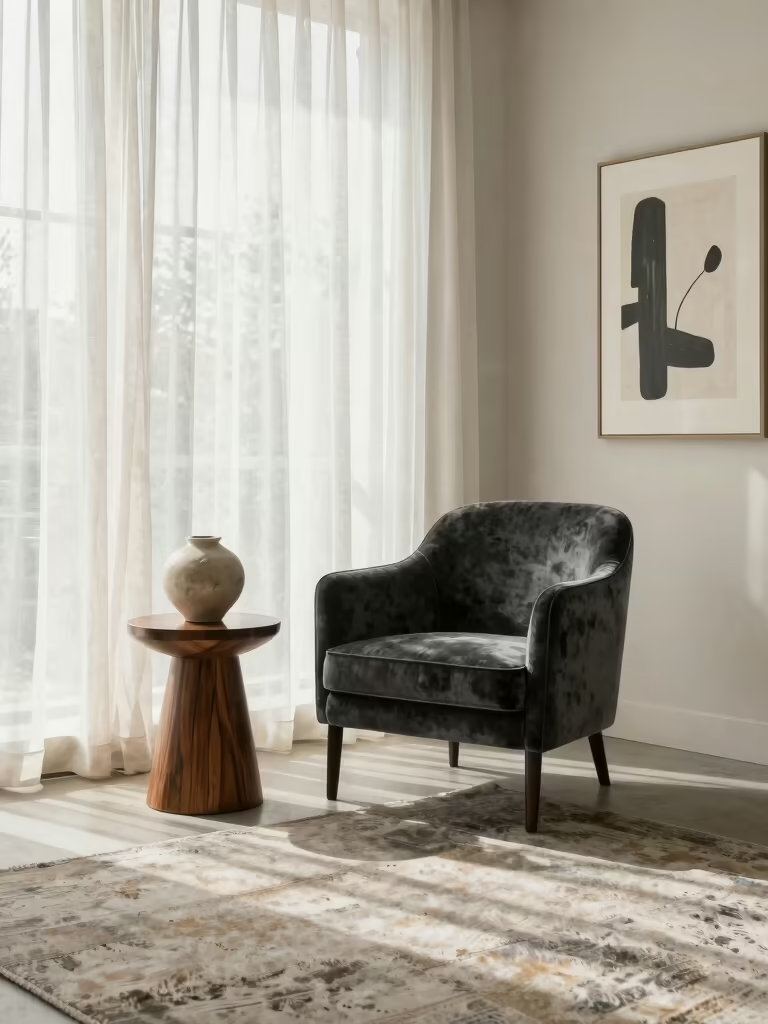
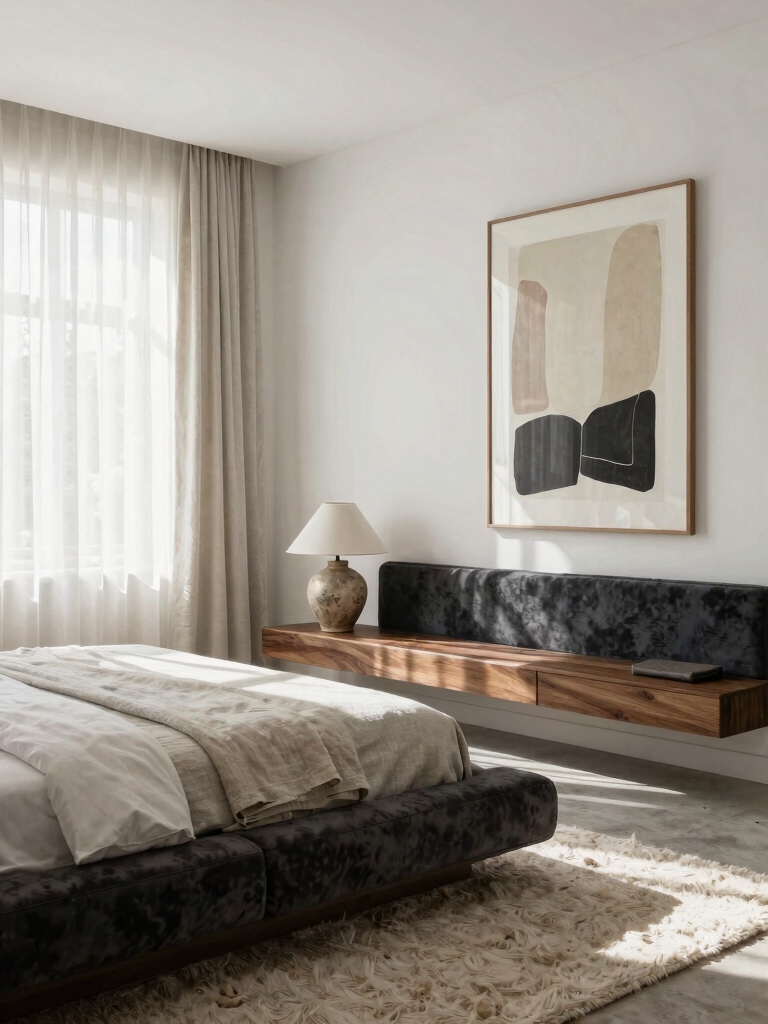
The single biggest reason an expensive bedroom looks costly is texture, not cost. A flat room of one fabric looks cheap, while layers of different materials catch the light and feel rich even when nothing was pricey. Build it up across the bed, the floor, and the windows so the eye always has something to land on, the foundation of a cozy, layered bedroom.
- Mix a chunky knit throw, smooth cotton sheets, and a velvet or linen cushion on the bed
- Add a natural-fiber rug like jute under a softer wool layer for depth underfoot
- Swap thin panel curtains for heavier, lined drapes that pool slightly at the floor
Stick to a Calm Color Story
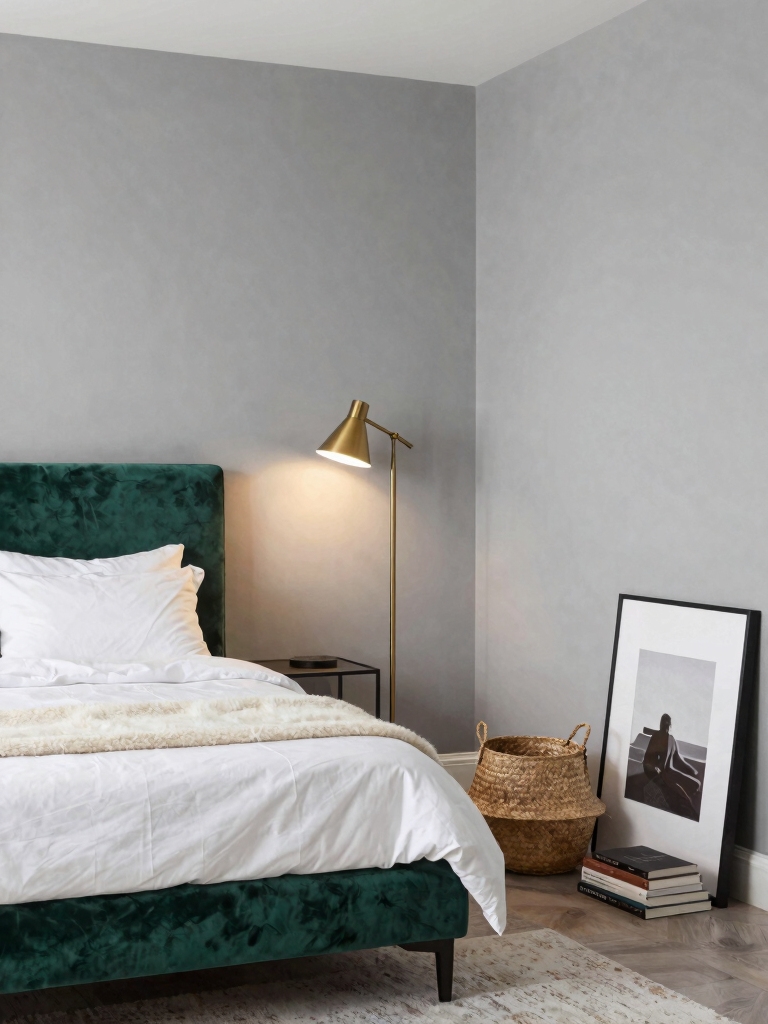
Nothing cheapens a bedroom faster than too many competing colors, so a tight, cohesive palette is your fastest route to a high-end look. Expensive-feeling rooms usually lean on two or three quiet tones, layered in a few shades and textures, all within the same color family. Calm comes across as considered, and considered looks costly, which is the whole idea behind a calm, neutral palette.
- Build on warm neutrals like greige, oatmeal, and soft taupe, then add depth with one moody accent
- Keep walls, bedding, and curtains within the same family so the room feels enveloping
- Let texture provide the contrast that keeps the room from looking flat
Two myths about making a bedroom look expensive:
❌ Myth: A matching furniture set looks richer.
✅ Reality: Usually the opposite. A showroom-matched suite can look flat and builder-grade, while a collected, slightly mismatched mix of good pieces comes across as more designed and more expensive.
❌ Myth: More pillows means more luxury.
✅ Reality: Only up to a point. A tidy, layered stack in two or three sizes looks hotel-luxe, but a mountain of throw pillows just reads cluttered and ends up on the floor each night.
Make the Headboard the Star
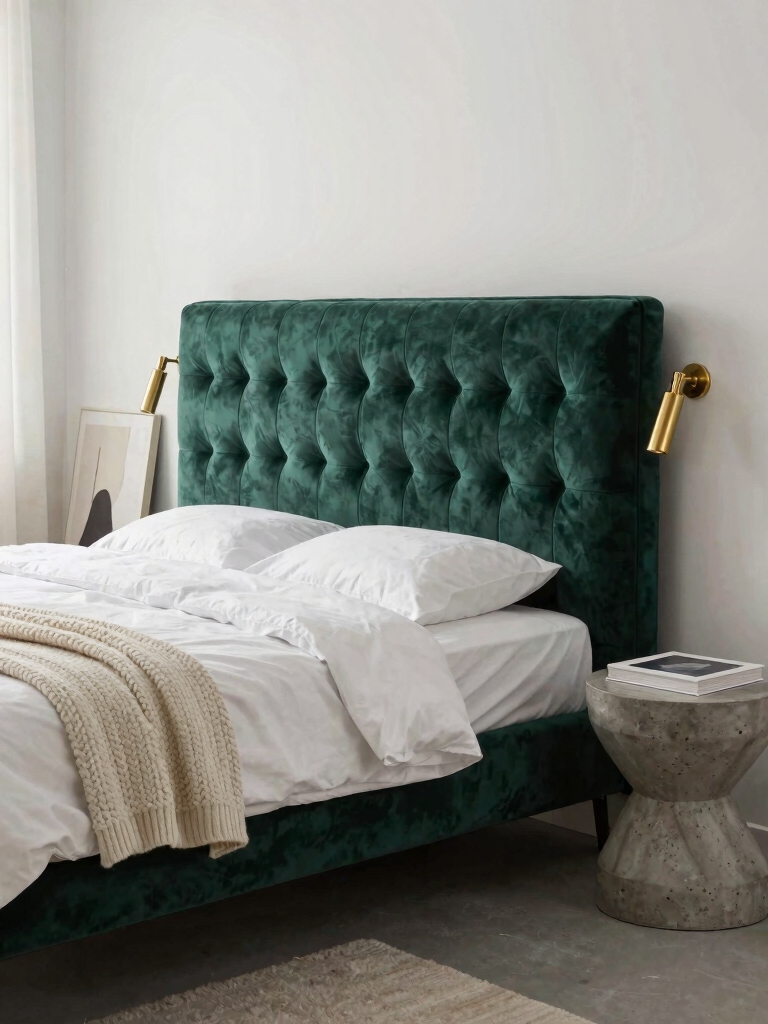
A bed with no headboard always looks unfinished, and a generous statement headboard is among the most high-end-looking upgrades you can fake. It anchors the whole room and draws the eye up, instantly giving the bed presence.
You do not need to buy one at retail. An oversized headboard reads as luxe precisely because it looks custom, and there are several cheap ways to get there, from a tall upholstered headboard to a panel painted onto the wall.
- Upholster a plywood panel with foam and fabric for a custom headboard, often under fifty dollars in materials
- Mount it tall and fix it to the wall, since the added height feels like grandeur
- Or fake one with a hung rug, a fabric panel, or molding painted onto the wall
Dress the Bed Like a Hotel
The bed is the first thing anyone sees, so styling it well does more for an expensive look than almost anything else. Hotels sell luxury through layers: a crisp base, a plush duvet, and a considered stack of pillows you would never actually sleep on all at once.
Aim for fullness and crispness. A duvet one size up drapes more generously over the sides, and a five-minute steam of the top sheet and shams is the whole difference between rumpled and refined. Stick to white or tonal bedding and add interest through texture, a linen duvet, a quilted coverlet, two pillow sizes, since busy prints tend to look cheaper.
Layer the Lighting for Depth
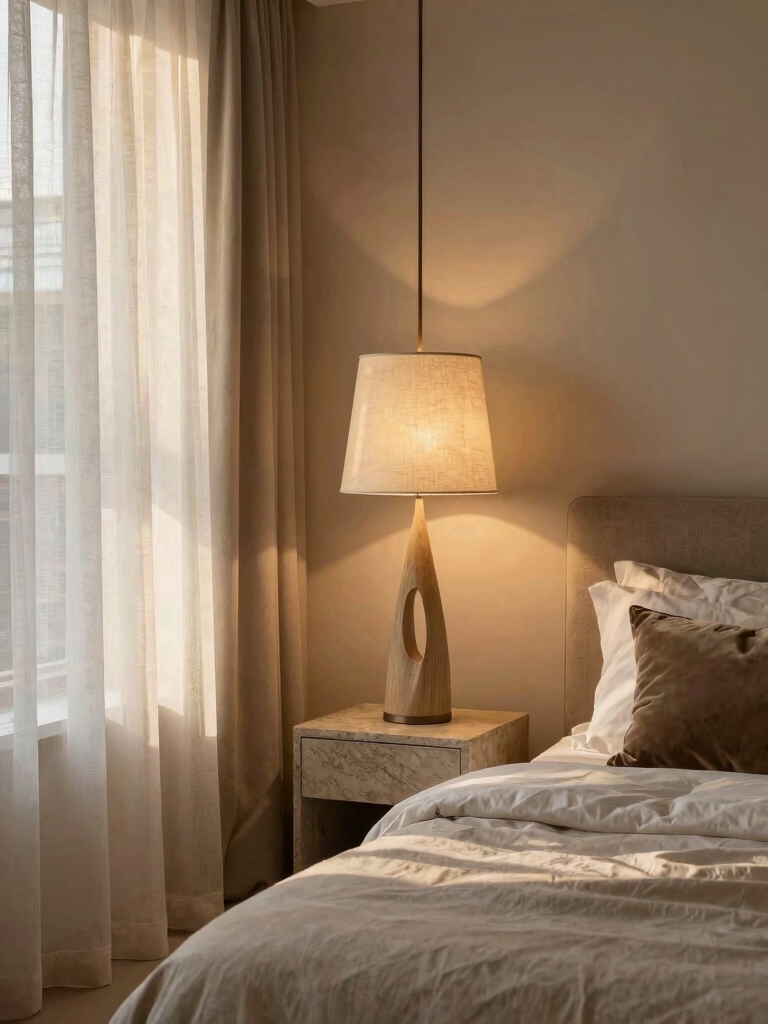
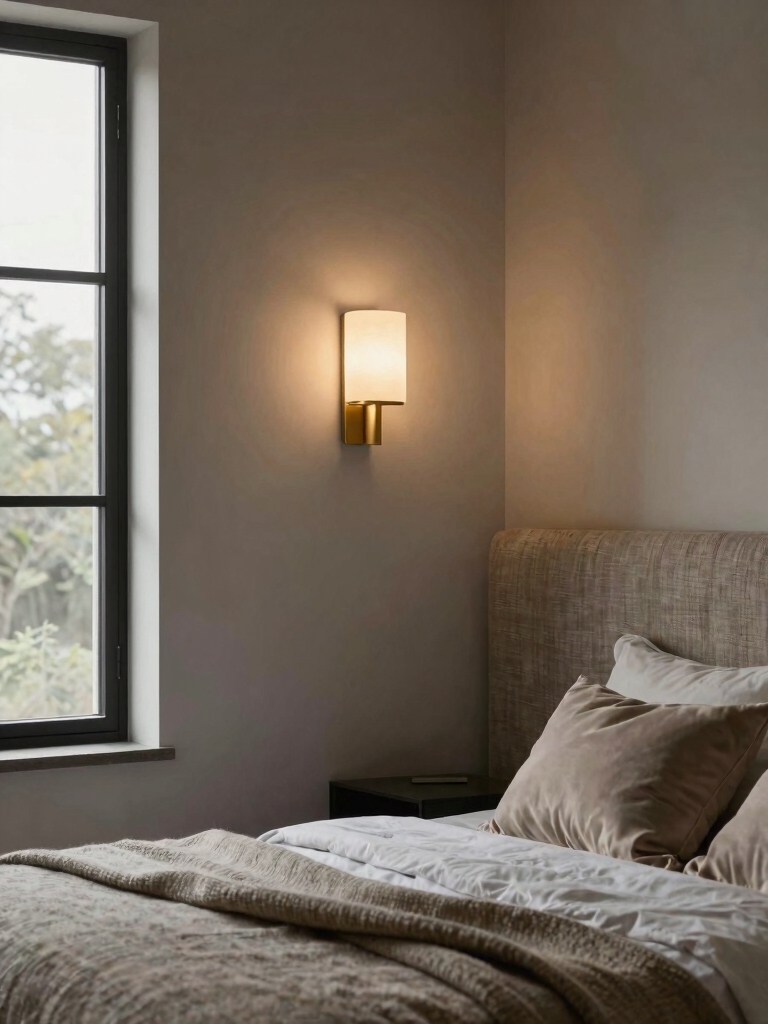
Harsh overhead light is the enemy of a luxe bedroom, and it is the first thing I change in a flat-looking room. Layered lighting at different heights creates the warm, shadowed depth that makes a room feel intimate and expensive after dark, and it is one of the cheapest fixes there is.
Aim for at least three light sources you can control separately, all in a warm tone, so you can dial the mood from bright to restful.
- Add matching bedside lamps for symmetry and a soft, even glow
- Put the main light on a dimmer so you can soften the room in the evening
- Tuck a warm LED strip behind the headboard or a floor lamp in a corner for extra layers
Lean a Large Mirror Against the Wall
A big mirror is a designer trick that makes a bedroom feel larger, brighter, and more polished all at once. Leaning an oversized floor mirror against the wall reflects light and view, and the scale alone feels confident and high-end.
Thrifted and marketplace mirrors turn up for ten to forty dollars, and a coat of paint or a little gilding wax on a dated frame makes one look far more expensive. Position it to bounce a window or a lamp, never a cluttered corner. An arched or thin-framed shape in brass or black looks especially current, and one tall mirror does more for a small bedroom than a wall of small frames ever could.
Create Custom-Look Wall Art
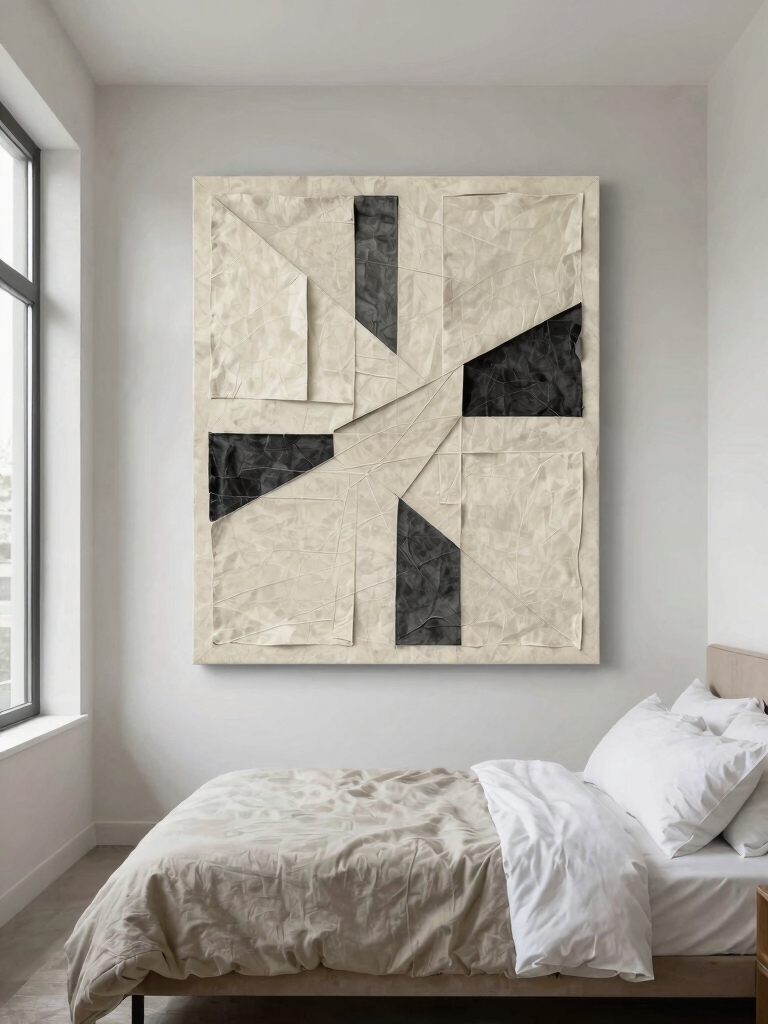
Bare or poster-covered walls quietly undercut an expensive look, but real art is not the only route. Custom-look art made from simple materials reads as collected and intentional for very little money.
Easy ways to fake high-end art
Frame a length of patterned fabric or wallpaper, blow up one of your own photos in black and white, or hang a woven textile for warmth. Scale is what does it: one big piece always looks more expensive than a scatter of small ones.
Matching frames and proper height pull it together. Hang art so its center sits around eye level, and leave a consistent gap above the headboard so the wall feels deliberate rather than floating.
Keep the Nightstands Symmetrical
Symmetry is a quiet luxury signal, and matching nightstands flanking the bed instantly make a room feel balanced and designed. Our eyes read symmetry as calm and intentional, which is exactly the high-end feeling you are after.
They do not have to be a real pair. Two similar thrifted tables painted the same color, or even two identical stools, do the job. Style them lightly and symmetrically — a lamp, a small stack of books, one object each — and resist crowding the surface.
Ground the Bed With a Plush Rug
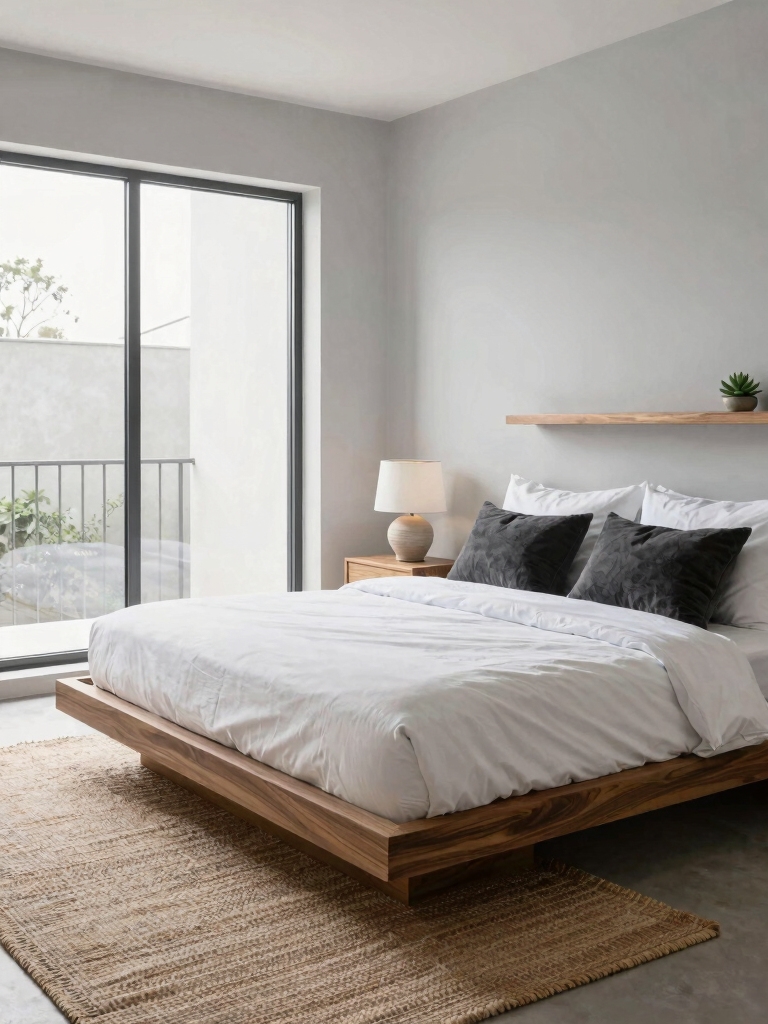
A bare floor leaves a bedroom feeling cold and a little hollow, and the right rug is where I tell people to start: it adds warmth, softness, and an instant sense of luxury underfoot. The most common mistake is going too small, which makes everything around it look cheaper.
Size up boldly: the rug should slide well under the bed and extend a generous step out on three sides, so you land on softness when you wake. If a single large rug is out of budget, layer a smaller soft rug over an inexpensive jute one for the same effect.
In a bedroom, restraint is the real luxury; what you leave out matters as much as what you put in.
Choose Furniture That Looks Polished
A few well-chosen pieces look more expensive than a room full of flat-pack filler, so buy less and choose better. Solid-wood thrifted furniture, even when it needs a little work, almost always reads more high-end than new particleboard.
Look for clean lines, real materials, and good legs, then refresh with paint and new hardware. One quality dresser with upgraded handles does more for the room than three cheap units, and it lasts far longer too.
When you do buy new, put the money into the one piece that gets the most use and skip the matching sets — a collected, slightly mismatched look actually reads more expensive than a showroom suite.
Bring in Greenery and Natural Touches
Plants and natural materials add the collected, slightly imperfect warmth that makes a bedroom feel collected and personal. A single large plant in a corner or one good stem in a vase brings a life to the room that no amount of decor can replicate.
- Choose one larger statement plant for real impact, since small ones get lost
- Add natural texture through a wood tray, a woven basket, or a stone dish
- Keep it sparse, since a few natural touches read luxe while a jungle reads cluttered
Finish With Small High-Impact Details
The last ten percent is what separates a nice room from one that genuinely looks high-end, and most of it is almost free. Crisp details and hidden clutter are the finishing touches that make everything else read as intentional.
- Hide cords, chargers, and clutter so the surfaces stay calm and clean
- Swap dated switch plates and drawer hardware for matte black or brass
- Add one good scent and a small stack of design books for that styled, finished feel
Skip the Things That Read Cheap
Knowing what to avoid matters as much as what to add, because a few cheap-looking habits can quietly undo everything else in the room. The usual culprits are easy to fix once you learn to spot them, and almost none of it costs a thing to change.
- A too-small rug: size up so the bed sits squarely on it
- A single bare overhead bulb: add lamps and a warmer tone so you are not relying on it
- Plastic storage and tangled cords on show — tuck them into baskets and cable clips
- Art and curtains hung too low — lift both higher than feels natural for instant height
Luxe Is a Look You Can Build
An expensive-looking bedroom is far more about how you layer and edit than how much you spend. Texture, a calm palette, warm light, and a little symmetry will carry a room of budget pieces a remarkably long way.
Start with the bed and the lighting, since those shift the whole room fastest, then add the smaller touches as you go, borrowing from our wider bedroom decor ideas as you build. Build it slowly and your bedroom will look like it cost far more than it ever actually did.