
Most small-bedroom advice looks great in a photo and falls apart by Tuesday. A bed you can’t make, a chair that becomes a laundry pile, a desk you stop using by week two. Pretty is easy; what’s hard is a tiny room that still works when you’re living in it at 7 a.m.
So these aesthetic bedroom ideas for small rooms are sorted by what holds up in daily use, beyond what photographs well. We’ll get the layout and zones working first, then tackle the unglamorous wins, storage, cords, lighting, that quietly make or break a small space. Honest costs and trade-offs included.
Quick Answers for a Small Room That Works
What matters most in a tiny bedroom? A layout that protects your daily flow. Get the bed and walking path right and everything else gets easier.
What’s the most overlooked fix? Cord and tech control. Tamed cables do more for a calm small room than another decorative pillow.
How do I make it feel bigger without renovating? Light walls, one large mirror, and zones marked by rugs and light rather than bulky dividers.
Maximize a Tiny Bedroom With a Working Layout
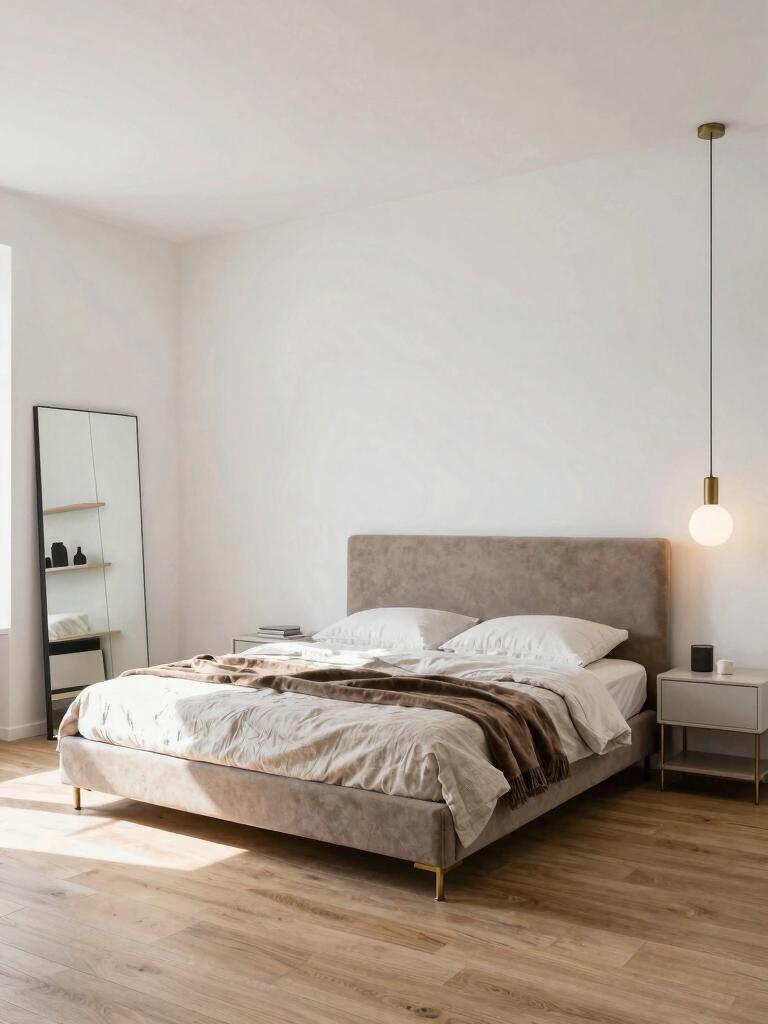
A small room lives or dies on its layout, and the test is simple: can you move through it half-asleep without barking a shin? I tour every tight space watching three things, the door swing, the window reach, and where a bed can sit without blocking the path. Those decide the whole plan before any decor enters the picture.
The Half-Asleep Test
Protect the walking route first. You want a clear lane from the door to the bed to the closet, even if that means letting go of a piece you wanted to keep. A room you can move through feels far bigger than one crammed with things you have to edge around every morning.
Then assign the leftover space to the jobs that matter. Sleep is non-negotiable; after that, pick one or two from dressing, working, or lounging and design only for those. Trying to fit all four into a box room is how people end up with a space that does everything badly. My [bedroom layout ideas for small rooms](bedroom-layout-ideas-for-small-rooms) map out a few working plans.
Plan Wall-Hugging Storage Solutions
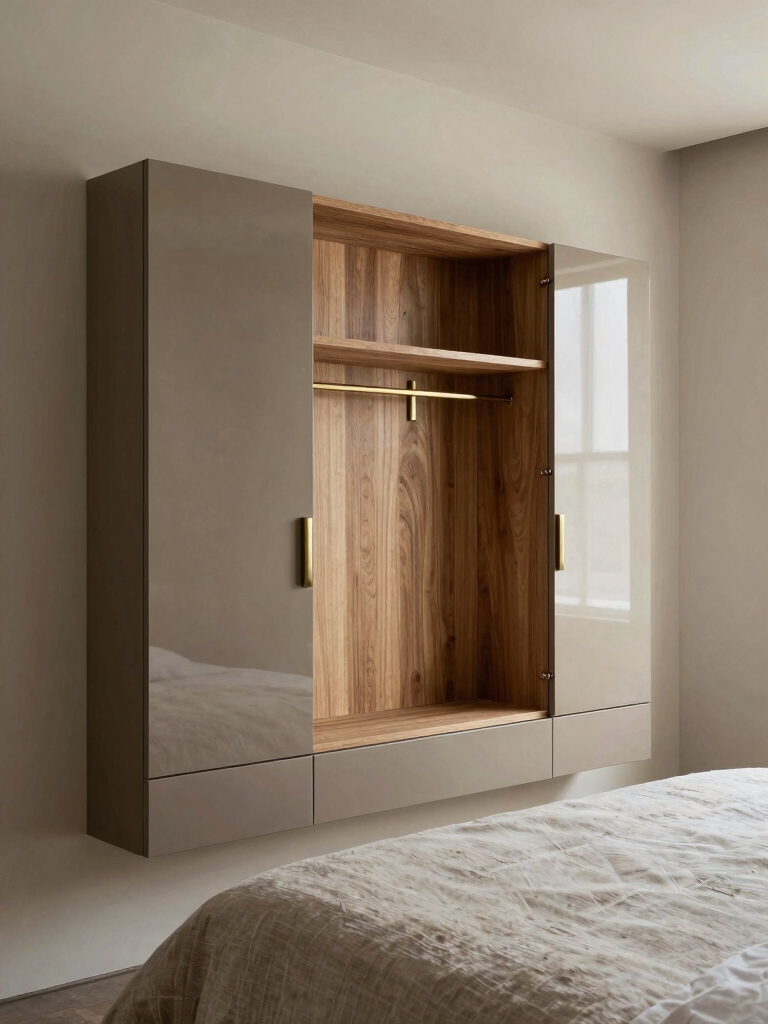
When the floor is spoken for, your walls become the storage you didn’t know you had. The goal is slim and shallow, things that hug the wall and stay out of the traffic lane. Shelves along the bed wall, a narrow cabinet beside the wardrobe, hooks where the door opens: each one adds capacity without stealing a single step of floor.
Plan it before you buy so the pieces line up cleanly. Keep depths shallow (a 6 to 8 inch shelf holds plenty and won’t clip your shoulder), and run storage vertically toward the ceiling where the room has nothing else to do. A slim wall shelf runs $20 to $60, and a set of sturdy hooks costs under $15. For systems that hold, see my [storage ideas that beat clutter](bedroom-storage-ideas-clutter).
- Keep wall storage shallow (6 to 8 inches) so it doesn’t intrude on the walking path.
- Run shelving up toward the ceiling to use the room’s most wasted space.
- Put a hook rail behind the door for bags, robes, and tomorrow’s clothes.
🅰️Storage bed
Best when you need maximum hidden storage and have few other options; the drawers replace a dresser entirely.
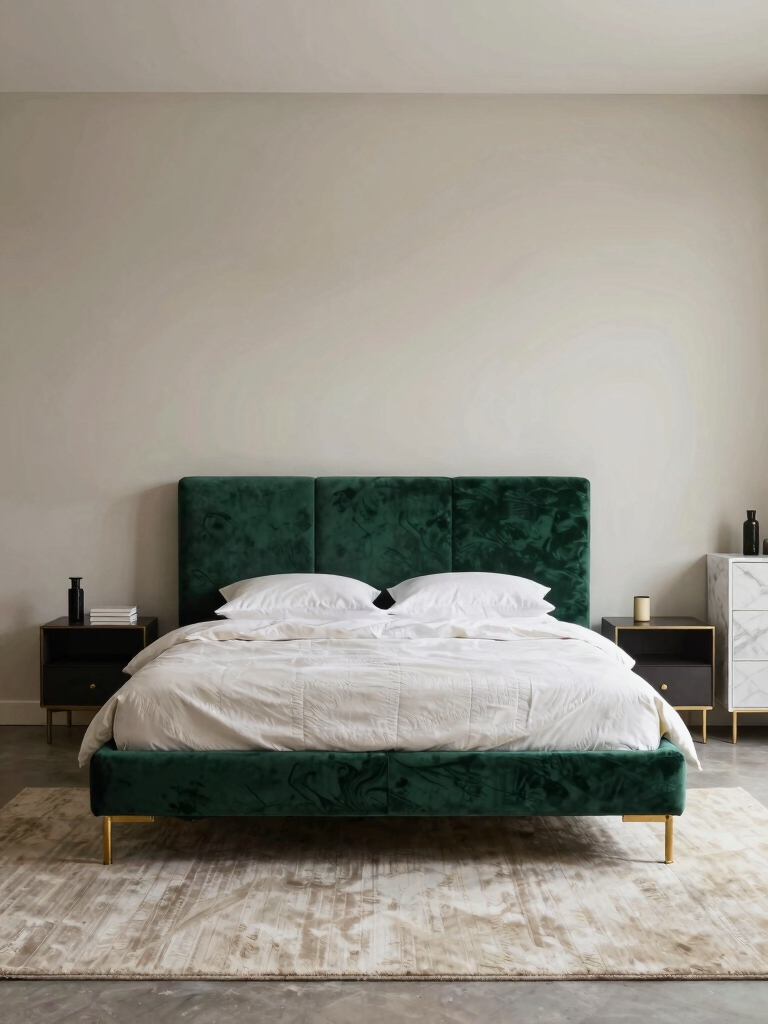
🅱️Bed on legs
Best when you want the room to feel airier; visible floor under the bed reads as more space, with bins sliding underneath.
Pick a Soothing, Light Neutral Palette
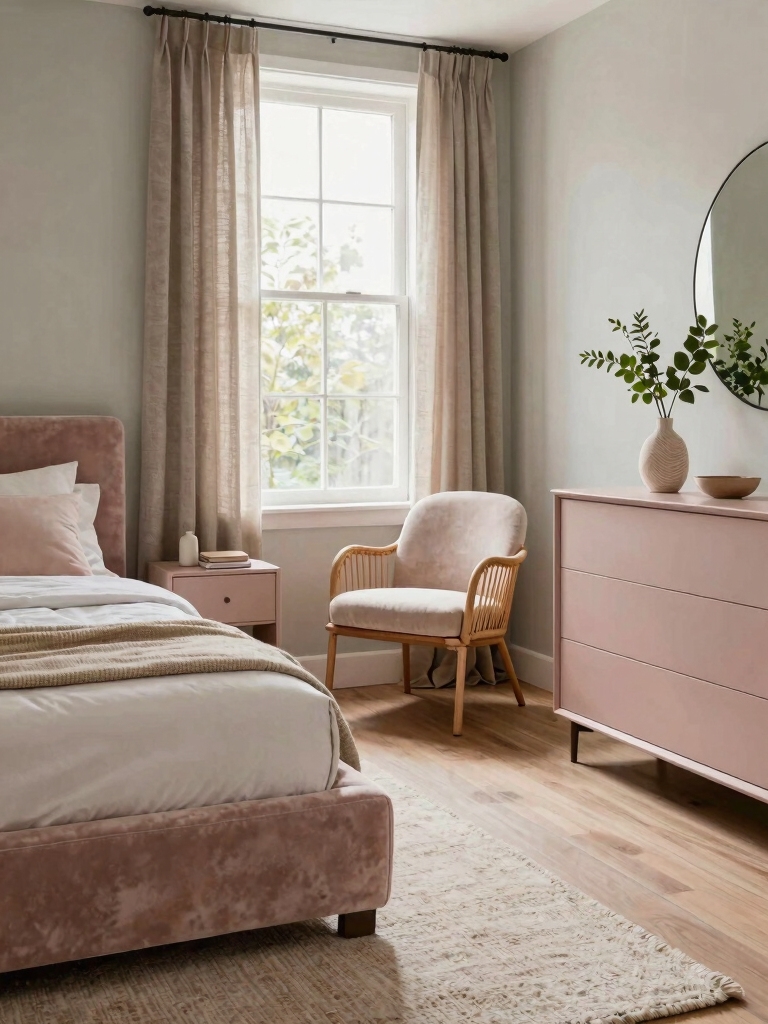
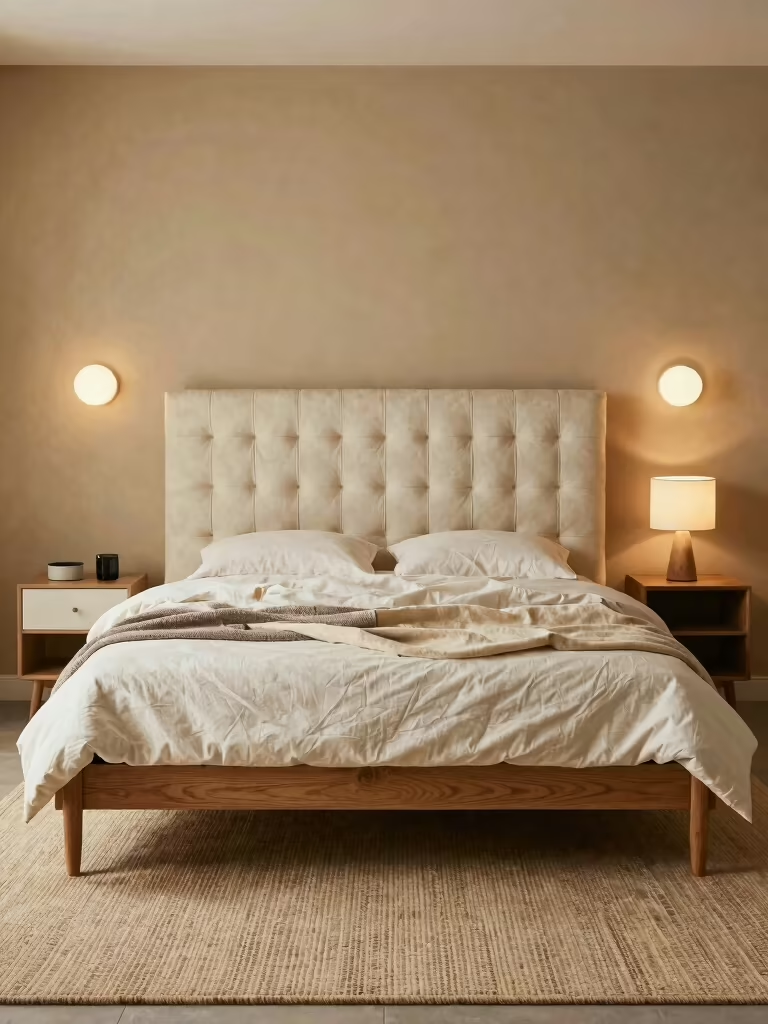
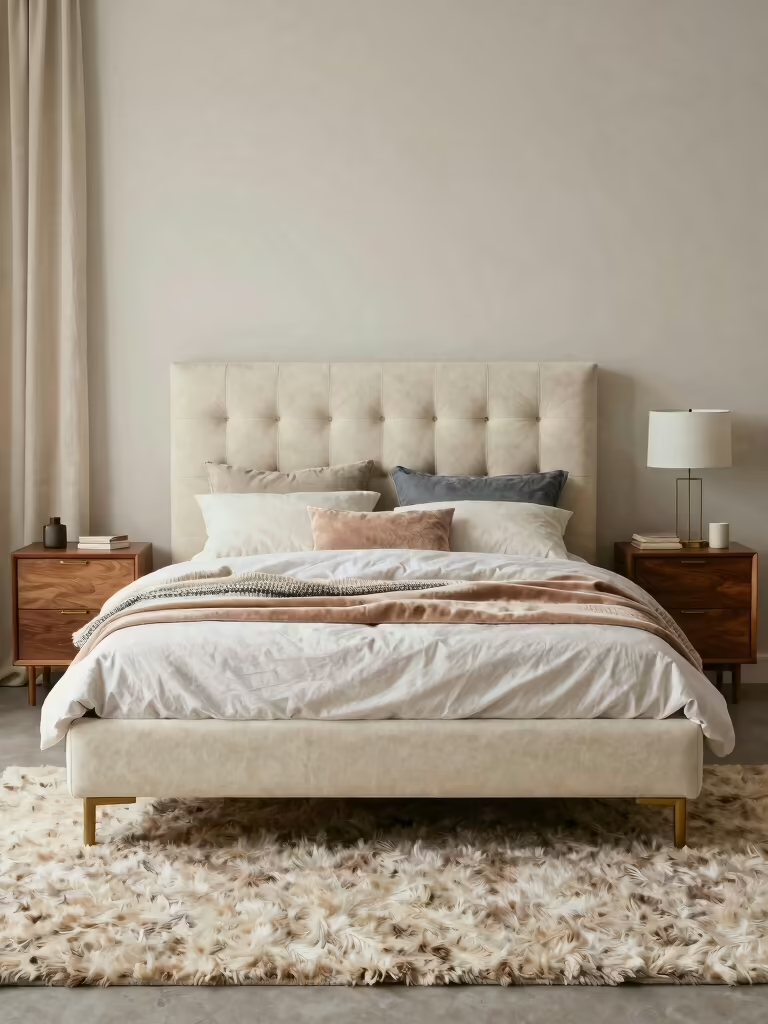
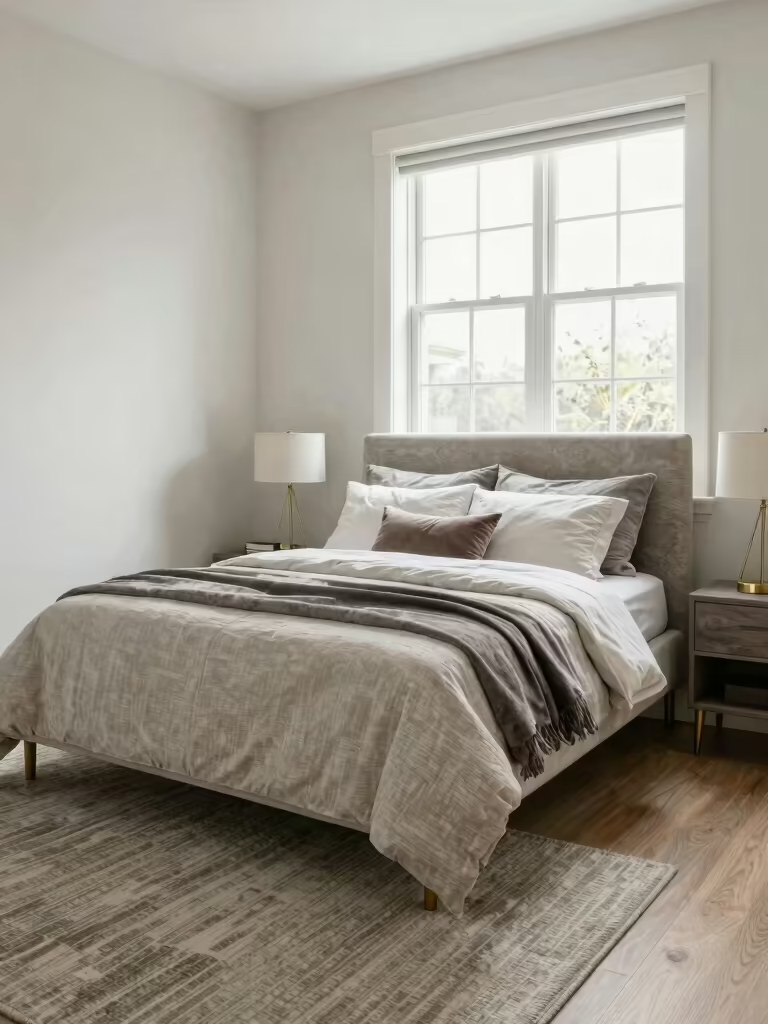
In a small room, color is doing a job beyond looking nice: it’s managing how big the space feels. Light, soft neutrals like warm white, pale greige, and the gentlest oatmeal bounce daylight and let the corners recede, so the walls quietly step back. Keep walls, trim, and curtains in the same light family and the room reads as one calm, open volume.
That doesn’t mean beige and boring. Let texture carry the interest, a waffle throw, a linen curtain, a jute rug, and reserve one soft accent for a single spot. Test two whites with a $6 to $9 sample pot at night, since small rooms often look very different after dark. My [cozy bedroom color palette guide](cozy-bedroom-color-palette-ideas-changing) covers pairings that hold up in low light.
Brightening Solutions for a Small Space
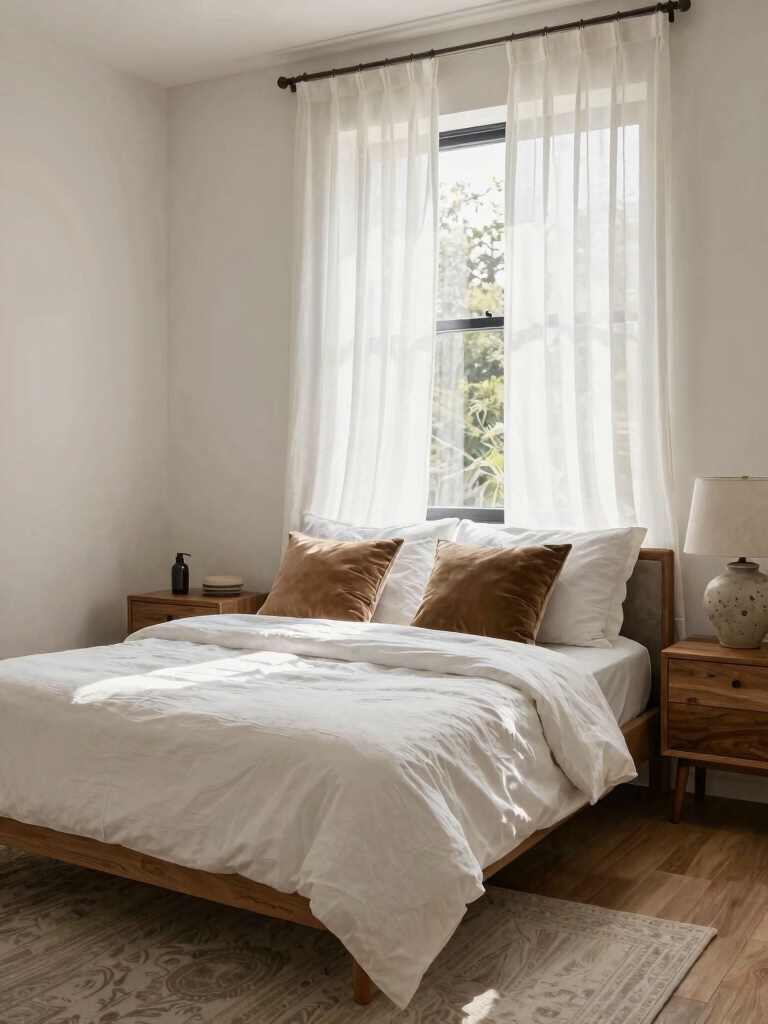
A dim small room always feels smaller, so getting light in is half the battle. Start with the window: hang sheer or light curtains, mount the rod high and wide, and keep bulky furniture away from the glass so daylight can reach the back wall. These cost very little and they change the whole feel of the room the same afternoon you do them.
After dark, work in layers so you’re never stuck with one glaring ceiling bulb. A reading lamp by the bed, a small accent glow on a shelf, and a warm overhead on a dimmer give you a room you can brighten for dressing or soften for winding down.
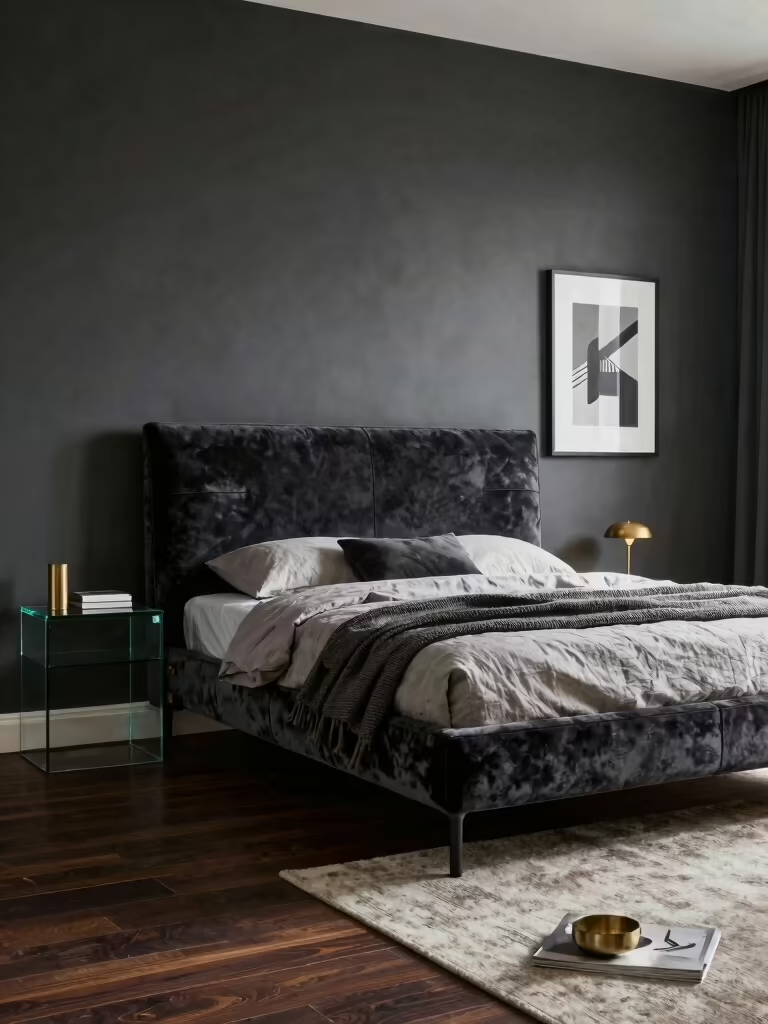
Three small sources beat one bright bulb. Reflective surfaces help too: a glass lamp base or a mirrored tray quietly multiplies whatever light you have. My [bedroom lighting ideas for mood](bedroom-lighting-ideas-mood) go deeper on tight-space setups.
👍Open shelving in a small room
- +Uses vertical space the floor can’t
- +Keeps daily items in easy reach
- +Adds display without a bulky cabinet
👎Watch out for
- –Shows clutter fast, so it needs editing
- –Requires matching baskets to stay calm
- –Collects dust on open ledges
Smart, Space-Saving Furniture Solutions
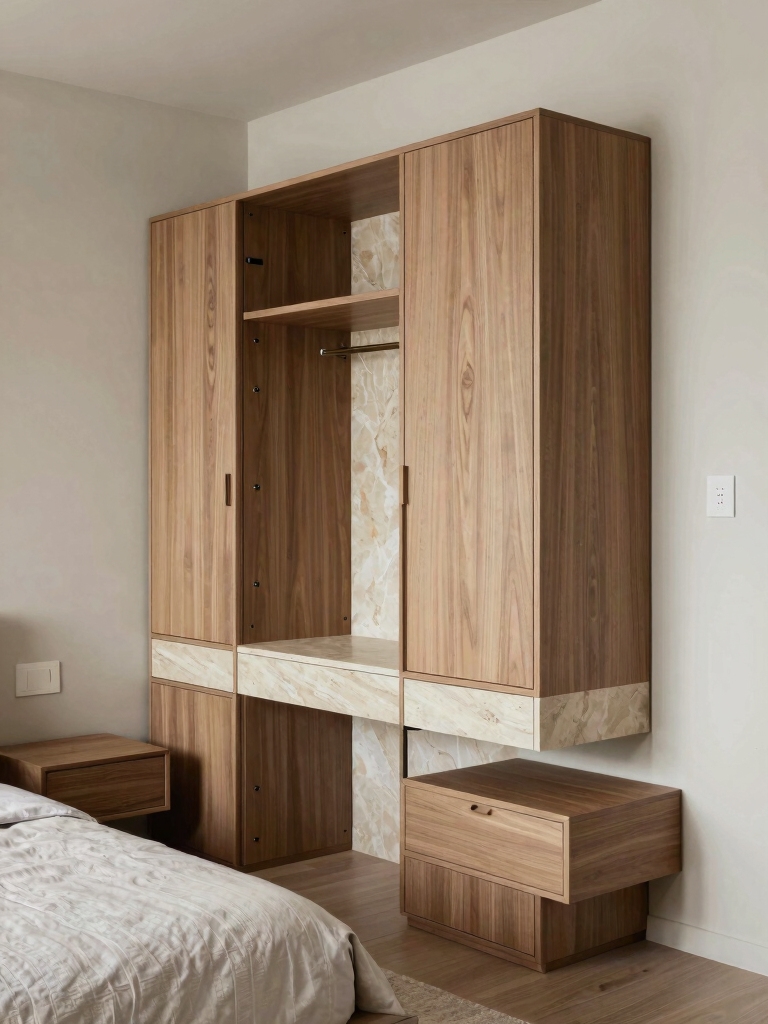
Every piece in a working small room should earn its footprint by doing more than one job. Shop for double duty and visible legs, and you furnish a whole room without filling it. Here’s the order I’d buy in, biggest payoff first.
- A storage bed or platform with drawers ($150 to $400): the single best way to turn dead floor into a dresser.
- A tall, narrow chest over a wide dresser, so you store up instead of out.
- A drop-leaf or wall-mounted desk that folds away when you’re not using it.
- A bench or ottoman that opens for storage and gives you a place to sit and dress.
Zone Sleep, Dressing, and Work Without Walls
The thing that makes a small room actually work is gentle zoning, giving sleep, dressing, and any work their own little territory without a single wall. You cue zones with sightlines and materials instead of dividers.
A small rug and a lamp turn a corner into a dressing spot; a different rug under the bed says this is the sleep zone. The eye reads the change. Suddenly the room feels organized, even though nothing was walled off, because your brain accepts the rug edges and lamp pools as honest boundaries between one purpose and the next.
For a workspace, keep it light and collapsible so it doesn’t swallow the room. A fold-down desk or a slim console that doubles as a nightstand gives you a surface that vanishes when the day’s done. A curtain on a tension rod can hide a wardrobe nook or a desk in seconds, which keeps work out of sight when you’re trying to rest.
Lighting does quiet zoning work too. A focused task light marks the desk, a warm bedside lamp marks the sleep zone, and the contrast between them tells your brain which mode you’re in. It’s a designer trick that costs nothing once the lamps are in place.
Tame Cords and Tech for a Calmer Room
Cords are the clutter nobody photographs and everybody lives with, and in a small room they’re loud. A tangle of chargers behind the nightstand can undo all your careful styling. The fix is cheap and fast: run cables through a few adhesive clips, plug everything into one power strip you can tuck out of sight, and corral the charging pile in a small lidded tray or box (often under $20 for the lot).
Go a step further by giving devices a home. A nightstand with a drawer hides the charging hub entirely, and a single wireless pad on top keeps the surface clear. Label the cords if more than two share a strip, so unplugging the right thing doesn’t become a nightly puzzle. None of this shows in a photo, but you feel it every time the room stays calm.
What to Ask Before You Buy
Small rooms punish impulse buys, so I run every potential purchase through a few quick questions before it comes home. The first is whether it does two jobs. In a tight space, single-use furniture is a luxury, and a piece that stores, seats, or folds away earns its place twice over.
The second is whether it fits the path, not just the wall. Measure the spot and the doorway, and picture walking past it half-asleep. A dresser that technically fits but narrows your walking lane will frustrate you daily, no matter how good the deal was.
The third is whether it can leave easily if it doesn’t work. In a small room, reversible beats permanent. Lean toward freestanding pieces, removable hooks, and tension rods over anything you’d have to patch or unscrew, especially if you rent. That flexibility is what lets a small room keep evolving as your needs change.
Keeping a Small Room Working Over Time
A working small room needs a light, regular tune-up to stay that way, since clutter shows fast where there’s no slack. I do a quick nightly tidy of the one open surface, then a slightly bigger pass each month: empty the catch-all basket, clear the desk, and put back anything that drifted. Ten minutes keeps the whole system honest.
Every few months, question your storage and furniture again. If a bin sits untouched or a piece has quietly become a clutter magnet, swap or rehome it. Small rooms reward this more than large ones, because the moment a piece stops working, you feel the lost space immediately, and reclaiming it is as simple as letting the dead weight go.
Small-Room Questions, Answered
?What actually makes a small bedroom work day to day?
A protected walking path and clear zones. If you can move through the room easily and each area has a job, the space functions well no matter how small it is.
?How do I add storage without a dresser?
Go vertical and under the bed. A shelf above the door, a hook rail behind it, and flat bins beneath the mattress add a closet’s worth of space without taking any floor.
?How do I add a workspace to a tiny bedroom?
Use a fold-down desk or a slim console that doubles as a nightstand, and hide it behind a curtain when you’re done. Keep it light and collapsible so it doesn’t claim permanent floor.
?Is open or closed storage better in a small room?
Closed storage keeps things calmer and hides clutter, while open shelving uses vertical space and keeps items handy. Mix both: closed for the messy stuff, open for a few tidy, good-looking pieces.
Make It Work First, Pretty Follows
A small bedroom that works is one you can move through, tidy in minutes, and actually rest in. Get the layout and zones right, tame the cords, lighten the walls, and choose furniture that pulls double duty, and the pretty part falls into place almost on its own. None of it needs a renovation or a big budget.
Pick the one fix that’s been bugging you most, whether that’s the walking path or the charger pile, and start there tonight.