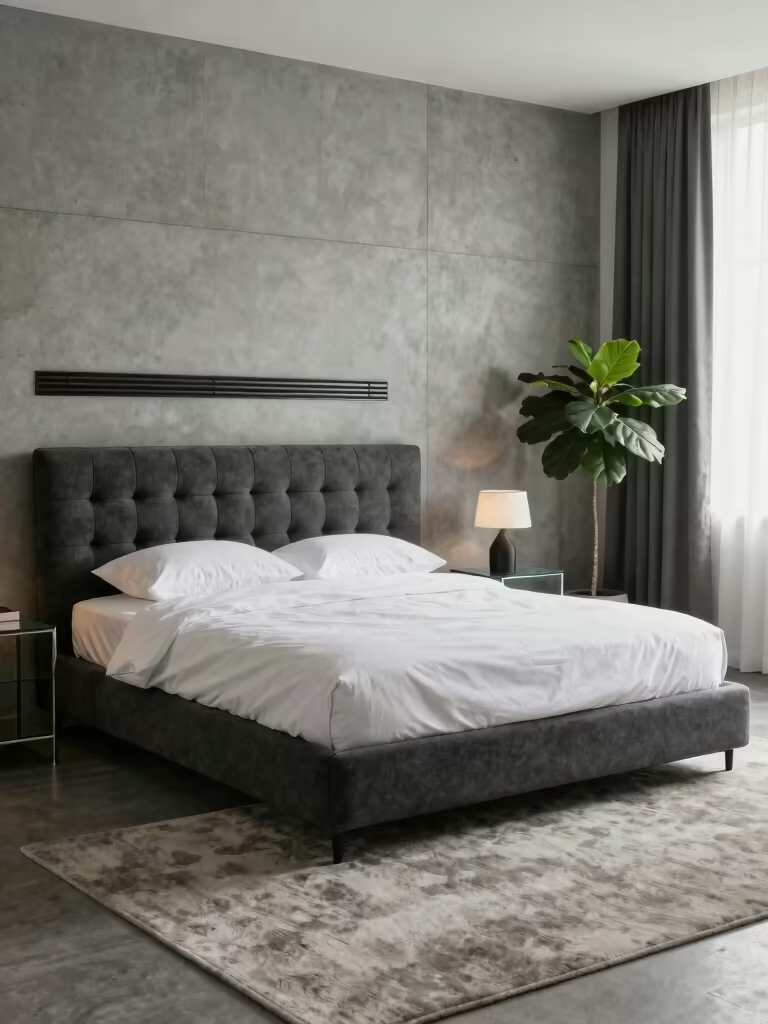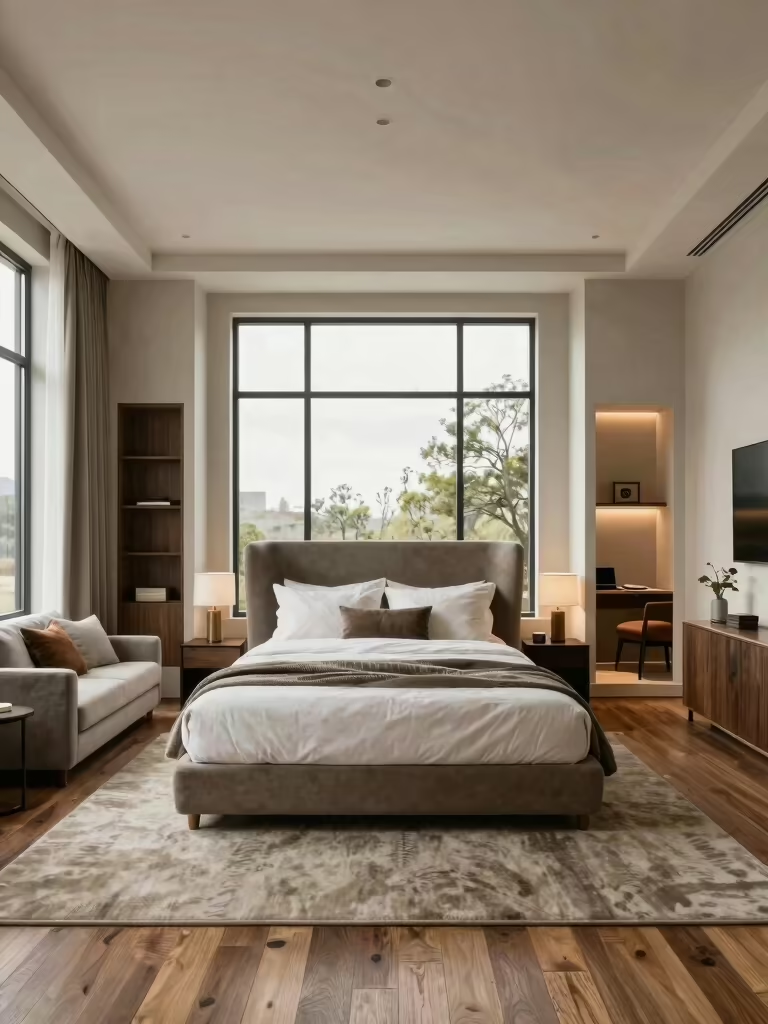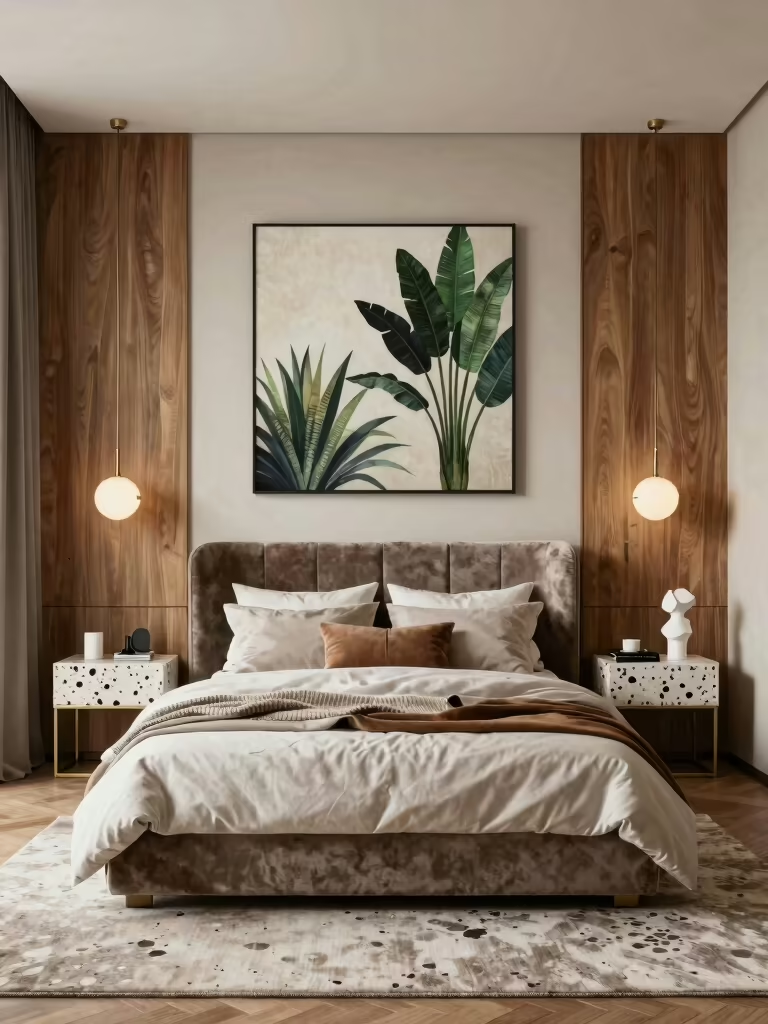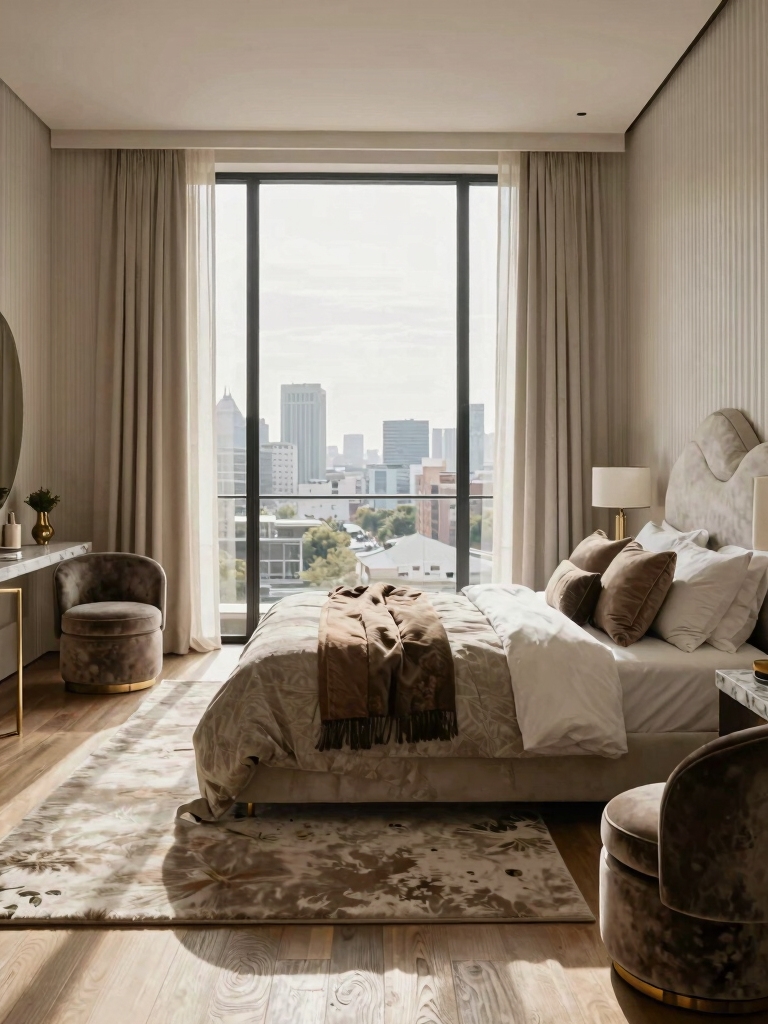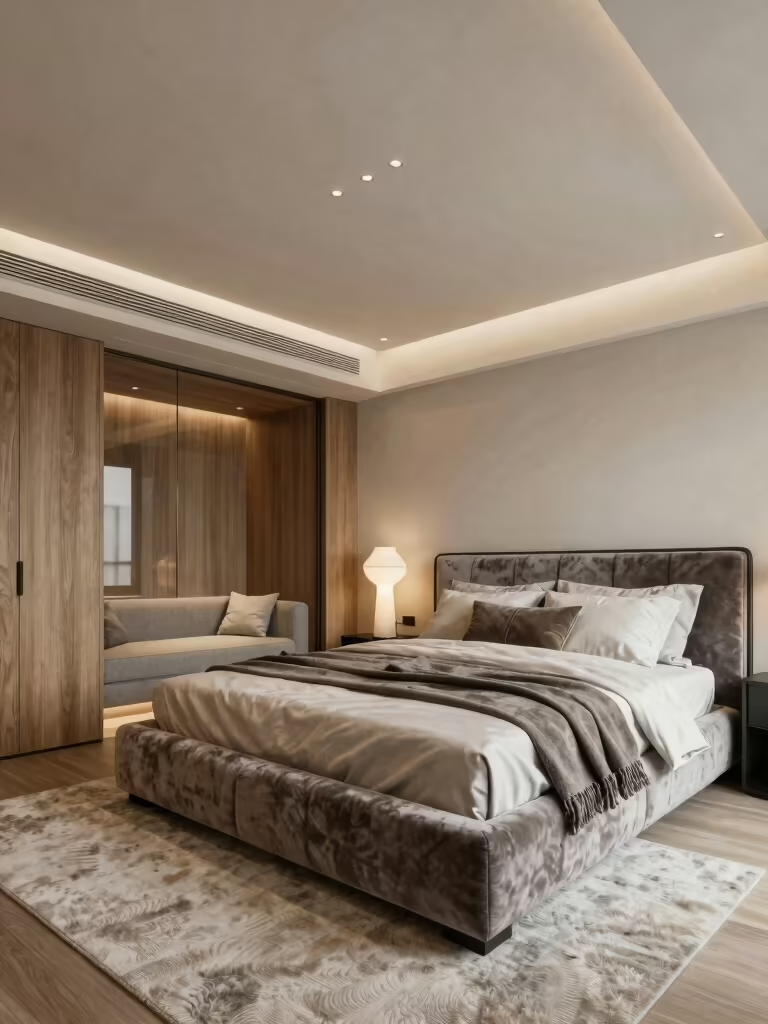

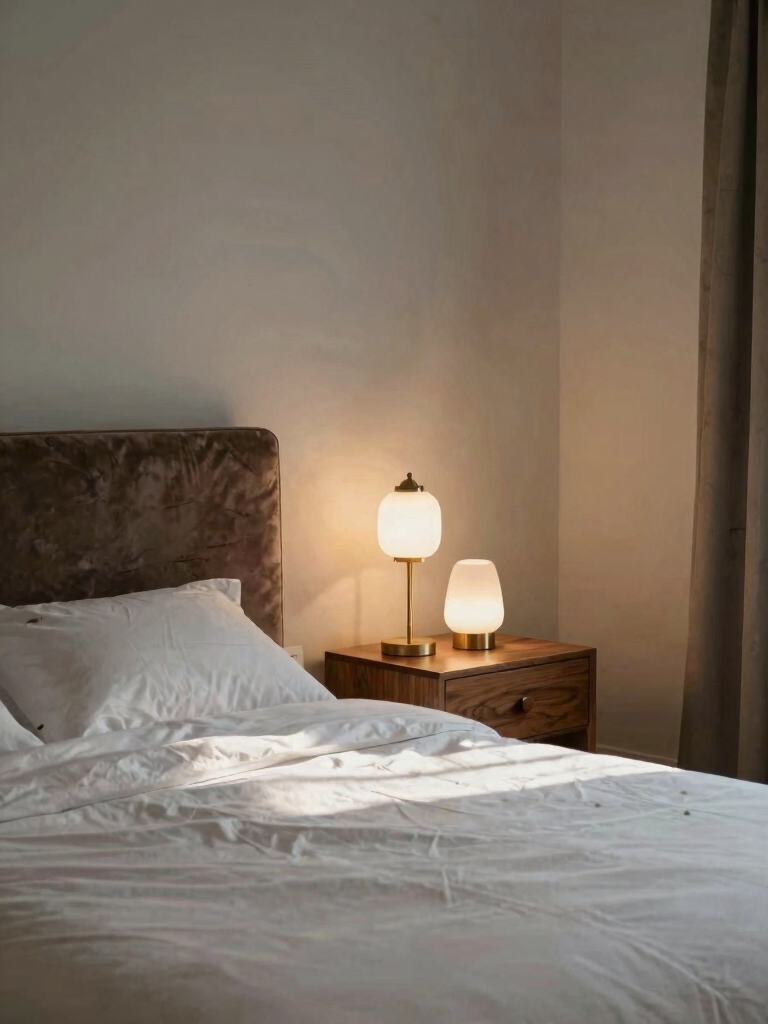
Most people light a bedroom like a kitchen: one bright fixture in the middle of the ceiling, flicked on full. That single choice is why so many bedrooms feel more like an office than a retreat. Mood lighting flips that. You light the room in low, warm pools from around the edges, and the whole feeling of the space changes.
These ideas are about that shift: choosing a mood first, layering soft sources at different heights, keeping the color warm, and putting everything on a dimmer so the room can move from bright to barely-there. None of it requires rewiring; most of it is lamps, bulbs, and a few smart switches. Get it right and a bedroom stops being a place you flip a switch in and becomes one you actually relax in.
The Short Version
Mood lighting comes down to four moves: pick the feeling you want, light the room in low pools from lamps and sconces while the ceiling fixture sits idle, keep every bulb warm at 2700K or lower, and put each source on its own dimmer.
The overhead becomes a backup you rarely use, while bedside lamps, a sconce, and a low accent glow carry the mood. Once those layers are in place and dimmable, a single room can shift from bright and practical in the morning to soft and intimate at night with no more than a few taps.
Design a Mood-Driven Bedroom Lighting Plan
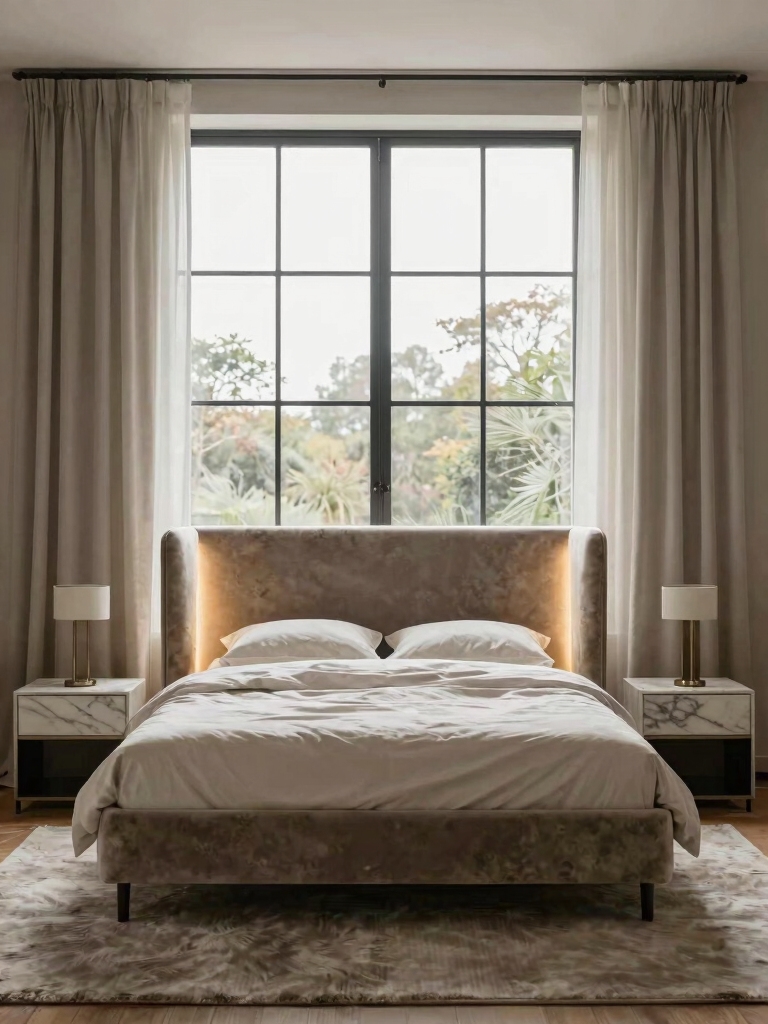
Mood lighting starts with a question, not a fixture: how do you want the room to feel at night? Calm and hushed, warm and romantic, soft and a little glamorous, each mood points to a different set of lights and a different brightness. Name the feeling you want most evenings, and the rest of the plan follows, because every light you add either serves that mood or fights it.
- Name the core mood you want at night, calm, cozy, or romantic, before you buy a single bulb.
- Light the room from several low sources around the edges. Let the overhead rest.
- Judge each light by the mood, and tie the plan to the room with these lighting ideas for the perfect glow.
Cohesive Lighting Balance Strategies
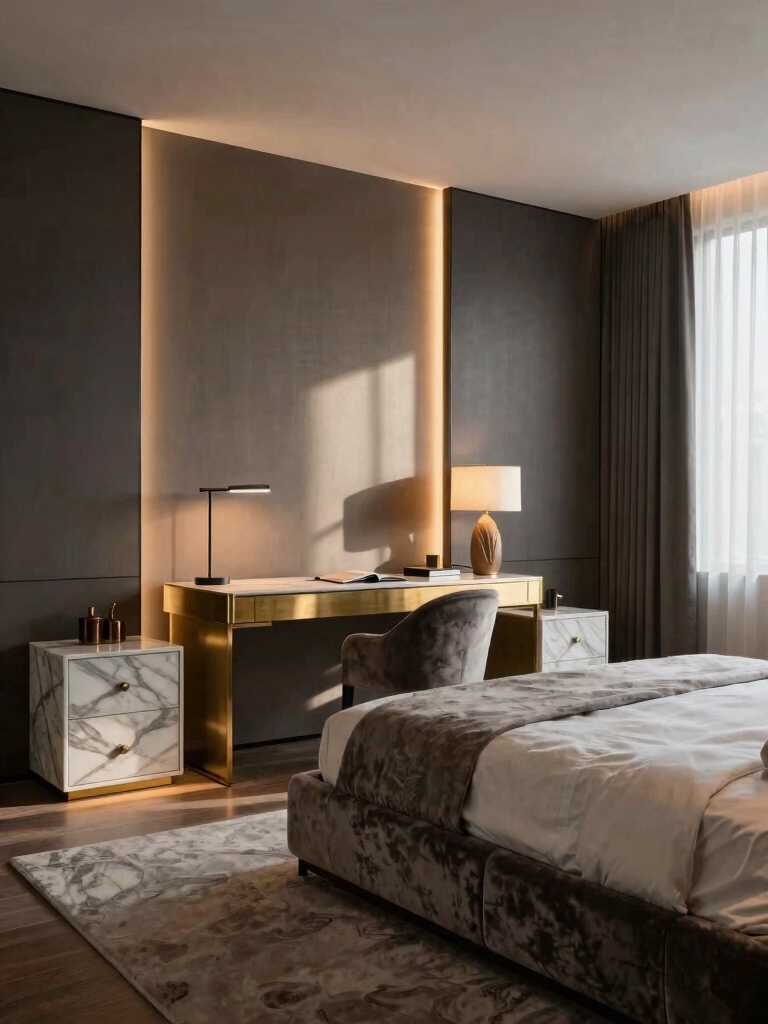
The secret to a room that feels lit, not flooded, is balance: several modest sources at different heights. Spread the light out. A pair of bedside lamps at elbow height, a floor lamp glowing in a corner, a candle or a small accent light low down, together they wrap the room in soft light from all sides. The eye reads that spread of gentle pools as warmth. A single overhead just reads as bright.
Mix the heights on purpose so the light has dimension. Something low, something at the bedside, something washing a wall, and the room gains a depth that flat overhead light flattens out. I tell people to light a bedroom the way you’d light a cozy bar, in pools you move between, and the mood takes care of itself once the sources are low and warm. Lean on these decor ideas worth borrowing to place them.
- Put a lamp on each nightstand so the light starts down at elbow height.
- Add a corner floor lamp or a wall wash to fill the room’s edges with soft light.
- Keep one low accent glow going so a soft floor of light always stays on.
👍Layered low lighting
- +Wraps the room in warm light from several directions
- +Adjustable: dim each pool for the mood you want
- +Flattering, calm, and easy to relax under
👎A single bright overhead
- –Floods the room from one harsh point
- –Stuck at one brightness with no mood control
- –Reads like an office, with flat light and hard shadows
Warm vs Cool Tones for the Right Mood
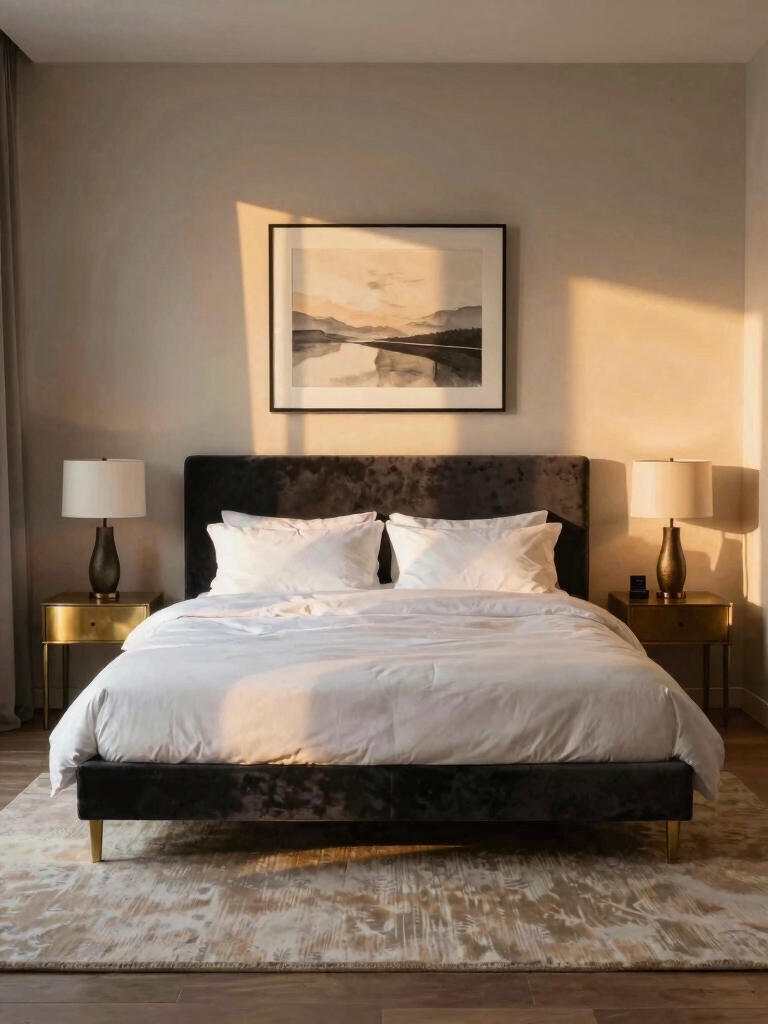
Color temperature does more for mood than almost any other choice, and in a bedroom warm almost always wins. Warm light, around 2700K or even lower, reads cozy, calm, and flattering, the glow of a sunset or a candle. Cool, bluish light reads alert and clinical. Great for a bathroom mirror, harsh in a room you sleep in. The number on the bulb box decides whether your bedroom feels like a spa or a server room.
Go warmer than you think for the evening layers. Bulbs labeled 2700K are the safe default, but dim-to-warm bulbs that drop toward 2200K as you lower them mimic candlelight and make the late-evening room feel even softer. Keep cool light out of the bedroom entirely, or save it for a single getting-ready task light by a mirror, and let everything else glow warm.
- Default every bedroom bulb to warm 2700K for a cozy, flattering base.
- Choose dim-to-warm bulbs that fall toward 2200K when dimmed to fake candlelight at night.
- Reserve any cool light for a single mirror task spot, and keep the rest of the room warm.
Flexible Dimming for Ambiance
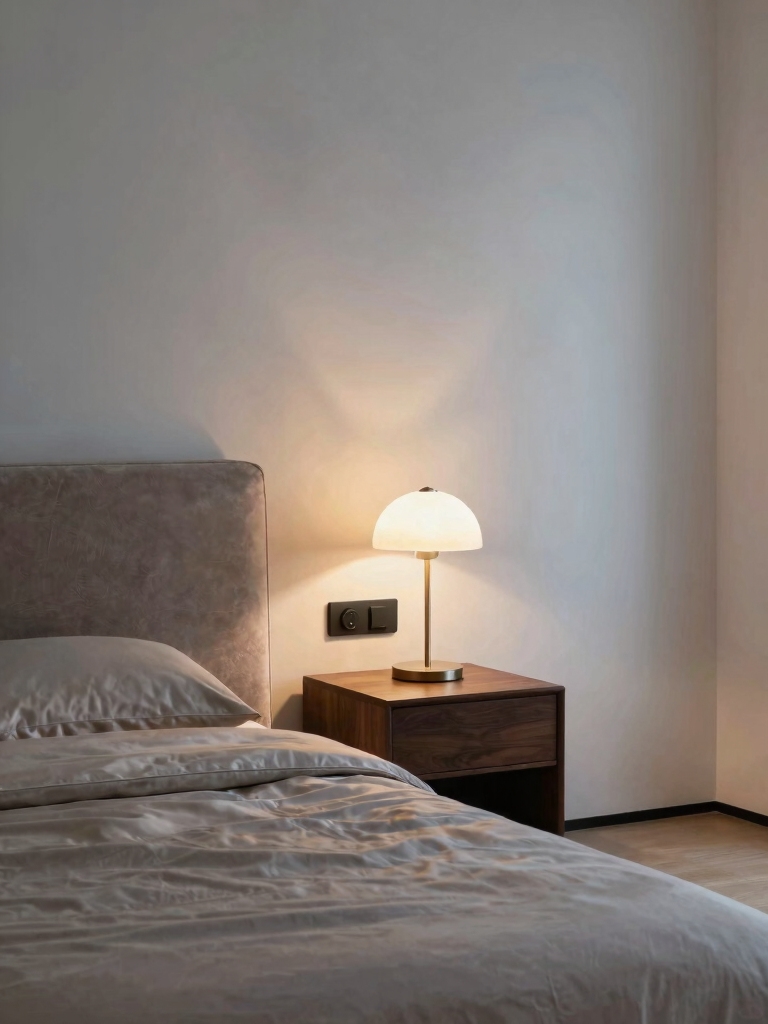
If you do only one thing for mood, make every light dimmable. A fixed brightness locks the room into one feeling. A dimmer lets the same lamp run bright for folding laundry and barely-there for winding down. Dimming is what turns a set of lights into a mood you can adjust, and it costs almost nothing to add.
Put every source on its own dimmer
Reach for the easy versions before rewiring. Smart bulbs, around $10 to $20 each, dim from your phone with no electrician; a plug-in dimmer, $15 to $25, handles a lamp on a standard outlet. Even a cheap dimmer on a bedside lamp transforms the evening, since the last hour before sleep wants light at maybe a quarter of full, far below the blast you’d use at noon.
Then save the settings you use most. A smart system lets you fade the lights up gently in the morning and drop to a low warm glow at night on a schedule, so the room sets its own mood without you reaching for a switch. The aim is fewer decisions and a softer evening, which is exactly what mood lighting is for, and these color palette ideas keep the walls warm enough to help.
| Scene | What’s on | The feel |
|---|---|---|
| Morning | Overhead and lamps, dimmed up | Bright and awake |
| Reading | One bedside lamp, focused and warm | Cozy and focused |
| Wind-down | Lamps and accent glow, low and warm | Soft and calm |
| Romantic | Sconces, candles, no overhead | Intimate and warm |
Space-Saving Romantic Lighting Solutions
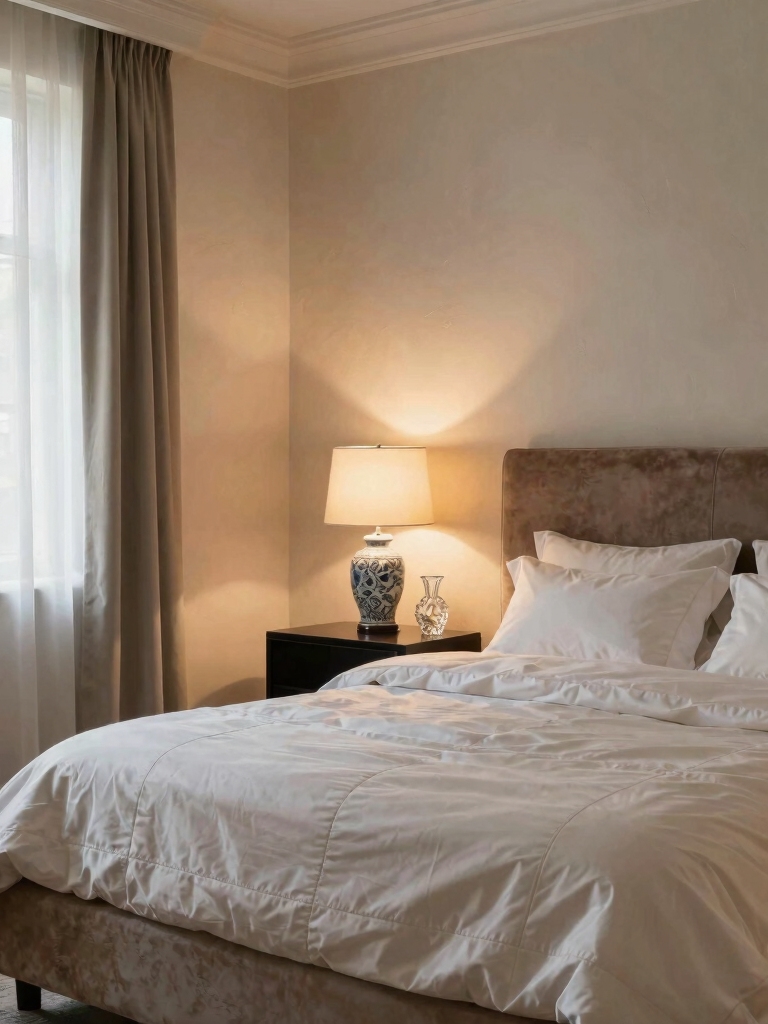
Wall sconces are the quiet hero of a romantic bedroom, because they throw a soft pool of light right where you want it while clearing the nightstand entirely. Mounted just above the bedside, a pair of sconces frames the bed like art and gives each person their own warm reading light, no table lamp eating the surface. Plug-in versions, often $40 to $120 each, skip the wiring and still deliver the look.
Lean into soft, intimate touches that a bright overhead can’t fake. A string of warm fairy lights along a headboard, a pair of LED candles on a dresser, a low lamp with a fabric shade that glows softly, these are the details that give a bedroom a romance a bright ceiling light always misses. The warmer and lower the light, the more intimate the room, which is the whole point of lighting for mood.
- Mount plug-in sconces above the nightstands to free the surface and frame the bed.
- Add a fabric or paper shade so the bulb glows softly and never glares.
- Use warm fairy lights or LED candles for the soft, romantic layer a ceiling light can’t give.
Set the Scene for Sleep, Reading, and Romance
Once the layers are in, mood lighting is really about scenes: a few saved combinations you switch between for what the moment calls for. A reading scene puts a focused warm light on your side and leaves the rest of the room low. A wind-down scene drops everything to a soft amber glow that tells your body the day is ending. A romantic scene kills the overhead entirely and leans on candles, sconces, and the lowest warm pools you have.
Build each scene around the lowest light that still works. The instinct is to add brightness; the better move is to subtract it until the room feels right, then stop. A sleep-friendly bedroom keeps the late-evening light dim and warm so it doesn’t fight your body’s wind-down, and the difference between a room you flip on and a room you set the scene in is the difference between a bedroom and a retreat.
Lamps, Candles, and the Low-Glow Layer
The lights that carry the most mood are rarely the ceiling ones; they’re the lamps and low sources at eye level and below. A table lamp with a warm bulb and a soft shade, often $30 to $80, does more for a room’s feeling than any overhead, because the light lands low, right where you actually live. Two or three of these scattered around a bedroom give you all the light you need most evenings.
Add a truly low layer for the softest nights. A small lamp on the floor behind a chair, a candle on the dresser, a salt lamp or a low plug-in nightlight, anything that glows near the ground makes a room feel calm and grounded after dark. That low-glow layer is the one most people skip, and it’s the one that separates a bedroom that feels merely warm from one that feels truly restful.
Common Mood-Lighting Mistakes to Avoid
A handful of mistakes keep a bedroom stuck in office mode. The biggest is relying on the central overhead, which floods the room from a single harsh point and kills any mood before it starts; treat it as a backup and light from the edges. The second is cool, bluish bulbs, which read clinical no matter how nice the fixtures are, so swap them for warm ones first.
The other two are about control and balance. Skipping dimmers leaves you stuck at one brightness all evening, with no way to soften the room as the night goes on. Lighting from only one source, even a warm one, leaves harsh shadows and a flat feel. Warm bulbs, several low sources, and a dimmer on each, and a bedroom finally does what mood lighting promises: it makes the room feel the way you want to feel in it.
Bedroom Mood Lighting, Answered
?What is the best lighting for a relaxing bedroom?
Several low, warm sources on dimmers, with the overhead kept only as a backup. Bedside lamps, a wall sconce, and a low accent glow at around 2700K wrap the room in soft light you can dim as the evening goes on. The overhead becomes a backup, and the lamps and sconces carry the calm, relaxing mood.
?What color light is best for a bedroom?
Warm light, around 2700K or lower. It reads cozy and flattering, like a sunset or candlelight, and it helps your body wind down at night. Cool, bluish light feels alert and clinical, so keep it out of the bedroom except for a single getting-ready task light by a mirror if you need it.
?How do I make my bedroom feel cozy with lighting?
Light it low and warm from the edges. Add bedside lamps with soft shades, a sconce or two, and a low accent glow, keep every bulb warm, and put them on dimmers so you can drop the brightness at night. Skip the central overhead most evenings and let the lower, warmer sources set the mood.
?Are dimmers worth it in a bedroom?
Absolutely, they’re the single best mood upgrade. A dimmer lets one light run bright for tasks and barely-there for winding down, so the same room shifts feeling through the evening. Smart bulbs ($10 to $20) or a plug-in dimmer ($15 to $25) add the control with no rewiring, and the late-evening room wants the light low anyway.
Set the Mood, Then Live in It
Setting the mood right comes down to a few simple shifts: choose the feeling you want, light the room in low warm pools from several sources, keep every bulb warm, and put each source on a dimmer so you can soften the room as the night goes on. Do that and a bedroom stops feeling like a place you switch on. It becomes a place you settle into, calm and warm and entirely yours after dark.
Save this as your lighting plan and start with the cheapest high-impact move: swap your bedside bulbs to warm and add a dimmer this week. From there, layer in a sconce, a low lamp, or a smart switch whenever you like, and watch how much the right light changes a room you thought you already knew.