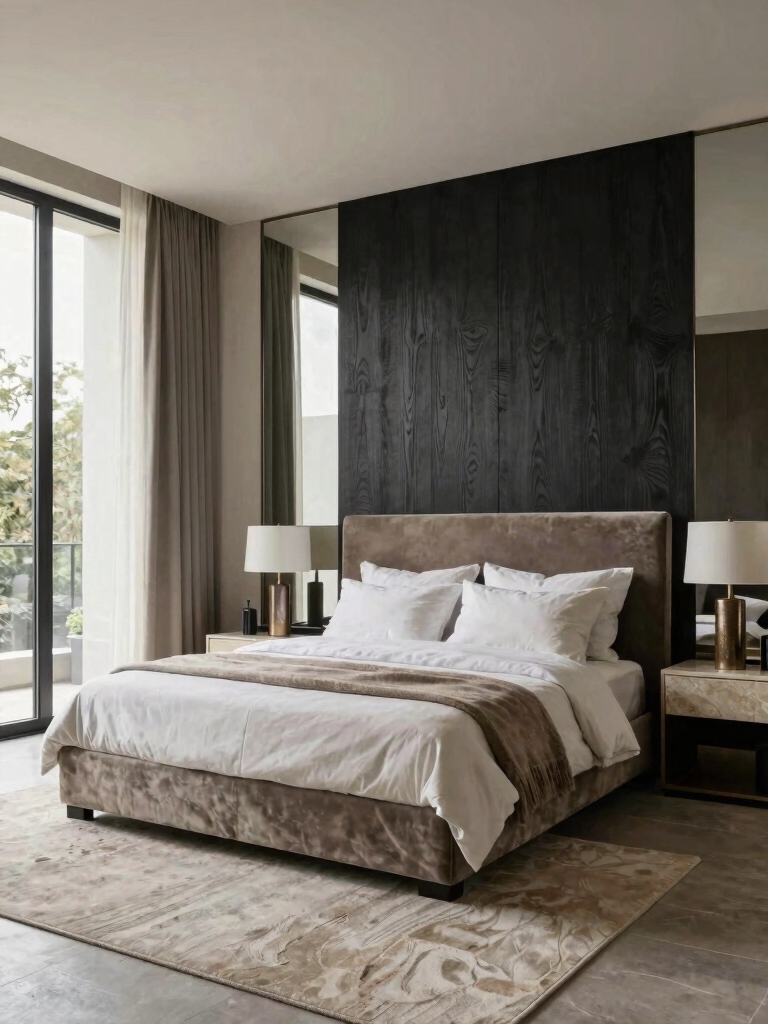

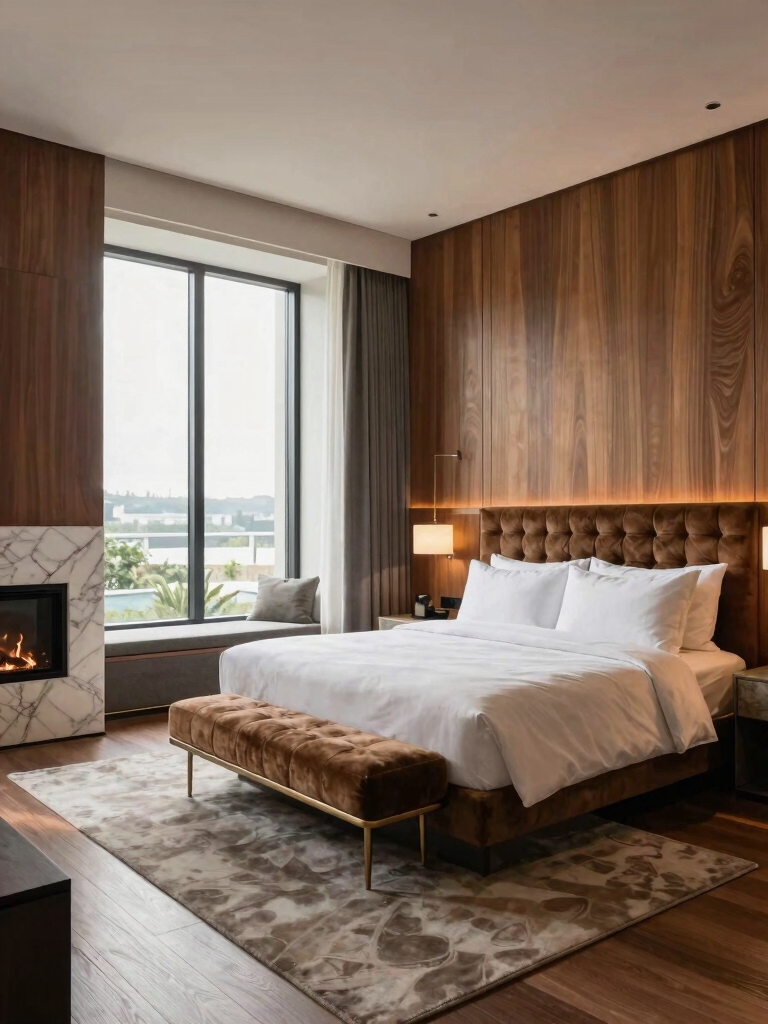
Most bedroom makeovers stall because people start with the shopping instead of the thinking. They buy a pretty rug, then a lamp that doesn’t go with it, and end up with a room full of nice things that don’t add up. The bedrooms that actually transform start the other way around: with one clear decision that every other choice answers to.
These bedroom interior design ideas hang on a simple framework. Name the vibe you want, then let the color, the light, the storage, and the furniture all serve it. Do that and a room stops being a pile of purchases and becomes a place with a point of view, which is the real change, and it costs nothing but a little upfront clarity.
Key Takeaways
- Start with the vibe, not the shopping: name the feeling you want, and every other choice gets easier.
- Let one direction run through color, light, storage, and furniture so the room feels cohesive, not random.
- Layer warm, dimmable light and hide the clutter; both do more for a room than new furniture.
- Make pieces work double duty in a small room, so function never costs you the look.
Define Your Bedroom Vibe First
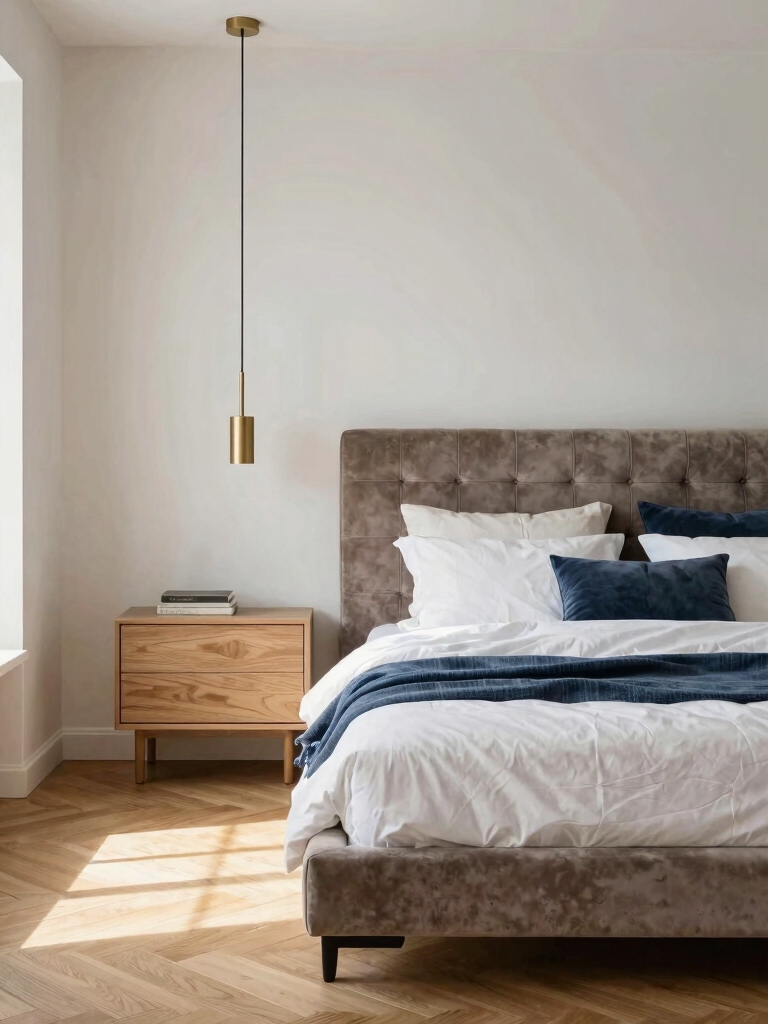
The single most useful design move costs nothing: decide how you want the room to feel before you choose a single thing. Name the core mood, calm, energizing, romantic, moody, minimal, then it becomes the filter every later decision passes through.
A room with one clear vibe always looks more designed than one chasing five trends at once. Pick a feeling. Commit to it. That single act of committing is what separates a room that reads intentional from one that reads like a series of unrelated impulse buys.
Make it concrete so it’s actually useful. Pick the core feeling, then list three adjectives that fit it, soft, warm, layered, say, or sharp, dark, minimal, and judge every purchase against them. If a piece doesn’t serve the three words, it doesn’t go in the room. That one rule is what keeps a makeover coherent, the same discipline these layout ideas bring to the floor plan.
- Name the core mood in one word, then three adjectives that describe it.
- Run every color, piece, and accent past those three words before you buy.
- Cut anything that doesn’t fit, since a coherent room beats a roomful of nice, unrelated things.
Choose a Color Palette That Shifts the Mood
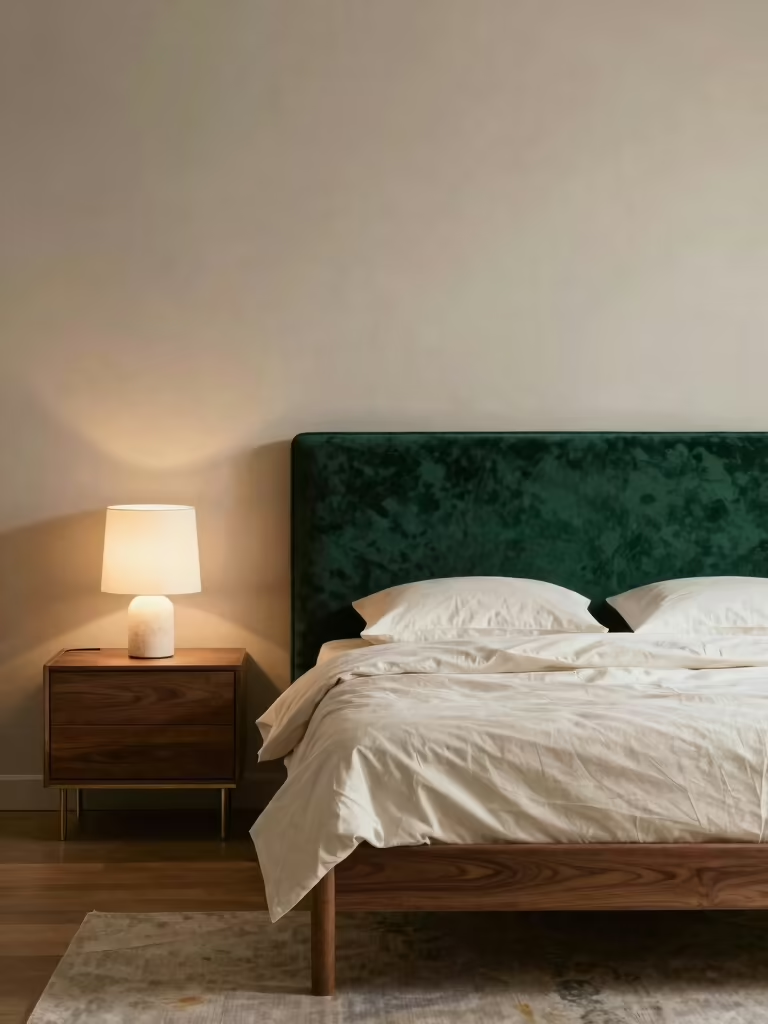
Color does more to change a room’s mood than anything else, and it’s the cheapest lever you have. Once you know the vibe, the palette almost picks itself: calm wants soft, low-contrast neutrals; cozy wants warm, deeper tones; bold wants a strong color with restraint around it. Pick a base and one or two supporting tones and the whole room suddenly reads intentional rather than accidental.
Keep the contrast in line with the feeling you named. Low contrast soothes; high contrast energizes, so match it to the mood you actually want in the room. A gallon of paint is about $50 and transforms a room in a weekend, the fastest change per dollar there is, and these color palette ideas help you land the combination.
- Pull the palette from your vibe: soft neutrals for calm, warm tones for cozy, a bold base for drama.
- Stick to a base and one or two supports so the scheme feels collected, not busy.
- Match the contrast to the mood, low for restful, higher for energizing, and test swatches on the wall.
🅰️Calm and minimal
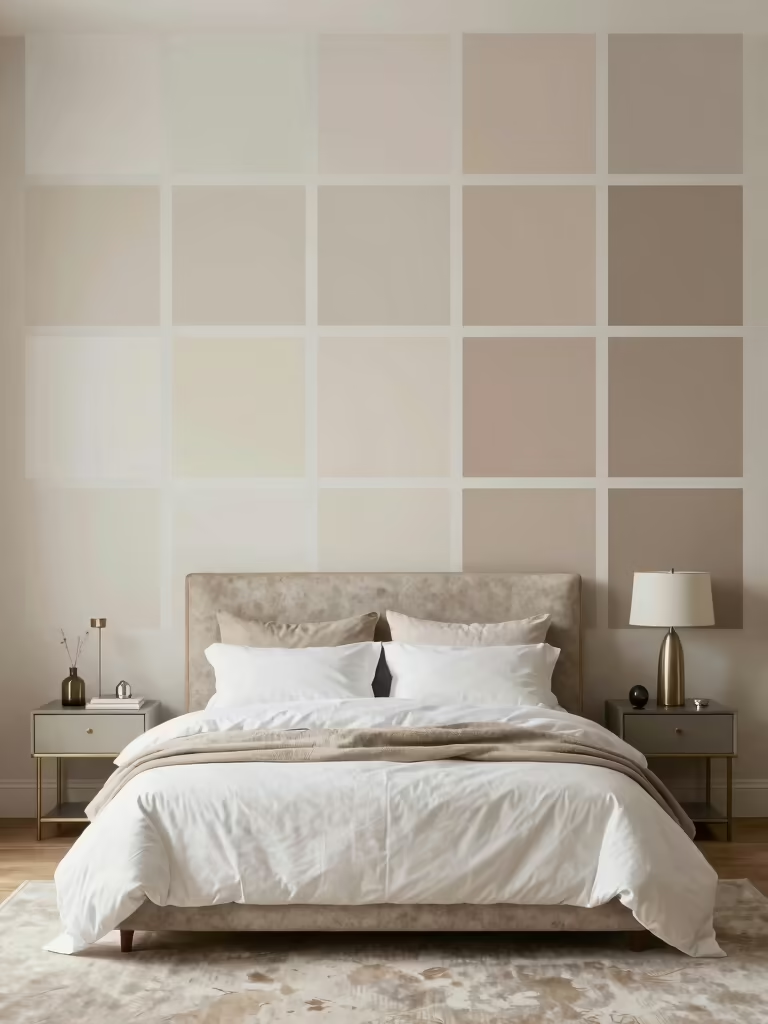
Best if you want the bedroom to feel restful and uncluttered; lean on soft neutrals, low contrast, and very few, well-chosen pieces.
🅱️Warm and layered
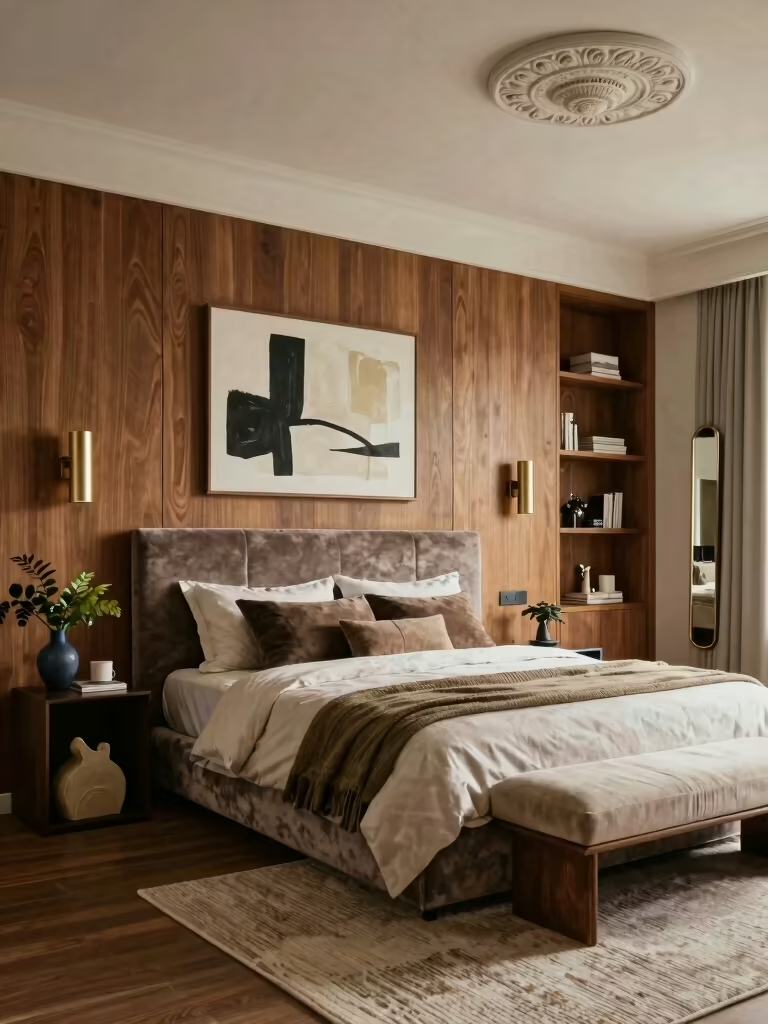
Best if you want cozy and collected; lean on deeper warm tones, lots of texture, wood, and a few personal, characterful objects.
Layer Lighting for Mood and Function
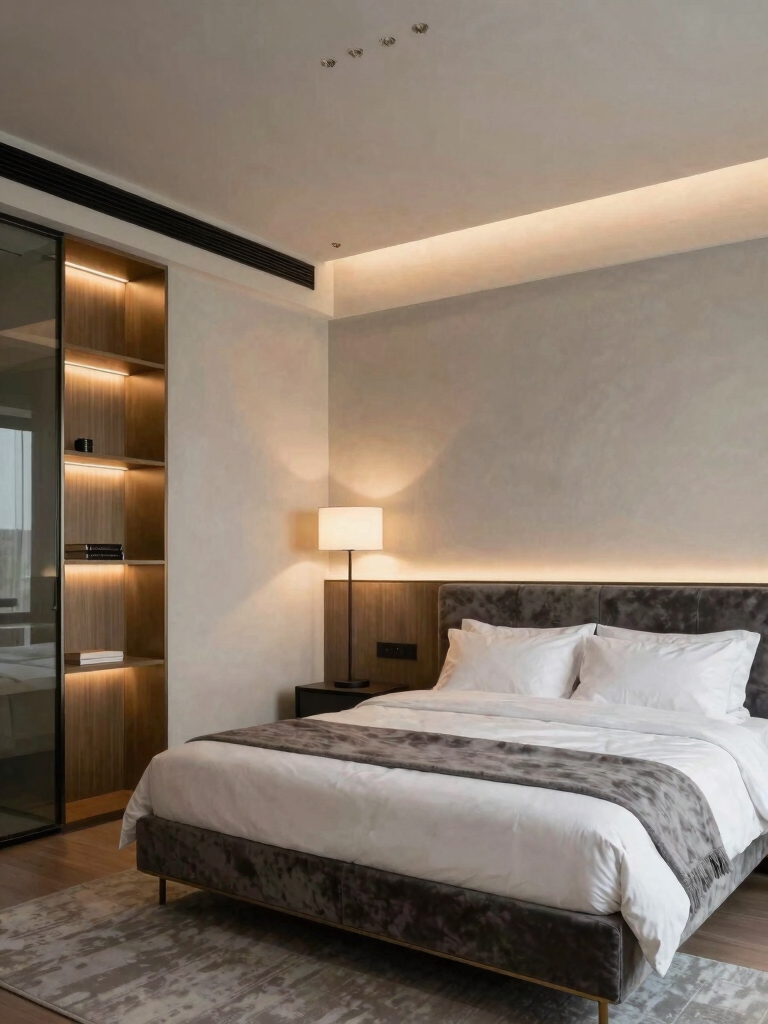
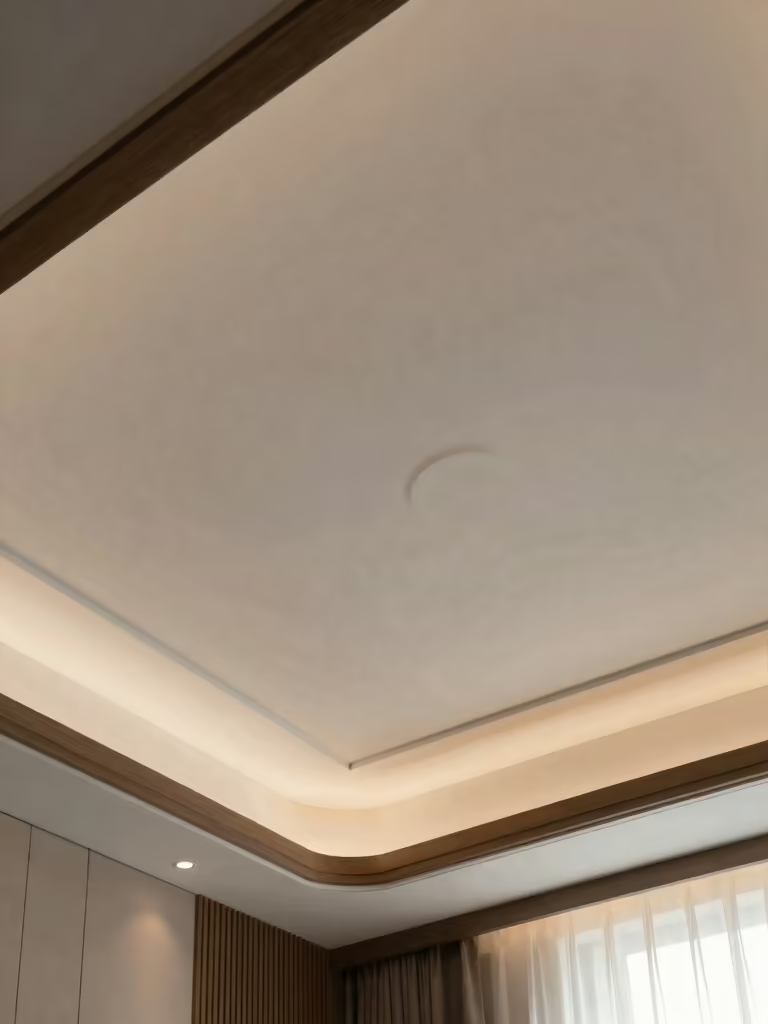
If one change quietly transforms more bedrooms than any other, it’s the lighting. A single bright overhead makes a room feel like an office, and swapping it for a few warm, layered sources is the fastest way to make the same space feel calm and finished. Light is the cheapest, highest-impact upgrade in the room.
Three layers, all warm and dimmable
Build three layers you control separately: an ambient overhead on a dimmer, bedside lamps or sconces for task, and a low accent glow for mood. Keep every bulb warm, around 2700K, so the whole room stays inviting, and put the key lights on dimmers, a few dollars each, so one room shifts from bright in the morning to soft at night.
In a small room, lighting does double duty by adding the depth that square footage can’t. Wall sconces clear the nightstands, a mirror bounces the light deeper into the room, and a low glow makes a tight space feel larger after dark. These lighting ideas for mood walk through building the layers.
Smart Storage That Hides the Clutter
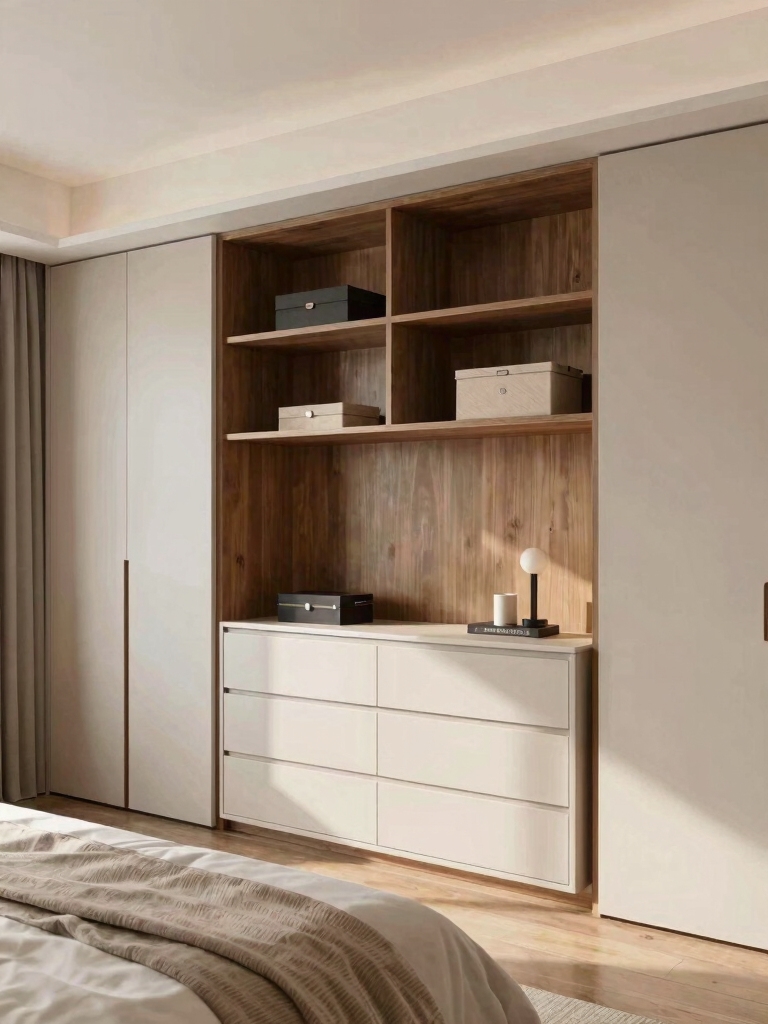
No design survives clutter, so the storage has to do the quiet work of keeping surfaces clear. Clutter undoes everything else. The principle is simple: give everything a home that’s out of sight, and the room reads calm because there’s nothing visual to trip on.
A made bed and clear nightstands do most of the heavy lifting once the stuff has somewhere to go, which is why I treat storage as part of the design, not an afterthought you bolt on once the pretty pieces are already in.
- Build storage into the big pieces: a bed with drawers, a bench that opens, a closed nightstand.
- Use the wasted spots, under the bed, the back of the door, the wall above eye level.
- Favor closed fronts over open shelves so the daily clutter stays out of sight.
- Keep one tray for the everyday overflow, and tuck the rest away with these storage ideas for hiding clutter.
| Change | Rough cost | Impact |
|---|---|---|
| Declutter and rearrange | Free | Often the single biggest shift |
| Warm bulbs and a dimmer | Under $30 | Transforms the whole mood at night |
| A fresh wall color | About $50 | Resets the room’s entire feeling |
| A storage bed | $300 to $700 | Clears the floor and adds real storage |
Multifunction Furniture for Small Bedrooms
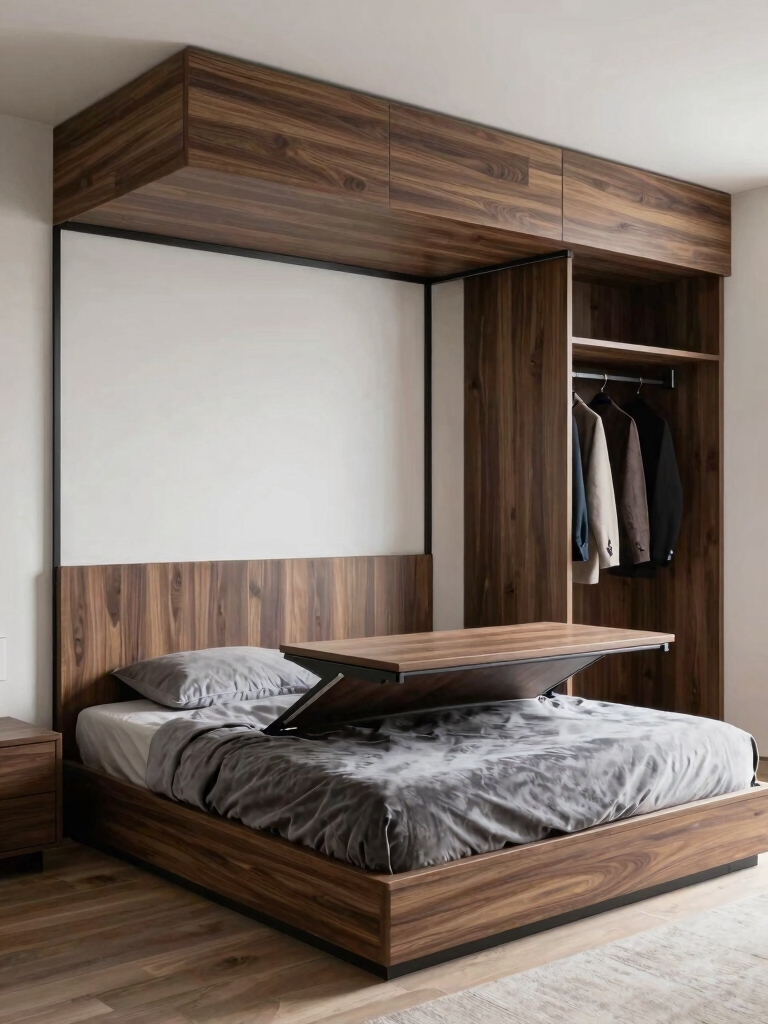
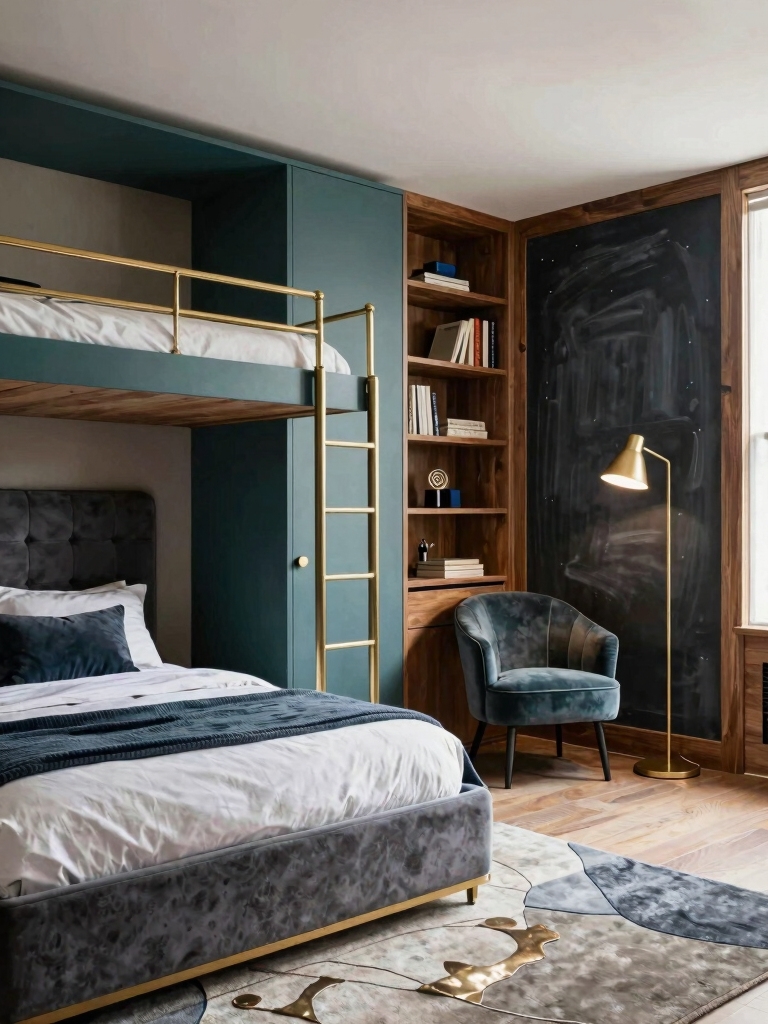
In a tight bedroom, every piece should do more than one job, which is how you get function without crowding. A bed with built-in drawers stores what a dresser would, a storage ottoman is a seat and a hideaway, and a fold-down wall desk gives you a workspace that disappears after hours. The right double-duty pieces keep a small room open and flexible.
Double duty without losing the look
Buy for everyday use, not the showroom demo. Test the boring version. A well-made storage bench you actually like to sit on does its second job for years, while a flimsy convertible that needs a two-step routine just to use gets abandoned by week two.
Quality double-duty beats gimmicky every time, and it usually works out cheaper too, since you buy one good piece instead of replacing a cheap one every couple of seasons when it wears out or stops folding the way it should.
Match the multifunction pieces to your vibe so they still look the part. A clean-lined storage bed reads modern; a tufted ottoman reads soft and classic, so the piece can save space and serve the look at once. A few of these decor ideas worth borrowing keep them feeling styled, not just practical.
The Mistake That Stalls Most Makeovers
After helping with a lot of these, I see the same trap over and over. People skip the vibe step. They jump straight to buying, a rug here, a lamp there, each piece individually nice, and end up with a room that never quite comes together because nothing was chosen against a plan. Name the feeling first and that whole problem disappears.
The second stall is doing too much at once and finishing nothing. I tell people to work in order, vibe, then color and light, then storage, then the personal layer, and to finish each stage before starting the next. A room transformed one clear step at a time beats a half-done overhaul of everything. The change comes from the sequence as much as from the ideas themselves.
Add Personal Touches That Finish the Story
Once the bones are right, the personal layer is what turns a well-designed room into yours. A few meaningful objects, a piece of art you love, a stack of real books, a photo that matters, give the room a soul that a catalog never could. The trick is to edit: a handful of things you care about, with space around them, beats a shelf crammed with filler.
Tie the personal pieces to the vibe you named so they feel intentional. If the room is calm and warm, a worn leather tray and a ceramic lamp belong; if it’s sharp and modern, one bold art piece does more than a dozen small ones. Keep the personal layer as edited as everything else, and the room feels collected and unmistakably yours rather than staged.
Budget Tweaks That Change a Room Fast
The biggest changes rarely cost the most, which is the good news if you’re working with a tight budget. I tell people to spend their first dollars on the highest-impact, lowest-cost moves: paint, light, and textiles.
A fresh wall color, warm bulbs and a dimmer, and a few new cushions and a throw transform a room for under a hundred dollars, no new furniture required, and they hit every one of the senses that actually register when you walk in: the color you see, the light you feel, the texture you touch.
Then let editing do the rest for free. Clearing the clutter, rearranging what you own, and pulling the bed off a cramped corner cost nothing and often change a room more than a purchase would. Start with the free and cheap moves, see how far they take you, and you may find the room is most of the way there before you’ve spent on anything big. These paint ideas to refresh a room are a good first dollar.
Decide the Feeling, Then Build It
The bedroom ideas that actually change everything aren’t single products; they’re a way of working. Name the vibe first, then let the color, the light, the storage, and the furniture all answer to it, and a scattered room turns into a cohesive, intentional retreat. The clarity up front is what makes every later choice both easier and cheaper.
Start by naming the feeling you want to wake up to, then make the cheapest high-impact move, paint or light, in that direction this weekend. Design the room around one clear idea, and the change is bigger than any single thing you could buy.