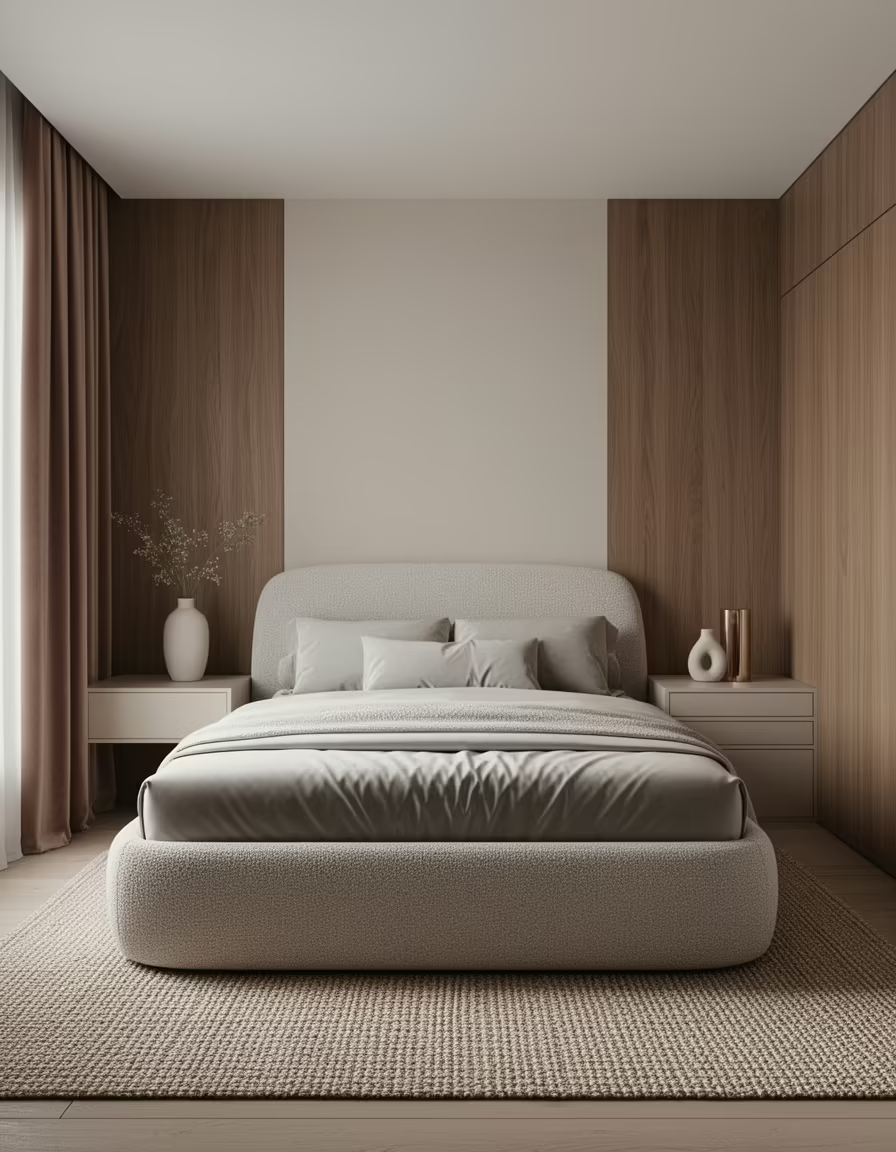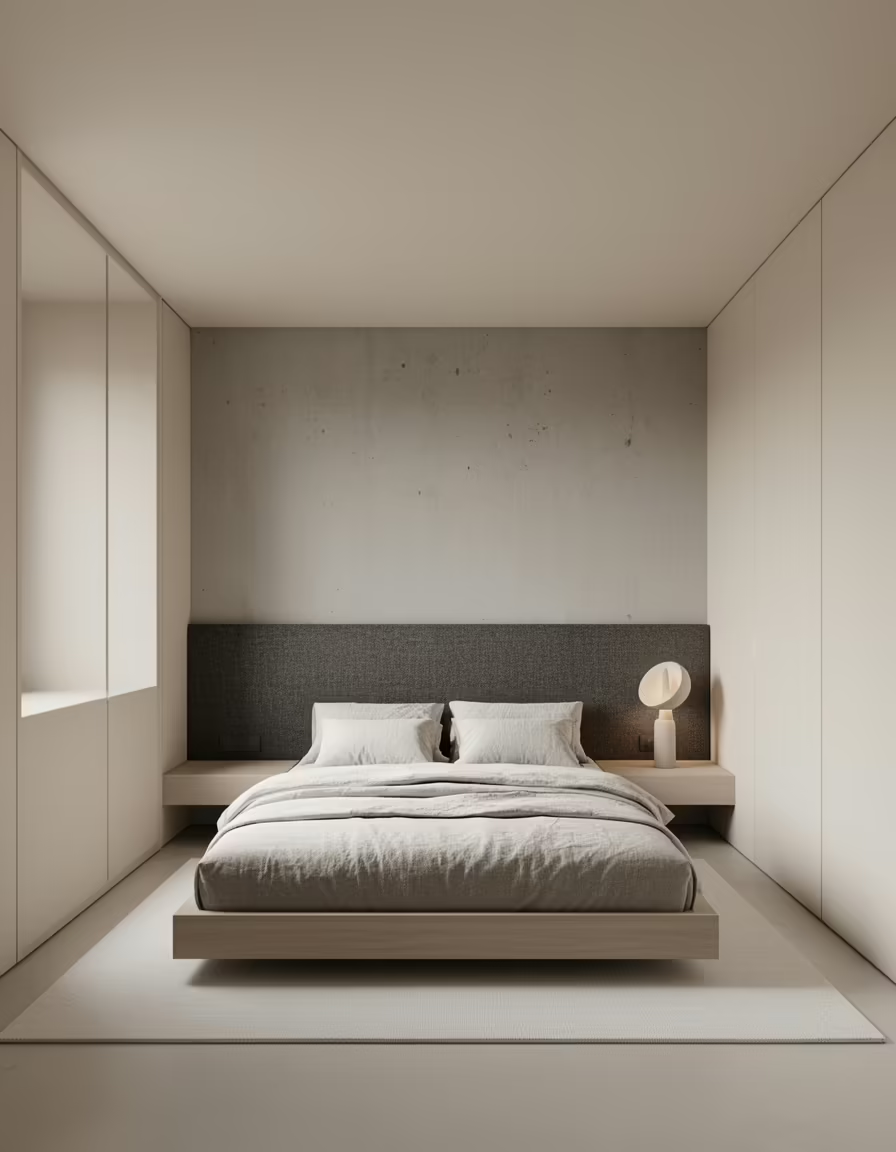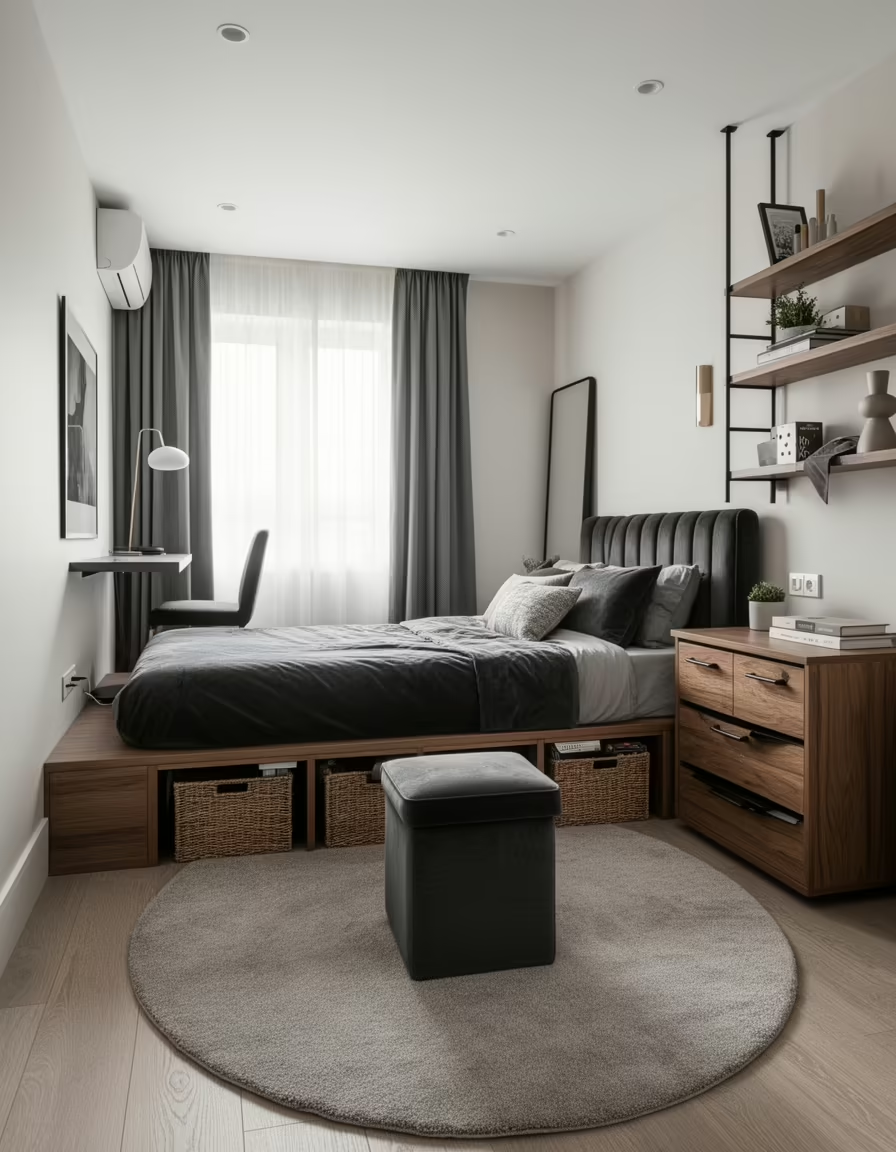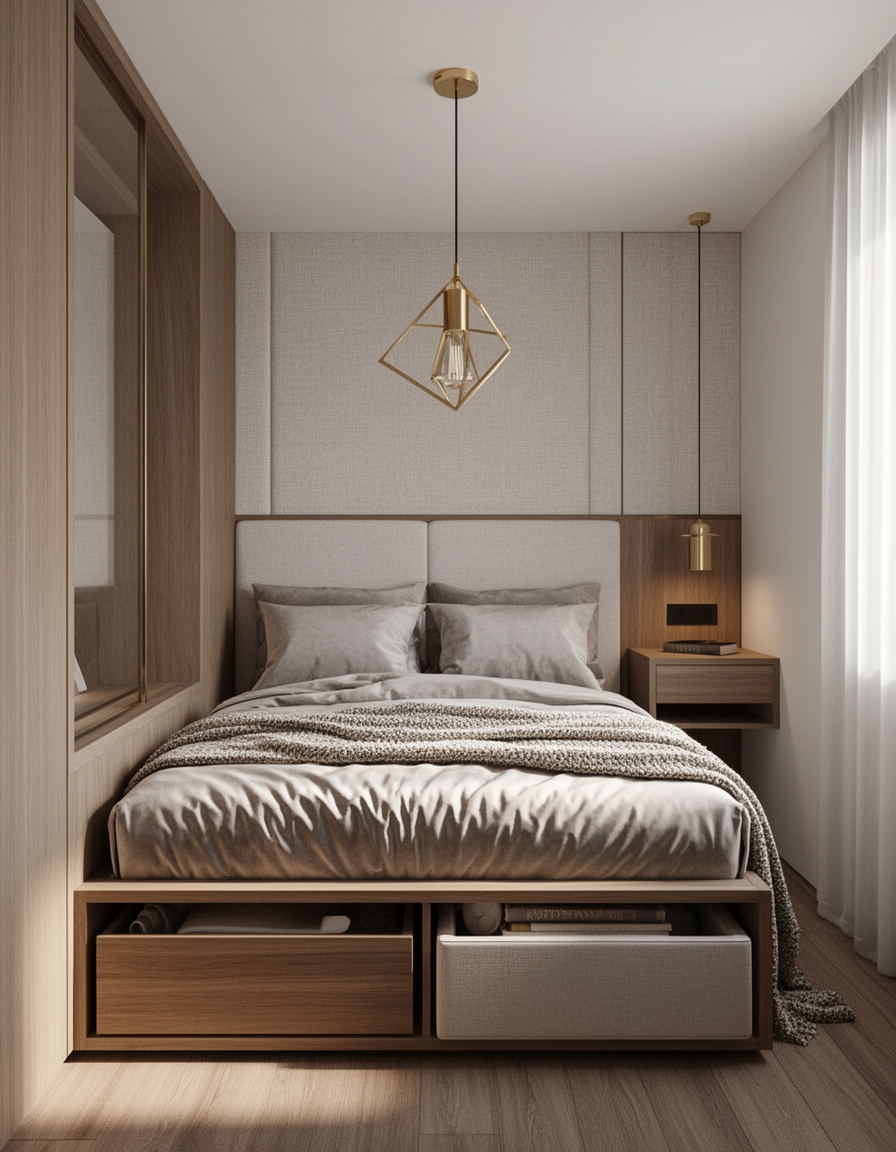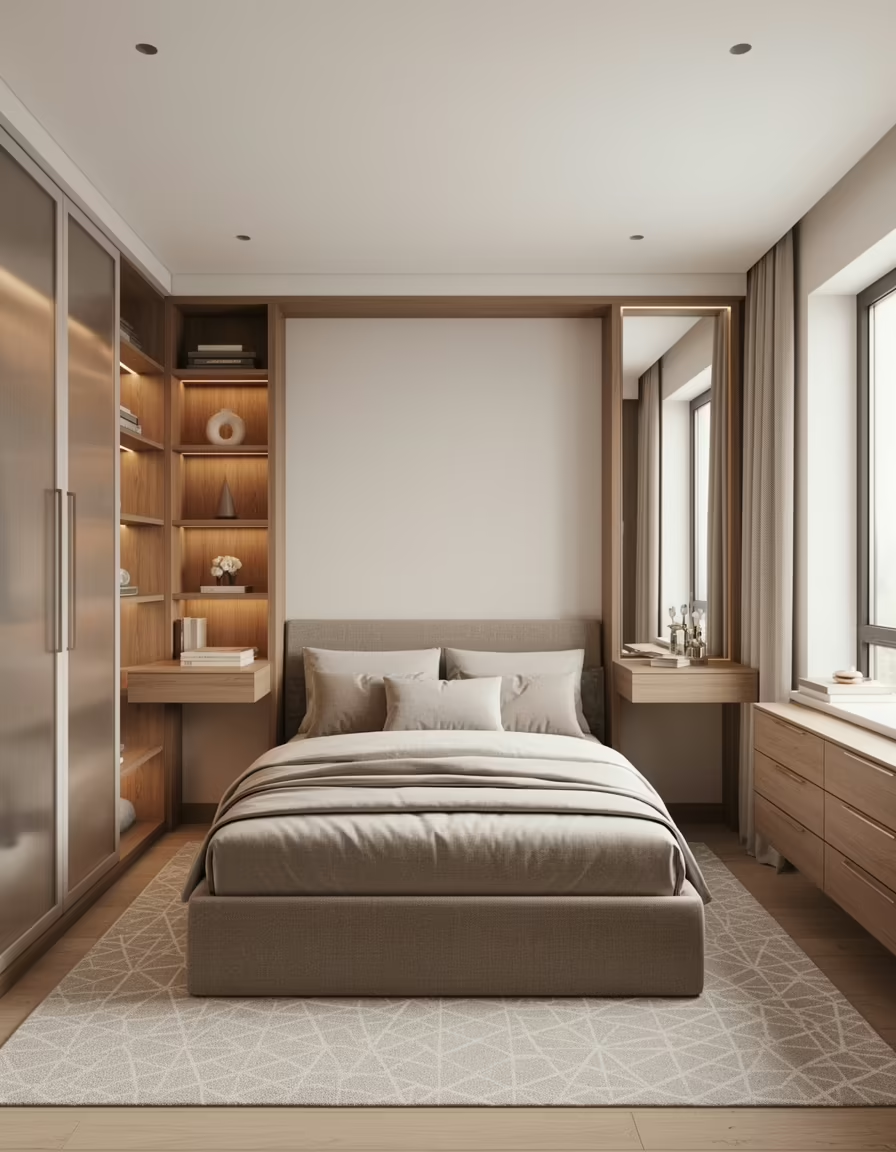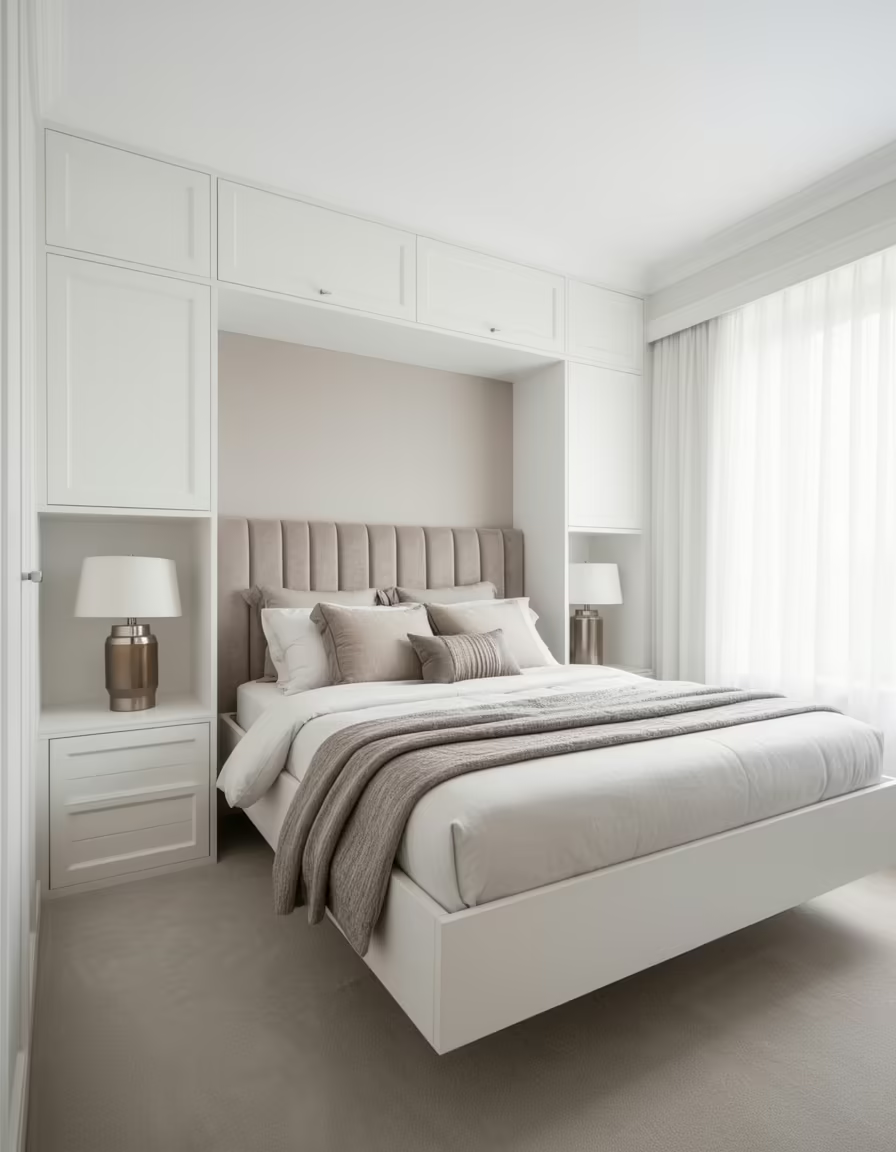

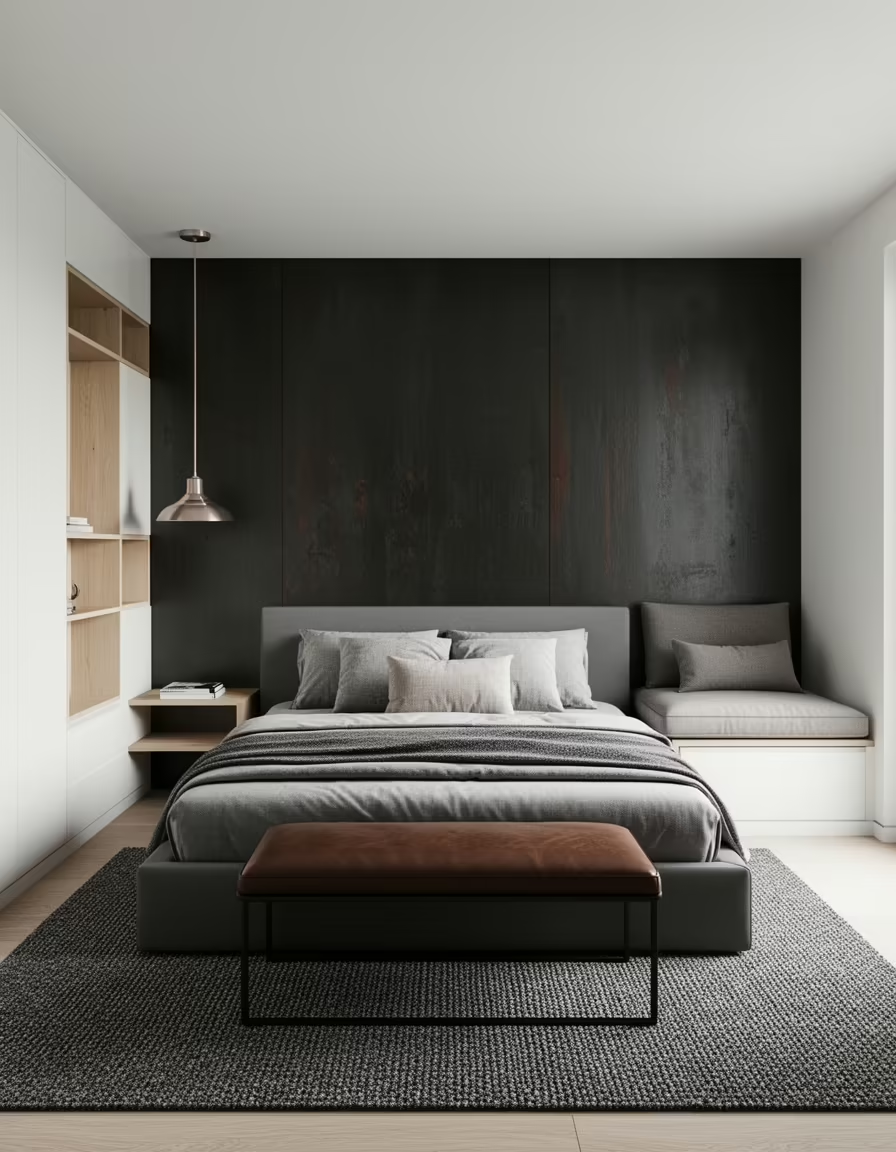
What makes a small bedroom come across as modern and masculine instead of just dark and cramped? Usually three things: a grounded color palette, materials you can actually feel, and zero visible clutter. None of them needs square footage.
A tight room suits this look. The restraint a sharp, modern space wants is easier to pull off when there’s less floor to fill, and the best bedroom ideas for small rooms lean into that. Texture, hidden storage, and clean lines do the heavy lifting here, and they make a compact room feel deliberate rather than boxed in.
Key Takeaways
- Ground the room with a deep, consistent palette: charcoal, slate, and warm wood look modern and hide wear better than pale tones.
- Let materials carry the style: leather, brushed metal, and raw wood add masculine depth without taking up an inch of floor.
- Make the bed earn its footprint with built-in drawers, and send the rest of the storage up the walls.
- Kill the cables: wireless charging and a hidden power strip keep the nightstand clean, which is half of what makes the room look modern.
Ground the Room With a Masculine Color Palette
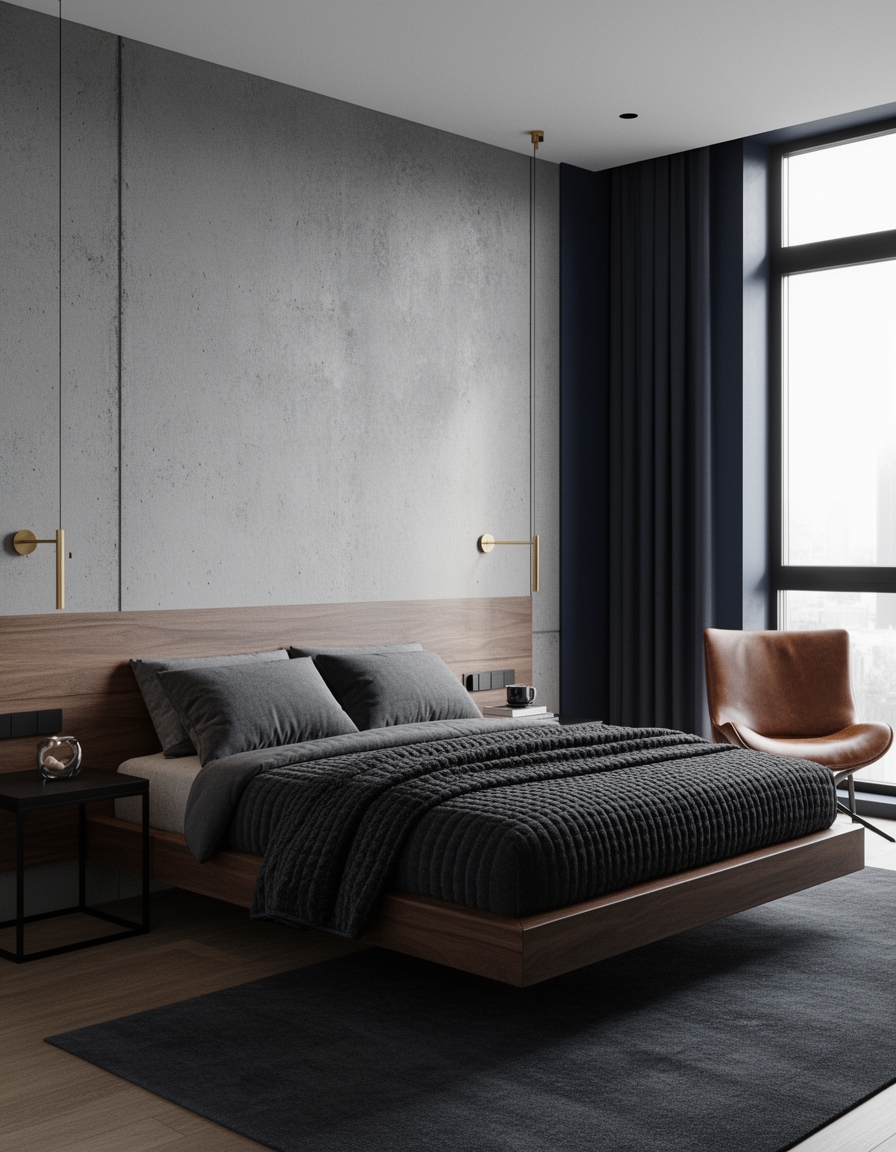
A grounded color palette is where a modern men’s bedroom starts, and it has nothing to do with the gray-on-gray stereotype. I steer clients toward depth instead: a charcoal or deep navy feature wall, slate textiles, and warm wood to keep it from going cold. In a small room, committing to one deep tone across the walls actually makes the box feel larger, because the corners blur instead of cutting the space into pieces.
Dark walls also earn their keep practically. They hide scuffs and fingerprints far better than white, which matters in a room that gets used hard. Keep the palette to one deep anchor and two quiet supports, then let a single warmer accent, brass, cognac leather, a wood grain, give the eye somewhere to land. For the wall itself, these paint ideas for small rooms are a solid starting point.
Optimize a Small-Room Layout Around One Main Job
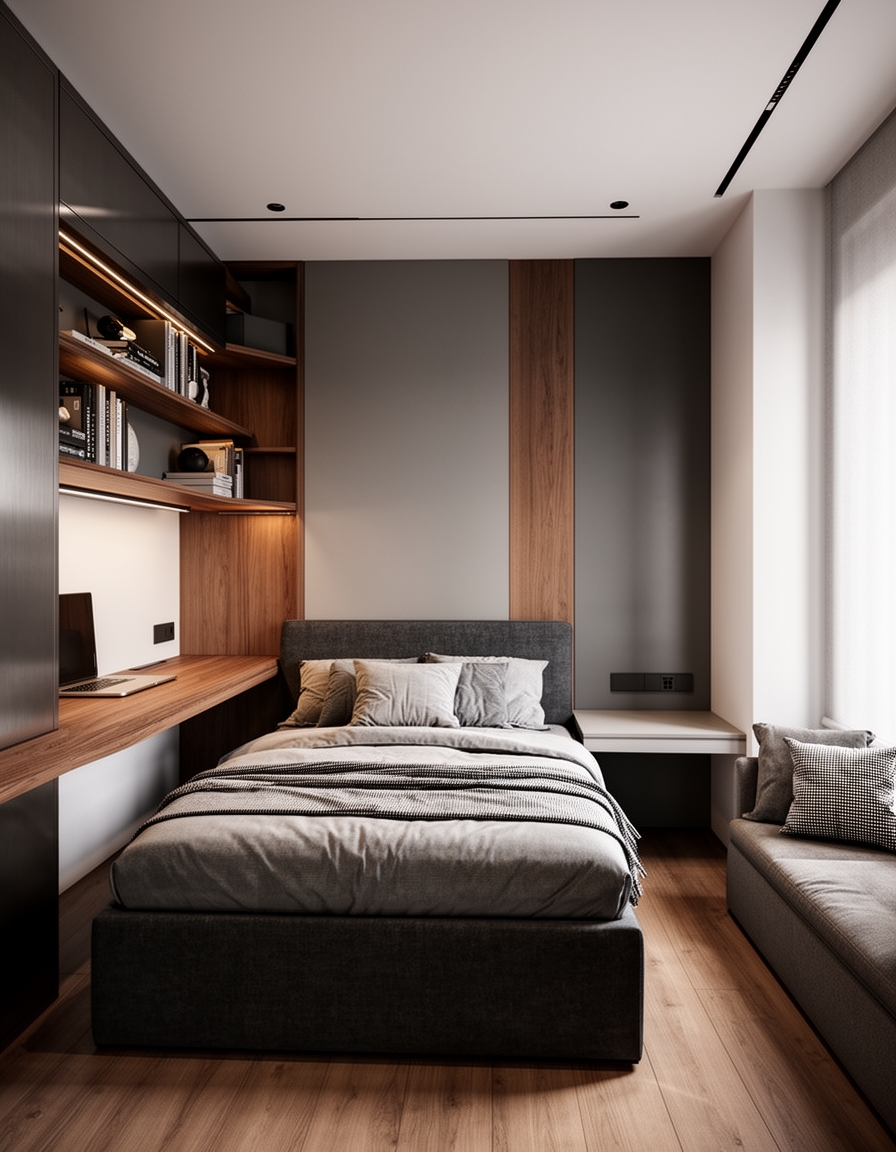
The fastest way to optimize a small room is to pick the one thing it has to do best, then build around it. Decide that first. Most small bedrooms try to be a bedroom, a home office, and a closet all at once, and end up doing none of the three well, so naming the room’s main job before you shop is the single most useful move you can make. Sleep usually wins, so the bed leads and everything else fits into the gaps it leaves behind.
- Anchor the bed on the strongest wall and keep at least 24 inches of clear path on the side you get in and out of.
- Map the traffic lane from door to bed first, then place the dresser and any seating outside that lane.
- Send storage up the walls to keep the standing space open, so the floor stays clear and the room breathes.
- Test the layout with painter’s tape on the floor before anything heavy gets carried in, the way you would plan a small-room layout on paper first.
Which palette direction fits your room?
🎯Charcoal and warm wood
Reads modern and grounded. Best if you want depth and warmth without the room feeling cold.
🎯Slate blue and brass
Reads sharp and a little dressed up. Best if you want some contrast and a hint of polish.
Maximize Space With Multifunctional Furniture
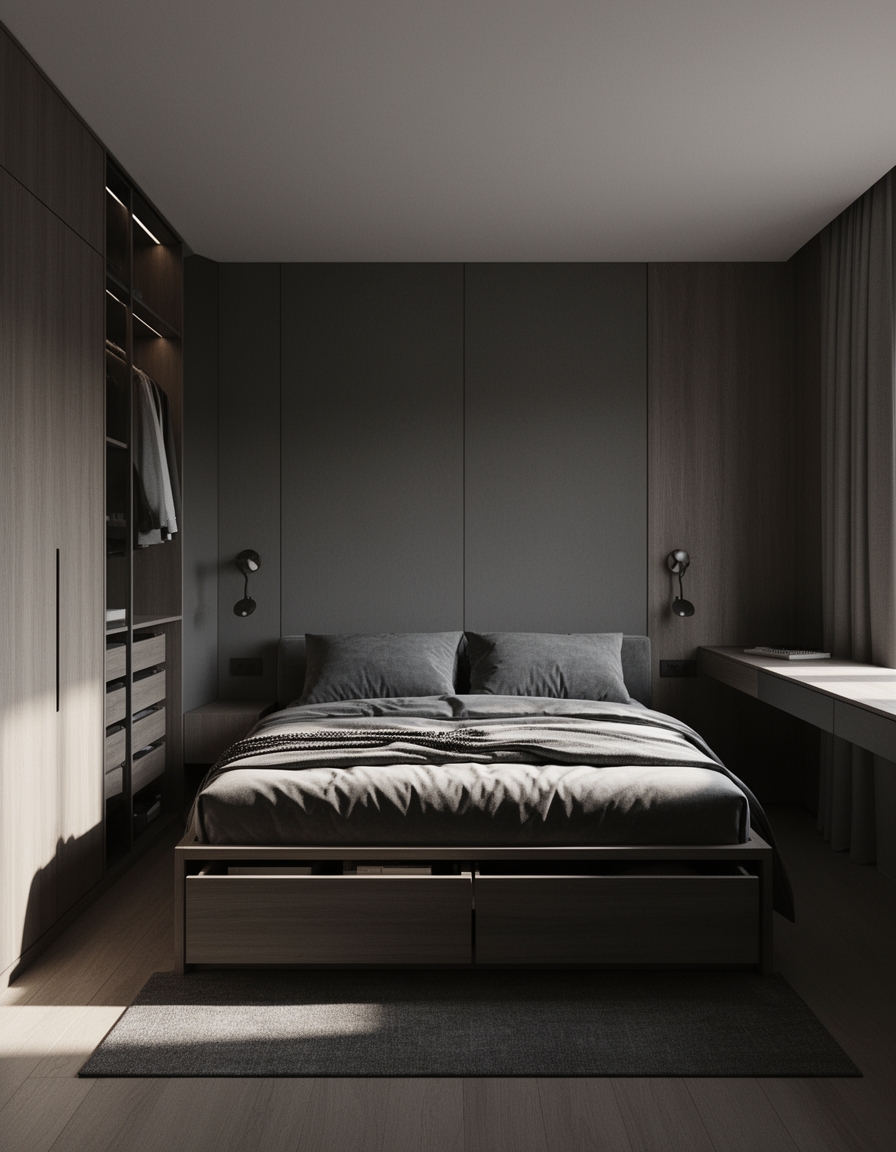
In a small modern bedroom, every piece should do two jobs without looking like it’s trying. The single best buy is a bed frame with built-in drawers, since the largest object in the room becomes the biggest storage unit at the same time. A good storage bed runs roughly $300 to $700 and pays for itself by replacing a separate dresser.
Buy pieces that store as they serve
From there, look for pieces that fold rest and function together. A leather or faux-leather storage bench at the foot of the bed gives you a spot to sit and a place to stash spare bedding. A narrow desk that doubles as a nightstand handles a laptop and a lamp on the same footprint.
The trap is gimmicky convertible furniture that does both jobs badly. I test the everyday use, the boring Tuesday-night version of it, and skip anything that needs a two-step routine just to go to bed. Real multifunction should save you effort. For the wall side of this, these storage ideas for hiding clutter keep surfaces clear.
Optimize Bed Flow So the Room Moves Easily
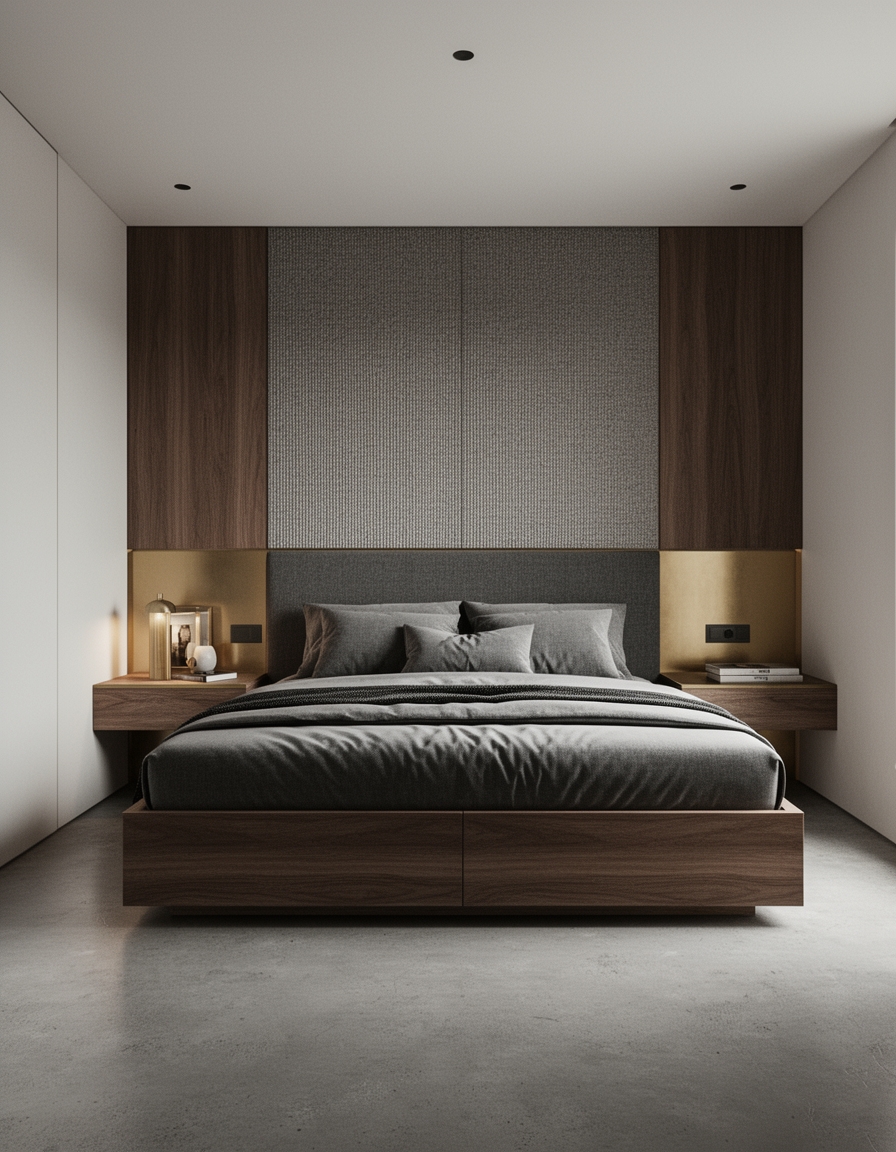
Bed placement makes or breaks the flow of a small room. Most people shove the frame into a corner to save an inch, and it quietly costs them a usable side.
I had a client do exactly that in a narrow box of a room, then ask me why it still felt so tight even after he’d cleared half the furniture out; we pulled the bed eight inches off the wall and the whole space opened up. I’ll give up a little floor any day to keep both sides of the bed reachable, since a bed you have to climb over makes a small room feel cramped fast.
A low headboard helps here too. It keeps the sightline open across the room and stops the bed from visually swallowing the wall behind it, which is exactly what you want when the wall is only a few feet wide.
- Position the bed so you can walk around at least one long side without turning sideways.
- Choose a low-profile headboard to keep the wall feeling tall and the room feeling open.
- Use slim, accessible side tables that hold a phone and a glass of water without crowding the path.
- Keep the foot of the bed clear of bulky furniture so the room looks open from the doorway.
👍A storage bed in a small room
- +Doubles the largest piece as your main dresser
- +Clears the floor of a separate storage unit
- +Keeps off-season layers hidden but reachable
👎Worth knowing
- –Costs more upfront than a plain frame
- –Drawers need clearance, so check the side path
- –Heavier to move on cleaning day
Clutter-Free Tech With Wireless Charging and Hidden Cables
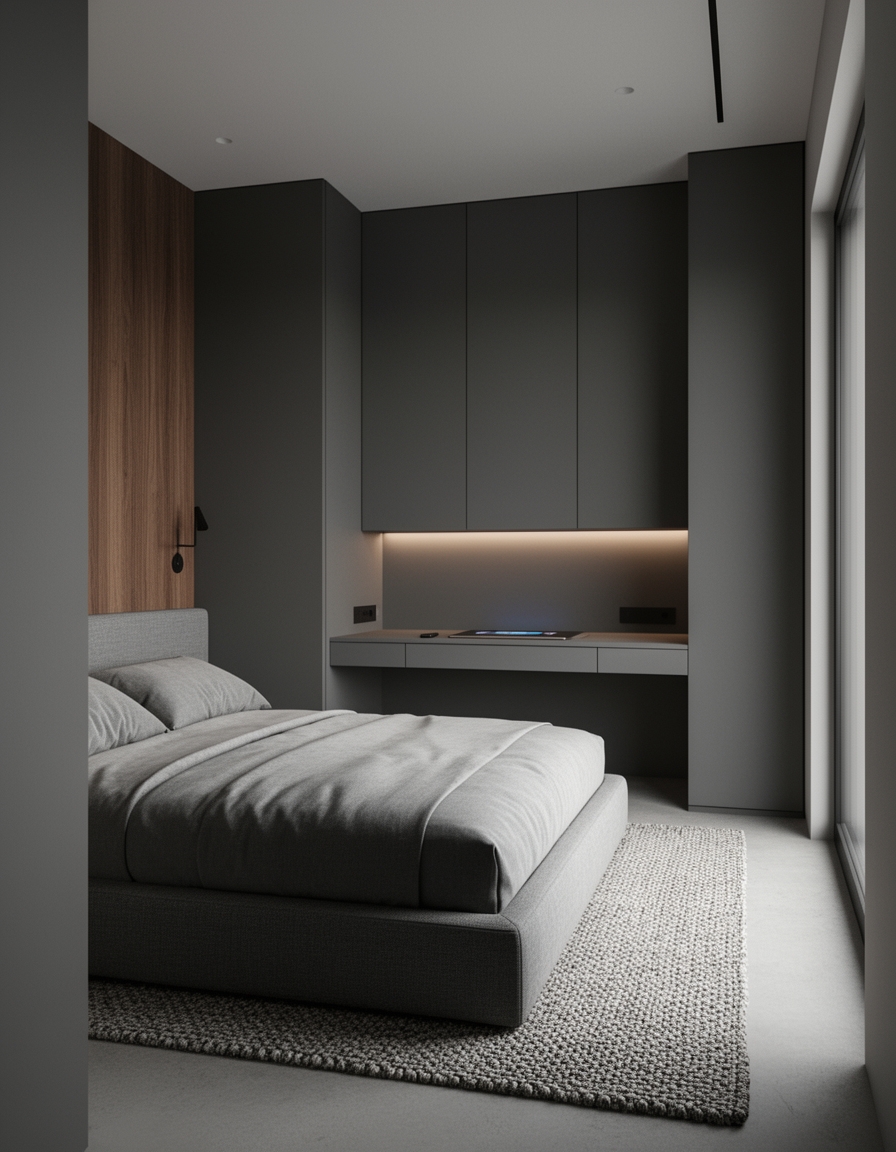
Nothing kills a modern look faster than a knot of cables on the nightstand, and a small room shows that mess immediately. Getting the tech under control is half of what makes a compact bedroom feel clean and current. I tell clients this is the cheapest high-impact upgrade in the whole room.
Start with a wireless charging pad, about $20 to $40, so the phone drops down with no cord. Add a small adhesive power strip mounted to the back of the nightstand or bed frame, and run the few cables you can’t avoid through a cheap cable sleeve. A wall-mounted charging hub keeps a watch and earbuds off the surface entirely.
The goal is a bedside you can wipe clean in one pass, with nothing trailing to the floor. Once the cords vanish, the rest of the room instantly looks more intentional, even before you change anything else.
Texture and Materials That Feel Rugged Yet Refined
If the palette is the foundation, texture is what gives a modern men’s bedroom its character, and it does it without adding bulk. The move is to mix a few tactile materials so the eye has something to read in a pared-back room. Leather or a good faux-leather, brushed or matte metal, raw or oiled wood, and a heavier woven textile cover most of the range.
Keep the surfaces honest and the finishes mostly matte, since high shine tends to look cheaper in a small space. A chunky knit throw over a clean-lined bed, a concrete-look lamp base, a leather bench, that’s enough contrast to feel rich without clutter. Pick three materials and stop. Three done well beat ten competing for attention, and a small room makes that kind of restraint easy to live with.
Minimalism With Purpose: Decorate Without Crowding
A small modern bedroom does not need much to decorate well, and overdoing it is the fastest way to lose the look. The goal is to decorate with intent: a few pieces that mean something, sized right for the wall, with breathing room around them. One large piece of art over the bed beats a scattered gallery wall in a tight space, since the single statement holds the room instead of chopping it up.
Keep the surfaces mostly clear and let one or two objects carry the personality. A stack of good books, a watch tray, a single plant in a matte pot, that is plenty on a nightstand or dresser top. Every extra trinket in a small room reads as clutter within a week, so I edit hard and rotate seasonally instead of piling on.
When clients want the room to feel more personal, I steer them toward texture and a single meaningful object over more stuff. A leather catchall, a framed print that actually matters to you, a quality throw. The room ends up feeling collected and calm, which is exactly the modern note you want in a space this size.
A Designer’s Shortlist: What to Buy First
When clients ask me where to spend first in a small modern bedroom, I always point to the same handful of pieces. These are the ones that change the room the most per dollar, and they’re worth getting right before anything decorative.
Get these four sorted and the room is most of the way there. Everything after is just refinement.
- A storage bed frame, the single piece that solves sleep and storage at once.
- One deep accent wall in charcoal or navy, about $50 and a weekend, for the biggest visual shift available.
- A pair of wall sconces or a wireless charging lamp to clear the nightstands and layer the light. These cozy lighting ideas for the perfect glow show the layering.
- A tall, slim wardrobe to handle clothes vertically, the kind covered in these wardrobe design ideas worth the hype.
Small Room, Sharp and Calm
A modern men’s bedroom in a small space comes down to discipline more than budget. Ground it with a deep palette, let real materials carry the style, make the furniture work double, and get the cables out of sight. Do that and the square footage stops mattering.
The look you’re after is calm and deliberate, a room that feels considered the second you walk in. Start with the palette and the storage bed, then layer texture and light from there, and a tight room turns into one of the sharpest spaces in the house.