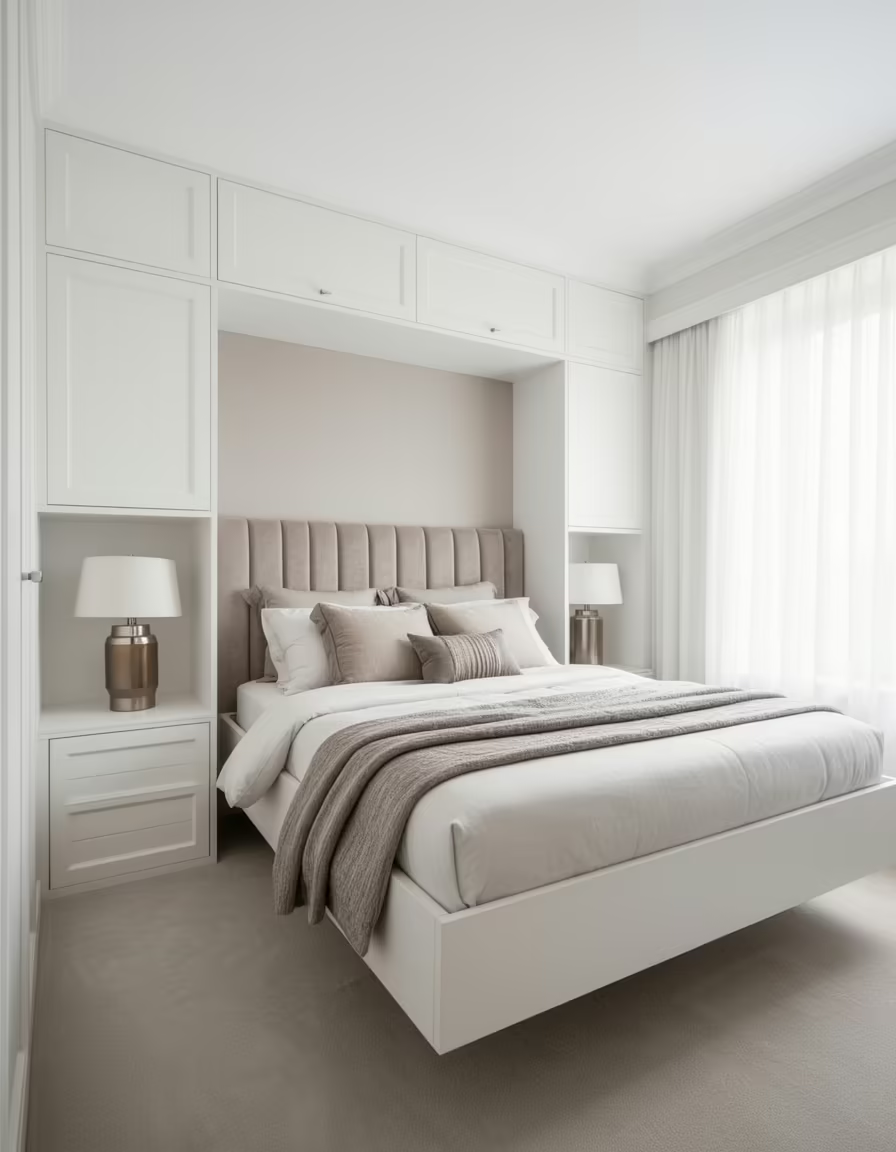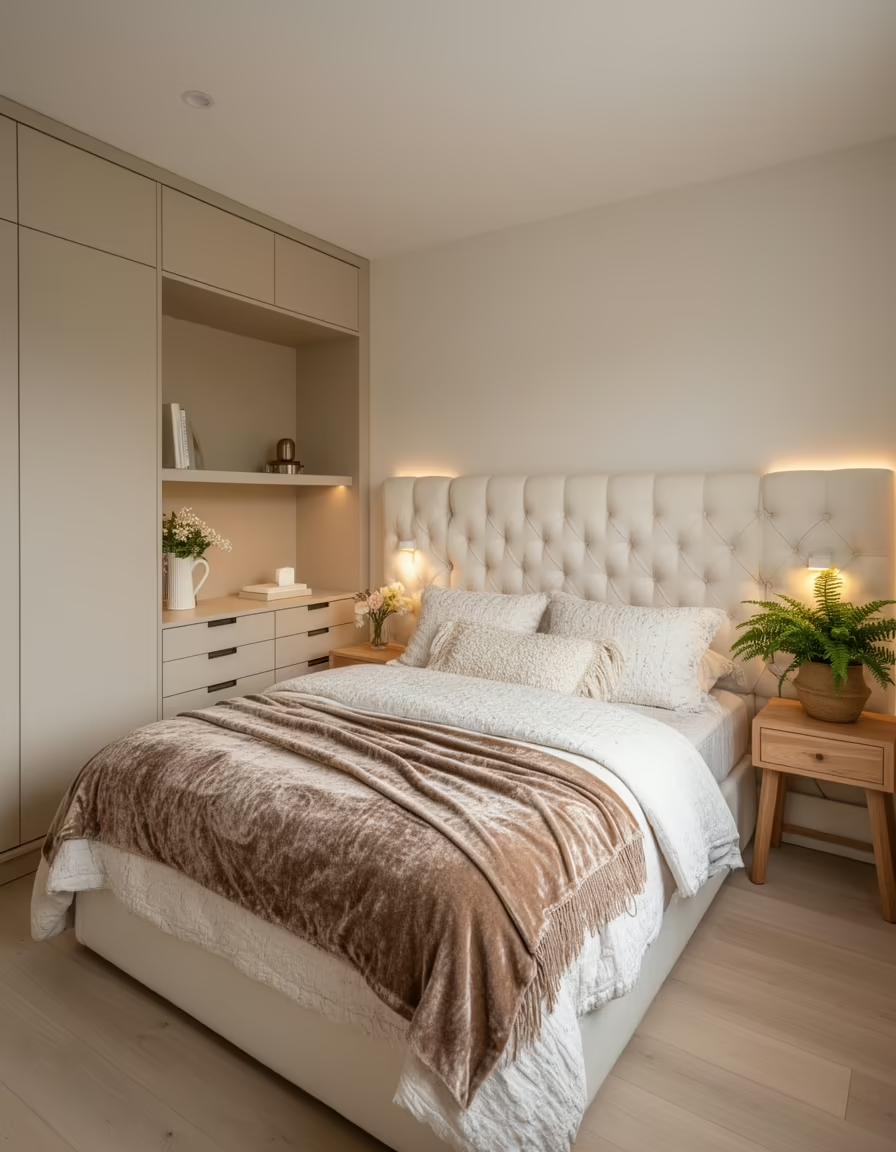

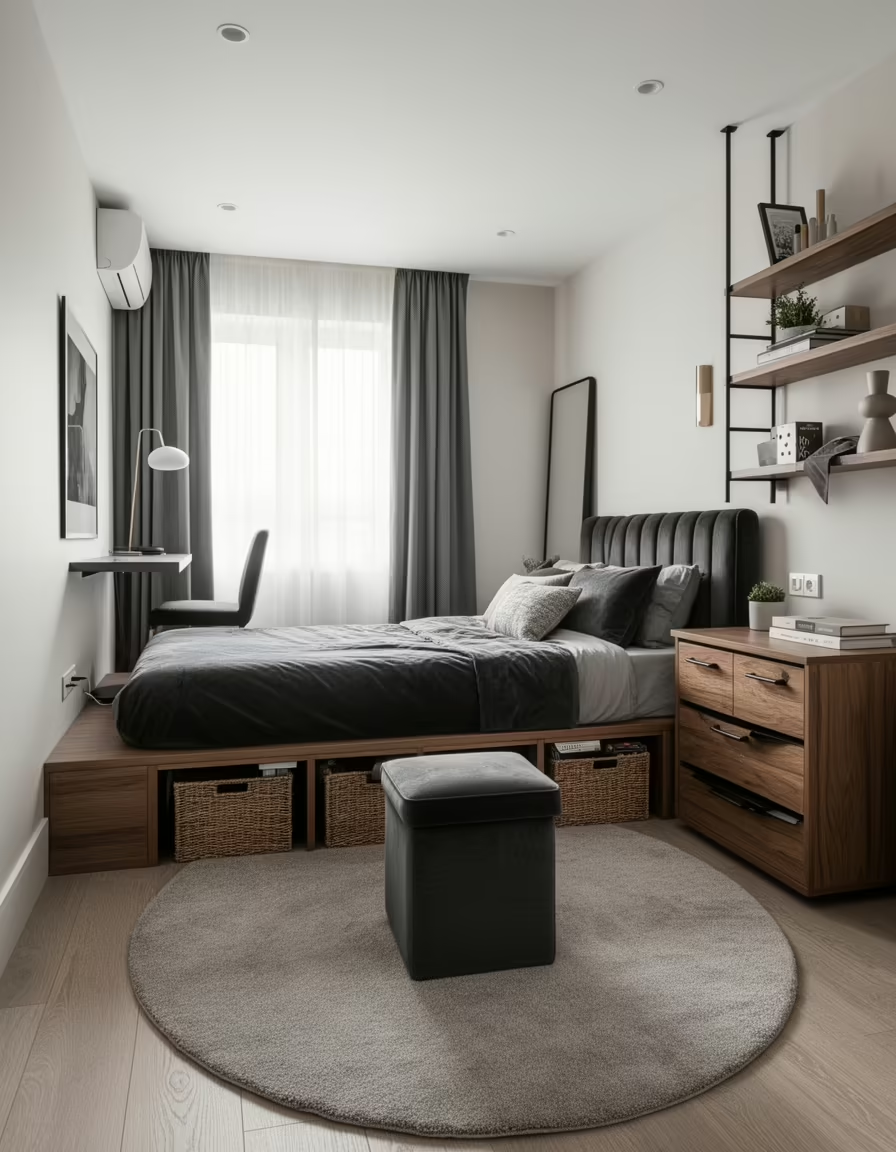
Most small-bedroom advice tells you to buy more storage. That’s backward. A small room rarely has a storage problem; it has a too-much-stuff problem with a storage layer bolted on top. Real organization starts by cutting what you own down to what fits, then giving the rest a clear home, so the room can finally hold your life without overflowing.
These are the organization moves a small bedroom really needs, in the order that works: pare down first, then contain what’s left in the right bins and dividers, then climb the walls and mine the space under the bed. Organization is a system, not a single purchase. Build it in this order and a cramped room turns into one that stays tidy with barely any effort.
Organization Questions, Quick Answers
Where do I start organizing a small bedroom? By decluttering, not shopping. Cut what you own to what the room can hold, then organize what’s left. Buying bins first just contains the excess.
What’s the most useful organizing buy? Drawer dividers and labeled bins, often $10 to $25 each. They turn a messy drawer or shelf into assigned spots, which is what keeps a small room tidy.
How do I keep it from getting messy again? Give every item one home and add a one-in, one-out rule. The full how-to is in the last section.
Smart Storage for Tiny Bedrooms
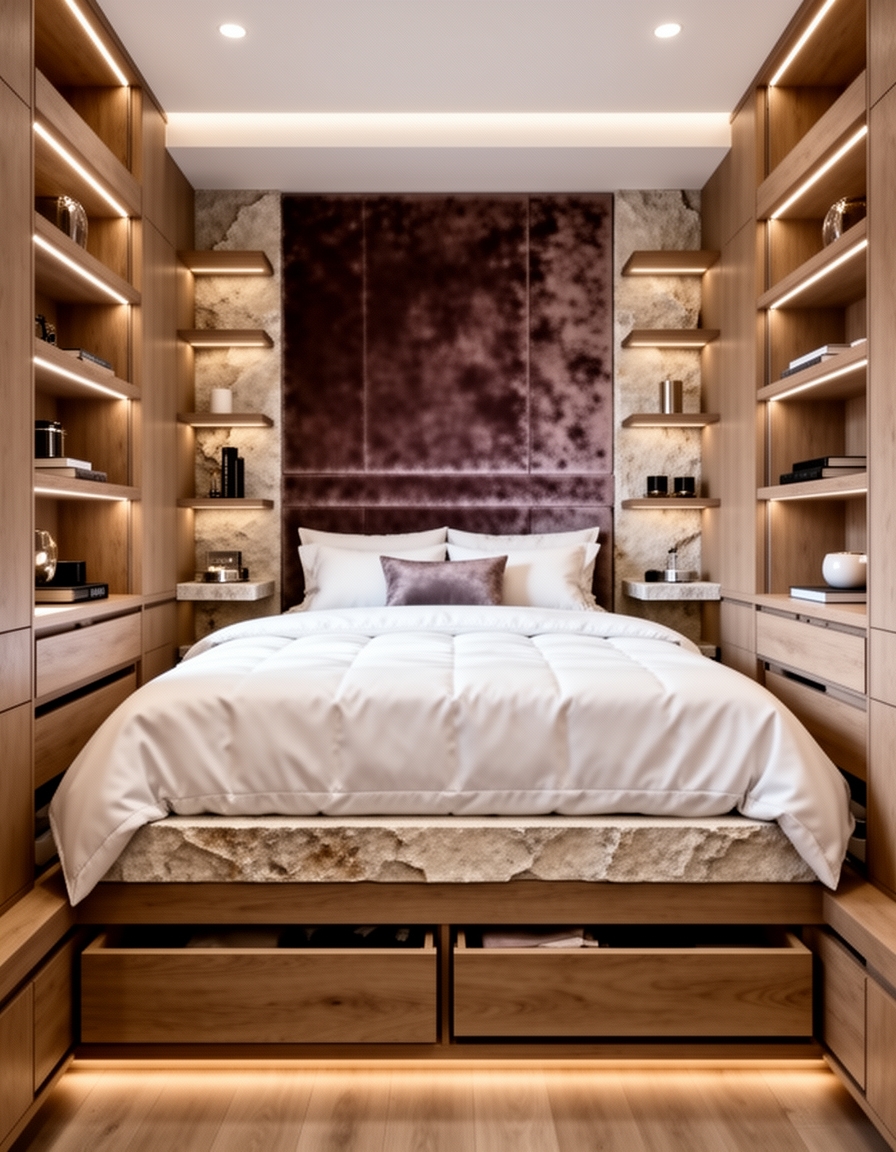
Smart storage in a tiny bedroom is less about the storage and more about what you ask it to hold. The most beautiful closet system in the world fails if you stuff three rooms’ worth of things into a one-room space, so the first move is always to cut. Pull everything out, keep what you use and love, and let the rest leave the room for good.
Once the volume fits the space, storage finally does its job. Now the bins, shelves, and drawers hold a sane amount of stuff with room to spare, which is what keeps a small room from tipping back into chaos a week later. Whether a room stays organized comes down to one thing, and it’s rarely the storage. It’s whether the amount of stuff matches the space.
The most organized small bedroom I ever worked on held about a third of what its owner started with; we filled four bags before buying a single bin, and the room looked sorted before a thing went back in. A small room with less in it feels organized even before you add a bin, and these storage ideas for hiding clutter go further once the volume is right.
Multi-Functional Furniture Solutions
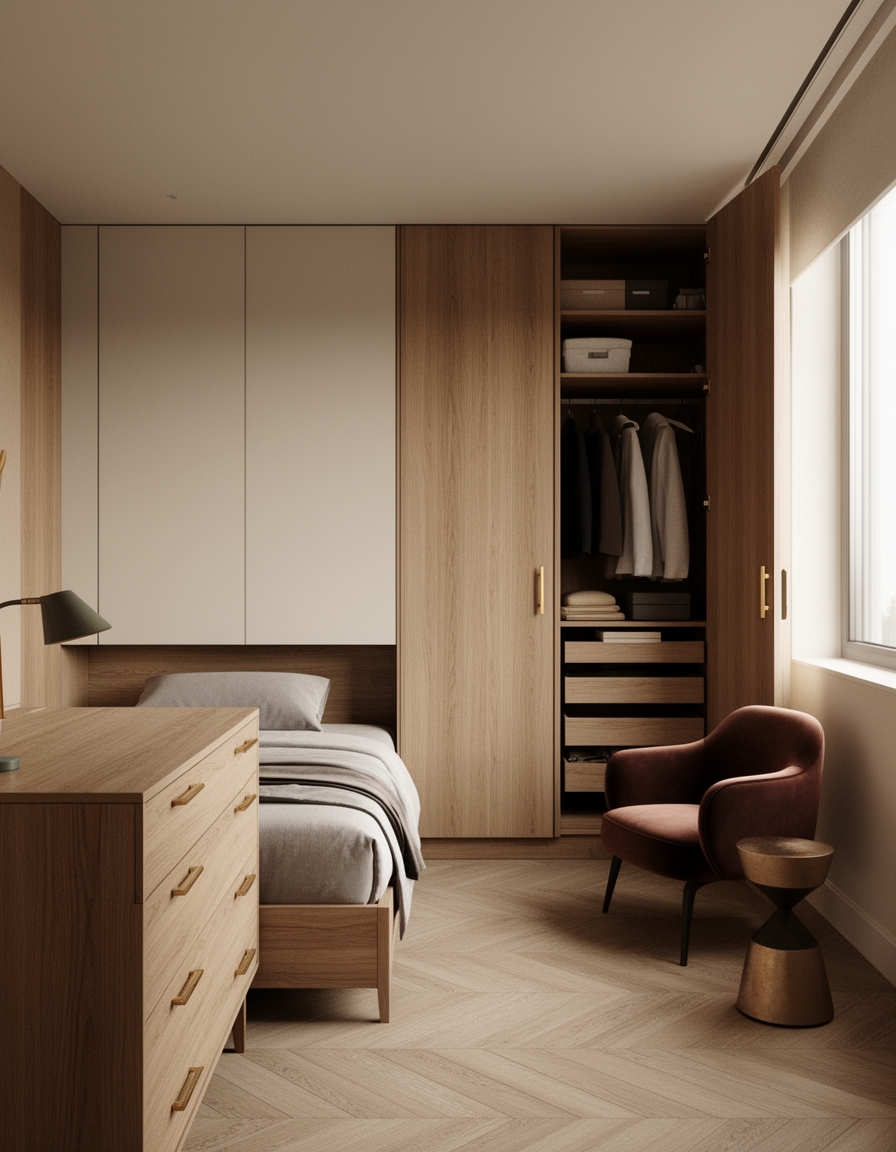
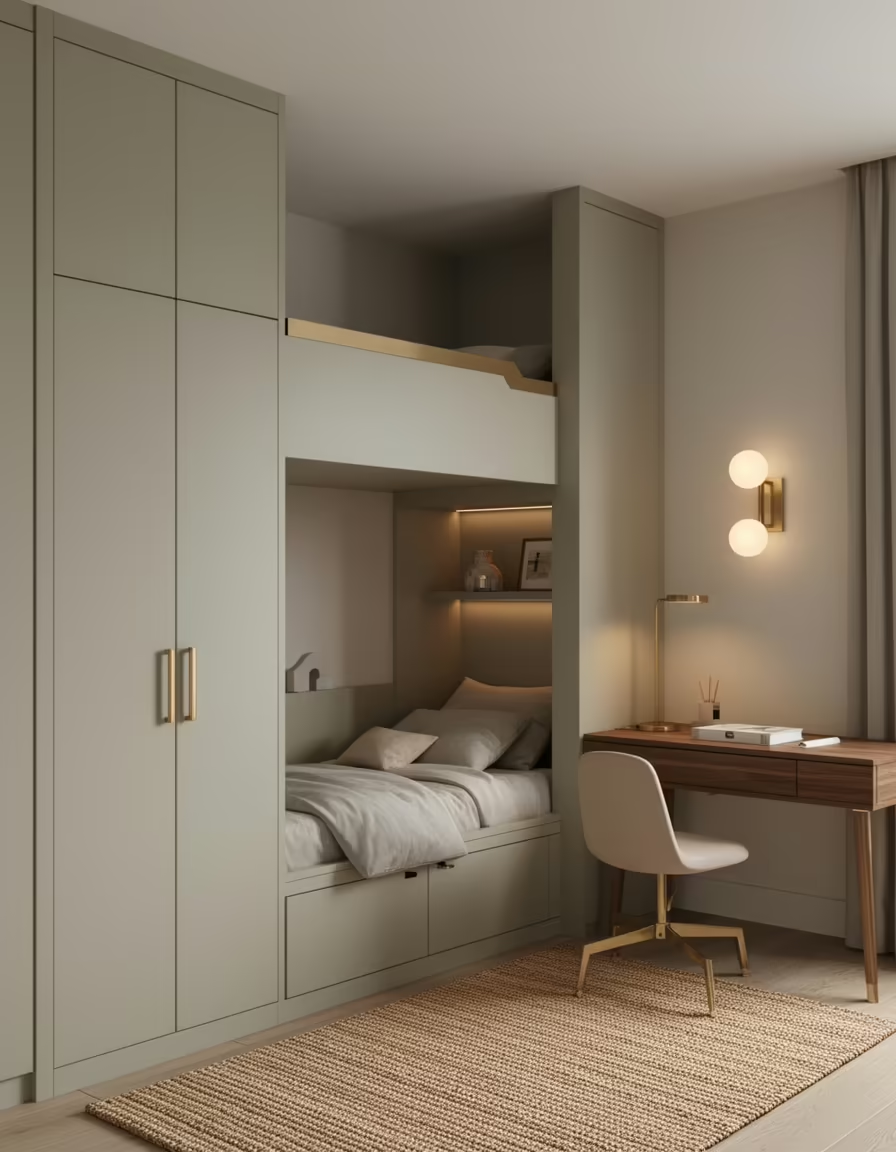
In a small bedroom, the furniture itself should be doing organizing work. A bed with drawers swallows what a dresser would, a storage ottoman hides the spare bedding, and a bench at the foot of the bed holds shoes while giving you a place to sit. Each piece that stores as it serves is one less separate organizer the room has to find floor for.
Choose pieces where the storage is actually easy to use. A drawer you have to climb over the bed to reach or a lift-top that needs both hands ends up ignored, so favor the versions you’ll actually open daily. The right multi-tasking piece does the job of two and keeps the floor clear, which is the whole point in a room this size.
- Lead with a storage bed so the biggest piece doubles as the dresser you can then skip.
- Add a storage ottoman or bench so seating and hidden storage share one footprint.
- Pick pieces with easy daily access, and lean on these decor ideas worth borrowing to keep them styled.
“Measure before you buy a single bin. Note the exact height, width, and depth of the shelf, drawer, or under-bed gap, then shop to those numbers. A bin an inch too tall won’t slide under the bed; a divider a half-inch too wide won’t drop into the drawer. Ten minutes with a tape measure saves a stack of returns and a cabinet of organizers that fit nothing.”
Balanced Zones That Enhance Functionality
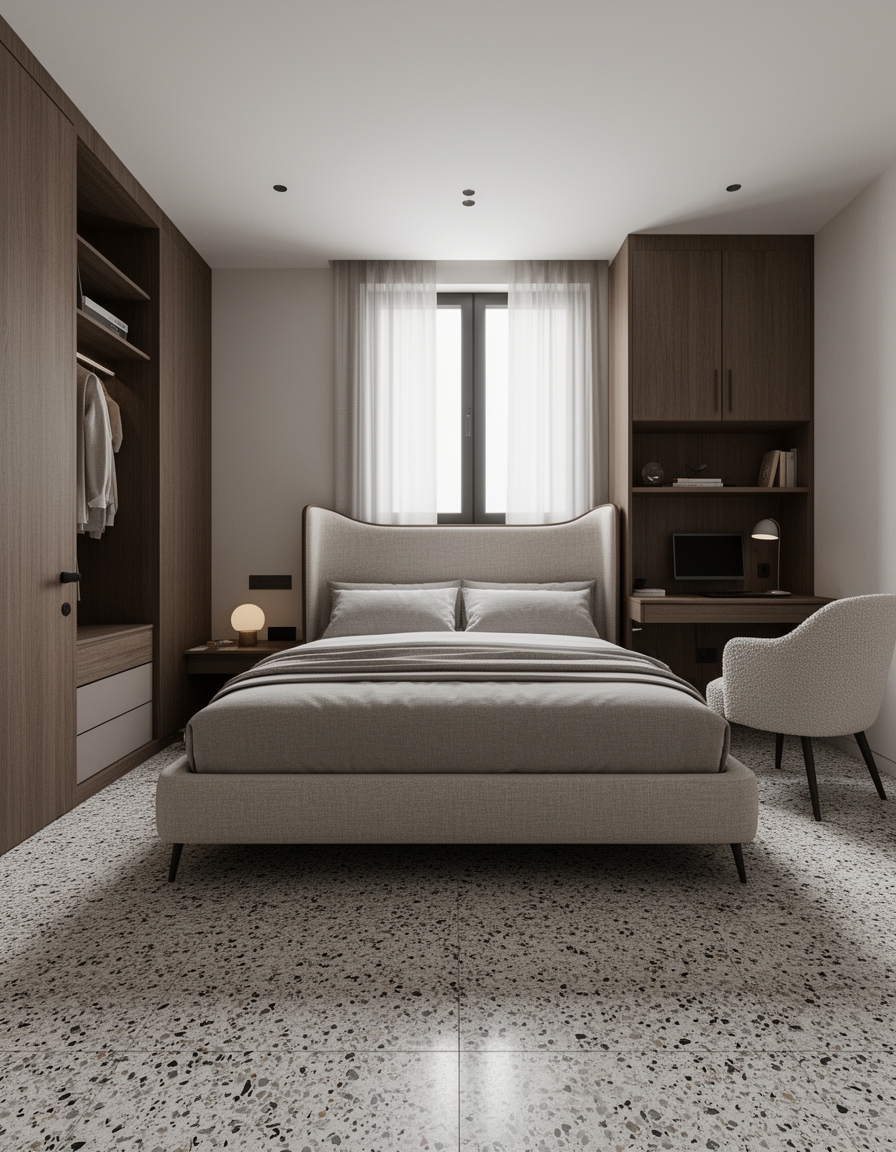
Good organization groups your things by how you use them, then gives each group a zone. Everyday clothes near the closet, books and chargers at the bedside, off-season and rarely-used things up high or under the bed. When like things live together in a logical spot, you stop hunting for anything and the room stays tidy because putting things away is obvious.
Frequent things in easy spots
Match the zone to how often you reach for the things in it. Prime, easy-to-reach spots go to daily items; the awkward high shelf and the deep under-bed bin go to what you touch twice a year. This one principle, frequent things in easy spots and rare things in hard ones, is what makes a small room feel easy to live in rather than a daily scramble.
Keep each zone holding only its own category. The bedside is for sleep and reading things, and the dresser top stays clear because the stuff that piled there now has a drawer. Defend the zones and the room runs itself, the way these layout ideas for small rooms keep the floor plan honest.
Maximize Vertical Bedroom Storage
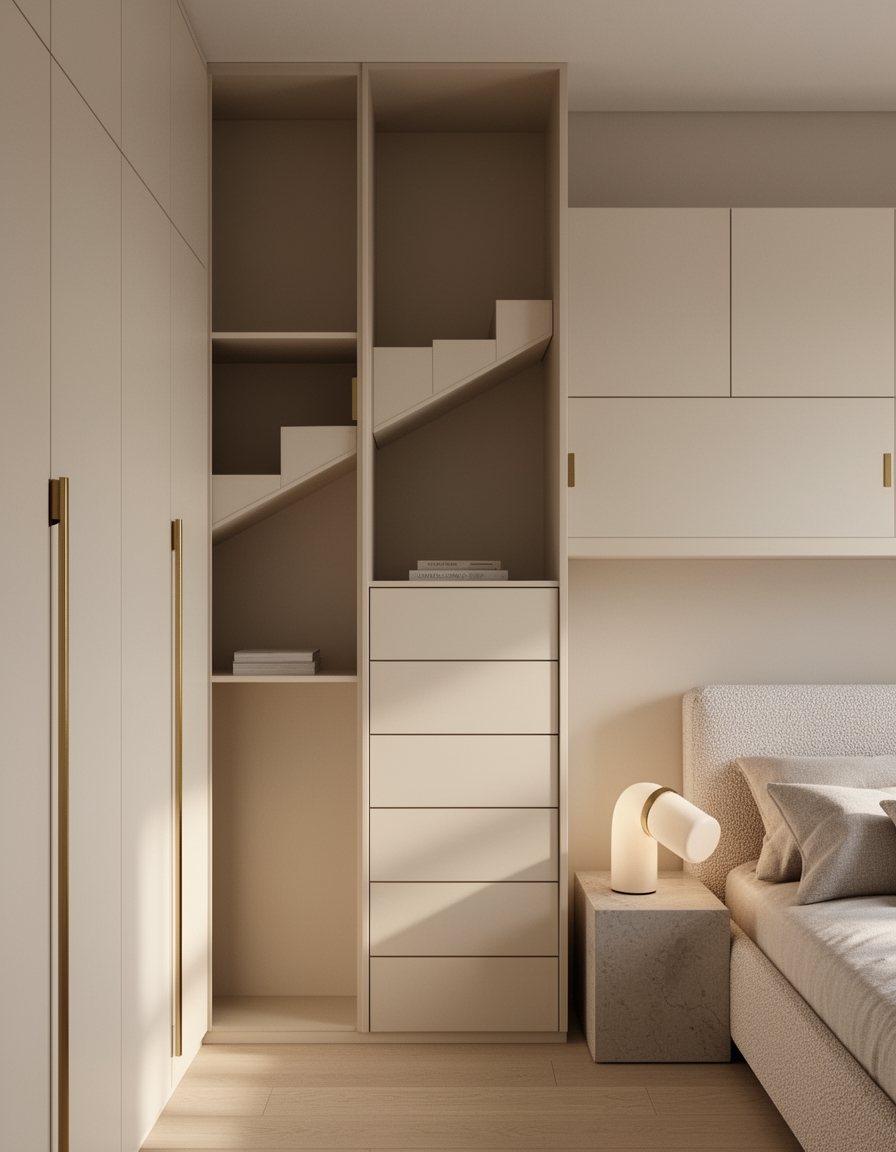
The walls are where a small bedroom hides most of its unused organizing space. The band above eye level, the back of the door, the full height of the closet, all of it can hold things without costing an inch of floor. A high shelf running the length of a wall, a hanging closet organizer, or a row of hooks turns empty vertical space into real, assigned storage. Look up first. The room’s spare room is overhead.
Use the closet’s full height, well beyond its rail. Most closets waste two or three feet above the rod and a foot below the hanging clothes, so a shelf up top and a set of stacking drawers or bins on the floor double what the closet holds. A simple closet system, often $100 to $300, pays for itself in a small room by claiming all that dead vertical space.
Keep vertical storage looking calm by containing it. Open shelves above eye level read as clutter fast, so use matching baskets or boxes up there and the wall stays tidy while still holding a lot. Label the boxes so you remember what’s up there, and these paint ideas to refresh a room keep the backdrop light behind it all.
Two organizing myths that keep small bedrooms messy:
❌ Myth: Matching bins and baskets are just for looks.
✅ Reality: They do real work. Matching, opaque containers hide visual noise and stack cleanly, so a shelf of ten mismatched boxes reads as clutter while ten matching ones read as calm. The uniformity is function, not decoration.
❌ Myth: You need a custom closet to get organized.
✅ Reality: Rarely. Most of the gain comes from cheap, removable add-ons: a second rod, stacking drawers, slim hangers, a shelf riser. A full custom build earns its cost in an oddly shaped closet, but a $60 kit of these fixes the majority of small ones.
Under-Bed Storage Solutions, Organized
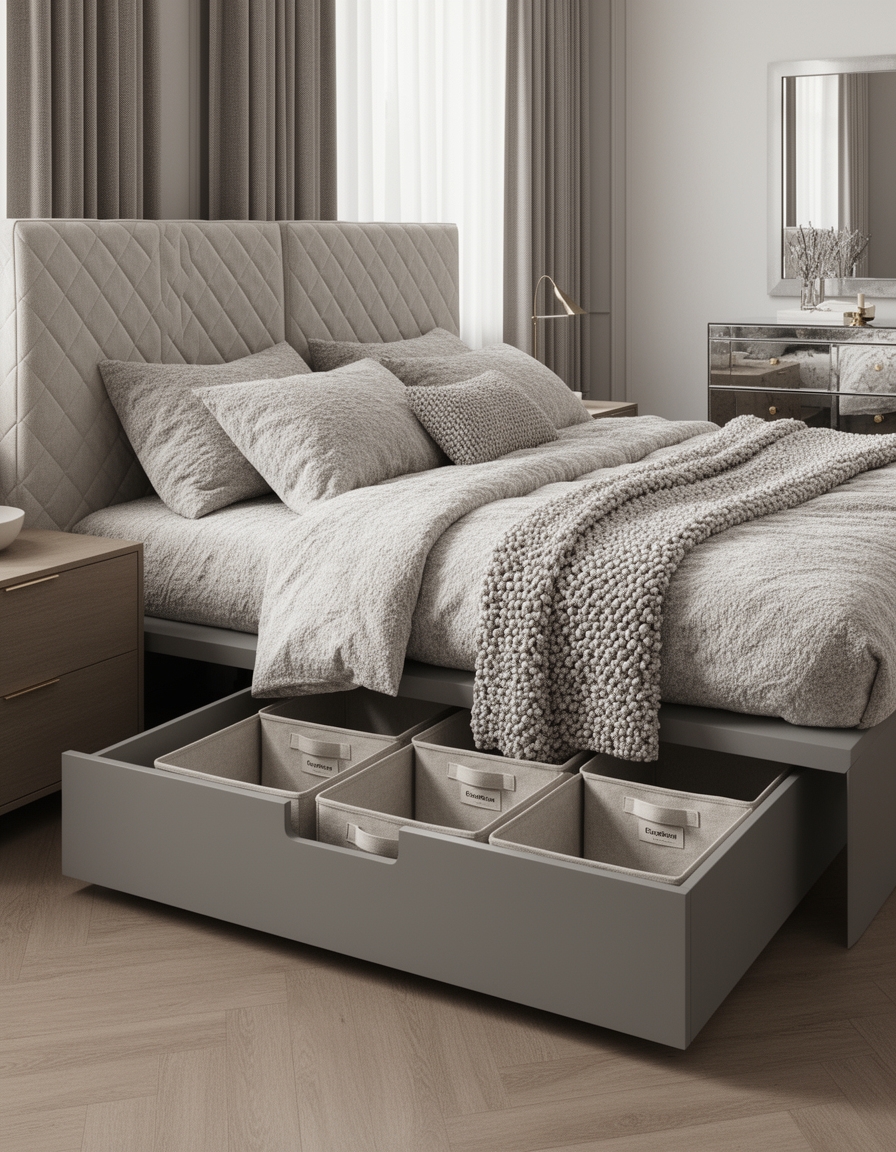
The space under the bed is the largest single storage spot in most bedrooms, and the most poorly used. Organized properly, it’s a giant flat drawer for the things you don’t need often: off-season clothes, spare bedding, luggage, keepsakes. The trick is to contain it in proper bins so it stays sorted instead of becoming a dusty no-man’s-land you dread reaching into.
- Use flat rolling bins with lids, often $15 to $40 a set, so the load slides out clean and stays dust-free.
- Sort by category and label each bin, off-season, bedding, keepsakes, so you find things without unpacking all of it.
- Reserve under-bed for rarely-used flat things, and raise the frame on risers if you need more clearance.
Declutter Before You Organize Anything
The step everyone wants to skip is the one that matters most: decluttering before you organize. Pull everything out of the room or the closet, sort it into keep, donate, and toss, and be honest about what you actually wear; most people find a third of it can leave without a second thought. A small room can only hold so much, and the fastest path to organized is simply owning less of it.
Work in small, finishable chunks so it doesn’t stall. One drawer, one shelf, or one closet section at a time beats tearing the whole room apart and losing steam halfway. Set a box by the door for donations and fill it as you go. The room gets lighter with every pass.
I tell people to start with the drawer that annoys them most, since one quick win builds the momentum to finish. Once you’ve pared down to what fits, the organizing part is quick, because there’s finally room for everything to have a place.
Contain and Label: The Organizing Layer
Once the volume is right, containers are what hold the sorted result in place over time. Drawer dividers stop socks and underwear from becoming one tangled drawer; small bins corral the loose things on a shelf; slim matching hangers, often $15 for a big pack, can nearly double what a closet rod holds while making it look intentional. Contain the small stuff and the whole room reads sorted.
Labels are the cheap secret that makes a system stick. When a bin says exactly what goes in it, you put things back without thinking and so does everyone else, which is what keeps the room organized weeks later. A label maker or a few written tags cost almost nothing and do more for long-term tidiness than another piece of furniture ever could, since a labeled home is one you actually use.
Keep It Organized Without the Daily Battle
An organized small room stays that way only if putting things back is easier than dropping them, so the goal is a system so obvious it takes no willpower. When every item has one fixed, labeled home within easy reach, returning it is a five-second move, and the room never builds up the pile that takes an afternoon to clear. The system does the work. You just feed it.
Lean on a one-in, one-out rule to hold the line. A new sweater means an old one leaves; a new pair of shoes means a tired pair goes, so the volume that fit the room stays fitting it. That single habit is what keeps a small bedroom from slowly filling back up, and it costs nothing but a moment’s honesty each time something new comes through the door.
Small-Bedroom Organization, Answered
?How long does it take to organize a small bedroom?
Less than most people fear if you work in chunks. A single drawer takes about ten minutes, a closet an afternoon, and the whole room a weekend spread across a few short sessions. Doing one finishable zone at a time keeps it from stalling, and the room looks better with every pass rather than worse mid-project.
?What are the best organizing products for a small bedroom?
Drawer dividers, labeled bins, slim matching hangers, and an under-bed bin set, most $10 to $40, do the most. They turn loose piles into assigned spots and stretch the space you have. A simple closet system ($100 to $300) helps if the closet wastes vertical space, but buy these only after you’ve pared down.
?What should I avoid storing under the bed?
Anything you reach for daily, anything that needs airflow like worn laundry or damp shoes, and fragile or valuable items in an open bin. Under-bed suits flat, rarely-used, fully-contained things: off-season clothes, spare bedding, and luggage, sorted into labeled lidded boxes so dust and damp stay out.
?Where should I store things in a small bedroom?
By how often you use them. Daily items go in prime, easy-to-reach spots; rarely-used things go up high or under the bed. Group like with like so each zone holds one category, and contain the small stuff in dividers and bins so nothing turns into a loose pile on a surface.
Less Stuff, Then a System
The organization a small bedroom actually needs comes down to doing things in the right order. Pare down to what fits, give each category a labeled home, claim the vertical and under-bed space the room is wasting, and lean on multi-tasking furniture so the pieces store as they serve. Do it in that sequence and a cramped, cluttered room turns into one that stays calm and tidy with almost no daily effort.
So before you add another bin or basket, ask the harder question first: is the problem really too little storage, or is it too much stuff? Answer that honestly, and the rest of the organizing falls into place faster and cheaper than you’d expect.