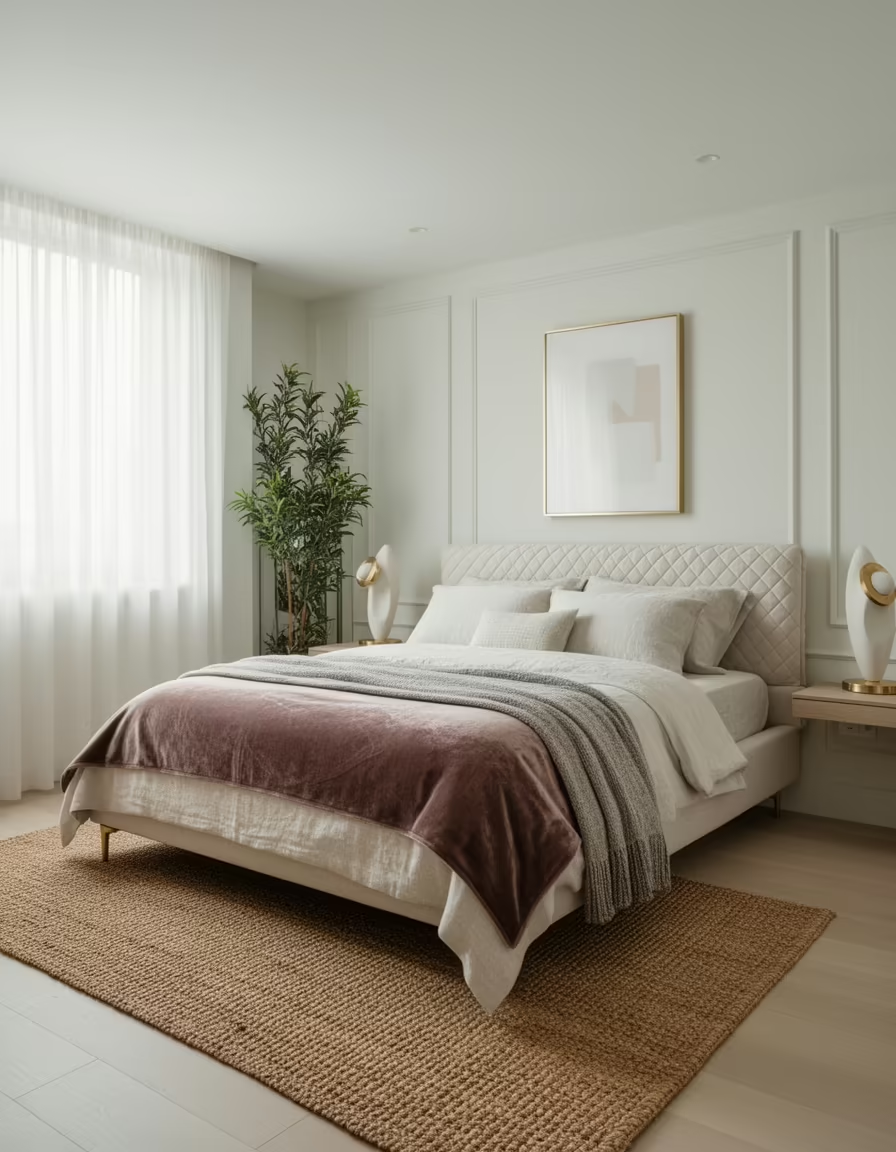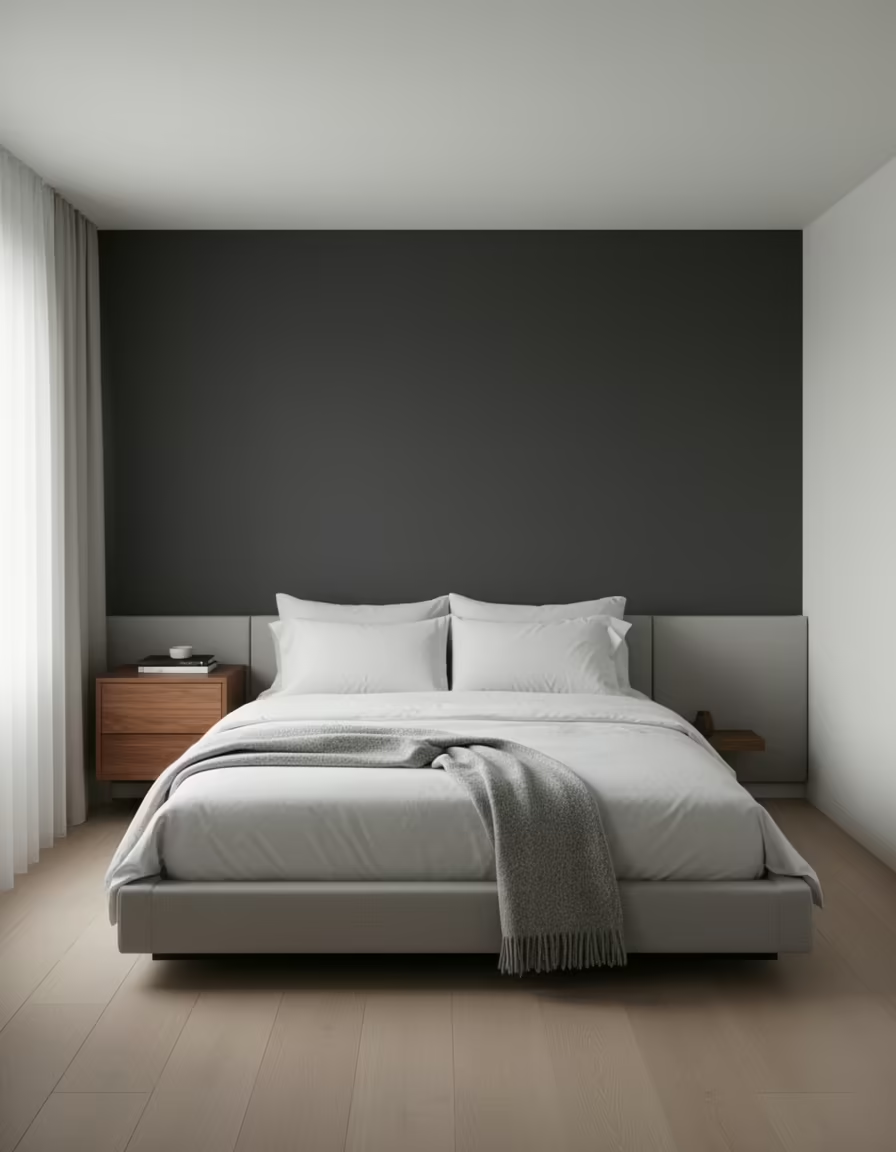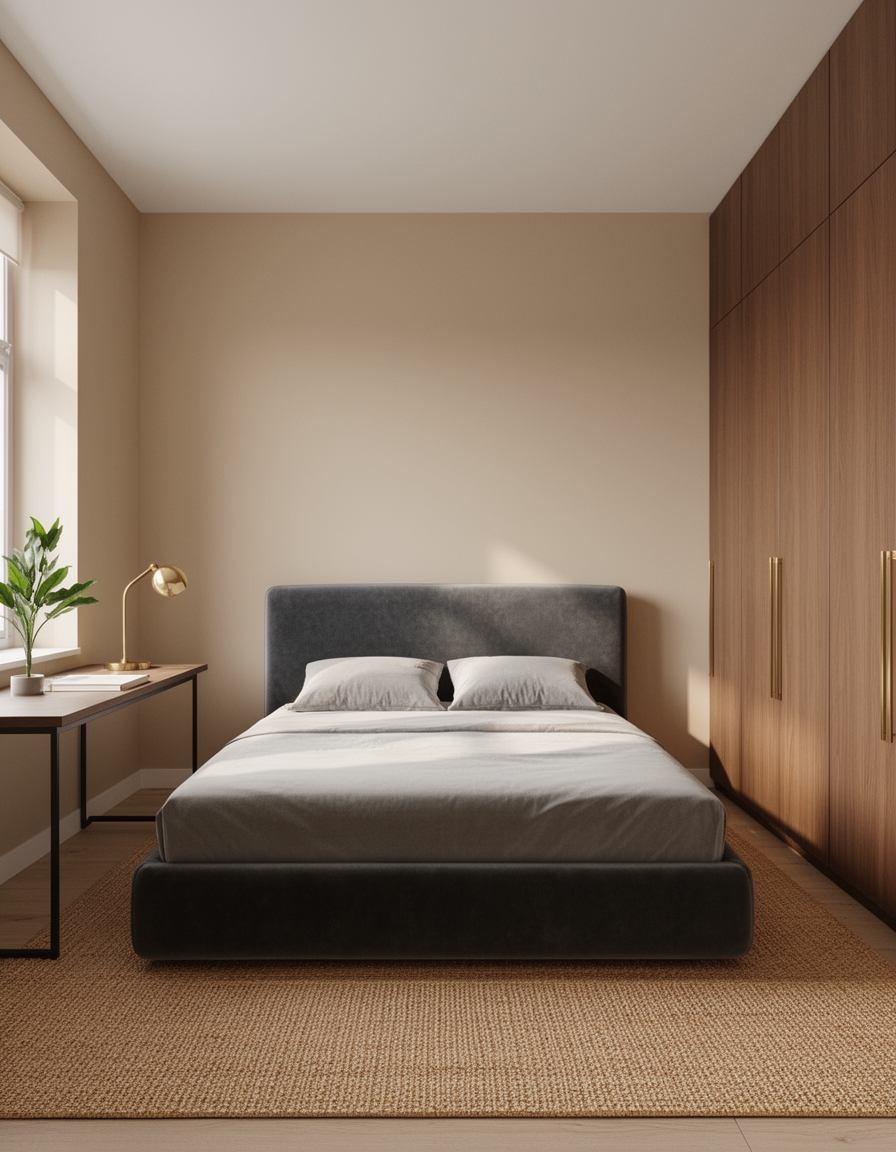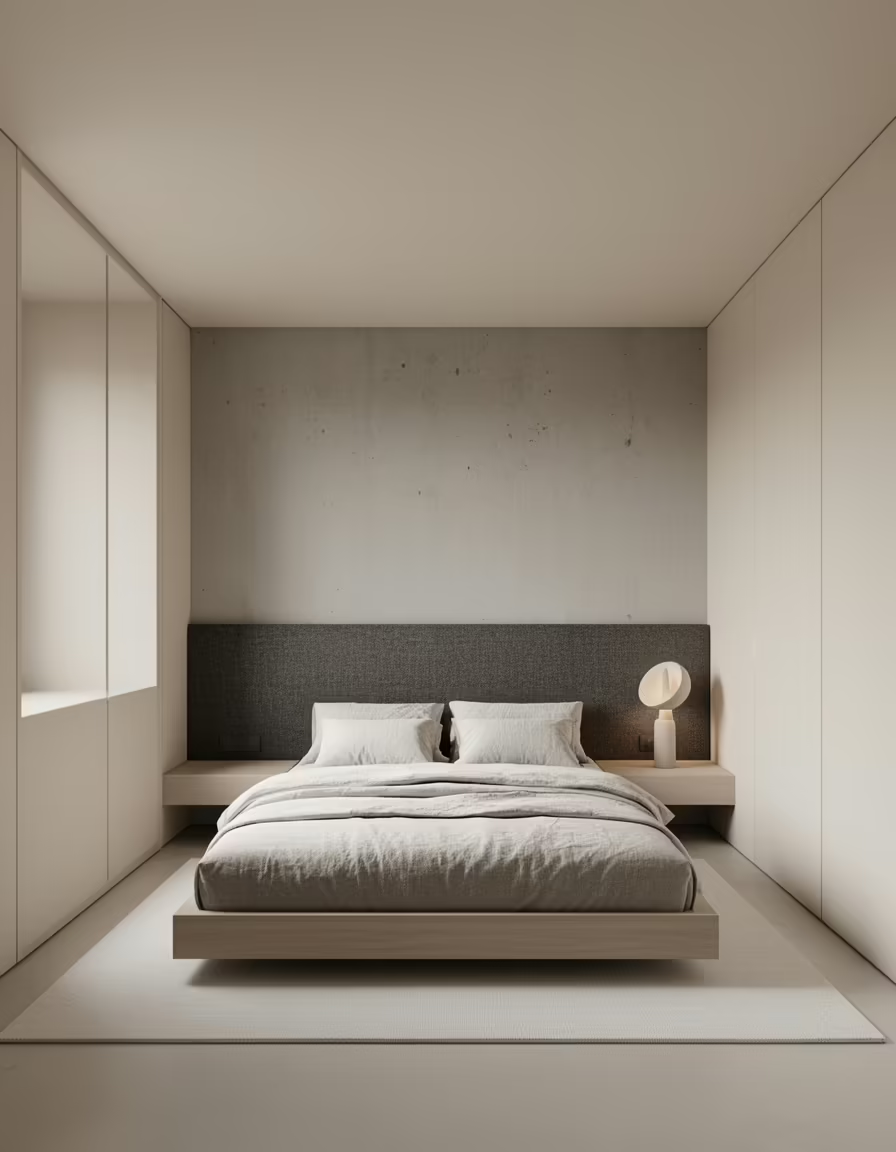
A small bedroom can feel like a problem to solve or a cozy space to design, and the difference usually comes down to a plan. Cram a tiny room with full-size furniture and it shrinks; treat the same square footage with a few smart moves and it breathes.
These are the aesthetic bedroom ideas for small rooms worth saving, the ones I come back to on real tight-space jobs. We’ll start with priorities, then work through storage, color, and furniture that earns its footprint. Each is renter-friendly, most are budget-friendly, and you can knock out the first this weekend.
Small-Room Wins at a Glance
| Move | What to do | Rough cost |
|---|---|---|
| Buy up, not out | Use vertical shelves and tall storage to free the floor | $30 to $120 |
| Lighten the palette | Soft, warm whites and pale tones to bounce light | $6 to $40 in paint |
| Make furniture multitask | A storage bed or lift-top bench that hides clutter | $80 to $250 |
| Add a mirror | One large mirror opposite the window to double the light | $40 to $150 |
Define Your Bedroom Priorities Clearly
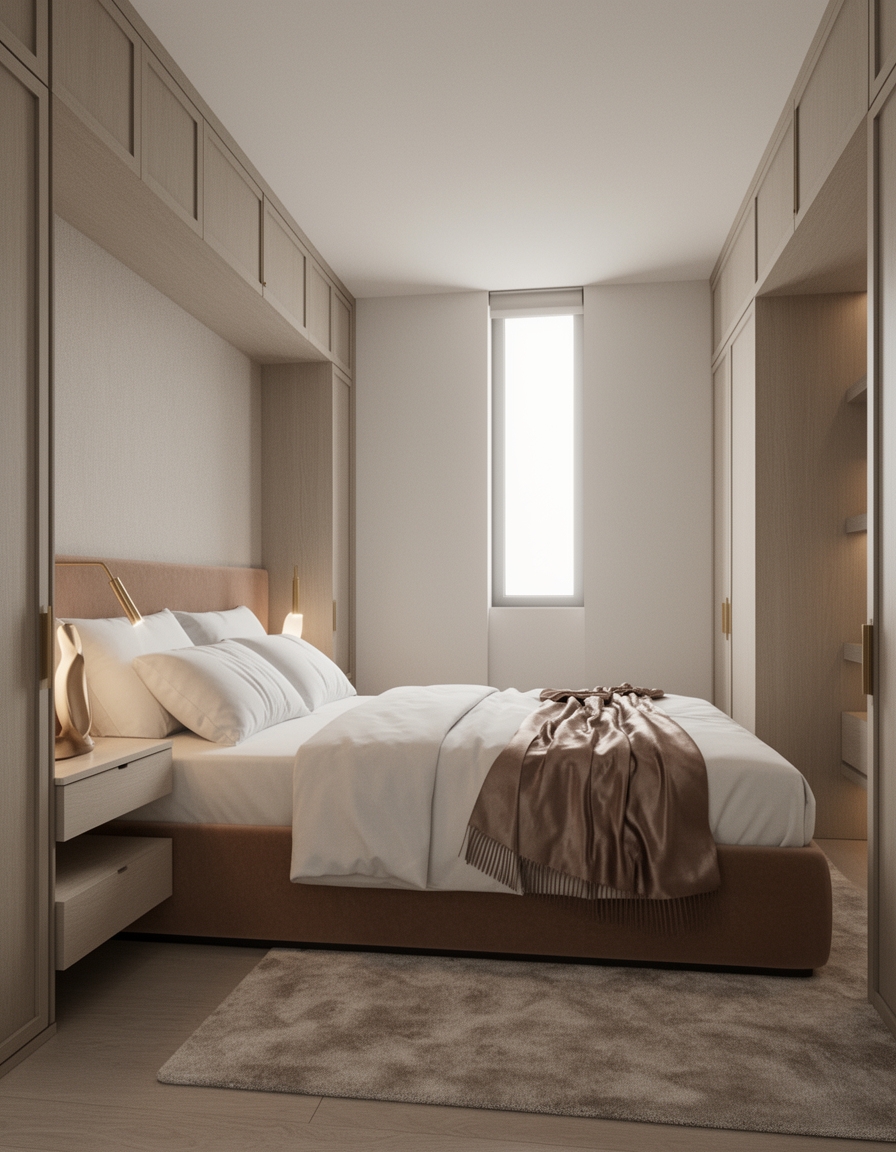
Small rooms punish guesswork, so before you buy anything, get clear on what the room must do. On every tight-space job I start with the same three questions, and they save people from costly mistakes. Run them on your own room and the plan almost writes itself.
- What’s non-negotiable? Sleep, getting dressed, maybe a tiny desk. Protect those functions before any decor.
- What can go? Be honest about the dresser you barely open or the chair that holds laundry. Floor space is the luxury here.
- How does your morning flow? Map the path from bed to door to closet, and keep that route clear so the room feels open.
Maximize Space With Smart Storage
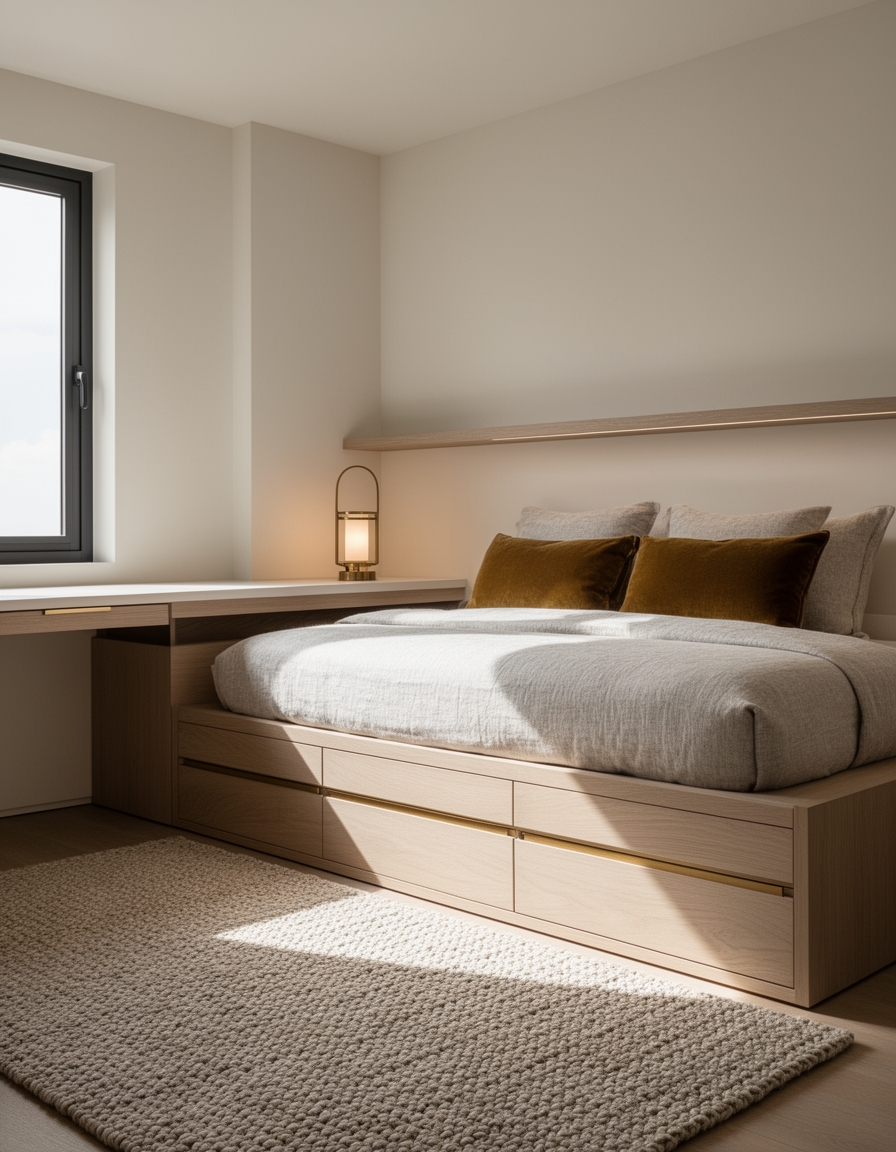
In a small room, storage is the whole game, and the best storage disappears. The space under your bed is the biggest untapped zone most people own, so use it before you buy a single new shelf. I’ve cleared entire closets just by moving off-season clothes into flat under-bed bins, which freed the hanging space for everyday wear and made getting dressed in a tight room feel far less like a daily wrestling match with my own wardrobe.
- Slide under-bed bins or drawers ($15 to $50) for off-season clothes and spare bedding.
- Add a slim storage bench at the foot of the bed ($80 to $180) for a seat and hidden storage in one.
- Use the back of the door for hooks or an over-door organizer; it’s free wall you already own.
ℹ️Good to Know
Light, warm-toned walls can make a room feel noticeably larger because pale surfaces reflect more daylight than dark ones absorb. In a small bedroom, that reflected light is doing real work, which is why so many tiny-room makeovers start with a coat of soft white.
Calming Colors That Expand Small Spaces
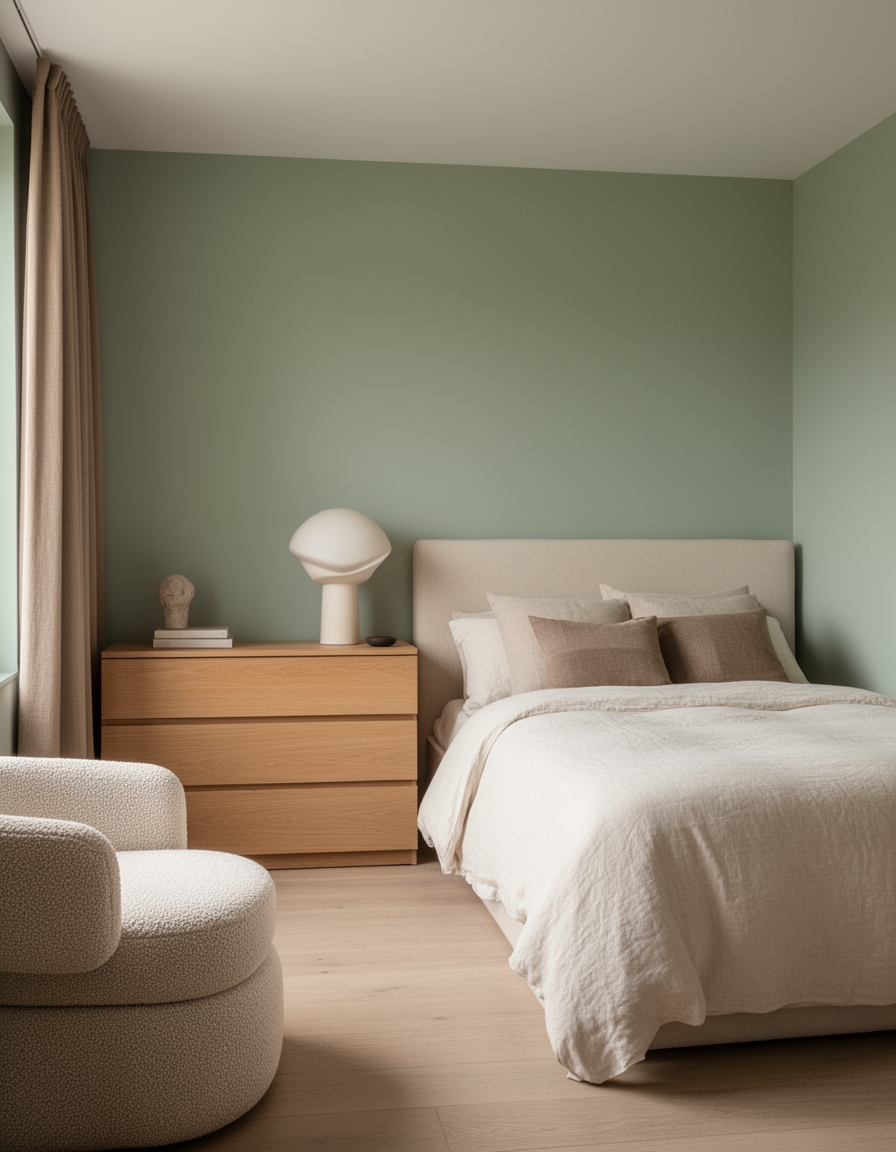
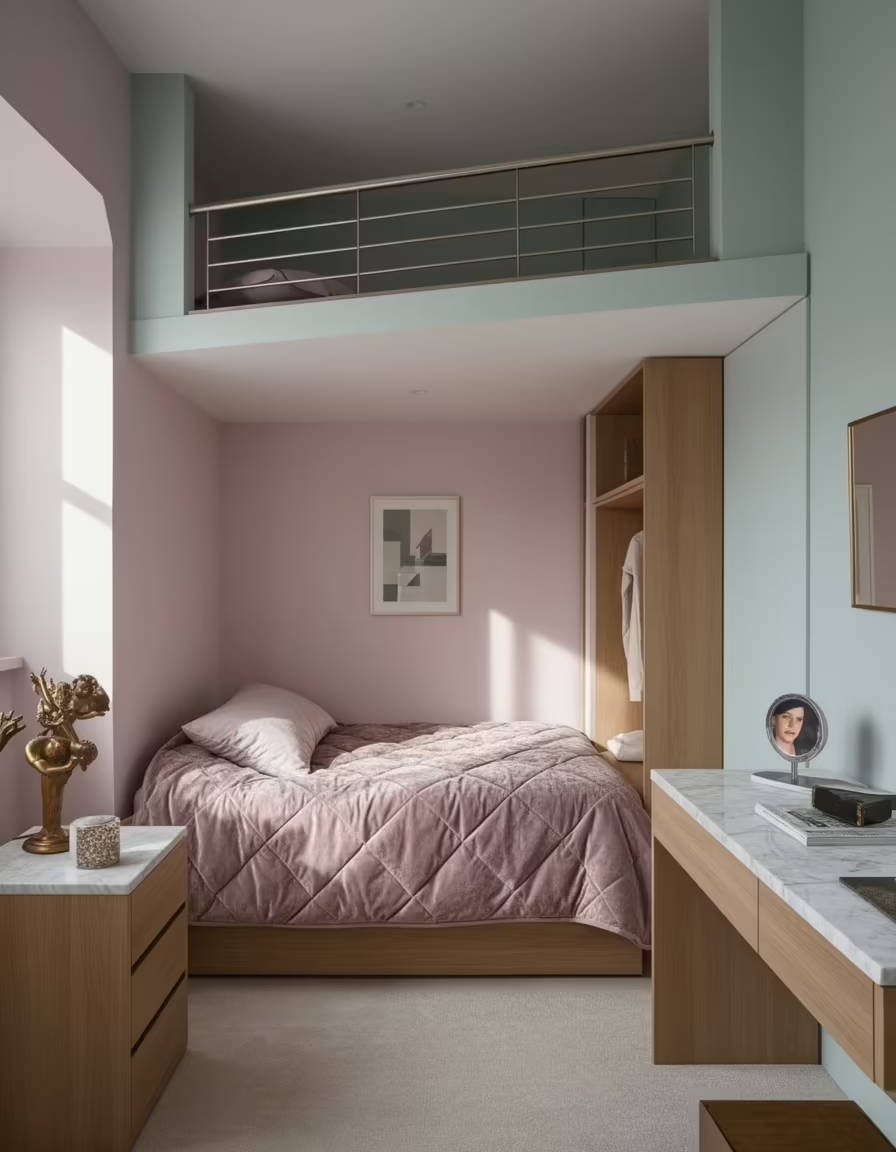
Light, soft colors make a small room feel larger because they bounce daylight around. Pale walls reflect; dark walls absorb. Warm whites, pale greige, and the gentlest sage or blue keep walls quiet and the space airy. Save the deep, dramatic tones for one accent so the room stays open and calm.
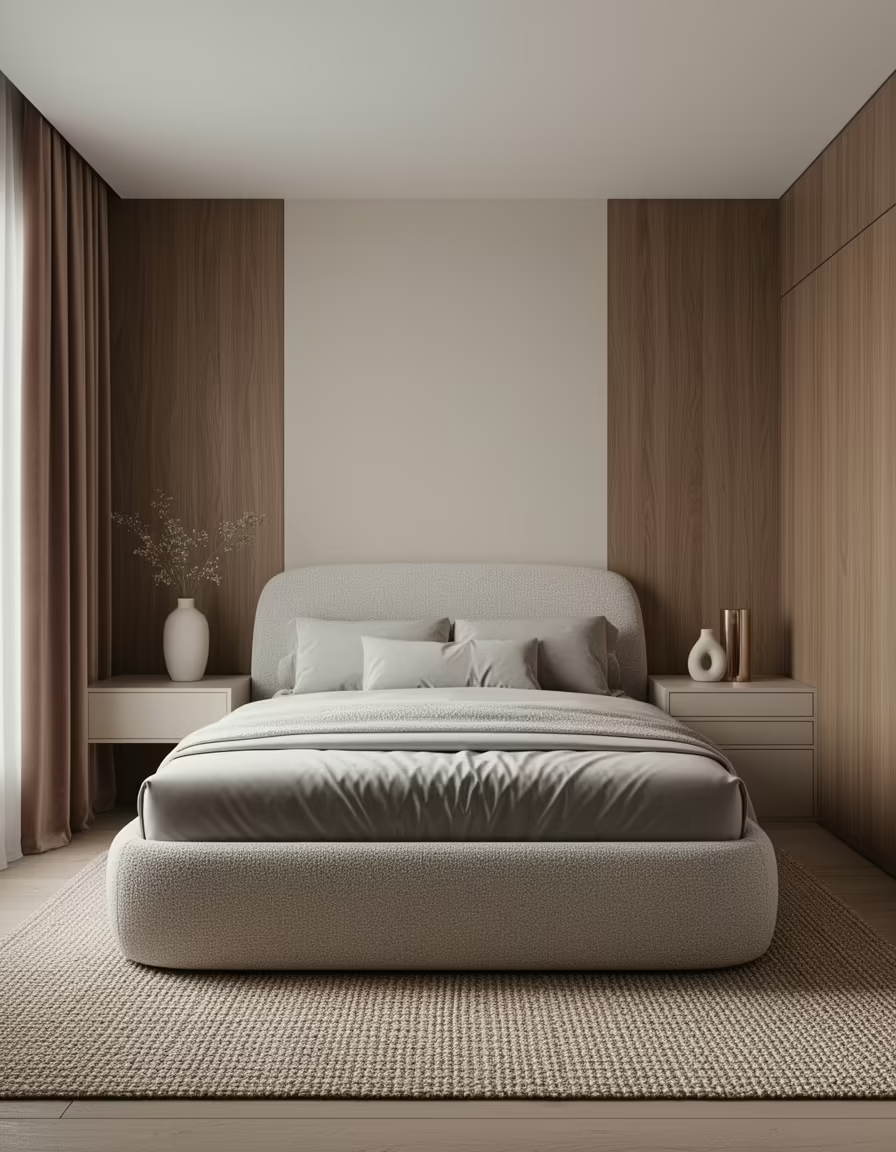
Keep walls, large furniture, and curtains in the same light family, then let texture carry the interest. A waffle throw, a linen curtain, and a jute rug add depth in a quiet room without throwing in a single loud color that would crowd the space visually.
A pint of sample paint runs $6 to $9, so test two whites at night before committing. For pairings tuned to small rooms, my [cozy bedroom color palette guide](cozy-bedroom-color-palette-ideas-changing) helps, and [small-room layouts that feel big](bedroom-ideas-for-small-rooms-feel-big) cover the bigger picture.
- Paint trim and walls close in tone so corners blur and the room feels taller.
- Hang curtains high and wide to draw the eye up and out past the actual window.
- Pick one matte accent color for a headboard wall or pillows, and stop there.
Space-Saving, Multi-Functional Furniture
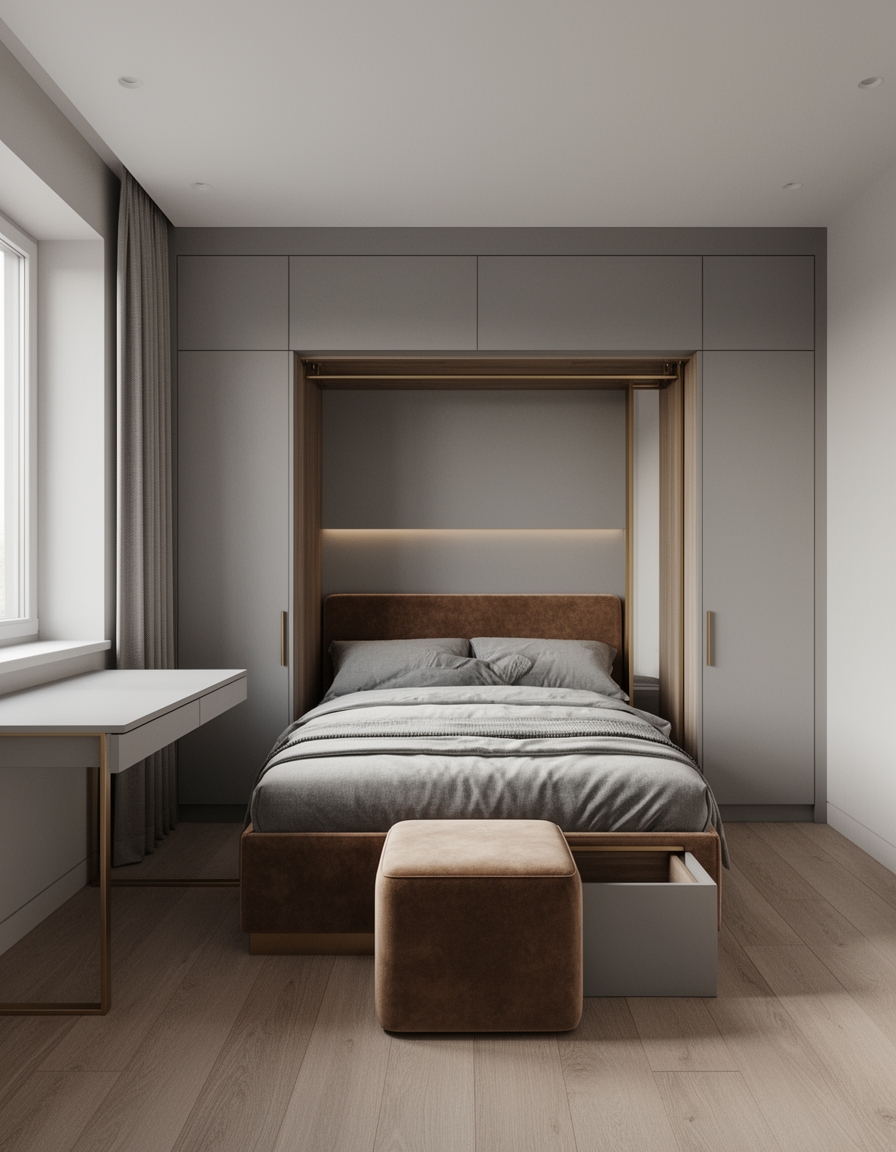
Every piece in a small room should pull double duty, because floor space is too precious for single-use furniture. A storage bed, a desk that doubles as a nightstand, an ottoman that opens up: each one buys you function while costing you no extra floor. This is where a small budget stretches the furthest, because one well-chosen piece quietly does the work of two.
Pieces That Earn Their Footprint
Scale matters as much as function. Choose pieces with legs you can see under, since visible floor reads as more space, and keep heights low so the ceiling feels higher. A leggy nightstand and an open-base bench feel airier than bulky, floor-hugging boxes. Let the light travel under your furniture.
When you shop, hunt secondhand for the bigger pieces. A solid wood storage bench or a slim writing desk shows up on local resale constantly for a fraction of retail. For more renter-safe layout ideas, see my [bedroom layout ideas for small rooms](bedroom-layout-ideas-for-small-rooms).
| Instead of | Try | Why it helps |
|---|---|---|
| A standard bed frame | A storage bed or platform with drawers | Hides bins and bedding under the mattress |
| A bulky dresser | A slim, tall chest or wall shelves | Uses height, not floor space |
| A floor nightstand | A wall-mounted or floating shelf | Frees the floor and feels lighter |
Vertical Storage for Organization
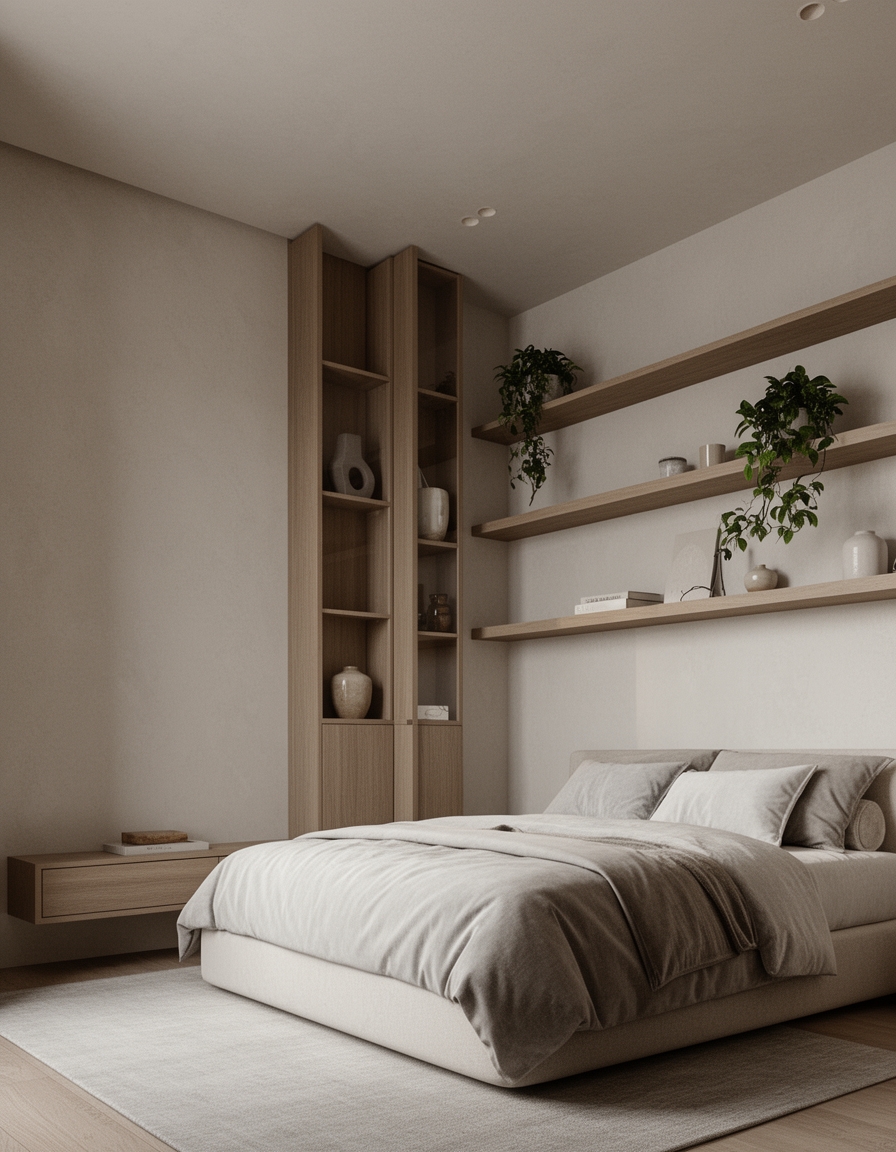
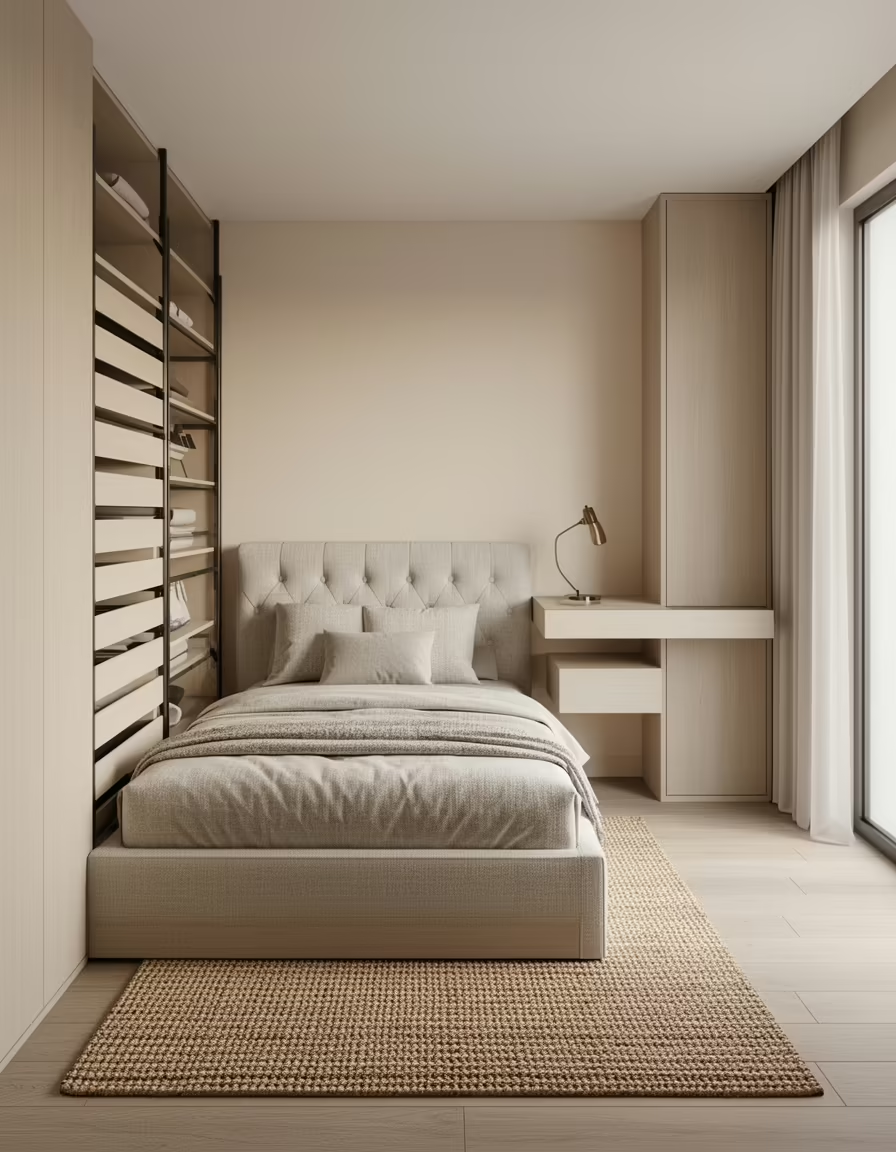
When the floor is full, the only direction left is up, and small rooms have far more wall than people use. Tall, narrow shelving and a few well-placed wall hooks turn empty vertical space into real storage. The trick is going high and slim so you gain capacity without crowding the room at eye level.
Going Up Without Crowding
Keep it organized and calm by curating what goes on open shelves. The top shelves hold pretty, rarely-used things; the reachable ones hold daily items in matching baskets so the wall stays tidy. I keep cords and clutter in lidded boxes up there so the surfaces below can stay clear.
Floating shelves and a slim wall-mounted nightstand also free the floor beside the bed, which makes the whole room feel more open. To keep those surfaces from filling back up, my [storage ideas that beat clutter](bedroom-storage-ideas-clutter) go deeper on systems that actually hold.
Styling Tips for a Polished Small Room
Once the function is sorted, a few styling moves make a small room look designed rather than just tidy. Hang one large mirror opposite the brightest window to double the daylight and the sense of depth; a 24-by-36-inch mirror runs $40 to $150 and does more for a small room than almost any other single piece. Lean into layered lighting too, since a couple of warm lamps make a tiny space feel cozy and intentional after dark.
Then edit hard. In a small room, three considered objects on a shelf look richer than ten crammed together, so choose a few pieces you love and let them have room to breathe. Keep one surface deliberately clear, hang art at eye level, and the whole space reads calm and curated instead of cramped.
Light and Mirror Tricks That Open a Room
Light is the cheapest way to make a small room feel bigger, and most of it is free. Open the curtains fully every morning so daylight reaches the back walls, and keep window areas clear of bulky furniture that blocks the glow. A dim small room always feels smaller than it is.
Mirrors multiply whatever light you have. Place one across from the window and the room borrows the view and the brightness, which instantly adds depth. A mirrored closet door or a tall leaning mirror works just as well, and reflective surfaces like a glass lamp base quietly add to the effect.
After dark, layer warm light at a few heights so the room never relies on one harsh ceiling bulb. A bedside lamp plus a small accent light makes even a box room feel calm and roomy. Warm light at two heights does more than one bright bulb. My full [bedroom lighting ideas for mood](bedroom-lighting-ideas-mood) walk through placement for tight spaces.
Common Small-Room Mistakes to Avoid
A handful of predictable mistakes make small rooms feel smaller, and they’re all easy to dodge. The first is buying furniture that’s too big for the space because it was on sale. A king bed in a box room leaves no walking path, and the whole space tightens. Measure first, and leave at least 24 inches of clear floor on the main side of the bed so the room can move.
The second is letting clutter live on every surface. In a tiny room there’s no slack, so open shelves and the nightstand fill fast and the calm vanishes. Give the daily small stuff a closed home, a drawer or a lidded basket, and the eye gets to rest on clear space instead of a pile of cords and receipts.
The third is dark, heavy window treatments that swallow the daylight a small room badly needs. Swap them for light, airy curtains hung high, and the same window suddenly works harder. Pair that with a mirror and a coat of warm white, and a dim little room turns bright and open for well under a hundred dollars.
Maintenance & Care for a Tidy Tiny Room
A small room shows clutter fast, so the upkeep is mostly about staying ahead of it. Do a two-minute reset each night, clearing the one surface you keep open and returning stray items to their bins. Wash and rotate bedding every two to three weeks so the bed stays fresh, and the room keeps its calm without much effort or any real time investment on a busy week.
Once a season, edit again. Pull anything you haven’t used, swap a textile or two to mark the weather, and check that your storage is still earning its space. Small rooms reward this habit more than big ones, because every item that leaves the room gives you back a little floor space you can actually see and feel.
Small-Room Bedroom Questions, Answered
?How do I make a small bedroom look bigger?
Lighten the walls, free the floor with under-bed and vertical storage, and hang one large mirror opposite the window. Those three moves add the most visual space for the least money and effort.
?What furniture works best in a tiny bedroom?
Pieces that do two jobs: a storage bed, a lift-top bench, a desk that doubles as a nightstand. Choose items with visible legs and lower profiles so the floor and ceiling both feel more open.
?Can a small bedroom still feel cozy and not cramped?
Yes. Keep the palette light and warm, edit surfaces down to a few loved objects, and layer soft lighting. Cozy comes from warmth and order, both of which are easy to get in a small space.
Small Room, Big Payoff
A small bedroom done well can feel calmer and cozier than a large one that’s never quite finished. Start with priorities, free the floor with vertical and hidden storage, lighten the palette, and let mirrors and warm light do the rest. None of it requires knocking down a wall or a big budget.
Save the one idea that fixes your biggest frustration, try it this week, and build from there as time and money allow. Your small room has more potential than it’s showing you right now.