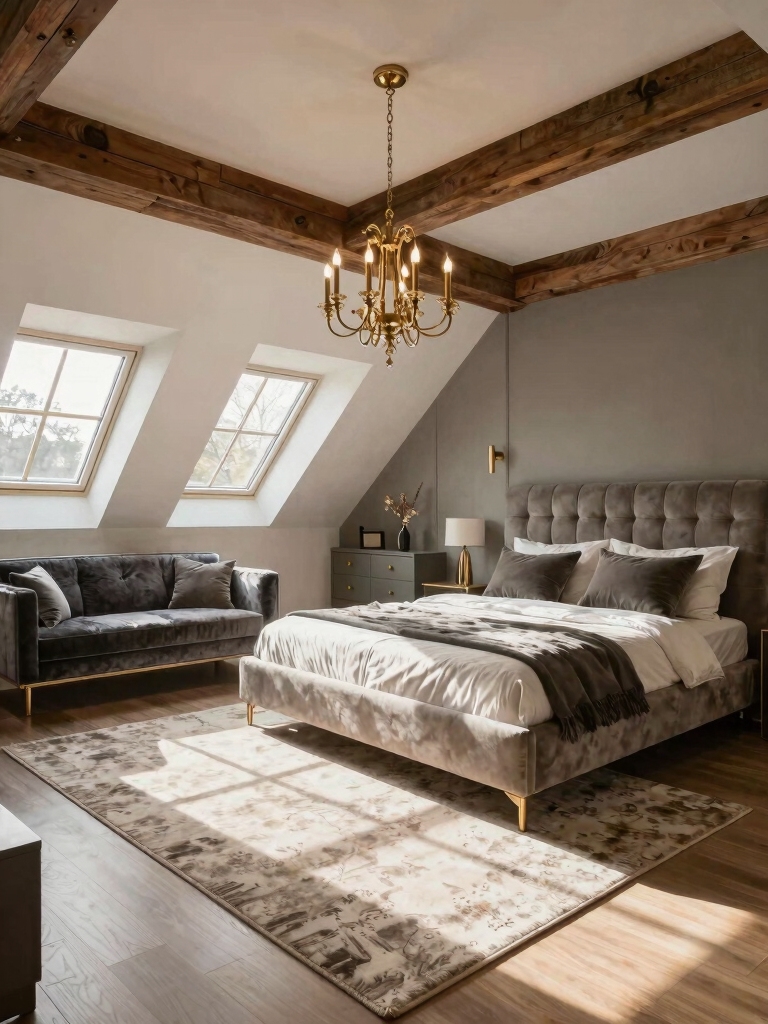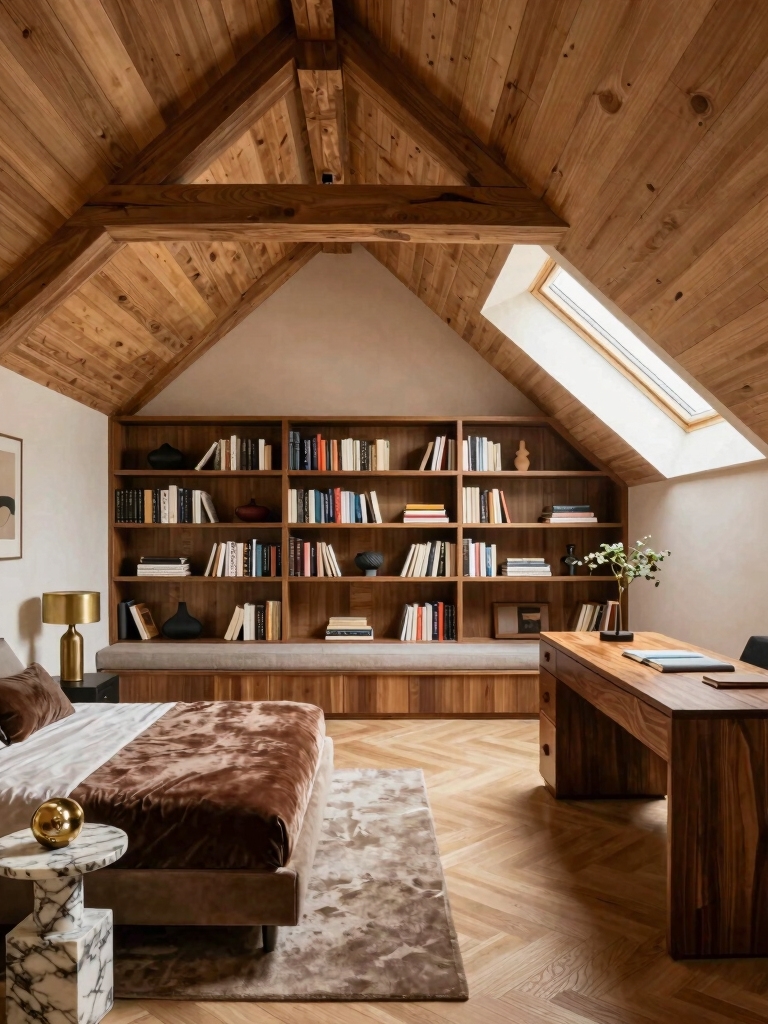

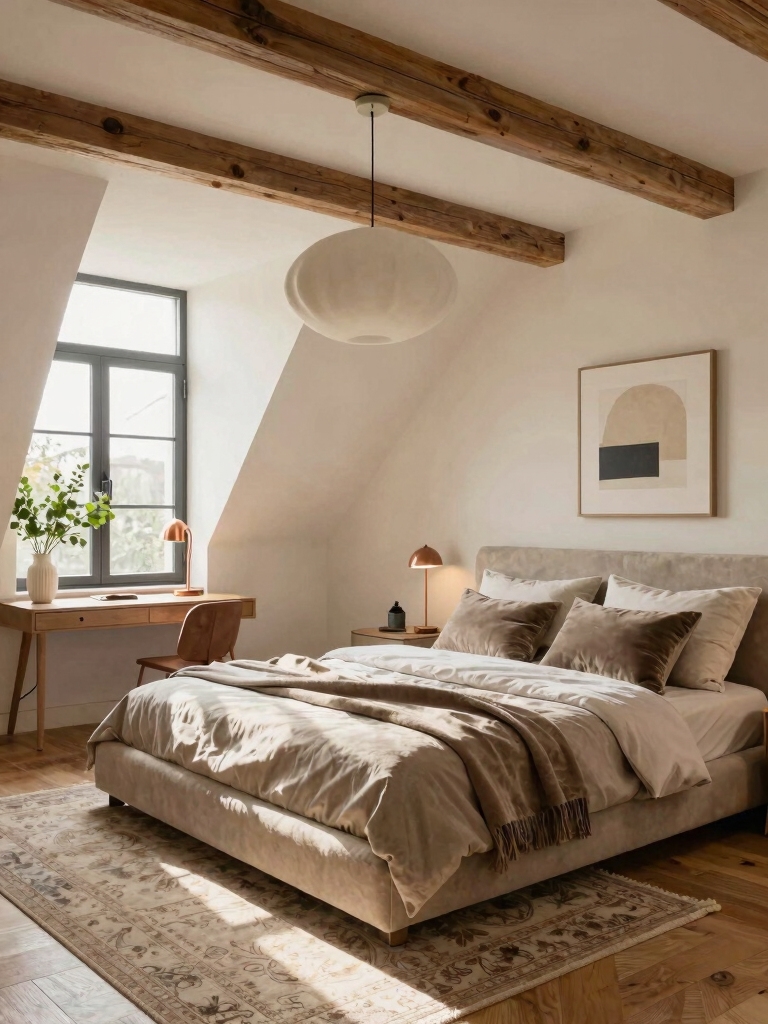
An empty attic looks like a problem: low slopes, odd angles, one small window. The same space, styled right, becomes the coziest room in the house, the one with the sloped ceiling that makes the bed feel like a nest. The angles aren’t a flaw. They’re the whole charm.
These attic bedroom ideas lean into that charm, the palettes, textures, light tricks, and storage that turn an awkward loft into a room people obsess over. I’ve leaned on every one of these in real eaves-and-angles spaces. Take the ones that fit your ceiling and your budget, and the quirks start working for you.
What Makes an Attic Bedroom Sing
The attic-specific wins are light and warmth: maximize every bit of natural light, keep the palette soft so the angles feel airy, and layer texture so the room feels cocooning and snug. Work with the slopes, not against them.
After that, the usual rules apply with an attic twist. Tuck storage into the eaves and knee walls, place the bed under the highest slope, and add warm, layered light to flatter the ceiling lines. Lean into the angles and the room turns into the one everyone wants to nap in.
Stylish Small-Space Transformations
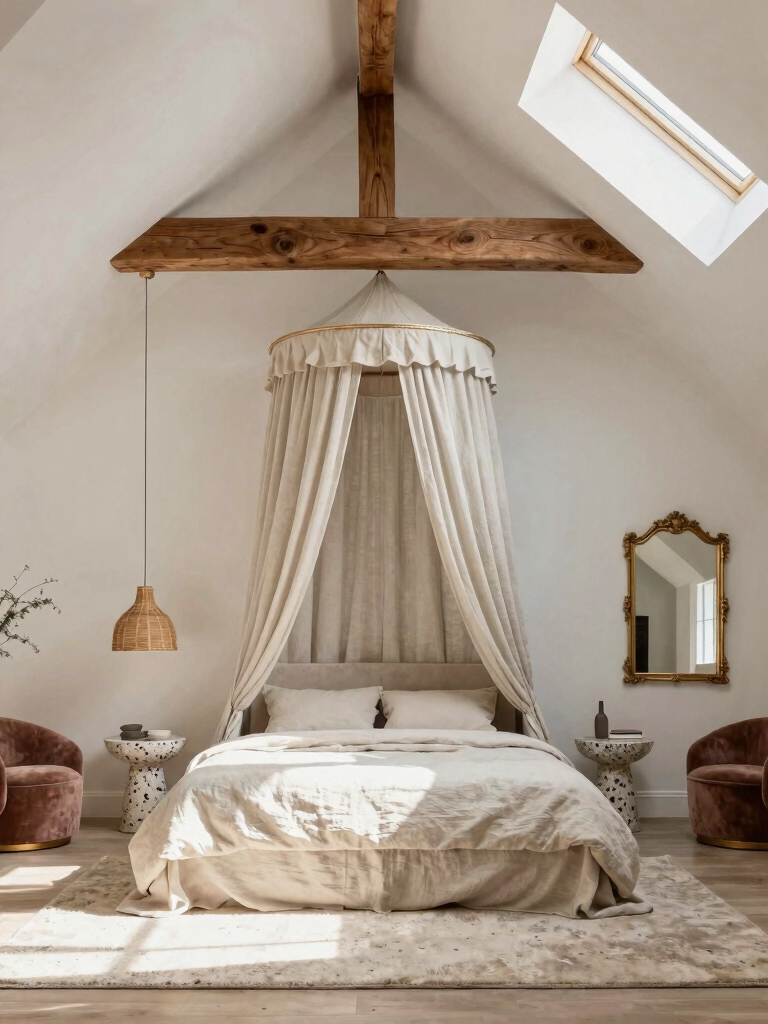
The reason aesthetic lovers obsess over attic bedrooms is the payoff: a cramped, slope-ceilinged box becomes a tucked-away retreat with more character than any square room. The angles create natural alcoves. The low eaves feel sheltering, and a single skylight can flood the space with light. You’re not fighting the architecture; you’re styling around its best features.
Start by reading the room honestly. Find the highest point for standing and the bed, note where the slopes cut in, and picture the natural zones the angles already suggest. Reading the room first, even just a ten-minute look, shapes every choice that follows, and it’s what separates a loft that feels charming from one that feels like a crawlspace with a mattress in it.
Balanced Neutrals With Bold Accents
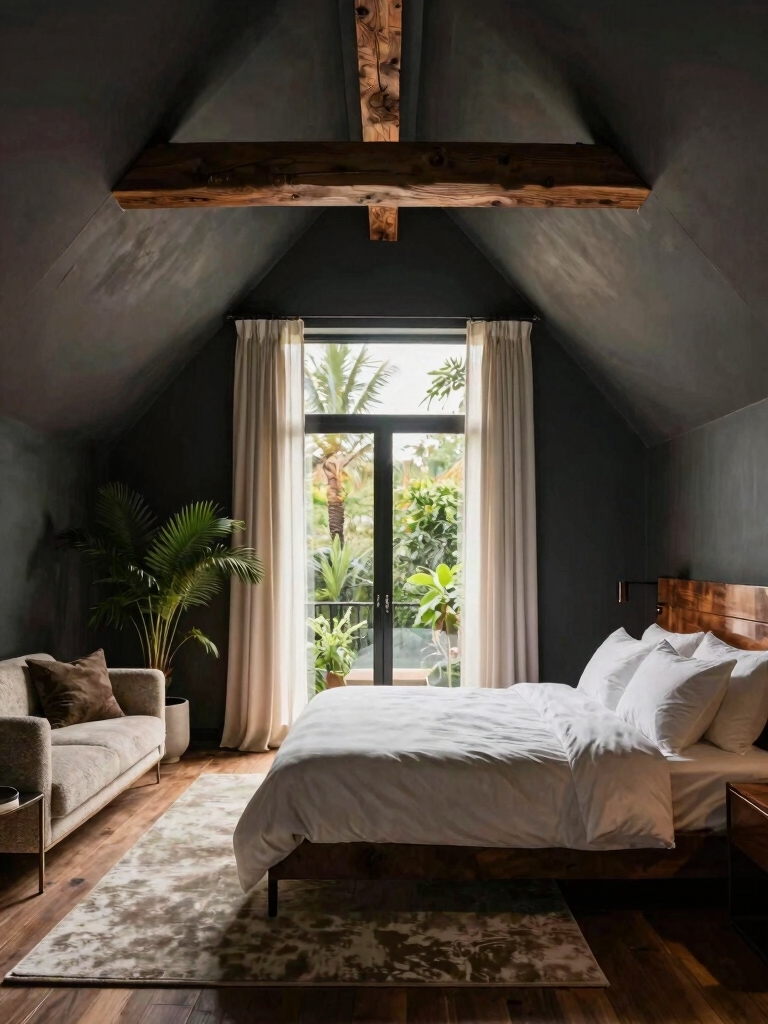
Color does double duty in an attic, setting the mood and managing how the angles look. A soft, light base (warm white, pale greige, gentle oatmeal) keeps low ceilings feeling airy and lets the slopes recede. Paint the walls and the sloped ceiling the same soft tone, and the angles blur into one calm shell. Suddenly the ceiling looks like a soft, enveloping curve and not a set of awkward cuts, and the whole loft feels deliberate.
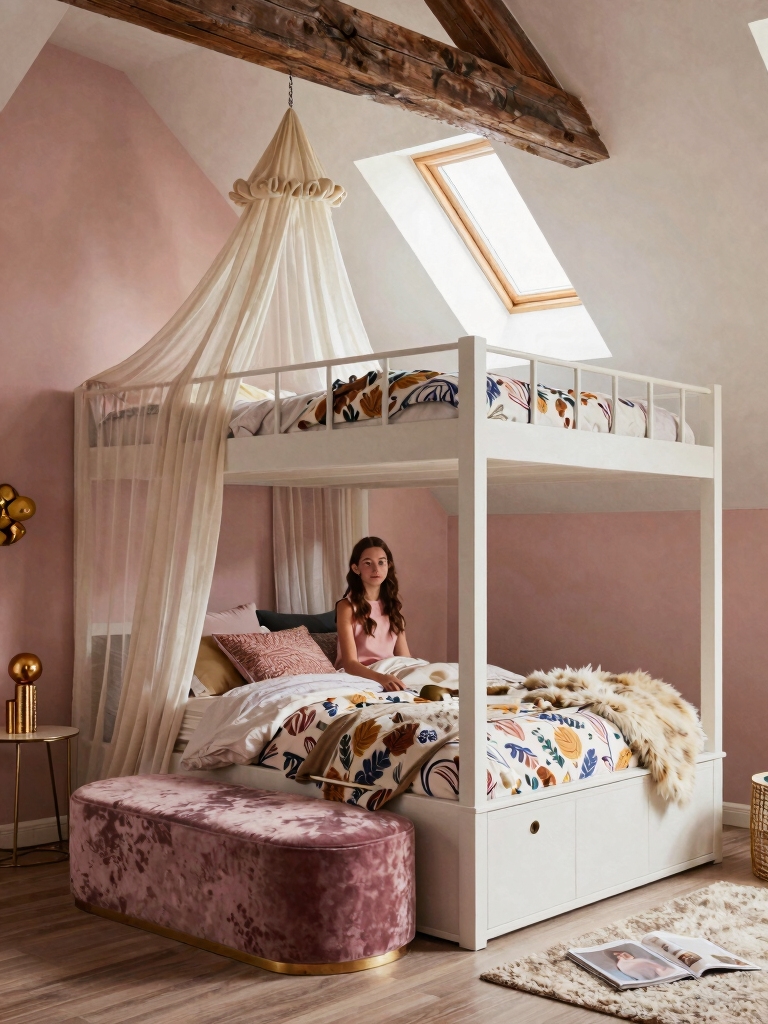
Then bring in personality with a controlled accent. A single moody wall in the gable end, a warm wood floor, or rich textiles give the room real depth. Keep the bold color to one zone so the eye has somewhere to land and the rest stays open. For pairings that suit low light, see my [cozy bedroom color palette guide](cozy-bedroom-color-palette-ideas-changing) and [attic paint ideas that set the mood](attic-bedroom-paint-ideas-set-mood).
- Paint walls and sloped ceiling the same light tone so the angles soften and the room feels taller.
- Reserve any bold color for the flat gable wall, where it adds drama without lowering the slopes.
- Carry one accent color through textiles and art so the scheme stays cohesive.
🅰️Paint the slopes
Best for a calm, enveloping look; one soft tone on walls and ceiling makes the angles disappear and the room feel taller.
🅱️Accent the gable
Best for personality; keep the slopes light and put your bold color on the one flat wall so it adds drama without closing in.
Brighten Tiny Attic Nooks
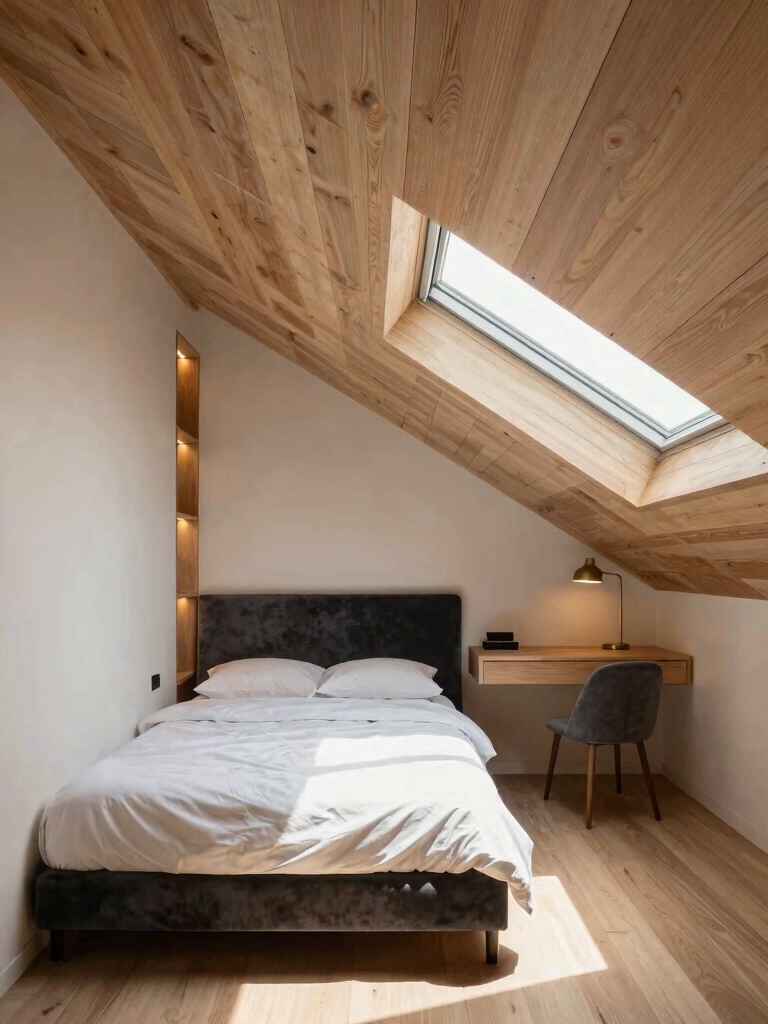
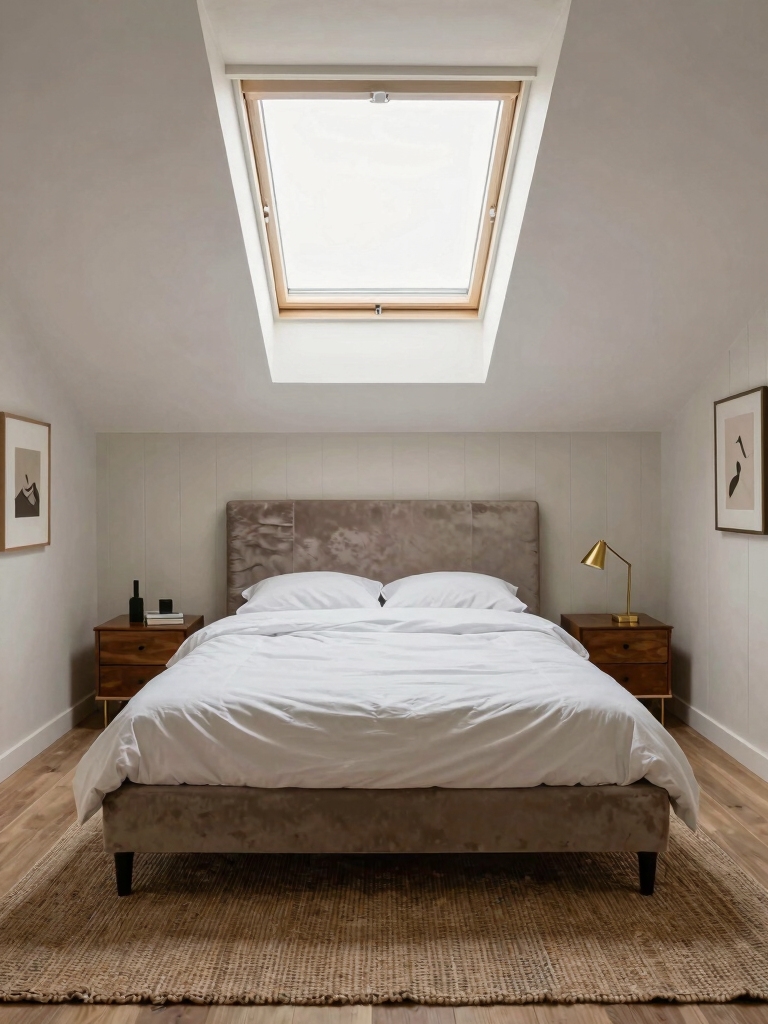
Light is the make-or-break of an attic, since these rooms often start with one small window and a lot of shadow. Get every bit of daylight you can: keep windows and skylights clear, skip heavy treatments, and use sheer or light-filtering shades that hold privacy without blocking the glow. A clean skylight alone can transform a dim loft, since light is everything up here.
Borrow Light You Don’t Have
Then bounce what light you have. A mirror placed across from the window doubles the daylight and the sense of space, and pale, slightly glossy finishes on walls or furniture keep light moving around the room. These tricks cost little and pay off all day.
After dark, layer warm light so the angles feel intentional. A bedside lamp, a low accent glow, and wall sconces that wash the sloped ceiling keep the room soft and dimensional. My [bedroom lighting ideas for mood](bedroom-lighting-ideas-mood) cover placement, which matters even more under a slope.
Warm Textiles for Cozy Spaces
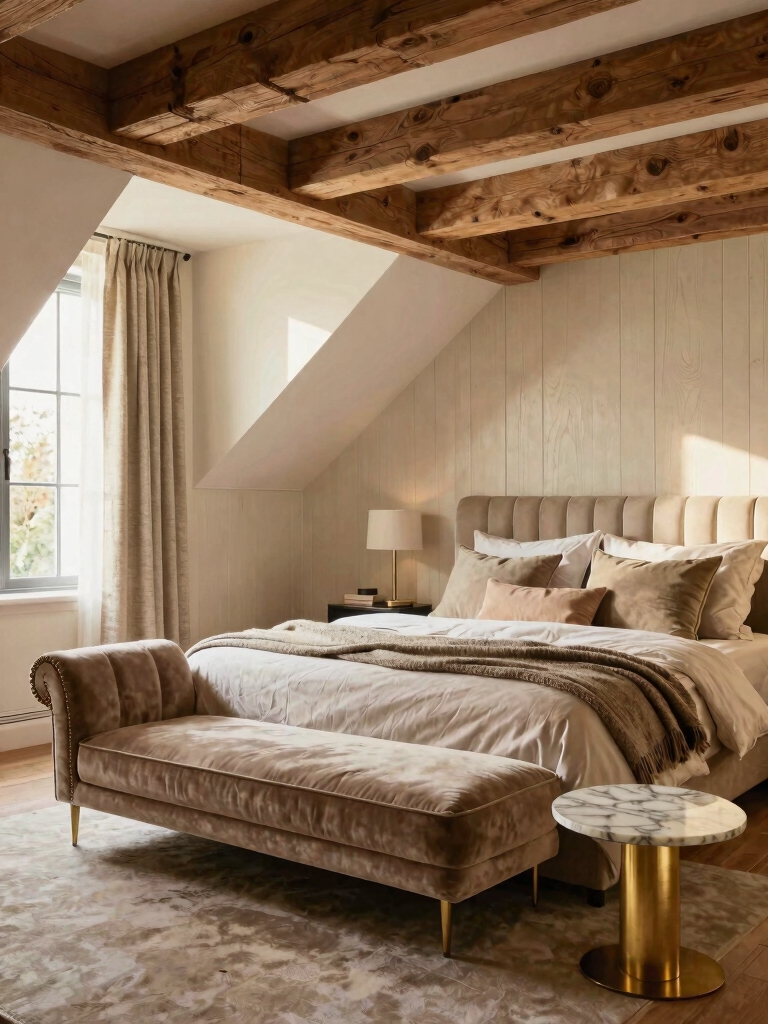
Texture is what makes an attic feel like a nest instead of a storage room, and it’s where the obsession really starts. Layer a few weights and the low, sheltering ceiling becomes a feature you want to curl up under. Build it in this order for a cozy, collected loft.
- Ground the floor with a soft rug ($90 to $200 for a 5×7); bare attic floors run cold and echo.
- Dress the bed in mixed weights: crisp sheets, a mid-weight quilt, one chunky throw for shadow.
- Soften hard angles with a textured curtain or a woven hanging on the gable wall.
- Add a knit pillow or two so the eye finds tactile warmth at every level.
The attic myth that keeps people from trying:
❌ Myth: Low, sloped ceilings make a room feel cramped.
✅ Reality: Sloped ceilings make a room feel cozy and sheltering when you lean into them. The trick is placing the bed and seating where headroom isn’t needed.
❌ Myth: Attics are too dark to be a real bedroom.
✅ Reality: One clean skylight plus a mirror and light walls can make an attic brighter than many ground-floor rooms. Light is a fixable problem.
Clever Attic Storage Solutions
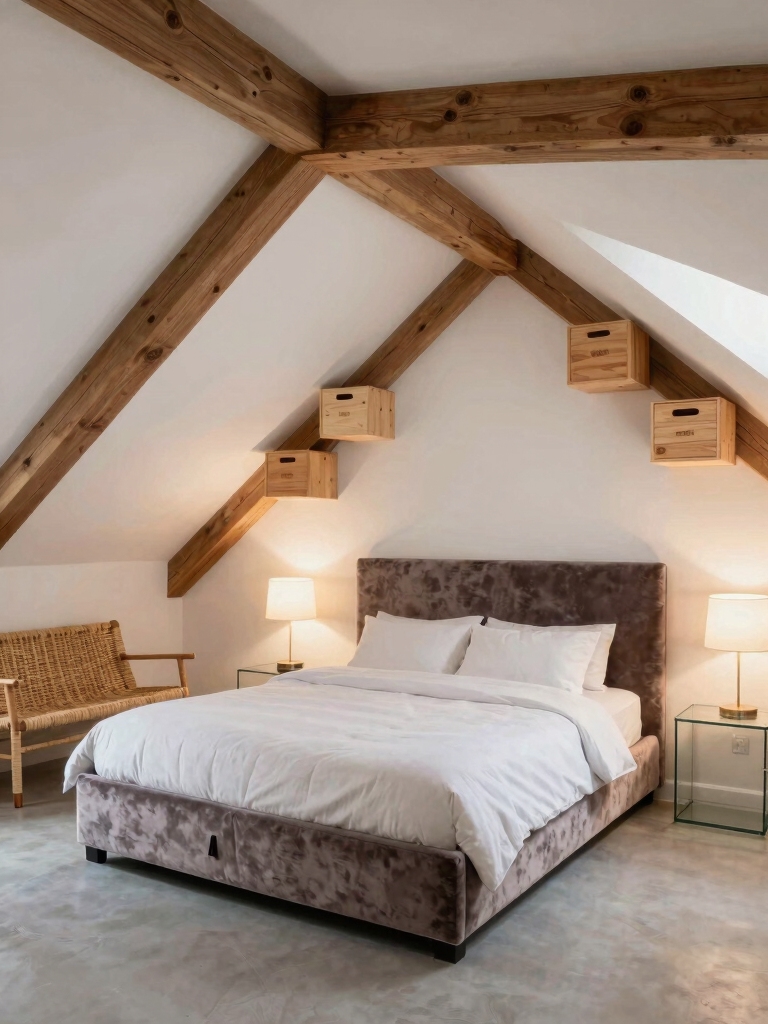
Attics hide their best storage in the spots a square room doesn’t have: the low eaves and knee walls where you can’t stand anyway. Building shelves or drawers into that dead triangle turns useless inches into real capacity, and it keeps the floor clear so the room feels open. This is the move that makes a small loft actually livable.
Where built-ins aren’t an option, work with the angle. Low bins and labeled totes slide neatly under the slope, a curtain rod across an eave becomes a hanging rail, and a bench at the foot of the bed hides off-season bedding. A set of low storage bins runs $15 to $50. For more systems, see my [storage ideas that beat clutter](bedroom-storage-ideas-clutter).
Style the Bed as a Tucked-In Nest
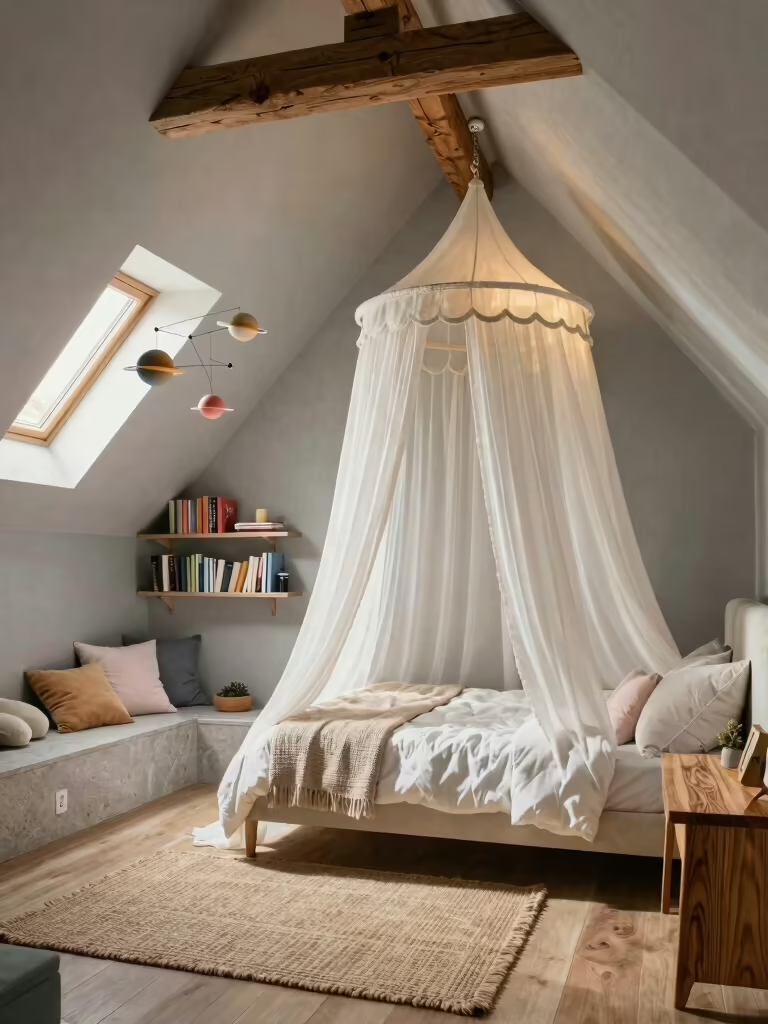
The reason attic bedrooms photograph so dreamily is the bed tucked right under the slope, low and sheltered like a berth on a ship. Lean into that look: a low platform frame, a deep headboard, and pillows piled toward the eave so the angle hugs the bed instead of looming over it. The slope stops being a problem and becomes the canopy.
Dress it for the nest effect. A run of fairy lights along the eave, a small sconce on the slope, and layered bedding in soft tones turn the lowest corner of the room into the coziest. This is pure aesthetic payoff, and it is why these rooms feel like a retreat the moment you flop onto the bed.
The headroom mechanics matter too, of course, but they are quick: headboard to the tall wall, low frame, clear path along the peak. I keep those moves brief here because my [sloped-ceiling attic loft ideas](attic-loft-bedroom-ideas-sloped-ceiling-need) and [low-ceiling attic ideas](attic-bedroom-ideas-low-ceiling-rock) walk through the placement math in full.
Statement Lighting and Cozy Zoning
An attic loves a little drama overhead, and lighting is the easiest place to add it. A single bold pendant hung from the peak draws the eye up and celebrates the height you do have, while wall sconces wash the slopes with warm light that flatters the angles. Keep everything on dimmers so the room can shift from bright to hushed.
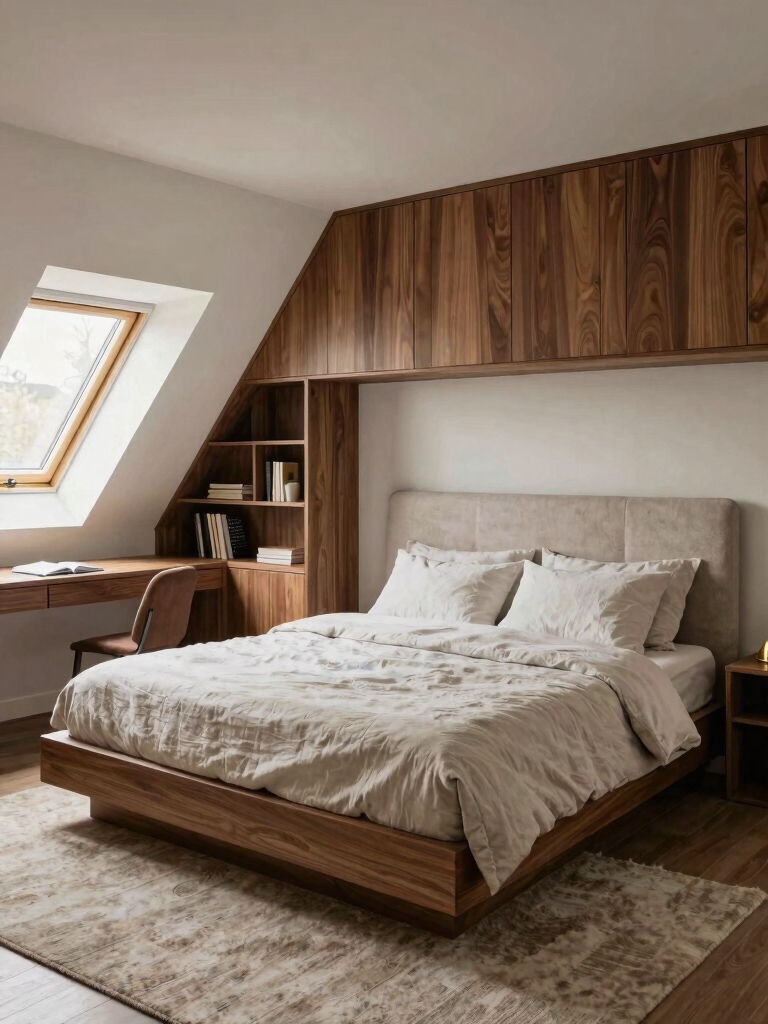
Use the angles to carve out cozy zones, too. A low eave becomes a reading nook with a chair, a lamp, and a shelf; a dormer makes a natural little desk alcove; the area under the highest slope stays the sleep zone. The architecture has already drawn the zones for you, so you’re just furnishing them.
Mark each zone with its own pool of light and a small rug, and the loft reads like several intentional spaces rather than one odd-shaped box. That layering is a big part of why these rooms photograph so well and feel so calm to be in.
Greenery, Sound, and Personal Touches
The finishing layers are what tip an attic from nice to obsessed-over. A little greenery softens the hard angles: a trailing plant on a high shelf, a compact pot on the sill, or a hanging fern near the skylight brings life to tricky corners. Keep it to a few healthy plants. A little greenery looks lush; a jungle of pots just reads as clutter.
Attics can echo, so soft materials do quiet double duty. A thick rug, dense curtains, and upholstered pieces absorb sound and warmth at once, keeping the room quiet and calm to sleep in. Finish with the personal layer, a few framed photos on a ledge, a keepsake or two, textiles in your colors, and the loft stops feeling generic and starts feeling unmistakably yours.
Built-Ins and Wardrobes That Fit the Angles
Standard furniture rarely fits an attic, which is exactly why built-ins make these rooms sing. A wardrobe that follows the slope, a desk that folds down from a knee wall, shelves that tuck into the eaves: each one claims space a freestanding piece would waste. Custom built-ins run roughly $150 to $400 per linear foot, but in an attic they often pay for themselves in storage a freestanding piece could never reach.
If a full custom job is out of reach, fake it cheaply. A row of off-the-shelf cabinets topped with a board makes an instant window seat with storage underneath. A tension rod across an eave gives you a hanging rail for almost nothing. The angle does the styling; you just fill it smartly.
Keep wardrobes tall and slim along the highest wall so you store up where the headroom lives. Mirror the doors and you bounce light while you’re at it. That doubling of function is what makes an attic feel generous and roomy, since one slim, mirrored wardrobe quietly handles storage, reflection, and the illusion of a taller room all at once.
Keeping an Attic Bedroom Comfortable Year-Round
Attics swing with the seasons more than other rooms, so a little upkeep keeps the comfort steady. Heat rises, so a fan helps in summer and a warm layer of textiles helps in winter; swap a heavy throw for a light cotton one as the weather turns, and the room stays usable all year. Check that any skylight or window seals are tight before the cold sets in.
Keep the styling fresh with small, regular moves: run the bedding through a normal wash so it stays soft, give the rug a weekly once-over since attic floors gather dust, and rotate a textile or a plant when a season changes. These tiny habits keep that obsessed-over feeling alive long after the initial makeover.
Let the Angles Do the Work
An attic bedroom rewards you for working with its quirks instead of resenting them. Lighten the palette, chase every bit of daylight, layer warm texture, tuck storage into the eaves, and place the bed under the highest slope, and the awkward loft becomes the room you never want to leave. The angles work for you once you stop fighting them and start framing the bed and the light around the height you actually have. None of it requires moving a single wall.
Which angle in your attic could become the cozy corner everyone wants to claim?