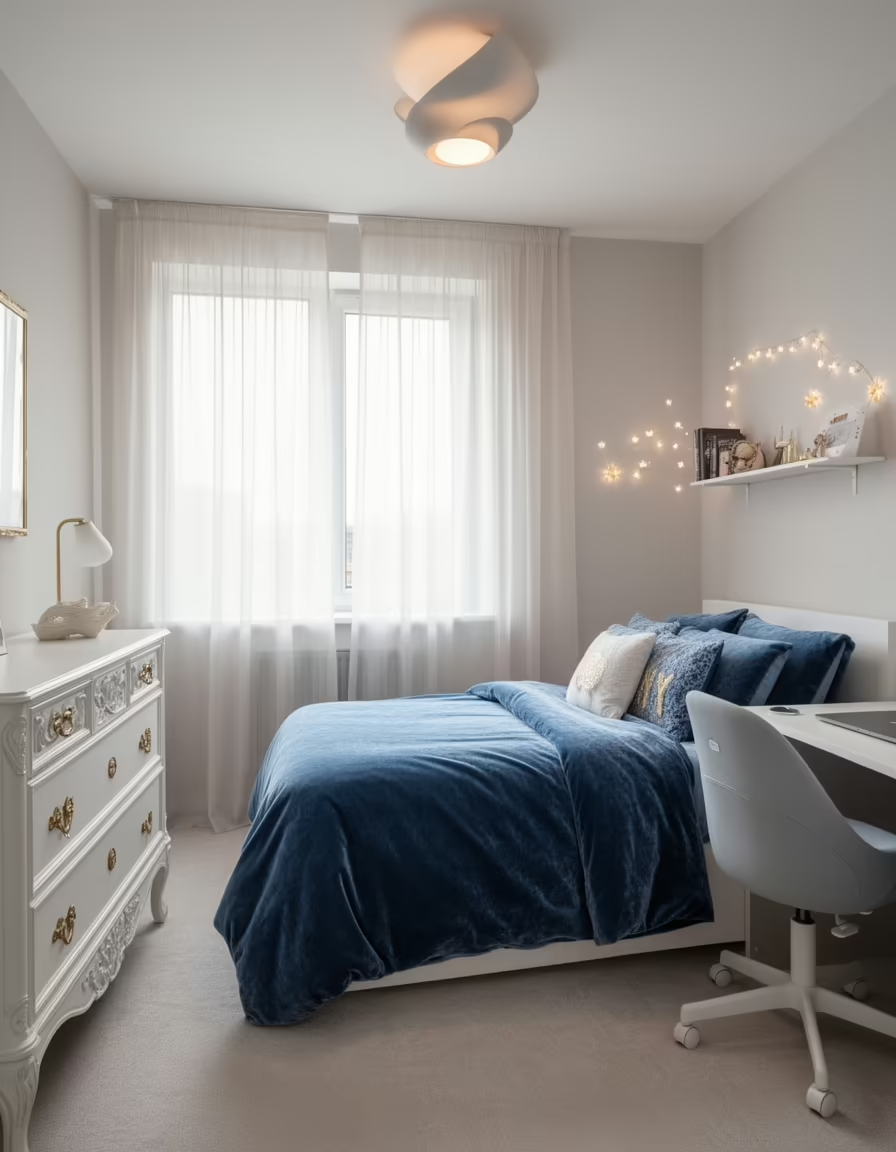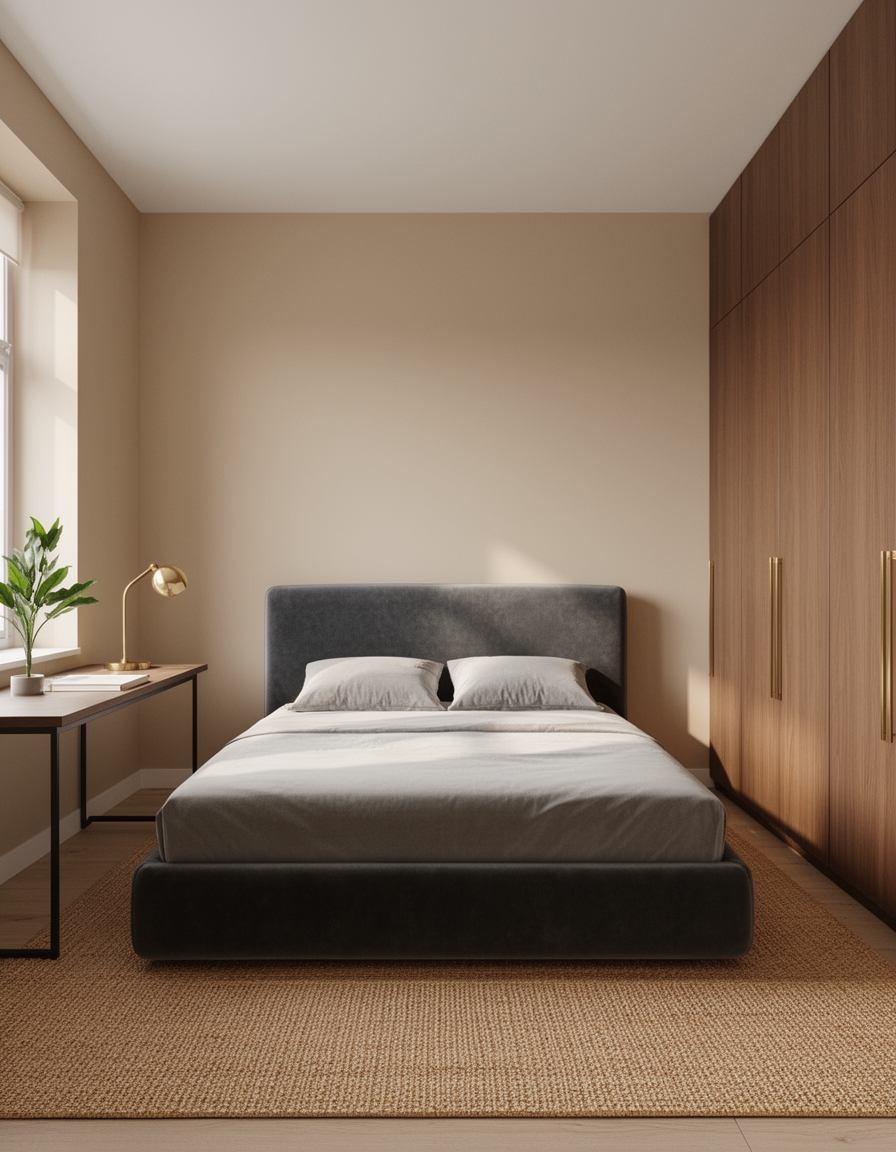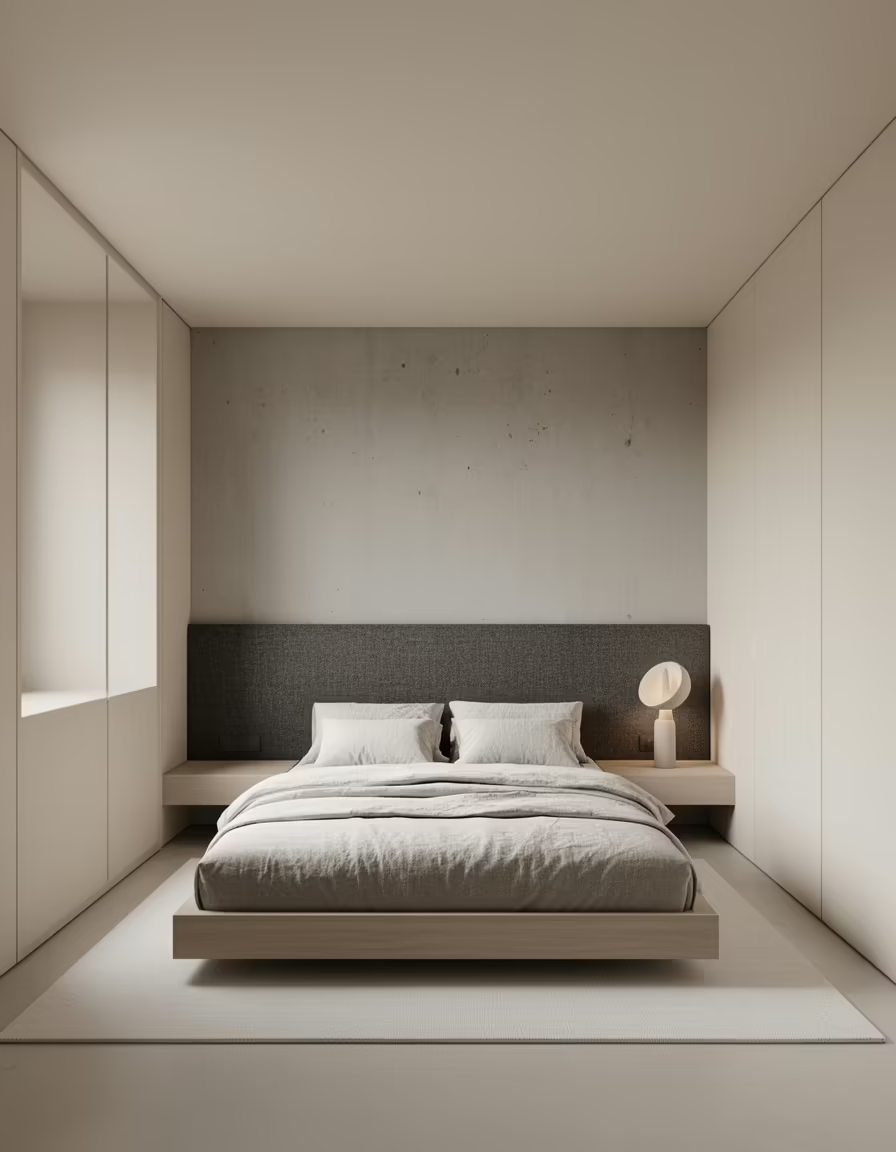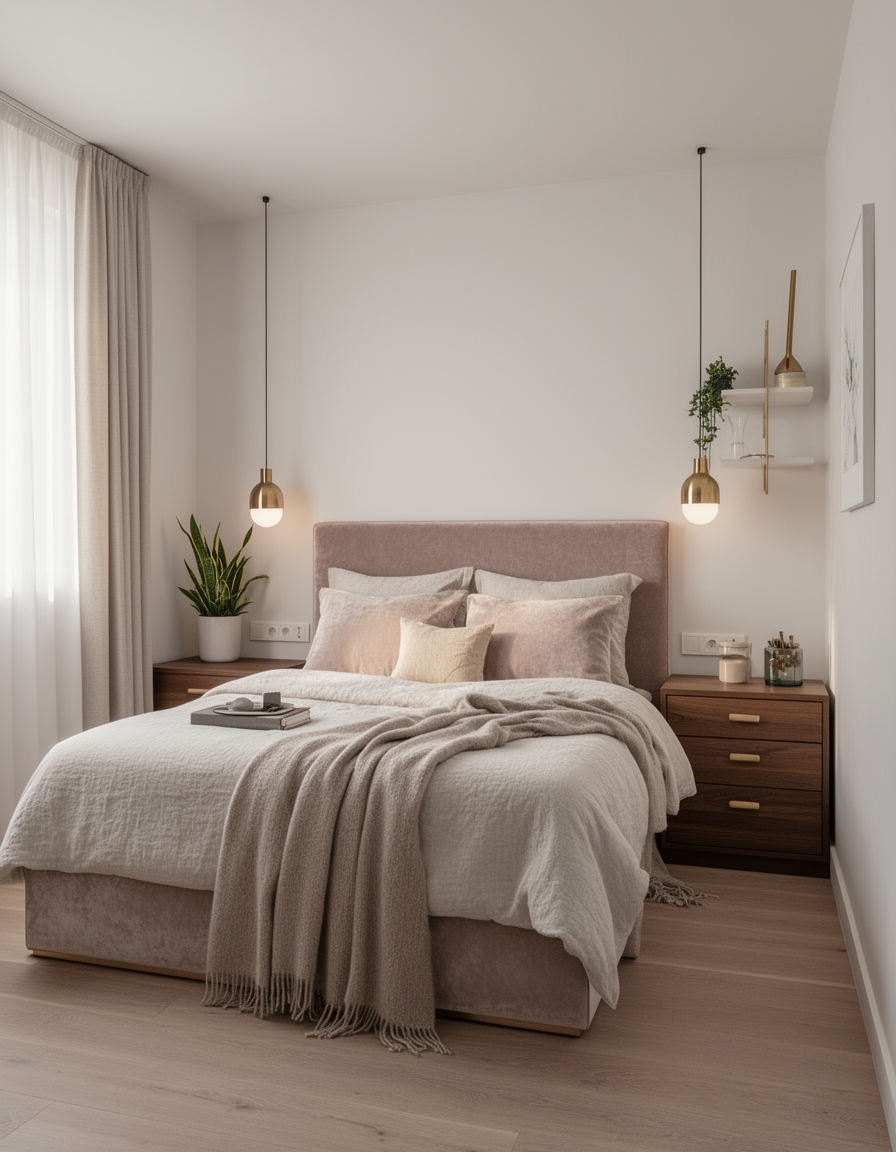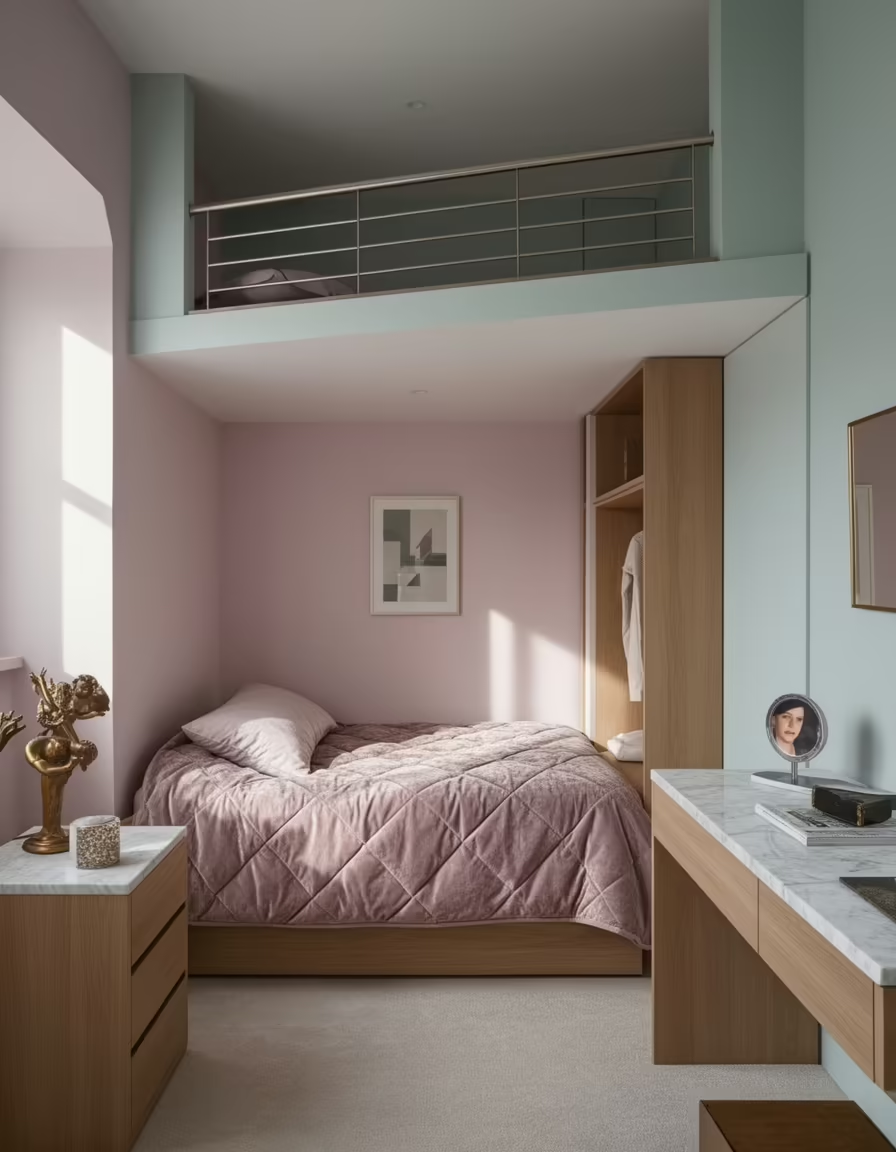
Sharing a small bedroom as a couple is its own puzzle. Two people, two sets of stuff, two ideas of what the room should feel like, and barely enough floor for one nightstand, let alone two. The rooms that work are the ones built for two from the start, with fairness designed in from day one.
These small bedroom ideas for couples solve the real friction points: where both your things live, how you each get a side of the bed that works, and how to land on a style you both actually like. Most are cheap, and all of them are about making one small room feel like it belongs to both of you.
Sharing a Small Room, the Short Version
- Give each person their own side: a nightstand, a lamp, and a share of the storage.
- Go vertical and dual-purpose so two people’s stuff fits without crowding the floor.
- Agree on a calm shared palette so the room feels like both of you, not a compromise nobody likes.
Create One Stylish Focal Point You Both Love
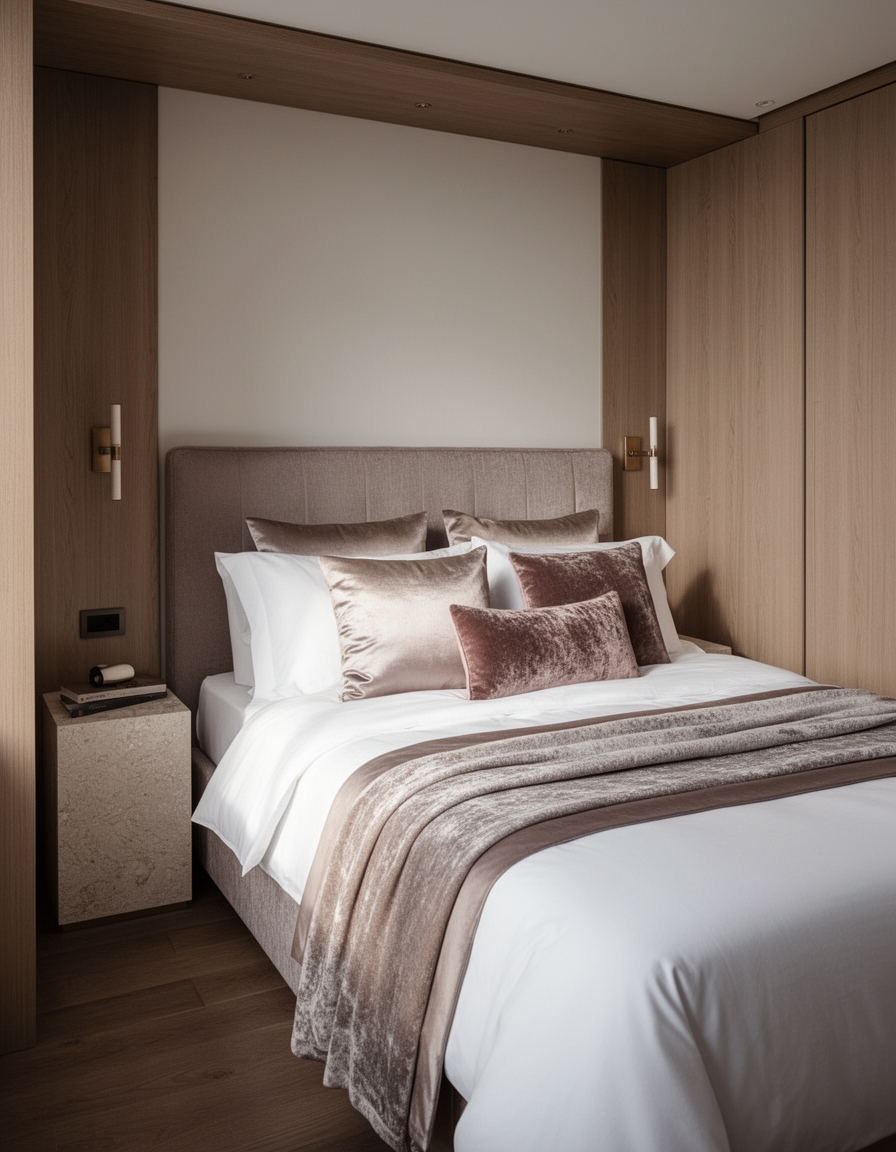
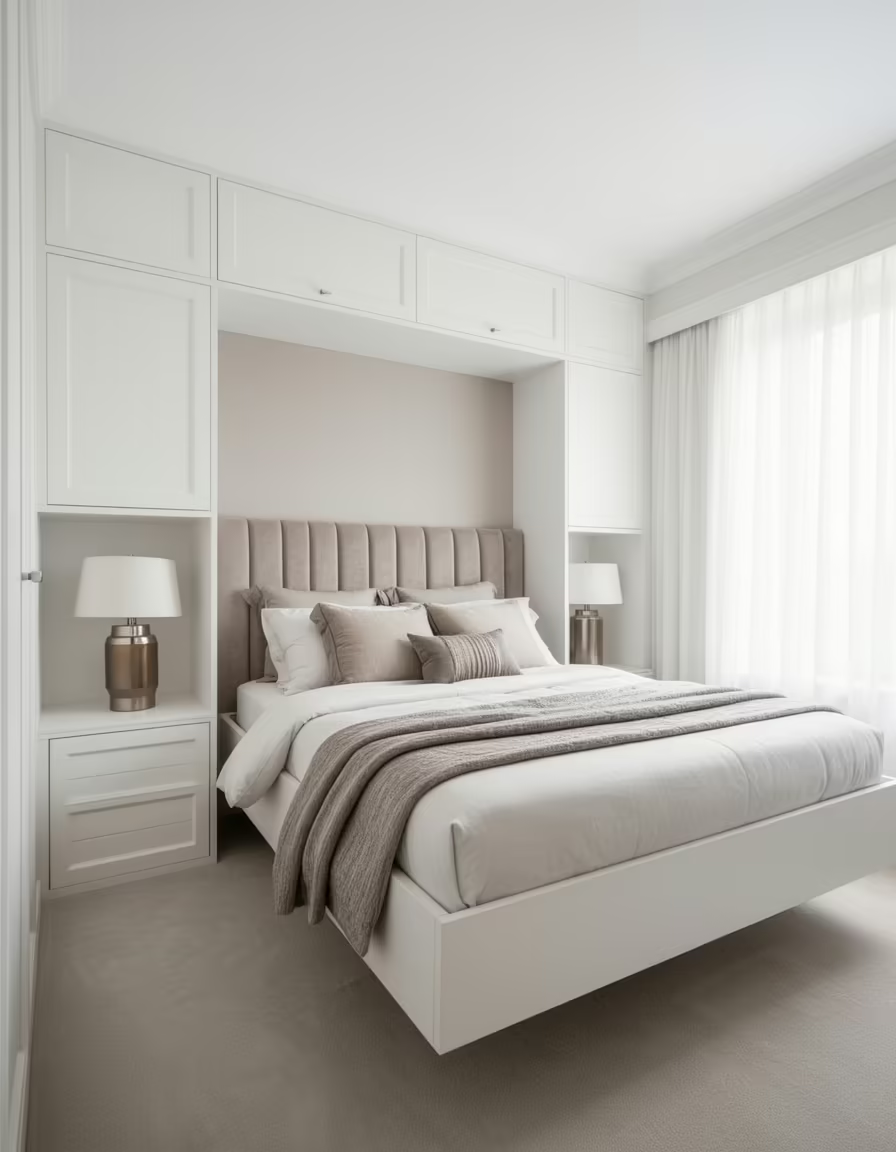
When two people share a small room, the fastest way to a space you both enjoy is one shared focal point you both chose. Usually that is the bed and the wall behind it. Put your effort there, a good headboard, art you both like, bedding in a color you both agreed on, and the rest of the room can stay simple.
A single agreed-on focus settles a lot of small disagreements before they start. Instead of each person staking a claim on different corners, you both point at the same wall and call it done. One thing you both love beats two things you each tolerate. Build the room outward from there. Start with the bed wall.
- Make the bed wall the shared statement
- Pick art and bedding together, so it is truly both of you
- Keep the other walls quiet to avoid clutter
- Let one nice piece replace several small ones
Maximize Vertical Wall Storage for Two
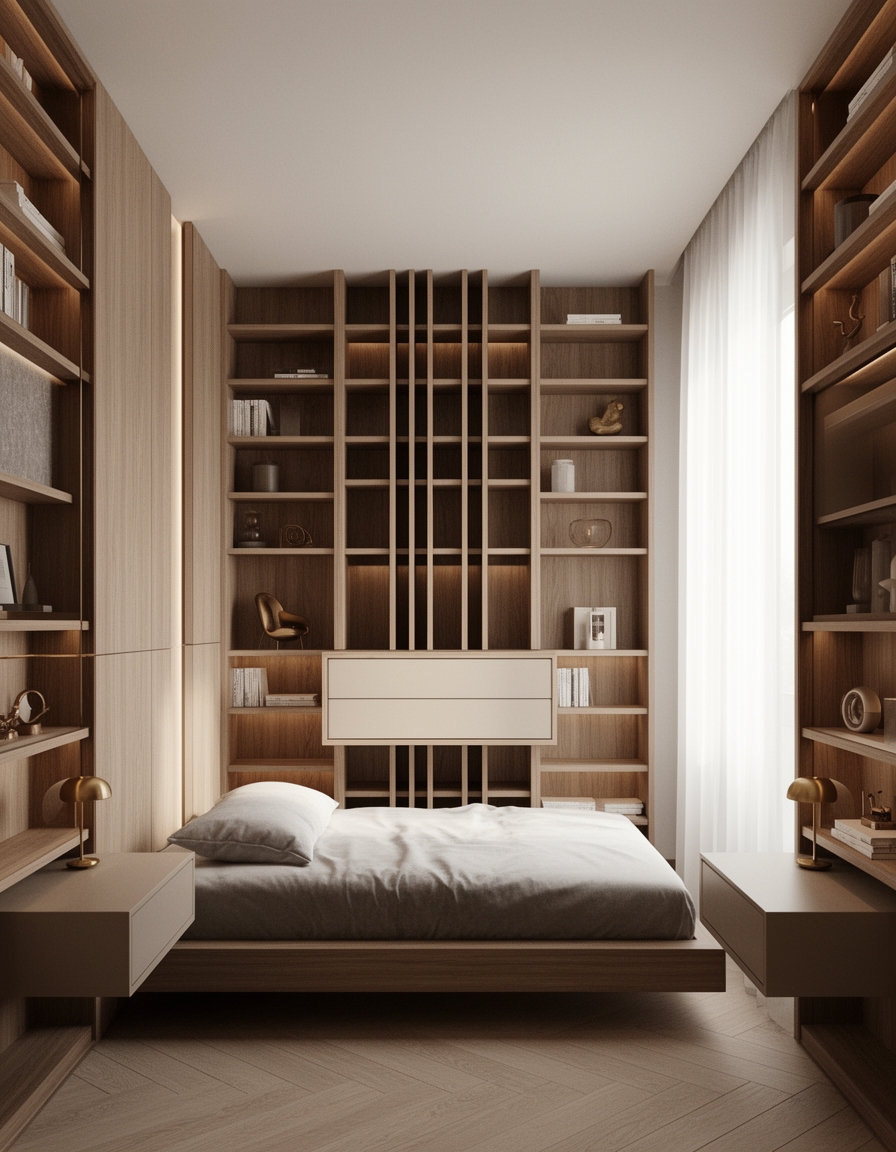
Two people’s belongings in one small room means storage is the make-or-break, and the only direction left is up. Vertical storage keeps the floor clear while doubling what the room can hold. Tall shelves, a unit on each side of the bed, and hooks on the back of the door give each of you somewhere to put your things.
Split it fairly so neither person is stuck living out of a suitcase. Matching tall, narrow units on each side look tidy and give you equal space. Equal storage prevents more arguments than any decor choice. Our a small room that works has more on going vertical.
- Floor-to-ceiling shelves on each side for balance
- Over-door hooks for robes, bags, and tomorrow’s clothes
- A tall, narrow dresser for each person, sized to match
- Wall-mounted shelves above the nightstands for books
Heads-Up
Resist buying a matching bedroom set to ‘solve’ a shared small room. Bulky matched suites eat the floor and force both of you into one taste. Choose slimmer, dual-purpose pieces that each suit one of you, and let the shared palette tie them together instead.
Choose Space-Saving, Dual-Purpose Furniture
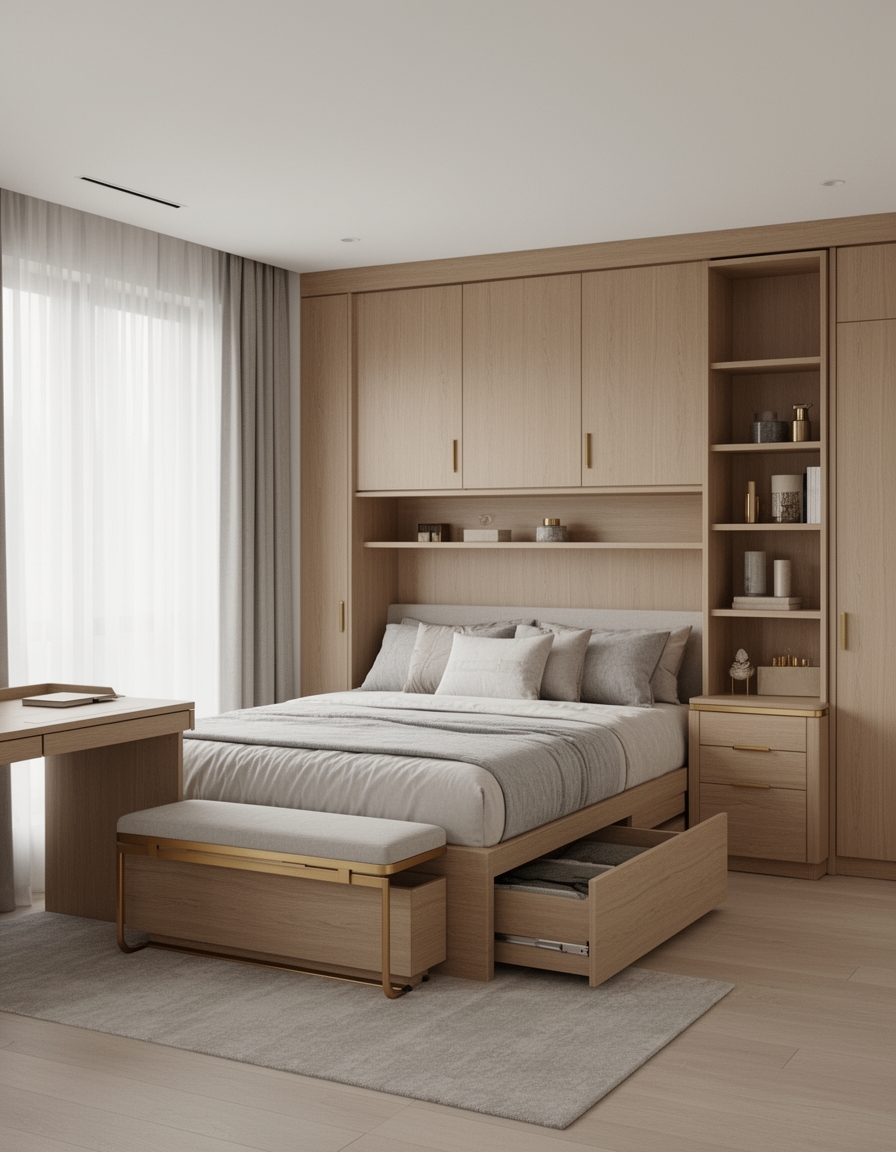
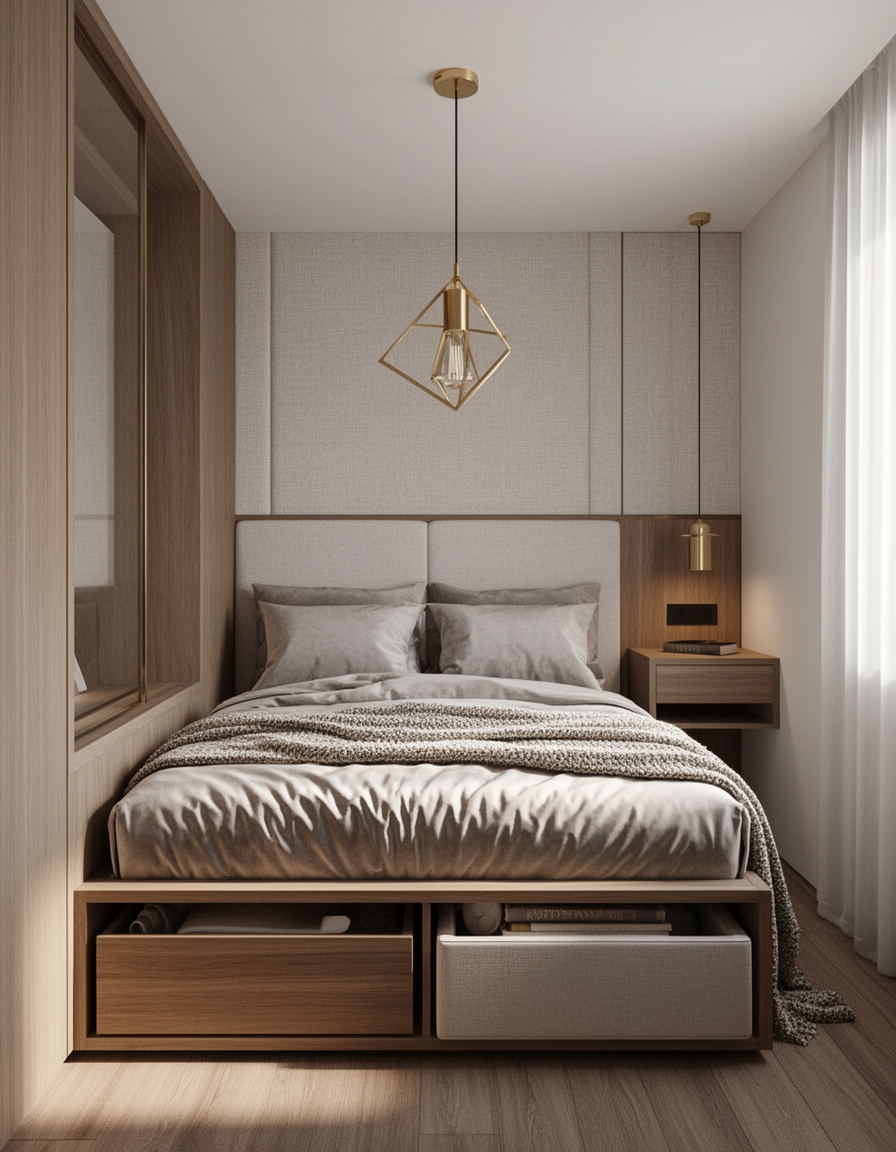
In a shared small room, every piece has to earn its footprint twice over, because there are two people’s needs to meet. A storage bed swallows a season of clothes for both of you; a bench at the foot of the bed seats one while hiding the other’s spare bedding. The more jobs a piece does, the more room you free for two people to move around without bumping into each other.
Pieces that do two jobs free the most room
Look for hidden storage and pieces that fold or tuck away. A storage bed alone can replace a dresser the floor has no room for, and a slim wall-mounted shelf gives each person a surface without a bulky table. Spend on the bed first, since it is the one piece you both use all night.
When couples ask me where to start, I point at the bed frame, because a divan or storage bed quietly settles half the storage fight. Get that right and the room calms down. Solve the bed and you solve half the room. A good storage bed costs more up front and saves you a whole dresser’s footprint, which in a small shared room is worth every penny.
Layer Cozy, Warm Lighting for Both Sides
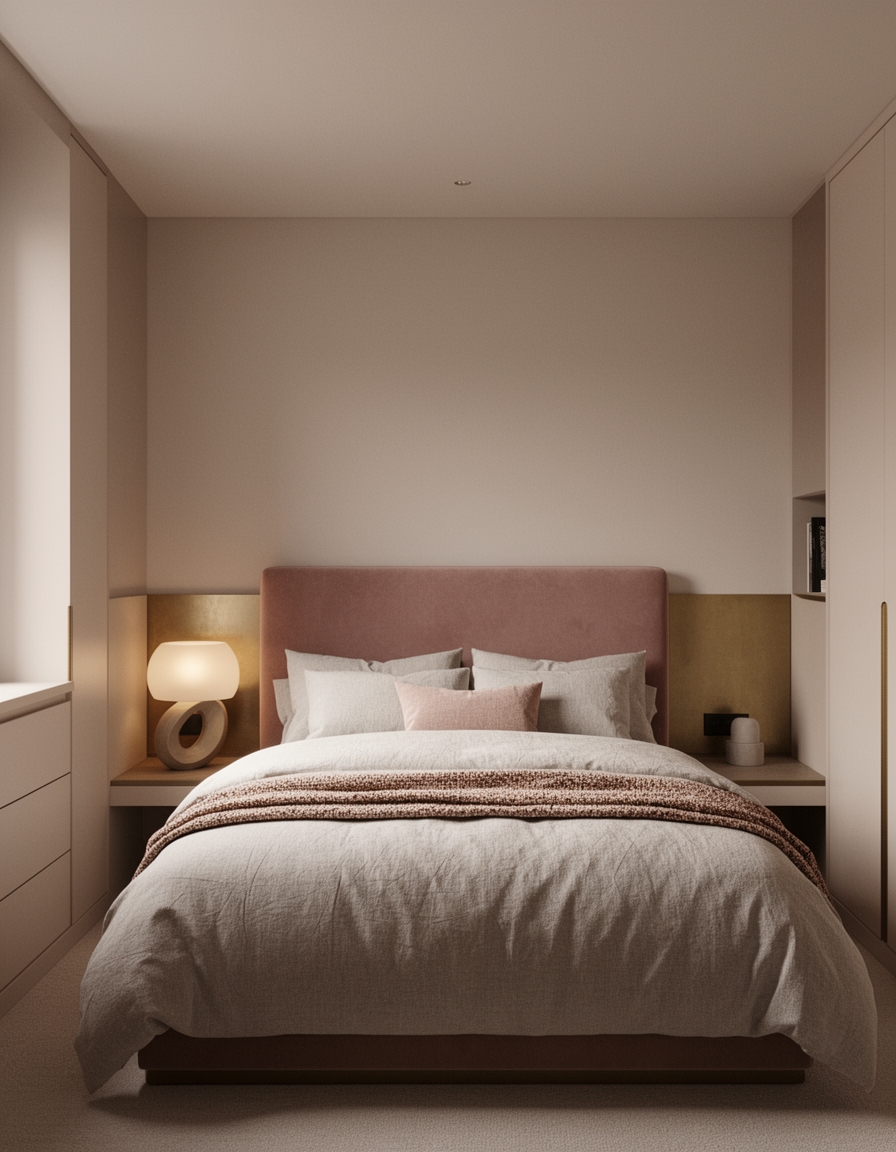
One overhead light rarely suits two people, since one of you wants to read while the other is ready for sleep. The fix is a light on each side: a small wall sconce or a slim bedside lamp per person, so each of you controls your own corner. That alone ends the great light-on-or-off debate most couples know well.
A controllable light each ends the debate
Add a warm overhead on a dimmer for the shared base, and keep all the bulbs warm, around 2700K, for a cozy small-room glow. Wall-mounted reading lights free up the tiny nightstands entirely. Layered light makes a small shared room feel calm and grown-up after dark.
I always push couples toward two separate, controllable lights before anything decorative, because it solves a nightly friction point for about thirty dollars a side. Comfort comes first here. For more on setting the mood, our what the experts recommend covers lighting layers.
| Element | Person A | Person B |
|---|---|---|
| Nightstand | Own table or shelf | Own table or shelf |
| Lighting | Own controllable lamp | Own controllable lamp |
| Storage | Equal vertical share | Equal vertical share |
Pick a Calm Palette You Both Agree On
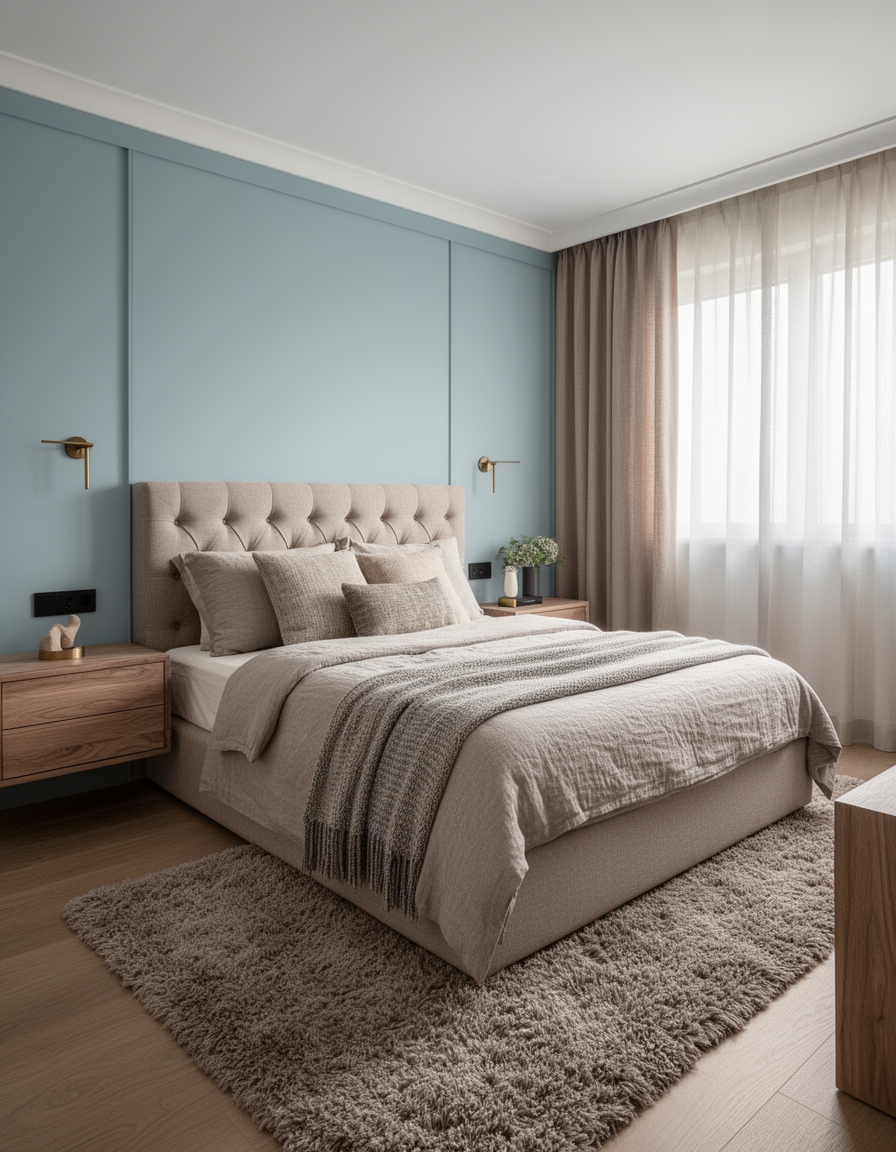
Color is where couples clash most, so a calm shared palette keeps the peace and makes the small room feel bigger at the same time. The move is a neutral base you both accept, then a couple of accent tones you each get a say in. Here is how to land on it without a standoff:
- Start with a light, neutral base you both can live with
- Each person picks one accent color to bring in
- Repeat each accent twice so both of you show up in the room
- Keep the big surfaces calm so the space still feels open
- Save bold personal taste for swappable accents over the walls
Give Each Person a Real Side
The small thing that makes a shared room feel fair is simple: each person gets a real side of the bed, with their own nightstand, lamp, and a spot for their phone and book. Even if the nightstands are tiny, two of them say the room belongs to both of you. Skip one side and resentment quietly starts.
If there is no floor room for two tables, mount a small shelf on each side or use slim wall-hung ledges instead. The point is symmetry. Two lamps, two surfaces, two little homes for the daily stuff. Two equal sides is the cheapest fairness you can build into a shared room. It costs almost nothing and it heads off a lot of friction.
Make Room for Two to Get Ready
Mornings are where a shared small room gets tested, so plan for two people moving at once. A single full-length mirror you can both use, a clear path from the bed to the closet, and a small valet hook or chair for each person’s next-day clothes keep the morning rush from turning into a collision at the closet door.
If you both dress in the room, stagger your stuff: one person’s things on the left, the other’s on the right, so nobody is reaching across. A couple of hooks by the door for bags and coats saves the floor and keeps both your jackets off the one chair. These tiny moves are what keep a shared small room working on a busy Monday, not just looking good on a quiet Sunday.
Blend Two Styles Without a Standoff
Most couples bring different tastes to the room, and the trick is blending so both of you win. Find the overlap first, the colors or materials you both already like, and build on that common ground. Then let each person own a few personal touches so the room reflects two people, not a takeover. A shared room should feel like a meeting in the middle. Both names on the lease, both tastes in the room.
- Start from the styles you already share, not your differences
- Let each person choose a couple of personal accents
- Keep big-ticket pieces neutral so they suit both tastes
- Mix one of his and one of hers for character
Keep Two People’s Clutter in Check
Two people generate clutter twice as fast, so a small shared room needs a clutter habit you both keep. Give every category a home, charging cables, jewelry, spare change, books, and the surfaces stay clear even with two of you using the room. A shared two-minute reset before bed keeps it from snowballing.
Closed storage helps more than open shelving here, since two people’s odds and ends pile up fast in plain view. A basket or drawer each for the small daily stuff means neither person feels their things are being shoved aside. Tidy is a team sport here. It gets far easier when the systems are fair from the start.
Styling Tips for a Shared Small Room
Once the function is sorted, a few styling moves make the small shared room feel intentional. Echo your two accent colors around the room so both personalities show up, keep one or two meaningful objects on display and skip the crowd, and use a single larger mirror to bounce light and add a sense of depth to the room. Restraint feels calm, which a shared room needs.
Layer soft texture for cozy-without-clutter: a throw, two good pillows, a small rug that defines the space. Keep the styling balanced side to side so neither half feels like an afterthought. The goal is a room that looks designed for two, because, thoughtfully, it was. A little symmetry goes a long way toward that feeling.
One Small Room, Built for Two
A small bedroom can absolutely work for a couple when you design fairness in from the start: a shared focal point, equal vertical storage, dual-purpose furniture, a light and a side each, and a palette you both helped choose. Get those right and the room stops feeling cramped and starts feeling like yours, together.
Pick the friction point that bugs you both most, storage, lighting, or who gets which side, and fix that one first this weekend. Build the rest in over time, and a tight shared room turns into the cozy, fair little retreat two people actually look forward to coming home to.