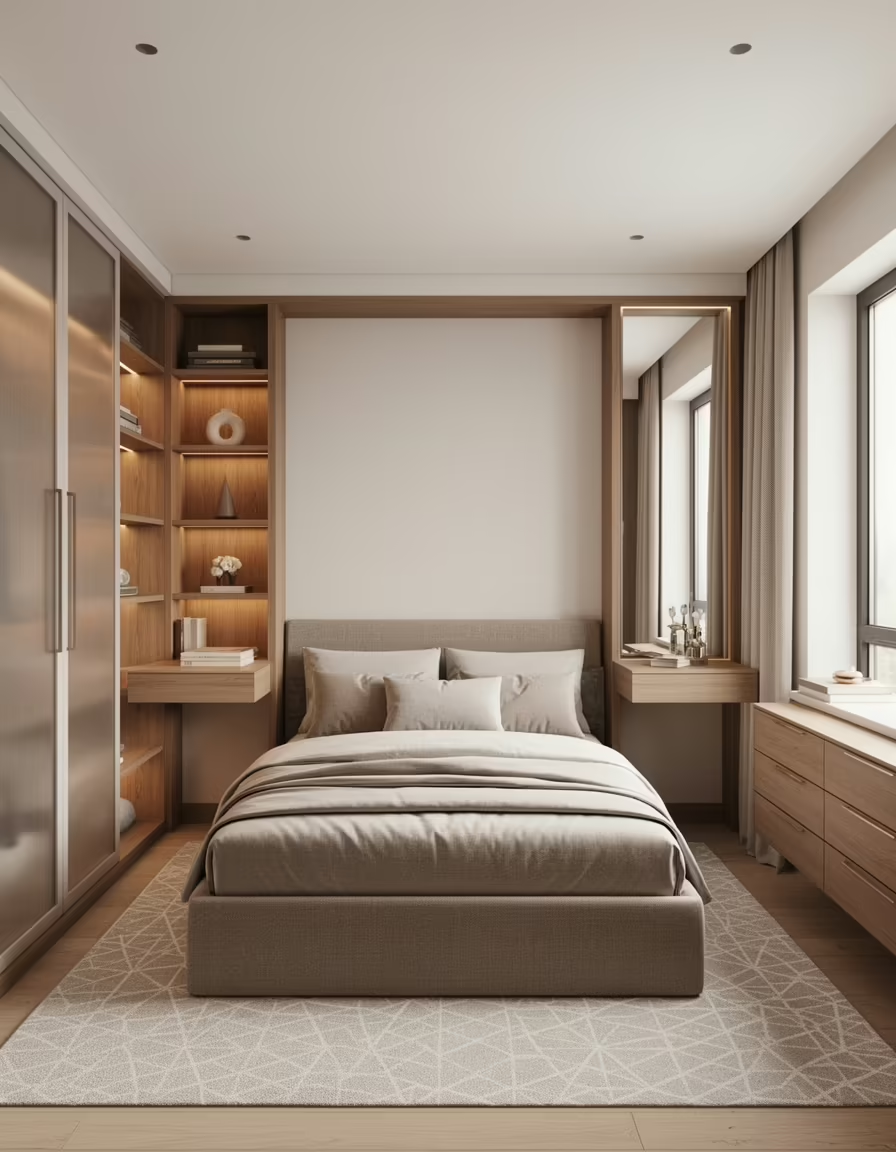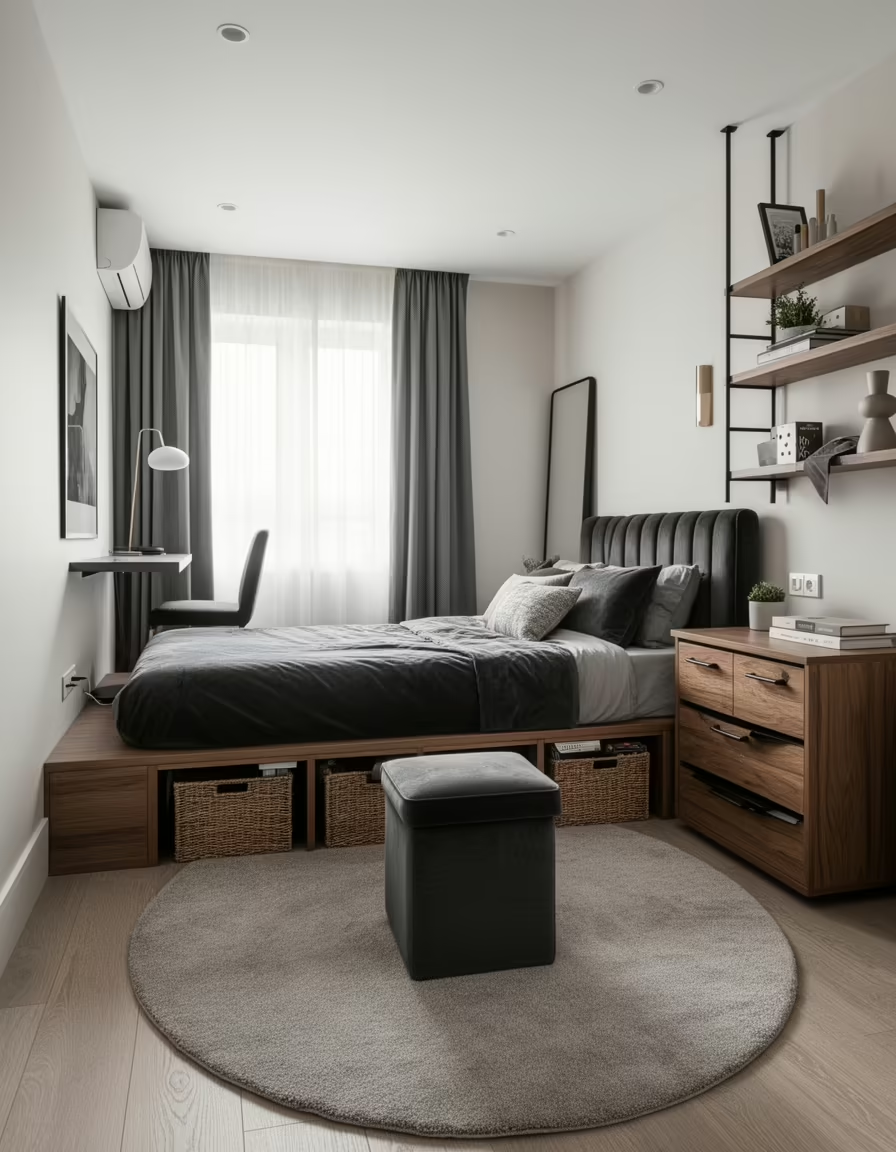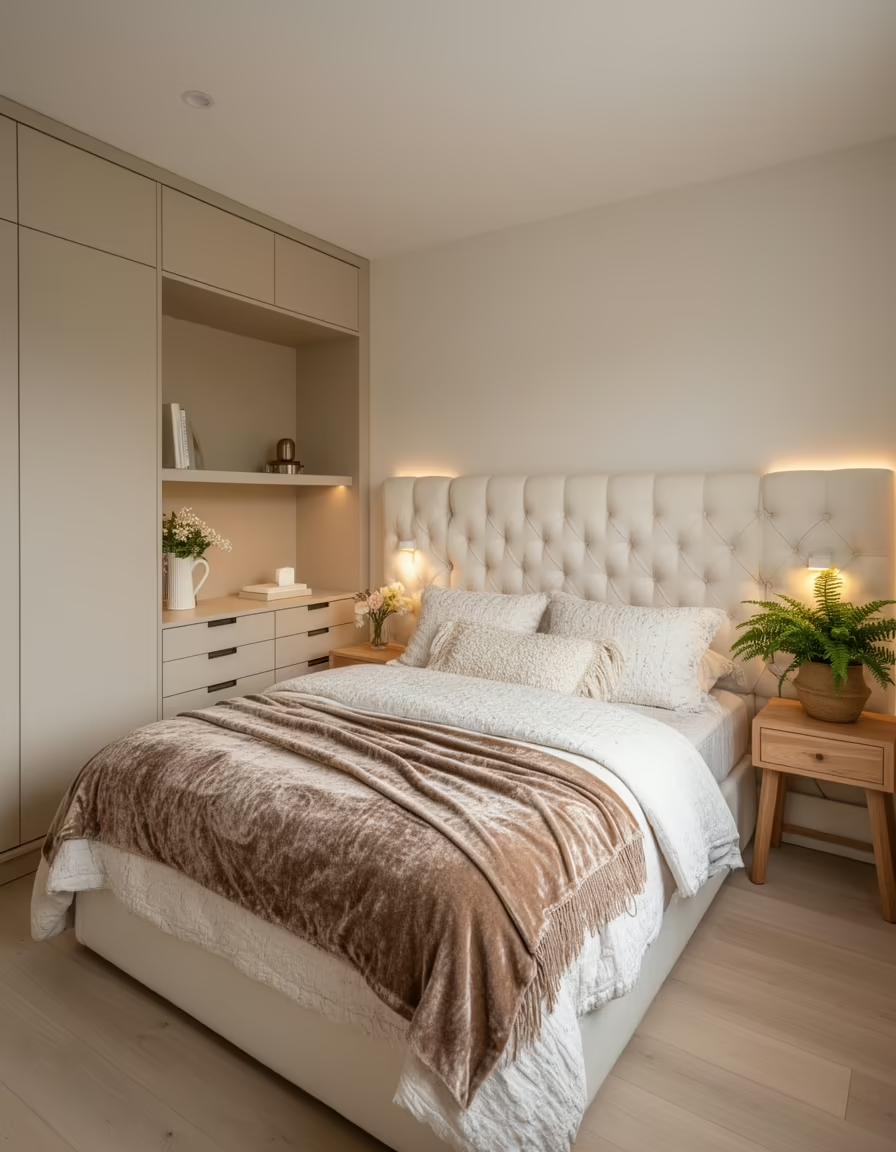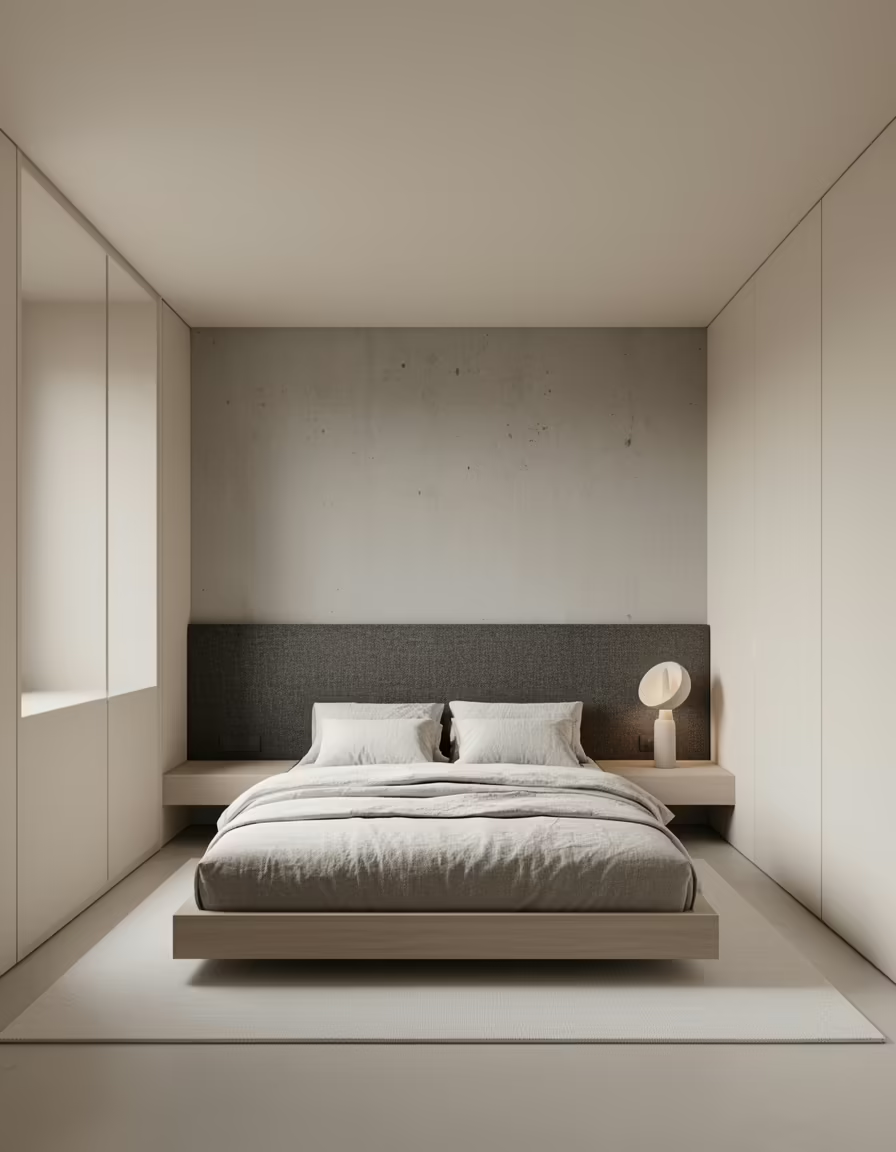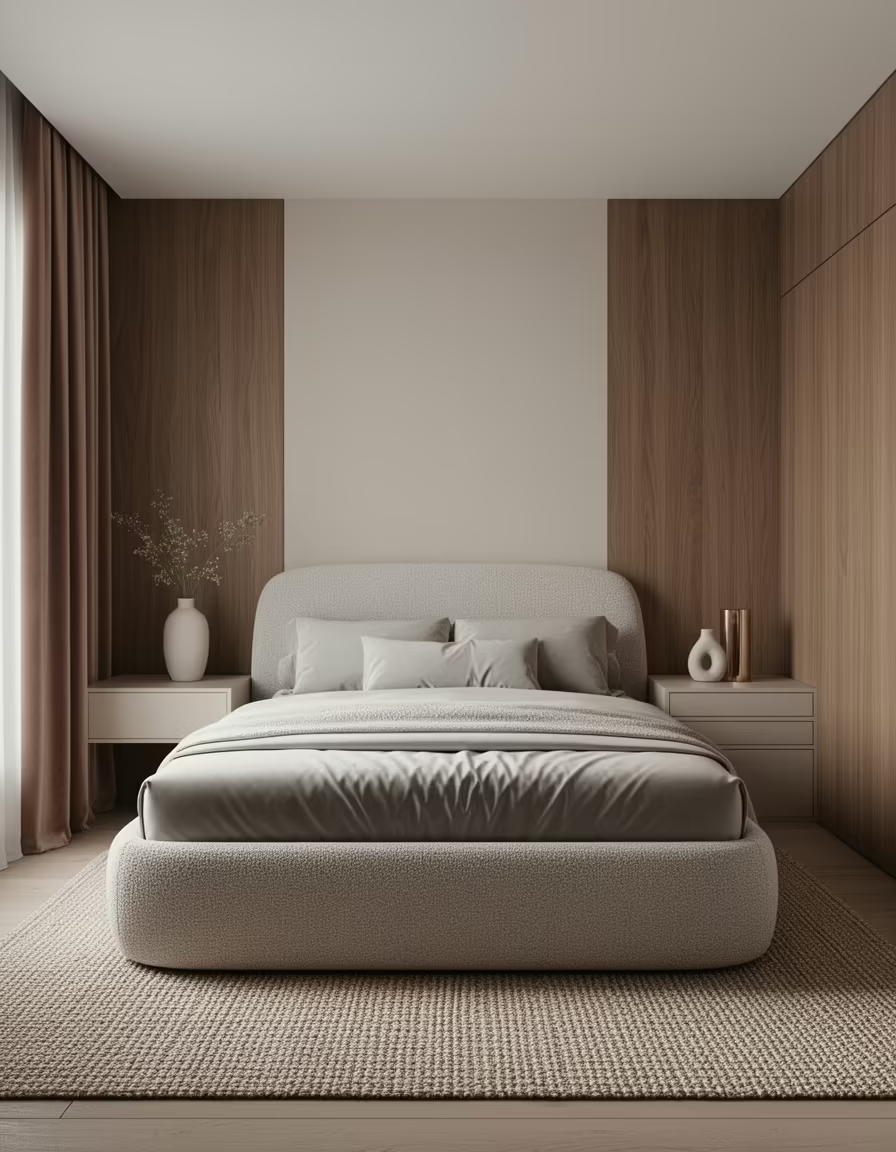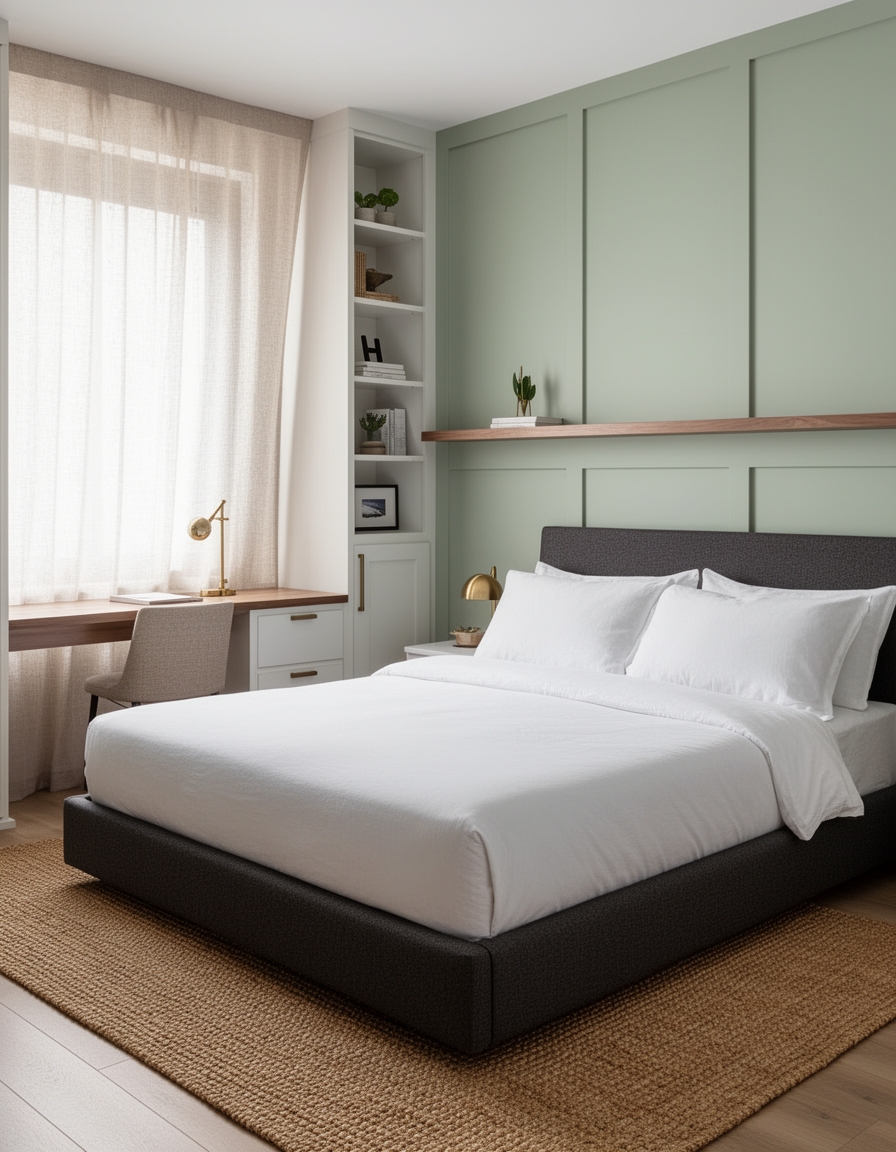
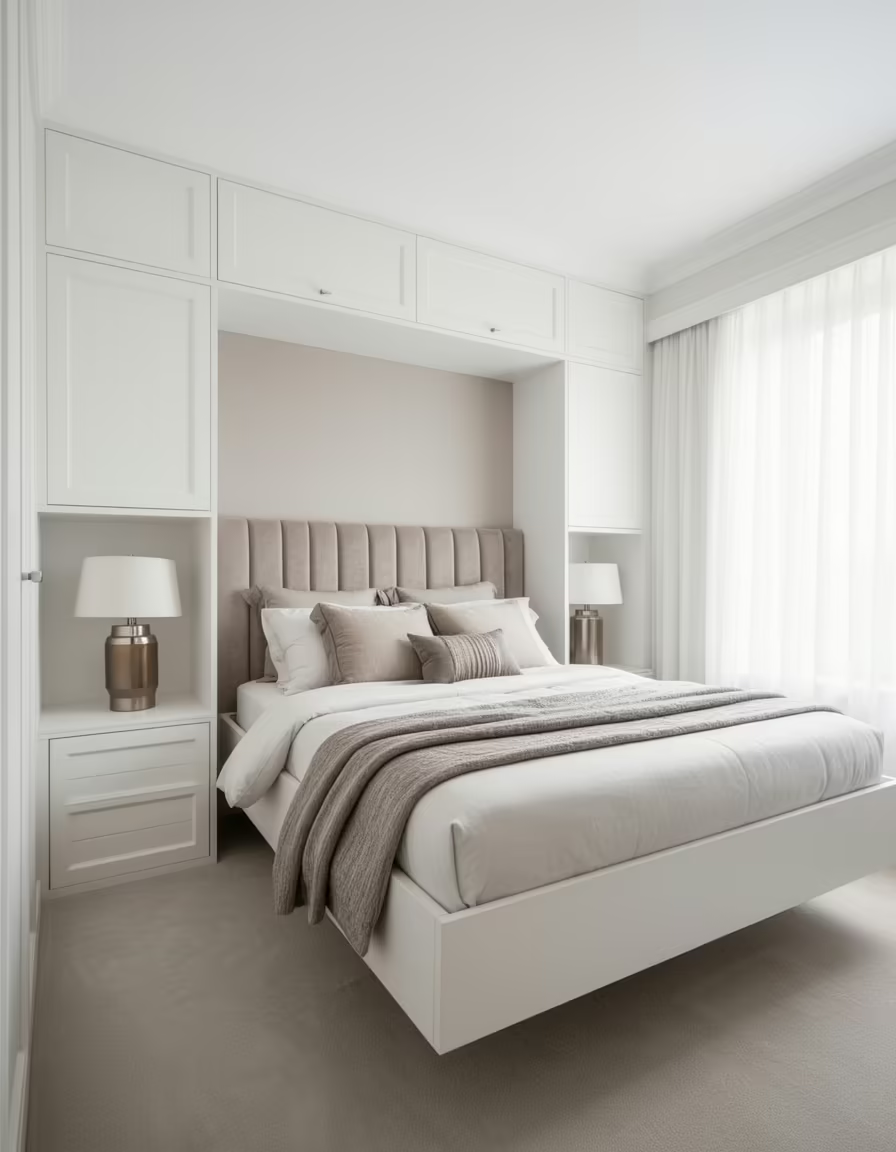
Here is the part most small-room advice misses: you cannot add square meters, yet you can absolutely change how many the eye thinks it sees. Feeling big is a trick of perception, and perception is something you control completely. Every idea below works on perception rather than the tape measure, so a tight room feels far larger than its floor plan says.
These small bedroom ideas all manipulate one thing: how spacious the room feels. Light bounces, furniture floats on legs, lines pull your gaze up and across, sightlines stay clear. Stack a few of these and a cramped box starts to breathe. Most cost little, and several cost nothing but rearranging what you already own.
How to Fool the Eye Bigger
A small room feels bigger when the eye can travel without stopping: pale surfaces that blur the edges, furniture raised on legs so the floor shows, vertical lines that lift the ceiling, and reflected light that adds depth. None of it changes the dimensions; all of it changes the impression.
The biggest wins are free or cheap: clear the floor and sightlines, raise the furniture, keep one calm color across surfaces, and place a mirror to catch the light. Do those and a tight room feels open, calm, and noticeably larger than it measures.
Maximize Space With a Few Creative Tricks
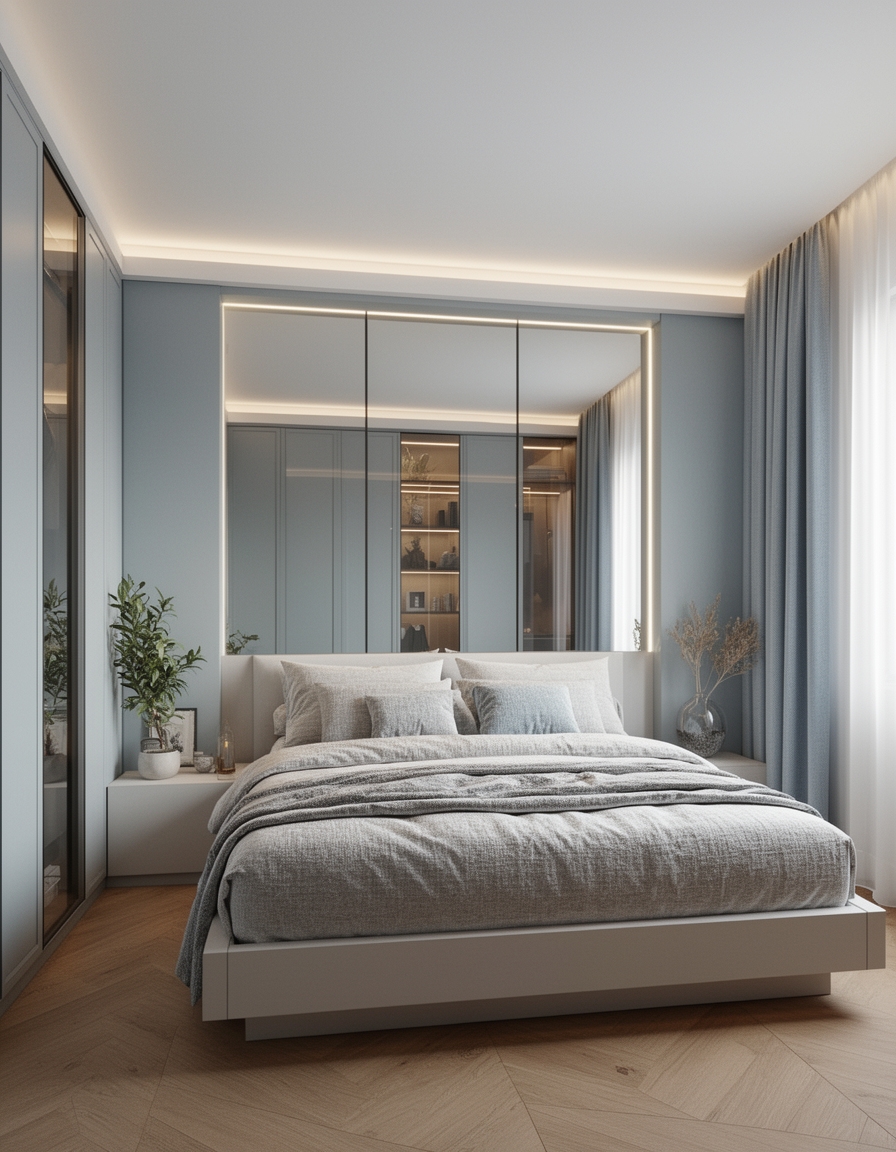
Making a room feel big is really about removing the signals that tell your brain it is small. A handful of cues quietly shout cramped, and once you learn to spot them they jump out everywhere. The steps box below gives the fix-order; first, here are the culprits to hunt down and remove:
- Clutter on the floor, which hides the space that signals room
- A blocked sightline from the doorway into the room
- Bulky furniture sitting flat and heavy on the ground
- Everything kept low, so the gaze never travels upward
- Dark, light-swallowing corners with no reflection
Use Light Colors to Expand the Space
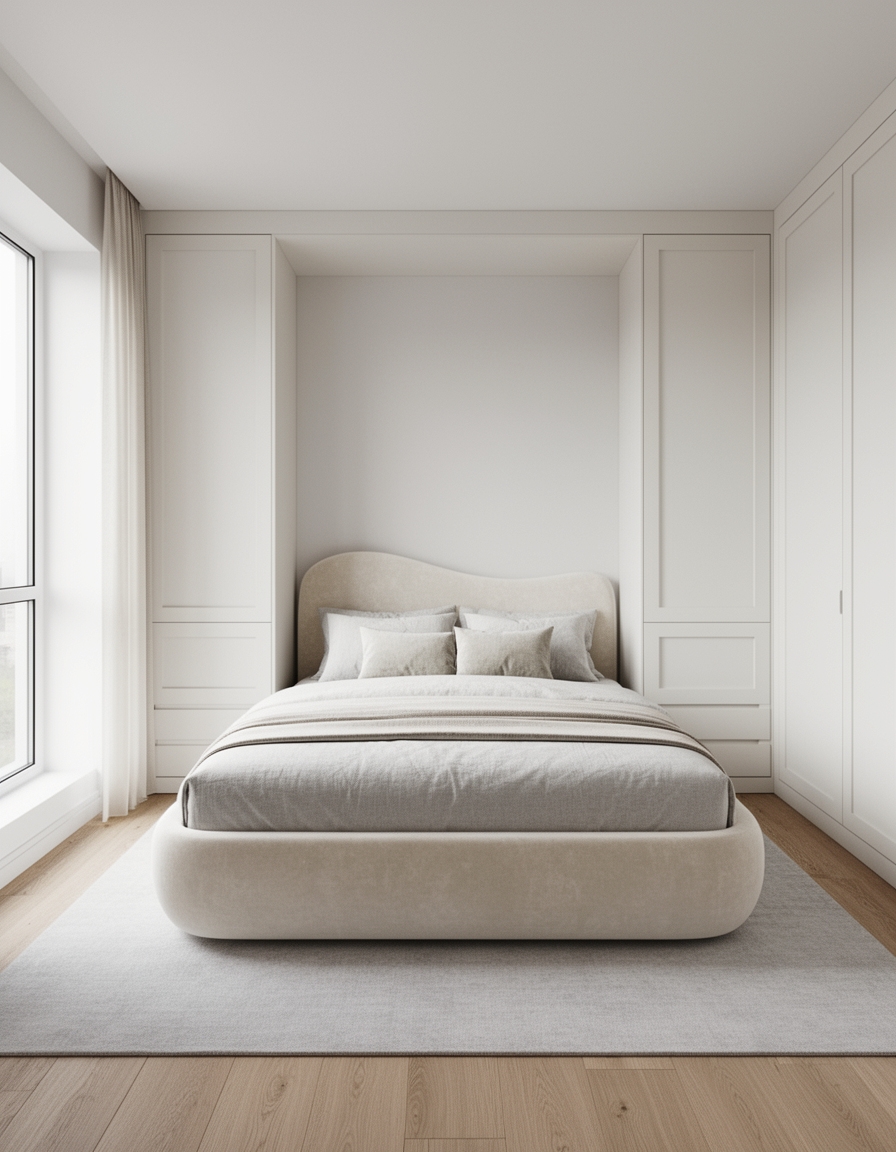
Pale color is the oldest space-stretching trick because it truly works on the eye: light surfaces reflect more light and blur where the wall meets the corner, so the boundaries blur and the room feels less boxed in. Keep walls, ceiling, and big furniture in the same light tone and the edges seem to dissolve.
The deeper move is going near-monochrome. When the floor, walls, and large pieces share one quiet tone, the eye finds no hard stopping point and judges the whole space bigger. Bring color in through small, low-commitment accents. A room with no sharp visual borders always feels larger than its measurements. That blur is the whole illusion. Soft edges fool the eye.
- Match wall and trim color so corners disappear
- Carry the wall tone onto the ceiling to lift it
- Keep big furniture close to the wall color
- Add color only in small, swappable accents
Which space-stretching trick should you start with? Pick what your room struggles with most.
1It feels dark and closed-in
Start with light: pale walls and a mirror facing the window.
2It feels cluttered and busy
Start with the floor: clear it, raise the furniture, store the rest.
3It feels low and boxy
Start with height: tall curtains and a vertical line up the wall.
Create Intentional Space Through Design
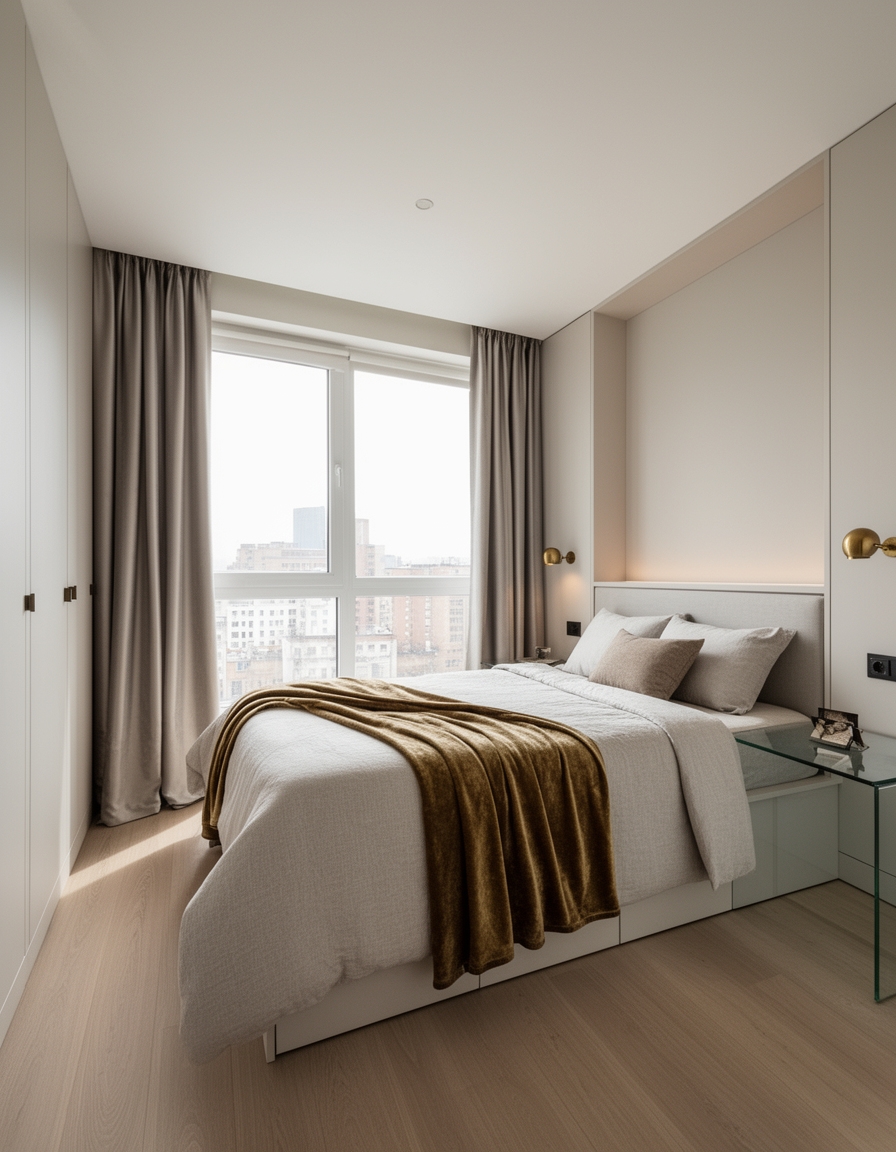
Big-feeling rooms are designed around sightlines and breathing room, with space left to spare. The single most powerful move is keeping the view from the doorway clear, because that first glance sets how large the whole room feels, and I always stand in the doorway and clear whatever clutters that opening line of sight before touching anything else.
Leave the floor in the center clear, pull pieces back to the walls, and a little emptiness does the work no clever gadget can.
- Keep the door-to-window sightline clear and open
- Leave deliberate empty space across the floor
- Push furniture to the edges to free the middle
- Choose fewer, larger pieces over many small ones
Pick Space-Saving, Multifunctional Furniture
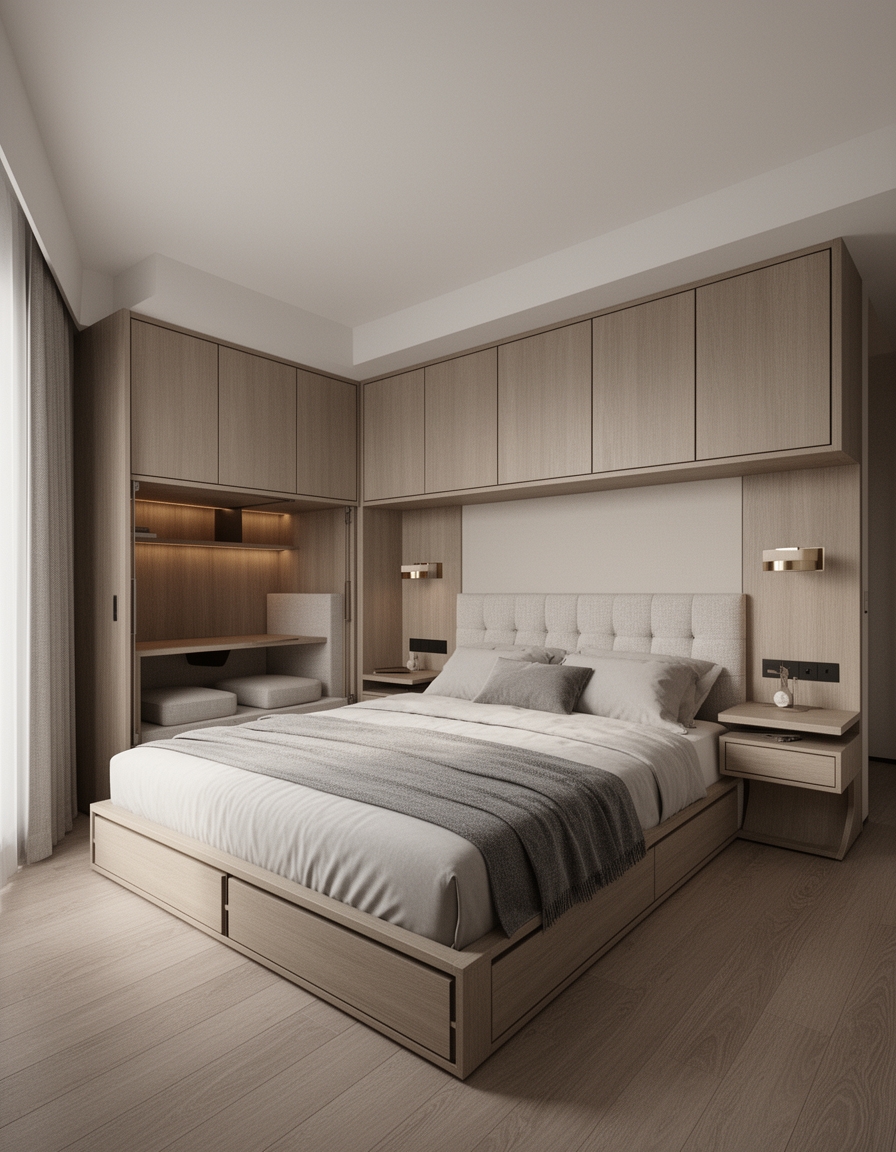
Furniture is where small rooms get heavy fast, so the pieces you choose decide how open it feels. The goal is less visual weight: raised legs, slim profiles, and pieces that do two jobs so you need fewer of them. A leggy bed and an open-frame nightstand let light and floor show through, which registers as more room. Choose furniture like this:
- Beds and sofas raised on visible legs, not boxed to the floor
- Slim, open-frame or glass pieces you can see straight past
- One dual-purpose piece in place of two single-use ones
- Low-profile furniture so more wall shows above it
A quick order to make any small room feel bigger.
1Clear the view
Open the door-to-window sightline and clear the floor.
2Lighten up
Bring walls, ceiling, and big pieces into one pale tone.
3Lift and float
Raise furniture on legs and draw the eye upward.
4Bounce the light
Add a mirror and reflective touches to deepen the room.
Add Light-Reflecting Enhancements
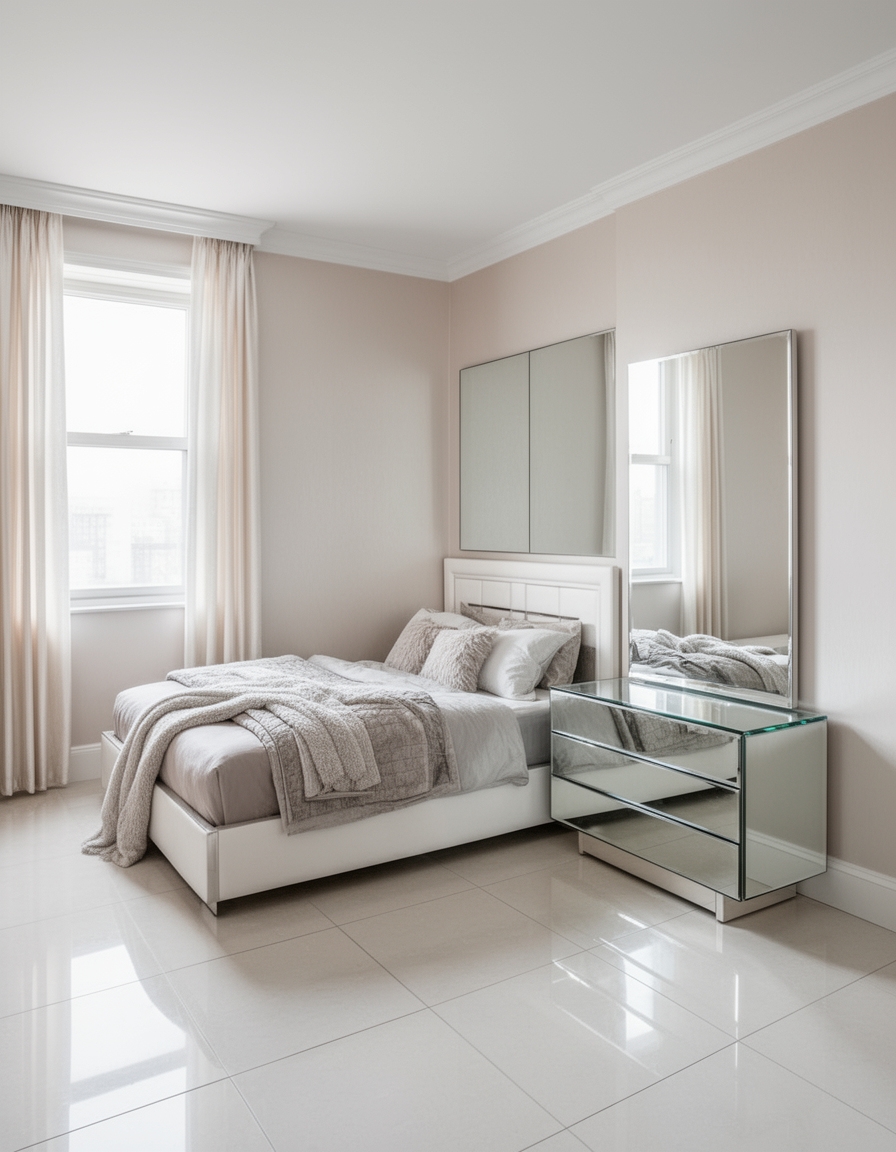
Light is what a small room is usually starving for, and bouncing it around is the closest thing to free square footage. A mirror placed to catch a window throws daylight deeper into the room and adds a sense of distance the wall lacks. Glossy and metallic touches do a quieter version of the same job all around the room.
A mirror is the closest thing to free space
Think beyond one mirror. Mirrored or glass surfaces, a polished tray, a metallic lamp, and pale, reflective bedding all keep light moving so dark surfaces cannot swallow it. Maximize the real daylight too: keep the window clear and the covering sheer so nothing blocks the source.
The first change I make in a dim, boxy room is leaning a big mirror opposite the brightest window. It is the cheapest depth you can buy, often twenty or thirty dollars secondhand. Reflected light suggests extra space, which is why every roomy-looking small bedroom keeps a mirror working hard.
Draw the Eye Up With Vertical Lines
Low ceilings make a room feel like a box, so anything that pulls the gaze upward makes it feel taller and roomier. Skip the curtains for now, those come later, and lean on built-in verticals: a tall narrow bookshelf, vertical wall paneling or beadboard, or a slim painted stripe that runs floor to ceiling. Each one leads the gaze upward and tricks it into sensing more height than there is.
Stack art in a tall column, climbing the wall, so it reads as one rising line. A single tall plant or a narrow ladder shelf in a corner does the same quiet lifting. These moves cost almost nothing and add the feeling of a ceiling you do not actually have. Up is where the free space hides in a small room. Use every inch of it you can find.
Let the Floor Show as Much as Possible
Visible floor is the single clearest signal of space, so every patch you can keep clear makes the room feel larger. This is why raised furniture works, and why a rug that almost reaches the walls makes a floor feel wider than a small one marooned in the middle. The more unbroken ground in view, the more open the room registers.
Keep the area in front of the door and along the main walking path completely clear at all times. Choose a bed frame with open space beneath when floor-feel matters more to you than hidden storage. Continuous flooring helps too: one material running throughout, with no thresholds or rug-edges chopping it up, comes across as a single larger expanse you can sweep in one glance. Let the ground breathe and the whole room follows.
Scale Furniture and Art to the Room
It sounds backward, but a few well-scaled larger pieces beat lots of little ones for making a small room feel bigger. A scatter of tiny furniture and small frames looks busy and cluttered, which shrinks a space; one appropriately large bed, one big piece of art, and a couple of substantial objects feel calm and confident. Calm, open space registers as room, while busyness registers as squeeze.
Go big in a few places and spare everywhere else. One oversized piece of art above the bed does more than a whole wall of postage-stamp frames ever could. Pick a headboard that fits the wall, then leave the surrounding surfaces clear.
Restraint at a larger scale signals spaciousness; a crowd of small things signals clutter. Choose few, choose big, and let them breathe. One generous piece with space around it always outperforms a huddle of small ones, and it gives the room a calm, deliberate anchor.
Hang Curtains and Light at the Right Height
Where you hang things quietly tells the eye how big the room is, and most people hang everything too low. Mount curtains close to the ceiling and let them drop to the floor, and the window, and the whole wall, suddenly seem taller. Hang art a touch higher than feels natural so the gaze climbs. Small adjustments in height add up to a real sense of stretch.
Lighting plays the same game. A small room lit by one central fixture flattens out and feels boxed, while a few low, layered light sources create pools and shadows that suggest depth beyond the real walls. Put a lamp in a far corner so the eye senses distance toward it.
Light the edges of the room, not just the center, and the whole space quietly expands toward them. I have turned a poky rental bedroom around with nothing more than two corner lamps and a mirror, no money spent on furniture at all.
Keep the Spacious Feeling Going
All these tricks share one weakness: clutter undoes every one of them in an afternoon. A small room that felt big on Sunday feels cramped by Wednesday if surfaces fill up and the floor disappears under stuff. The illusion is real, but it is fragile, so a light daily habit is what keeps the open feeling alive long after you set it up.
- Clear the floor and the main pathway each evening
- Keep surfaces mostly bare so the eye can rest
- Store rather than stack, so nothing piles up in view
- Pause before adding anything new to the room
Making a Small Bedroom Feel Bigger
?What makes a small bedroom feel bigger?
Anything that lets the eye travel without stopping: pale, near-monochrome surfaces that blur the corners, a clear floor and open sightlines, furniture raised on legs, vertical lines that lift the ceiling, and reflected light. None of it changes the dimensions, but together they make the room read noticeably larger than it measures.
?What is the cheapest way to make a room feel bigger?
Clearing and rearranging, which cost nothing. Open the sightline from the door, pull furniture to the walls, and get clutter off the floor. After that, swapping a heavy curtain for a sheer one and raising the rod close to the ceiling costs very little and instantly makes the window and wall feel taller.
?Do light colors really make a room look bigger?
Yes, because light surfaces reflect more light and soften the corners, so the boundaries of the room blur and feel further off. The effect is strongest when walls, ceiling, and big furniture share one pale tone, since the eye finds no hard edge to stop at and judges the whole space larger.
?Should furniture be big or small in a small bedroom?
A few well-scaled larger pieces beat many small ones. A scatter of tiny furniture reads as busy and shrinks the room, while one appropriately large bed and one big piece of art feel calm and confident. Choose fewer, larger items, raise them on legs, and leave the surrounding space clear.
?How do I keep a small room feeling spacious over time?
Protect the illusion with a light daily habit, since clutter undoes every trick fast. Clear the floor and pathway each evening, keep surfaces mostly bare, store things rather than stacking them in view, and pause before bringing anything new in. The spacious feeling holds as long as the room stays clear.
Small Room, Big Impression
You cannot stretch the walls of a small bedroom, yet you can absolutely change what the eye believes. Clear the sightlines, go light and near-monochrome, raise the furniture so the floor shows, pull the gaze upward, and bounce every bit of light you can. Each trick works on perception, and together they make a tight room read truly open.
Pick the two or three that fit your room and try them this weekend, starting with the free ones: clearing, rearranging, raising. Layer in the rest over time, keep the clutter in check, and a box of a bedroom will feel far bigger than the floor plan ever promised it could.