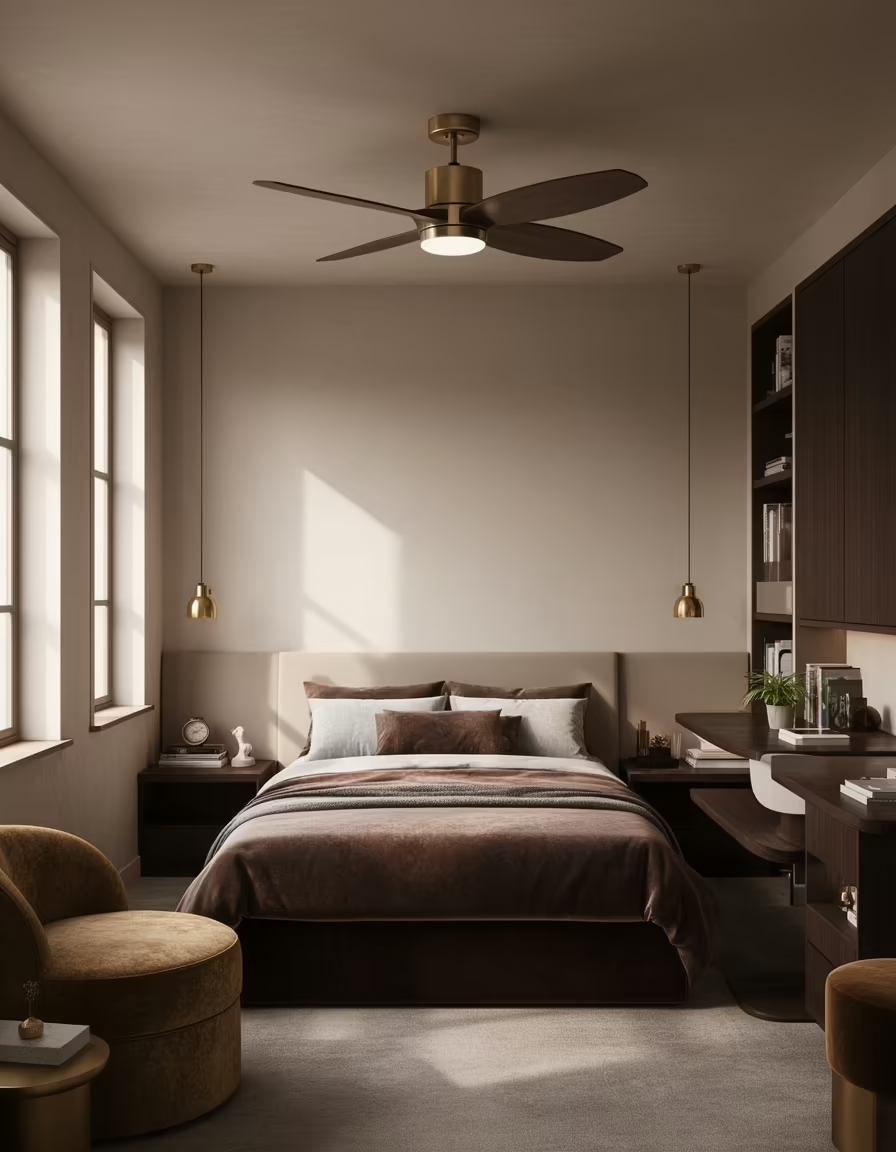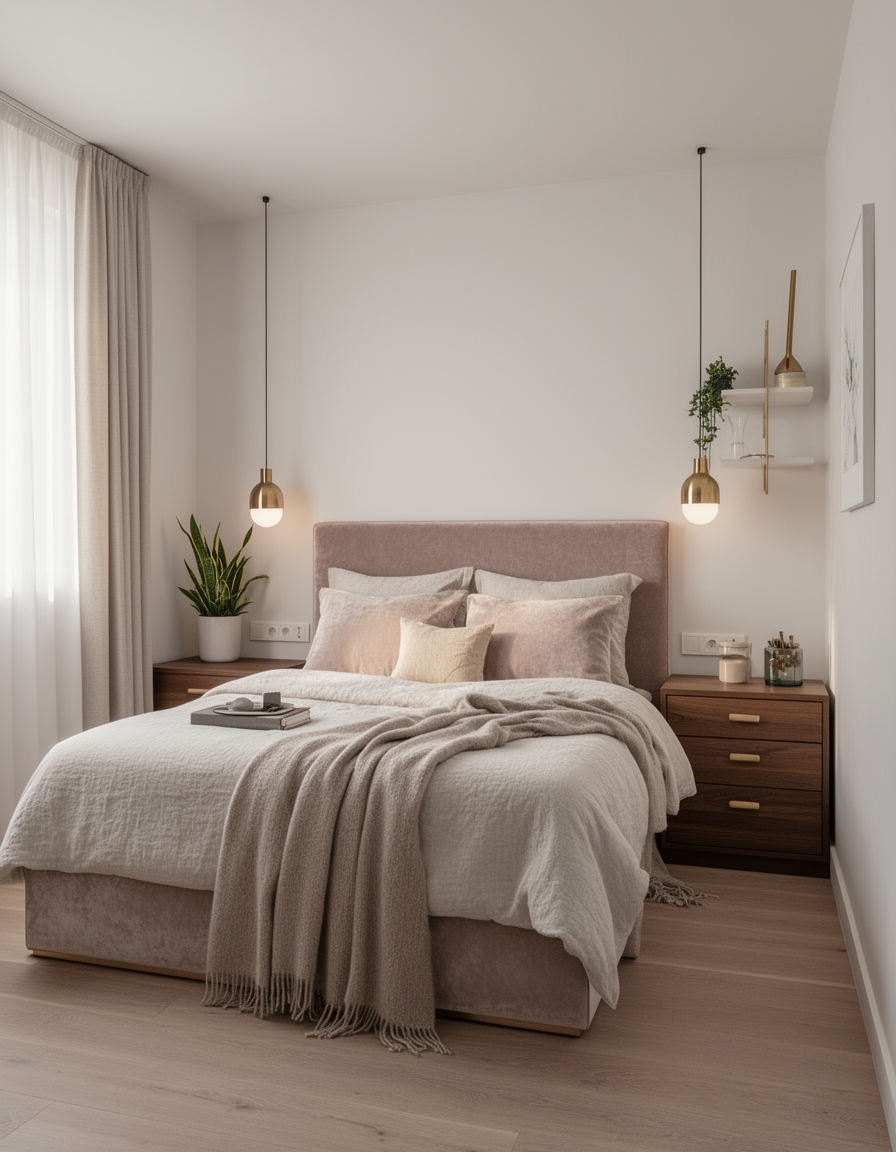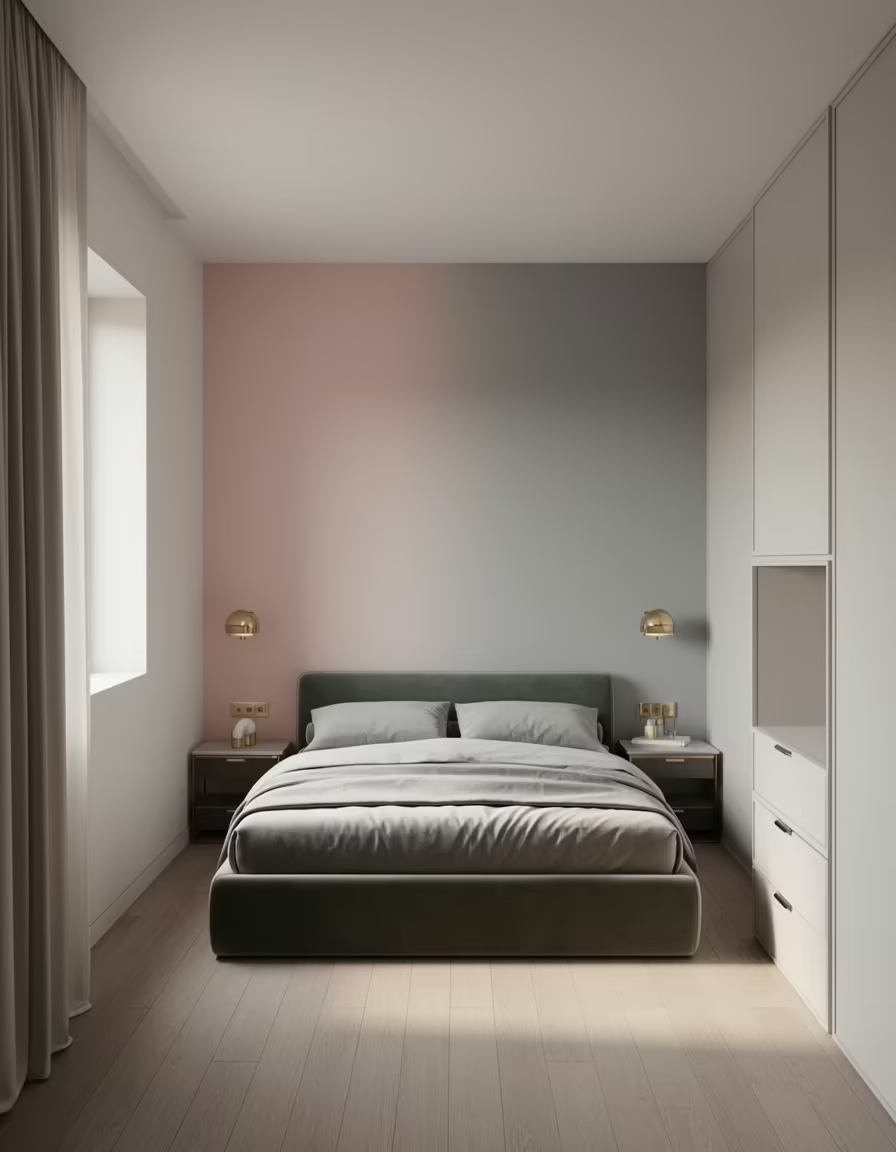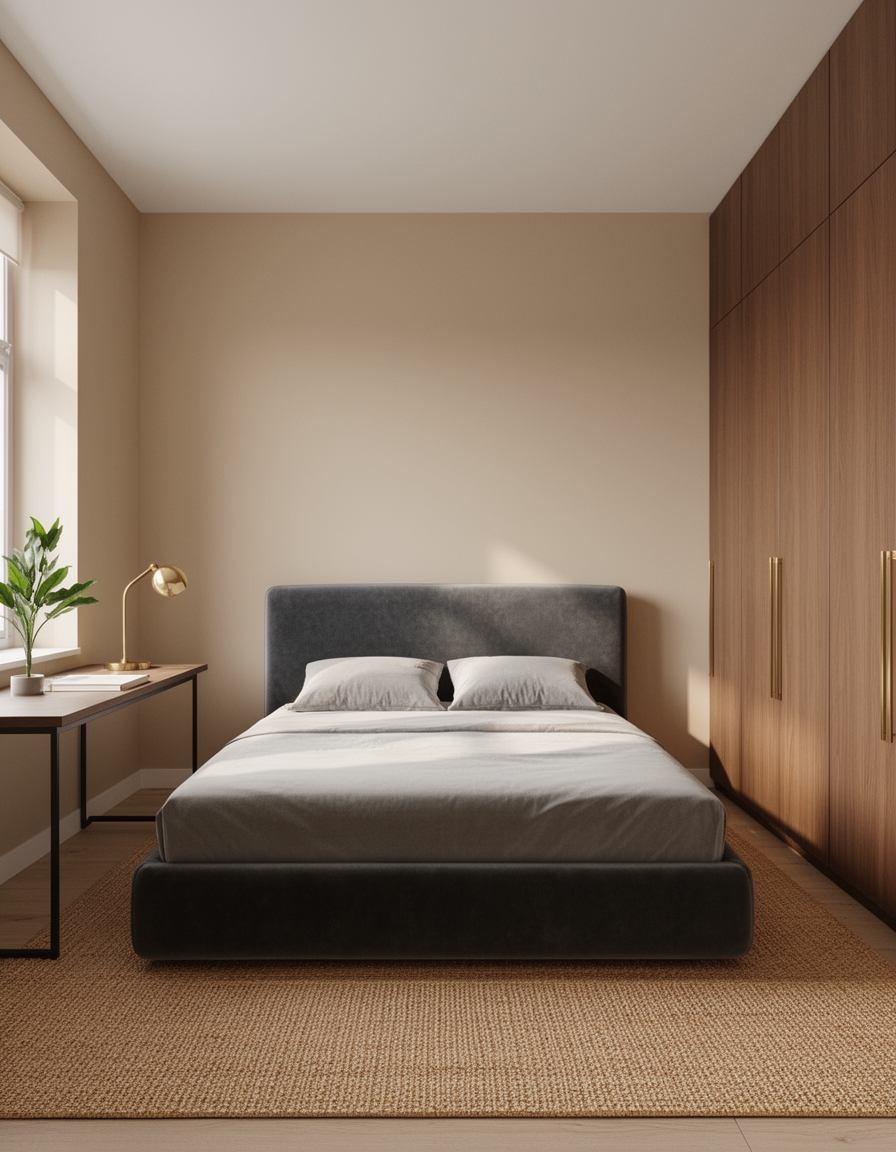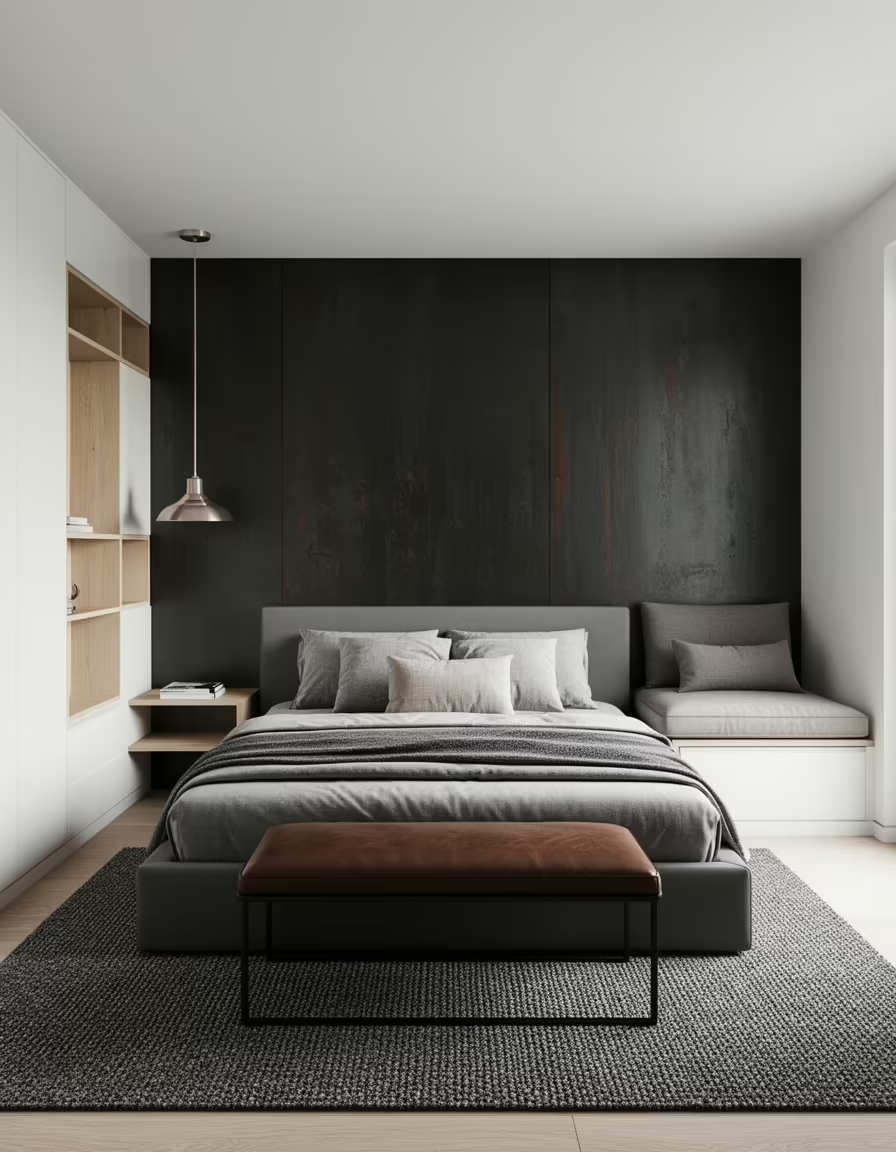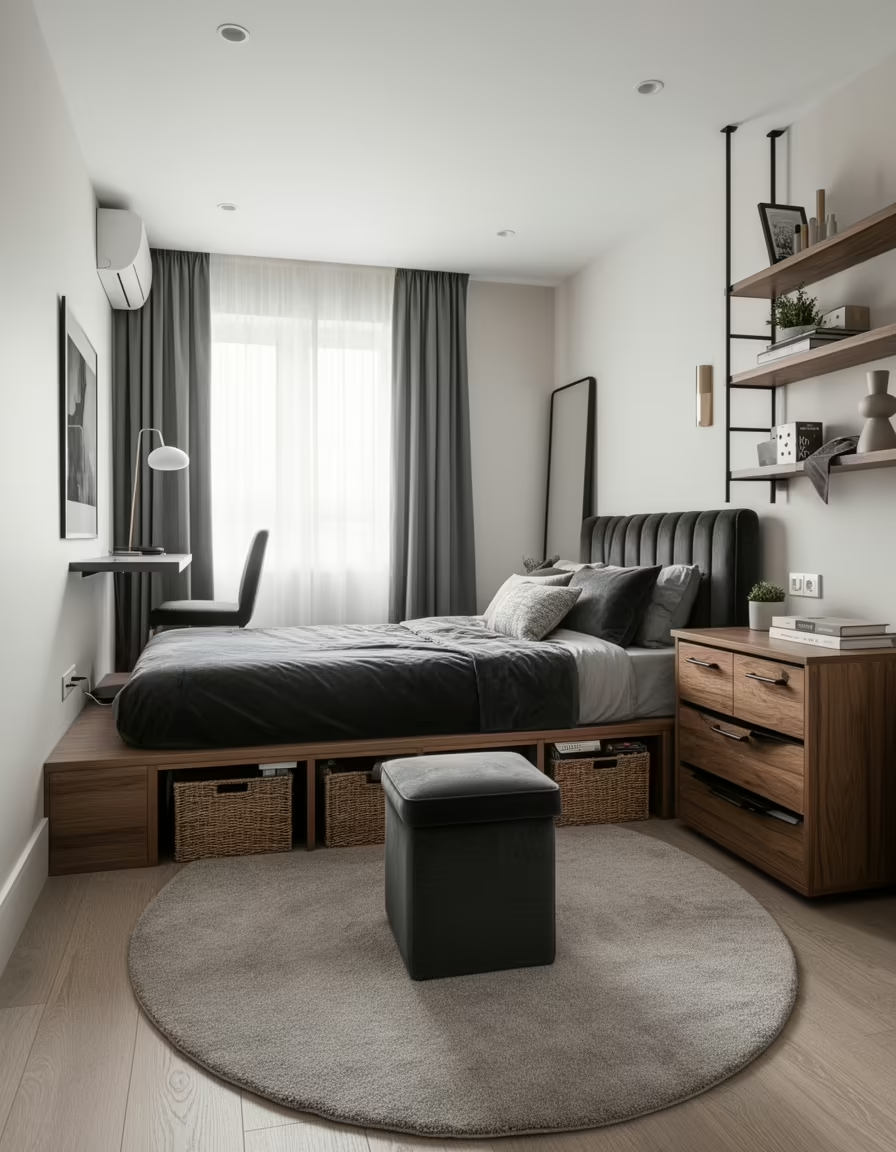
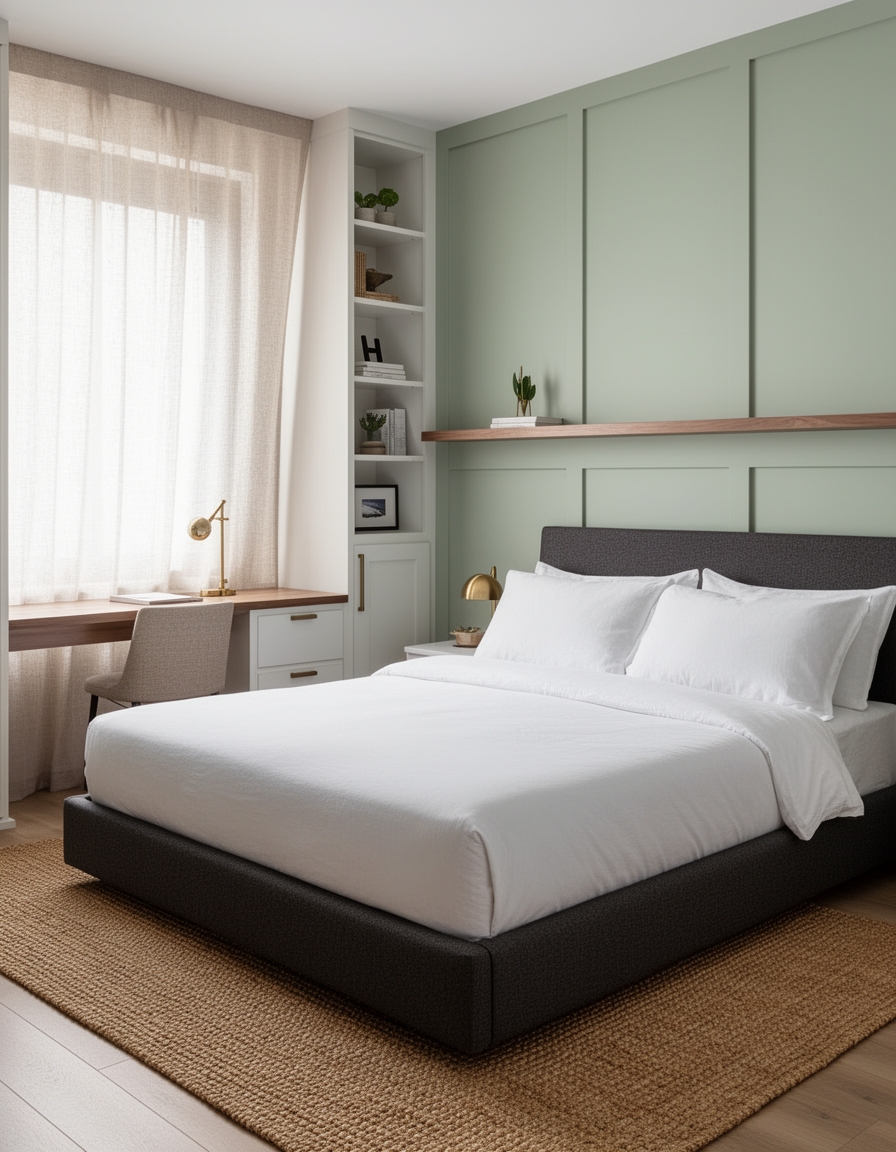
A friend once walked into my old box bedroom, all nine square meters of it, and asked which designer did it. The honest answer was a weekend, a staple gun, and about sixty dollars. That is the quiet truth about small rooms: their size makes them the easiest place to look high-end on your own dime, because a little handmade style covers a lot of wall. Size is on your side here.
These DIY style ideas for small bedrooms are about the look, the part the storage guides usually skip: a headboard you make yourself, a slat wall, a color scheme that grows with you, and the personal touches that turn a tight room into one that feels truly designed. Most take an afternoon and cost less than a single store-bought accent.
DIY Style on a Small Scale
| Project | Style payoff | Rough cost |
|---|---|---|
| DIY headboard | An instant focal point | $30-70 |
| Slat accent wall | A designer-look feature | $60-150 |
| Peel-and-stick detail | Pattern with no commitment | $20-50 |
| Handmade art | Personality for almost nothing | Frames only |
Maximize Small-Bedroom Style
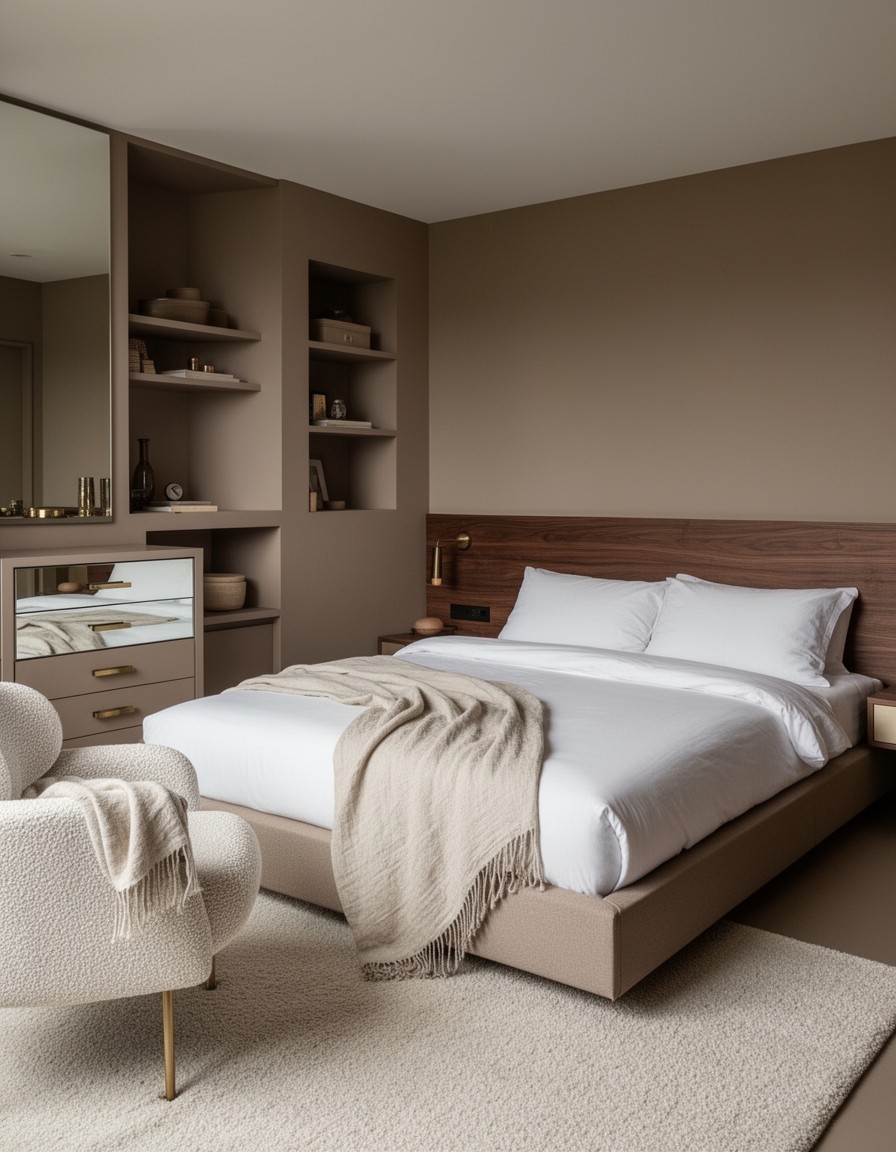
Style in a small room is less about how much you do and more about doing one or two things with real conviction. A single bold gesture, a handmade headboard, a painted shape, a feature wall, gives the eye a focal point and the whole room a point of view. The size that feels limiting is actually what makes one DIY gesture read so strongly.
The DIY mindset is your advantage here. When you make the statement piece yourself, you size it to your exact wall and pick the exact color, so it fits in a way store-bought rarely does. In a small room, one confident handmade feature beats a dozen safe purchases. Pick your one gesture, build it well, and let it lead.
- Choose one bold focal point, then keep the rest calm
- Size the DIY piece to your exact wall for a custom fit
- Pick a color you truly love, since it will dominate
- Let the handmade thing be the star of a calm, simple backdrop
Sort Storage, Sleep, and Study Priorities
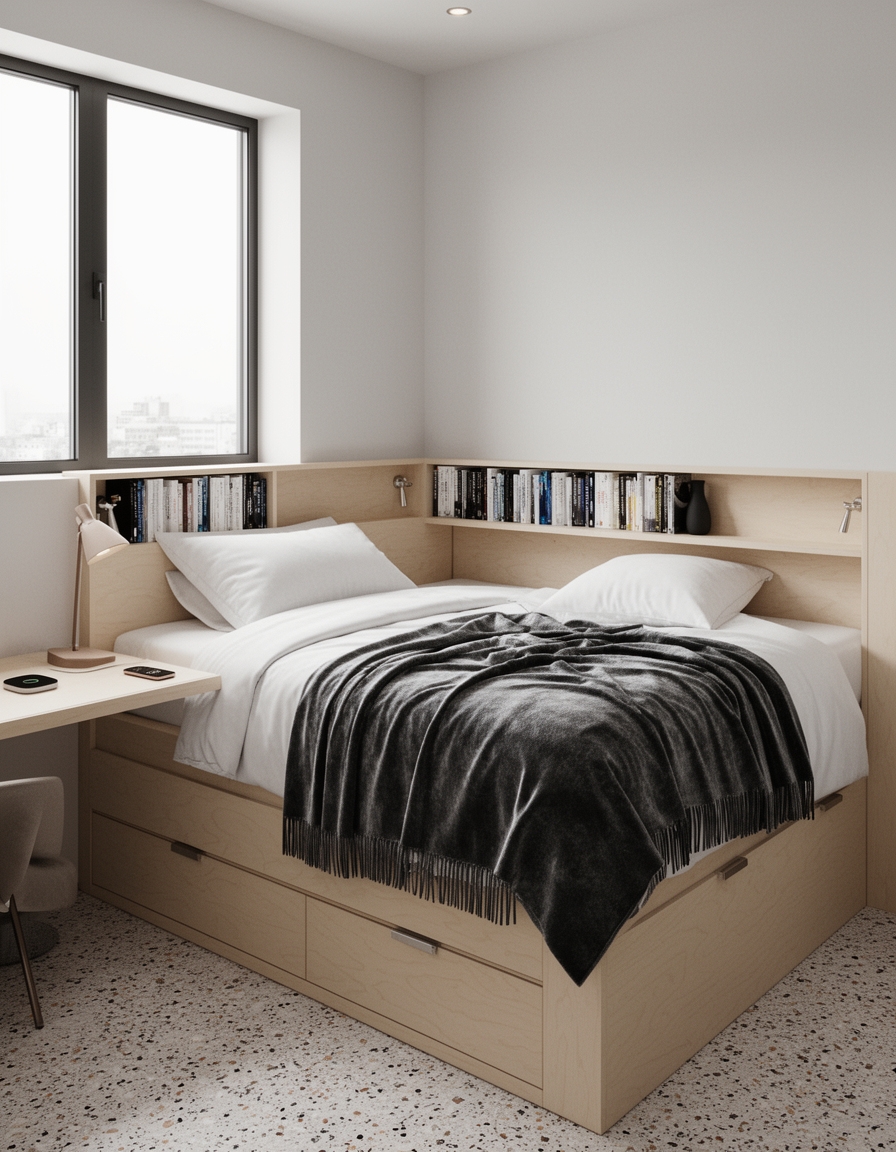
Before the pretty stuff, decide what the room must do, because a stylish room that fails to function is just a nice-looking mess. Rank your needs, somewhere to sleep, store, and maybe study, then style around those needs from the start. The most stylish small rooms hide their hard work behind a calm surface. Set your priorities in this order:
- Sleep first: the bed and how it anchors the room
- Storage second: enough that surfaces can stay clear
- Study or work third: a small desk only if you need it
- Style throughout: woven into each piece from the start
Heads-Up
Do not cram every DIY idea into one small room. A feature wall AND a gallery AND bold bedding AND three accent colors will fight each other in a tight space. Choose one or two statement projects, keep the rest calm, and the room looks designed, not busy.
Build a Scalable Color Palette Strategy
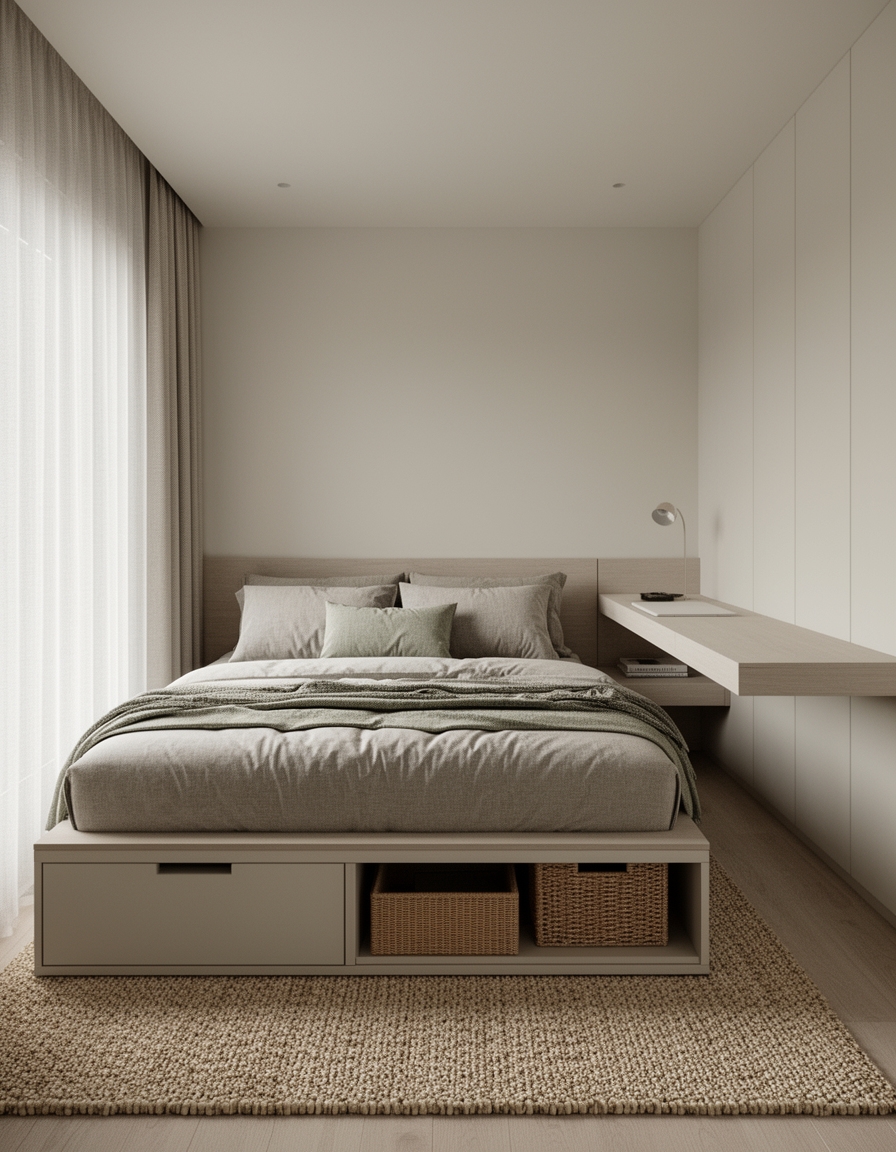
A smart DIY color strategy lets you restyle the room later without starting over, which matters when tastes change. Keep the big, hard-to-redo things, walls, bed, in a calm base you can live with for years, then bring personality through the cheap, swappable layers. That way a new look is a fresh duvet and a coat of accent paint, done in a weekend.
Pick two or three core tones and one accent you can shift seasonally. A DIY painted shape or a peel-and-stick panel lets you test bold color with zero long-term risk. A scalable palette is style insurance: you change the cheap layer, never the expensive one. Build it once and restyle for years on pocket change.
- Keep walls and big pieces in a calm, lasting base
- Put the personality in bedding, art, and removable accents
- Choose one accent tone you can swap with the seasons
- Test bold color with peel-and-stick before you commit
Make Multifunctional, Space-Saving Furniture
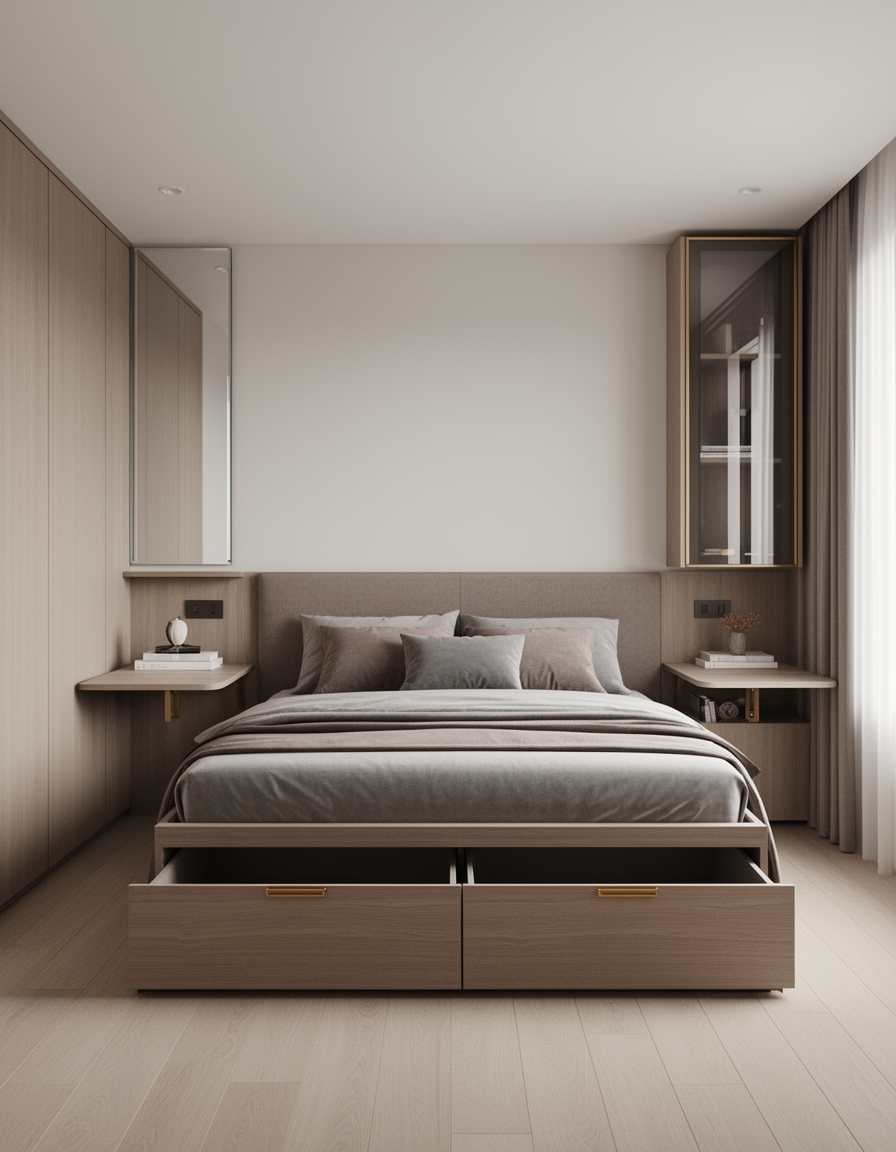
DIY furniture earns its place in a small room when it looks good and does two jobs at once. A bench you build at the foot of the bed seats you and hides off-season clothes; a floating shelf doubles as a nightstand and a display ledge. Made well, these pieces look intentional and open up the floor that makes a room feel styled.
Style the builds, do not just assemble them. Stain the wood to match your palette, add nice hardware, round the edges, so the homemade piece looks like a design choice. Our a small room that works covers the function side; here the goal is making those workhorses truly handsome.
- A storage bench that seats and hides at once
- A floating shelf styled as a nightstand and display
- Stained or painted finishes that match your palette
- Good hardware to lift a basic build into a design piece
👍DIY the style yourself
- +Sized and colored to your exact room
- +A fraction of the cost, real personality
- +You can restyle it later for almost nothing
👎Buy it ready-made
- –Generic sizing that rarely fits a small wall
- –Costs more for less personality
- –Hard to restyle without buying again
Try Smart, Space-Saving Bed Ideas
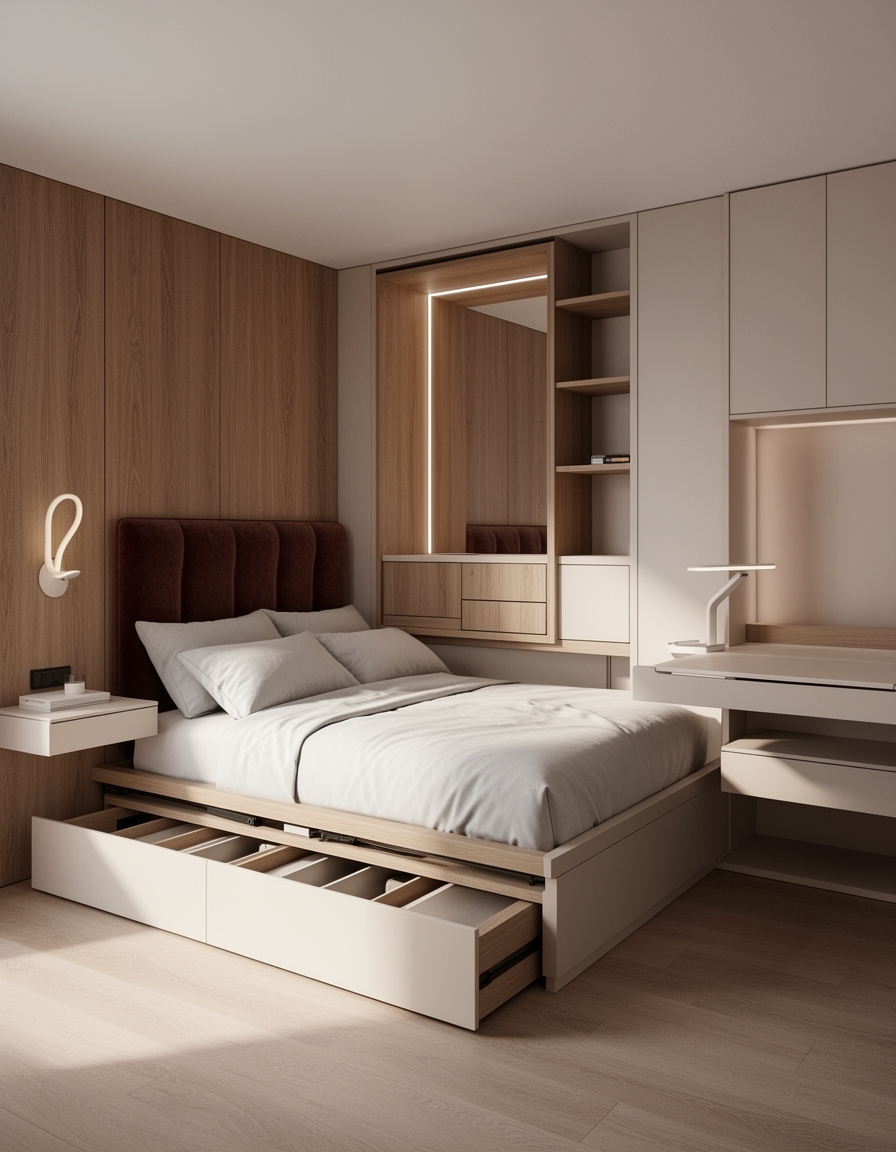
The bed dominates a small room, so styling it is the highest-leverage DIY you can do. A handmade headboard is the project I push hardest, because it sets the whole tone for about thirty to seventy dollars. Upholster a board in fabric you love, build a slat-wood panel, or fix a row of pegboard above the pillows for a modern look.
Start with the headboard, every time
Beyond the headboard, the bed is your styling canvas. Layer bedding in your palette, add a folded throw, and let the made-up bed carry the room. If floor space is brutal, a low platform you build yourself or a daybed styled with cushions doubles as seating by day. The bed earns the most styling attention because it gives the most back.
What I tell people nervous about DIY is to start with the headboard, since it is forgiving and the payoff is huge. Mess up a cushion cover and nobody minds. You just redo it. A handmade headboard is the single biggest style-per-dollar move in a small bedroom.
Put Up a Slat or Accent Wall
If you want one project that screams designer, a DIY accent wall is it, and a small room only needs one wall to transform completely. Wood slat paneling, a painted geometric shape, or a peel-and-stick pattern behind the bed turns a plain box into a room with a clear feature. Slat kits run sixty to a hundred and fifty dollars and go up in a weekend.
Keep the feature to one wall so the small room still breathes, and tie its color to your palette so it feels built-in. Renters can get the same effect with peel-and-stick panels or removable wallpaper that lifts off cleanly later. One treated wall against three plain ones is the whole trick, and it is the project guests always assume cost far more than it did.
Fill the Walls With Handmade Art
Empty walls make a small room feel unfinished, and store-bought art is expensive, so this is where DIY pays off in pure personality. One large handmade piece, or a tight little gallery of things you made, fills the space with character for the cost of frames. Make a few and the room stops looking flat-packed and starts looking like someone with taste actually lives there.
- One oversized abstract you paint yourself for impact
- Pressed flowers or fabric scraps framed as art
- A small gallery of prints, photos, and sketches you like
- Floating shelves styled with your own objects and books
Add Personality With Small DIY Details
The difference between a tidy small room and a stylish one is usually the small handmade details that show a real person lives there. A lampshade you recovered, drawer pulls you swapped, a no-sew cushion in your accent color, a painted plant pot: Tiny projects, big character. These are the finishing touches that make the room feel curated rather than furnished.
Lean into one or two materials or motifs so the details feel connected and deliberate. Repeat your accent color in a cushion, a frame, and a vase, and the room looks designed. None of it costs much or takes long. The styling lives in these small, deliberate choices, and DIY is what lets you make them exactly yours instead of settling for the shop’s version.
Paint Your Way to Instant Style
If you only do one DIY in a small room, make it paint, since nothing else changes the style so much for so little. A color-blocked headboard shape, a painted arch behind the bed, or a two-tone wall gives a tight room a designed look with just tape, a brush, and an afternoon. A sample pot or two costs only a few dollars and lets you test the idea before you commit.
Paint also lets you fake architecture a small room lacks: a painted picture rail, a faux wainscot, a soft color drifting up onto the ceiling to lift it. Keep the lines crisp and the palette tight, and these tricks read as built-in detailing rather than a quick fix. It is the most forgiving, lowest-cost way to hand a plain box real character.
Common Mistakes to Avoid
The biggest DIY-style mistake in a small room is doing too much: a feature wall, plus bold bedding, plus a gallery, plus three accent colors, all crammed into a tight space that turns chaotic. Pick one or two statements and let them shine against a calm backdrop, and the room holds together. Restraint is what separates designer-looking from cluttered.
The other trap is rushing the finish. A wonky shelf or a rough paint edge is what makes homemade look cheap, so take the extra hour to sand, level, and tidy the lines. Style is in the details, and in a small room every detail is at arm’s length. Done patiently, your DIY looks custom; rushed, it looks like a project.
DIY Small Bedroom Style Questions
?What is the best DIY project for small-bedroom style?
A handmade headboard. For about thirty to seventy dollars you set the whole tone of the room with one focal point, and you can size and color it to your exact space. Upholstered board, slat wood, or a pegboard panel all work, and it is forgiving enough for a first-time DIY.
?How do I make a small bedroom look designed on a budget?
Pick one statement DIY, a feature wall or a headboard, and keep everything else calm. Match its color to a simple palette, add a few handmade details that repeat your accent tone, and finish the work carefully. Restraint plus one strong handmade gesture is what reads as designer, not a roomful of stuff.
?Can renters do DIY style without losing the deposit?
Yes. Use peel-and-stick panels, removable wallpaper, and a freestanding or leaning headboard instead of anything drilled. Repaint with the landlord’s blessing or stick to swappable layers, bedding, art, cushions, for the personality. Most style DIYs here can be done damage-free and taken with you.
?How do I keep DIY from looking cheap?
Slow down on the finish. Sand the edges, level every line, stain or paint neatly, and add decent hardware. In a small room everything is seen up close, so a careful finish is what separates custom-looking from homemade. One well-made piece beats three rushed ones every time.
Small Room, Big Handmade Style
A small bedroom is the best place to try DIY style, because one handmade gesture, a headboard, a slat wall, a wall of your own art, transforms the whole room, and the tight footprint keeps the cost and effort low. Make one confident statement, keep the rest calm, and finish it carefully, and a tiny room ends up looking like someone designed it on purpose.