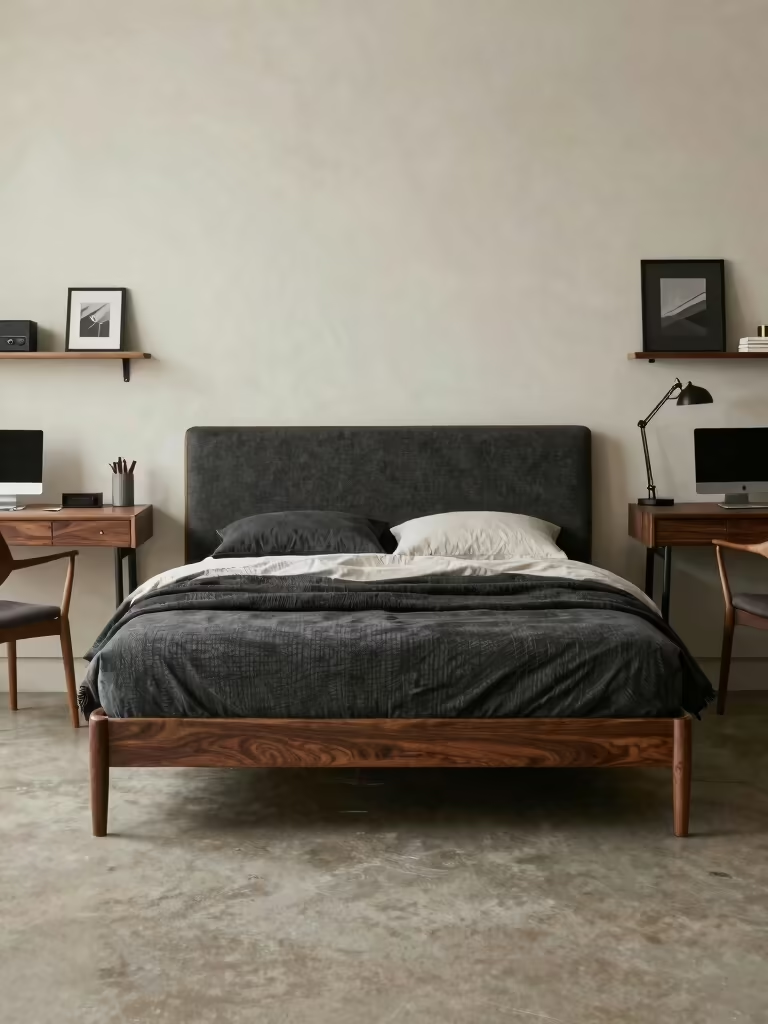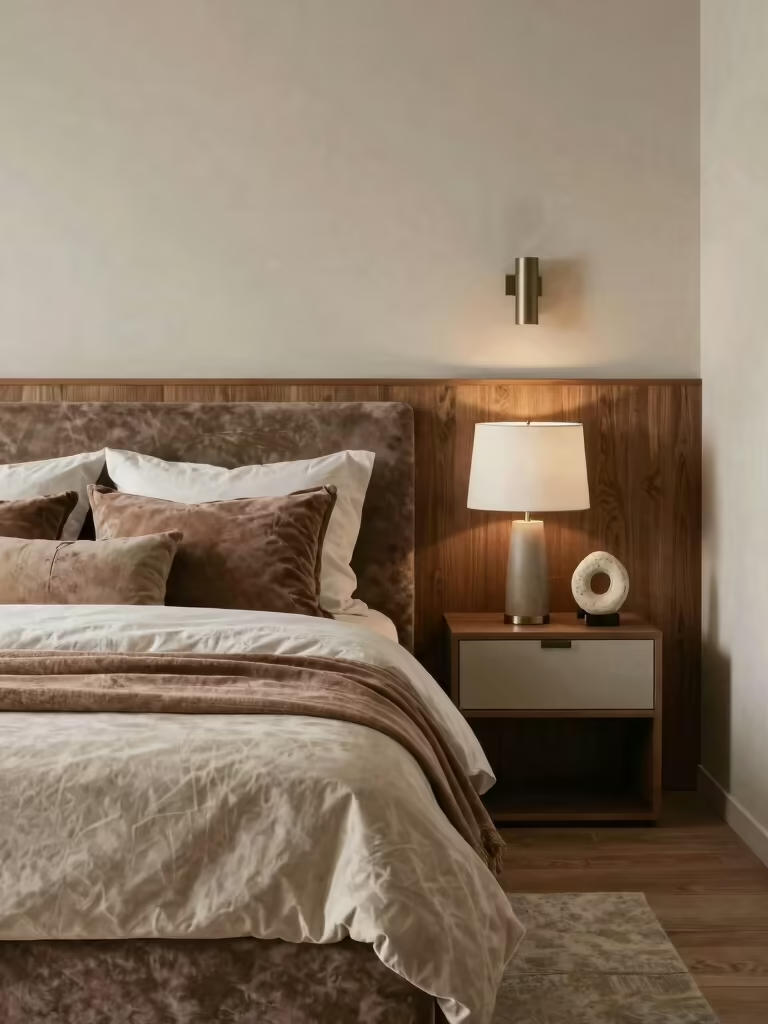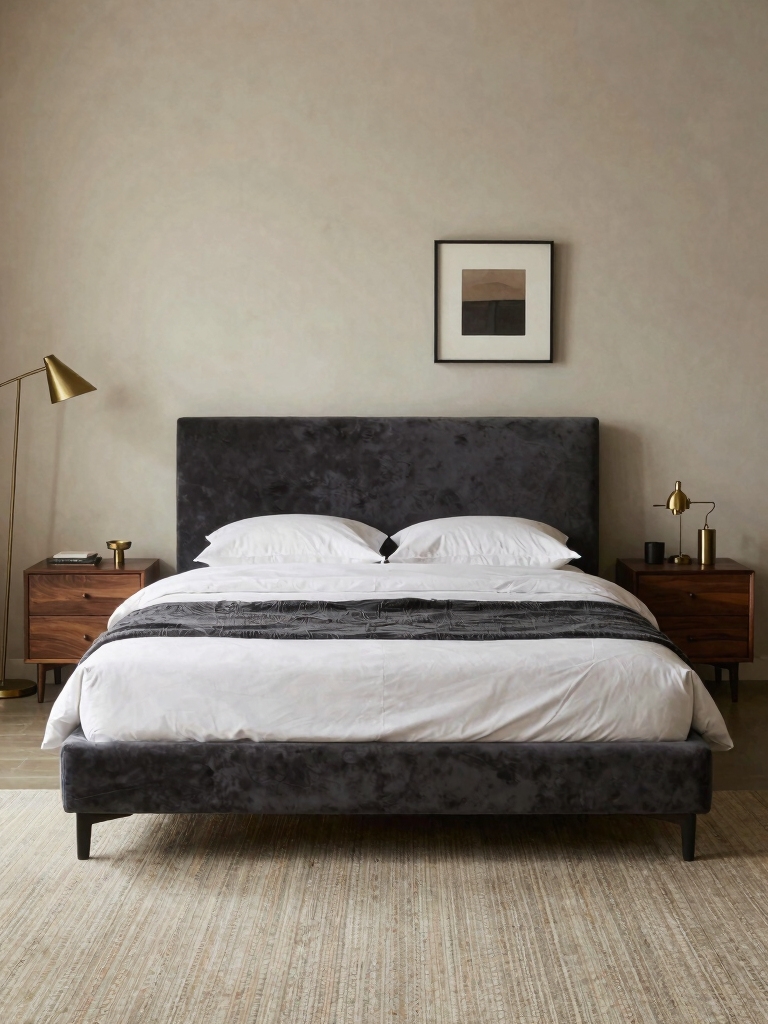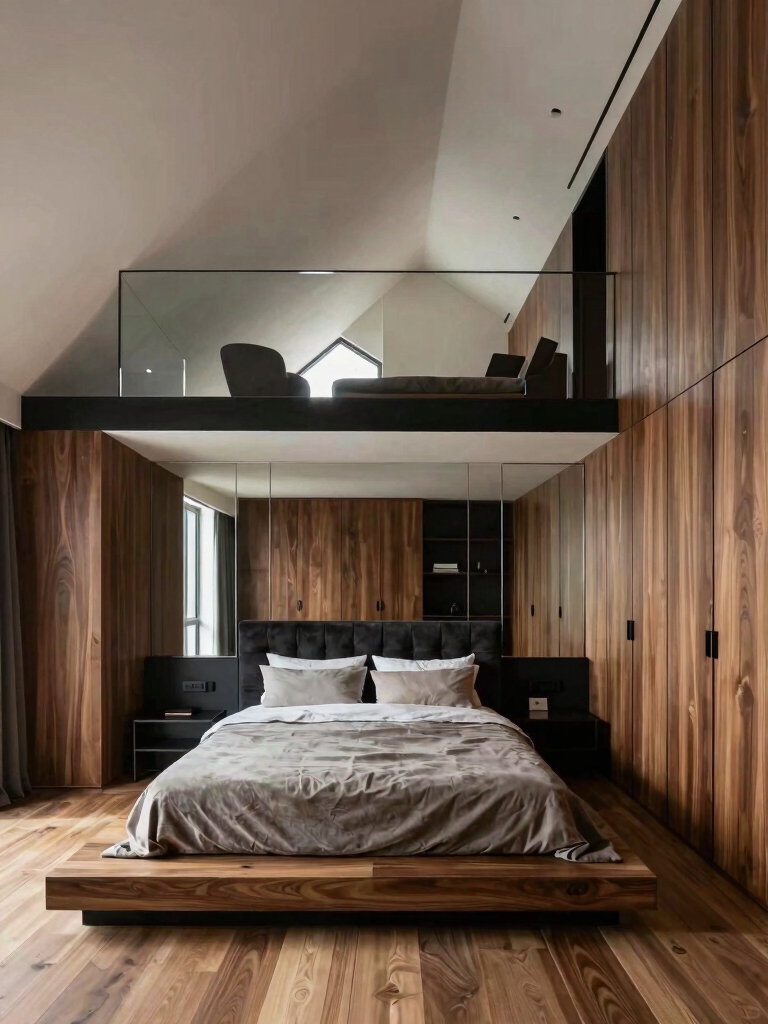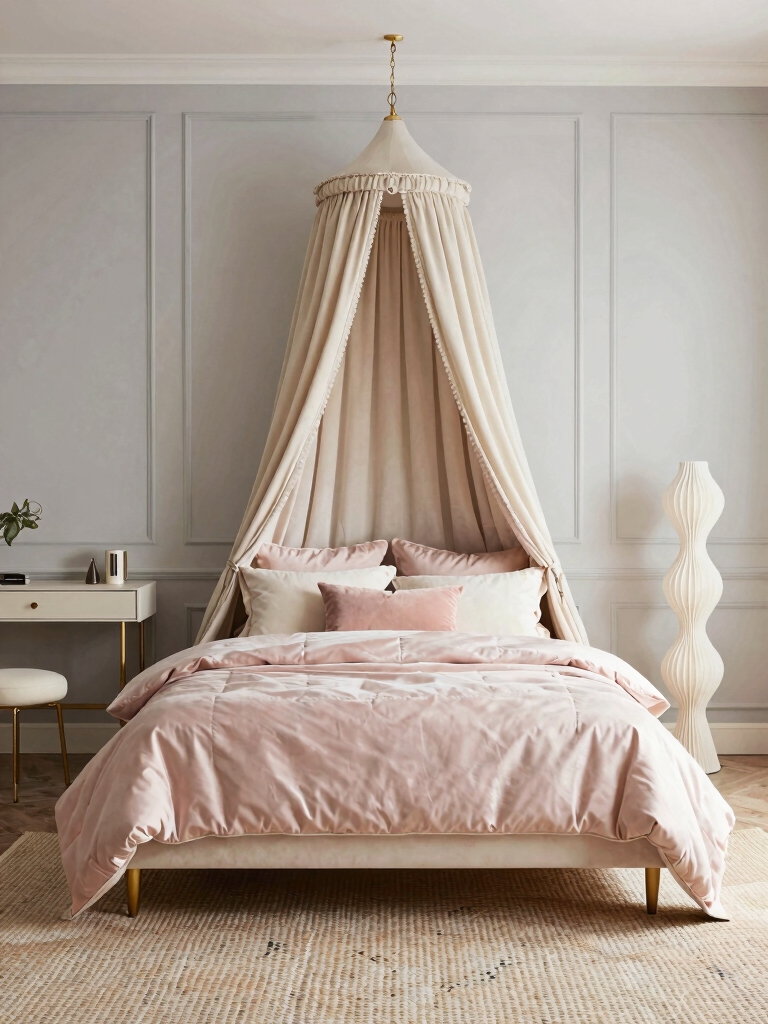
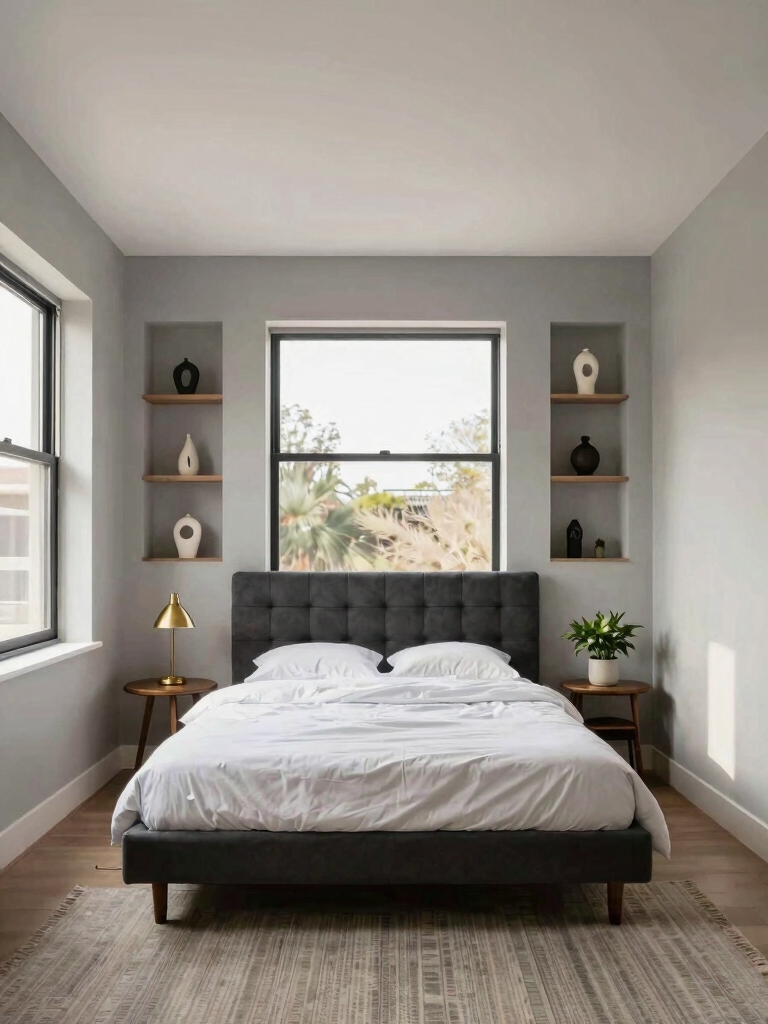
The clever small bedrooms aren’t the ones with the most storage; they’re the ones where the storage gets up off the floor. Almost every trick that makes a tiny room feel bigger comes down to the same idea: keep the floor plane as clear and uninterrupted as you can. Your eye takes open floor as space.
These clever bedroom ideas for small rooms are the tricks I reach for again and again, floating what usually sits on the ground, hanging the clutter on the walls, and bouncing light into the corners. None of them costs much, and most work even if you rent. Use a handful and a cramped room starts to breathe.
Key Takeaways
- Get things off the floor: floating nightstands and wall-mounted storage keep the floor clear, which the eye takes as more space.
- Bounce the light: pale colors and a mirror across from the window double the daylight a small room gets.
- Make every piece do two jobs, and send storage up the walls instead of out across the floor.
- Use renter-friendly tricks, adhesive hooks, tension rods, peel-and-stick, so the cleverness doesn’t cost your deposit.
Plan a Small Bedroom for Space and Comfort
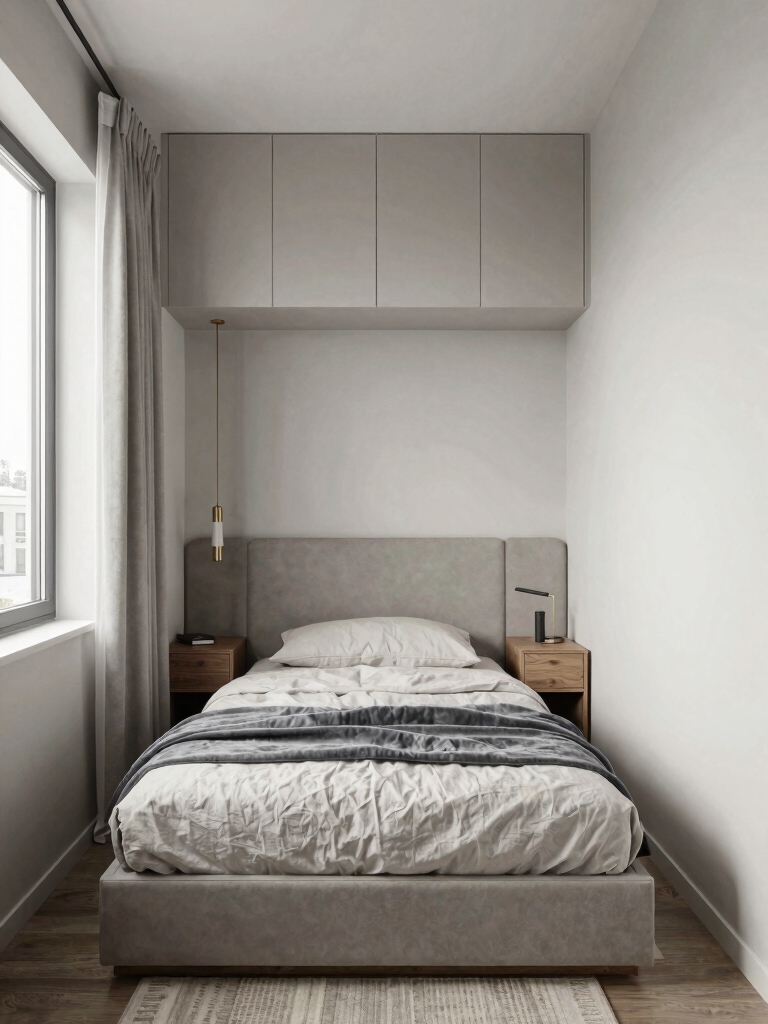
Before any space-saving trick, the plan is to protect the floor and the sightlines, because that’s what the brain registers as room. The fastest way to find your wins is to stand in the doorway and notice what your eye trips on first: a dresser jutting into the path, a pile on the chair, a cord snaking across the carpet. Those trip-points are your project list. A small room feels bigger the second the floor and the path open up.
The comfort half matters just as much. Clever shouldn’t mean cramped or fiddly, so every space-saving move still has to be something you’ll happily live with daily. Sketch the room to scale first, the way these small-room layout ideas suggest, and you’ll spot the easy wins fast.
- Keep one clear path from the door and protect a patch of open floor; empty floor is the whole illusion.
- Pick furniture that meets the ground lightly, legs you can see under, so light and floor run beneath it.
- Pull clutter off every flat surface and find it a home on a wall or behind a door instead.
Clever Built-In Storage Hacks
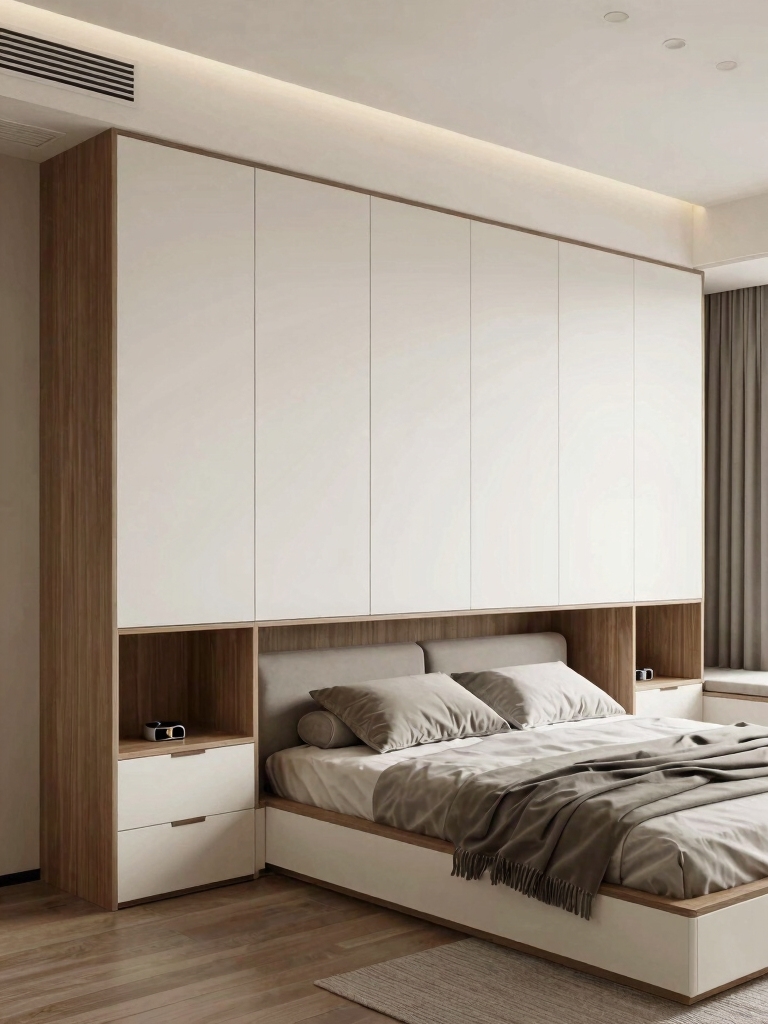
The cleverest storage in a small room hides in the spots most people ignore. The gap between studs becomes a recessed shelf, the wall above the door becomes a high cabinet for off-season stuff, and a deep window ledge becomes a bench with baskets underneath. Each one adds storage without stealing a single inch of floor, which is the whole point in a room where every inch of floor is doing visual work for you.
Doubling up is the other half of the job. A headboard with a hidden cavity, a stair-step shelf that climbs a corner, a bed lifted just enough for flat bins, all of it turns dead space into working space. I lift almost every bed I work on a few inches, since that gap is the biggest unused drawer in the room.
Keep it looking calm by hiding the mess behind closed fronts and matching boxes. Open shelves show clutter in a tight room within a week, so I save them for a few good-looking things and tuck the rest away. These storage ideas for hiding clutter go deeper on the disappearing act.
Two things people believe about small bedrooms that hold them back:
❌ Myth: A small room needs tiny furniture to feel bigger.
✅ Reality: Lots of small pieces actually read as cluttered. One properly scaled bed and a couple of slim, leggy pieces leave more visual space than a crowd of little ones.
❌ Myth: Dark colors always make a small room feel smaller.
✅ Reality: A consistent deep color can make a tight room feel cozy and intentional. What shrinks a room is clutter and clashing tones, not depth itself.
Light, Airy Colors That Open the Room
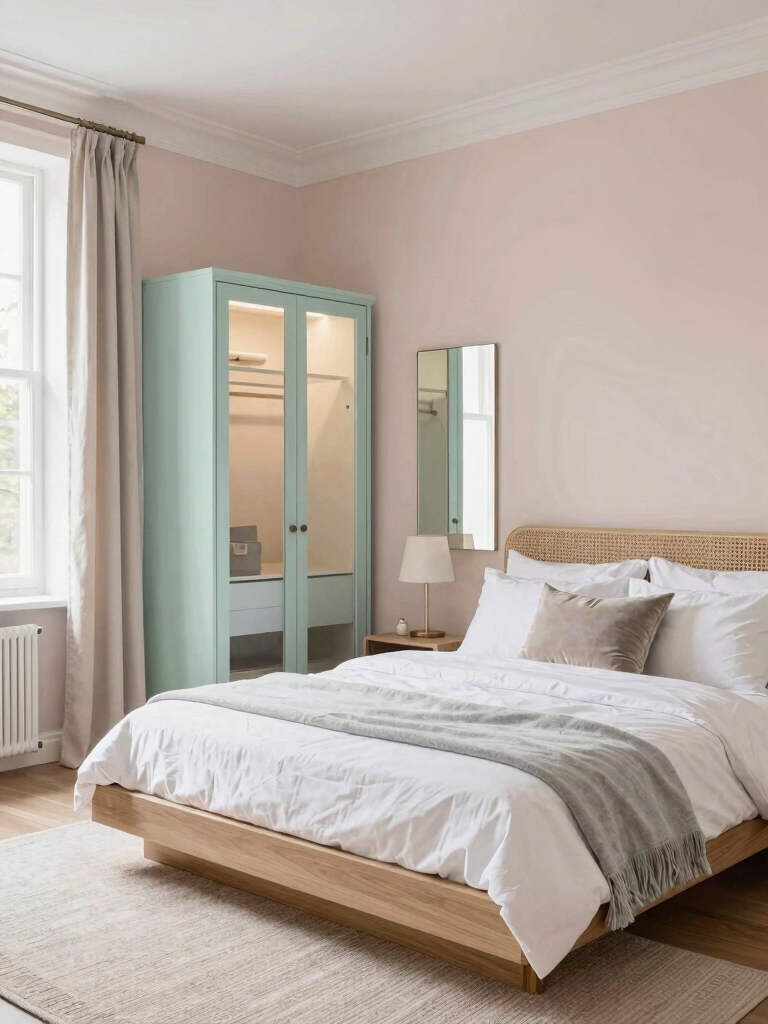
Color is the cheapest trick there is, because pale walls bounce light around and make a small room feel taller and wider. Soft whites, pale greige, and gentle warm neutrals reflect daylight instead of soaking it up, which keeps the room airy. The ceiling looks higher when the walls are light, especially if you carry the wall color up onto it.
Carry the wall color onto the ceiling
Light doesn’t have to mean bland, though. Add warmth and a little contrast with wood tones, a soft accent in the textiles, and matte finishes so the room feels calm rather than stark. The trick is keeping the big surfaces pale and saving any depth for the small, swappable pieces.
Light bounces best with help. A mirror placed across from the window throws daylight deep into the room and visually doubles the brightest view you have. Paired with pale walls, that one move makes a dim, boxy room feel open, and these mirror ideas for doubling a small space show where to hang it.
Wall-Mounted Organizers for Clear Surfaces
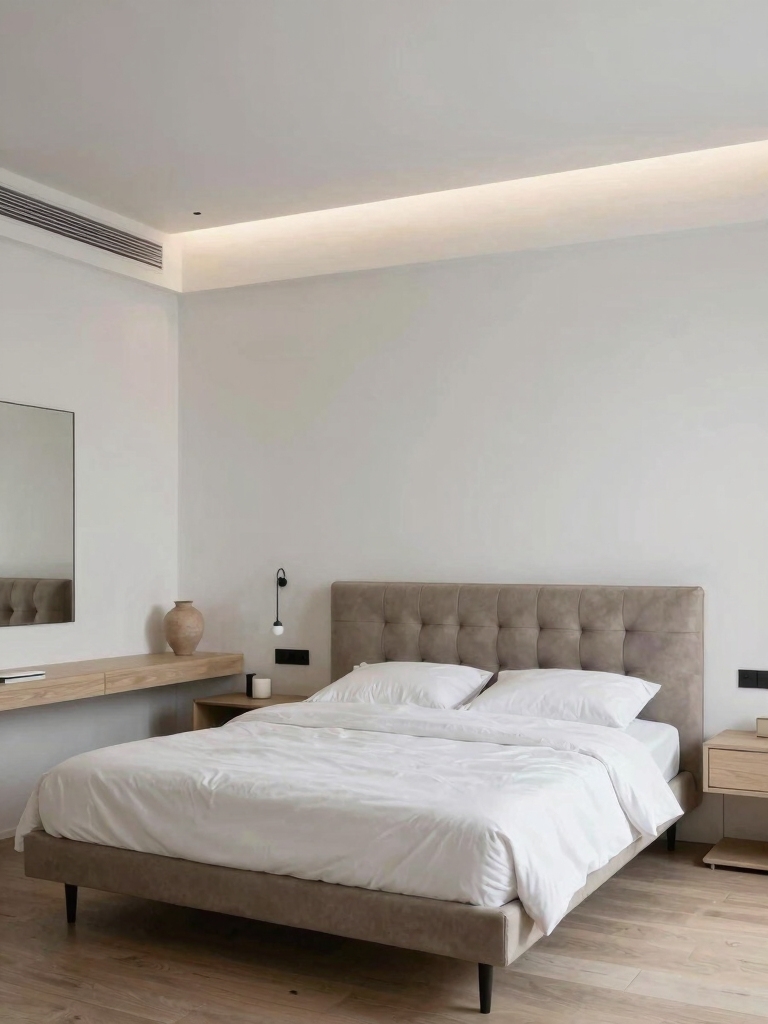
Clear surfaces are most of what makes a small room feel calm, and the fix is to catch clutter on the wall before it ever lands on a surface. A slim rail by the door grabs bags and keys, a row of hooks holds tomorrow’s clothes, and a wall pocket corrals the small stuff that always migrates to the nightstand.
The walls are wasted real estate
Go vertical wherever a surface is overflowing. A pegboard above the desk, a floating ledge for books and a plant, an over-door organizer for shoes, each one moves clutter up and off the floor and the desktop. The walls in a small room are its most wasted real estate, and once you start treating them as storage, the floor and the surfaces have a chance to stay clear.
Best of all, most of this is renter-proof. Adhesive hooks and rails, about $15 to $30, hold a surprising amount and peel off cleanly, so you get the cleverness without losing your deposit. Keep the organizers low-profile and matched so the wall looks tidy, not busy.
A few small-space terms worth knowing before you shop:
📖Floating furniture
Wall-mounted pieces with no legs on the floor; the visible floor underneath makes a room feel larger.
📖Over-door organizer
A hanging rack or pocket panel on the back of a door; reclaims the most-forgotten square footage in any room.
📖Tension rod
A spring-loaded rod that wedges between two walls with no drilling; great for curtains, dividers, or a closet rail in a rental.
Floating Nightstands That Save Floor Space
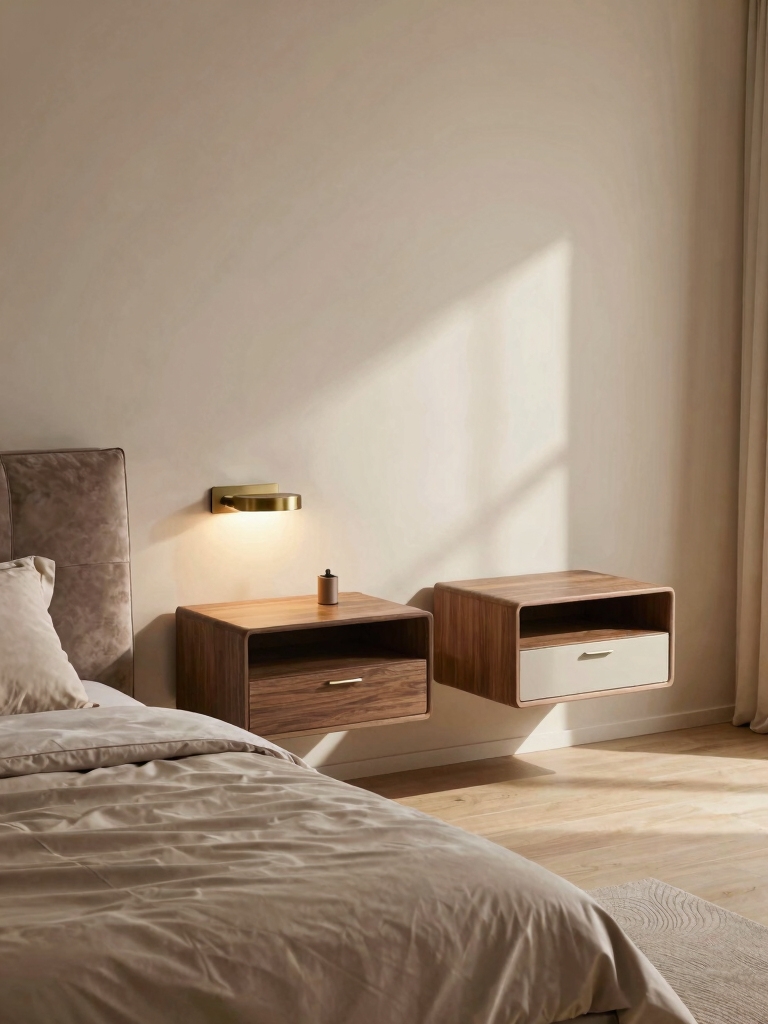
A floating nightstand is one of the single smartest swaps in a small bedroom, because it gives you bedside storage while keeping the floor visible underneath. That sliver of open floor under the shelf tricks the eye into seeing more room, and the mounted look feels clean and deliberate. A simple wall-mounted shelf or a small floating drawer runs about $40 to $100, and even a single mounted ledge with a sconce above it does the job in the tightest rooms.
- Mount it at mattress-top height so it’s easy to reach from bed and the lamp sits at the right level.
- Pick a slim profile with a small drawer or ledge, enough for a phone, a book, and a glass of water.
- Route the lamp and charger cords behind the shelf or down a cord channel so the wall stays clean.
- Skip it on both sides if the room is tight; one floating shelf and a wall sconce frees even more floor and still covers the bedside basics.
Zone a Small Room for Sleep, Work, and Lounging
A clever small bedroom often has to be more than a bedroom, and the trick is to suggest separate zones without building walls. A rug under the bed, a small desk turned to face a different direction, and a reading chair in the corner each cue a different activity, so one room quietly does three jobs. The zones can overlap; they just need a visual signal.
Lighting does a lot of the zoning for free. A focused lamp over the desk, a warm glow by the bed, and a different level in the lounge corner tell your brain where each activity belongs. Keep the palette consistent across the whole room so the zones feel connected, not chopped up, and the small space still reads as one calm, intentional room.
Quick Makeover Moves Worth Copying
When I do a fast small-room refresh, I work through the same short list, because these moves give the most change for the least effort. Swap the overhead bulb for a warm one and add a small lamp, a ten-minute job. Float the nightstands. Hang a big mirror opposite the window. Then pull everything off the floor and the surfaces and put back only what truly earns its spot. That last step, the editing, makes the biggest difference, and it costs nothing.
The before-and-after that surprises people most is just clearing and lifting. A room that felt cramped with a bedside table, a floor lamp, and a laundry chair suddenly breathes once the nightstand floats, the lamp moves to the wall, and the chair leaves. Nothing got bigger. The floor just opened up. I tell people to try the free moves first, since half the time you don’t need to buy a thing.
Clever Tricks That Suit Renters Best
Most of these moves work whether you own or rent, but a few are made for renters who can’t drill, paint, or renovate. I steer renters toward the reversible version of every trick: tension rods, peel-and-stick wallpaper, freestanding shelves, and adhesive hooks, nothing that needs a drill or a paintbrush. You get the custom-fit look and you keep your full deposit at move-out.
Lean hardest on the no-damage wins. A large leaning mirror bounces light without a single hole, a freestanding clothing rack reads intentional when it’s styled well, and removable wallpaper on one wall fakes a custom feel that comes right off at move-out. These decor ideas worth borrowing are full of reversible tricks, and the room ends up looking far more put-together than its lease would suggest.
Clever Small Bedroom Questions, Answered
?How much weight can adhesive wall hooks and rails actually hold?
More than people expect, but read the package rating and respect it. Most command-style strips hold a few pounds each, and heavy-duty adhesive hooks manage five to seven pounds, enough for bags, robes, and a wall pocket. For anything heavier, like a loaded shelf, hit a stud or use a proper anchor instead.
?How do I add storage to a small bedroom without a remodel?
Go vertical and reversible. Wall rails, over-door organizers, under-bed bins, and a tall slim shelf add real storage with no construction. Adhesive hooks and tension rods hold a surprising amount and peel off cleanly, so even renters can do most of it.
?Do mirrors really make a small room look bigger?
Yes, when placed well. A mirror across from or beside the window bounces daylight deeper into the room and visually doubles the brightest view. A large leaning mirror does it with no holes in the wall, which makes it a favorite renter trick.
Float It, Hang It, Light It
Clever small-bedroom design comes down to a few repeatable moves: get the storage off the floor, hang the clutter on the walls, bounce the light with pale colors and a mirror, and keep every piece doing double duty. None of it costs much, most of it is reversible, and together the tricks make a cramped room feel surprisingly open.
Start with the one surface that’s bugging you most, the cluttered nightstand or the dim corner, and apply the matching trick. One clever move at a time is how a small room quietly turns into one you actually want to be in.