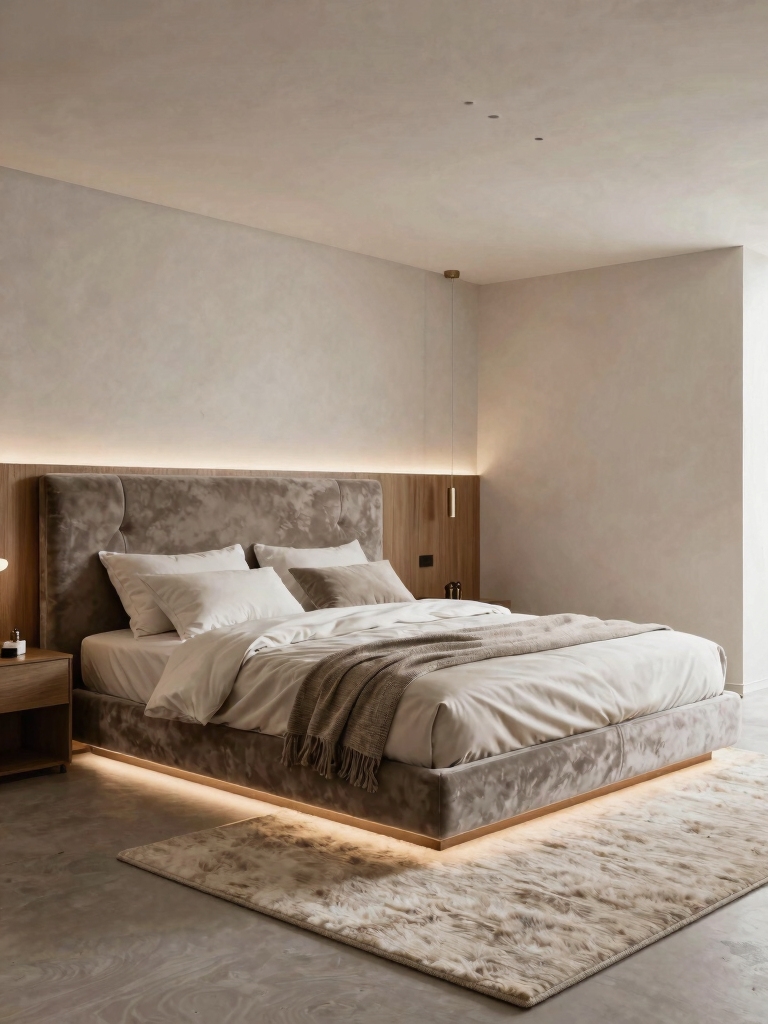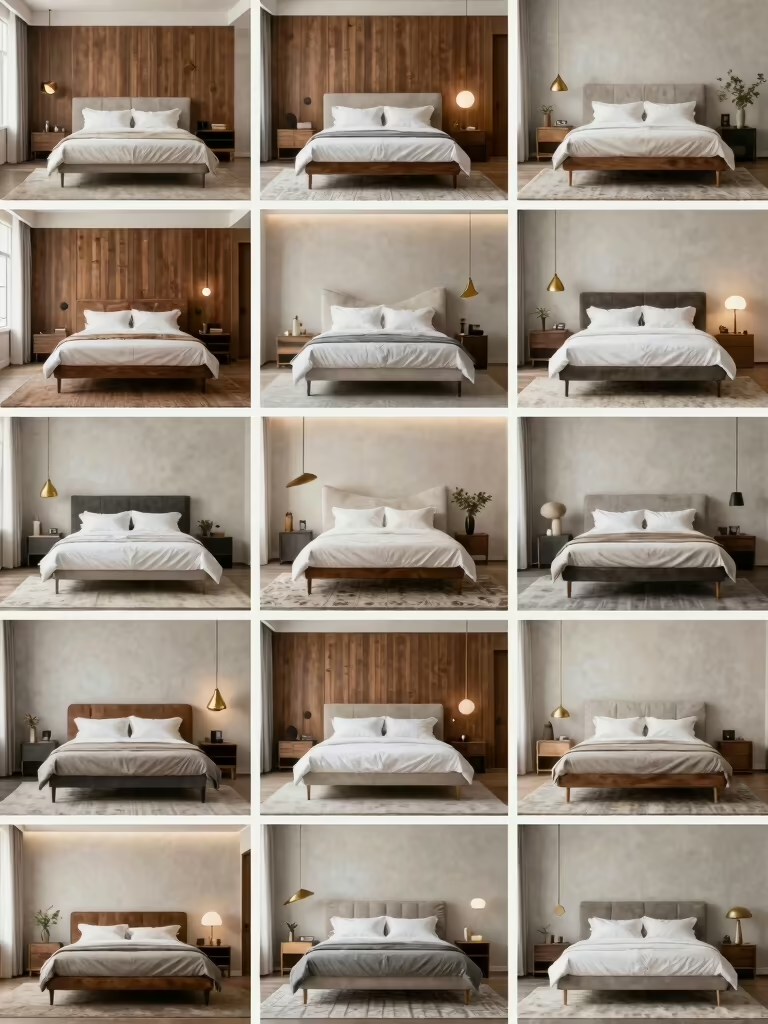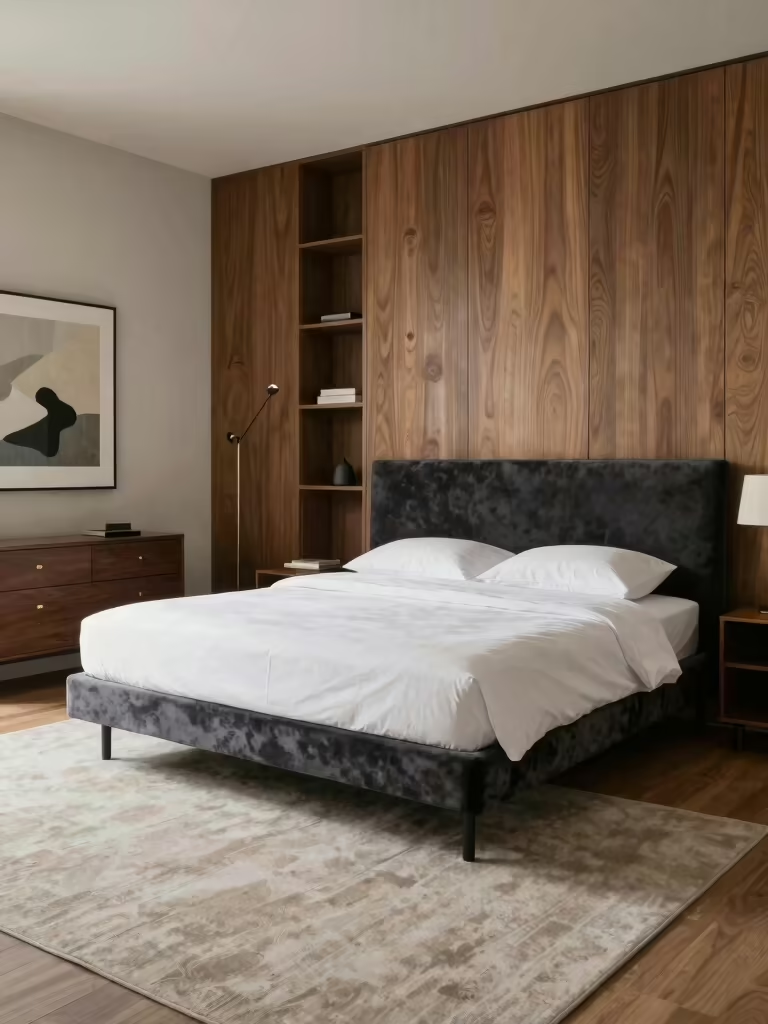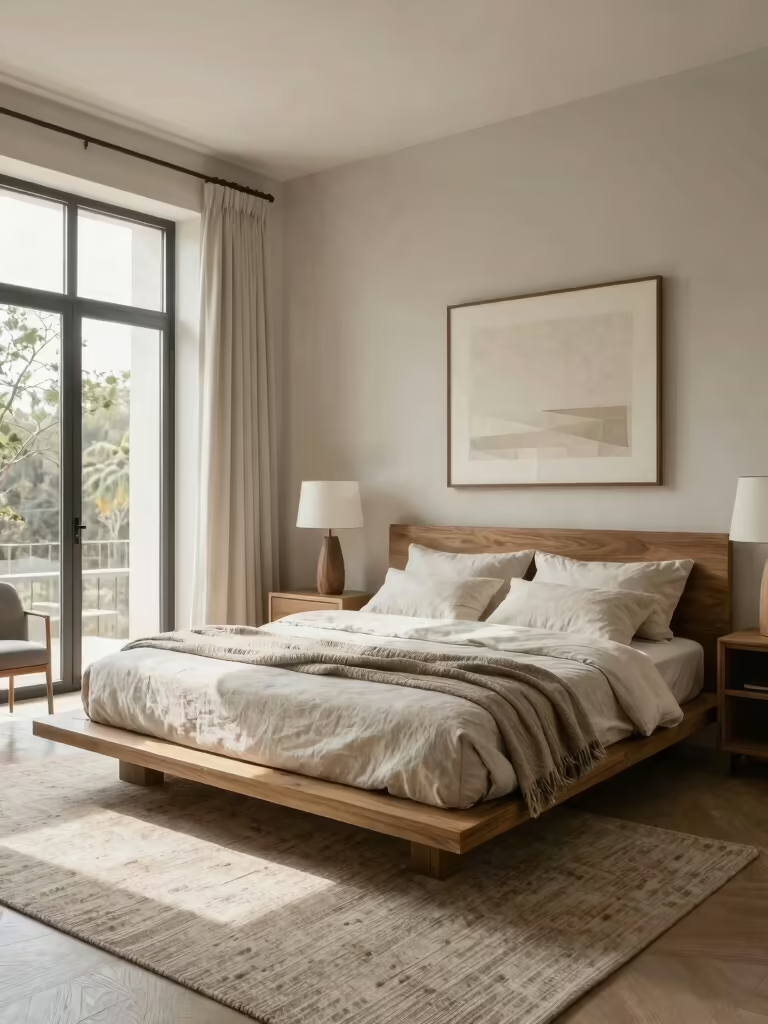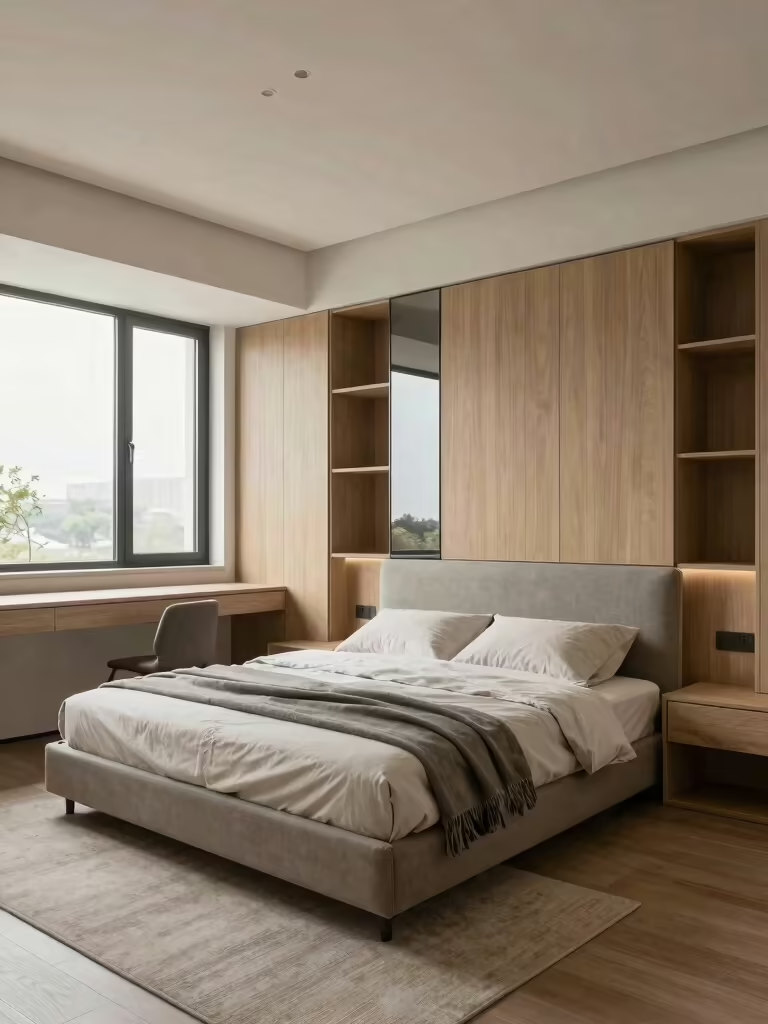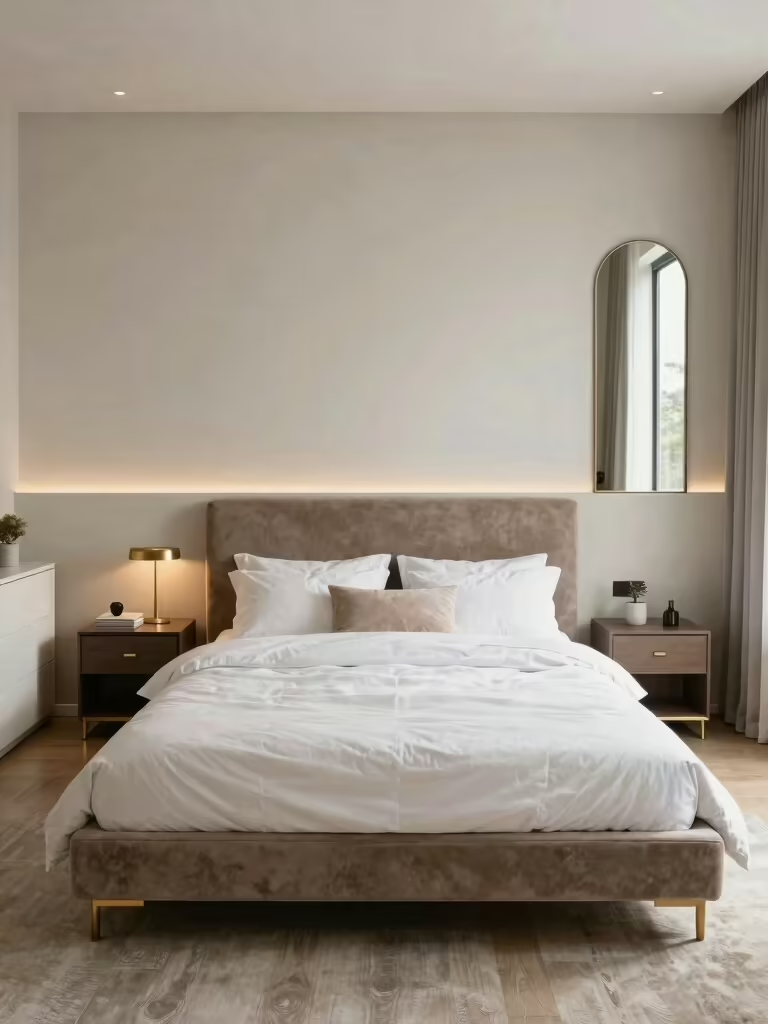

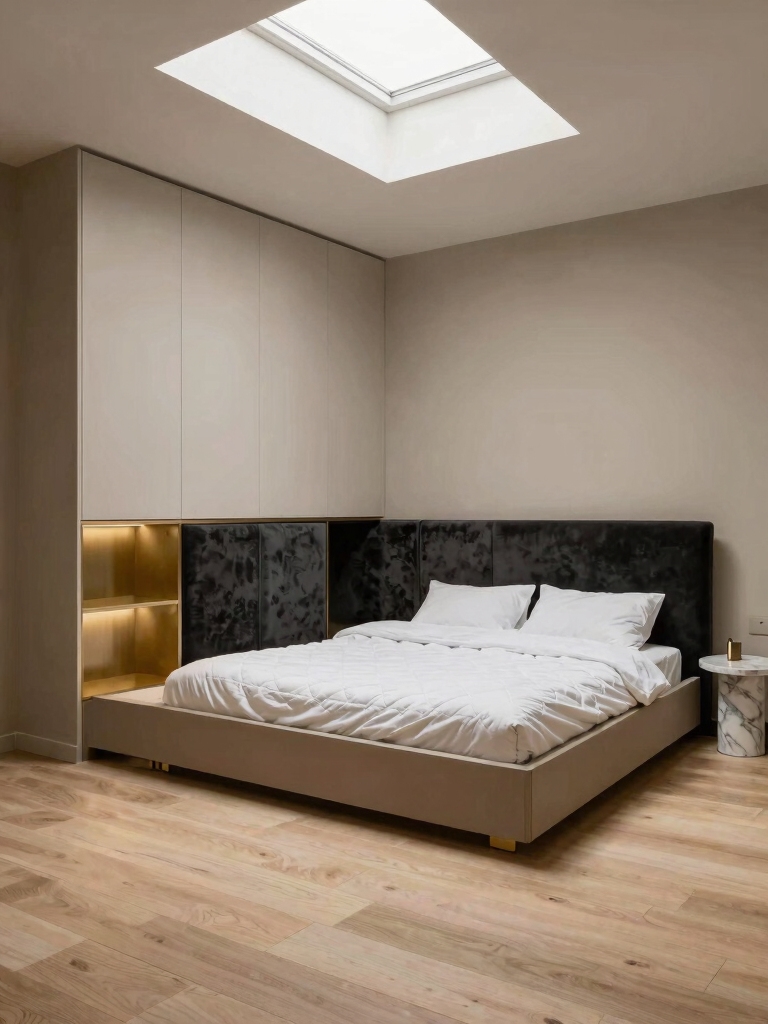
In an L-shaped bedroom, I start by spotting the footprint and mapping flow to avoid cramped pockets. I prioritize built-ins and modular pieces, with clever vertical storage to free floor space. I place the bed on the longer wall for balance, then zone sleeping, dressing, and lounging with distinct cues like lighting and furniture. I use low-profile furnishings, full-height mirrors, and layered lighting to expand depth. Want more tips to refine your layout? I’ve got you covered as you move forward.
How to Maximize Space in an L-Shaped Bedroom: Foundational Principles
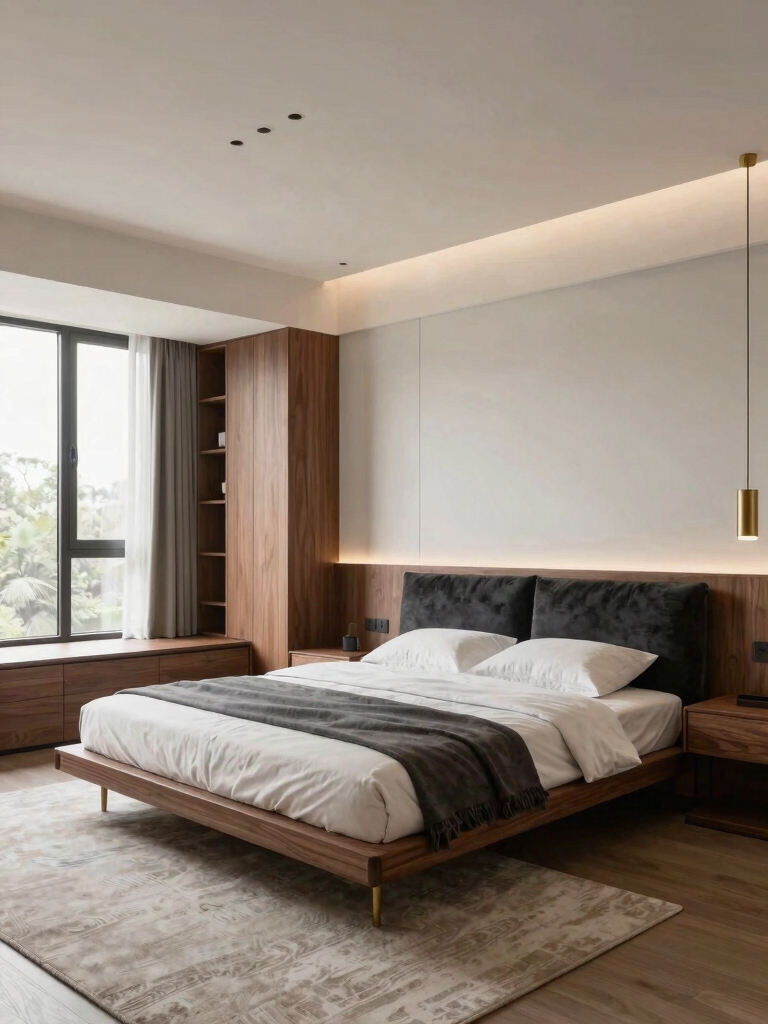
Maximizing space in an L-shaped bedroom requires a clear plan that honors both form and function.
I’ll guide you through core principles, from traffic flow to focal points, so every square inch earns its keep.
Prioritize built-ins, modular pieces, and layered lighting, then align storage with doors and angles.
Together, we’ll create a calm, efficient, visually balanced retreat.
Incorporating smart bedroom layouts can further enhance the usability of small L-shaped rooms.
Spotting an L-Shaped Footprint: What Qualifies as an L Room
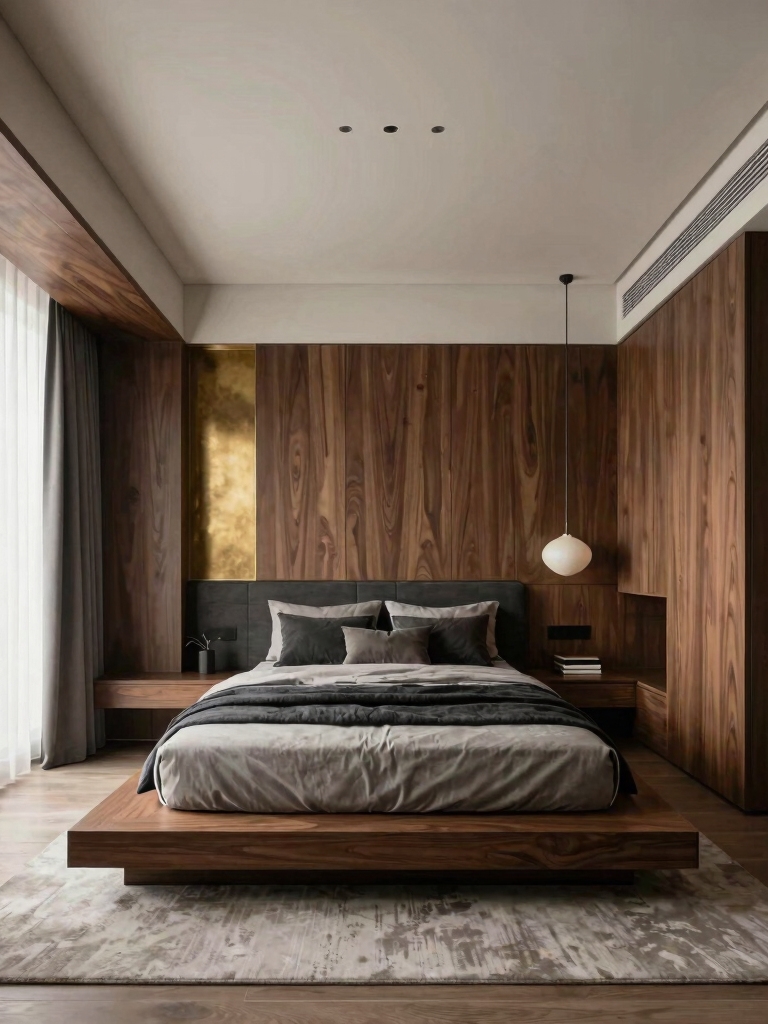
I’ll walk you through spotting an L-shaped footprint by first noting the L-Shape Footprint Basics: the classic layout creates a distinct leg that extends beyond a rectangular box.
I’ll help you identify true L rooms by checking for a concave corner or a secondary alcove that redefines the space.
We’ll also look at common architectural cues, like partial walls or shifted door placements, that signal an L-shaped footprint.
L-Shape Footprint Basics
An L-shaped footprint is defined by two perpendicular wings that create a visible corner, forming a distinct interior nook rather than a simple rectangle.
I spot a true L by noting a continuous wall line that bends, producing three or more wall planes and an alcove-like feel.
Proportions matter: leg lengths should balance, avoiding cramped corridors or oversized, wasted nooks.
Identifying True L Rooms
Spotting a true L room starts with the same idea as the footprint: two perpendicular wings that create a distinct corner, not just a rounded or irregular side.
I look for a clear angular bend, a visible junction, and a space that tethers two walls in a purposeful notch.
If the geometry feels seamless yet intentional, you’ve found an authentic L layout.
Common Architectural Cues
I look for corridors that diverge distinctly from the main line, creating a pronounced elbow. Proportions matter: the shorter leg shouldn’t feel cramped, while the longer arm maintains flow.
Material shifts and sightlines reveal intent, guiding furniture placement toward balanced, functional zones without wasted space.
Core Design Principles for L Layouts: Scale, Proportion, Flow
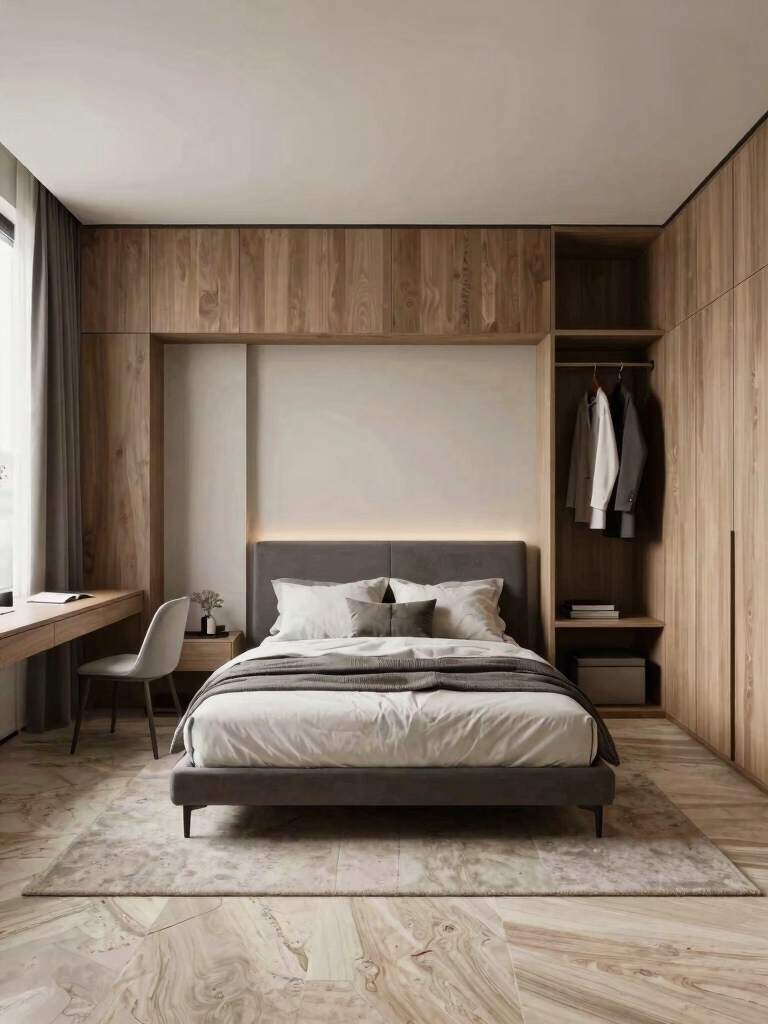
As I plan an L-shaped space, I focus on scale to guarantee furniture reads properly without overcrowding the room.
Proportion keeps the eye balanced, so large pieces don’t overpower smaller ones and the layout feels intentional.
And I map flow first, shaping pathways that feel natural yet defined so every zone—sleep, dressing, and lounging—connects smoothly.
In small bedrooms, maximizing every inch with creative space-saving solutions ensures functionality without sacrificing style.
Scale Awareness in Layouts
Scale awareness in L layouts matters because the size of each element sets the room’s rhythm and function.
I consider scale when choosing furniture, rugs, and fixtures, aiming for a cohesive footprint that feels balanced yet dynamic.
You’ll notice how proportionate pieces create intuitive traffic paths, reduce clutter, and emphasize focal points, guiding conversation, movement, and daily use with effortless clarity.
Proportion for Visual Balance
Proportion is the quiet partner to scale, guiding how our eyes move through an L-shaped space and how furniture, rugs, and fixtures relate to one another.
I balance sizes to create harmony and avoid crowding.
- Choose rug and bed widths that echo each other
- Pair tall personnel with low-profile furnishings
- Align accents to shared visual lines for cohesion
Flow Through Space Planning
Flow is the backbone of an L-shaped bedroom, guiding how you move through the space and how each zone relates to the others.
I balance traffic lanes with furniture placement, ensuring clear paths and unblocked sightlines.
I favor partial enclosures and scale shifts that unify zones, so circulation feels natural.
Thoughtful flow elevates comfort, function, and the overall sense of cohesive space.
Where to Place the Bed in an L-Shaped Room
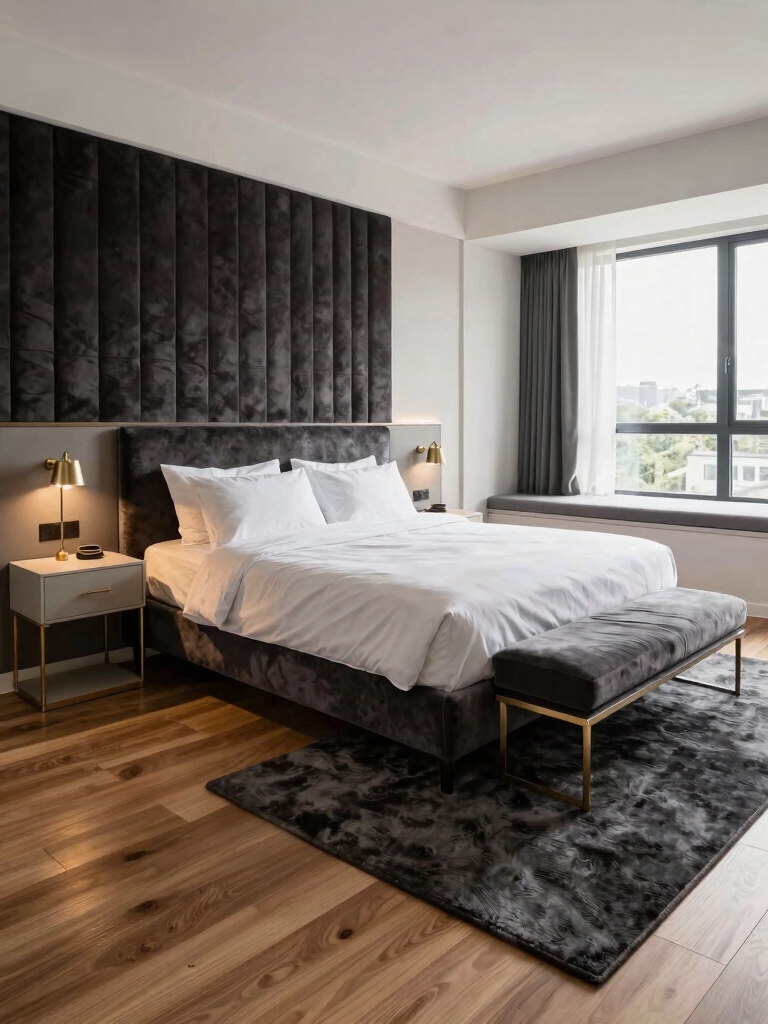
When you’re figuring out where to place the bed in an L-shaped room, start by identifying the walls that feel most natural for a focal point and traffic flow.
- Align the headboard with the longer wall for balance.
- Position away from doorways to create a calm landing.
- Center the bed to optimize symmetry and bedside access.
Incorporating smart layout ideas can also help you maximize space and improve the overall flow of your bedroom.
Best Configurations for Built-In Storage That Fit an L
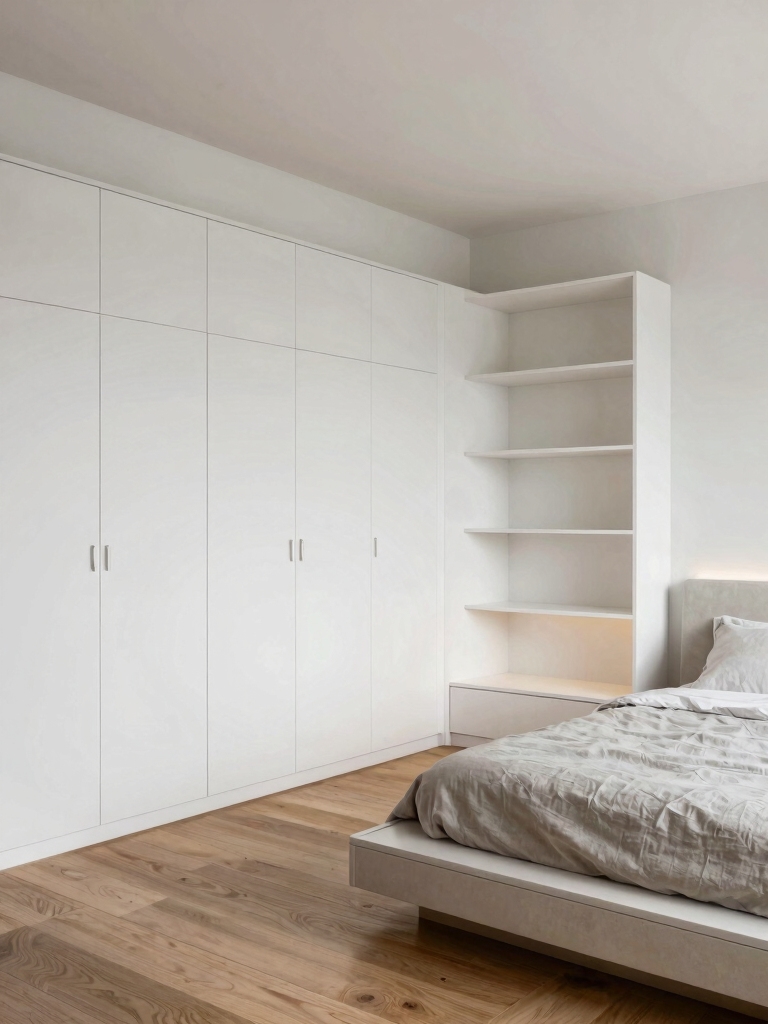
Built-in storage should feel like a natural extension of an L-shaped layout, not an afterthought.
I prioritize slim, tall cabinets along perpendicular walls to maximize floor area while preserving flow.
Use pull-out drawers, corner carousels, and under-bed compartments to hide clutter.
Integrate labeled, adjustable shelves for flexibility, and consider soft-close hardware for quiet, polished functionality.
Build-ins should breathe with the room.
Maximize every inch by incorporating clever small bedroom cupboard ideas that optimize storage without overwhelming the space.
Zoning an L-Shaped Bedroom: Sleeping, Dressing, Lounging
Zoning an L-shaped bedroom means carving the space into clear zones for sleeping, dressing, and lounging without interrupting the room’s flow.
I guide you by imagining distinct zones, each ready for use without overlap.
- Sleep zone
- Ready-to-dress zone
- Lounge/social area
This approach keeps circulation smooth, maximizes light, and preserves a calm, cohesive feel throughout. Incorporating charming small bedroom ideas can enhance the cozy and functional atmosphere of your L-shaped space.
Corner-Friendly Wardrobes and Closet Layouts for L Forms
I want to show how corner-optimized wardrobe design can maximize every inch of an L-shaped space, so you get roomy storage without crowding the room.
We’ll explore L-shape closet layouts that align with alcoves and door swings, plus space-saving sliding doors that keep traffic flowing.
Let’s map practical steps you can take—from corner angles to accessible shelves—that make dressing easier and your room feel larger.
Corner-Optimized Wardrobe Design
If you’re working with an L-shaped room, corner-friendly wardrobes can maximize storage without crowding the space, using a design that hugs the angle and leaves walking area clear.
I prioritize efficient fittings and adjustable shelves.
- Cornered reach: deep, angled hanging space
- Slim-module sections: maximize perimeters
- Sliding doors: save room, minimize intrusion
L-Shape Closet Layouts
L-shaped closet layouts maximize every inch by hugging the corner and keeping walkways open, so you get ample storage without feeling boxed in.
I design with a clear path in mind, prioritizing reachable shelves, hanging zones, and folded storage where needed.
I balance symmetry and function, use corner modules, and customize depths to prevent crowding while preserving a tidy, breathable wardrobe.
Space-Saving Sliding Doors
Sliding doors are a smart, space-saving solution for corner-friendly wardrobes in L-shaped layouts.
I guide you through efficient choices and precise placement that maximize every inch.
- Choose compact tracks and soft-close mechanisms for smooth operation.
- Opt for full-height mirrors to visually expand the area.
- Use pocket or corner-sliding configurations to preserve floor space and accessibility.
Visual Tricks to Make an L-Shaped Room Look Larger
When you want an L-shaped room to feel more open, smart layout choices and subtle contrasts do the heavy lifting.
I’ll guide you with clear tricks: mirror placements to double light, consistent ceiling height visuals, and cohesive color palettes that bleed across angles.
Use low-profile furnishings, unify flooring, and emphasize sightlines to create a calm, expansive feel.
Incorporating small room ideas that bedroom fans swear by can further enhance the comfort and functionality of your L-shaped space.
Sliding and Pocket Doors to Improve Flow in Angular Spaces
In angular spaces, sliding and pocket doors are a smart way to fuse rooms without sacrificing flow. I share how they streamline traffic, create flexible zones, and maintain light.
Here are quick ideas:
1) Choose slim profiles to preserve sightlines
2) Use pocket doors where space is tight
3) Opt for soft-closing hardware for quiet shifts
These clever bedroom solutions are perfect for cozy spaces where maximizing every inch matters.
Multi-Functional Furniture Ideas for Small L Bedrooms
I’m exploring how multi-use bed frames and hidden storage can transform small L-shaped bedrooms without crowding the space.
I’ll show you simple setups that pair a platform bed with built-in drawers or a fold-out desk, so you gain function without sacrificing calm lines.
Let’s discuss practical tweaks that keep everything tidy and within reach, while still feeling spacious.
Incorporating creative solutions tailored for small bedrooms ensures you make the most of every inch without overwhelming the room.
Multi-Use Bed Frames
- Storage drawers beneath the mattress
- Lift-top desks for compact workspaces
- Corner benches with hidden bins
Hidden Storage Solutions
Hidden storage in an L-shaped bedroom isn’t an afterthought—it’s a smart design choice that frees up floor space without sacrificing function.
I prioritize multi-functional pieces, like under-bed drawers, window-seat benches with hidden bins, and vertical shelving that doubles as bedside storage.
I recommend compact wardrobes with sliding doors and modular ottomans for concealed clutter control and flexible seating.
Lighting Strategies to Illuminate Every Corner
Lighting in an L-shaped bedroom can feel tricky, but with a few focused strategies you’ll illuminate every corner without harsh glare.
I’ll guide you to balanced brightness that shapes the space.
- Layer light: combine ambient, task, and accent to reduce shadows.
- Use dimmers and warm tones for comfort and depth.
- Place sources near walls and corners to bounce light evenly.
Incorporating charming bedroom decor ideas can enhance the overall ambiance and complement your lighting setup.
Headboard Choices and Wall-Banding Solutions for Tight Nooks
When I plan headboard options, I consider both style and scale to fit tight nooks without crowding the bed space.
Wall-banding can create a clean connection that hides irregular walls while highlighting a chosen headboard silhouette.
I’ll compare materials and install approaches for small rooms.
I’ll also share space-saving layout tips that pair the headboard with built-in storage or slim nightstands to maximize flow.
Incorporating these elements can transform awkward bedroom layouts into stylish retreats that optimize both function and aesthetics.
Headboard Style Options
A great headboard can transform a tight nook into a focal point, and there are several stylish options to fit every wall and mood.
I’ll share concise picks that fit tight spaces without crowding.
- Upholstered panel for softness and sound dampening
- Minimalist veneer platform with integrated shelves
- Floating headboard with wall-manding lighting and clean lines
Wall-Banding For Nooks
I choose wall bands that mirror the room’s lines, keeping the headboard area calm and cohesive. Subtle textures, low profiles, and paint that echoes cabinetry create depth without clutter.
This approach makes tight corners feel intentional, balanced, and inviting, not boxed in or busy.
Space-Saving Layout Tips
Choosing a headboard and wall-banding strategy for tight nooks comes down to maximizing sightlines and minimizing bulk, so I narrow options to slim profiles and integrated details.
- Opt for low-profile headboards with built-in shelves.
- Choose wall-banding that continues the headboard’s line to avoid visual interruptions.
- Use mirrors or glass accents to reflect space and brighten corners.
Floor Plan Example: Compact Master in an L Footprint
In a compact master suite laid out on an L footprint, I prioritize smart zoning and accessible circulation so every square inch earns its keep.
The entry opens to a clear path between sleeping, dressing, and bathing zones, minimizing cross-traffic. A wall-mounted dresser, floating nightstands, and a low-profile bed maintain sightlines, while pocket doors save space without compromising privacy or light.
Floor Plan Example: Petite Guest Room in L Shape
A Petite Guest Room in an L Shape fits neatly into a compact footprint by separating sleeping, lounging, and access paths without crowding the doorways.
I design with efficiency, clarity, and comfort in mind, guiding readers to practical choices.
- Place a slim bed along the longer wall for airflow and door clearance.
- Use a wall-mounted desk to save floor space.
- Add a compact seating nook near natural light.
Floor Plan Example: Mixed Suites With Angular Boundaries
Mixed Suites with angular boundaries demand a floor plan that embraces sharp edges while preserving flow.
I design passages that guide traffic past distinct zones—sleeping, lounging, and study—without abrupt separations.
Use strategically placed nooks, soft lighting, and integrated storage to soften the geometry.
This layout maximizes light, visual breadth, and privacy, delivering a sophisticated, functional retreat.
Color and Material Plays That Enhance Depth in L Rooms
Color and material plays can dramatically deepen an L-shaped room by layering tone, texture, and light.
I guide you to choose contrast panels, reflective surfaces, and warm woods to add depth without crowding space.
1) Use a light wall tone with a darker accent.
2) Introduce satin or matte finishes for restraint.
3) Integrate a single statement material to anchor the layout.
Rug Placement to Anchor Zones in an L Layout
Rug placement in an L layout isn’t about filling space; it’s about anchoring zones so your bed, seating, and pathways read as cohesive areas.
I choose rug shapes and sizes that define each zone without crowding sightlines. I offset edges to echo furniture lines, mix textures for contrast, and guarantee rug underlays prevent shifting.
The result: calm, legible flow throughout the room.
Acoustics and Noise Control in Angular Spaces
Acoustic considerations matter just as much as layout when you’ve shaped an angular room.
I’ll guide you through practical tweaks that keep noise contained and sound quality even. Focus on surfaces, proportions, and spacing to reduce echoes without sacrificing style.
1) Use soft, varied textures
2) Place absorbers strategically at corners
3) Avoid parallel planes where possible for cleaner reflections.
A Budget-Friendly, Step-by-Step Makeover for Existing L Bedrooms
If you’re starting with an existing L-shaped bedroom, a budget-friendly makeover can transform the space without breaking the bank.
I’ll guide you step by step, prioritizing function, light, and cohesion.
Begin with a focused palette, swap dated hardware, and add dual-purpose furniture.
Tackle acoustics, maximize vertical storage, and create zones that feel intentional, not cramped.
Finally, celebrate with a cohesive, refreshed retreat.
Conclusion
I hope these ideas spark a fresh, practical vision for your L-shaped bedroom. Yes, it can feel tricky at first, but with thoughtful bed placement, built-ins, and layered textures, you’ll gain coziness without crowding. If you worry you’ll waste space, remember that angles can create intimate nooks and clever storage—embrace them. Start with one small change, then layer another. Before you know it, your L room will feel spacious, balanced, and distinctly yours.