
You walk in and something’s just off. The door swings into the only good wall, the window lands dead center, and the bed has nowhere to go that doesn’t block something. An awkward bedroom layout has a way of bugging you every single day, even when you can’t name why.
The fix is rarely a bigger room. It’s a smarter plan. These awkward bedroom layout ideas work through the usual troublemakers, off-center doors and windows, narrow footprints, sloped or broken walls, and turn each quirk into the thing that gives the room character. I’ve spelled out the practical move and a rough cost for each, so you can start with whatever’s bugging you most.
Fixing an Awkward Layout, Fast
- Diagnose first: map the doors, windows, outlets, and traffic path before you move a thing.
- Place the bed where it doesn’t block a door or window, ideally against the longest solid wall.
- Zone the leftover space on purpose so the awkward corners get real jobs.
- Use rugs, light, and mirrors to redraw a room you can’t structurally change.
How Awkward Layouts Disrupt Tranquility
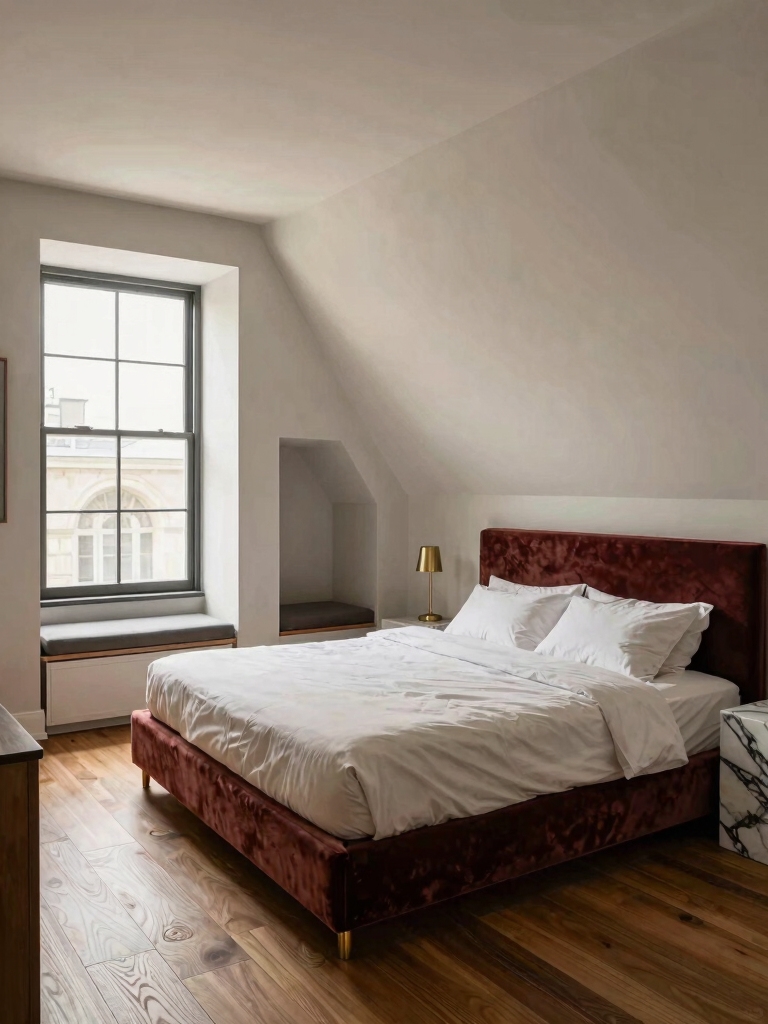
An awkward layout works against you in small, daily ways you feel before you can explain. The bed juts into a walkway, a door bangs the nightstand, a window glares onto the pillow at 6 a.m. None of it is dramatic, but together it chips at the calm a bedroom is supposed to give you.
Name the Problem First
Naming the specific problem is the whole first step, because each one has a known fix. Off-center doors and windows fight symmetry; narrow rooms force a single furniture line; multiple doors eat wall space; a chimney breast or slope breaks the room into odd chunks. Once you can point at the culprit, the solution stops feeling like guesswork.
Start with a quick map. Sketch the room with every door swing, window, outlet, and radiator marked, then trace how you actually move through it. That five-minute drawing reveals the real constraints, and it’s what turns a frustrating room into a solvable puzzle. My [bedroom layout ideas for small rooms](bedroom-layout-ideas-for-small-rooms) cover reading a tricky floor plan.
Define Purposeful Zoning First
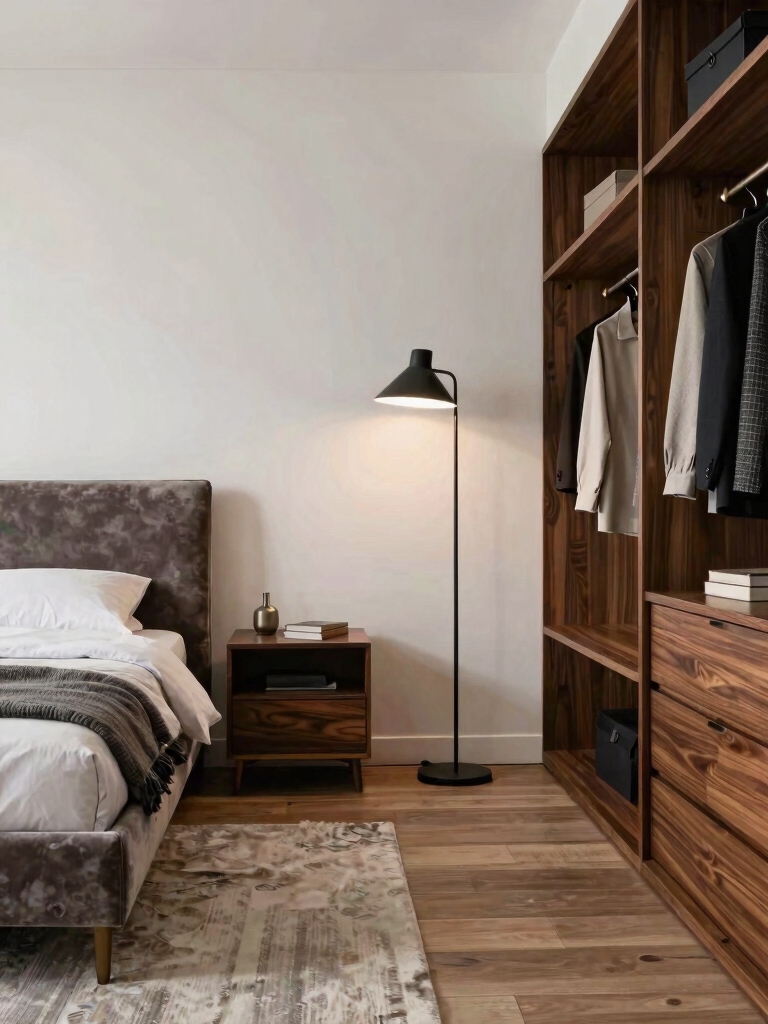
Before a single piece moves, decide what the room needs to do, because zoning is what gives awkward space a purpose. List the jobs (sleep, dress, maybe work or lounge), then assign each one to an area that suits it. An awkward alcove that frustrates you as ‘leftover’ becomes obvious once it’s labeled the reading corner or the dressing zone.
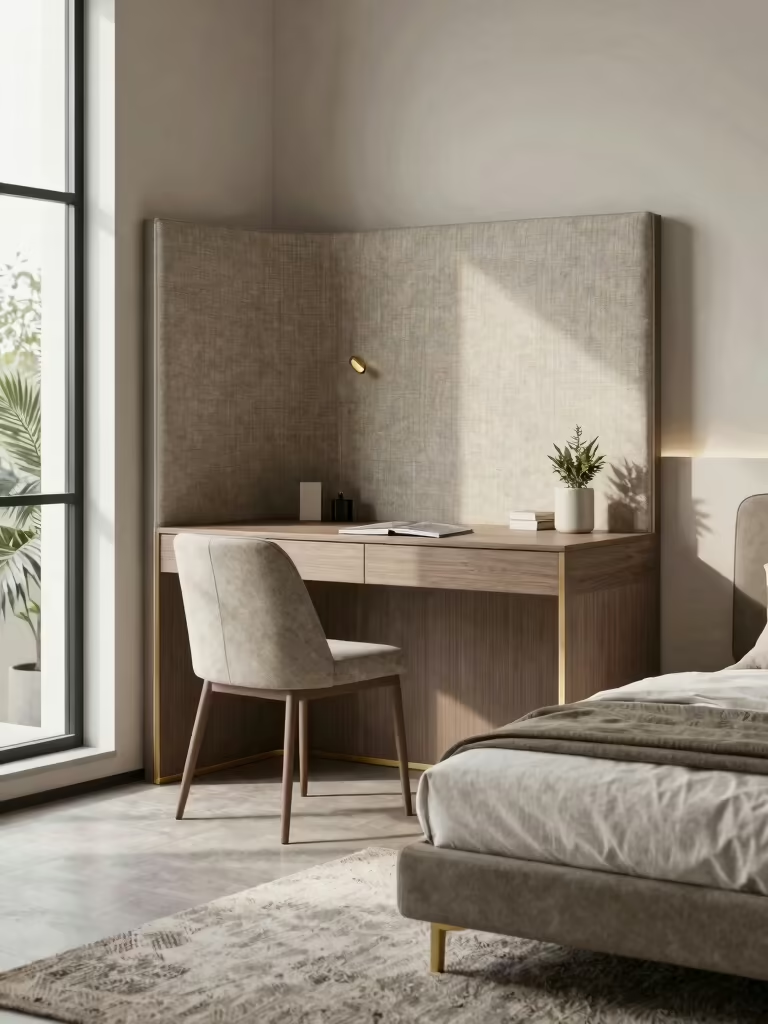
Match each zone to the room’s quirks and let them earn their keep. A bumped-out chimney breast frames a perfect desk nook; the narrow end of a long room becomes a wardrobe wall; the spot under a window wants a bench rather than the bed. Assigning jobs this way means every odd corner earns its keep so nothing sits empty and annoying.
Keep the traffic lanes clear as you zone. Leave a comfortable path from the door to the bed to the closet, even when it costs you a piece you wanted to fit. A room you move through easily feels calm no matter how strange its shape, which is the entire goal of zoning an awkward space.
Heads-Up
Don’t buy furniture before you map and measure. Awkward rooms punish guesswork, and a bed or wardrobe that technically fits but blocks a door or a path will frustrate you daily. Sketch the plan, mark the swings, then shop to the dimensions you actually have.
Maximize Space With Smart Positioning
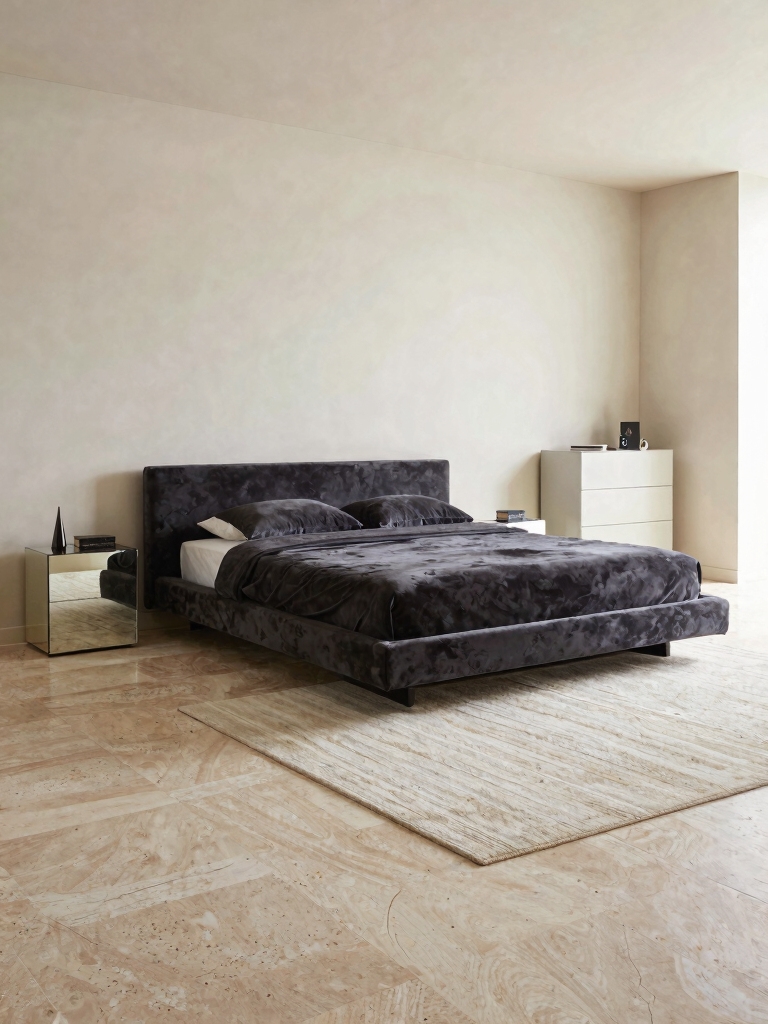
Where the bed lands decides everything else in an awkward room, so place it first and build out from there. The aim is a spot that opens the floor and dodges the doors and windows. Work through these in order to find it.
- Set the bed against the longest solid wall that doesn’t block a door swing or a window.
- If every wall has an opening, float the bed and use a slim freestanding headboard to define it.
- Leave at least 24 inches of clear floor on the main side so the path stays comfortable.
- Angle the bed across a corner only as a last resort, since it eats floor, but it can tame a room with doors on every wall.
Clever Storage and Stylish Geometry
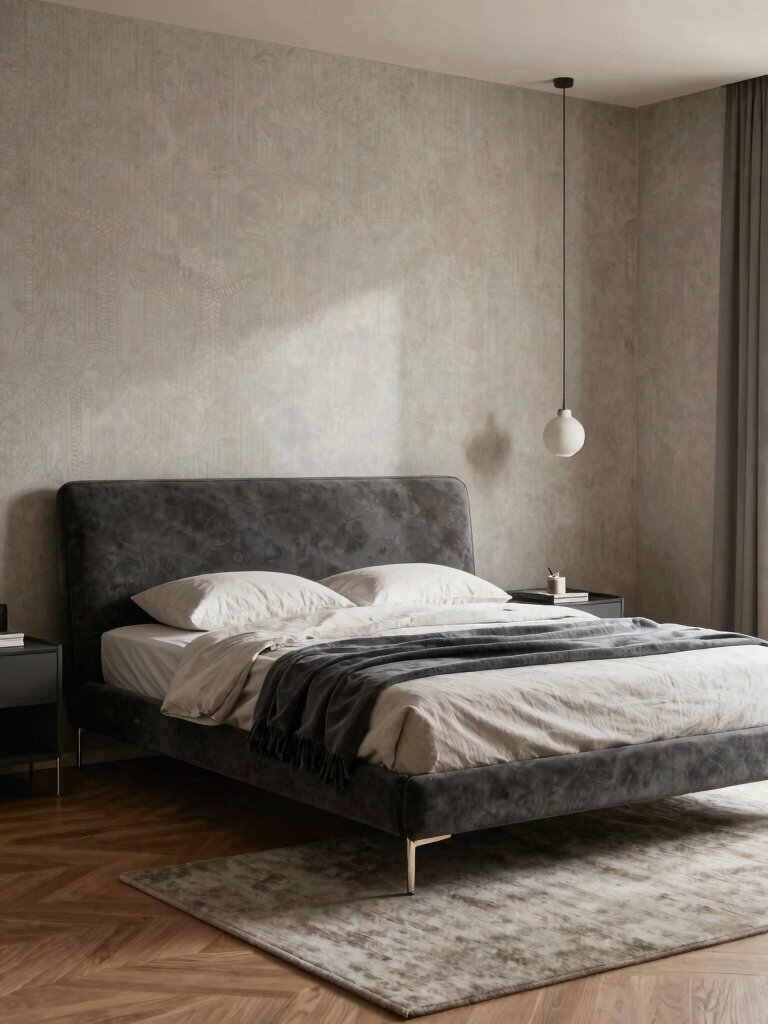
Awkward layouts hide their best storage in the odd spaces a square room doesn’t have, and using them is what clears the floor. The narrow gap beside a chimney breast, the dead end of an L-shaped room, the wall behind a door: each one takes a slim shelf, a tall cabinet, or built-ins that turn the quirk into capacity. The geometry that annoyed you becomes the thing that organizes you.
Lean into pieces that fit the shape you’ve got. An L-shaped or corner bed can follow an odd nook and free the center; a tall, narrow chest suits a sliver of wall; built-ins around a bumped-out wall make it look intentional. A slim freestanding shelf runs $30 to $120, while built-ins cost more but reclaim the most. My [storage ideas that beat clutter](bedroom-storage-ideas-clutter) go deeper.
- Fill the gap beside a chimney breast or a corner with a tall, narrow shelf or cabinet.
- Choose an L-shaped or corner bed to follow an odd nook and open the middle of the room.
- Hang storage on the wall behind the door, the most overlooked space in any room.
📋Awkward-Room Game Plan
- ✓Map every door swing, window, outlet, and radiator
- ✓Name the specific problem (off-center, narrow, multi-door, bump-out)
- ✓Place the bed first, clear of openings
- ✓Assign a real job to each leftover corner
- ✓Redraw with a generous rug, layered light, and a mirror
Sleek, Functional, Airy Design
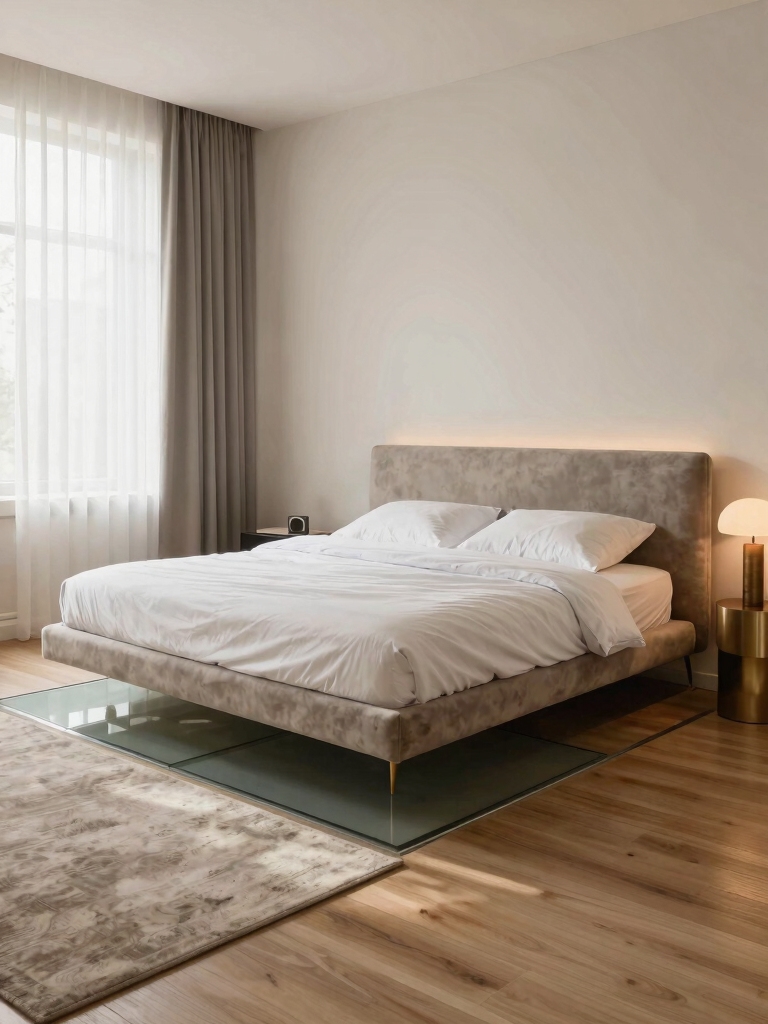
Once the function is sorted, a few styling moves make an awkward room feel deliberate and open instead of compromised. Light, low, and reflective is the formula. Run through these to keep the space breathing.
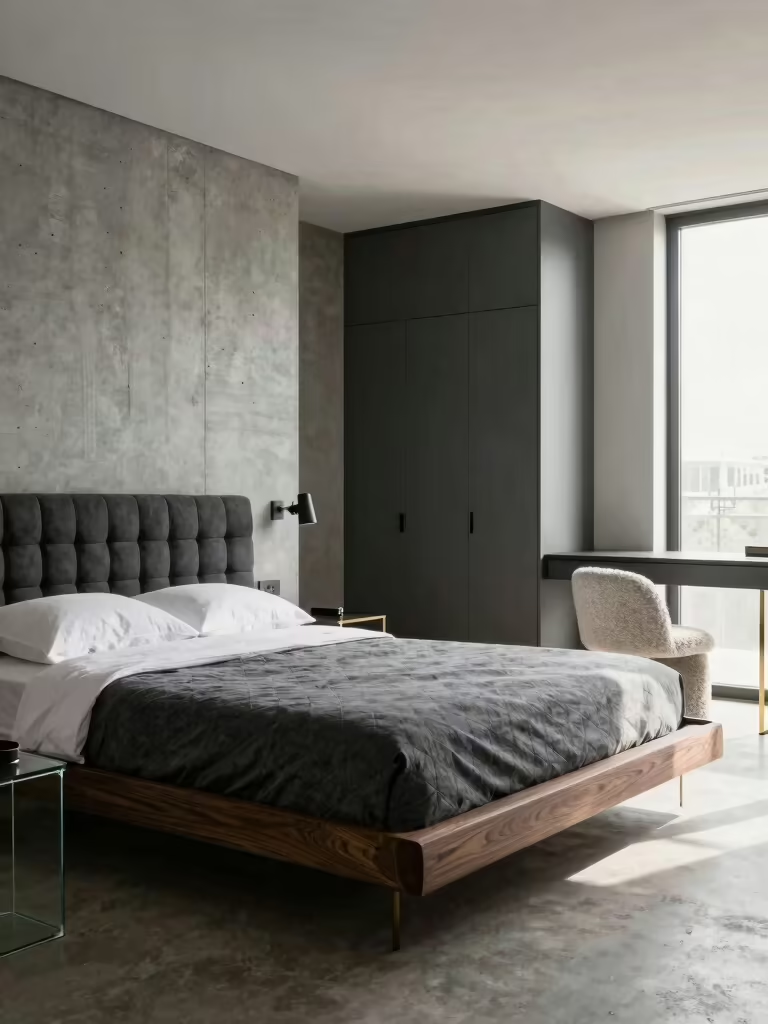
- Choose low-profile, leg-up furniture so the floor shows and the room feels airier.
- Hang one large mirror to bounce light and visually stretch a narrow or dim room.
- Keep the palette light and consistent so the eye glides past the awkward angles.
- Layer warm lighting at a few heights so no single harsh fixture spotlights the quirks.
Fixing the Most Common Awkward Layouts
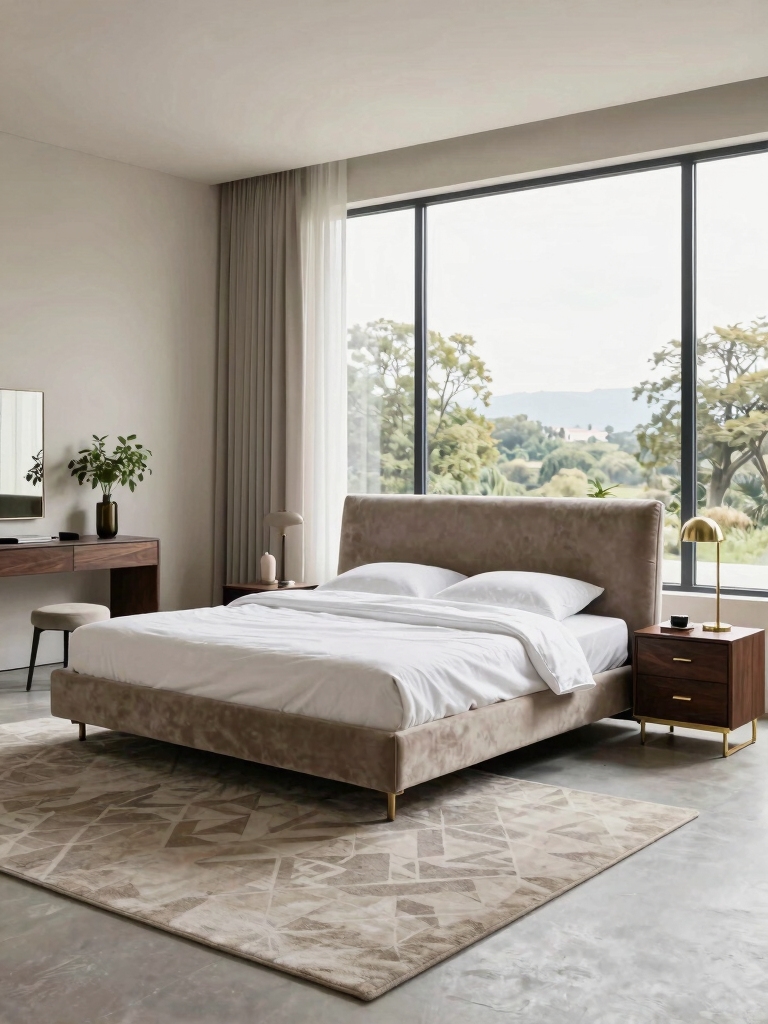
A handful of specific layouts cause most of the trouble, and each has a reliable fix. For an off-center window, stop trying to center the bed on the wall and instead center it on the window, then balance the rest with symmetrical lamps and art so the asymmetry reads intentional. The eye wants balance more than dead-center placement.
For a long, narrow room, avoid the hallway look of everything lined up against one wall. Break the length into two zones, a sleep area and a small seat or desk, with a rug anchoring each, and the corridor feeling lifts. A room divided into purposes always feels wider than one long empty lane.
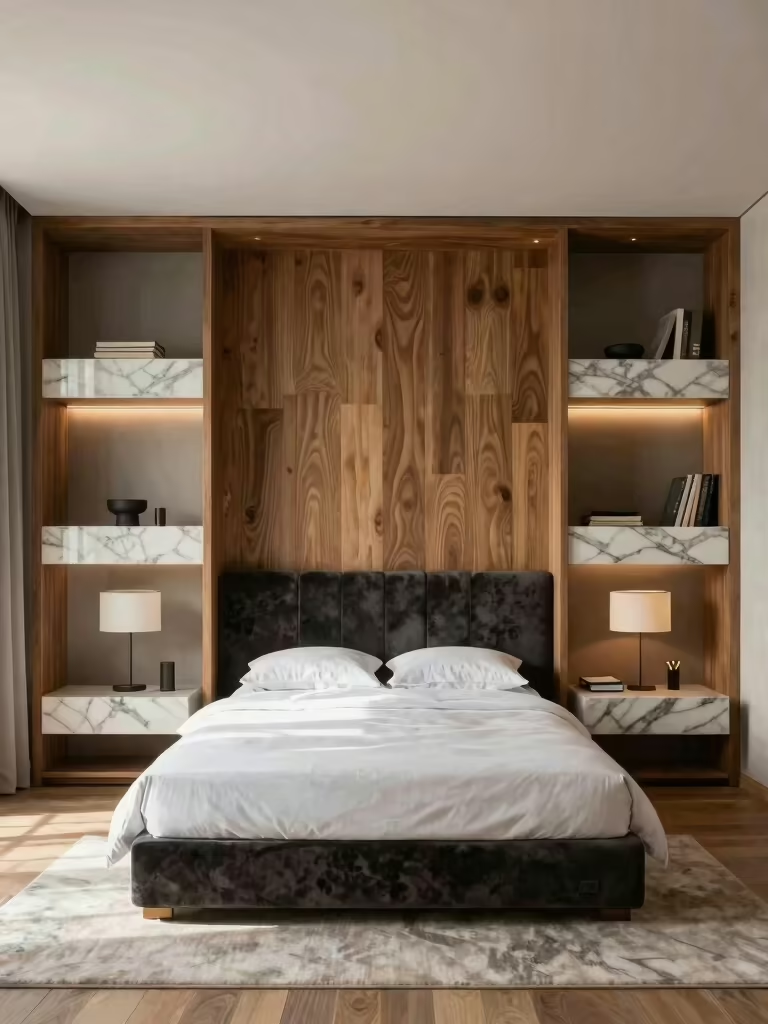
For a room with doors on multiple walls, protect the swings first and claim the leftover wall stretches for low storage and the bed. Where a chimney breast or a structural bump-out splits the wall, flank it with matching built-ins or wardrobes so it looks framed and deliberate. My [small-room layouts that feel big](bedroom-ideas-for-small-rooms-feel-big) help with the tightest versions.
Redraw the Room With Rugs, Light, and Mirrors
When you can’t move a wall, you can still redraw the room with what goes on the floor and walls. A rug is the most powerful tool here: place one to define a zone or to visually square off a room that isn’t, and the eye follows its edges instead of the awkward architecture. Size it generously, since a too-small rug makes any room feel choppier.
Light does the same quiet correction. A dim, oddly shaped room reads smaller and stranger, so layer warm light at several heights to even it out and pull attention away from the quirks. A lamp in a dark corner can make a whole alcove feel intentional rather than forgotten.
Mirrors are the cheat code for awkward rooms. One large mirror opposite a window doubles the light and the sense of space, and a mirror on a short wall can make a narrow room feel wider. These three tools cost little and reshape how a room feels without touching its bones. My [bedroom lighting ideas for mood](bedroom-lighting-ideas-mood) cover the placement.
Style the Quirk Into a Feature
The best awkward-room makeovers quit hiding the quirk and start showing it off. A weird alcove becomes a built-in reading nook with a cushion and a sconce; a low bump-out gets a runner of plants or a row of art so the eye treats it as intentional. The moment a quirk has a clear purpose, it stops reading as a mistake.
Use the odd architecture to add character a boxy room never gets. Flanking a chimney breast with matching shelves turns it into a framed centerpiece, and a deep window reveal becomes a tiny seat with a pad and a pillow. These are the moments a room earns its personality, the parts visitors remember and ask about.
Lean on paint to tie it all together. Carrying one calm tone across the walls and any bump-outs lets the geometry settle into the background; a single accent on the most prominent odd wall then claims it on purpose. For palette help, my [cozy bedroom color palette guide](cozy-bedroom-color-palette-ideas-changing) covers tones that calm a busy-shaped room.
Common Mistakes to Avoid
The biggest mistake with an awkward room is forcing a standard layout onto a non-standard space. Centering the bed on a wall when the window is off-center, or pushing everything to the perimeter in a narrow room, fights the architecture and makes the awkwardness louder. Work with the quirks and they quiet down.
The other common slip is over-filling. An awkward room shows clutter and crowding faster than a regular one, so skip cramming every corner with furniture to ‘use the space.’ Leave breathing room, give the odd corners real jobs instead of random stuff, and edit hard. A calm, slightly empty awkward room beats a packed one fighting for every inch.
Work With the Quirks, Not Against Them
An awkward layout isn’t a life sentence; it’s a puzzle with a known solution. Map the room, name the problem, place the bed clear of the openings, give every odd corner a job, and redraw the rest with rugs, light, and mirrors. Do that and the quirks that bugged you become the character that makes the room yours.
Pick the corner that bugs you most, give it a clear job, and the whole room starts to settle.