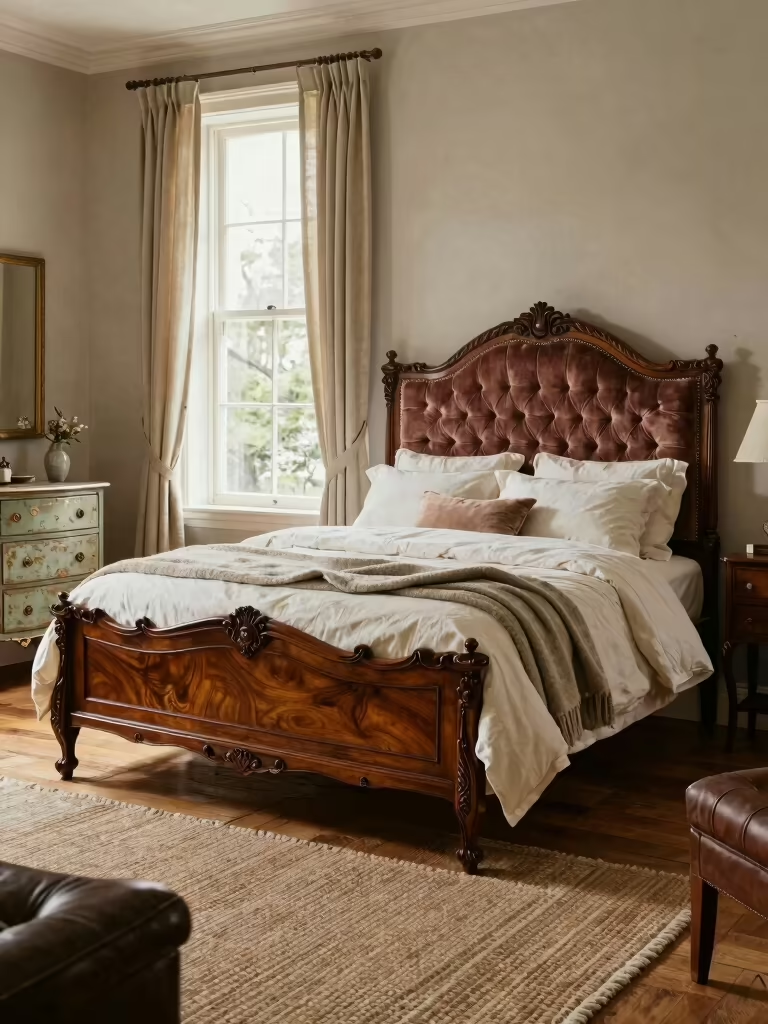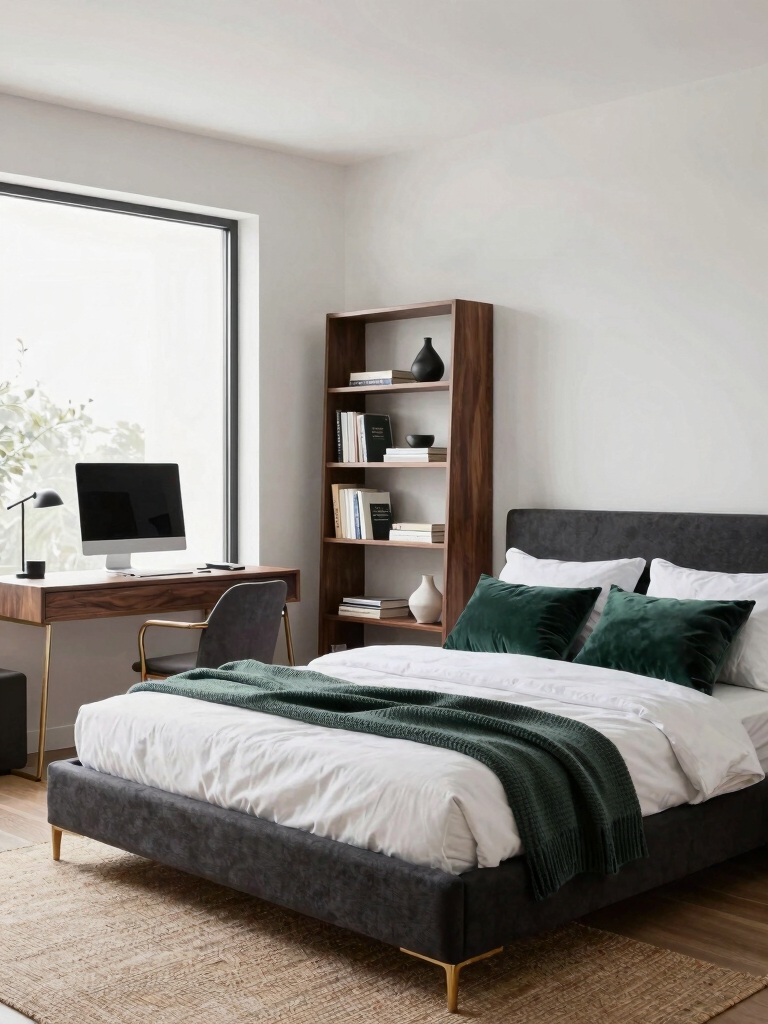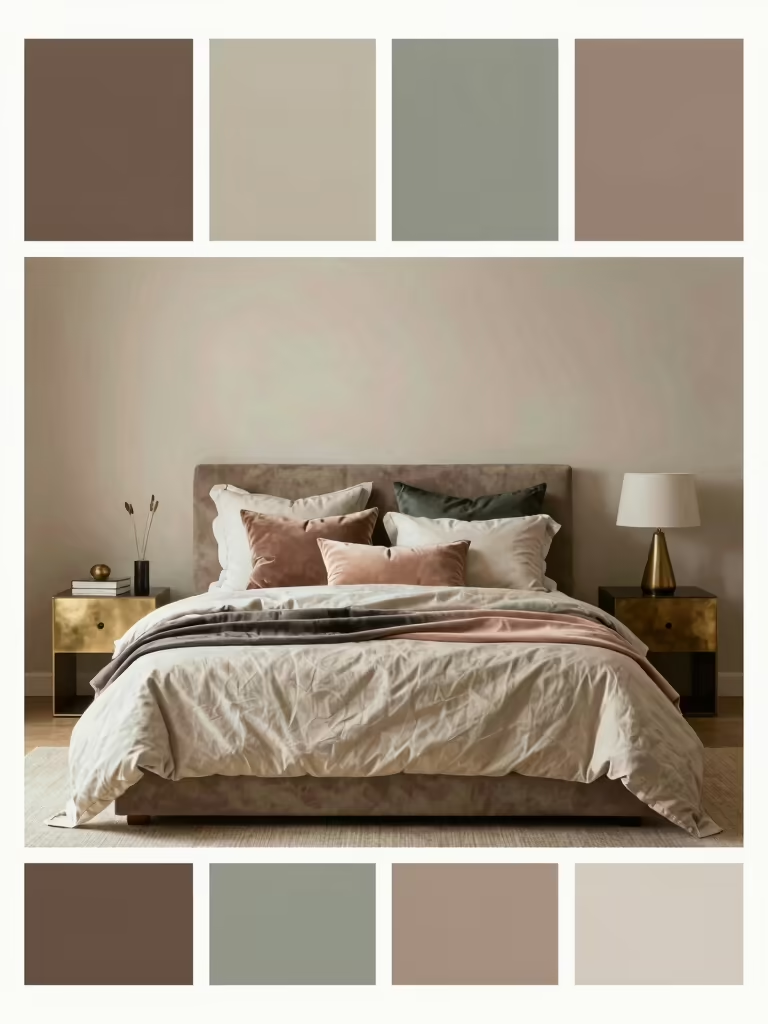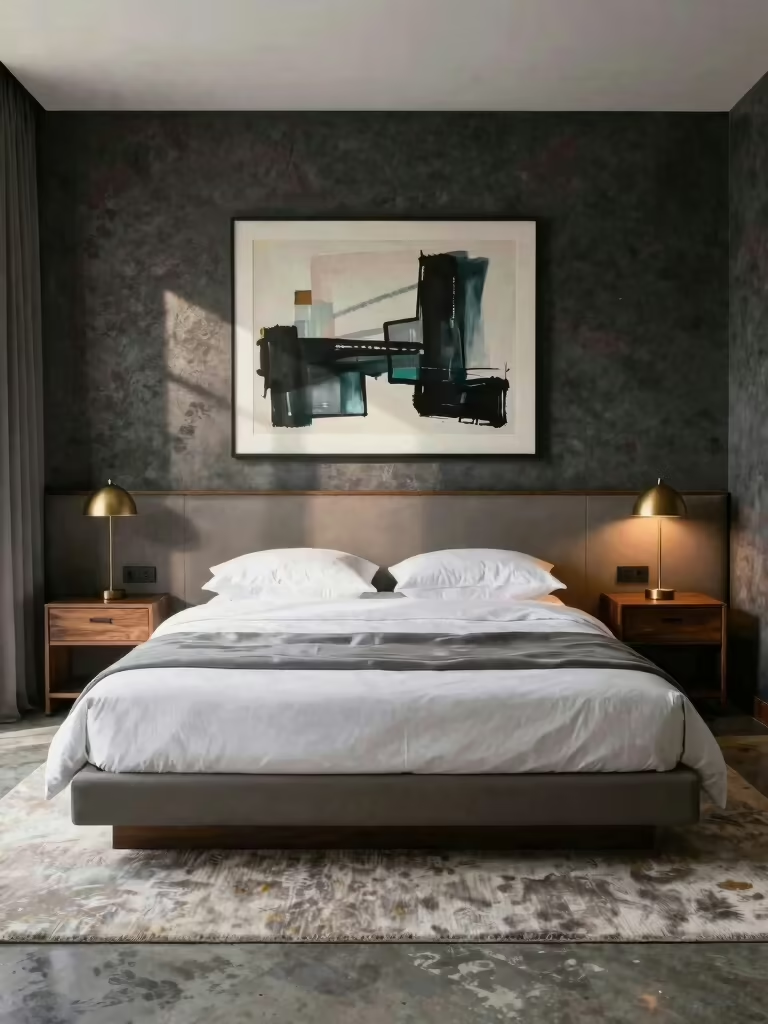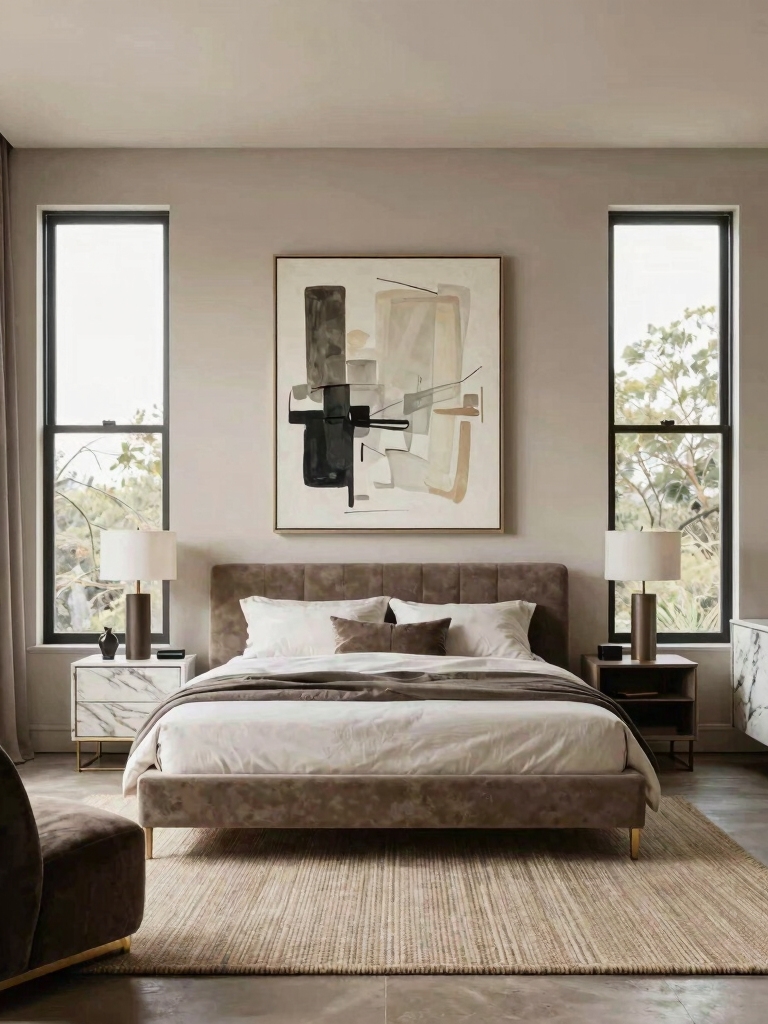

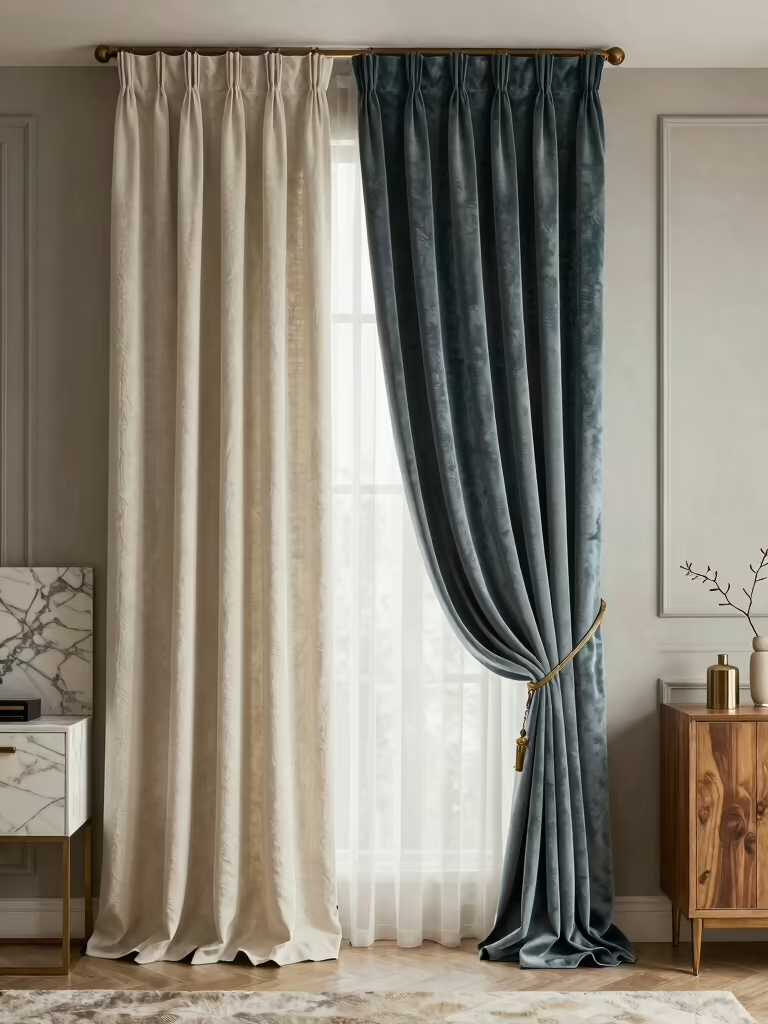
Walk into a bedroom with the right curtains and you feel it before you can name it. The light goes warm and filtered, the windows look twice their size, and the whole room settles into something that feels deliberate. That’s soft drama, the kind of mood that comes from the fabric you choose and the way you hang it. No bold paint required.
These bedroom curtain ideas build that mood in layers: plush velvet for depth, sheers that turn morning light into a glow, bold accents for a single dramatic note, and the hanging tricks that make any panel look custom. Most of it costs less than you’d think, and the biggest difference comes from how high and wide you hang, which is free.
Curtain Drama at a Glance
| Move | What it does | Rough cost |
|---|---|---|
| Hang high and wide | Mounts the rod near the ceiling and past the frame so windows look bigger | $0, just rehang |
| Add velvet panels | Brings weight, depth, and a hush that soft fabrics can’t match | $40 to $120 a panel |
| Layer sheers behind | Filters harsh light to a glow while keeping daytime privacy | $15 to $40 a panel |
| Pool on the floor | Lets panels break or puddle for a relaxed, romantic finish | Extra length only |
Tactile Elegance in Bedrooms
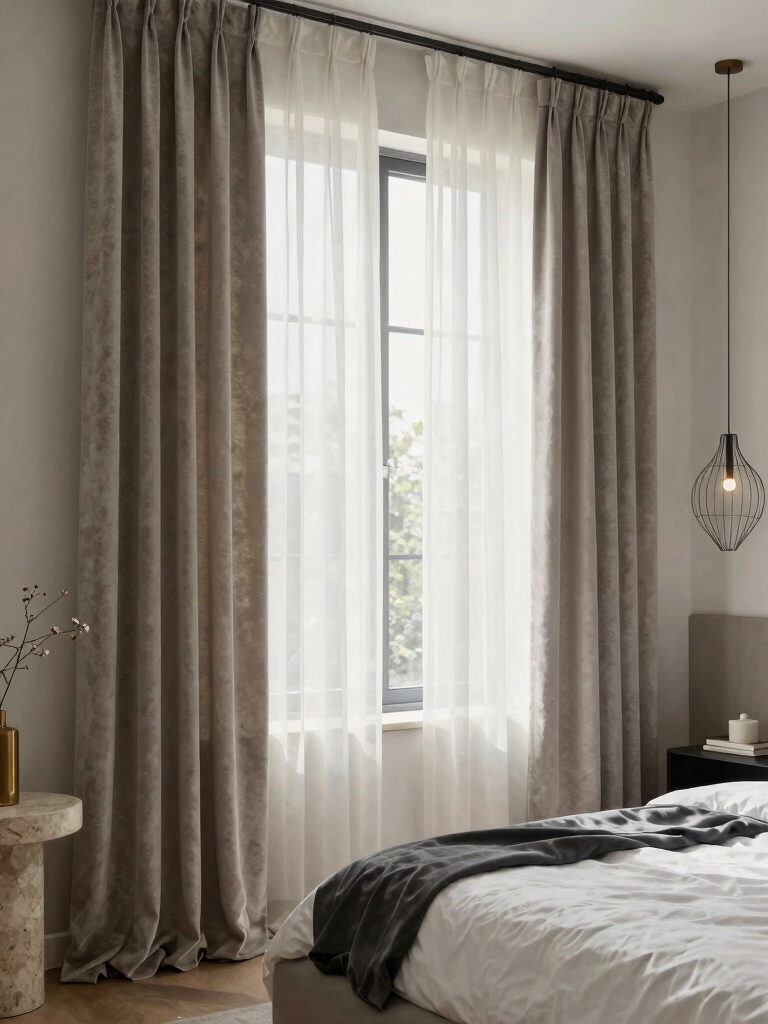
Soft drama starts with texture you can feel. A flat cotton panel looks fine in daylight and forgettable by night; a woven linen or a brushed velvet catches shadow and light all day, and that movement is what gives a bedroom its mood. Run your hand down the fabric in the store. If it has weight and grain, it will carry drama on the wall.
Mix Weights, Not Just Colors
The depth comes from mixing weights across the window. A heavy drape beside a fine sheer sets up a contrast your eye reads as richness, the same way a knit throw lifts a smooth duvet. Two textures in conversation always look more considered than one fabric doing all the work. Keep the palette tight so the textures do the talking.
Scale matters as much as the cloth. Skimpy panels that barely cover the glass undercut every other move you make, so buy width: panels totaling two to two-and-a-half times the window width so they hang in full, deep folds even when drawn open. That generous gather is the single thing that separates a dramatic window from a thin, rental-grade one.
Gentle Light Diffusion for Soft Mornings
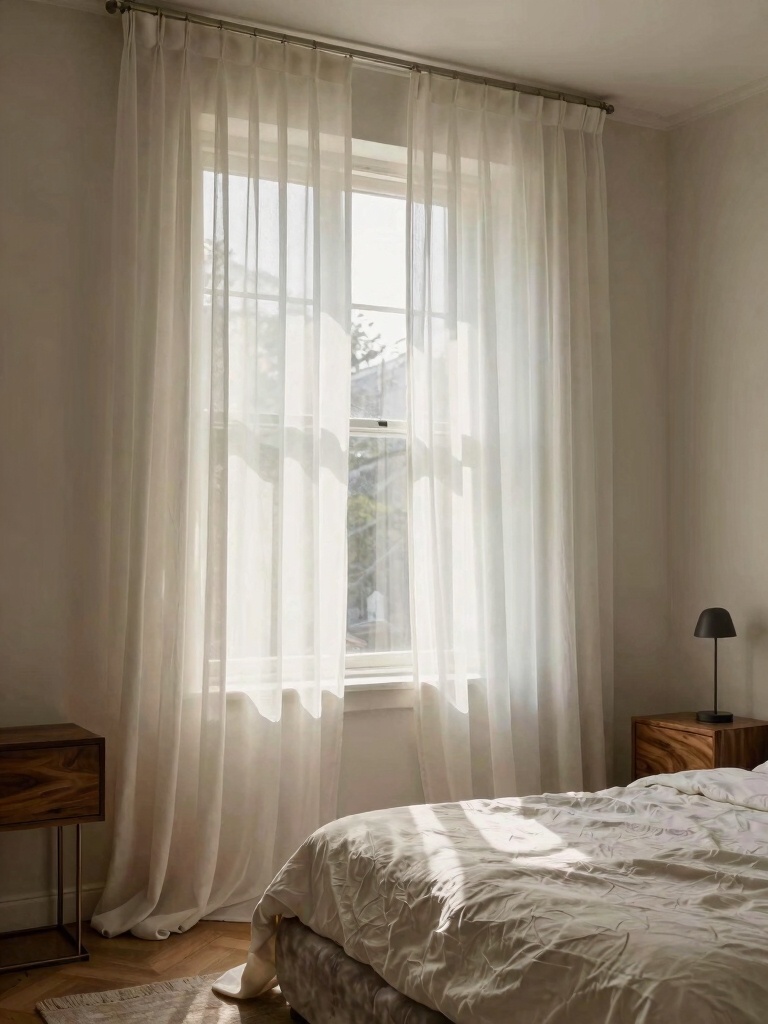
Light is half the drama, and the way a curtain handles it sets the whole mood of the room. A light-filtering panel turns a harsh morning beam into a soft, even glow that makes the whole space feel calm and a little cinematic. Here’s how to build that diffused light without losing your privacy or your lie-in.
- Choose a light-filtering weave like linen or cotton voile that softens sun without going fully sheer.
- Hang the filtering layer closest to the glass so daylight passes through it before anything else.
- Add a heavier drape on the outside that you draw at night for full darkness when you want it.
- Skip pure-white sheers if your light runs cold; a warm ivory keeps morning light golden, not gray.
Four steps to a dramatic, livable window:
1Mount high and wide
Fix the rod near the ceiling and extend it past the frame on both sides so the window reads tall and the panels clear the glass.
2Hang the sheer first
Put a light-filtering sheer closest to the glass on its own track for soft daytime light and privacy.
3Add the heavy drape
Layer a velvet or lined panel on the outer track to pull across at night for depth and darkness.
4Set the length
Buy or hem so the panels kiss the floor, or add a few inches to break for a softer, romantic puddle.
Velvet Drapes for Rich Depth
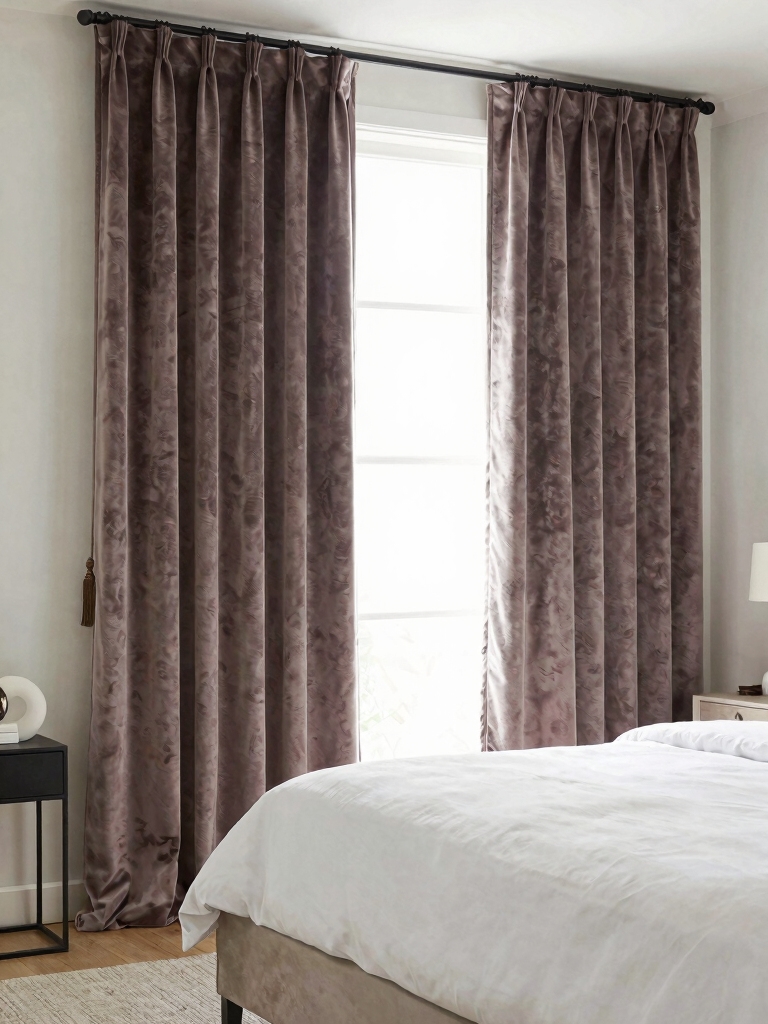
Nothing delivers soft drama faster than velvet. The pile catches light along every fold, so a single deep panel reads as a wash of shifting color, and the weight makes it hang in clean, heavy lines that lighter fabrics rarely hold. Velvet also absorbs sound, which is why a velvet-draped bedroom feels hushed the moment you close the door.
Pick the color for the mood you want at night, since that’s when velvet earns its keep. Deep emerald, midnight navy, and warm rust all glow under lamplight and ground the room without making it feel dark. Pair the panels with matte brass or black hardware so the metal reads intentional, and let them fall to the floor for that last bit of weight. For tuning the whole palette around them, see my [bedroom color ideas for any vibe](bedroom-color-ideas-vibe).
Sheer Layers for Balanced Light
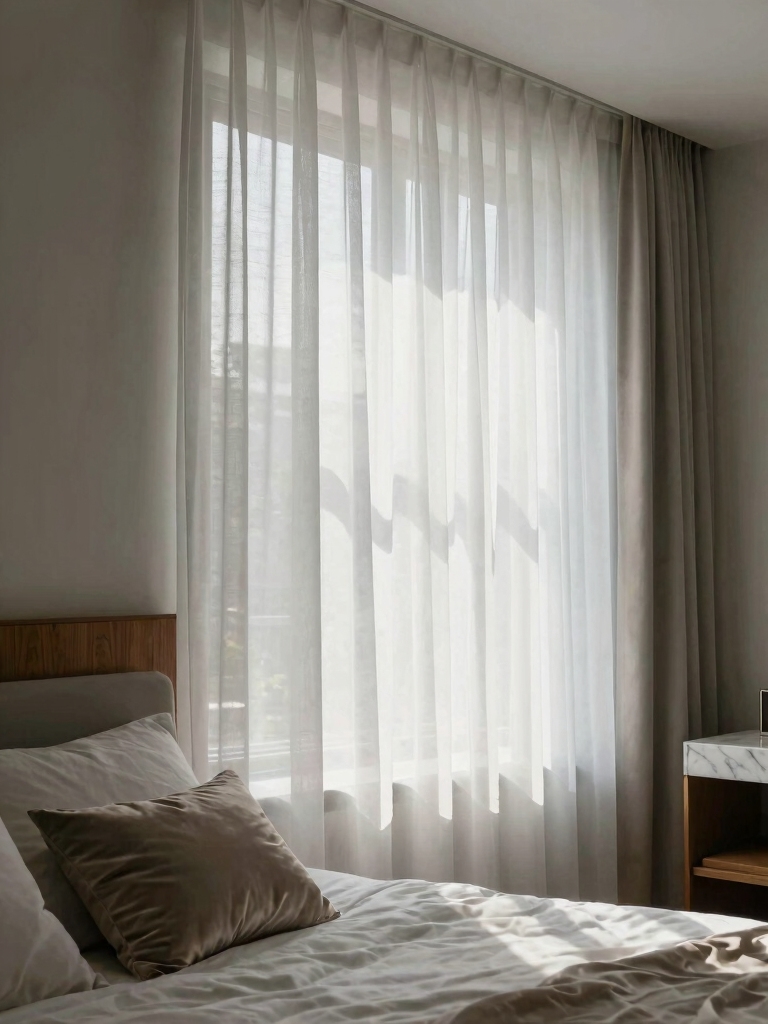
Sheers are the quiet half of a dramatic window, and layering them behind a heavier drape is what gives you control over the light hour by hour. During the day the sheer alone keeps the room private and bright; at dusk you pull the solid panel across for darkness and depth. That two-layer setup is the backbone of nearly every bedroom that looks both moody and livable.
The trick with sheers is treating them as a real layer in their own right. Give them their own rod or a double-track so each layer moves on its own, and hang both from the same high point so the lines stay long. Done right, the sheer softens the light all day and the heavy panel brings the drama at night, with one window doing both jobs.
- Use a double rod so the sheer and the drape draw separately.
- Match the sheer’s warmth to your light: ivory for cool rooms, crisp white for sunny ones.
- Let both layers reach the floor so the window reads tall, not boxed in.
| Fabric | Mood it sets | Best for |
|---|---|---|
| Velvet | Deep, hushed, dramatic | Night-time mood and cool rooms that need warmth |
| Linen | Soft, relaxed, airy | Filtered daylight and a calm, lived-with feel |
| Cotton voile sheer | Bright, gentle, private | The daytime layer behind a heavier drape |
| Patterned solid | Bold, focal, deliberate | One statement window in an otherwise calm room |
Bold Accents, Balanced Drama
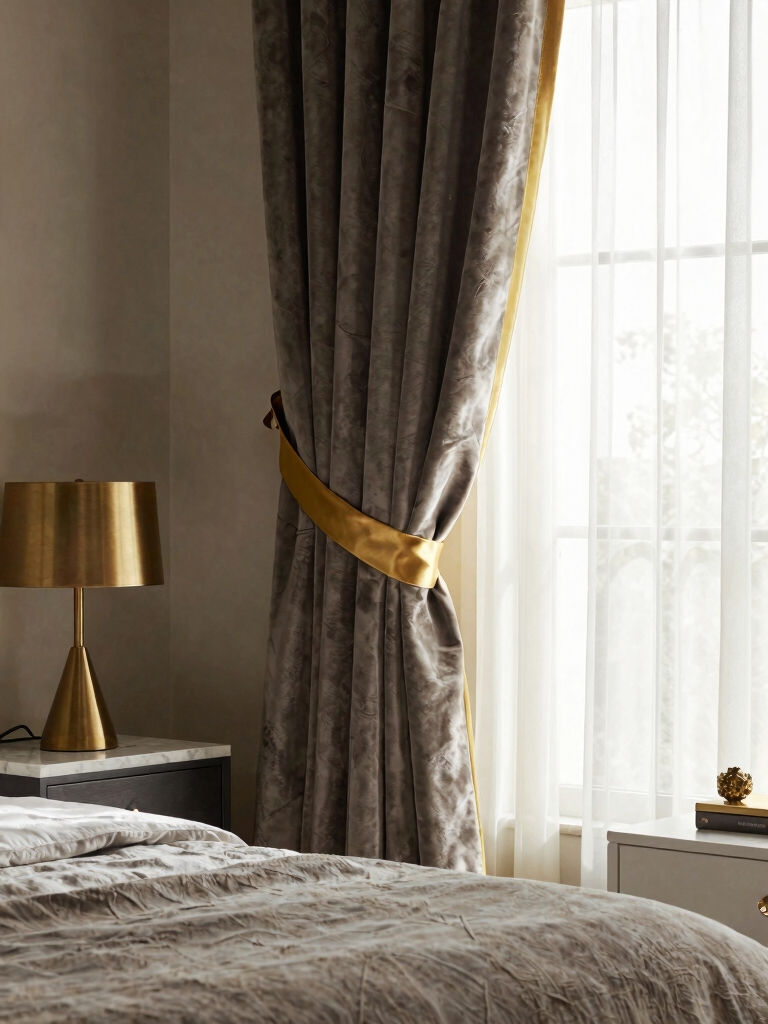
Soft drama can take one bold note, as long as the rest of the room stays calm enough to let it land. A single pair of patterned or saturated curtains becomes the room’s focal point, the way one strong artwork anchors a quiet wall. The key is restraint everywhere else: bold curtains want neutral walls and simple bedding around them so they read as the deliberate star.
Pull the curtain’s boldest color into the room just once or twice and the whole scheme clicks into place. Echo a deep curtain tone in a single cushion or a throw, keep the walls soft, and the bold panels feel planned. For a room that should still feel restful, choose a deep solid over a busy print; the color carries the drama while the calm surface keeps it from tipping into loud.
- Let bold curtains be the one loud element; keep walls and bedding quiet.
- Repeat the curtain’s strongest color in a cushion or throw so it ties in.
- For a calmer room, pick a deep solid; save big prints for a bolder space.
Styling Tips for Dramatic Curtains
The styling details are what push curtains from fine to custom-looking, and most cost nothing. Hang the rod close to the ceiling, well above the frame, and extend it six to twelve inches past the window on each side so the panels clear the glass when open and let in full light. Those two moves alone make a standard window look architecturally tall and wide.
Then mind the fall and the fullness. Steam out the creases the day they go up so the folds hang clean, weight the hems if the fabric is light so it drapes straight, and use rings or pleats that let the panel stack into deep folds. Length sells the look: aim for panels that just kiss the floor, or add a few inches to break and pool for a softer, more romantic finish.
How to Hang Curtains for Maximum Drama
If you change one thing, change the height. Most curtains are hung too low, mounted right at the top of the window frame, which chops the wall in half and makes the ceiling feel lower. Move the rod up near the ceiling, or at least two-thirds of the way between the frame and the ceiling, and the eye travels up the full drop of fabric. The room reads taller instantly, and the curtains look like they belong to the architecture.
Width is the second free upgrade. A rod that stops at the window frame forces the panels to cover glass when open, blocking light and looking skimpy. Extend the rod well past the frame on both sides so the open panels rest against the wall, framing the window and letting every bit of daylight in. A window framed this way looks larger than it is, which is the heart of the drama.
Get the length right and the whole thing lands. Curtains that float inches above the floor look like they shrank in the wash, so measure from the high rod down to the floor and buy or hem to that number. A clean kiss of the floor is the safe choice; a break or a gentle puddle adds softness if your home stays low-traffic. Either way, floor-length is non-negotiable for drama.
Common Curtain Mistakes
The most common mistake is buying too little fabric. A single flat panel stretched across a window has nothing to gather, so it hangs thin and sad however nice the cloth. Always buy enough width to total two to two-and-a-half times the window so the curtains keep deep folds even when fully open. Skimping here undoes every other good decision.
The other frequent slip is ignoring light temperature and care. A cold white sheer makes warm morning light look gray, and a velvet that needs dry-cleaning becomes a chore you resent within a season.
Match the fabric’s warmth to your room’s light, check the care label before you fall for a fabric, and the drama you set up on day one still looks right a year later. For a sleeker, more modern take on the same windows, see my [modern master bedroom curtain ideas](bedroom-curtain-ideas-master-modern).
Let the Windows Set the Mood
Soft drama in a bedroom comes from layers and how you hang them: textured fabric for depth, a sheer to soften the light, a velvet or bold panel for mood, and a rod hung high and wide to make the window feel grand. None of it demands a big budget, and the most transformative move, raising and widening the rod, costs nothing at all.
Soft drama is mostly fabric and height, and the height is free. Rehang one panel higher and wider tonight; the taller, framed window you get is usually enough to tell you which fabric belongs there next.