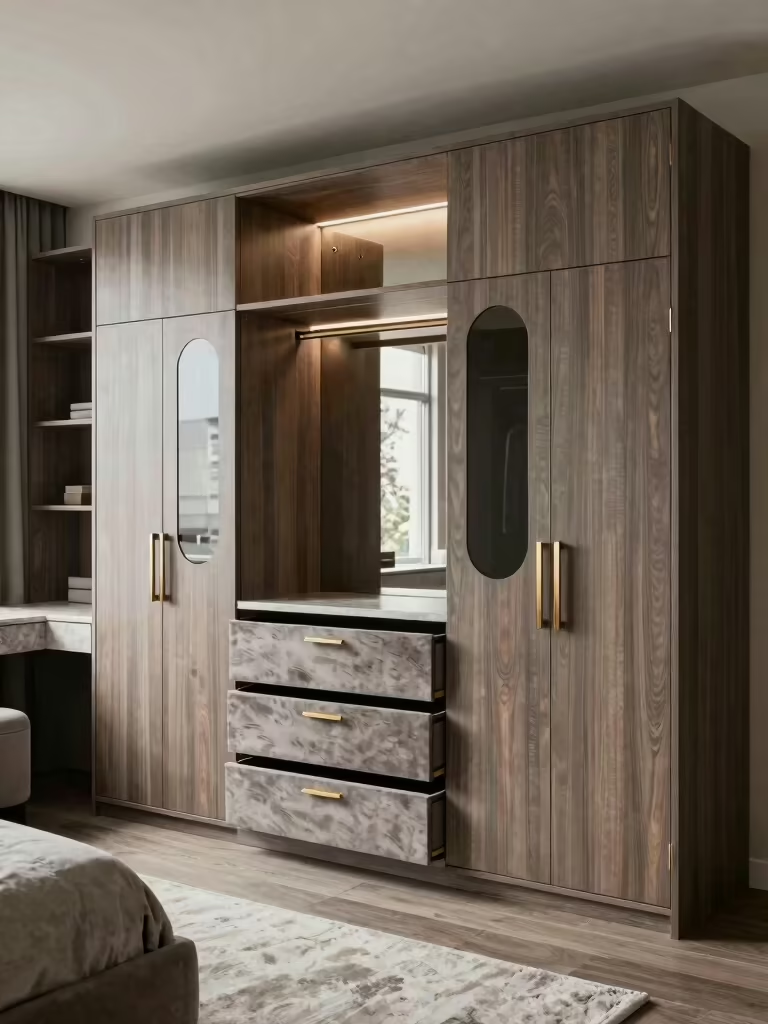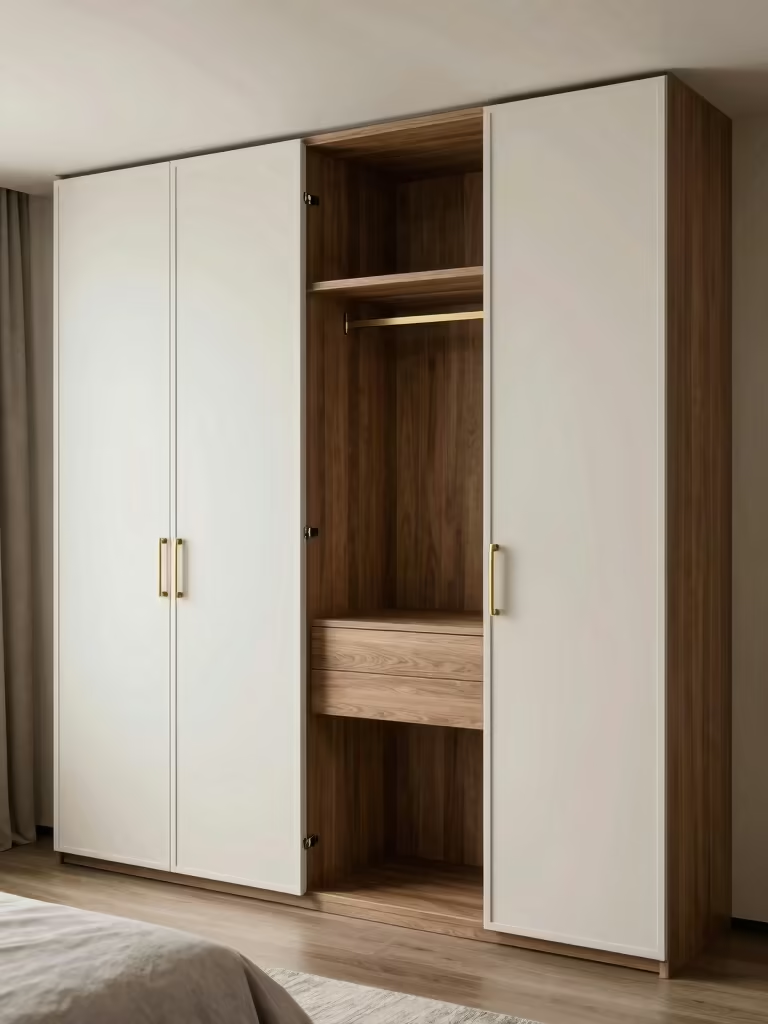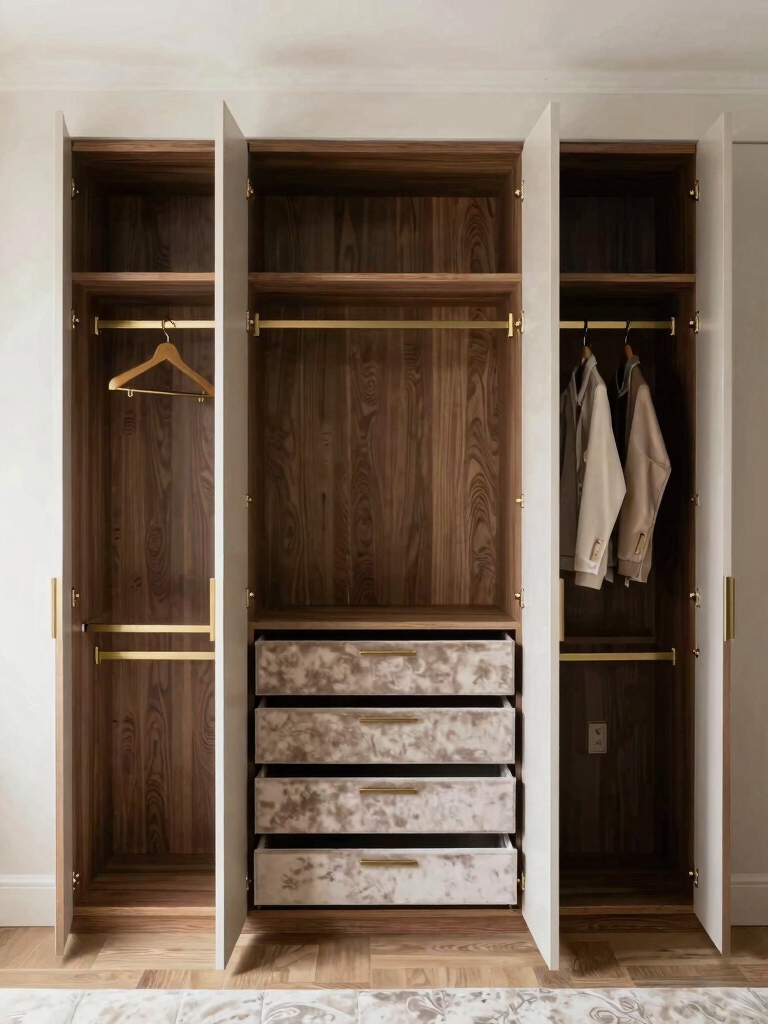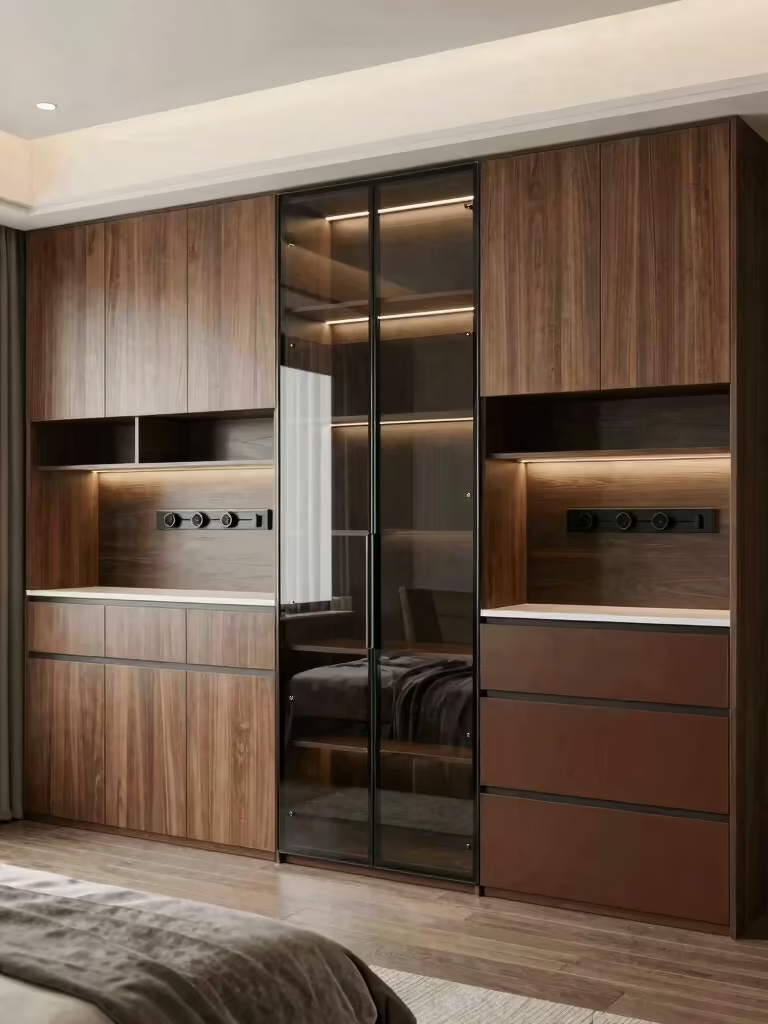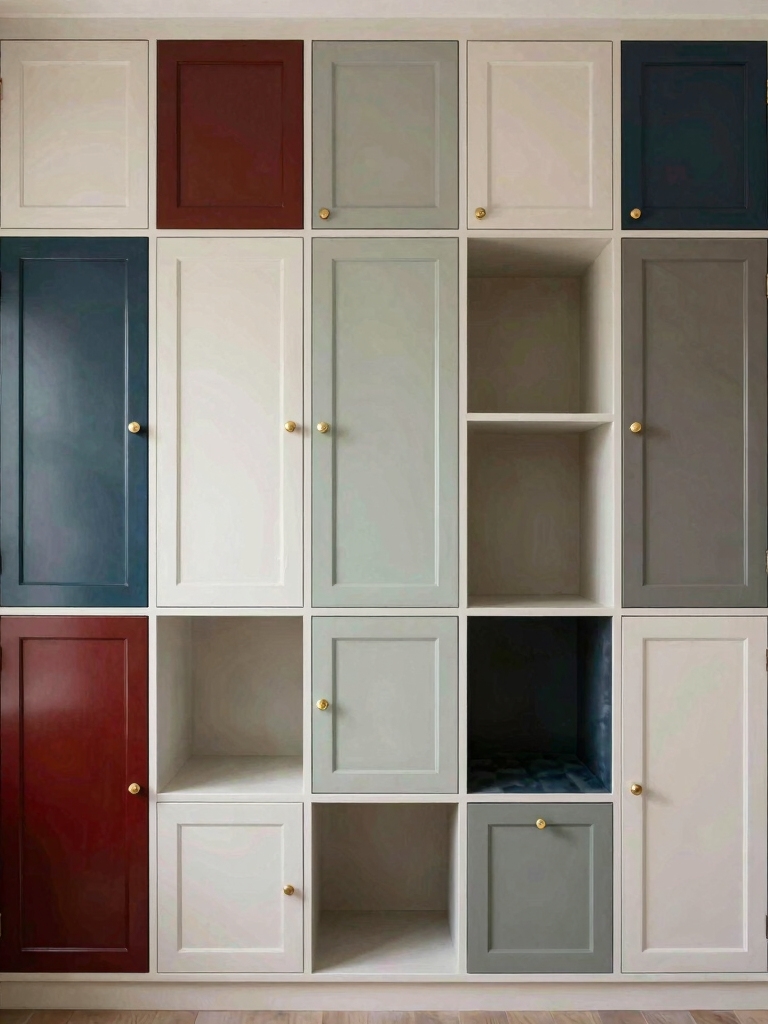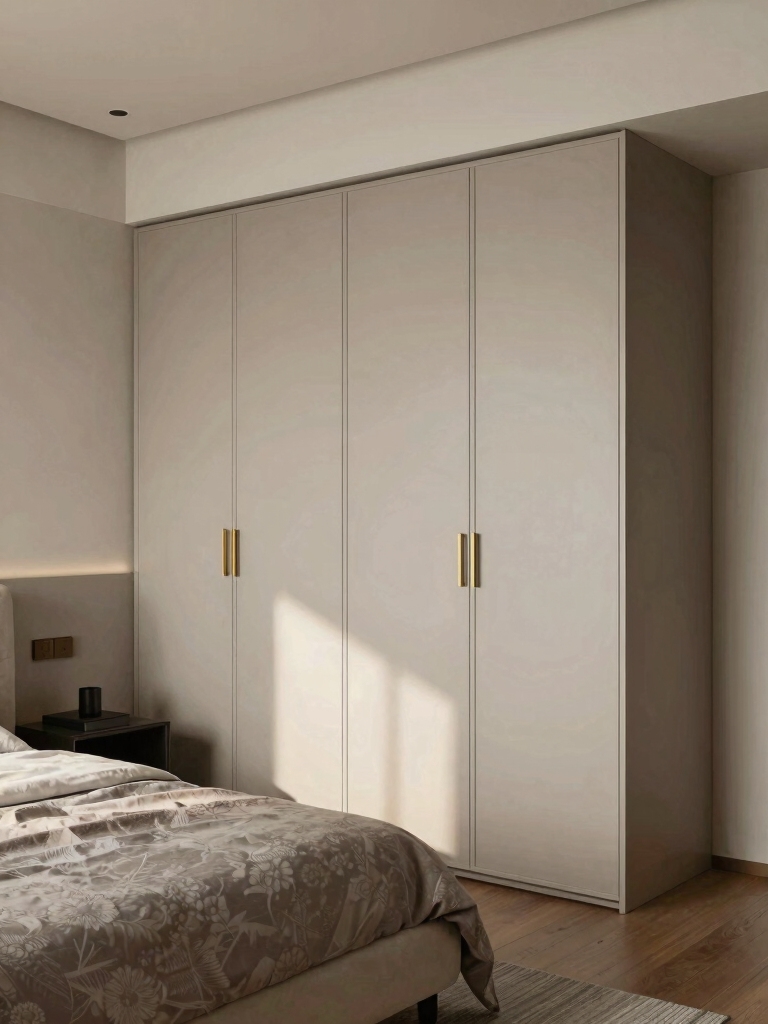

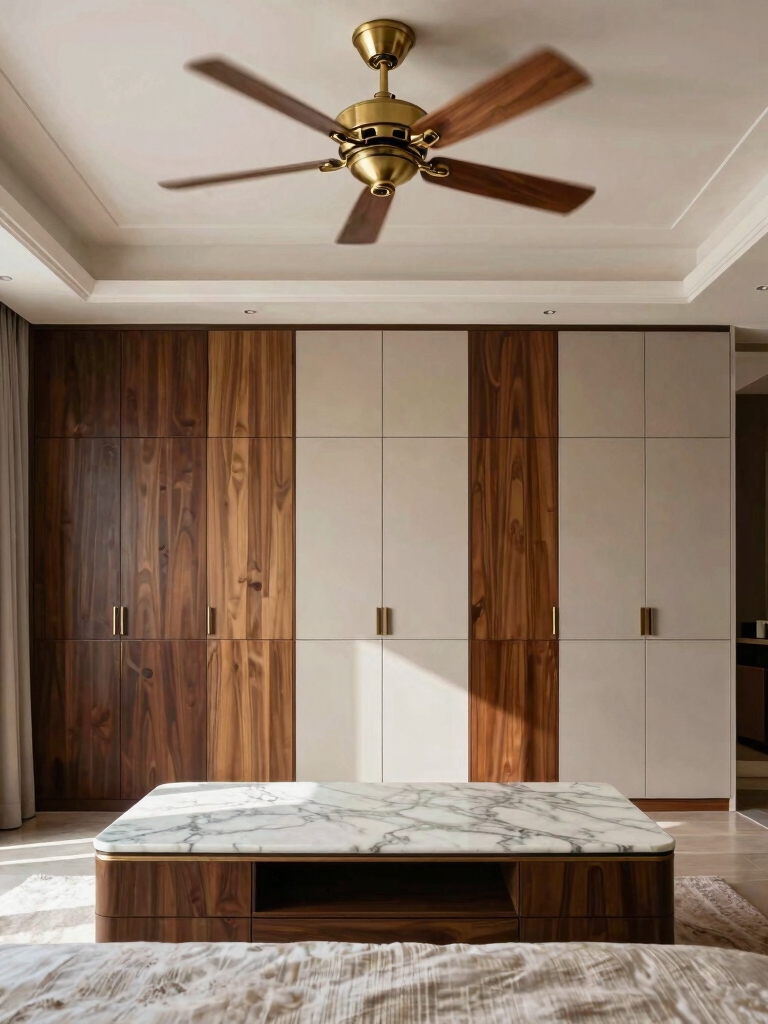
The single biggest upgrade most bedrooms need is not a new bed; it is better storage. A smart cupboard or wardrobe setup does more for how a room looks and lives than almost any decorative purchase, because it gets the clutter out of sight and the floor back. These cupboard bedroom ideas are the ones organized people keep recreating.
Below are 16 storage moves built around cupboards, wardrobes, and hidden shelving, most of them friendly to small rooms and tight budgets. Each one trades visible mess for calm, usable space you actually want to live in.
How Smart Cupboard Storage Works
Good bedroom storage starts with zoning before buying. Split your stuff into daily, occasional, and seasonal, then give each a home: a wardrobe or cupboard for daily wear, hidden shelves for display, and under-bed or high storage for the rest. Closed fronts keep the room calm.
Lean on vertical and built-in space where the floor is tight. Sliding panels, corner wardrobes, and under-bed drawers reclaim room a bulky dresser would eat, so the bedroom feels bigger and stays tidy with less effort.
Start With Smart, Modular Storage
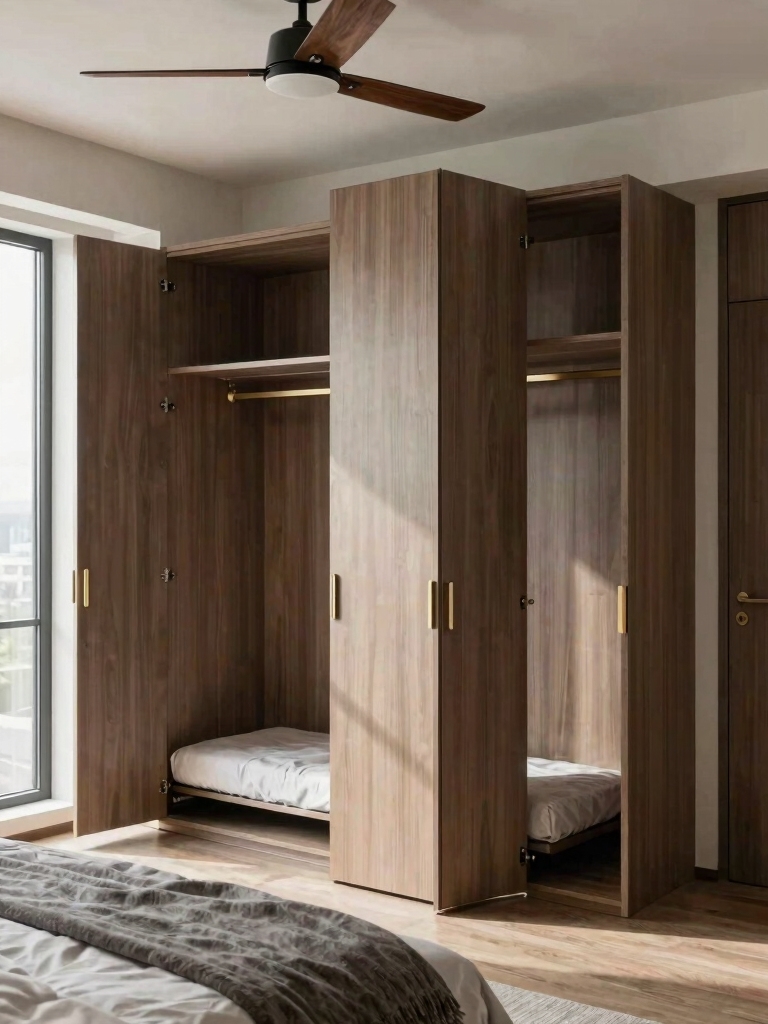
Before you buy a single cupboard, map what you actually own and how often you reach for it. Cupboard storage works when it is planned around your routine: daily wear at eye level, occasional pieces higher up, seasonal items boxed away. The plan is what keeps the room calm, more than the number of shelves. Zone it first.
Plan it, then buy it
Modular systems are the most forgiving way to do this, since you can reconfigure them as your needs change. Cubes, adjustable rails, and stackable units let you tune the space without buying new furniture every time. Closed doors over the front hide the inevitable mess.
The first thing I do in a cluttered bedroom is zone the storage before adding any. I have fixed rooms that felt hopeless just by giving every category a home, no new wardrobe required. For more on this, our clever small-room storage goes deeper.
Maximize Wall Space With Hidden Shelves
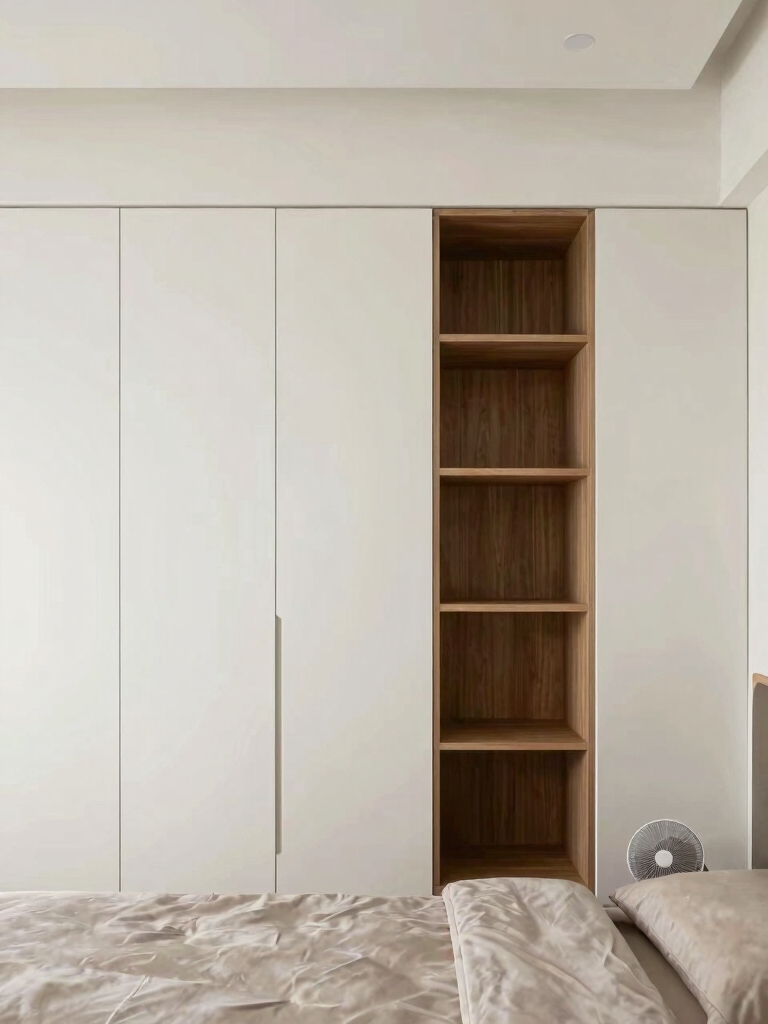
Walls are storage most people waste. Build upward. Recessed niches, shallow ledges, and slim shelves pull display and overflow up off the floor without the bulk of a cabinet. Built into the right spots, they read as built-in architecture, and they free the floor that makes a room feel small.
Put them where they earn their keep: above a desk, beside the bed, over the door, or in a recessed wall cavity between the studs. Keep them shallow so they do not crowd the walkway. For more floor-saving storage, our hidden bedroom storage helps.
- Recessed niches between studs for flush, bulk-free storage
- A slim ledge above the desk or bed for books and display
- A long shelf over the door for rarely-reached items
- Shallow depth so nothing juts into the walking path
A few cupboard terms worth knowing:
📖Carcass
The box of the wardrobe itself, before doors and fittings. A solid carcass is what lasts for years.
📖Reach-in vs walk-in
A reach-in is a shallow cupboard you access from the front; a walk-in you step into. Most bedrooms use reach-in.
📖Modular
Units you can mix, stack, and reconfigure, so the storage grows with you instead of being replaced.
Choose a Sleek, Space-Saving Wardrobe
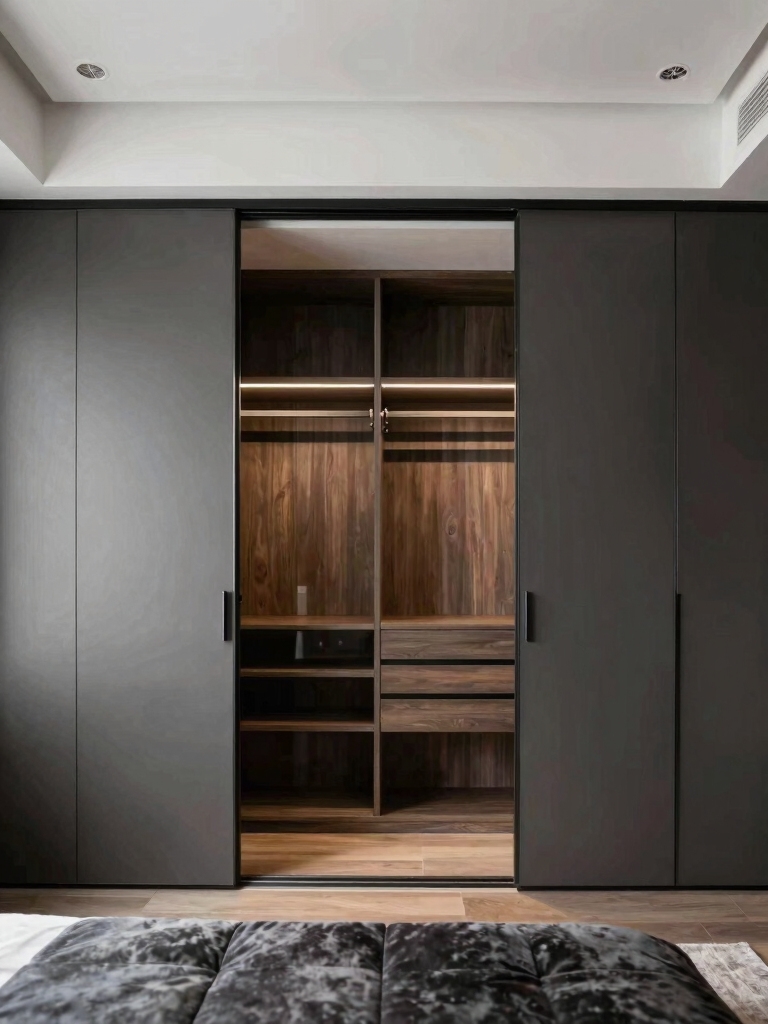
Sliding panels are the wardrobe upgrade small bedrooms keep coming back to. Unlike hinged doors, they need no clearance to swing open, so you reclaim the floor a regular wardrobe door would block. They also read clean and flush, which keeps a small room calm.
Choose slim, sturdy tracks and a finish that blends with the wall, mirrored, matte, or matching the paint, so the wardrobe almost disappears. A mirrored sliding front does double duty, bouncing light and adding a full-length mirror without taking extra space.
What I point people to in a tight bedroom is sliding over hinged doors, every time. I have watched a cramped room gain a clear walking lane just from losing the door swing. It is a quiet change that pays off every single day.
Fit Space-Saving Corner Wardrobes
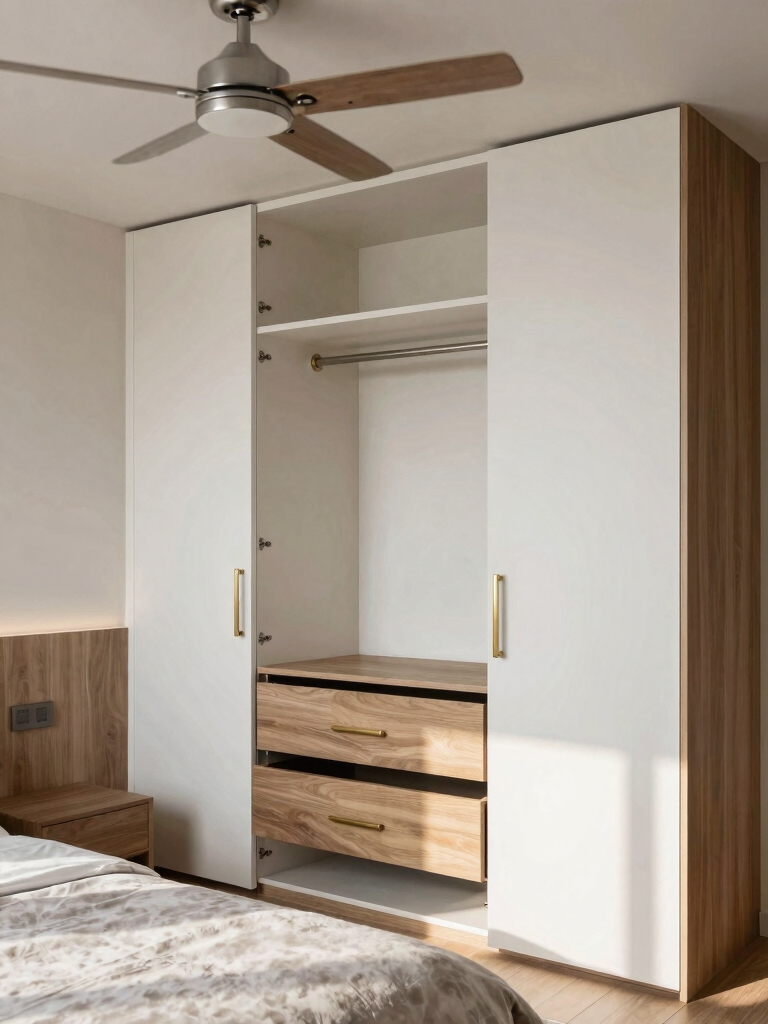
Corners are dead space in most bedrooms. Use them. A corner wardrobe is one of the smartest cupboard moves there is. An L-shaped or angled unit turns an awkward corner into real hanging and shelf space without eating the main floor. It is found storage, plain and simple.
Pick one scaled to the corner so it does not overwhelm the room, and keep the finish light or mirrored so it recedes. A corner unit pairs well with sliding fronts to save even more space. For a whole-room plan around tight square footage, our a small room that works helps.
- An L-shaped or angled unit to fill a dead corner
- A light or mirrored finish so it recedes
- Sliding fronts to skip the door swing
- Internal fittings, rails plus shelves, to use the full depth
ℹ️Good to Know
Mirrored wardrobe fronts do three jobs at once: they hide the clutter, bounce daylight to brighten the room, and give you a full-length mirror without taking any extra floor. In a small bedroom, that is the highest-value front you can choose.
Use Clutter-Free Hidden Bed Storage
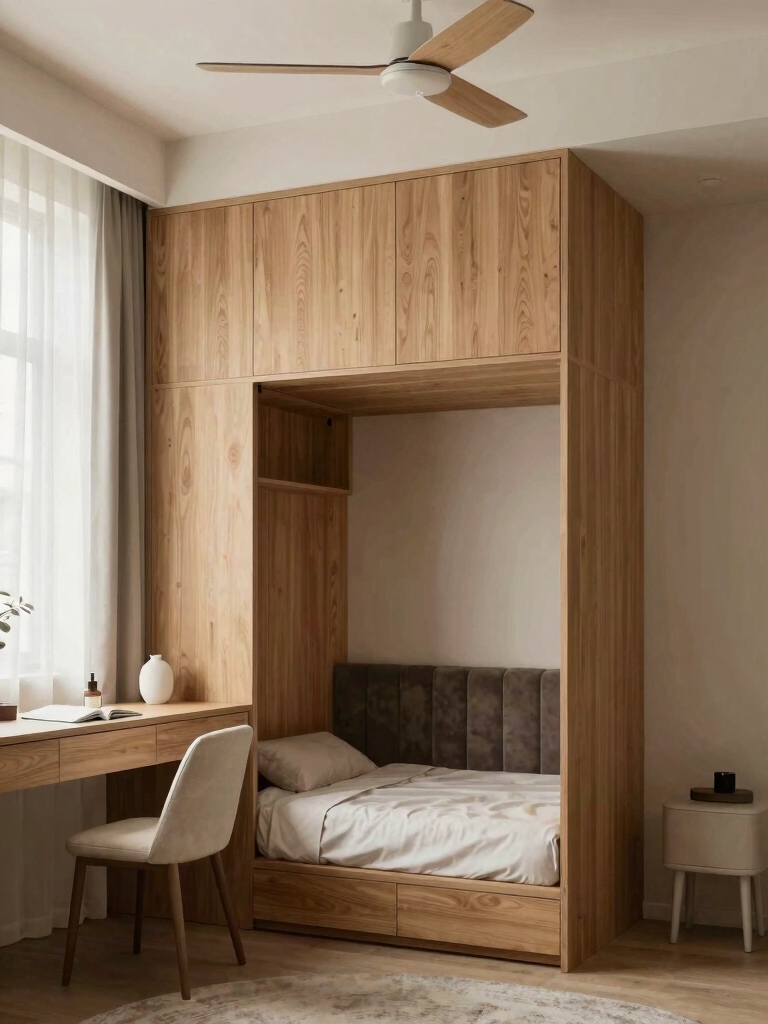
The space under and around the bed is the biggest cupboard you already own. It is free space. Put it to work in this order:
- Choose a bed with built-in drawers, or add rolling under-bed bins
- Use a storage ottoman or bench at the foot for blankets
- Add a headboard with built-in shelves or cubbies
- Label and lid the deep, hard-to-reach bins for seasonal stuff
- Add a bed skirt if open bins bother the look
Is a Cupboard Wardrobe Right for You?
A built-in or sliding cupboard wardrobe suits you if your bedroom is short on closet space or floor, or if a freestanding dresser keeps eating the room. It is also the right call for renters, who can use freestanding modular units that mimic built-ins without touching the walls. The payoff is a calmer, larger-feeling room.
It may be overkill if you already have a generous closet and little to store, where a simple dresser does the job. Be honest about how much you own before you build, since an oversized wardrobe wastes the very floor you are trying to save. Match the storage to your actual stuff, sized to fit the space, no bigger.
Make a Cheap Wardrobe Look Built-In
You do not need custom millwork to get the built-in look. A flat-pack wardrobe (often $150-400) run to the ceiling, trimmed at the gap, and painted the wall color looks like a fitted unit for a fraction of the price. The details, not the budget, are what sell it; our make a cheap wardrobe look expensive goes further.
- Run the wardrobe to the ceiling and trim the gap with molding
- Paint it the same color as the wall so it reads built-in
- Swap the cheap handles for better hardware
- Add a strip of warm LED inside for a custom touch
Organize the Inside So It Stays Tidy
A beautiful cupboard still fails if the inside is chaos, so the fittings matter as much as the doors. The fitting I insist on is double-hang rails, plus drawer dividers and a few labeled bins, which keep everything visible and reachable. The goal is that putting things away is easier than dropping them on a chair.
Zone the interior the way you zoned the room: daily wear front and center, occasional pieces up high, seasonal boxed at the bottom. Slim, matching hangers alone make a cupboard look twice as organized. A tidy inside is what keeps the calm you built from unraveling by Friday.
Light the Cupboard and Keep It Cohesive
Good cupboard storage is wasted if you cannot see into it, so add light. Light it inside. A strip of warm LED or a few battery puck lights inside a wardrobe makes finding things easy and adds a quiet, high-end glow. It is a cheap upgrade that makes a flat-pack feel custom.
Keep the wardrobe finish cohesive with the room so the storage blends quietly into the room. A matte finish in the wall color or a light wood disappears, while a clashing color makes a big unit feel even bigger. For a palette that ties it together, our a calm color base helps.
Edit the Cupboard Twice a Year
Storage only works if it does not silently fill past capacity, so edit the cupboard on a schedule. Twice a year, when the seasons turn, pull everything you have not worn and pass it on. A cupboard with breathing room stays usable, while a stuffed one becomes a place you avoid.
Build a quick habit alongside it: a ten-minute weekly tidy to put strays back and keep the surfaces clear. The discipline is what keeps all that clever storage from quietly defeating itself. The cupboard works only as well as the editing behind it.
Choose Durable Materials and Finishes
A cupboard you use every day takes real wear, so the materials matter more than the price tag suggests. A solid carcass, sturdy soft-close hinges, and smooth drawer runners are what separate a wardrobe that lasts a decade from one that sags in a year. Spend on the moving parts. You can fake the look elsewhere.
For the finish, lean on materials that hide handprints and age well: a matte laminate, real wood, or a cane front over a high-gloss surface that shows every smudge. If you are buying flat-pack, upgrade the hinges and handles and you get most of the durability of a pricier unit for a fraction of the cost.
Style the Top of the Cupboard
The top of a wardrobe is prime real estate people either waste or clutter. Used well, it adds storage and a styled moment at once; left as a dumping ground, it makes the whole room feel messy. Keep whatever lives up there deliberate and contained so it looks intentional from across the room.
- Matching lidded boxes or baskets for hidden overflow up high
- One or two larger decorative pieces, never a scatter of small ones
- A trailing plant to soften the hard top edge
- Nothing loose or random, since the top is at eye level from the door
Cupboard and Wardrobe Questions People Ask
?How do I add storage to a small bedroom without crowding it?
Go vertical and built-in. Sliding or corner wardrobes skip the door swing and use dead space, hidden shelves take the walls, and under-bed drawers use the floor you cannot see. Closed fronts keep it all calm, so the room reads bigger even as it holds more.
?Are sliding wardrobe doors better than hinged ones?
In a small room, usually yes. Sliding panels need no clearance to open, so you reclaim the floor a hinged door would block, and they read flush and clean. The trade-off is you can only see half the wardrobe at once, which matters less than the space you save.
?How do I make a cheap flat-pack wardrobe look built-in?
Run it to the ceiling, trim the gap with molding, and paint it the same color as the wall so it reads as a fitted unit. Swap the cheap handles and add a strip of warm LED inside. Those details turn a basic wardrobe into something that looks custom for very little.
?Where should I put a wardrobe in a small bedroom?
Use a dead corner with an L-shaped unit, or line the shortest wall so it does not block the walking path. Keep the finish light or mirrored so it recedes, and choose sliding fronts where the door swing would crowd the room. The aim is storage that disappears.
?How do I keep a wardrobe from becoming a mess?
Zone the inside, daily up front, seasonal boxed at the bottom, use double-hang rails and dividers, and edit it twice a year. Matching slim hangers and a ten-minute weekly tidy do the rest. Good fittings make putting things away easier than leaving them out.
Storage First, Calm Follows
The cupboard ideas people keep recreating all do the same quiet thing: they hide the clutter and hand the floor back. Zone your stuff, lean on sliding and corner wardrobes where space is tight, work the walls and the under-bed area, and keep the inside organized, and the whole room calms down.
So start with the one storage problem that bugs you most, the overflowing closet, the dead corner, the pile on the chair, and solve that first. Build out from there, and the bedroom feels bigger and tidier without a single decorative purchase.