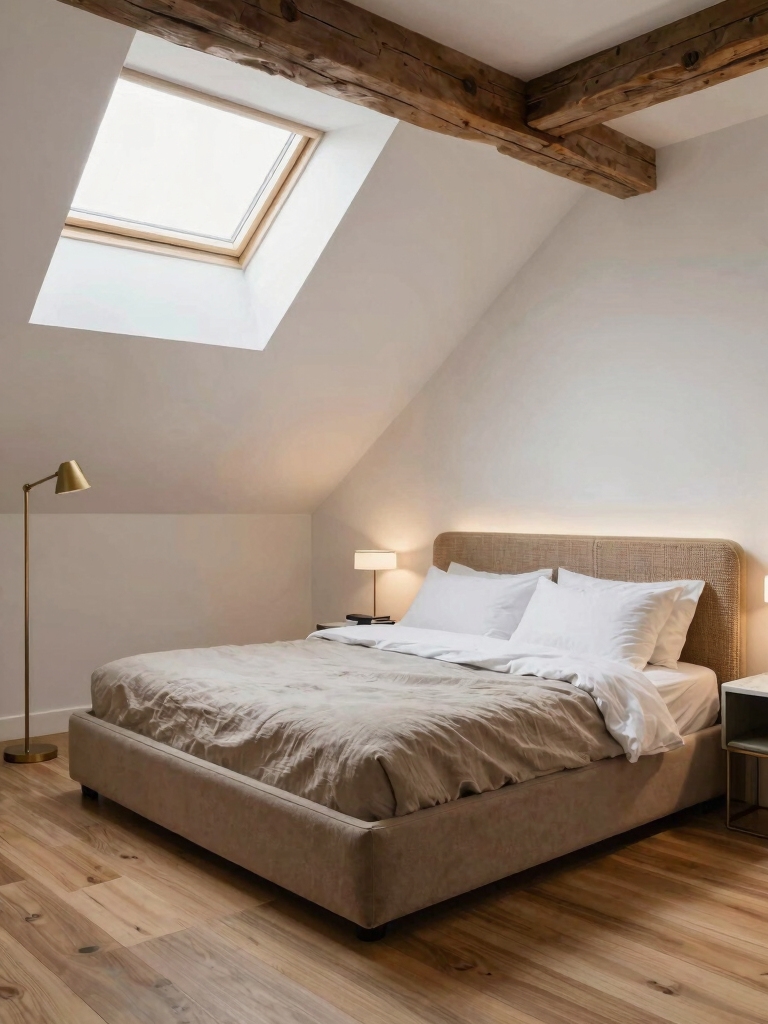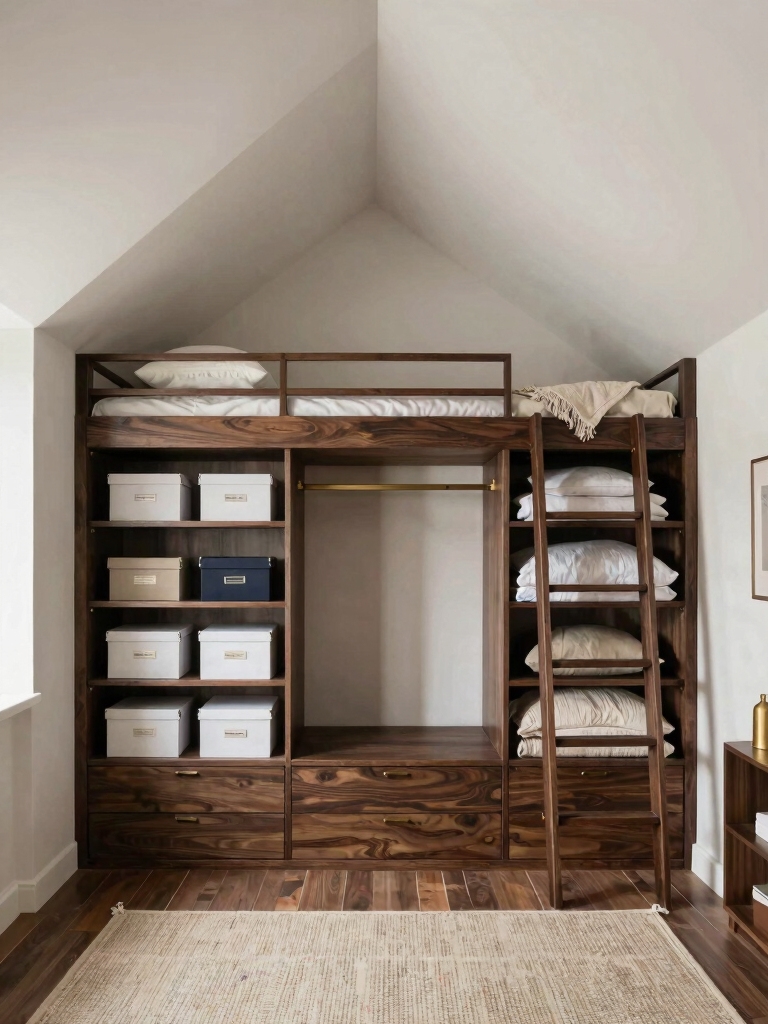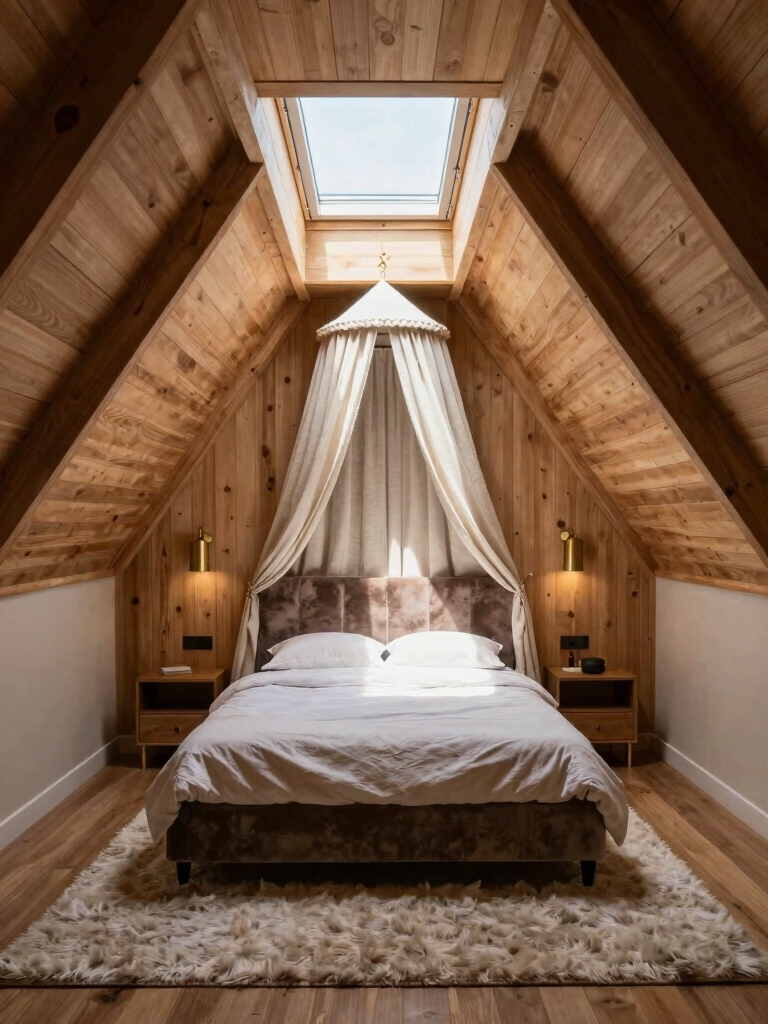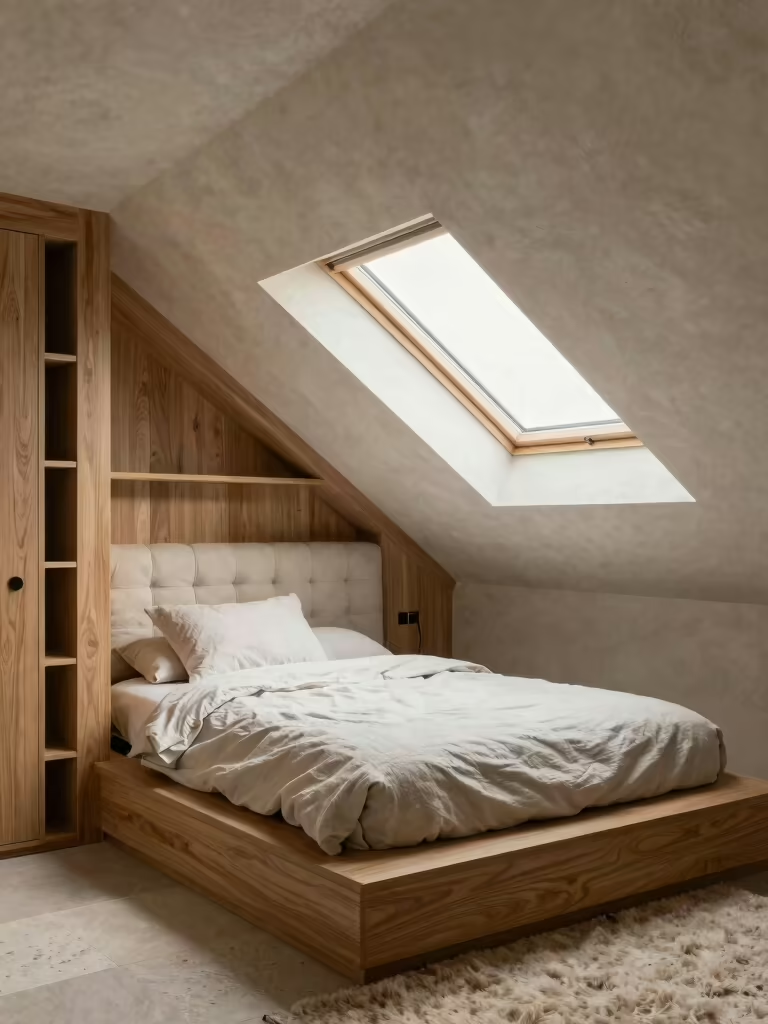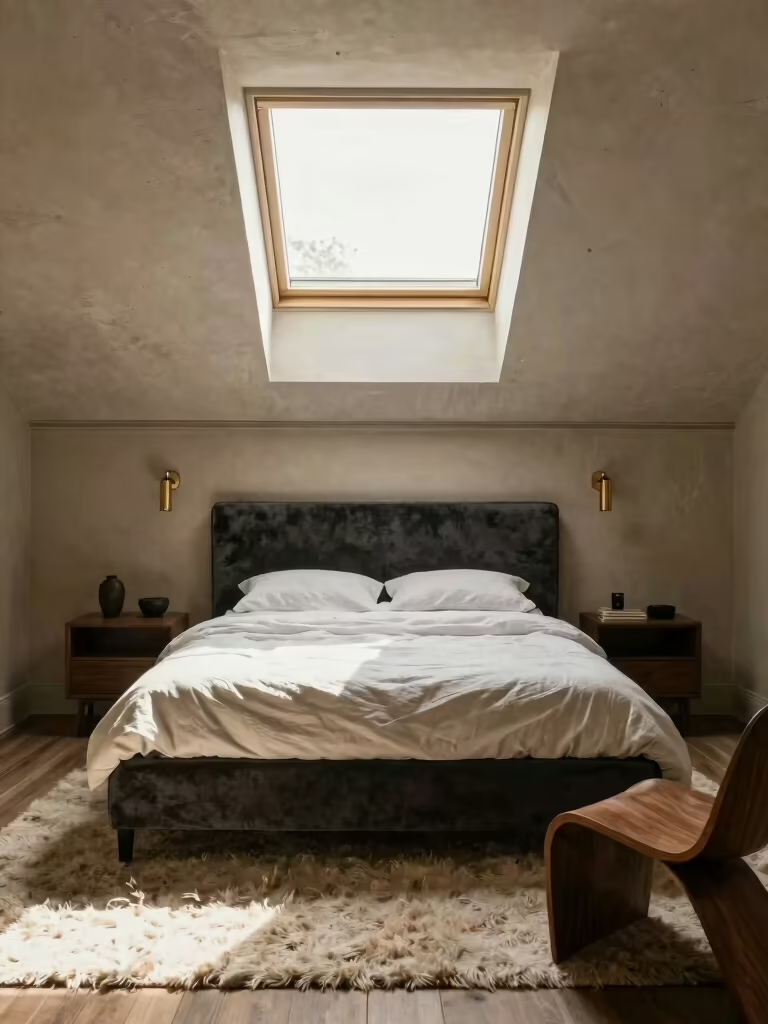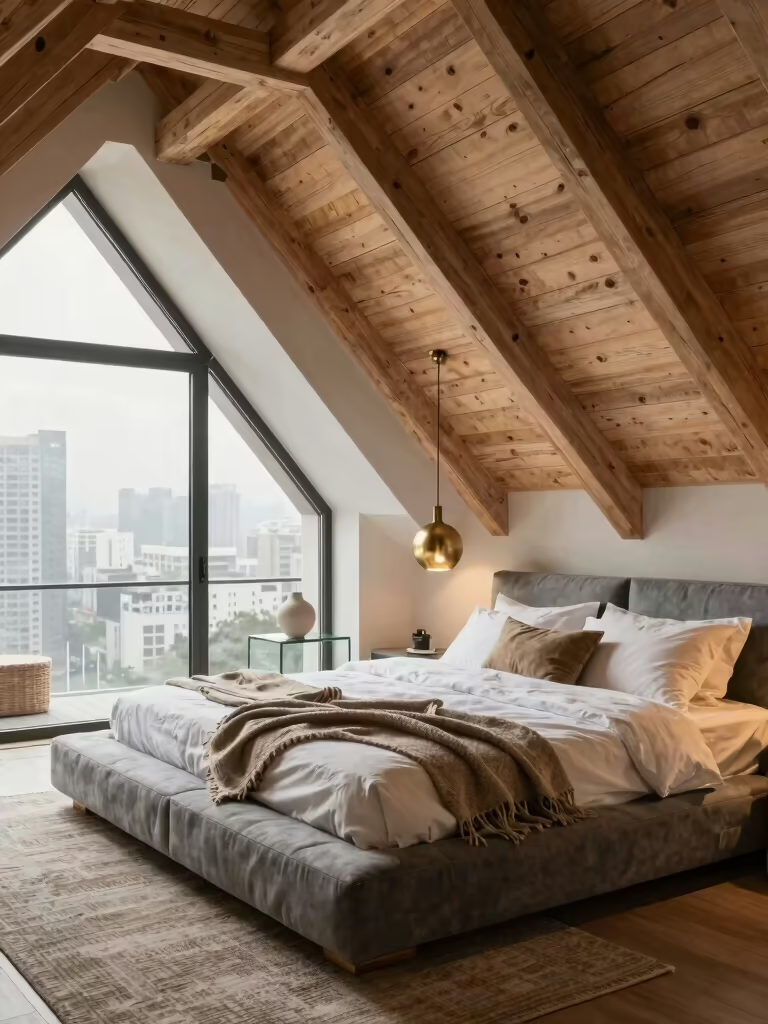

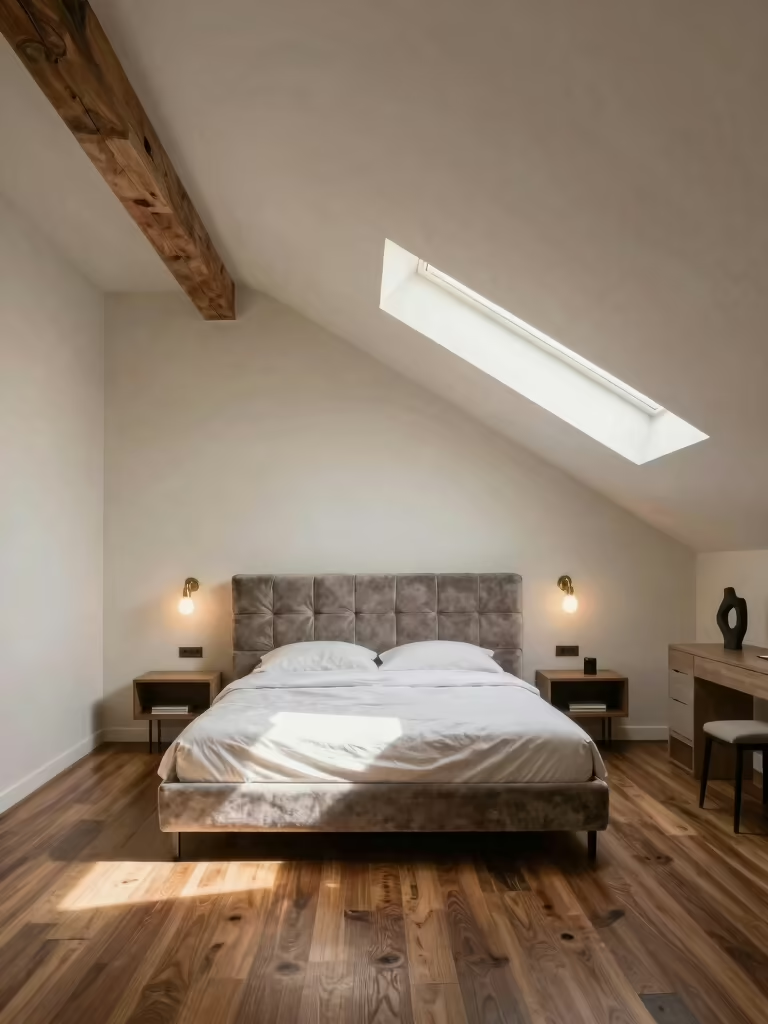
Most attics live two lives: a dusty box of holiday bins, or the calmest bedroom in the house. The best attic bedroom makeover ideas close that gap by working with the slopes instead of fighting them, treating the angles as character, lighting the room warm, and tucking storage into the eaves.
Below are 16 moves an attic makeover starts with, from the color that calms a sloped ceiling to the bed placement that turns a low corner into a cozy nook. Most cost little and lean on the quirks the room already has.
What an Attic Makeover Starts With
| The move | Why it matters up here | Start with |
|---|---|---|
| One cohesive color | Calms the busy angles | Two neutrals, ceiling included |
| Maximized light | Attics run dark and low | A mirror facing the window |
| Eave storage | Dead low space, reclaimed | Under-eave drawers or a knee-wall cabinet |
| Smart bed placement | Low ceilings need the right spot | Bed under the highest point |
| Warm layered light | Replaces missing daylight | 2700K bulbs on a dimmer |
Why an Attic Makes a Great Retreat
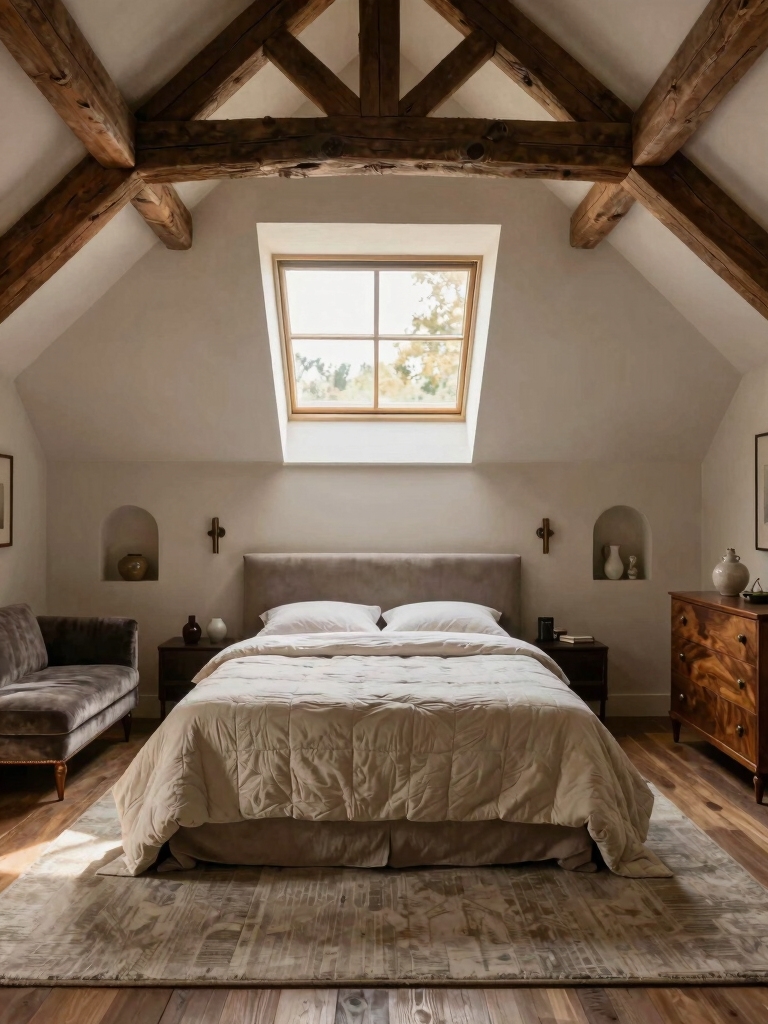
An attic has built-in advantages most bedrooms never get: tucked-away privacy, interesting angles, and often the best light in the house. The slopes that feel like a problem are exactly what make the room cozy once you lean into them. Start by seeing the quirks as the design, not the obstacle. Lean into the slopes.
- Privacy, since it is usually the most separate room in the house
- Character, because the slopes and dormers do the styling for you
- Light, where roof windows and dormers pull in great daylight
- Coziness, since low, tucked spaces feel like a retreat by nature
Set a Cohesive Color for the Sloped Ceilings
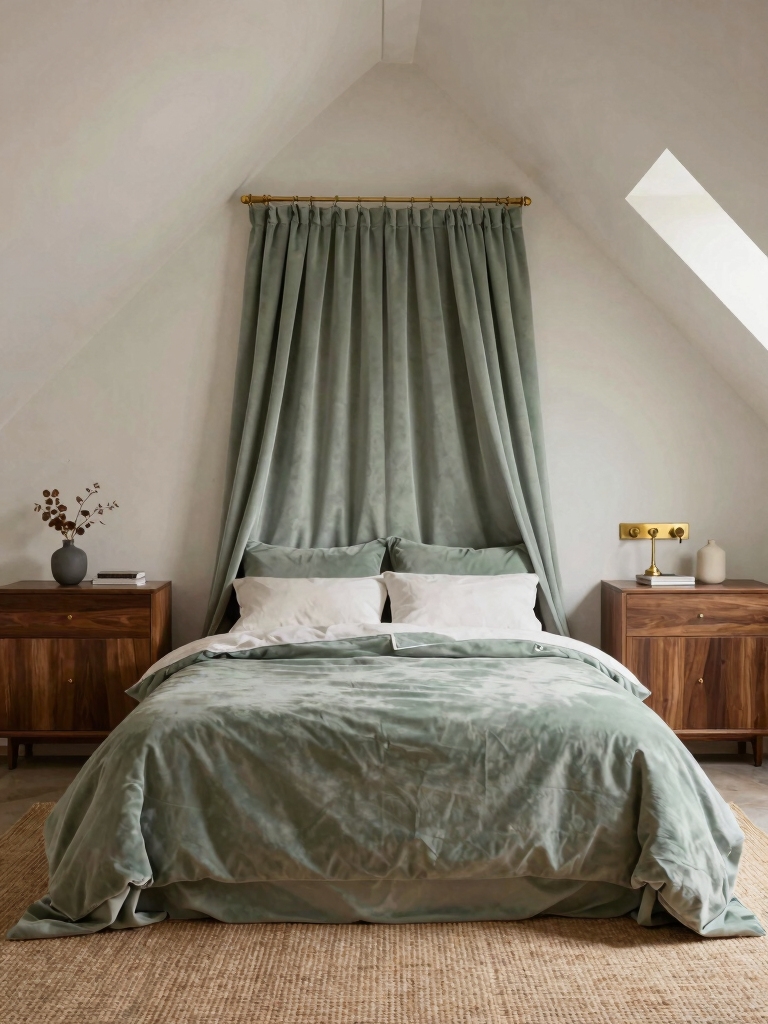
Sloped ceilings get busy fast, so one cohesive color is what keeps an attic calm. The trick is to wrap the walls and the slopes in the same tone so the angles stop chopping the room into pieces. For a fuller palette plan, our a calm color base helps; otherwise build it in this order:
- Paint the walls and sloped ceiling the same color to blur the angles
- Pick two warm neutrals as the base, greige and a soft white
- Add one warm textile accent, clay, olive, or rust
- Keep finishes matte so the slopes do not catch glare
- Skip busy wallpaper, which fights the angles for attention
“Before you change anything, find the highest point of the room and stand there. That spot wants the bed or the main seating, since it is where you can stand comfortably. Everything low and angled then becomes storage, a nook, or a desk.”
Maximize the Natural Light
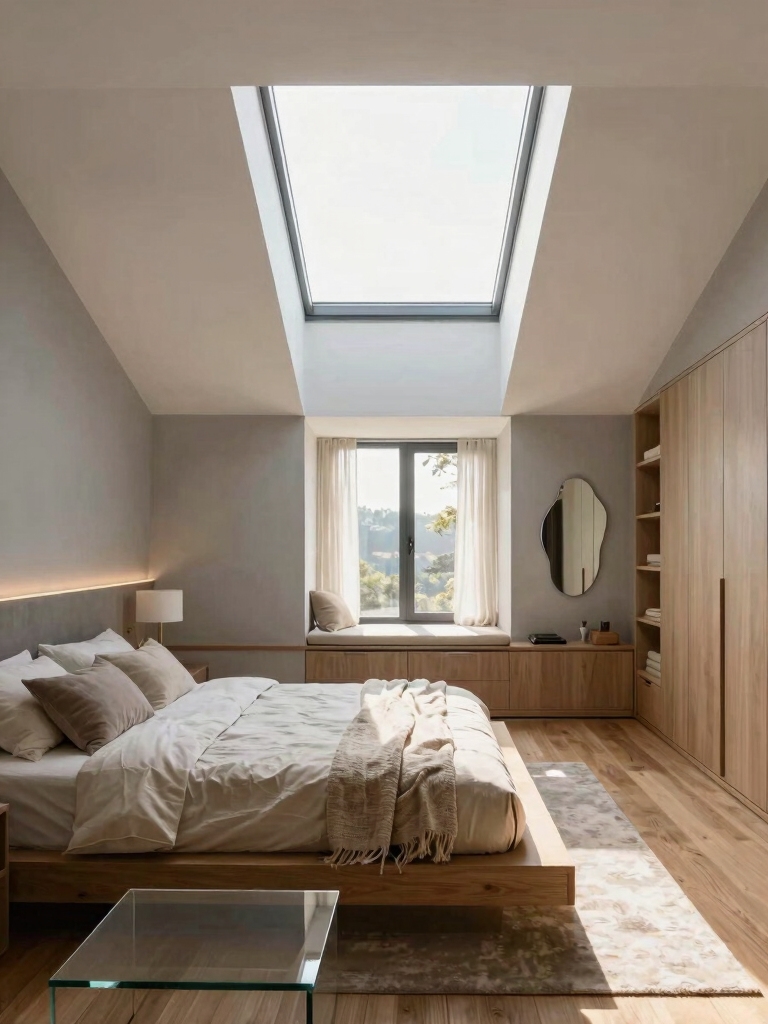
Attics run dark, so light is the first thing a makeover fixes. Light comes first up here. The first thing I do in a dim attic is hang a mirror across from the window, which reads like a second one and doubles the daylight for free. Make the most of every roof window or dormer, and bounce what you have deeper into the room.
Keep the window dressing minimal so nothing blocks the precious light. Sheer or top-down shades on a roof window let the sun in while still giving privacy. For warm light after dark, our layered lighting guide helps fill the gap.
- A mirror opposite the window to double the daylight
- Pale walls and ceiling to bounce light around
- Minimal, light window coverings that do not block the glass
- A roof window or skylight if the budget allows a bigger change
Build Smart Storage Into the Eaves
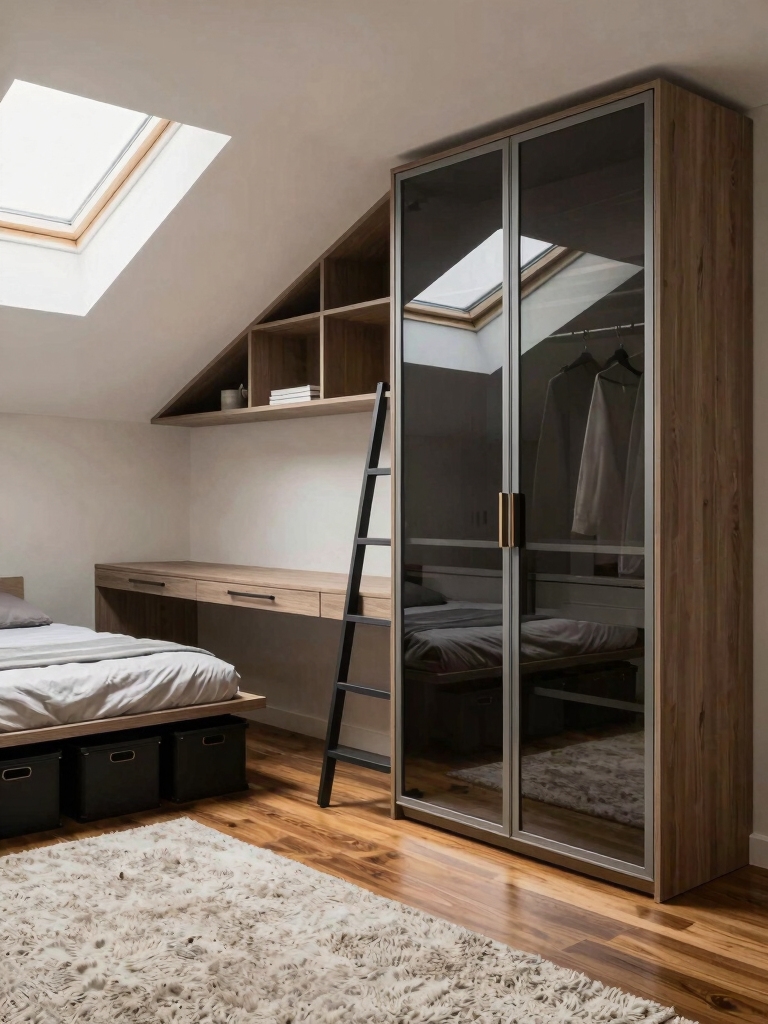
The low space under the eaves is dead floor in most attics and the biggest opportunity in a makeover. The eaves are free square footage. Turn those awkward angles into storage and the rest of the room opens up; our hidden storage has more ideas. Work it in this order:
- Fit under-eave drawers or a low knee-wall cabinet into the slope
- Use the full-height walls for a tall, slim wardrobe
- Add a bed with built-in drawers to skip a dresser
- Hang slim shelves on the vertical part of a sloped wall
- Bin and label the deepest eave space for off-season stuff
Plan an attic makeover in four steps:
1Map the heights
Mark where you can stand, where you stoop, and where it is eave-only; that dictates the whole layout.
2Calm the color
Wrap the walls and slopes in one warm tone so the angles read as a single room.
3Claim the eaves
Turn the low dead space into drawers, a cabinet, or a tucked reading nook.
4Layer the light
Maximize the daylight, then add warm lamps so the room glows after dark.
Define Cozy Zones With Rugs and Lighting
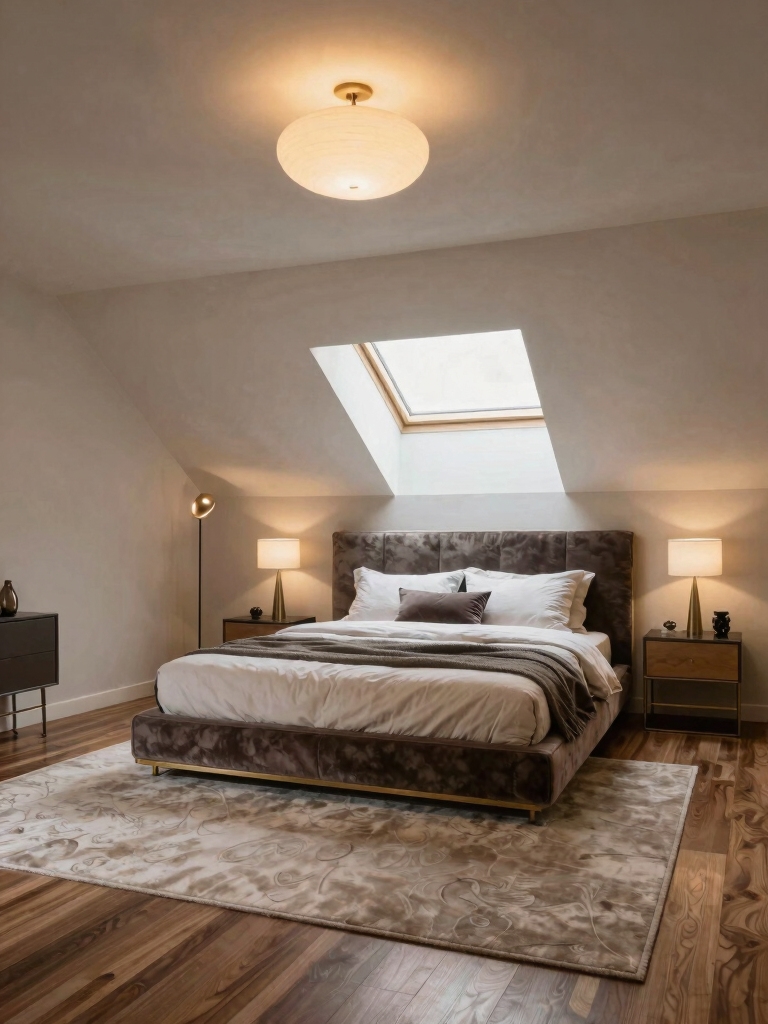
An open attic feels better broken into zones, since one big undefined space can feel like a hallway with a bed in it. A rug under the bed marks the sleep zone, and another by a chair marks a reading corner. The eye reads separate areas even without a single wall.
Rugs map it, light proves it
Lighting does the same job after dark. A warm lamp in each zone, a bedside pair, a floor lamp by the chair, tells you where one area ends and the next begins. Put them on 2700K bulbs and a dimmer so the whole attic glows softly at night. It is a five-minute swap.
The zone I carve out first in an attic is a reading nook in the eave, since that low, tucked corner is useless for standing but perfect for curling up. A chair, a lamp, and a shelf turn dead space into the best seat in the house.
What to Expect From an Attic Makeover
An attic makeover is mostly cosmetic if the space is already finished: paint, light, storage, and textiles do the heavy lifting for a few hundred dollars and a couple of weekends. The angles look harder than they are to work with once you stop fighting them.
If the attic is unfinished or unconditioned, that is a different project. Insulation, a vapor barrier, and proper wiring or a roof window are jobs for a licensed pro, both for comfort and for safety, before any styling makes sense. Get the structural bones sound and safe first, and then the cosmetic makeover goes fast.
Place the Bed Where the Ceiling Is Highest
Bed placement makes or breaks an attic. Sit up, never duck. The spot I reach for first is dead center under the highest part of the ceiling, where you can sit up without ducking, or tucked lengthwise into the eave where the low slope becomes a cozy headboard wall. Either way, leave a clear path you can walk without stooping.
Keep the pieces around the bed low and slim so they fit under the slopes: small nightstands, low lamps, a slim bench. A tall headboard fights a sloped ceiling, so go low and let the angle of the roof be the drama instead. For more on working a tricky footprint, our lay out a tricky room helps.
Add Vertical Lift Where You Can
Low ceilings make a room feel shorter, so draw the eye upward wherever the height allows. A few vertical cues trick the room into feeling taller than it measures, especially on the full-height walls and the dormers.
- Floor-length curtains on a dormer window to add height
- A tall, narrow bookshelf on a full-height wall
- Vertical paneling or stripes on the straight walls
- Pendant lights that draw the eye up toward the peak
Keep It Warm, Quiet, and Comfortable
Attics swing hot and cold and can echo, so comfort is part of the makeover, not an afterthought. Good insulation keeps the temperature livable, and soft layers, a rug, curtains, an upholstered headboard, soak up the sound a hard, angled room bounces around.
Add a fan or a small heater sized to the space for the extremes, and lean on breathable bedding so you stay comfortable as the attic temperature shifts. For more ways to make a snug room feel bigger and brighter, our make a small room feel bigger applies up here too.
Tuck a Desk or Vanity Under the Slope
The spot where the ceiling drops too low to stand is perfect for something you do sitting down. Sit, do not stand. Slide a desk or a small vanity under the slope and that dead corner earns its keep, since you only need head height while seated, which makes it the most efficient use of an awkward angle there is.
Keep it shallow and simple so it fits the wedge of space: a slim writing desk, a wall-mounted fold-down, or a narrow vanity with a mirror. Add a low lamp and a chair that tucks fully under, and the eave becomes a workspace without stealing any standing room from the rest of the attic.
Choose Low, Slope-Friendly Furniture
Furniture for an attic has to respect the angles, so scale and height matter more than usual. Measure first. Low, slim pieces slide under the slopes and keep the room feeling open, while tall ones either do not fit or block the light, so check the ceiling height at each spot before you buy anything big.
- A low-profile bed or platform over a tall four-poster
- Slim nightstands that fit under the slope
- Long, low dressers along a knee wall
- Nothing tall except against the full-height walls
Refresh the Attic Over Time, Cheaply
An attic does not need to be finished all at once. Paint first. Spread the makeover over a few weekends and a small budget, and tackle it in order: paint, then light, then storage, then the soft layers. Each step makes the next one easier to see.
Once it is set up, keep it feeling fresh with cheap seasonal swaps, a different throw, a new stem in a vase, warmer bulbs in winter, every few months. The attic stays inviting without another big push, and the calm base you built carries it the rest of the year.
Attic Bedroom Questions People Ask
?Can any attic become a bedroom?
Most finished attics can, but check the basics first: enough head height to stand in part of the room, safe access, a window or egress for fire safety, and proper insulation. With those in place, an attic bedroom is mostly a cosmetic makeover. Without them, bring in a licensed pro before you decorate.
?How do I make a low, sloped ceiling feel taller?
Paint the walls and slopes one light color so the angles blur, hang any curtains floor to ceiling, and draw the eye up with a tall shelf or vertical lines. Keep furniture low so the ceiling feels higher by comparison. The goal is to stop the slope from chopping the room into pieces.
?Where should the bed go in an attic?
Under the highest part of the ceiling so you can sit up comfortably, or tucked lengthwise into the eave where the low slope becomes a snug headboard wall. Leave a clear walking path where you will not hit your head, and keep the surrounding pieces low and slim.
?What is the cheapest way to make over an attic bedroom?
Paint, light, and textiles. Wrap the room in one warm color, swap to warm bulbs on a dimmer, add a big rug and soft layers, and claim the eave for storage. That combination transforms a finished attic for a few hundred dollars without touching the structure.
Let the Angles Do the Work
An attic bedroom rewards the makeover that stops fighting the slopes and starts using them. Calm the color, claim the eaves, place the bed where you can sit up, and light the room warm, and the same angles that felt like a problem become the reason the room feels like a retreat.
So look up at your own slopes and ask what they could be, a reading nook, a wall of storage, a cozy headboard wall, rather than what they are not. Start with the color and the light, and let the attic show you the rest.