
You learn a sloped ceiling with your head first. The morning you sit up too fast and meet the rafter, you understand why placement matters more here than in any square room. Live under the angles long enough and you stop fighting them; you start designing around where your body actually goes.
These attic loft bedroom ideas are the practical, everyday fixes sloped-ceiling dwellers actually need, beyond the pretty ones. We’ll handle headroom, angle-fitting storage, bed placement, and skylight light, each with the rough cost and the daily-life logic behind it. Get these right and the slope stops being a hazard and becomes the coziest thing about the room.
What Sloped-Ceiling Living Needs
- Map your real headroom first, then put standing tasks under the tall part and lying-down ones under the slope.
- Choose low-profile furniture so nothing eats the headroom you have or forces a stoop.
- Fit storage to the angles with built-ins in the eaves, where you can’t stand anyway.
- Chase daylight with a skylight and a mirror so the room feels open and airy.
Attic Remodel Design Strategies
Living well under a slope starts with a plan built around your body, not a magazine layout. Before anything else, measure the headroom at a few points and watch where the daylight lands, then sketch where you stand, sit, and lie down. The angles will tell you what belongs where. Work through these first.
- Measure headroom at the peak, the knee wall, and the standing zone so you know your real usable space.
- Map the daylight and the safe exit before you place a single piece of furniture.
- Assign standing tasks to the tall part and low tasks (sleep, seating, storage) to the slopes.
Low-Profile Furniture for Sloped Rooms
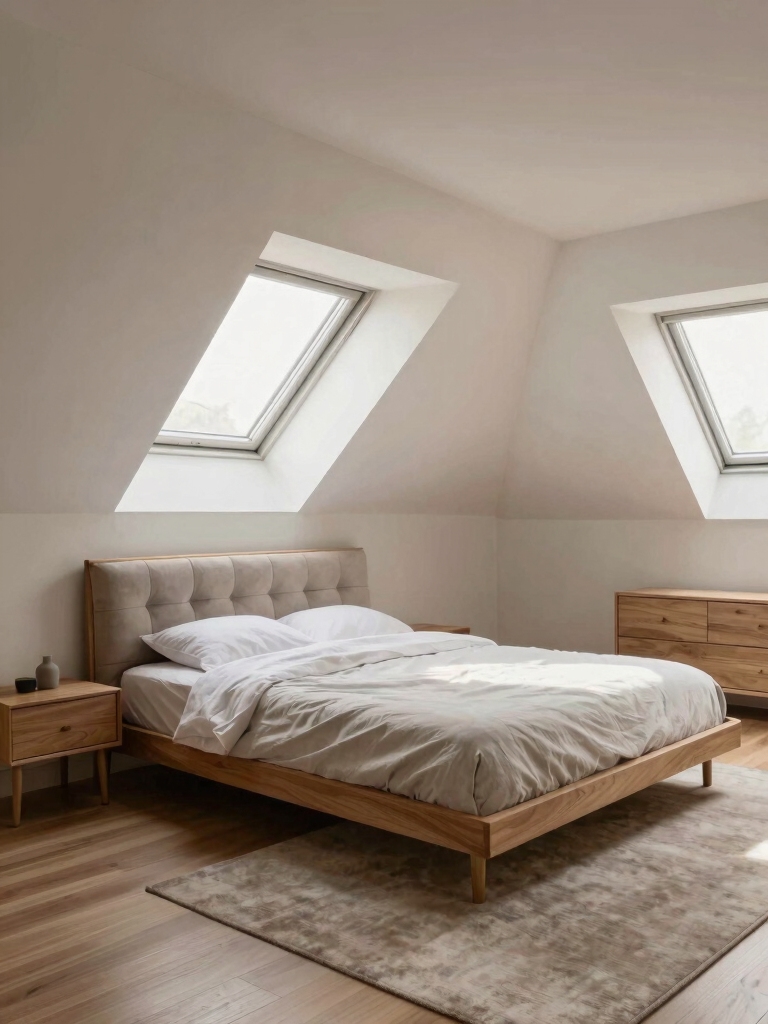
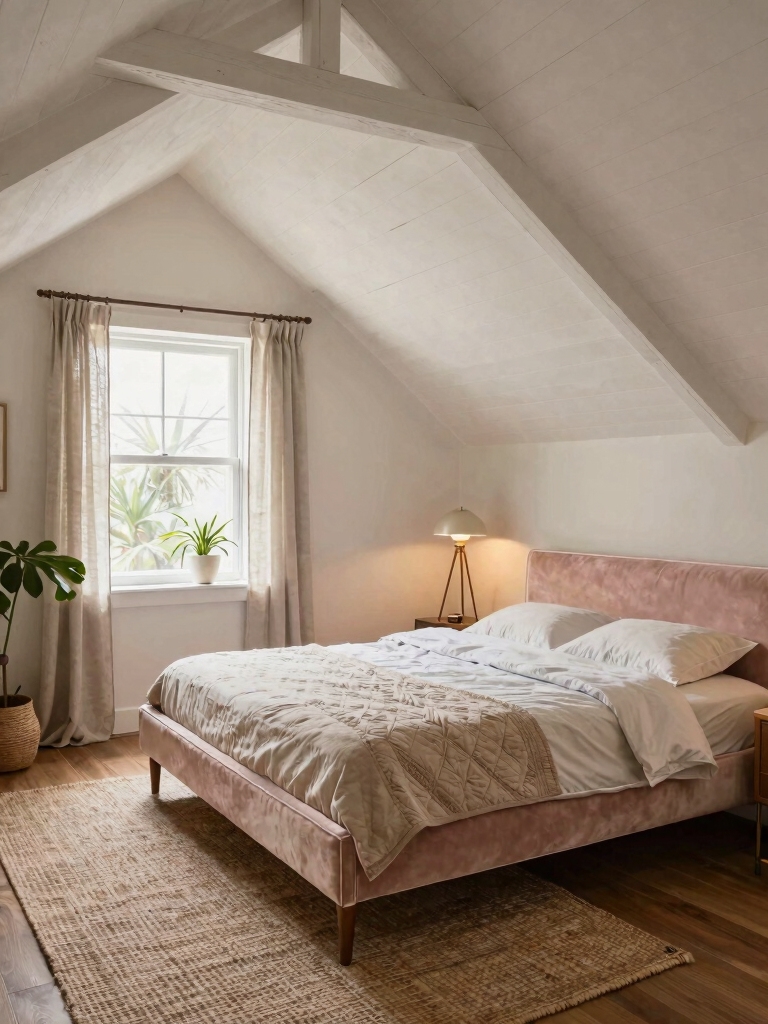
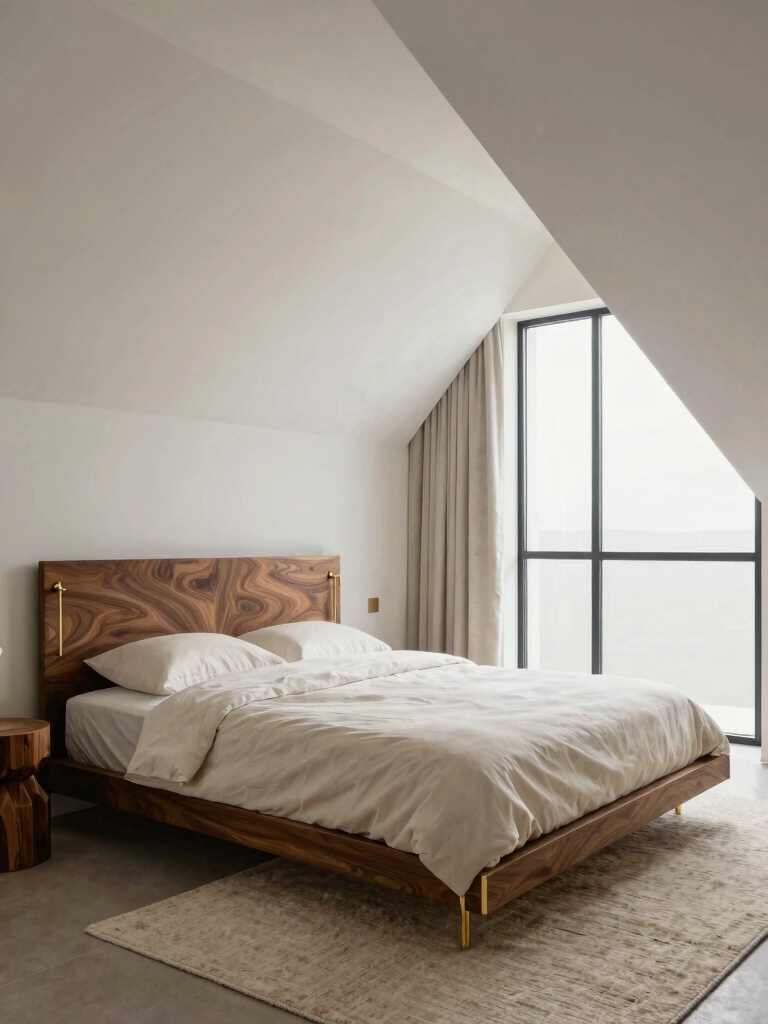
The fastest way to make a sloped room livable is choosing furniture that sits low, so it leaves the headroom you’re short on intact. A low platform bed, slim dressers, and floor seating all leave more air above them, which keeps the room feeling open above your head. This is the change dwellers feel most. Day to day, low furniture is the difference between a room that breathes and one that seems to lean over your shoulder every time you cross it.
Match Each Piece to Its Spot
Tuck the low pieces where the ceiling dips and stand the taller ones on the full-height wall. A bed slides under a slope beautifully, since you only need headroom to sit up at the pillow end. A wardrobe or bookcase, on the other hand, wants the peak. Matching the height of each piece to its spot is the whole game.
Lean toward pieces with visible legs, too. The sliver of floor showing beneath a bed or chair tricks the eye into reading more space, which a low room needs. For the tightest ceilings, my [low-ceiling attic ideas](attic-bedroom-ideas-low-ceiling-rock) cover the height tricks in full.
ℹ️Good to Know
Standard guidance treats ceiling under about five feet as non-standing space. That’s not wasted, though: it’s exactly where a bed, a bench, or built-in drawers belong. Planning around that line, rather than ignoring it, is what makes a sloped room livable.
Clever Built-In Storage Solutions
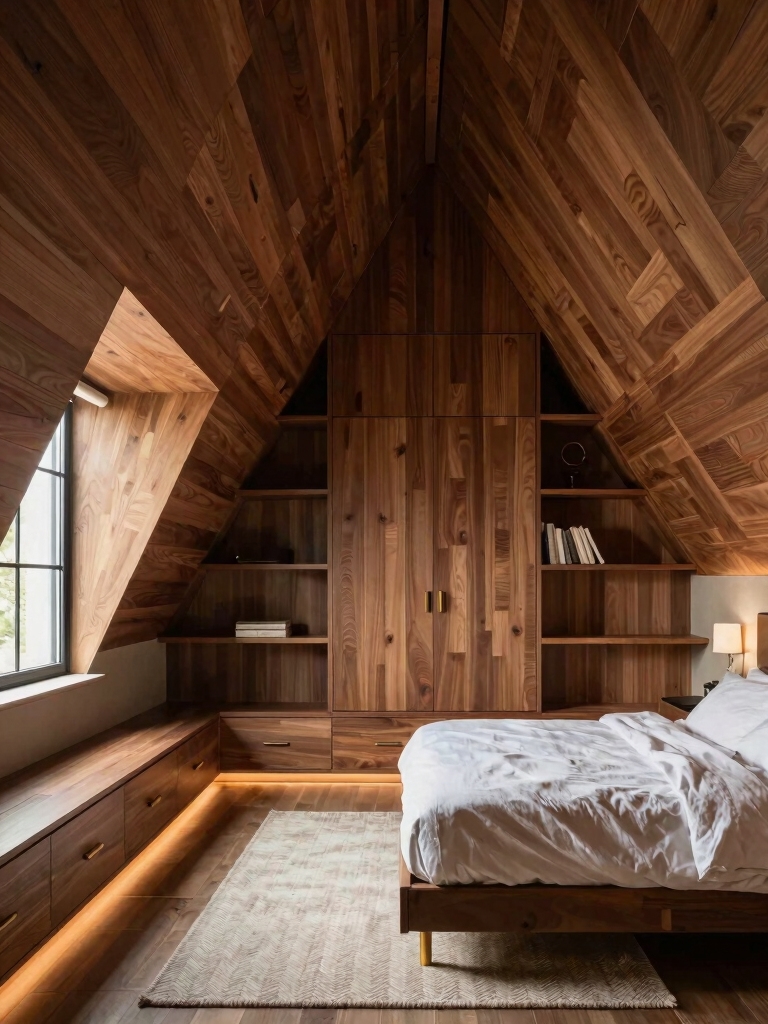
Storage is where sloped ceilings stop being a problem and start paying you back, because the awkward low triangle is perfect for things you don’t reach standing up. Built-ins fitted to the angle turn dead space into real capacity while keeping the open floor clear. This is the upgrade that makes daily life under a slope actually work.
Custom alcove shelves climb the angled wall, fold-down desks tuck flat when you’re done, and sliding panels hide the seasonal gear in the eaves. A basic knee-wall built-in runs a few hundred dollars, while bins and a tension-rod rail cost far less if a custom job is out of reach. For systems that keep it all tidy, see my [storage ideas that beat clutter](bedroom-storage-ideas-clutter).
- Build alcove shelves up the sloped wall, stepping them down to stay within reach.
- Add a fold-down desk that lies flat against the knee wall when not in use.
- Use sliding panels or low drawers to hide seasonal gear in the eaves.
Sloped-Ceiling Bed Placements
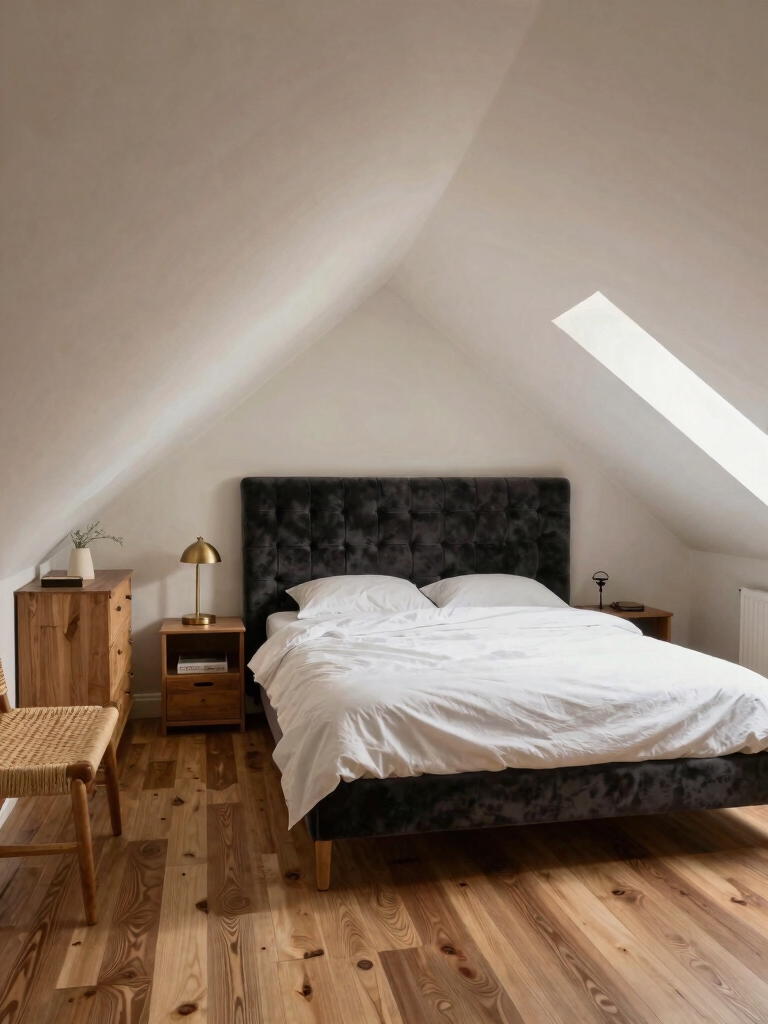
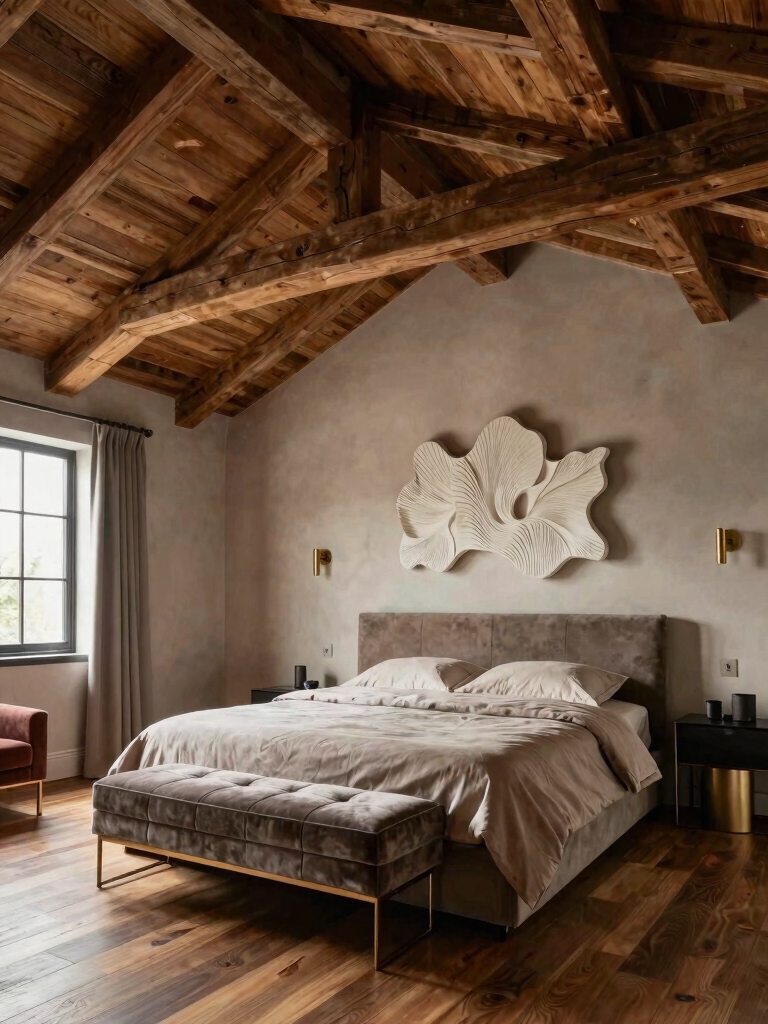
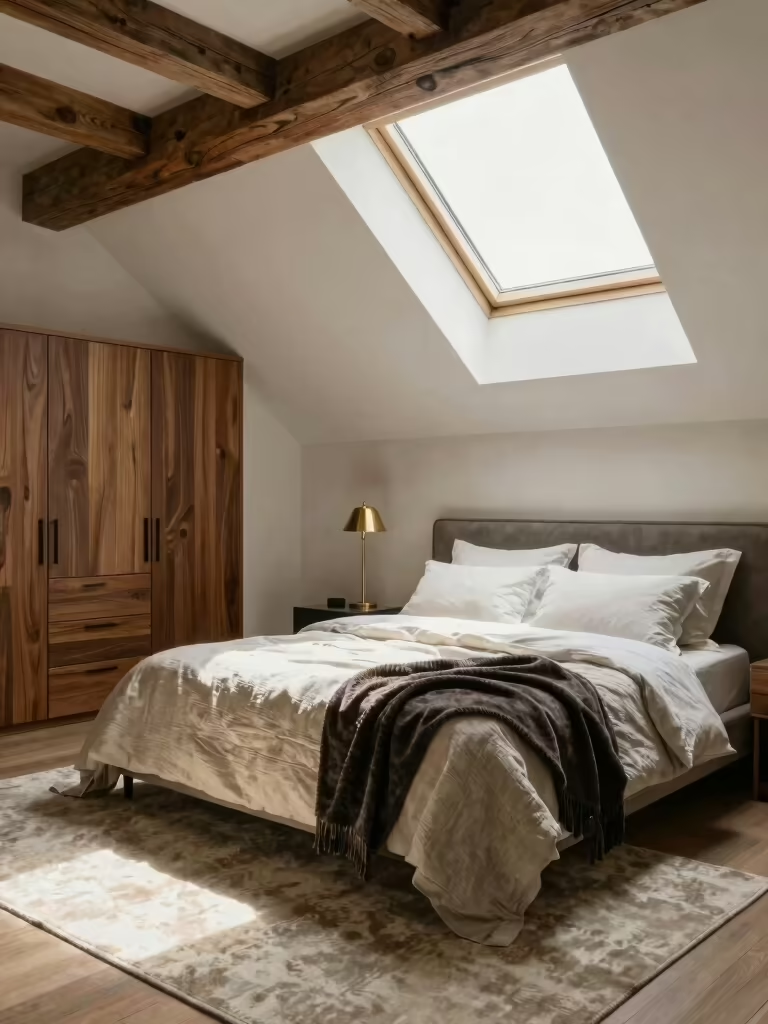
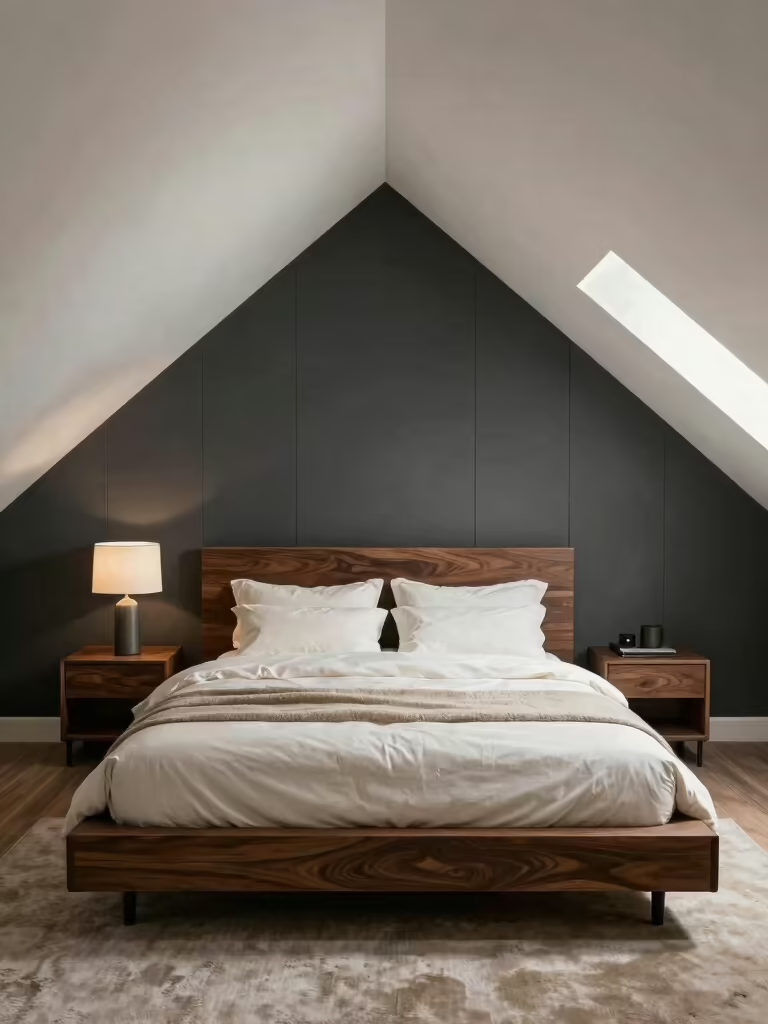
Bed placement is the decision sloped-ceiling dwellers get wrong most, and it’s the easiest to fix. Set the headboard against the peak or the tallest wall so you can sit up without ducking, and let the foot of the bed run into the low slope where headroom stops mattering. That one move turns the lowest, most useless part of the room into the part you sleep under happily.
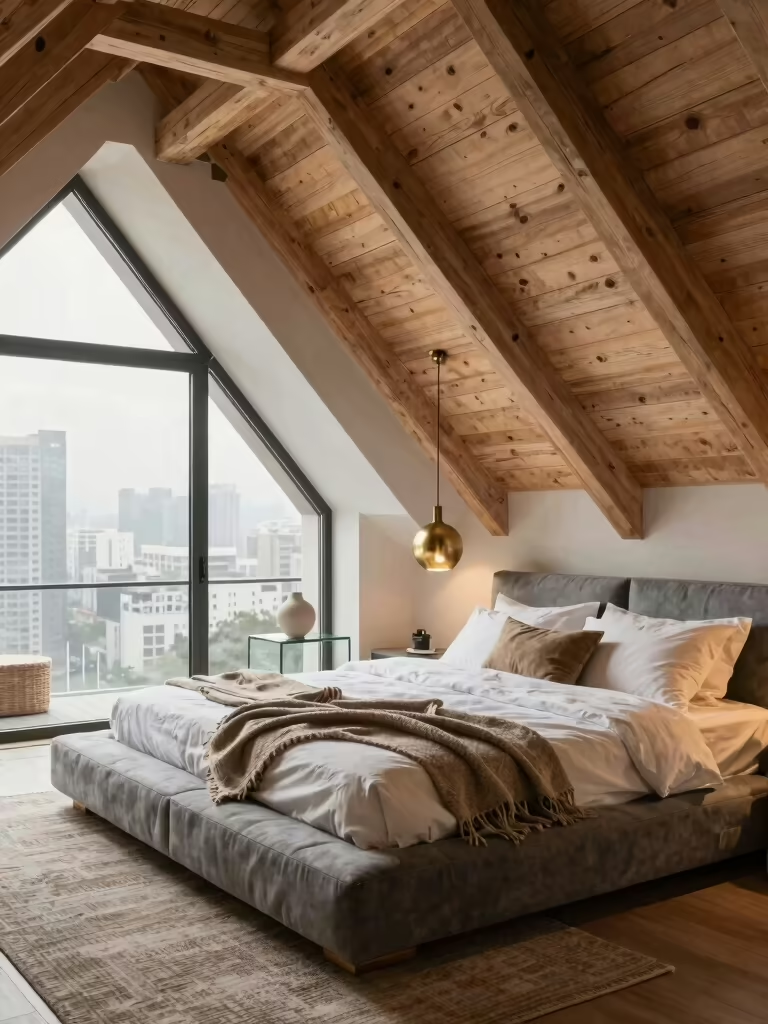
If the room is long and low, running the bed parallel to the slope can create a calm, cabin-like effect that flatters the angle and works with it. Keep the low side clear for getting in and out and for airflow. A low platform frame keeps the whole arrangement open. My [angled-ceiling attic ideas](attic-bedroom-ideas-angled-ceilings-made) sketch out a few placements in detail.
- Headboard to the peak or tallest wall so you sit up with clearance.
- Run the bed’s foot into the low slope, where you only ever lie flat.
- Keep the low side open for access and a little airflow around the bed.
The angle you fight every morning is the same one that makes the room feel like a hideaway at night. Design for your body, and the slope turns from hazard to charm.
Brighten the Attic With Skylights
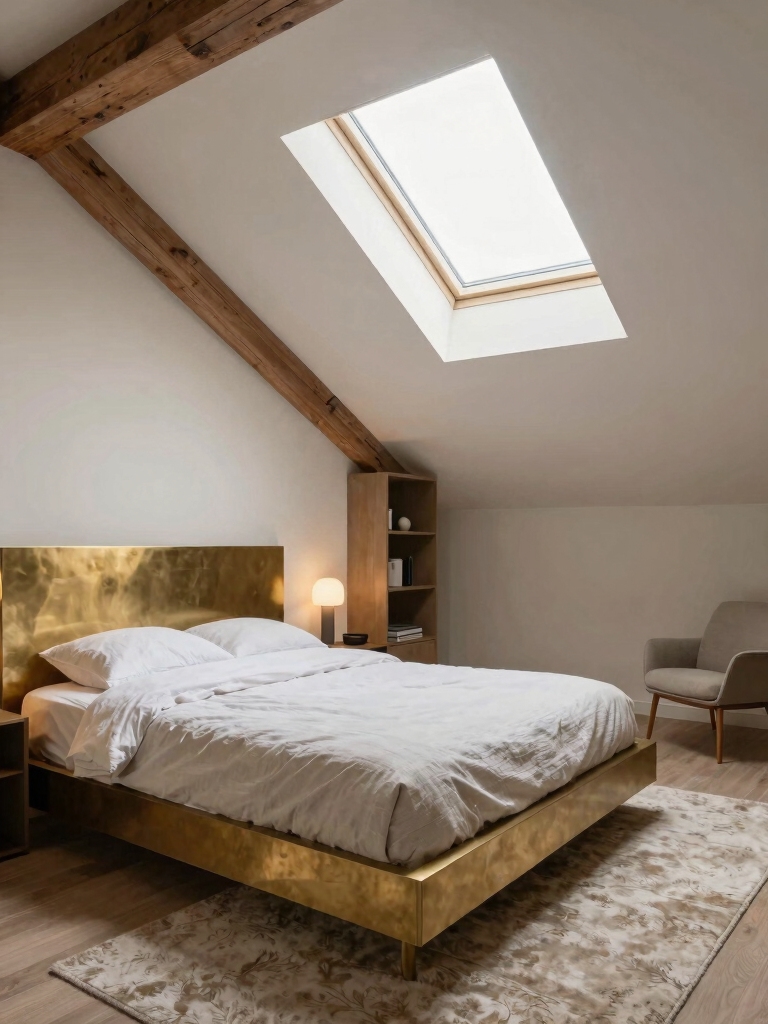
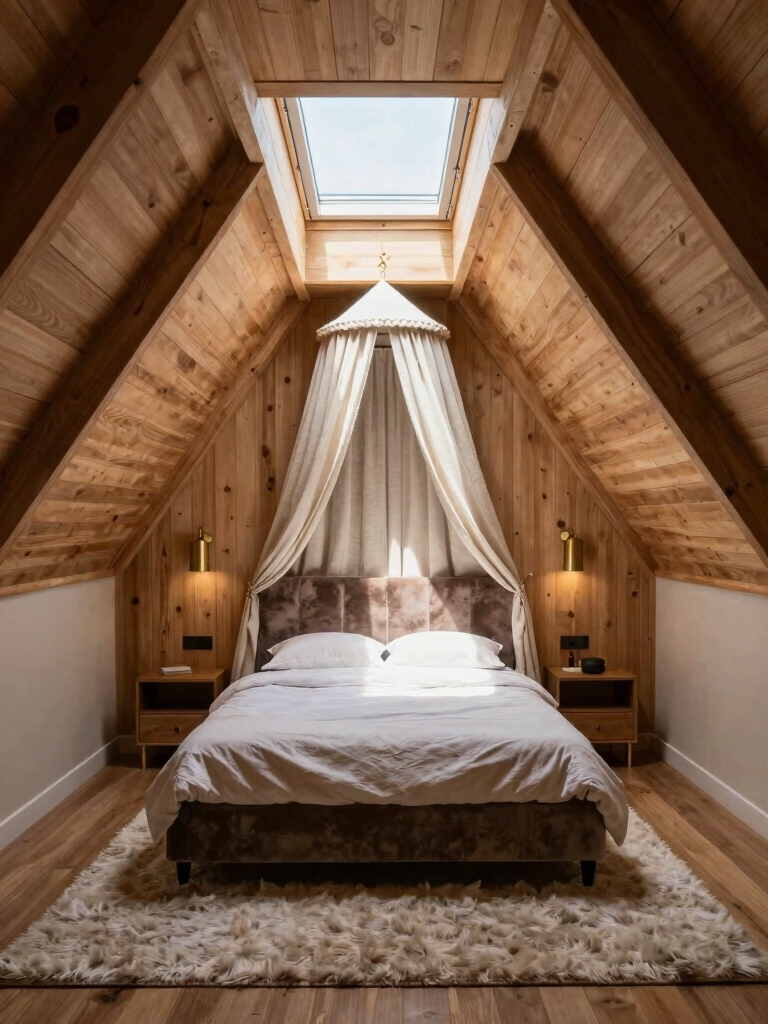
Daylight is what keeps a sloped room from feeling like a cave, and a skylight is the dweller’s best friend up here. Set into the slope, it pours overhead light a wall window can’t, and a vented one lets the hot air that gathers at the peak escape. One clean skylight changes everything. It can flip a whole attic from morning to night, flooding the room at noon and framing a patch of stars once the lamps go low.
Work the light you have harder, too. A mirror angled to catch the skylight or window throws brightness into the dim corners, and keeping the glass clear with only sheer shades lets the daylight do its job. Pale, lightly reflective walls carry it further. For layering the night-time light, see my [bedroom lighting ideas for mood](bedroom-lighting-ideas-mood).
- Add or keep a clean skylight, ideally a vented one to release trapped heat.
- Angle a mirror to bounce skylight or window light into the shadowed corners.
- Use only sheer shades on the glass so privacy never costs you daylight.
Use Color to Make a Sloped Space Feel Bigger
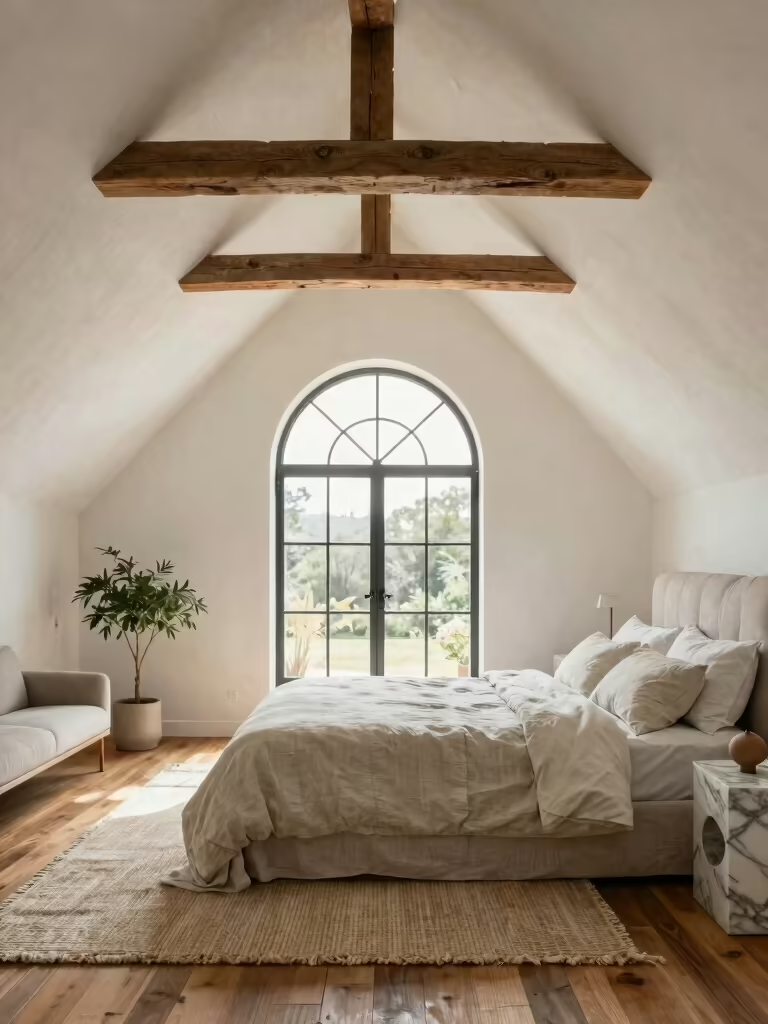
Color is the cheapest livability upgrade a sloped room has, because the right palette makes the angles recede. Paint the walls and the sloped ceiling one pale, continuous tone and the eye loses track of where the wall ends, and the room feels taller than the tape says. Strong contrast at the peak does the opposite, pointing the eye straight at the lowest spot.
Keep the whole shell in one light family and let warmth come from textiles rather than bold wall color. Soft warm white, pale greige, or a gentle warm gray all open the room while staying cozy. One deeper accent on the flat gable wall gives the eye a place to land without shrinking the space.
Match the tone to your light so the room never feels cold. A north-facing attic wants a warmer neutral, while a bright south-facing one can carry a cooler one. Test big swatches at morning and night, since attic light shifts hard by the hour. My [low-ceiling attic ideas](attic-bedroom-ideas-low-ceiling-rock) go deeper on the height-by-color trick.
Multi-Use Furniture for a Tiny Footprint
When the usable floor is small, every piece has to earn its place by doing more than one job. A storage bed that hides drawers, a bench that opens for blankets, a fold-down desk that disappears: each one gives a sloped room a function while saving precious floor. Dwellers who get this right never feel cramped, even in a truly small footprint.
Think convertible where you can. A daybed handles seating and the odd guest, a nesting table tucks away after use, and an ottoman stores while it seats. These flexible pieces let one small loft shift between sleeping, lounging, and working and keeps it feeling open.
Keep the multi-use pieces low and light so they suit the slopes. A bulky convertible sofa fights an attic; a slim, low one belongs there. The aim is furniture that works hard and stays out of your headroom, which is exactly what living under a slope demands. My [hidden-corner attic ideas](attic-bedroom-ideas-maximize) cover squeezing function from every angle.
Noise, Dust, and Daily Comfort Under a Slope
The parts of sloped-ceiling living nobody photographs are the ones dwellers feel most: temperature, sound, and dust. Warm air pools at the peak, so a fan working with a vented skylight keeps summer nights bearable, and light bedding helps when the heat lingers. Soft surfaces, a thick rug and dense curtains, soak up the echo a hard-walled attic throws around.
Stay ahead of the dust that attics gather, especially up on the sloped surfaces and skylight wells out of easy reach. A quick high dusting now and then, plus a regular vacuum of the rug, keeps the room fresh. These small comfort habits are what turn a charming-looking attic into one that’s actually pleasant to live in every single day.
What to Expect Living Under a Slope
Set honest expectations and a sloped room rewards you. You’ll give up some standing space along the low walls, but you gain a cozy, sheltered feel and storage a square room rarely offers. The trade is real, and most dwellers find it more than fair once the layout works with their body instead of against it.
Budget-wise, expect a wide range. Paint, textiles, bins, and a mirror cost little and change the room in a weekend; built-ins, a new skylight, or any structural and insulation work cost more and belong to a licensed pro. Start with the cheap, high-impact livability wins, add the bigger projects over time, and the slope becomes the feature you’d miss in any other room.
Sloped-Ceiling Bedroom Questions, Answered
?Where should the bed go under a sloped ceiling?
Headboard against the peak or tallest wall so you can sit up with clearance, and the foot running into the low slope where you only lie flat. A low platform frame keeps the arrangement open.
?What furniture works best in a sloped room?
Low-profile pieces: a platform bed, slim dressers, floor seating, and multi-use items like a storage bench or fold-down desk. Keep tall pieces on the full-height wall.
?How do I use the low space under the slope?
For anything you don’t stand at: the foot of the bed, a bench, or built-in drawers and cabinets in the eaves. That low triangle is ideal storage, not wasted space.
?How do I brighten a dark sloped attic?
Add or keep a clean skylight, paint walls and slope one pale tone, and angle a mirror to bounce the light. Sheer shades and reflective finishes carry daylight into the corners.
?Are sloped-ceiling bedrooms worth it?
Yes, for most people. You trade some standing room along the low walls for a cozy, sheltered feel and bonus eave storage. Plan around your body and the slope becomes the room’s best feature.
Live With the Slope, Not Against It
A sloped ceiling asks you to plan around your body, and once you do, it gives back more than it takes. Map your headroom, keep the furniture low, fit storage to the angles, place the bed to flatter the slope, and chase the daylight. Those moves turn the rafter you used to bump into the cozy roofline you choose to sleep under.
Save this, start with the one fix your daily routine needs most, and let the slope become the best part of the room.