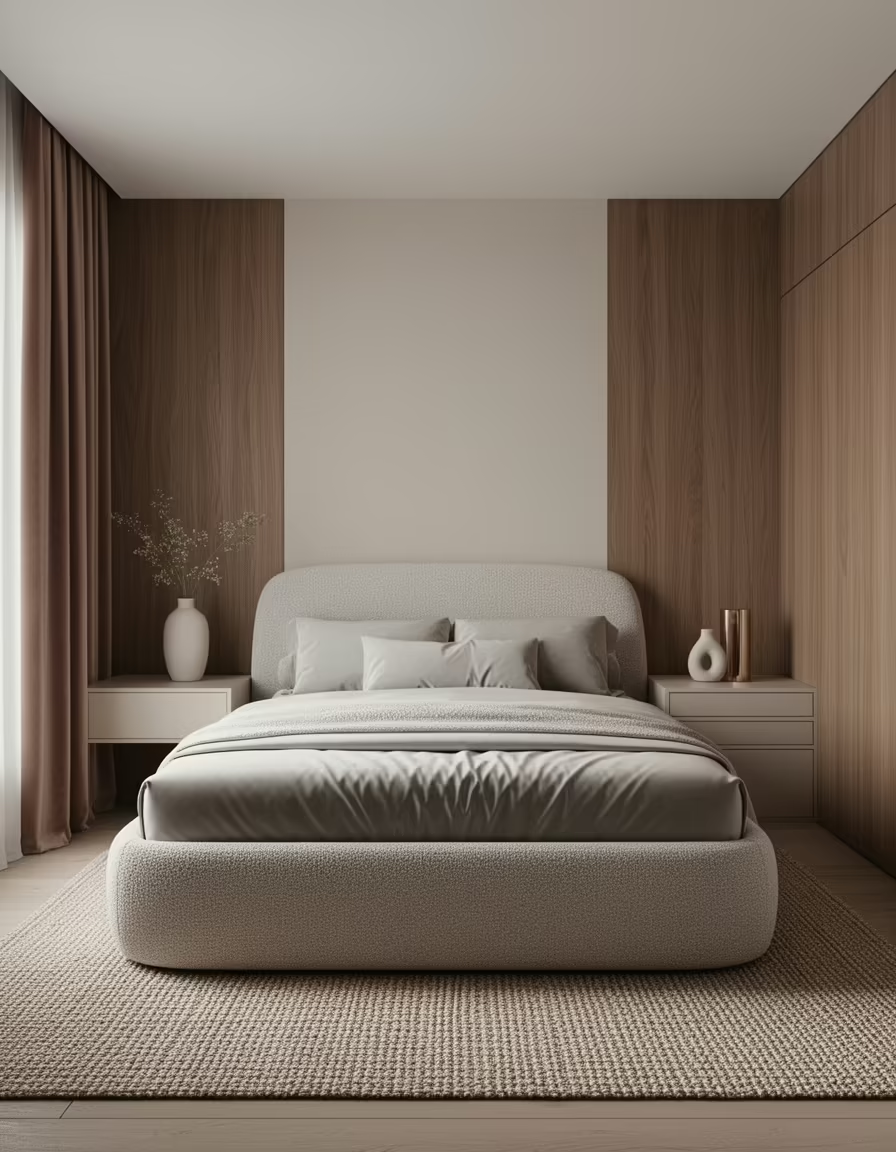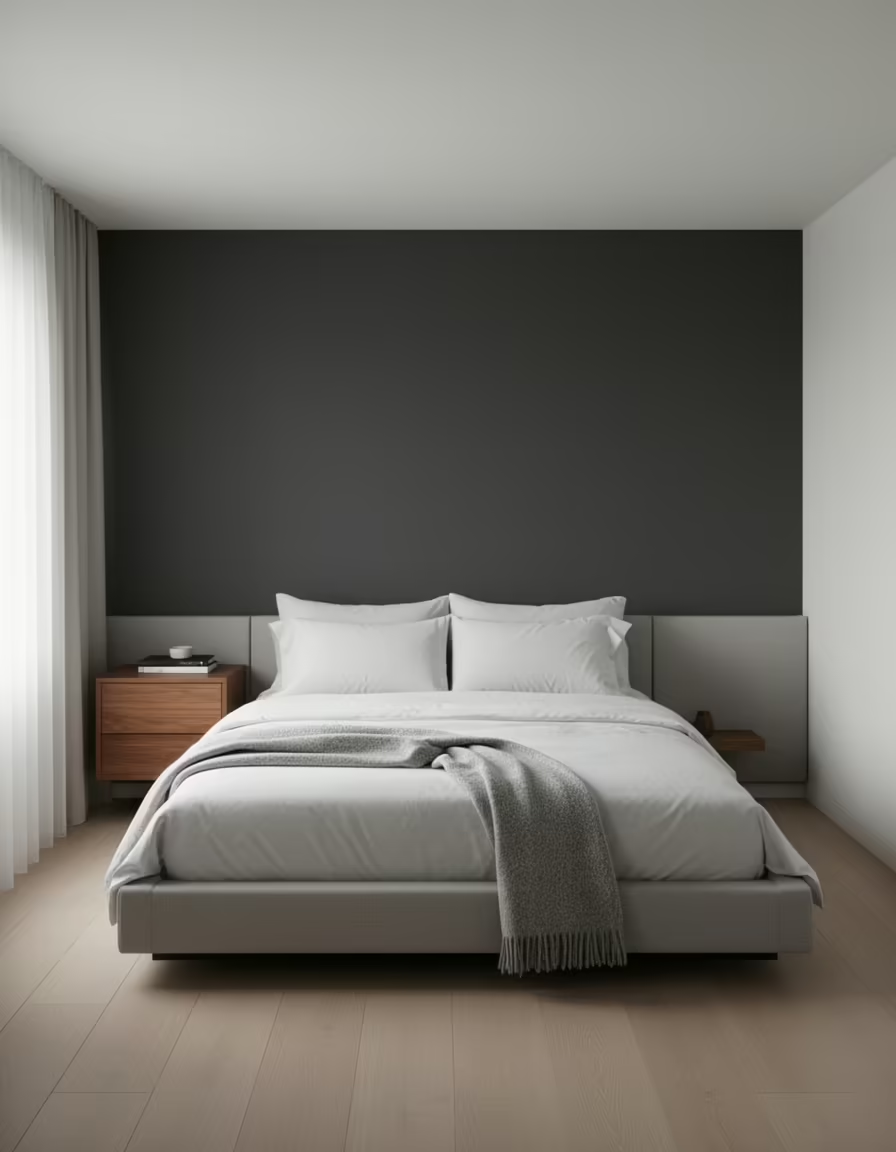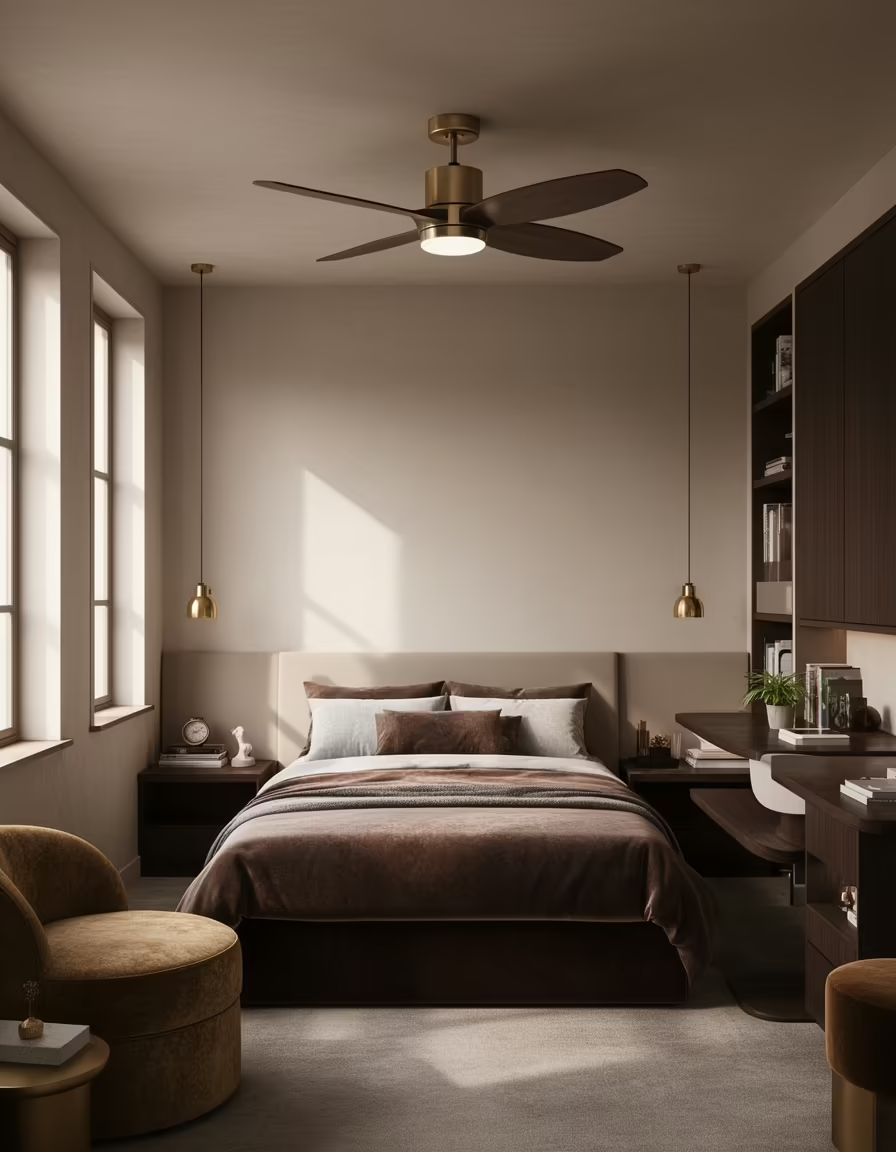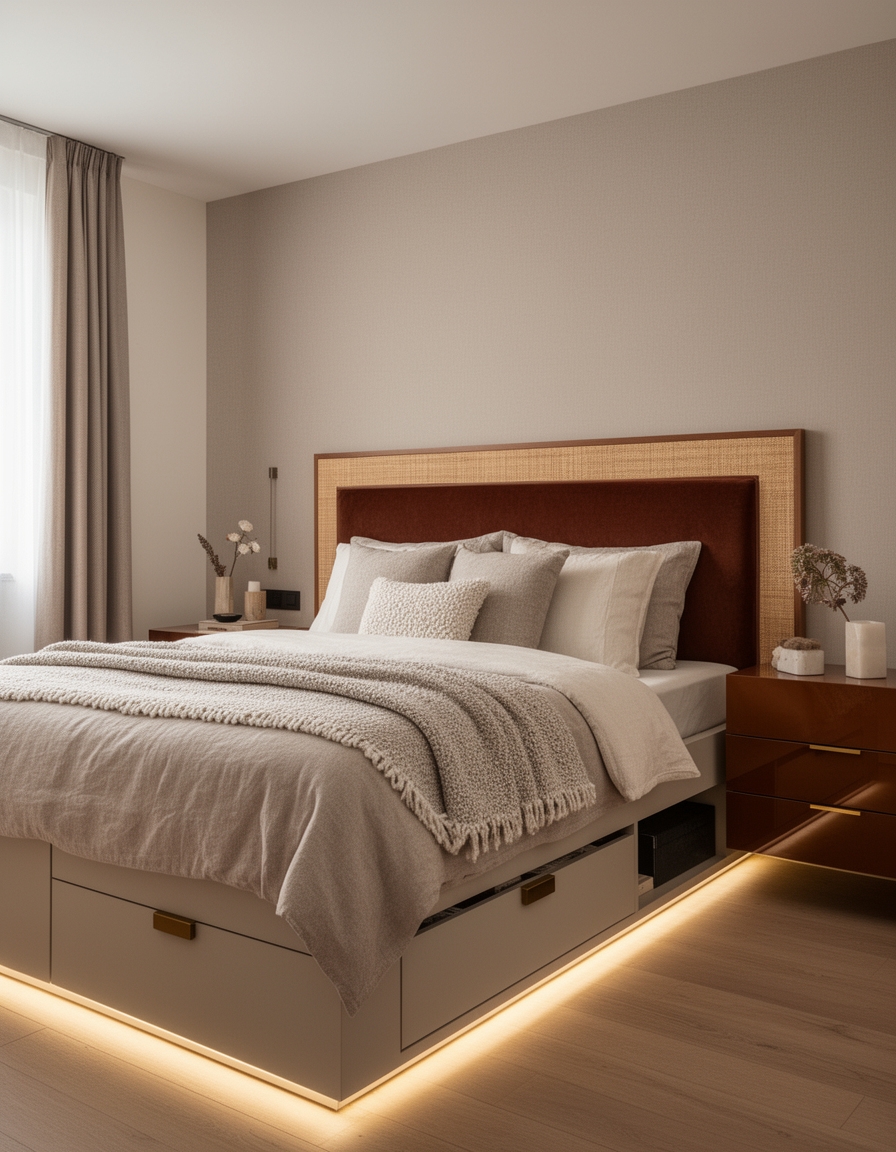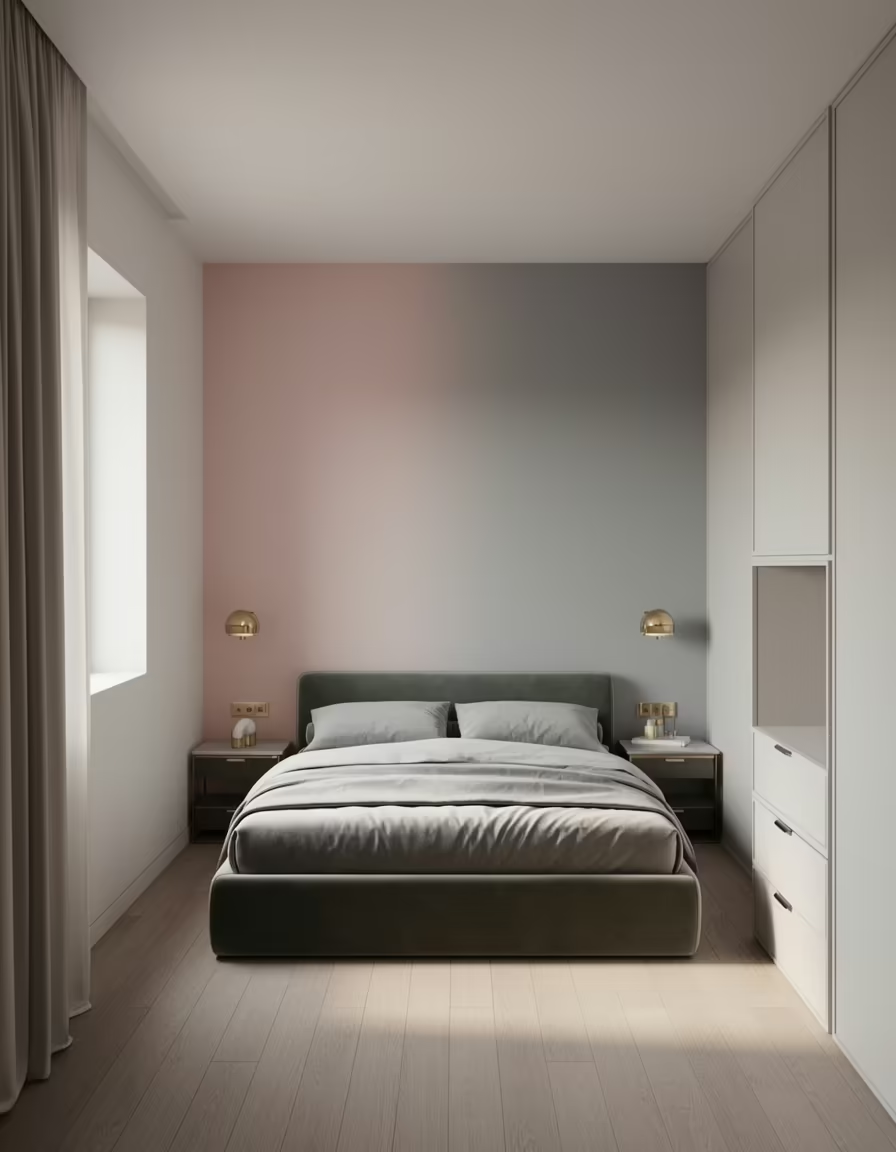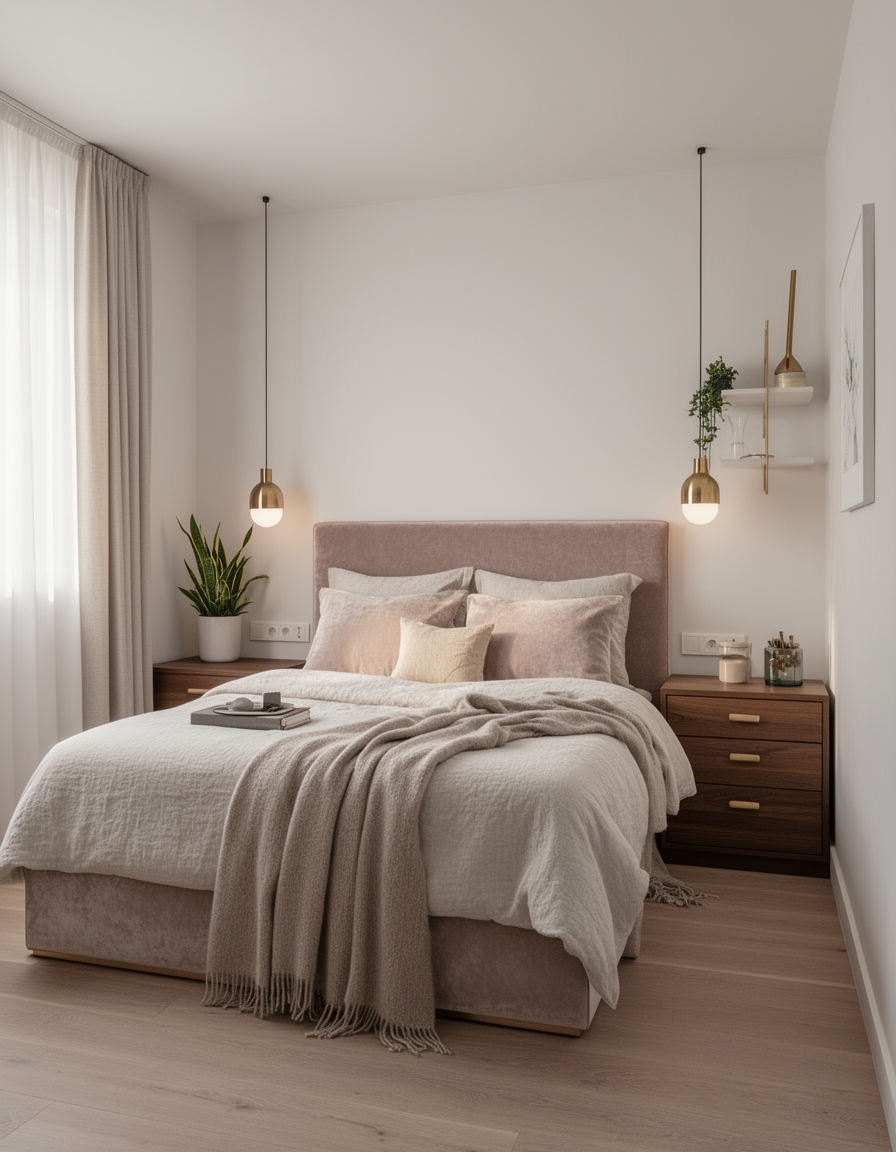

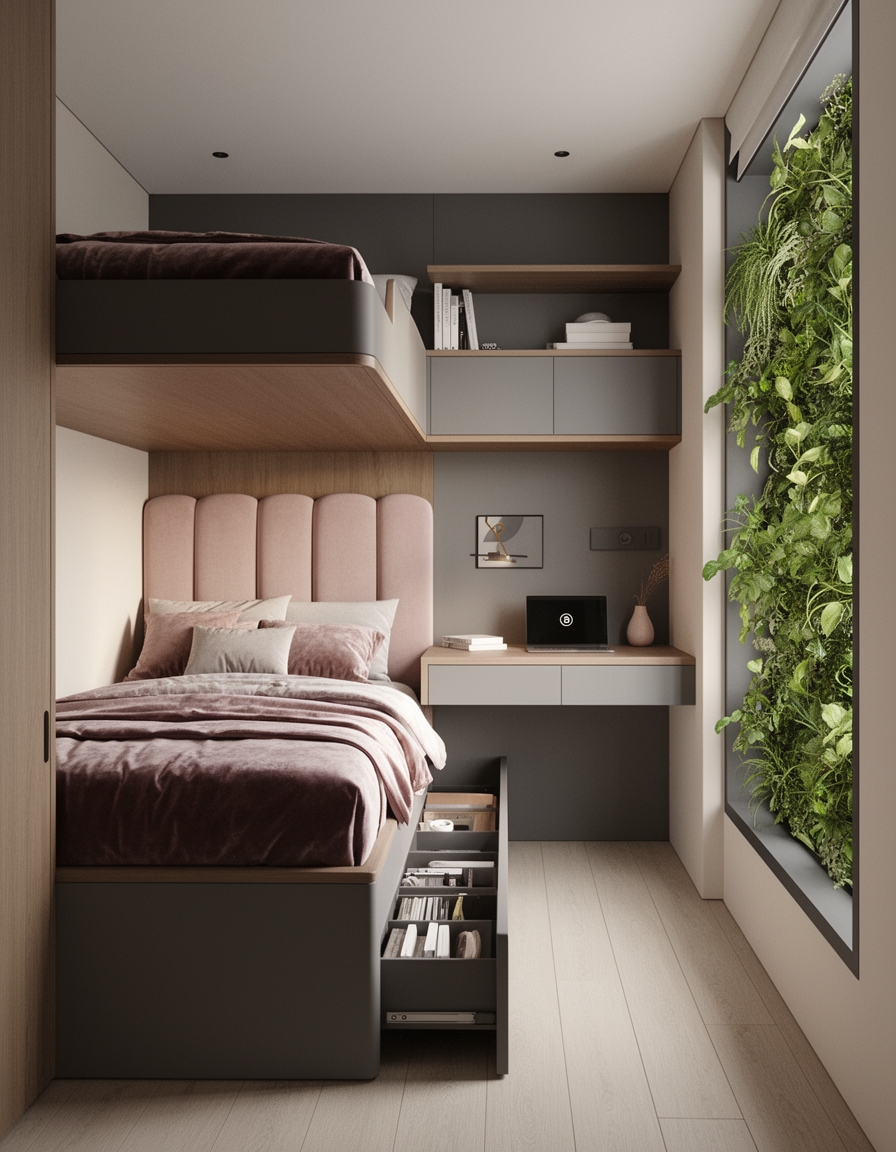
The smallest teen room I ever planned was a 9-by-10 box a family had written off as just somewhere to sleep. Their daughter wanted a desk, a spot for two friends to sit, and a home for a growing pile of art supplies, all in a space that barely held a bed and a dresser.
We got there, and it wasn’t magic. The real trick behind bedroom ideas for small rooms for teens is treating the room as three small zones stacked into one, then using every vertical inch the walls will give you. Personality comes last, on a budget, and it’s the easiest part.
Key Takeaways
What’s the first move in a small teen room? Zone it before you buy anything. Decide where sleep, study, and hangout each live, then shop to fit those three jobs.
Where does storage go when the floor is full? Up the walls and under the bed. Tall slim units and under-bed bins on risers hold the most without stealing standing room.
Cheapest way to make it feel like theirs? Removable decals, one statement piece, and swappable textiles, usually under $50 and totally reversible when taste changes.
Plan a Cozy, Functional Teen Retreat in a Small Room
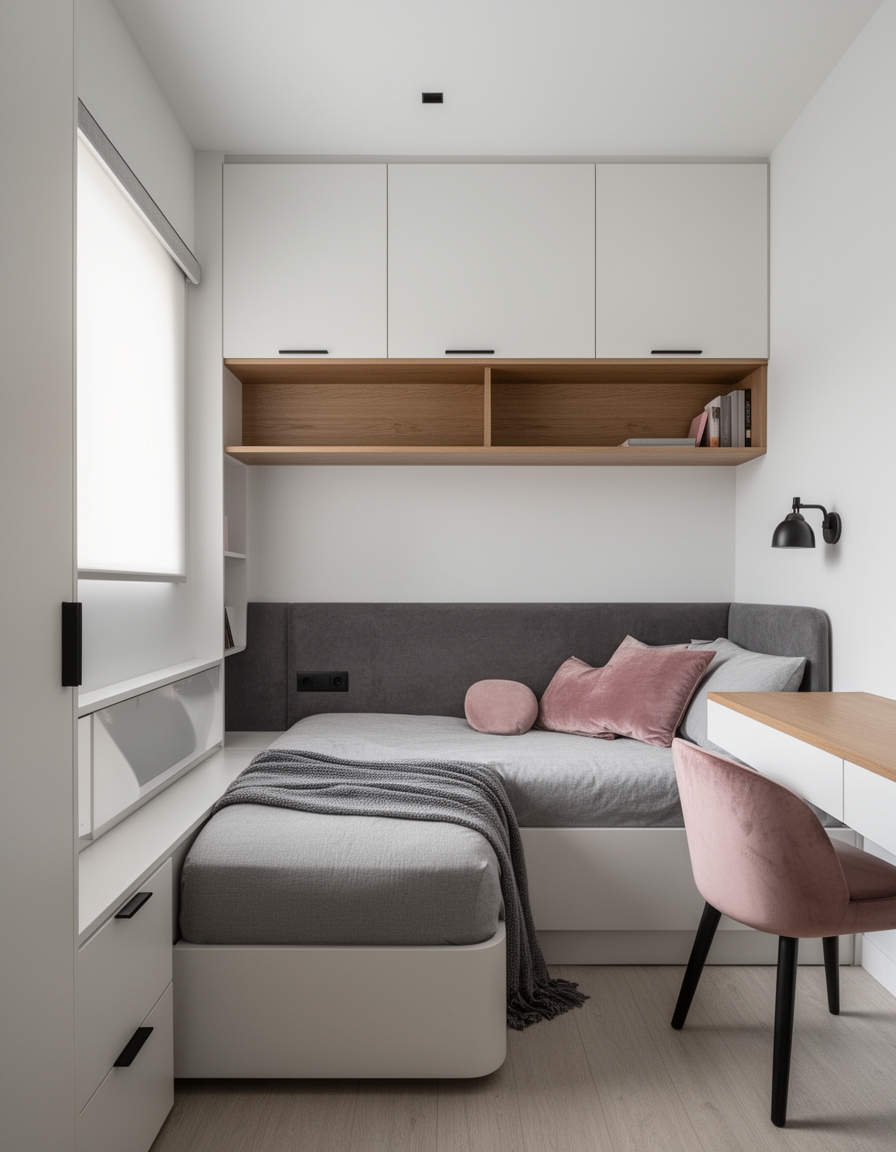
A teen bedroom has to pull triple duty, and that is exactly why a tight one feels stressful before it feels cozy. The fix is to plan the three jobs first, on paper, before a single thing gets ordered. The thing parents always ask me is what to buy, and my answer is always the same: nothing yet, map the room.
Walk the space first. Mark where the bed has to go, where daylight lands, and where the outlets sit. Those three facts decide almost everything else, and they quietly save you from buying a desk that ends up jammed against the only window in the room.
- Give each zone a clear anchor: the bed for sleep, a compact desk for study, a soft seat or floor cushion for hanging out.
- Keep one open path from door to bed so the room never feels blocked, even with friends over.
- Pick a compact bed with built-in drawers so the biggest piece in the room also does the heaviest storage work.
- Sketch it to scale first, the same way you would plan a small-room layout before you spend a dollar.
Maximize Vertical Storage to Free Up the Floor
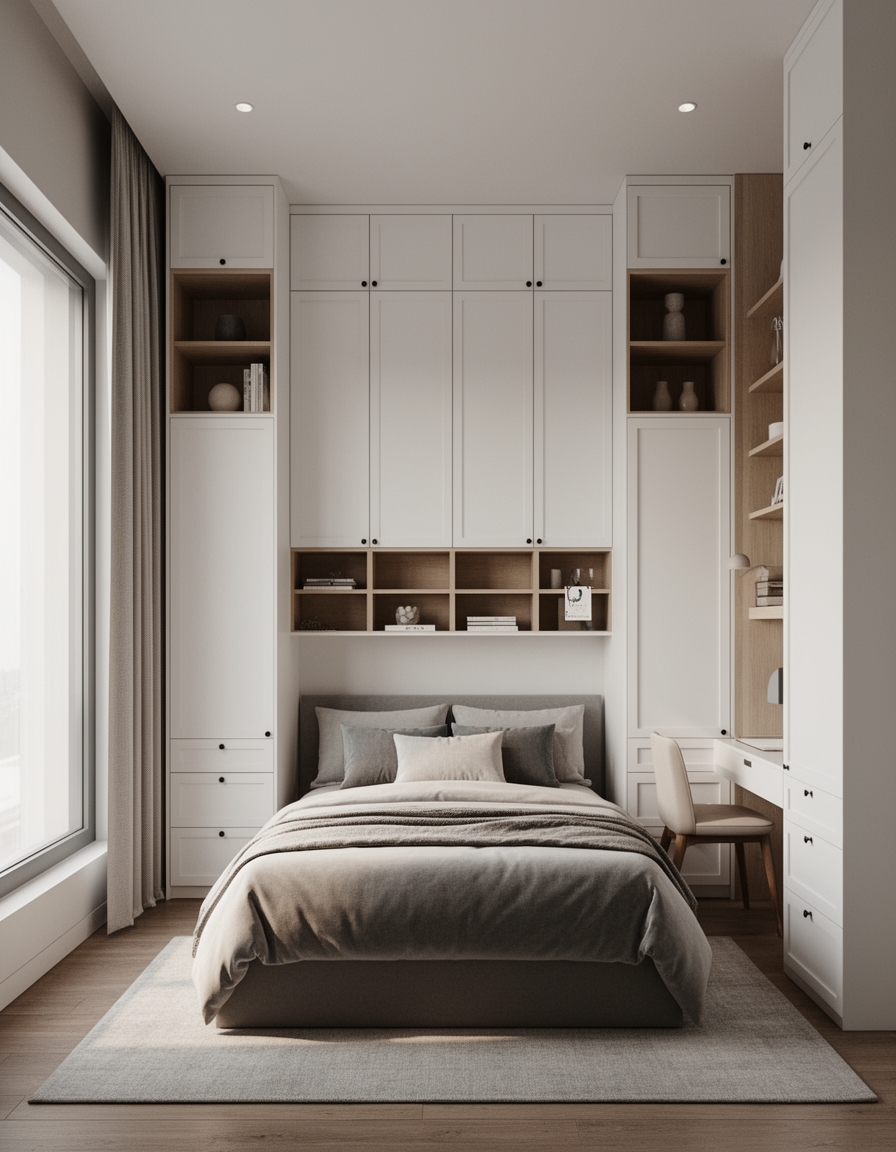
When the floor is spoken for, the walls are where a small teen room earns its keep. I start here every time. Going vertical clears the standing space a teen actually needs, and it turns the dead wall above eye level, the stretch most people forget to claim, into real, usable storage that keeps the floor open for living.
- Run a tall, slim bookcase up toward the ceiling, since a narrow unit stores as much as a low wide one and stretches the wall taller.
- Mount wall cubbies or floating shelves above the desk for books and supplies, keeping the work surface clear.
- Add high hooks behind the door for bags, headphones, and a robe, the one bit of wall almost everyone forgets.
- Use a hanging organizer for shoes or makeup so the closet floor stays open for taller items.
- Group the verticals by zone, study supplies over the desk, so the eye reads order instead of a busy wall.
Two things people assume about small teen rooms that lead them wrong:
❌ Myth: A teen needs a loft bed to save space.
✅ Reality: A loft frees floor space but eats headroom and can feel cramped to sit under. In a low-ceiling room, a standard bed on risers with under-bed bins often holds more and feels less boxed in.
❌ Myth: Bright white walls are the only way to make it bigger.
✅ Reality: Teens can have real color. One bold accent wall with light tones on the rest still reads open, and it actually feels like their room instead of a hotel.
Efficient Under-Bed Storage Solutions That Stay Hidden
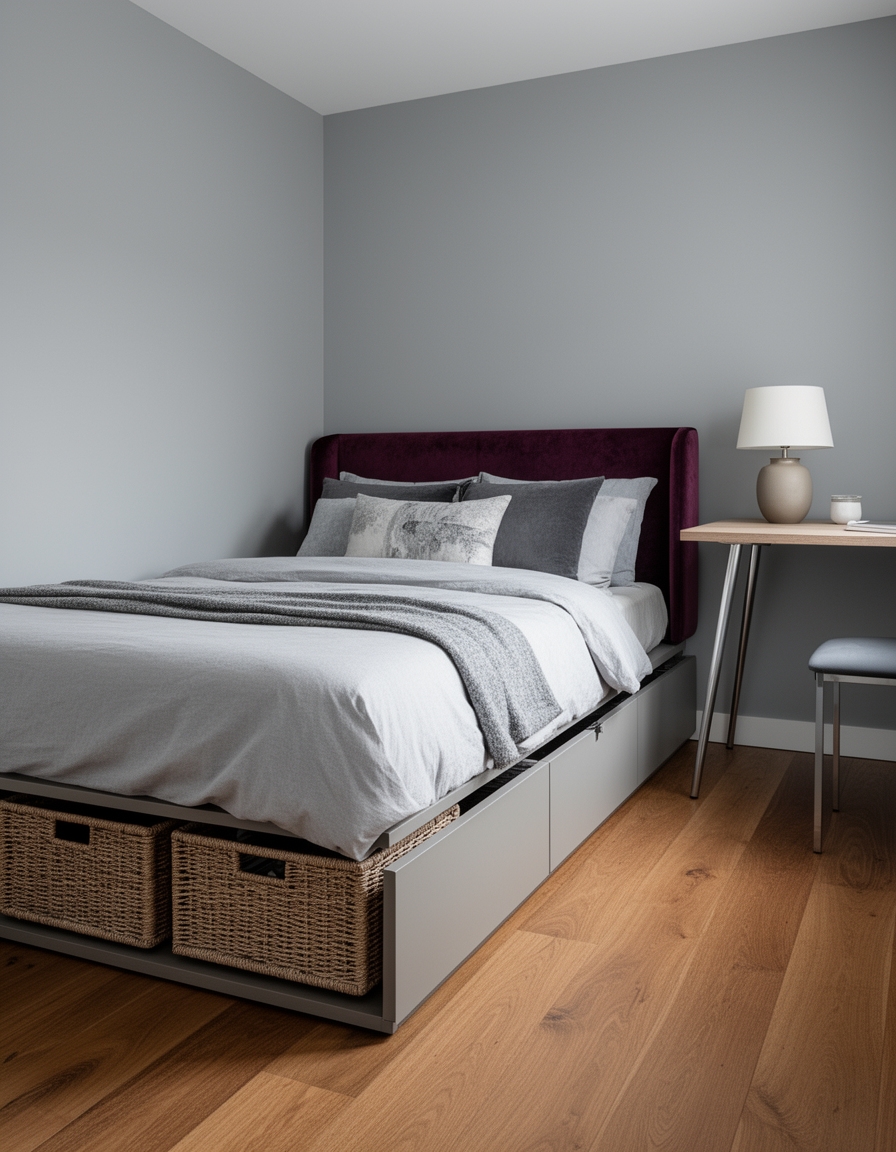
The space under a bed is the largest storage drawer in any small room, and most of it sits empty. I claim it first. A teen room I redid last year gained back a full season of clothes just by treating that gap as serious storage, the kind that swallows winter layers and hands the closet back for everyday clothes.
- Lift the frame on bed risers, about $15 to $25, to open up several inches of extra clearance for taller bins.
- Swap shoved-in cardboard boxes for flat rolling drawers that glide out, so the back of the space stays reachable.
- Store off-season clothes and spare bedding here in labeled zip bags, freeing the closet for everyday pulls.
- Keep one shallow bin for the stuff that always lands on the floor, chargers, sketchbooks, the overflow that has no other home.
A Functional, Organized Hangout That Doubles as a Desk
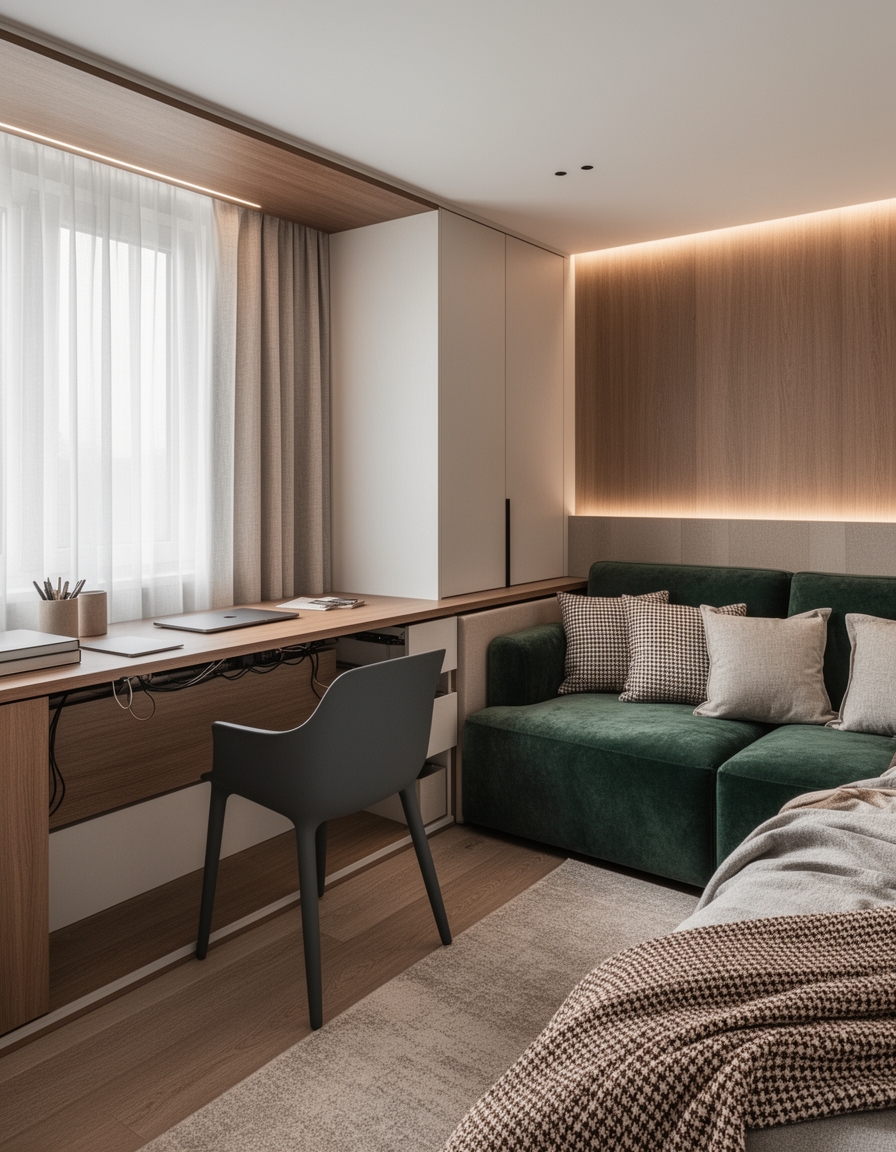
Teens need somewhere to work and somewhere to be social, and a small room rarely has space for both as separate setups. The answer is one spot that flips between the two, and I build this flip-spot into almost every teen room I plan. A desk against the window with a comfy chair becomes a hangout perch the moment the homework closes. It costs nothing extra.
What surprises families is how little this costs. I recommend a floating desk to almost everyone I work with. A floating wall desk runs roughly $60 to $120 and folds flat when friends come over, clearing the floor for a beanbag or two without any permanent change to the room.
- Choose a spill-friendly desk surface so snacks and study can share it without drama.
- Add a slim shelf or pegboard above the desk to keep cords, chargers, and supplies up and out of the way.
- Tuck a floor cushion or folding stool under the desk for instant extra seating that disappears when not in use.
- Mount a power strip with USB ports to the desk leg so devices charge without a tangle across the floor.
Which desk setup fits the room?
🎯Floating wall desk
Best when floor space is tightest. It folds flat against the wall and clears the room for friends in seconds.
🎯Corner desk with shelves above
Best for a dedicated studier. It claims a dead corner and stacks books and supplies overhead, off the work surface.
Versatile Lighting for Study, Mood, and Late Nights
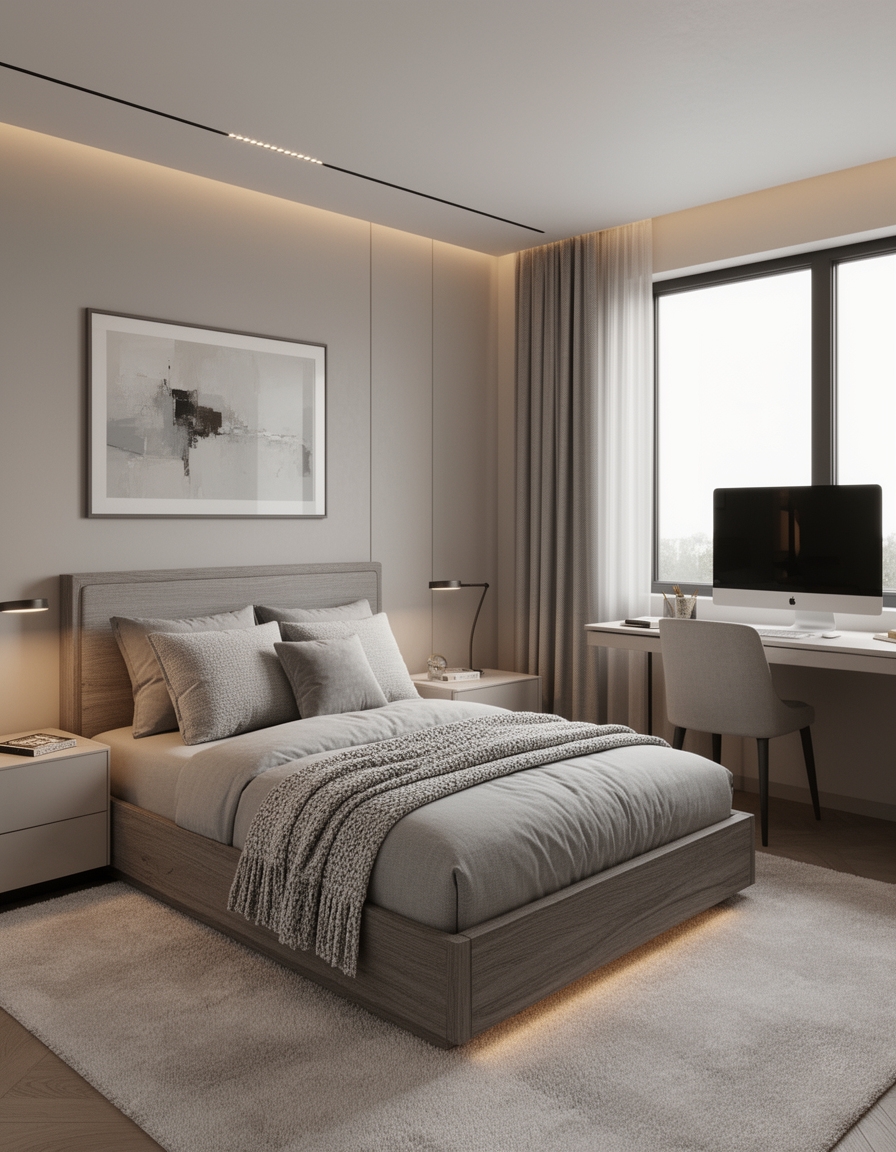
Lighting shapes how a small teen room feels almost as much as the furniture. I never let one overhead bulb run the whole show, since it can’t cover study, chill, and sleep at once. The move is to layer a few small sources so the room shifts moods on demand.
Layer the light for every mood
Start with a focused desk lamp around $12 to $20 for homework, add a warm bedside light for winding down, and run a soft LED strip behind the headboard or shelves for the late-night glow teens love. A small dimmer plug, under $15, lets one light do two jobs.
Warm bulbs around 2700K keep the room cozy at night, while a brighter, cooler lamp at the desk keeps focus sharp during study. For more of this layered approach, these cozy lighting ideas for the perfect glow go further.
Zone Sleep, Study, and Social in One Small Room
Zoning is what makes a small teen room feel like three rooms in one, and you can cue it without building a single wall. A rug under the bed, a lamp over the desk, and a different color on one wall tell the brain where each activity belongs. Those quiet signals do the work that square footage can’t.
Keep the sleep zone calmest, with the softest light and the least clutter, so the room still feels restful once the lights go low. Let the study zone be the brightest and most organized, with everything needed for homework within arm’s reach. The social corner can carry the boldest color and the most personality, since that is the part friends actually see.
When I plan a shared room, I define the zones even harder, with a slim bookshelf or a curtain on a tension rod that gives each person a pocket of their own. A clear boundary, even a soft one, heads off most of the friction that comes with sharing a tight space. Siblings notice the difference fast.
Acoustic Tweaks for a Calmer, Quieter Study Space
Small rooms with hard floors and bare walls bounce sound around, and that echo makes a tight space feel busier and harder to focus in. A few soft surfaces calm the whole room without eating any floor. The cheapest fix is a dense rug under the bed, which absorbs both footsteps and the hum from the rest of the house.
Layer in a fabric headboard or a wall hanging behind the desk to soak up echo right where studying happens, and hang curtains even on a small window to soften the glass. If the room is shared or sits off a noisy hallway, a small white-noise fan around twenty dollars covers the rest and doubles as airflow on warm nights. None of it is permanent, and all of it makes the room feel calmer the minute you walk in.
A Budget Shopping List Worth Trying This Year
Personality is the cheapest part of a teen room and the most fun. I tell every teen to start right here. Almost none of it needs to be permanent, and the pieces below let a teen change their mind in a year without redoing anything, which matters a lot when taste shifts as fast as it does at this age.
Spread fifty to a hundred dollars across a few of these and the room starts to feel like theirs, this season at least. Most of it peels off cleanly when the next phase arrives.
- Peel-and-stick decals or a wall poster, $10 to $25, for color and personality with zero commitment and no wall damage.
- Two swappable throw pillows and a soft rug to add texture and soften the acoustics in a hard-surfaced small room.
- A storage ottoman around $40 to $70 that works as a seat, a footrest, and a hideaway for the overflow at once.
- Fairy lights or an LED strip for the late-night mood teens reliably ask for, cheap and reversible. For more reversible swaps, these DIY budget bedroom ideas are a good next stop.
Small Teen Bedroom Questions, Answered
?How do you fit a desk in a tiny teen bedroom?
Use the wall, not the floor. A floating wall-mounted desk or a narrow corner desk takes up almost no standing room, and a fold-down version disappears entirely when it’s not in use.
?What storage works best when there’s no closet space?
Go vertical and under the bed. A tall slim wardrobe or a clothing rack plus a few under-bed rolling bins on risers will hold a full teen wardrobe without a built-in closet. A wall hook rail handles bags and daily layers.
?How can a teen personalize a small room on a budget?
Lean on reversible pieces: peel-and-stick decals, a poster or two, swappable pillows, and string lights. Fifty dollars spread across those reads as personality without damaging walls or locking in a look they’ll outgrow.
?How do you make a shared small bedroom quieter for studying?
Soften the surfaces and split the zones. A dense rug, a fabric headboard, and curtains absorb echo, while a slim bookshelf or tension-rod curtain between beds gives each person a calmer pocket to focus in.
Start Small, Build the Room Around How They Live
A small teen bedroom comes together when you plan the three zones first, send the storage up the walls and under the bed, then layer in light and personality on a budget. Get the bones right and the room handles homework, friends, and sleep without feeling crammed.
Pick one move to start this week, claiming the under-bed space or mapping the zones, and let the rest follow. Bookmark this so the shopping list is handy the next time you’re standing in a too-small room wondering where to begin.