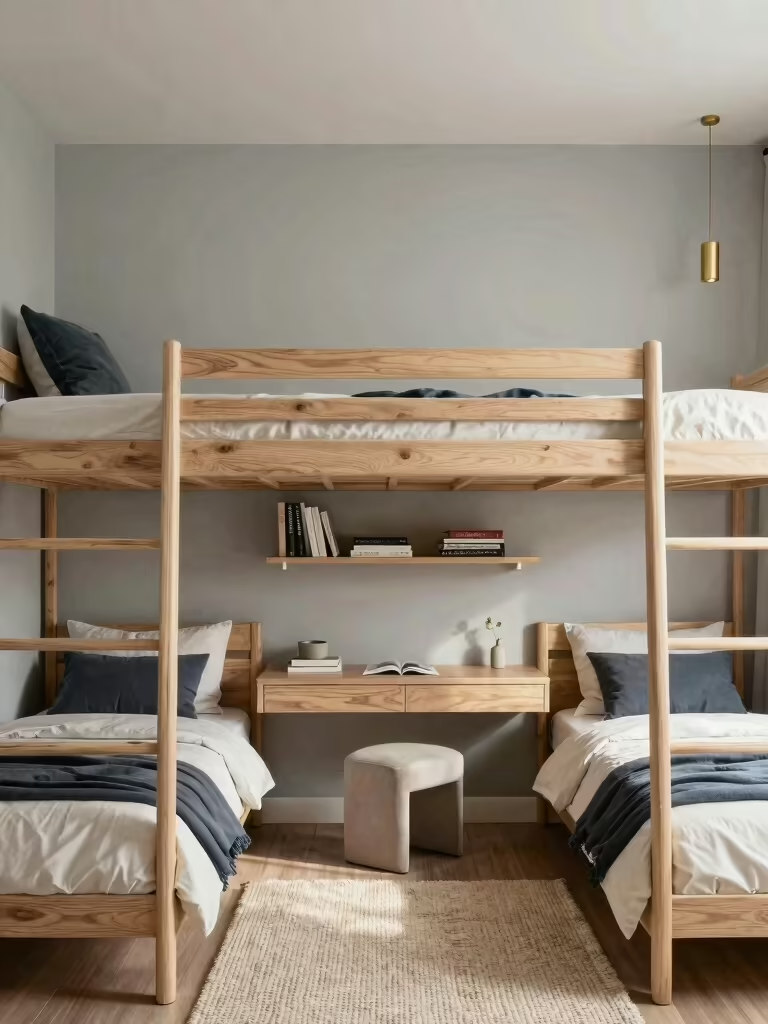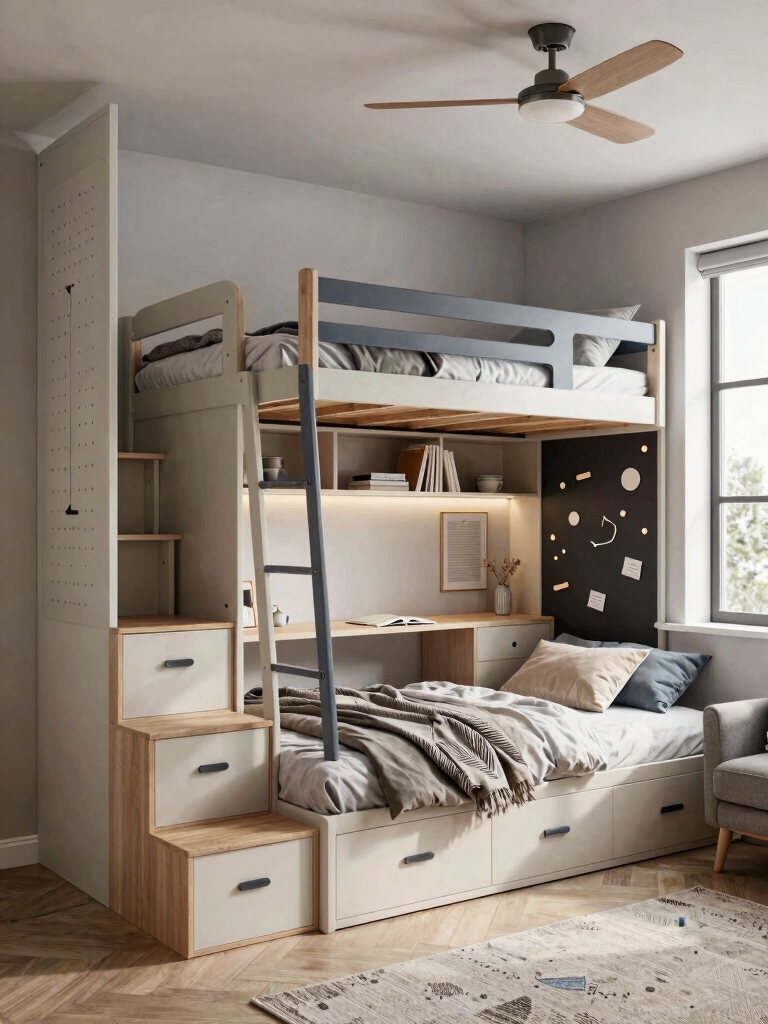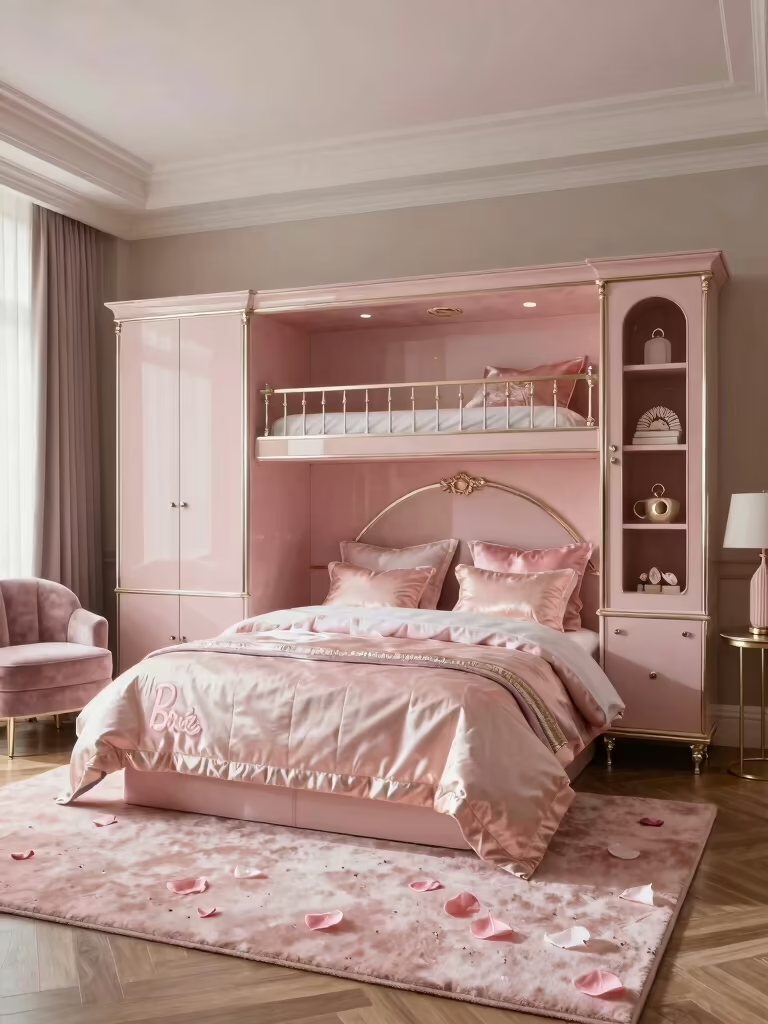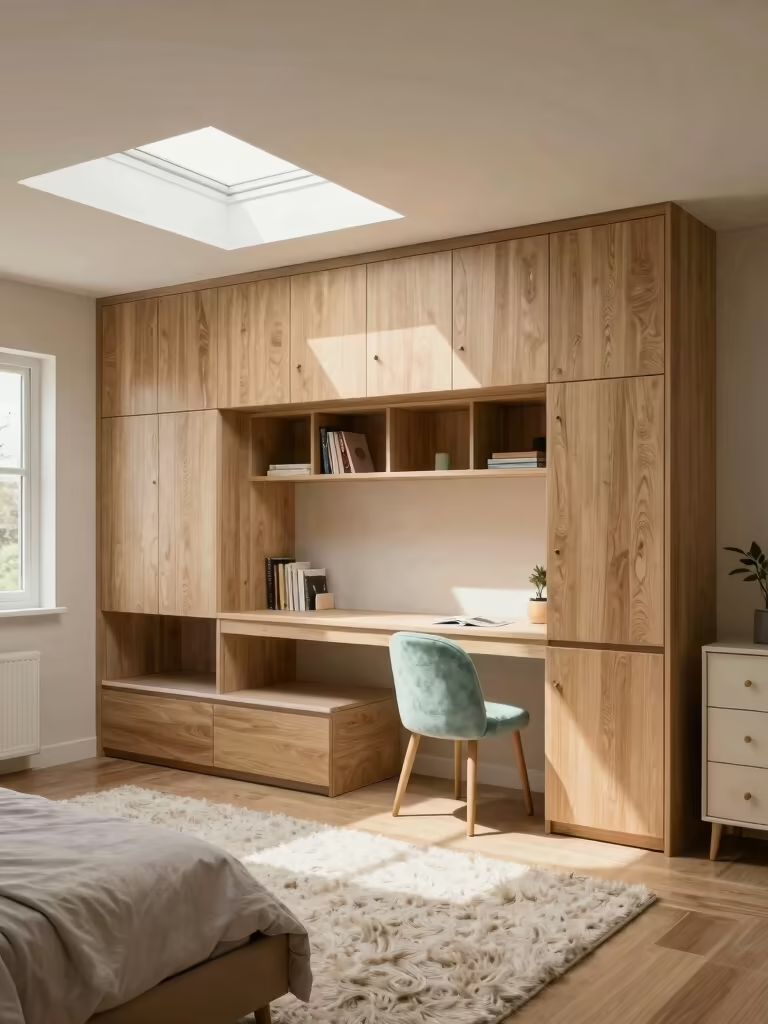
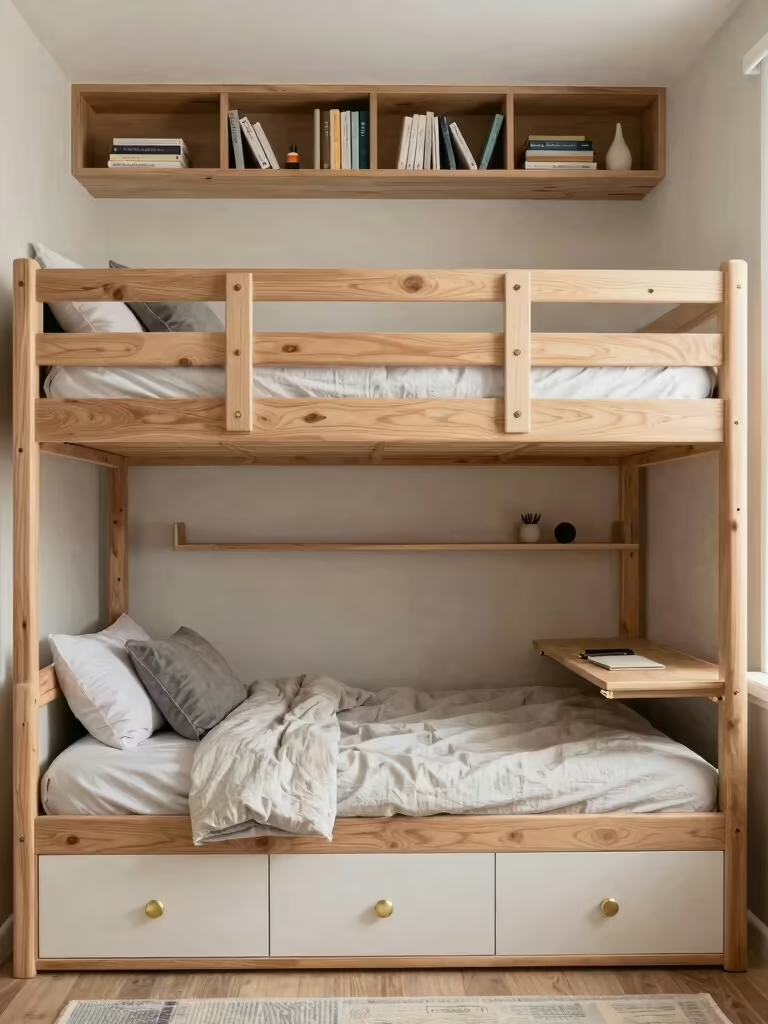
I’ve pulled together 14 smart ideas for a two-kid, small-room setup that keeps floor space open and clutter tucked away. Think bunk or loft beds, dual-purpose desks, hidden storage, and vertical organizers to free up play zones. I favor calm colors with a few bold accents, plus zones for sleep, study, and play. Simple, sturdy furniture and DIY touches keep costs down and personality up. Want more tips that fit your space? You’ll find them here.
Plan a Two-Kid, Small-Room Layout: Key Questions and Criteria
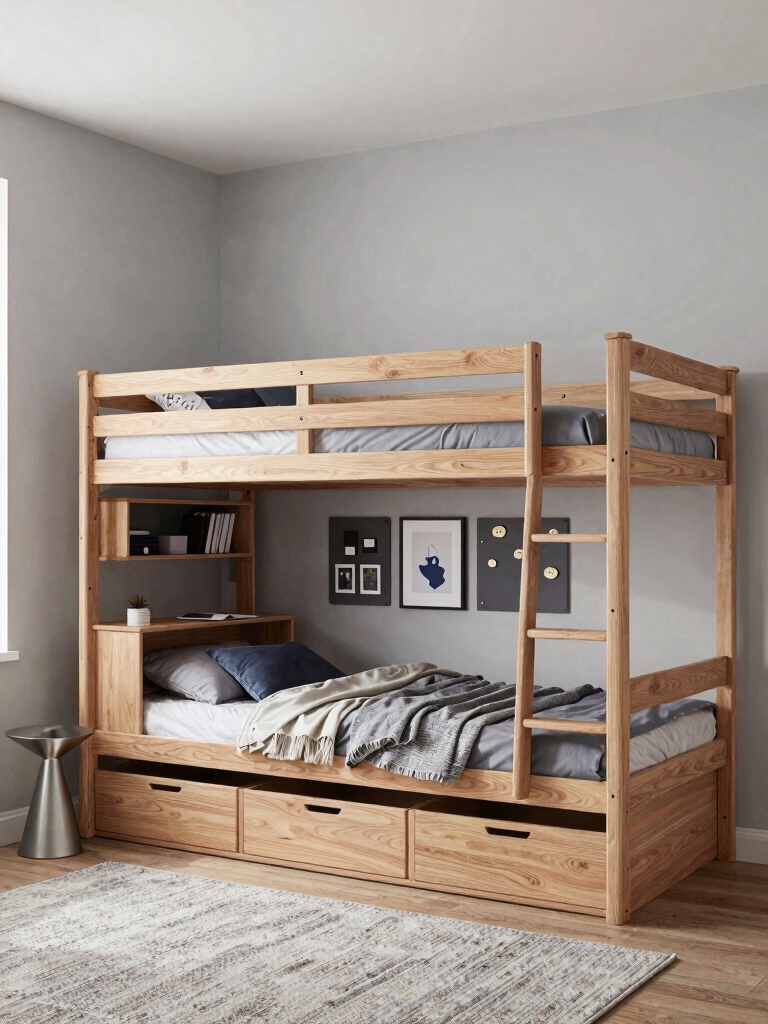
So, where do you start when planning a two-kid, small-room layout? I focus on shared zones, personal nooks, and clear traffic flow.
Ask: who needs desk space, who stories, who play? Criteria matter: storage that hides clutter, flexible zones, safety, and easy maintenance.
I sketch zones, measure walls, and balance personalities with color, texture, and calm. Practical, playful, achievable.
Consider renter-friendly solutions like temporary shelving and modular furniture to maximize space without permanent changes for clever bedroom solutions.
Bunk and Loft Options That Maximize Floor Space
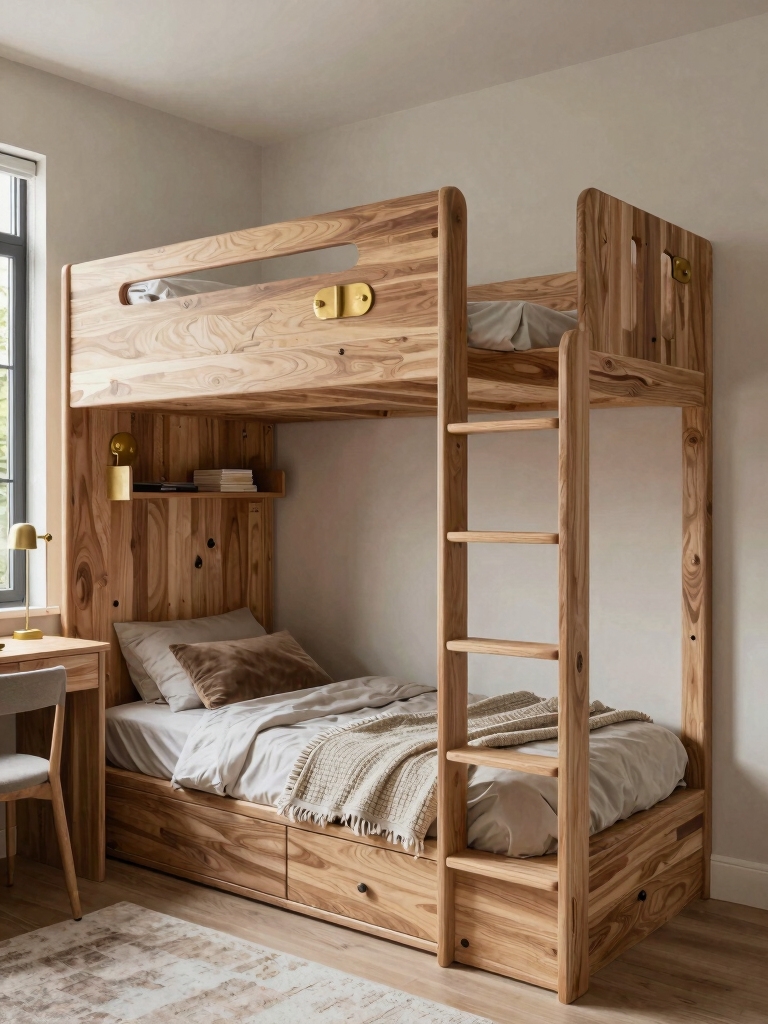
Bunk and loft options can dramatically free up floor space without cramping a kid’s personality.
I’ll show you simple layouts: low bunk beds for open under-sleeping room, lofts with desk or play area beneath, and ladder-free stairs for safety.
Choose neutral finishes, maximize vertical storage, and keep circulation clear.
Space-saving design remains playful, practical, and surprisingly cozy.
You’ll love the room it creates.
Incorporating creative space-saving ideas can transform even the smallest bedroom into a functional and fun environment for kids.
Dual-Purpose Furniture That Hides Clutter and Frees Space
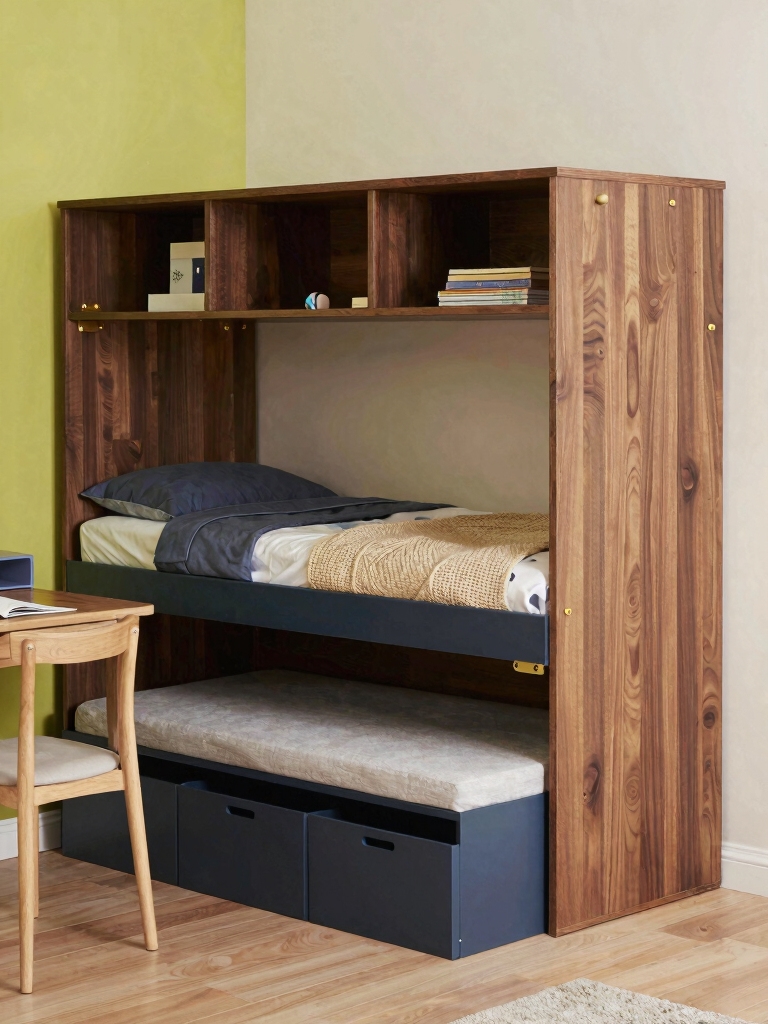
Now, carrying that space-saving mindset from bunk and loft layouts, let’s talk about dual-purpose furniture that hides clutter and frees space.
I love desks with hidden compartments, ottomans that store toys, and beds with built-in drawers.
These pieces streamline rooms, reduce mess, and spark imagination.
Quick swaps, clever silhouettes, and approachable prices make clutter vanish without sacrificing charm or play.
Incorporating clever storage solutions can transform even the smallest bedrooms into organized, functional spaces.
Color and Pattern Tricks to Make a Room Feel Larger
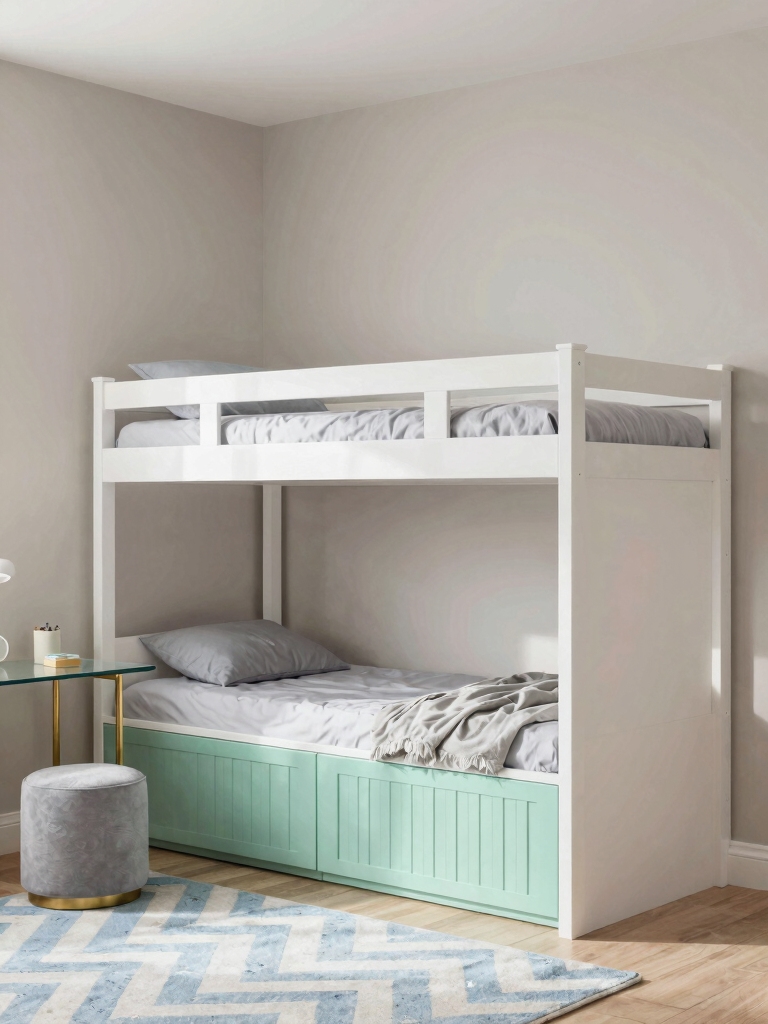
Color and pattern tricks can make a small kids’ room feel bigger without losing personality.
I choose light walls and a few bold accents to guide the eye upward, plus rugs that echo furniture lines.
We’ll lean on simple patterns—stripes, chevrons, subtle florals—sparingly, so the space breathes.
Confident contrasts and consistent repeats create cohesion and perceived spaciousness, effortlessly playful.
Incorporating cozy bedroom ideas that maximize space and style ensures the room remains both functional and inviting with smart storage solutions.
Zone the Room: Sleep, Study, and Play Areas
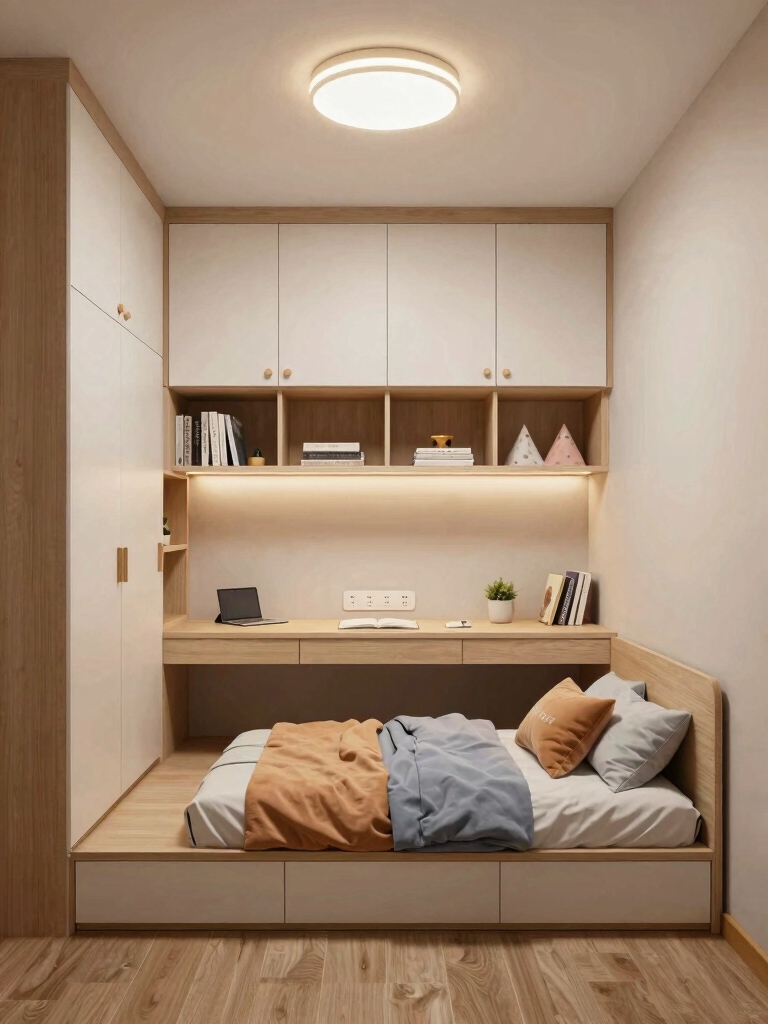
As we chapter-divide the room, I’ll show you how to carve out sleep, study, and play zones without clutter.
I start by placing a low bed with a sheer curtain so dreams breathe, a compact desk tucked near natural light for focus, and a soft rug for imagination.
Zone markers guide activities, keeping traffic smooth and space calm.
Incorporating creative small bedroom ideas can maximize every inch of the space while keeping it fun and functional.
Smart Storage That Fits a Two-Kid, Tiny Room
I’ll show you how built-in twin storage can keep a two-kid room neat without stealing floor space.
We’ll also tap into vertical space with clever organizers that grow as they do.
Let’s mix practical zones with playful touches so every item has a home and every kid has room to dream.
Incorporating space saving ideas can transform even the smallest room into a functional and fun bedroom for kids.
Built-In Twin Storage
Two built-in twin storage systems can be a lifesaver in a two-kid, tiny room, giving each child a personal closet and a shared under-bed drawer stack that stays out of the way.
I design them to blend with furniture, maximize vertical space, and keep everyday items accessible.
Practical, sturdy, and flexible, these solutions grow with clutter challenges and tiny triumphs alike.
Vertical Space Maximizers
Vertical space is a goldmine in a two-kid, tiny room, and I love turning awkward nooks into smart storage that kids can actually use.
I install wall-mounted shelves, hanging organizers, and bunk-adjacent drawers to keep toys out of the floor.
Clear bins with labels, magnetic strips, and accessible hooks make daily tidying quick, simple, and surprisingly fun for everyone.
Lighting Ideas That Brighten Without Crowding
I’ll share simple ways to brighten a small kids’ room without making it feel crowded, like using layered ambient lighting and compact, space-saving fixtures.
Think soft under-bed lamps, wall sconces, and ceiling light that spreads evenly without taking up floor space.
Let’s keep the glow balanced, so clutter stays out of sight and play stays in the spotlight.
Incorporating smart storage solutions can further enhance the sense of openness by minimizing visible clutter.
Brighten Without Cluttering
When a small kids’ room feels bright and open, you’ll notice it’s easier to play, study, and sleep in.
I keep lighting purposeful, not busy: install a slim ceiling fixture, choose a bright white bulb, and add under-shelf LEDs for task zones.
Use reflective surfaces and simple curtains to amplify glow without crowding.
Practical, playful, clutter-free brightness proves kid-friendly.
Layered Ambient Lighting
I mix warm ceiling glow with a gentle bedside lamp and a flexible strip for corners, so the room feels cozy yet open.
You get mood shifts for story time, homework, and wind-down, without a single corded clutter sight.
Simple, thoughtful, playful practicality.
Space-Saving Fixtures
I’ll use compact, layered lighting—under-shelf LEDs, wall-mounted sconces, and tethered pendants—so corners stay open. You’ll flip a switch and feel cozy, not crowded.
I favor dimmable options, easy installs, and playful colors that spark imagination without clutter. Bright, efficient, and kid-friendly lighting, solved.
Personalizing on a Budget for Two Kids
Creating a cozy, personalized space for two kids on a budget starts with simple, thoughtful choices that feel special every day.
I mix DIY decor with practical storage, swapping out pillows and throws seasonally, and I reuse small furniture pieces to create distinct zones.
Personal touches—color, photos, and handmade banners—make them both feel seen without breaking the bank.
Incorporating creative storage solutions helps maximize every inch of the room efficiently.
Safe, Age-Appropriate Layouts That Grow With Kids
I’ve learned that a cozy, budget-friendly setup can still stay safe and grow with kids, so I’m focusing on layouts that age with curiosity and changing needs.
I prioritize quiet zones and flexible furniture, so play areas evolve into study nooks without clutter.
Built-in storage, low beds, and adjustable desks keep safety first while inviting imagination to thrive.
Incorporating harmony in shared bedrooms helps maintain peace and balance as kids share their space.
Quick, Affordable DIY Accents You Can Tackle This Weekend
I’m sharing quick weekend projects, budget-friendly decor tricks, and space-saving DIY hacks you can tackle now to refresh a small kids’ room.
This is all about simple, practical ideas that give you big impact without blowing your budget.
Let’s jump in and pick one project you can start this weekend that fits your space and a smile.
Creative kids bedroom designs often incorporate personalized decor to reflect each child’s unique style and interests.
Quick Weekend Projects
This weekend, you can transform a small kid’s room with a few quick, affordable DIY accents that make a big impact.
I’ll guide you to simple projects that spark joy without clutter. I’m talking rapid upgrades like wall decals, magnetic boards, or repainting a dresser.
You’ll finish with a refreshed space that feels intentional, playful, and wonderfully practical.
Let’s start together.
Budget-Friendly Decor Tricks
I’ll show simple, cheerful accents you can DIY tonight or tomorrow. Think removable wall decals, washi tape gallery stripes, upcycled jar lanterns, and cozy textiles from thrifted finds.
Quick steps, clear materials, and safety first—so you feel confident, excited, and ready to play within a neat, organized space.
Space-Saving DIY Hacks
Small rooms don’t have to feel cramped; with a few space-saving DIYs, you can turn every inch into a practical play zone.
I’ll show quick, affordable accents you can tackle this weekend—no fancy tools needed. Think wall-mounted shelves, magnetic boards, collapsible organizers, and hidden storage under beds.
I keep ideas simple, sturdy, and kid-friendly—so your space stays flexible and fun.
A Practical Furnishing Checklist for a Two-Kid Small Room
When you’re furnishing a two-kid small room, a practical checklist keeps chaos at bay and turns tight spaces into cozy zones kids actually love.
I’d start with a shared high/low bed to maximize floor area, then add modular storage, a compact desk, and calming colors.
Prioritize durable, washable fabrics, safety, and clear zones so play, study, and sleep flourish together.
Case Studies: Real Two-Kid Small-Room Layouts
Real rooms tell real stories: I’ve watched two kids share a compact space become organized, playful, and surprisingly calm.
In these layouts, clever bunks, sliding panels, and zoned desks turned chaos into collaboration. I’ve seen color blocks cue chores, tucked shelves hide clutter, and bright zones spark imagination.
Small, intentional design proves: thoughtful spaces nurture big kid vibes without losing coziness.
Maintenance and Rotation to Keep the Room Feeling Roomy
After seeing how two kids can share a compact space with clever bunks and hidden storage, I’ve learned that keeping that feeling of roomy calm isn’t a one-and-done fix.
I suggest a weekly reset: quick sorting, rotating toys, and rotating cushions for variety.
Store low-need items out of sight, label bins, and invite them to reclaim space together—it stays fresh, doable, and cheerful.
Planning for the Future: Scalable Changes as Kids Grow
As kids grow, our shared space should flex with them, not fight their pace.
So I plan for scalable changes that stay practical today and easy tomorrow. I’ll start with modular furniture, height-adjustable desks, and clever storage that adapts to new interests.
We prioritize durable finishes, comfy zones, and play areas that double as study nooks, ensuring growth feels natural, not disruptive.
Conclusion
Here’s the thing: a two-kid room doesn’t have to feel crowded. When I mapped out smart zones and multi‑use furniture, I saw floor space double in usefulness. Fun fact: kids’ rooms with clearly defined sleep, study, and play zones report up to 40% more independent tidy time. Start with a plan, add a bunk or loft, and tuck clutter behind doors or under beds. With a little cleverness, small rooms become big on personality.