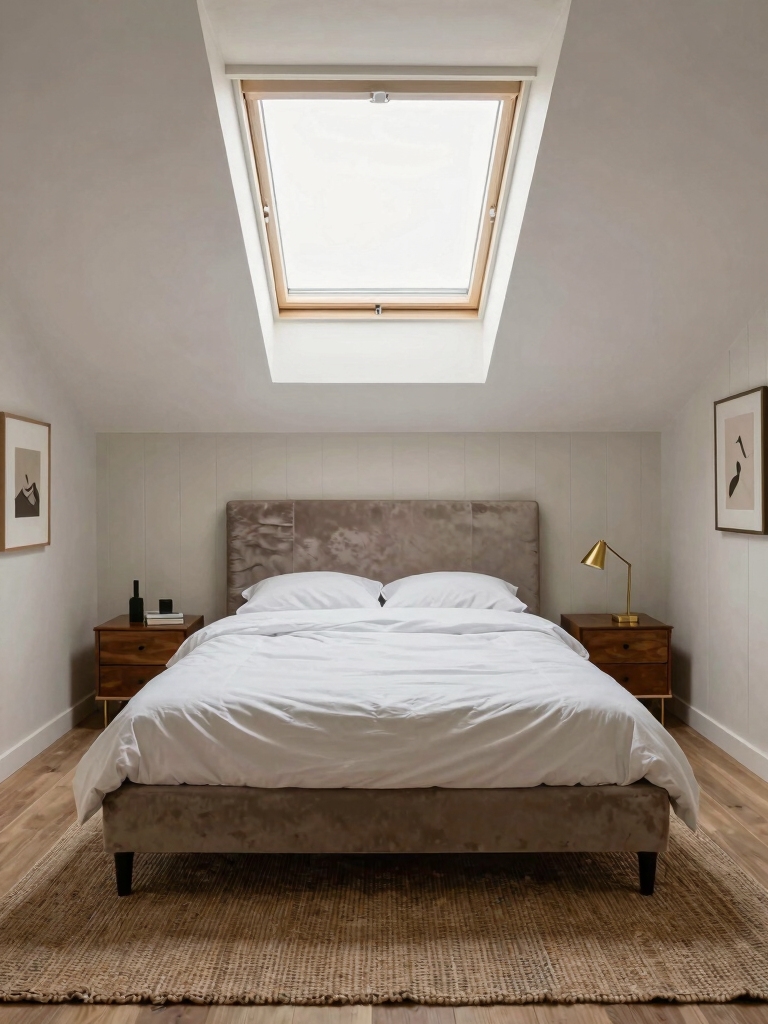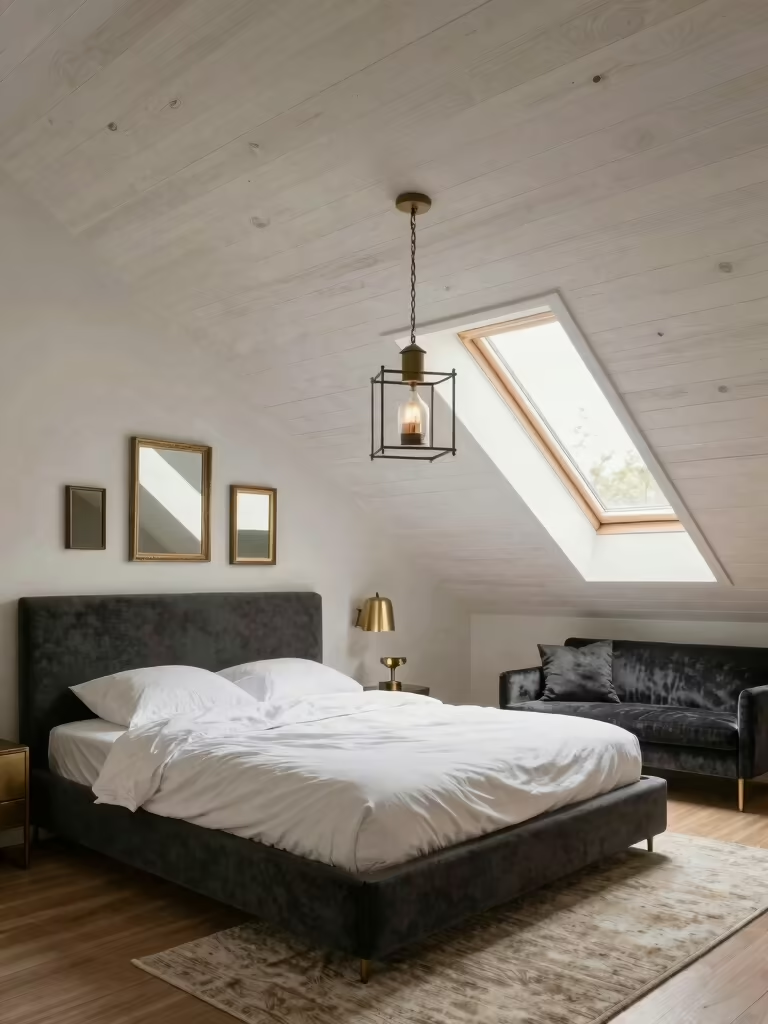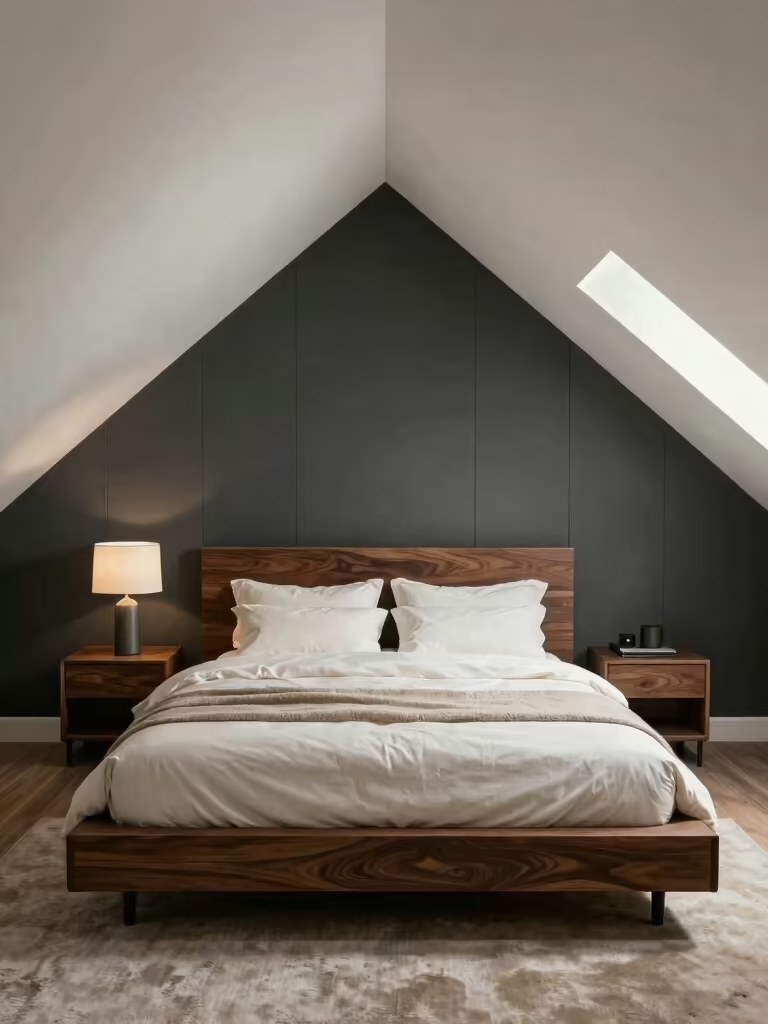

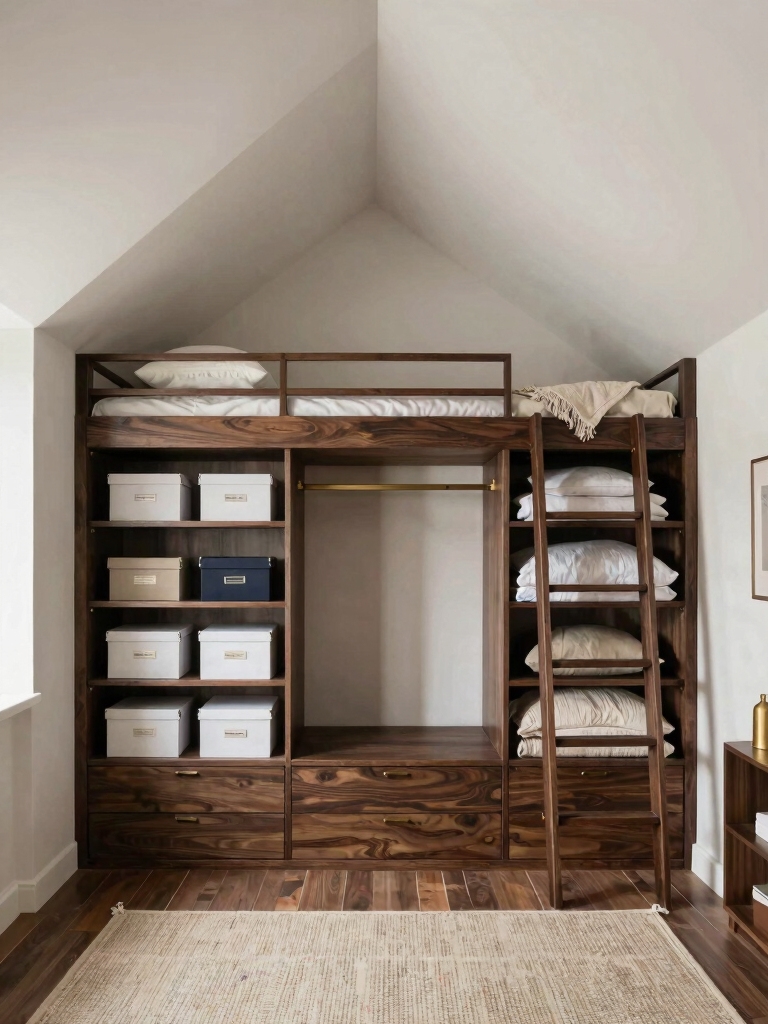
People assume a sloped attic can’t hold much, so they cram everything into one closet and call it a day. The opposite is true. An attic hides more usable storage than a square room, because every awkward eave and knee wall is space a normal bedroom simply doesn’t have.
These attic storage ideas are the ones that keep a room truly tidy, organized around the attic’s real strengths: height, slope, and access. We’ll work through built-ins, under-bed solutions, hidden benches, and clever small-footprint tricks, each with the rough cost and the reason it earns its place. The result is an attic a neat freak would happily live in.
The Tidy-Attic Game Plan
- Read the room first: height decides tall storage, the slope guides shelf angles, and access sets the paths.
- Mine the eaves and knee walls with built-ins; that dead triangle is your biggest hidden capacity.
- Use the space under the bed and behind the headboard for low-profile, out-of-sight storage.
- Containerize and label everything so the system stays tidy without daily effort.
Maximize Your Attic Storage Potential
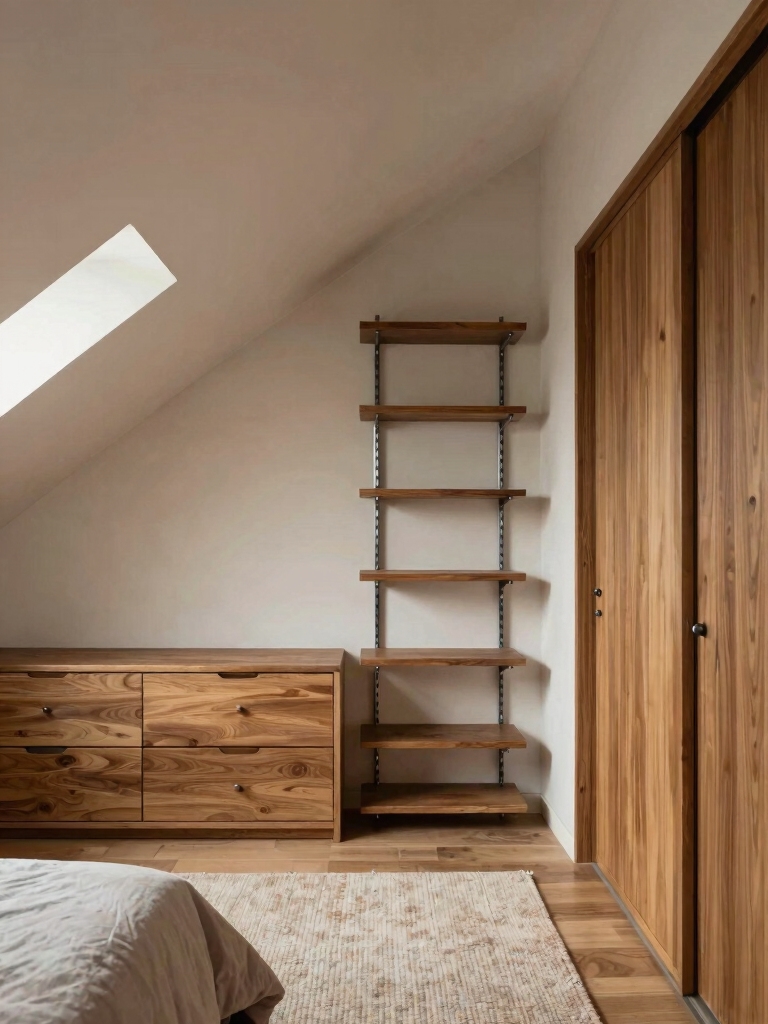
Before buying a single bin, read what your attic is offering, because its quirks decide what storage fits where. Three traits drive every choice: the height (which sets where tall units and standing room go), the slope (which guides shelf angles and reach), and the access (which fixes door swings, light, and clear paths). Map those and the storage plan almost designs itself.
Let the Room Tell You What Fits
Walk the room and tag the zones. The full-height wall takes tall wardrobes and shelving; the low eaves take drawers and bins you reach sitting down; the dormers make natural nooks. This ten-minute audit is what separates a tidy attic from one where boxes pile up in the only spot you can stand.
Then match the storage type to each zone, since one solution rarely fits a whole sloped room. A neat attic is really just the right container in the right corner, repeated around the room. My [angled-ceiling attic ideas](attic-bedroom-ideas-angled-ceilings-made) cover reading the room’s bones in detail.
Smart Ways to Maximize Attic Storage Space
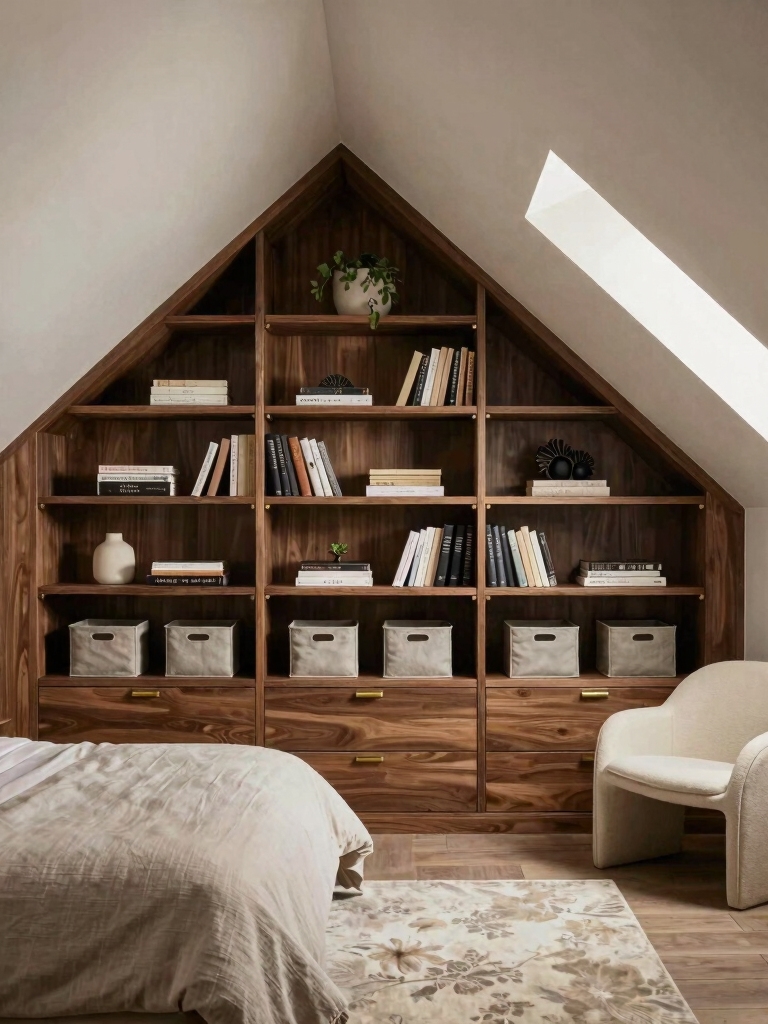
The single biggest win in an attic is building storage into the sloped walls and eaves, turning the awkward angles into capacity. Sloped-wall shelves and knee-wall cabinets use the exact space a freestanding piece can’t reach. Here’s how to put the angles to work.
- Fit built-in shelves that hug the slope, stepping down with the ceiling so each shelf stays reachable.
- Build drawers or cabinets into the knee wall, where the ceiling is too low to stand anyway.
- Add a tall, shallow wardrobe with sliding doors on the full-height wall, so it stores up without crowding the floor.
| Attic zone | Best storage | Rough cost |
|---|---|---|
| Full-height wall | Tall sliding-door wardrobe or shelving | $150 to $500 |
| Knee wall / eaves | Built-in drawers or low cabinets | $150 to $400 per run |
| Under the bed | Drawers or rolling bins | $20 to $200 |
| Behind the bed | Headboard with compartments | $80 to $300 |
Efficient Under-Bed Storage Solutions
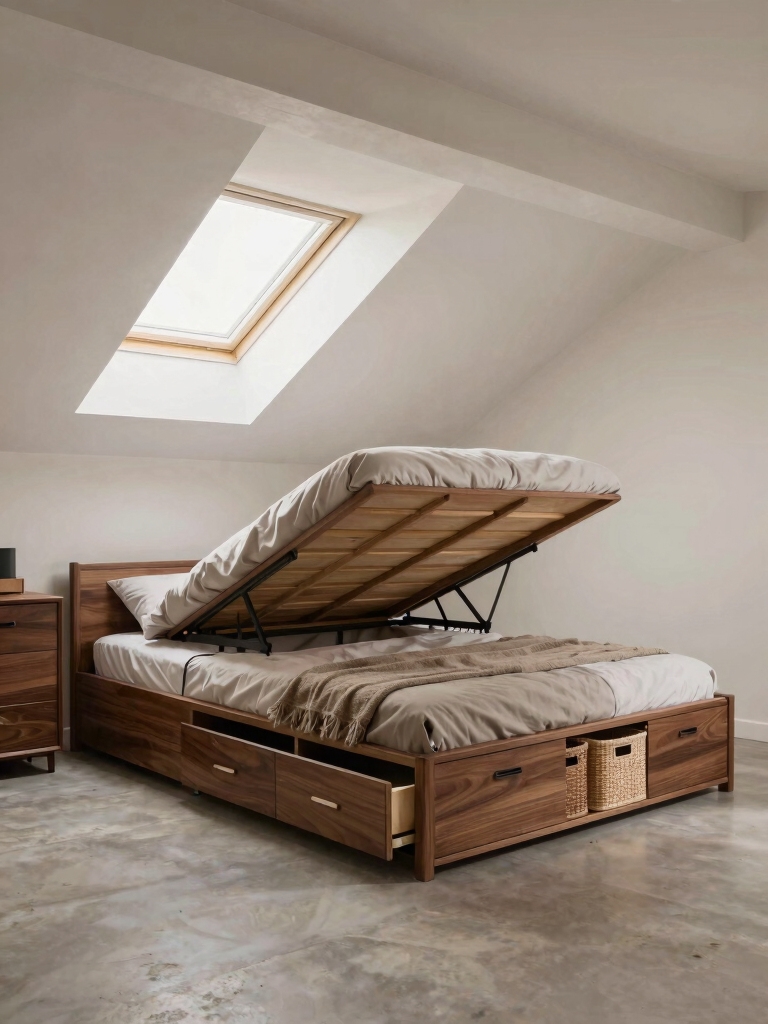
The space under the bed is an attic’s most overlooked storage, and it’s perfect for the low-clearance reality of a sloped room. A platform bed with built-in drawers turns the whole footprint into a dresser, while low rolling bins work under any frame. This is the easiest capacity to add, since the bed is going in the room regardless.
The Easiest Capacity to Add
Make it work harder with a few habits. Vacuum-seal off-season clothes to shrink them flat, label every bin so you’re not hauling out the wrong one, and keep a slim rolling crate for the things you reach often. A set of under-bed bins runs roughly $20 to $60, and drawers built into a platform bed cost more but hold far more.
Mind the practical details that under-bed storage can trip on. Keep bins a touch off the floor or on casters so dust and damp don’t reach them, and route any cords or chargers near the headboard away from stored fabric. My [storage ideas that beat clutter](bedroom-storage-ideas-clutter) go deeper on keeping these systems tidy.
Hidden Storage Space-Savers
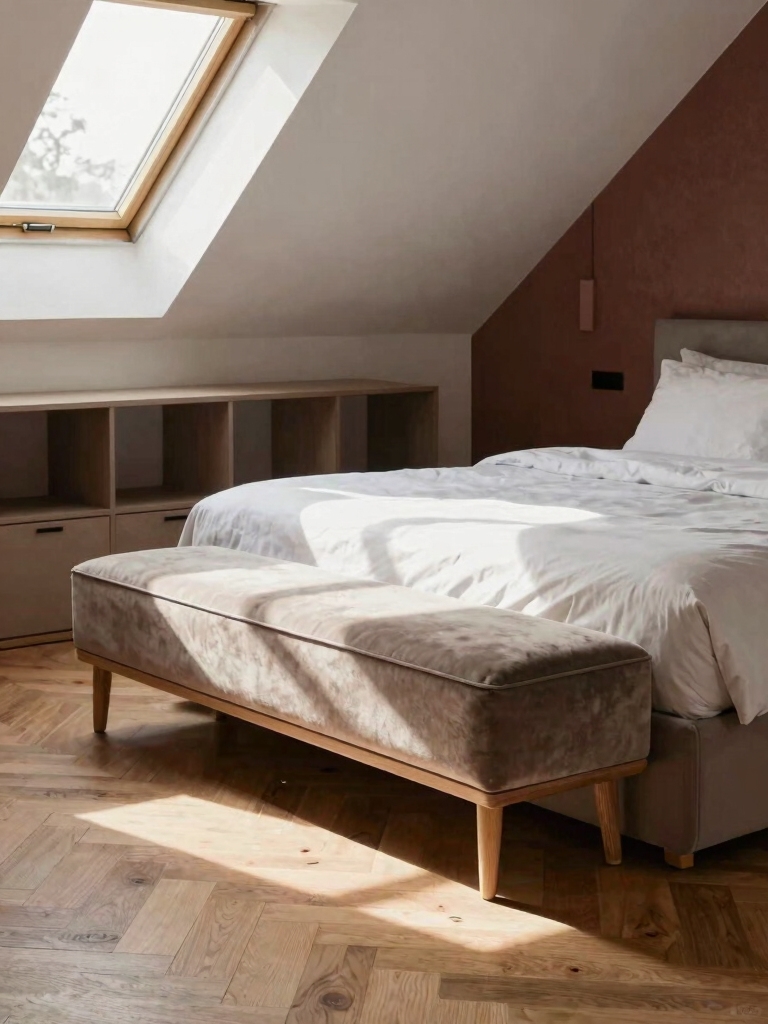
The storage neat freaks love most is the kind you can’t see, because hidden capacity keeps the room calm while it quietly holds your stuff. An attic offers plenty of spots to tuck things out of sight. Work these in for a tidy room that hides its hardworking side.
- A bench with a lift-up lid at the foot of the bed seats you and swallows spare bedding.
- Headboard storage with slim built-in compartments keeps nightstand clutter at arm’s reach and off the floor.
- A flush access panel in a knee wall opens to a deep, hidden cupboard in the dead space behind it.
A few storage terms worth knowing:
📖Knee wall
The low half-wall that closes off the eave; cabinets set into it use space you could never stand in.
📖Sloped-wall shelving
Shelves that step down to follow the roofline, keeping each shelf within reach.
📖Toe-kick / under-bed clearance
The low gap beneath furniture; perfect for slim drawers and rolling bins.
Maximizing Attic Storage Elegantly
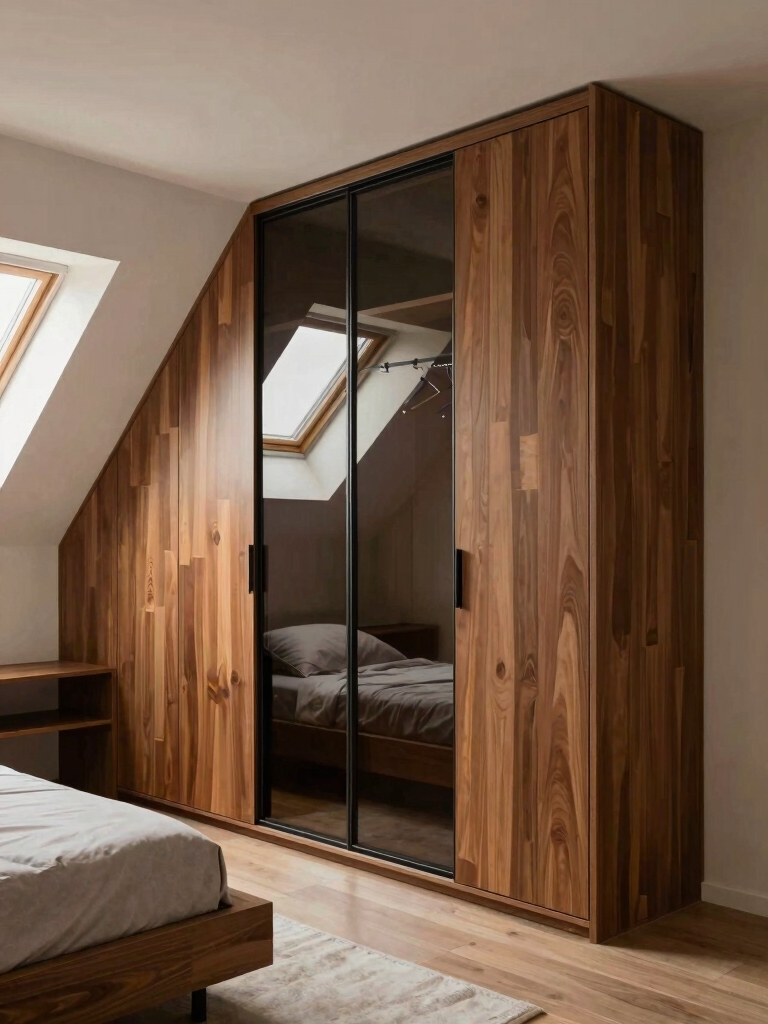
Storage that’s both hardworking and good-looking is what makes a neat attic feel designed, not just organized. The secret is consistency: matching baskets, a unified finish on built-ins, and closed storage for the messy stuff so open shelves can hold only the tidy, pretty things. A calm, cohesive look comes across as elegant even when it’s hiding a lot.
Pair function with a few display moments so the room doesn’t feel like a storage unit. One open shelf of books and a plant, a tray of daily items, the rest tucked away, and the attic stays both useful and serene. For more on keeping surfaces calm, see my [hidden-corner attic ideas](attic-bedroom-ideas-maximize).
- Use matching baskets and bins so open storage looks tidy and calm.
- Give built-ins a single, cohesive finish so they feel custom and calm.
- Keep open shelves for the good-looking few and hide the rest behind doors or in bins.
Corner Desks, Vanities, and Pegboards
An attic’s corners and short walls are prime spots for storage that also does a job. A compact corner desk or a slim vanity tucked under the slope pairs a work surface with hidden bins below, so the function comes with its own tidy storage built in. You get a useful station without surrendering floor to a freestanding piece.
Pegboard is the neat freak’s secret weapon for an awkward stretch of wall. Mounted on a knee wall or beside a desk, it turns a blank vertical surface into flexible, see-everything storage for accessories, tools, or craft supplies. Everything hangs at a glance, which makes putting things away fast and keeping them tidy almost automatic.
The theme across both is making a single spot earn two jobs. A desk that stores, a wall that organizes, a vanity that hides its clutter: each one keeps the floor clear and the room calm. In a tight attic, that double duty is the whole game, and it’s what keeps the space tidy long term.
Keep It Tidy: Systems That Stick
Storage only stays neat if the system is easy to keep up, so build for the laziest version of yourself. Open baskets beat lidded boxes for daily items because they’re faster to use, while labeled, lidded totes higher up hold the rarely-touched things out of the way. The easier a thing is to put back, the more likely it stays put.
Sort by how often you reach for something, using frequency as your main guide. Daily items go at easy height, weekly ones a step away, and seasonal stuff up high or deep in the eaves. This zoning is what neat freaks rely on, since it means the everyday clutter has a fast, obvious home and never piles up on a surface.
Label generously and revisit the system each season. A quick relabel and a purge of what you no longer use keeps the storage honest, and it stops the slow creep that turns any attic back into a junk room. Five minutes a season protects all the work you put into building the system.
Budget Storage Wins You Can Do Today
Not every storage upgrade needs a carpenter. The fastest, cheapest wins are the ones a neat freak can knock out in an afternoon, and they make a real dent. Slide a set of under-bed bins beneath the frame, add a few hooks behind the door, and stand a tall, narrow shelf on the full-height wall. Three small buys. One tidy room.
Repurpose what you already own before buying more. A spare bookshelf turned on its side fits under a slope, an old dresser slides into a knee-wall gap, and shoeboxes labeled by contents corral small stuff inside a closet for free. Shopping your own home first is the thriftiest way to start, and it keeps clutter actually leaving the house.
Spend the saved money where it counts most. One quality piece, a real sliding-door wardrobe or a built-in bench, anchors the room and does more than a cart of cheap organizers that wobble and break. Buy that big piece secondhand if you can, since solid wood at resale prices stretches a small storage budget a long way.
What to Expect From an Attic Storage Project
Set realistic expectations before you start, since attic storage ranges from a weekend of bins to a custom built-in job. The cheap, fast wins, under-bed bins, baskets, a pegboard, a labeled system, cost very little and take an afternoon. Built-in sloped shelves and knee-wall cabinets cost more and may need a carpenter, but they reclaim the most space and look the most polished.
Decide what’s DIY and what’s not. Most container-and-bin solutions are firmly do-it-yourself, while anything cut into the structure, or any wiring for a lit closet, is a job for a pro. Plan the budget around that split, start with the cheap high-impact wins, and add the built-ins over time as funds allow. The room gets tidier at every stage.
A Place for Everything, Even Up Here
An attic isn’t short on storage; it’s short on storage that fits its angles. Read the height, slope, and access, build into the eaves and knee walls, use the space under and behind the bed, and containerize the rest. Do that and a sloped room holds more, and stays tidier, than the square bedroom down the hall.
Start with the cheapest high-impact win this weekend, label as you go, and watch the clutter find its place at last.