
Most bedroom decor ideas for couples start from a myth: that decorating as a pair means someone has to lose, your soft blush against their charcoal, your full surfaces against their bare ones. It does not work that way in the rooms that actually feel good.
The looks that last are built on small compromises that fold into one shared style, with the truce drawn down the middle of the bed left out of it. Below are 20 moves I come back to when two people, two sleep styles, and two opinions have to share one room and still want to like each other in the morning.
The Short Version for Two
Agree on a palette first, then let each person own a few details. A shared base of warm neutrals with one accent you both like keeps the room cohesive, while separate nightstands, reading lights, and a personal object or two on each side give you both a real stake in it.
Spend where you both touch it, the mattress, the sheets, the lamps, and save on the decorative extras. Most of what makes a couple’s room feel intimate, low warm light and a clear, calm surface, costs very little.
Pick a Romantic Color Palette for Two
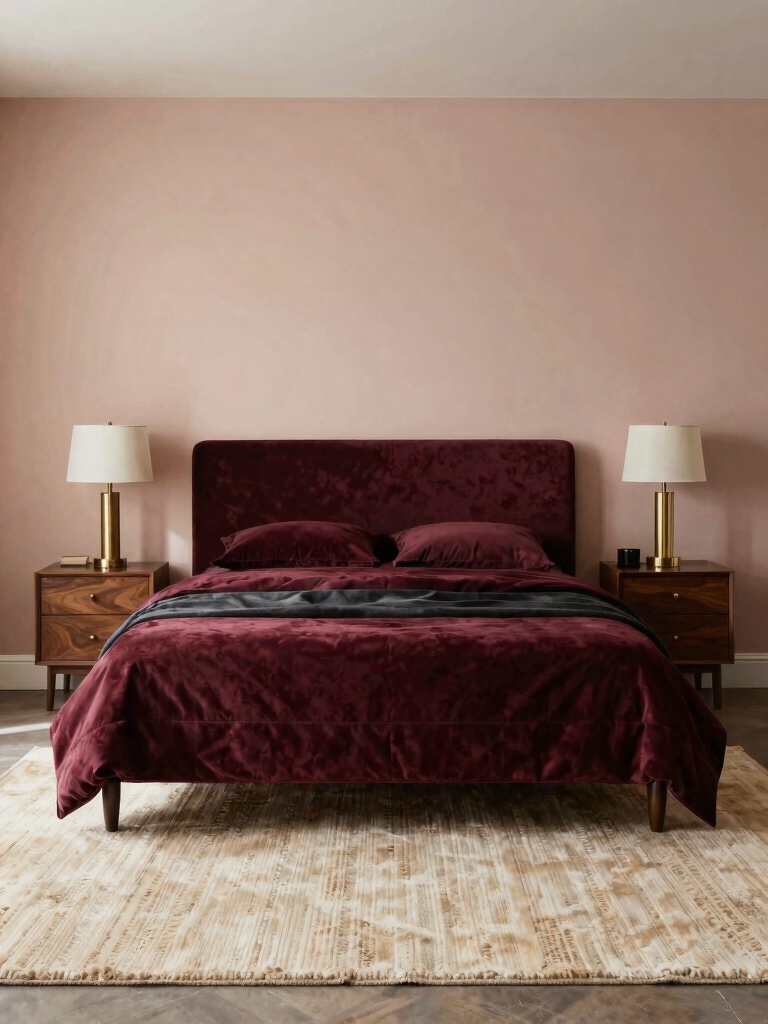
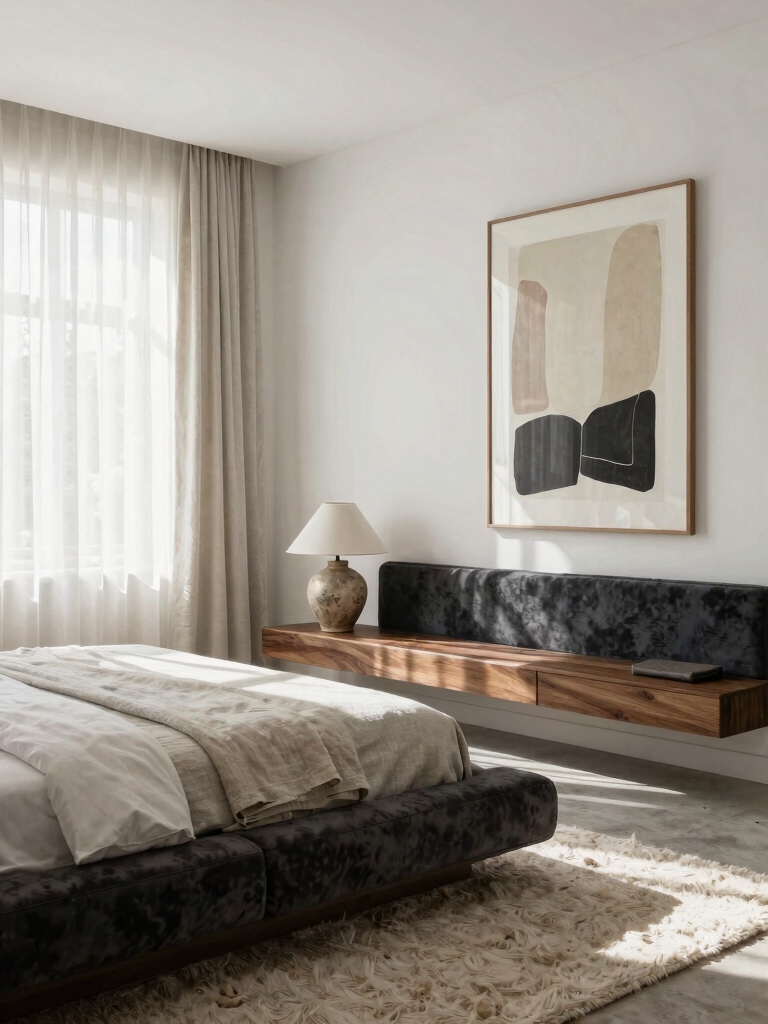
Start with color, because it is the one decision the whole room hangs on, and the easiest place for two people to deadlock. Pick a shared base of warm neutrals, greige, oat, or soft taupe, then choose one accent you both actually like and let it repeat around the room. One agreed accent beats two competing ones.
If your instincts pull in opposite directions, split the job. One of you picks the neutral, the other picks the accent, and warm metal or wood tones tie it together. For a deeper look at pairing tones, our warm color palette walks through combinations that calm a room down.
- Soft blush with charcoal for warm meeting grounded
- Sage with ivory for a calm, nature-leaning base
- Deep navy with warm white for contrast that never goes cold
- Add brass or warm wood so the palette feels finished
Layer Cozy Textiles Until the Bed Feels Warm
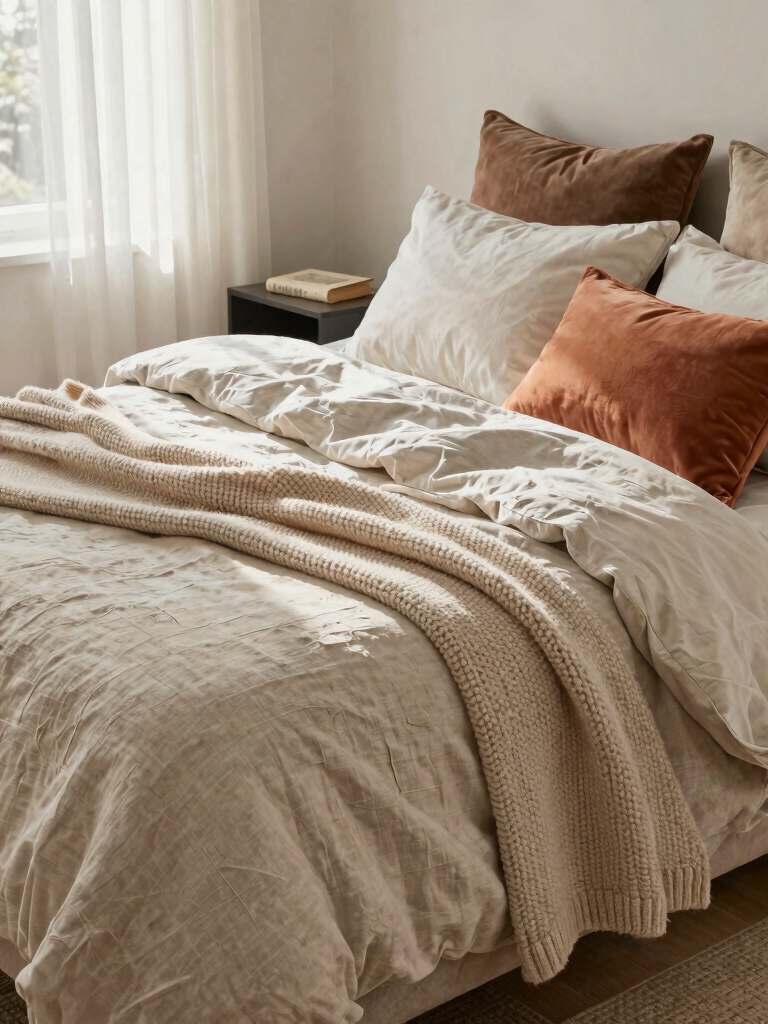
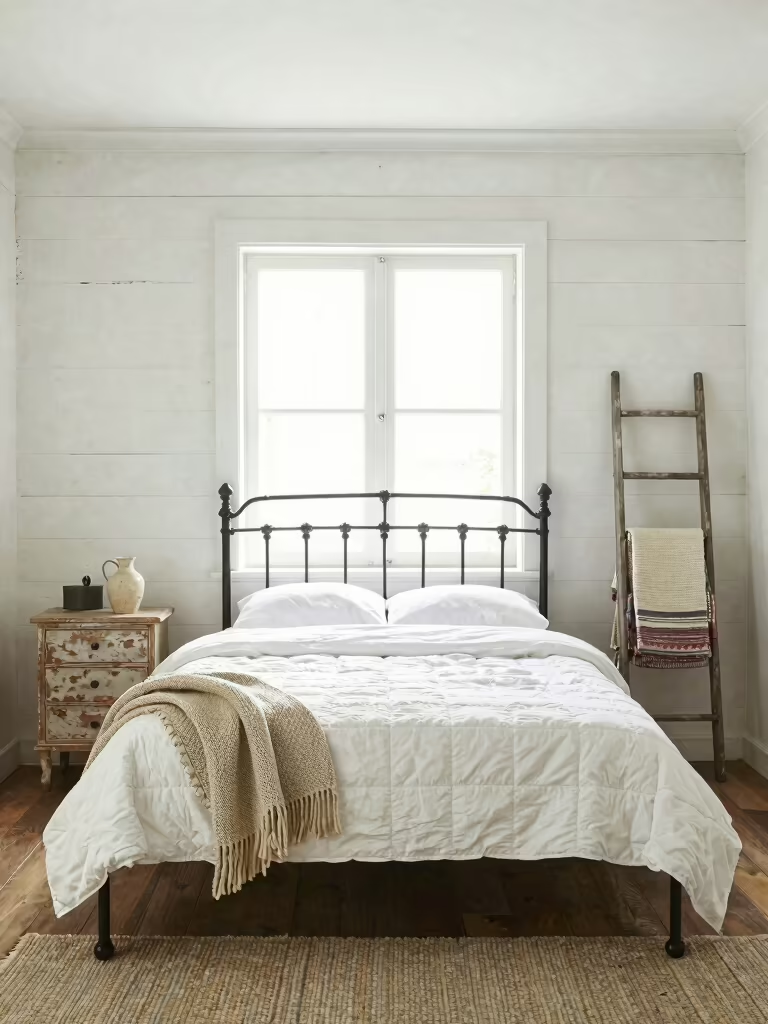
Texture is where a couple’s bed stops looking like a guest room and starts feeling like yours. Build it from the sheets up: a soft duvet, one chunky throw slung across the foot, and pillows in a couple of different weaves. The bed should look a little undone, like two people actually sleep there.
Same color, different texture
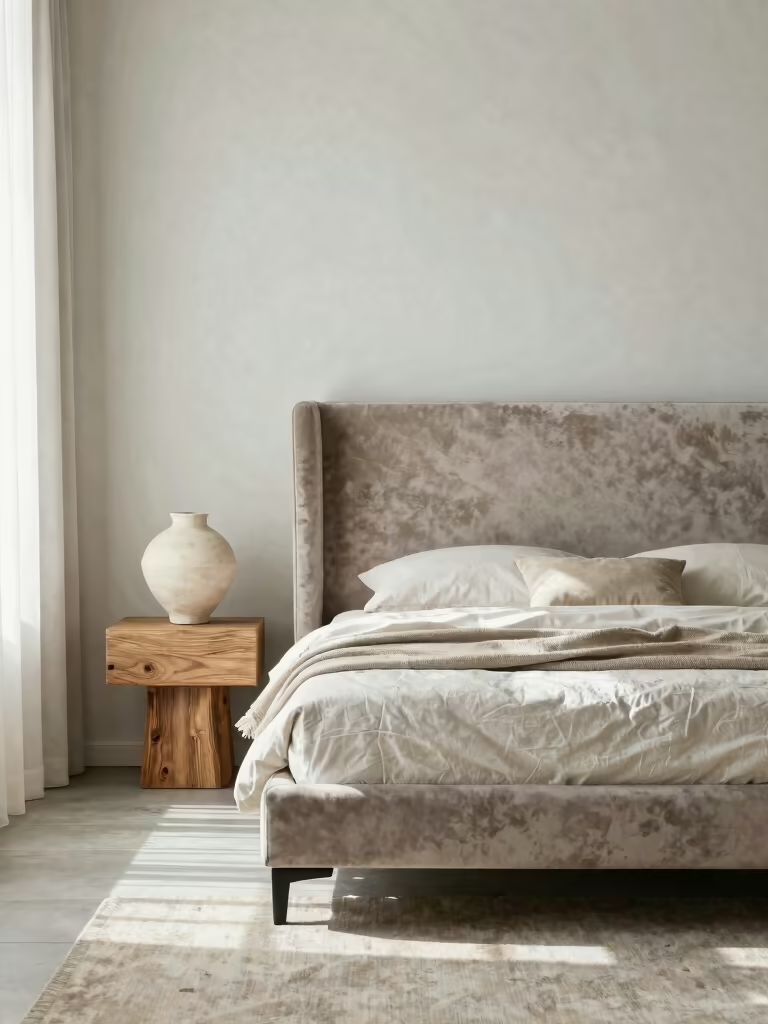
Keep the palette tight so the layers stay calm. Vary the texture, not the color, a smooth sham against a nubby throw against a soft duvet, and the bed gains depth without any one piece shouting. A linen duvet runs $60-130, and it is the single piece that changes a bed the most.
What I tell couples who run hot and cold at night, and most do, is to layer so each person can adjust. A lighter blanket on one side, a heavier throw on the other, both tucked under one shared duvet, keeps the bed looking unified while you each sleep how you want.
A few terms worth agreeing on before either of you shops:
📖Shared base
The two or three neutral tones the whole room sits on, agreed by both of you first.
📖Accent
The one bolder color you both sign off on, then repeat three times around the room.
📖His-and-hers zones
Small areas, a nightstand or a reading light each, where one person’s taste gets to lead.
Set Intimate, Layered Lighting
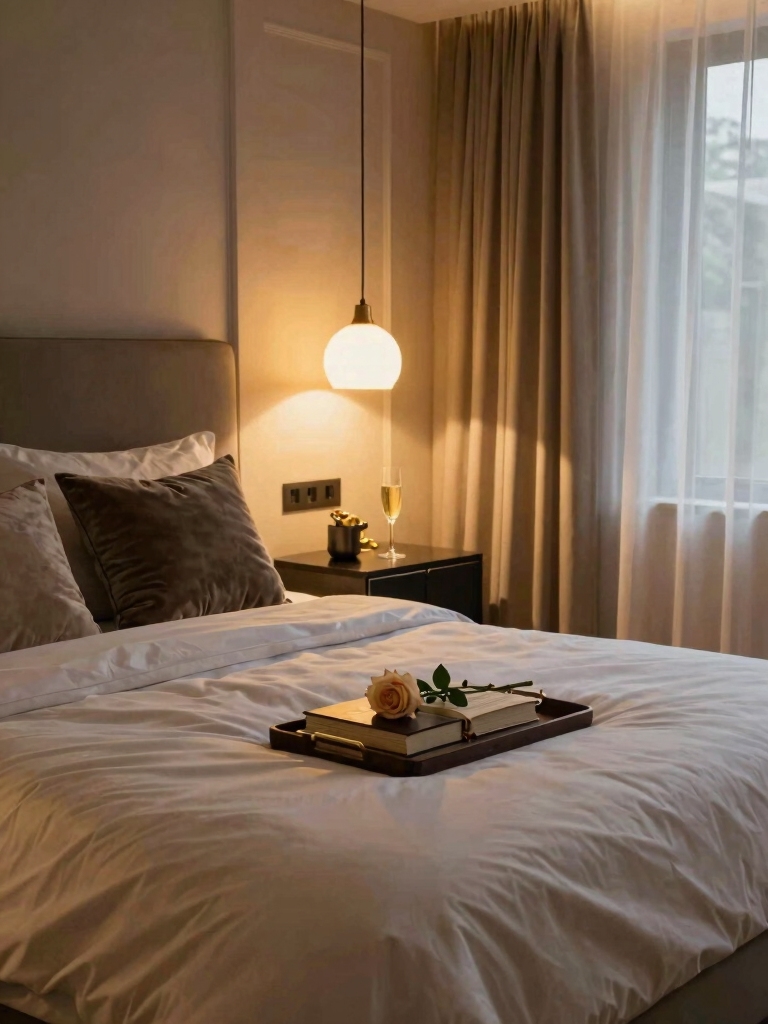
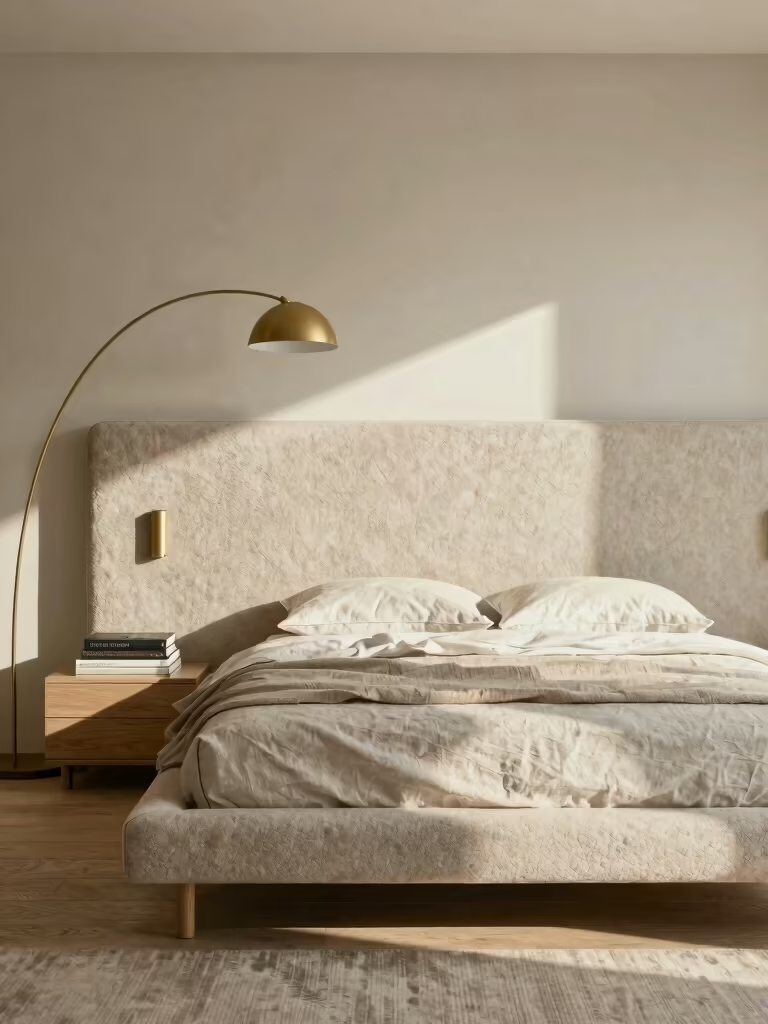
Overhead light is the enemy of a romantic bedroom. Swap it for layers you control: two bedside lamps, a low dresser lamp, maybe warm fairy lights or a candle. 2700K warm bulbs on a dimmer do more for the mood than any decor purchase, and the swap takes about five minutes. Light sets the whole tone after dark.
Give each side its own switch. A reading light you can turn off without disturbing the other person is a small thing that prevents a lot of late-night friction. For placement that works spot by spot, our layered bedroom lighting goes deeper.
- Two matching bedside lamps for symmetry and reading
- A dimmer on the overhead so it plays backup while the lamps lead
- Warm fairy lights or a salt lamp for the soft after-dark glow
- Candles near the bed, where the mood actually lives
Pick Bedding That Puts Comfort First for Both
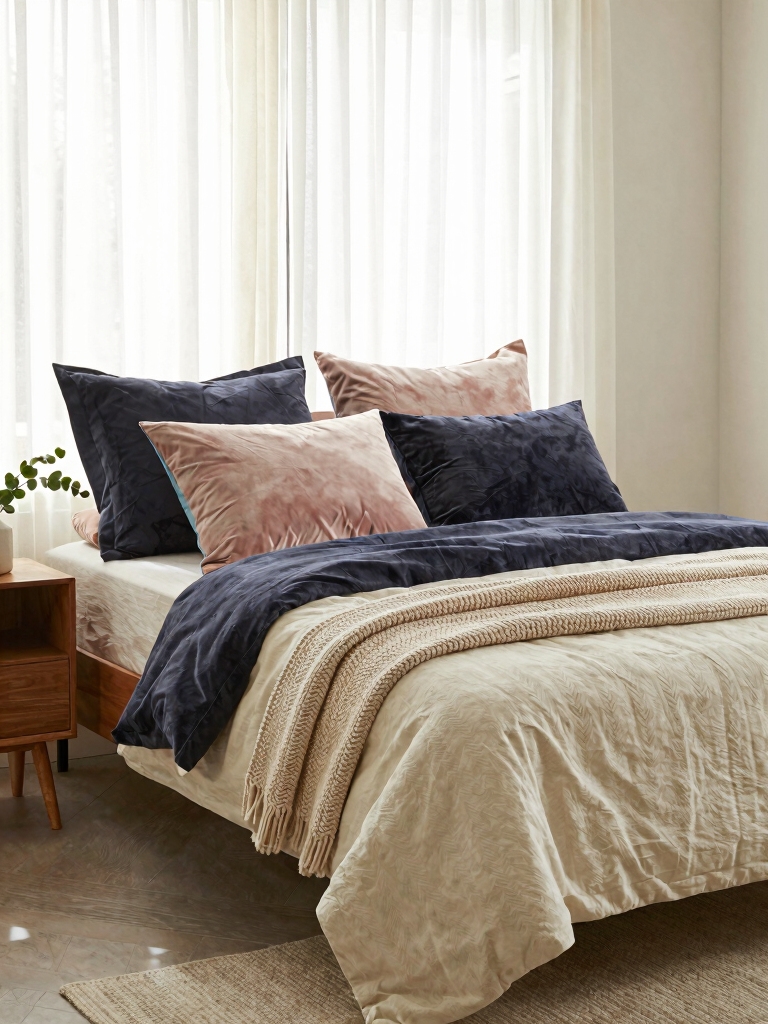
Bedding is where comfort and looks have to meet, and where couples compromise most. Agree on a weight and weave you both like, then layer so the bed photographs well and feels right. If one of you likes crisp and the other likes soft, percale sheets under a linen duvet split the difference.
Buy the sheets you touch every night before the decorative extras. A breathable cotton or linen set in a neutral you both signed off on does more for sleep and looks than a pile of accent pillows. If you are starting from scratch, build a balanced bedroom for two from the ground up.
- Percale for the crisp sleeper, linen for the soft one, layered together
- A duvet insert rated for the warmer sleeper, with a lighter blanket on the cool side
- Two pillow firmnesses, since necks are not identical
- One shared color so the mismatched comforts still look like a set
👍Worth spending on together
- +A mattress you both agree on, since you each sleep on it nightly
- +Real linen or cotton sheets that feel good and last years
- +Two solid bedside lamps with their own switches
👎Easy to save on
- –Trendy throw pillows, which a thrift store covers
- –Wall art, where a good print stands in for the original
- –Matching everything, since a little mismatch looks collected
Add Personal Touches That Celebrate Your Story
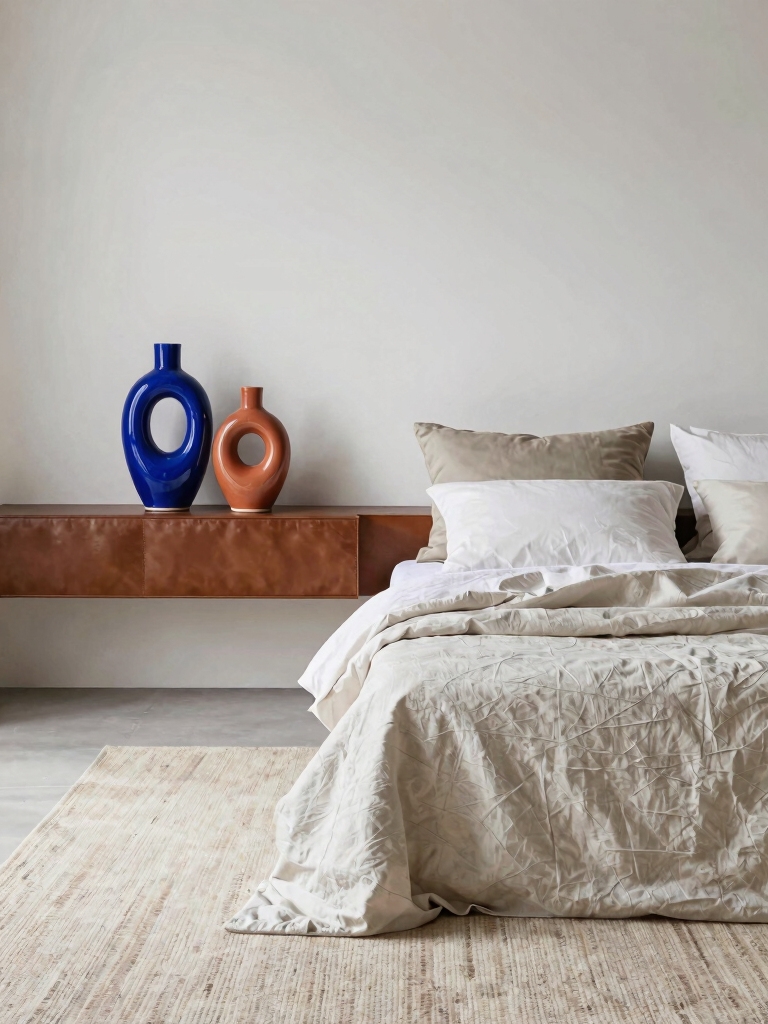
The last layer is the one that makes the room unmistakably yours as a couple. Bring in a few objects that hold a story, and place them with restraint so the room stays calm. Here is the order I work in:
- Frame two or three real photos, not a whole wall, and keep the frames in one tone
- Give each person one shelf or nightstand to style their own way
- Add one shared object, a piece from a trip or art you bought together, as the centerpiece
- Leave breathing room around each item so it feels chosen and uncrowded
- Skip the his-and-hers novelty signs, which date fast and look like a gift shop
Common Mistakes Couples Make Decorating Together
The most common mistake is splitting the room down the middle: one person’s florals on one side, the other’s industrial edge on the other, so it looks like two rooms sharing a wall. The fix is one shared base palette with small personal touches layered on top, never two styles fighting for territory.
The other big one is buying everything at once to be done with it. A room assembled in a single weekend rarely feels personal. Start with the bed and the light, live with it a few weeks, then add the rest slowly as you each figure out what you actually want.
Give Each Person Their Own Nightstand
The first thing I add to a lopsided couple’s room is a second nightstand. Two of them, even mismatched, are the simplest way to make a shared room feel fair: each person gets a lamp, a surface, and a drawer for the private clutter that otherwise spreads everywhere. It heads off a lot of low-grade resentment.
- Match the height so the bed looks balanced, even if the styles differ
- One drawer each for chargers, books, and the nightly junk
- A reading lamp per side with its own switch
- Keep the tops to a lamp, a book, and one object, no more
Carve Out a Reading Nook for Two
If you have a spare corner, a small nook gives a couple somewhere to be together away from the bed and the couch. A loveseat or two chairs, a shared floor lamp, a side table for two mugs, and a soft rug underfoot is all it takes.
Keep it low and warm. A floor lamp runs $40-90, a secondhand chair often less, and the corner becomes the spot you both drift to in the evening. Position it near a window if you can, so it works by day too.
Make Room for Two Different Sleep Styles
Most couples do not sleep the same way, and a good bedroom plans for that. Couples ask me how to handle a snorer or an early riser, and the answer is almost always a small fix. The fix is cheap, too. Different temperatures, schedules, and noise tolerances all have simple decor solutions that keep the peace, and the room looks no less pulled together for any of them.
A blackout curtain on the early riser’s side. A small reading light for the night owl. A fan or a heavier blanket to settle a temperature gap. None of it costs much, and each one removes a daily friction point that no amount of pretty styling would fix.
Soften the Room With Scent, Sound, and Greenery
The finishing touches reach the senses the eye misses. A little greenery, a gentle scent, and some soft sound turn a good-looking room into one that actually feels calm to come home to together. None of it is expensive, and all of it is easy to change.
- One larger plant for life, set where it gets daylight
- A low-key scent near the bed, vanilla, lavender, or cedar, kept subtle
- A small speaker for quiet evenings instead of the TV
- Sheer curtains to soften daylight and muffle a little street noise
Refresh It Often With Small Swaps
A couple’s room stays interesting when it shifts a little as the seasons turn. Small, cheap swaps keep it feeling tended without a full redo, and they give you both a low-stakes way to keep deciding things together every few weeks.
Rotate the throw pillows, change the art, bring in fresh stems, warm the lighting in winter. For ideas to steal as you go, a cozy couples nest and a small-room couples version are easy places to pull from. Keep the changes small and steady, and the room keeps feeling like the two of you.
One Room, Two People, One Style
A bedroom for two works when it reads as one shared style with room for both of you inside it. Agree on the palette and the light, spend on the things you both touch, and give each person a few details to call their own. Do that and the room stops feeling like a compromise and starts feeling like home.
None of this needs a big budget or one decisive weekend. Pick the move that would cut the most friction tonight, a second nightstand, a dimmer, a reading light per side, and build the rest slowly, together, one agreed change at a time.