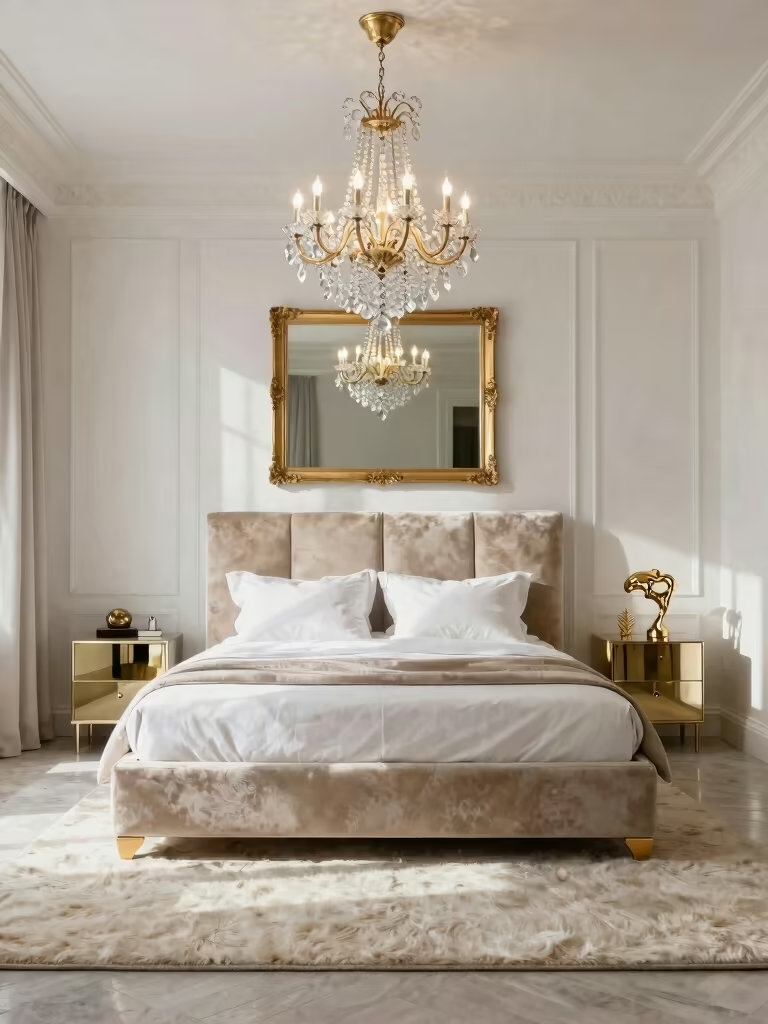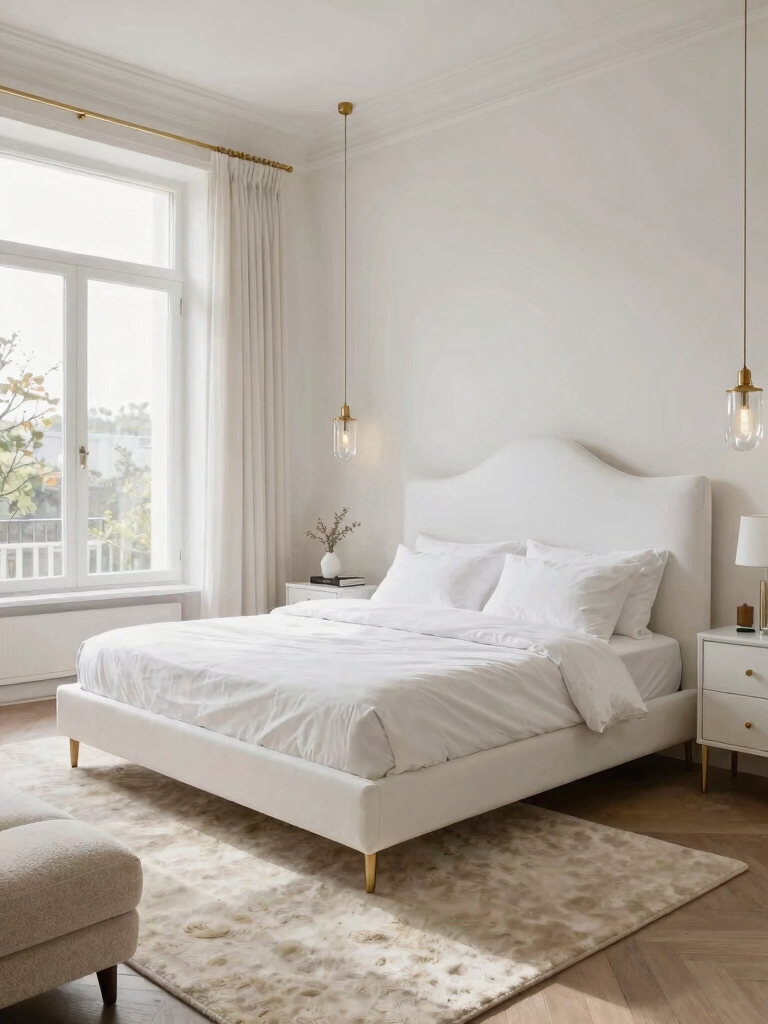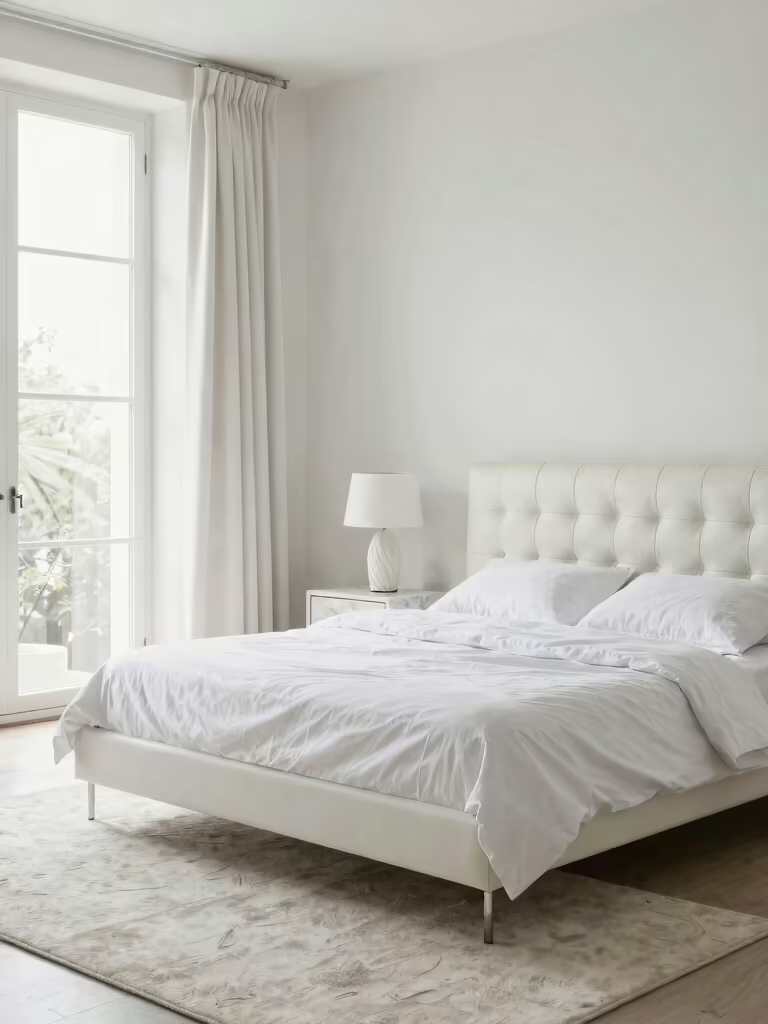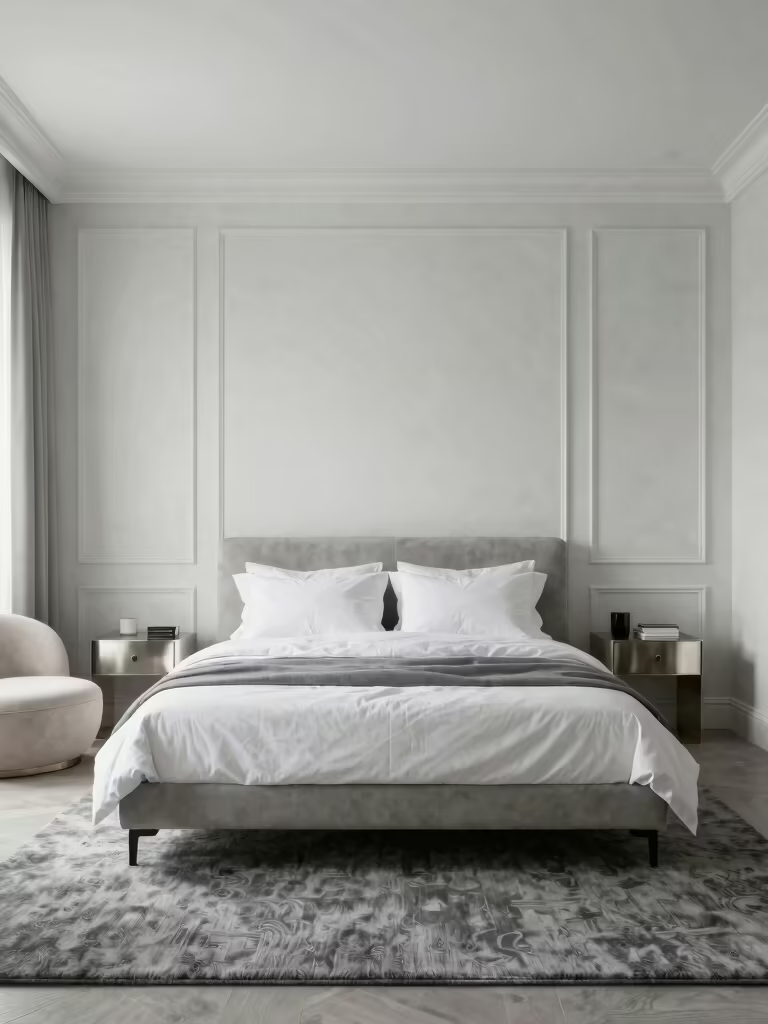

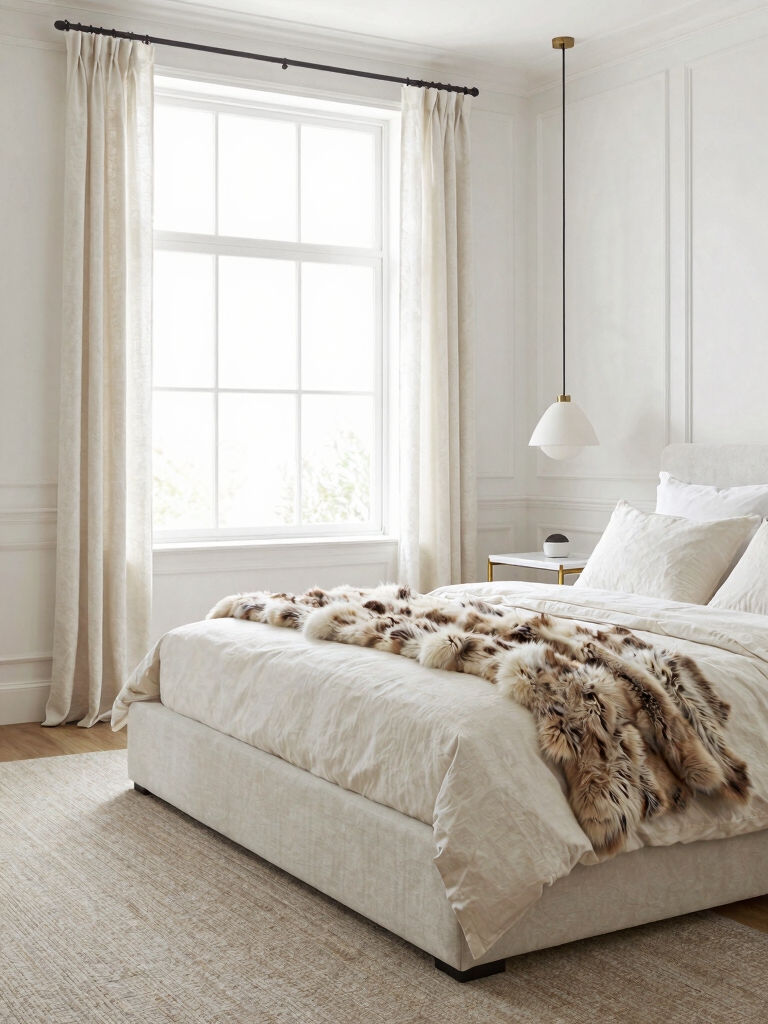
A white bedroom can feel like a hug or a hospital, and the line between them is thinner than people think. The all-white rooms that look chilly are missing the same few things: texture, a soft undertone, and good light. Add those back and the exact same palette turns soft, calm, and the room you don’t want to leave.
These white bedroom ideas are about that warming-up: piling on tactile layers, working in wood tones, choosing a white that leans warm instead of icy, and lighting it so it glows. White done this way isn’t stark or sterile; it’s the most restful backdrop there is, quietly luxurious and endlessly easy to live with.
What Makes White Feel Cozy
| Layer | Add | Why it warms the white |
|---|---|---|
| Texture | Boucle, chunky knit, linen, wool | Gives flat white the depth it needs to feel soft |
| Wood | Oak, walnut, rattan, a vintage piece | A warm tone breaks up the clinical edge |
| Light | 2700K bulbs and a dimmer | Golden light keeps white from going gray at night |
Cozy White Bedroom Essentials
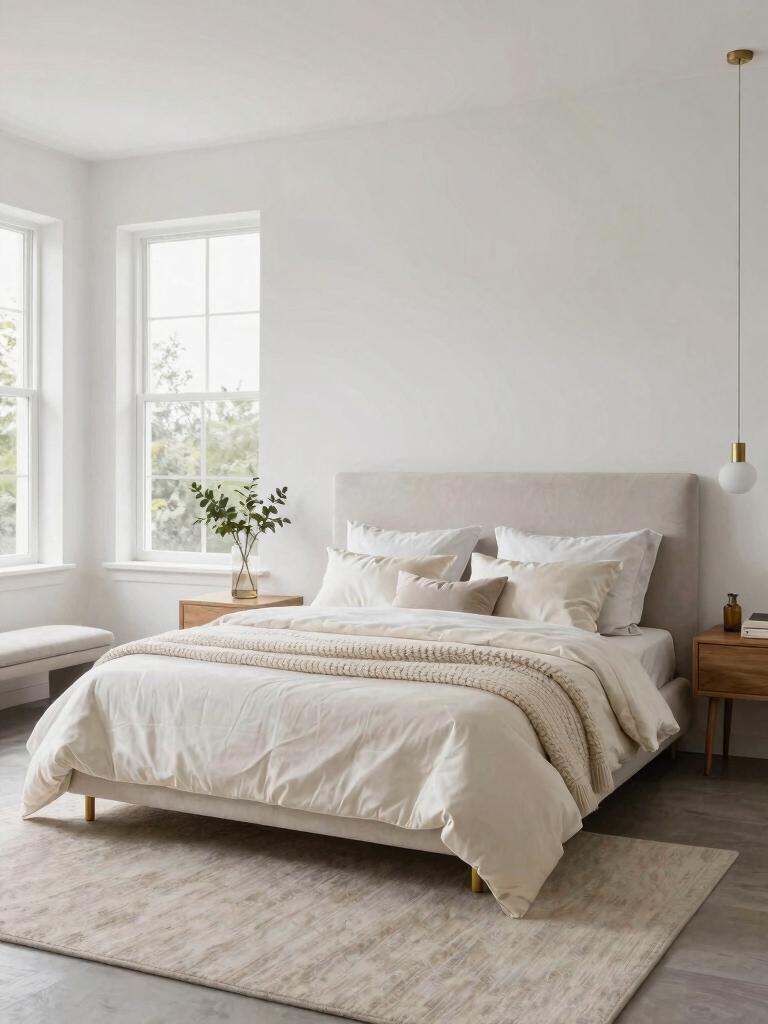
A white room turns chilly when it’s all smooth surfaces and cool light, so the whole job is adding back softness and depth. The shortlist is short. Texture, a cream-leaning white, wood tones, and golden light. Get those four working and even a small, plain white box turns soft and inviting.
Miss them and the nicest furniture in the world still looks like a showroom. I tell people not to blame the white itself when a room feels cold, since it’s almost always the missing texture or the wrong bulb, not the paint, that’s making it feel cold.
- Choose a warm white with a cream or beige base, not a stark, blue-leaning bright white.
- Pile on texture, since flat white needs tactile layers to feel like anything but a blank canvas.
- Bring in wood and warm metal so the palette has a grounding tone to lean on.
- Light it golden with warm 2700K bulbs (an $8 to $15 swap that warms the whole room), and plan the layout the way these layout ideas suggest.
Layer Textures to Warm a White Room
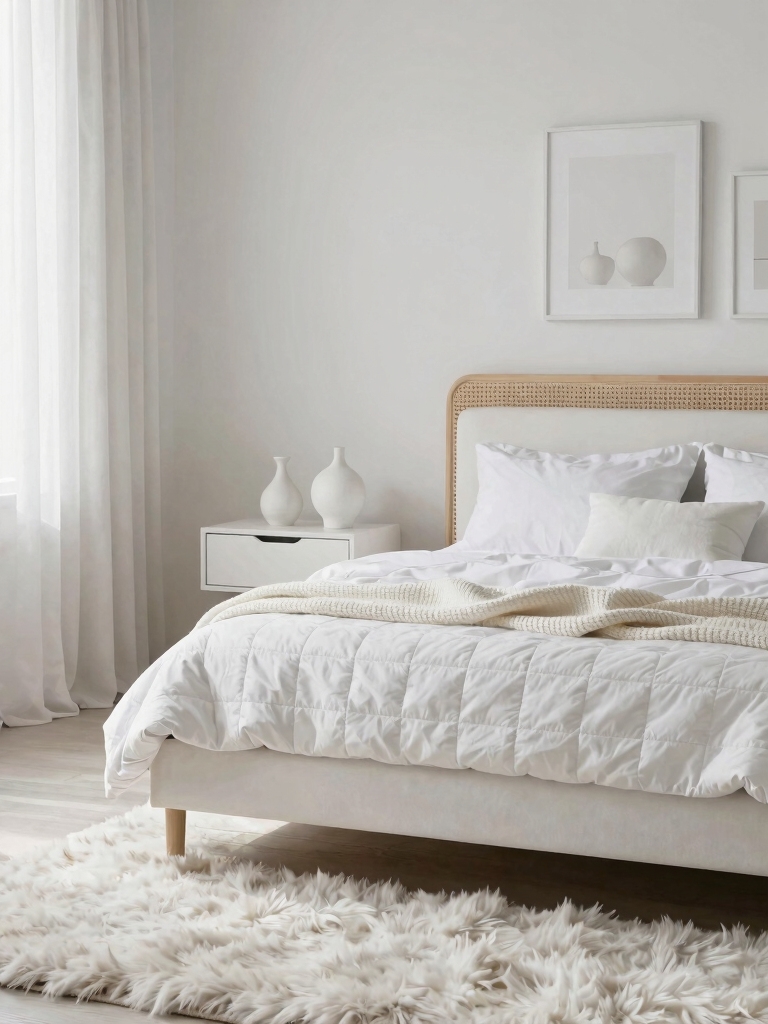
Texture is the single most important thing in an all-white room, because color isn’t doing the work, so the materials have to. The move is to layer as many tactile surfaces as you can: a chunky knit throw, a boucle cushion, a waffle blanket, a wool or jute rug, linen curtains. Each one adds the depth and shadow that keep white from flattening out into a single dull plane the eye slides right off.
Pile on at least three textures
Mix the weaves so the eye and the hand both have something to read. A smooth percale against a nubby waffle against a high-pile rug gives a monochrome room real richness without a drop of color. I build at least three or four different textures into every white bed I style, and a single chunky throw at $40 to $80 is usually the cheapest way to start, since that’s the difference between inviting and stark.
Layer it on the bed first, where you feel it most. A fitted sheet, a flat sheet, a duvet, a folded quilt at the foot, and a couple of textured cushions turn a plain white bed into one you sink into, the same warming trick these cozy decor ideas worth borrowing use everywhere else.
| Warm white | Cool white | |
|---|---|---|
| Undertone | Cream, beige, or yellow base | Blue or gray base |
| Feels | Soft, calm, inviting | Crisp, bright, but can read icy |
| Best in | Bedrooms and low-light rooms | Sunny rooms or modern, high-contrast looks |
Soft Neutrals That Keep White Inviting
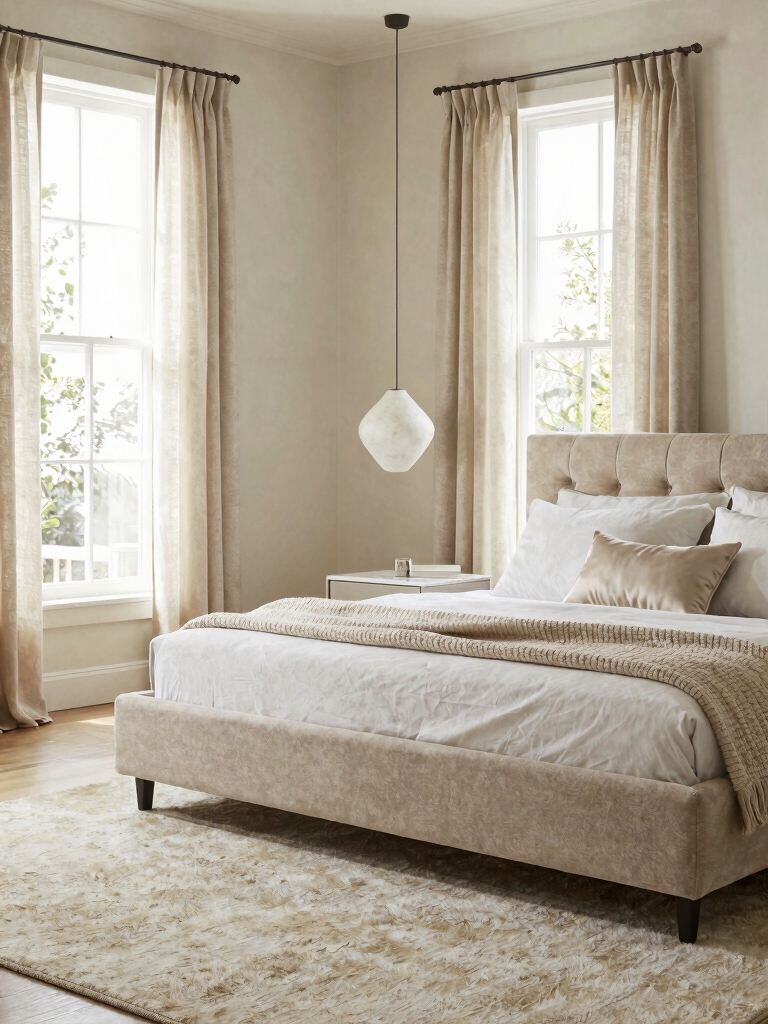
Pure white on every surface is what tips a room into stark, so the fix is to let white share the room with its softer relatives. Tone-on-tone is the trick. Cream, oatmeal, greige, sand, and pale taupe all read as part of the white family while quietly warming it, so the scheme stays light and airy but loses the icy edge.
Think of it as a white room with the warmth turned up just enough. The subtle shifts between those near-whites are what give the eye something to settle on, giving the room a layered, considered depth instead of like one flat coat of builder white.
- Pair crisp white with cream, oatmeal, and greige so the palette gains depth instead of flatness.
- Let walls, bedding, and rug sit at slightly different warm tones rather than one matching white.
- Add a single soft accent, a dusty sage or blush, if you want a whisper of color without breaking the calm.
- Keep the whole family warm-leaning, and lean on these color palette ideas to choose the tones.
Warm Woods and a Standout Piece
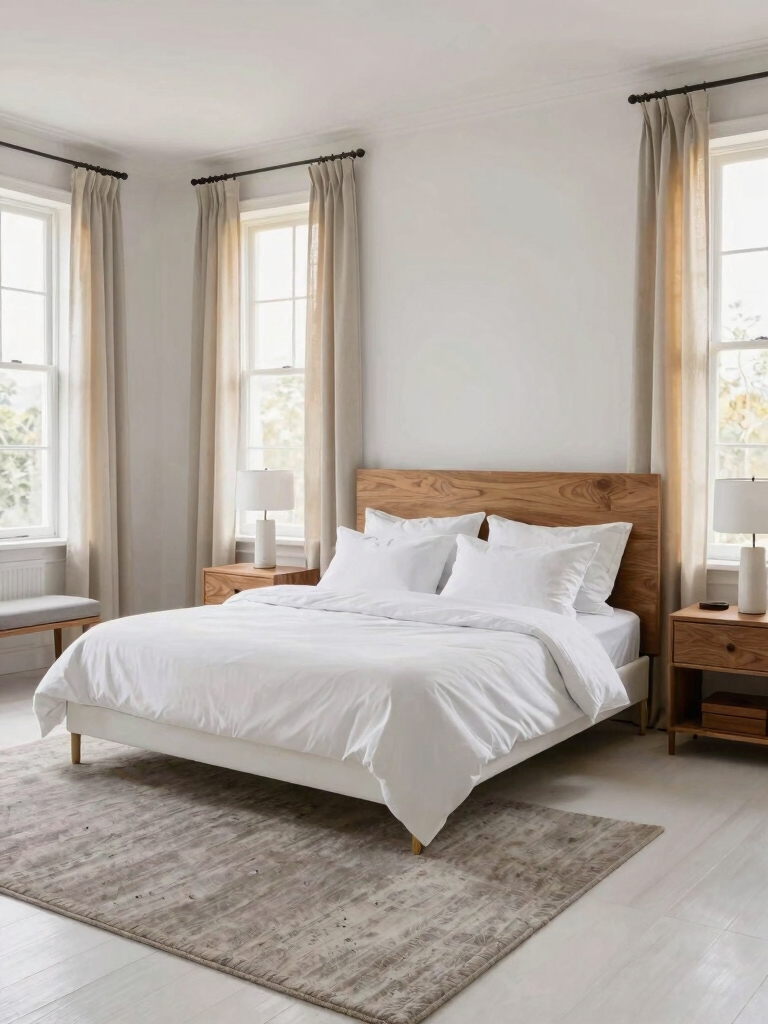
Wood is what gives an all-white room a heartbeat, because a warm grain against all that white instantly warms the scheme rather than chilling it. A wood headboard, a rattan chair, an oak nightstand, or a vintage dresser brings a natural tone and a bit of history into the scheme, and it stops the room from feeling like a blank gallery. Even one good wood piece changes the whole feeling of the room from cold gallery to warm retreat.
One or two warm anchors, no more
Then let one standout piece carry some character. White is a generous backdrop. In a quiet white room, a single sculptural lamp, an antique mirror, or a textured art piece becomes the focal point without any fight from competing color, and the restraint of the all-white scheme actually makes that one piece land harder than it ever would in a busier room.
Let the wood tones rhyme rather than match exactly, an oak nightstand can sit happily near a walnut frame as long as both lean warm, and don’t overdo the standout moments, one or two is plenty. A white room is at its best when it’s calm with a few warm, characterful anchors, and these paint ideas to refresh a room help you get the white itself right.
ℹ️Good to Know
Whites have undertones just like any color. The same room can feel cozy or clinical depending on whether the white leans cream or blue. In a bedroom, a warm white with a cream or soft beige base almost always wins for warmth, especially in a room that doesn’t get much direct sun.
Let in Natural Light
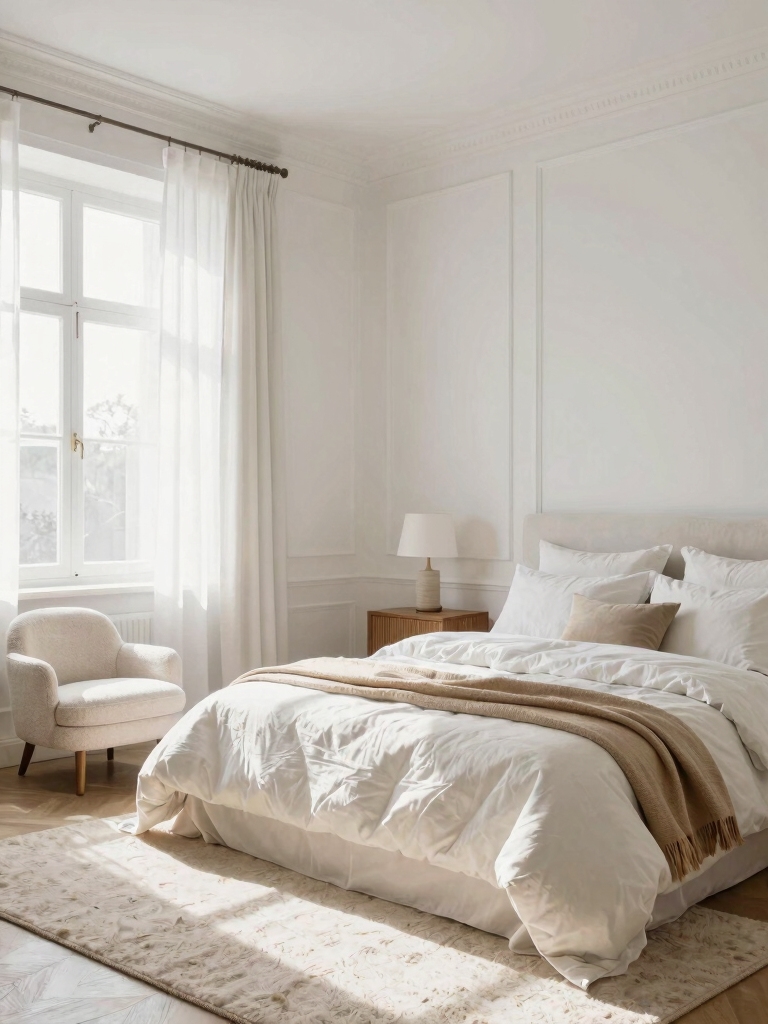
White and natural light are made for each other, since pale surfaces bounce daylight around and make a room feel airy and open. The goal is to let as much light in as you can during the day and keep it soft and golden at night, so the room glows in both.
Heavy, dark drapes are the enemy of a bright white room. They swallow the very light the palette depends on. A white room with the daylight blocked just looks gray and flat, which is the opposite of the airy calm you chose white for in the first place.
Hang light, sheer or linen curtains that filter the sun without blocking it, place a mirror across from the window to double the daylight, and keep the sills clear. After dark, switch to warm, layered lamps so the white stays creamy instead of going gray, and these cozy lighting ideas for the perfect glow cover the evening setup.
- Swap heavy drapes for sheer or light linen curtains that let the daylight through.
- Place a mirror opposite the window to bounce light deeper into the room.
- Keep the windowsills and the glass clear so nothing blocks the daylight white depends on.
Three Cozy-White Directions to Borrow
Cozy white isn’t one look, and naming the direction you want makes the rest of the choices easy. I usually point people toward one of three. Scandi-white leans into pale wood, simple lines, and lots of texture for a calm, hygge feel. Coastal-white softens the scheme with linen, rattan, and a whisper of blue or sage. Modern-farmhouse-white brings in warmer woods, a little black hardware, and chunkier knits for a homier, lived-with warmth.
They all start from the same warm white and the same pile of texture; the wood tone and the one accent are what set them apart. Pick the one that matches how you want the room to feel, then let it steer the wood, the metal, and the single accent color. A clear direction keeps a white room from drifting into a generic, characterless box, which is the quiet trap of an all-white scheme.
Styling Tips That Keep White Cozy, Not Clinical
The last layer is the styling, and a few quiet moves keep a white room from sliding back toward sterile. Bring in life and softness: a couple of easy plants, a stack of well-read books, a soft rug your feet land on in the morning. Green against white is especially good, since a single trailing plant adds the one bit of natural color the scheme can carry without losing its calm, and it brings a little life to all those still, pale surfaces.
Then resist the urge to keep it pristine. A perfectly clean, empty white room turns cold, while one with a thrown-back quilt, a few personal objects, and a little everyday softness feels like someone actually loves it. Perfect is the enemy here. Keep the clutter low but the texture and personality high, and the white stays the calm, cozy, quietly luxurious backdrop it’s meant to be.
Common White Bedroom Mistakes
Picture the classic cold white bedroom: bright walls, a smooth white headboard, one bluish ceiling bulb, and nothing else. It looks like a rental listing photo, not a place anyone sleeps. Almost every chilly white room I walk into is some version of that same empty, all-smooth setup, and the cure is just putting back what got left out.
Two culprits do most of the damage. A blue-based white that looked crisp on the paint chip turns icy on the wall, and a cool ceiling bulb drains the warmth out of everything under it after dark. The good part is that each is a same-day fix, a swapped bulb, a thrown blanket, a single oak stool, so a room that felt like a clinic on Friday can feel like a retreat by Saturday without anyone repainting a thing.
Cozy White Bedroom Questions, Answered
?How do I make a white bedroom feel cozy instead of cold?
Work in layers, easiest to hardest. Start with the cheap, reversible moves: swap to 2700K bulbs and pile texture onto the bed, since those two alone warm most rooms in an afternoon. Then add a wood piece for a natural tone, and only repaint to a creamier white if the room still reads icy in daylight. Doing it in that order means you rarely need the expensive step at all.
?What’s the best white paint for a warm, cozy bedroom?
A warm white with a cream, beige, or soft yellow base rather than a stark, blue-leaning bright white. It reads soft and inviting under both daylight and lamplight. Always test a large swatch on the actual wall, since whites shift dramatically with the room’s light.
?How do I add warmth to a white room without adding color?
Reach past fabric for the warm-toned hard stuff: brass or aged-bronze hardware, an antique brass lamp, a gilt mirror frame. Metals in a warm finish read as warmth the way a color would, but they keep the scheme technically neutral. A candle or two and a dimmer pull the same trick after dark, so the room feels warm without a single colored thing in it.
?Do white bedrooms work in a small room?
Yes, beautifully. White bounces light and makes a small room feel larger and brighter. Keep it warm with texture and wood so it doesn’t feel like a clinic, add a mirror to double the daylight, and the small white room reads open and airy rather than cramped.
?How do I keep a white bedroom from looking dirty or worn?
Choose washable, durable fabrics and a wipeable wall finish like eggshell or satin, and lean on slightly warmer, more forgiving whites that hide marks better than a stark bright white. Wash the white bedding weekly and run a five-minute spot-clean on the headboard and sills, and the room never gets the chance to look grubby. A warmer white with texture also disguises the everyday wear that shows instantly on flat, cool white.
White, Warmed All the Way Up
A cozy white bedroom isn’t about the color at all; it’s about everything you add to soften it. Pick a warm white, pile on texture, work in wood tones, let in daylight, and light it golden, and the same palette that can feel like a hospital turns into the most restful, quietly luxurious room in the house. White is only as cold as you leave it.
Start with the white itself and the texture on the bed, since those two do most of the warming, then layer in wood and light from there. Get the warmth right and a white bedroom becomes the calm, inviting retreat it always had the potential to be.