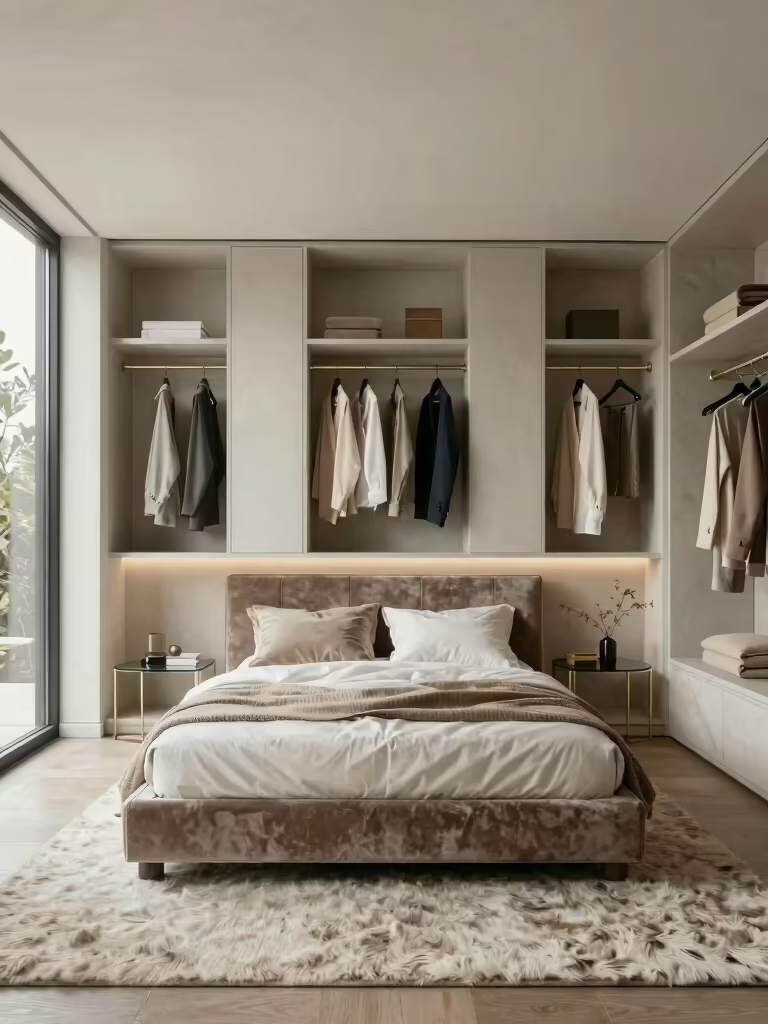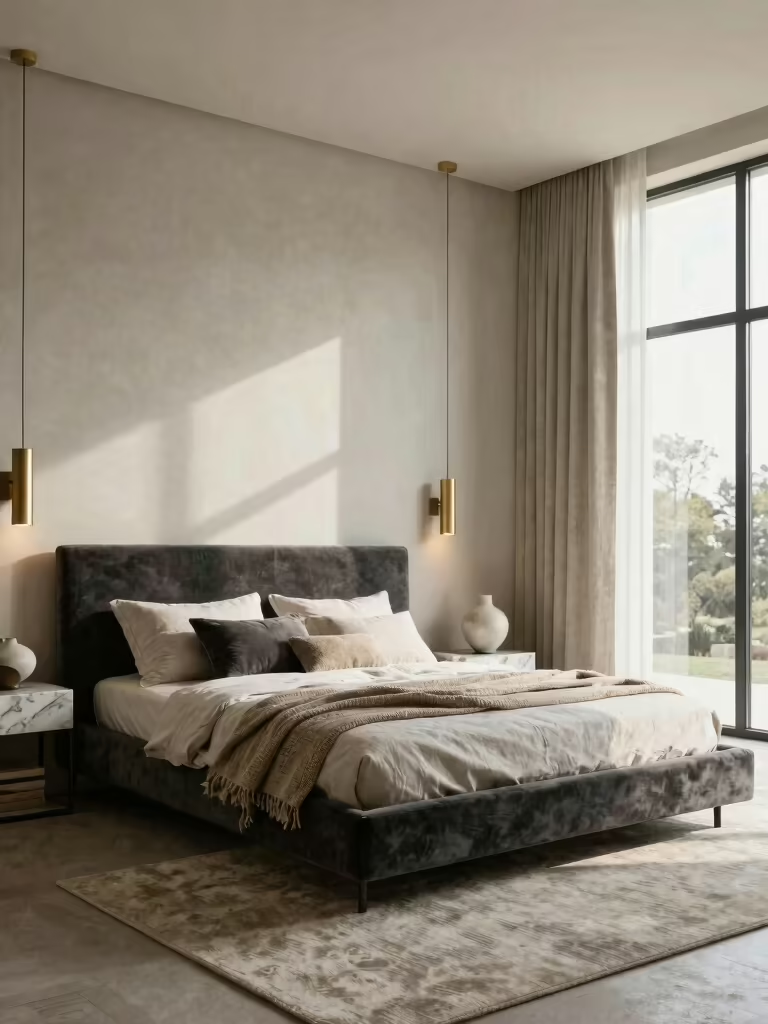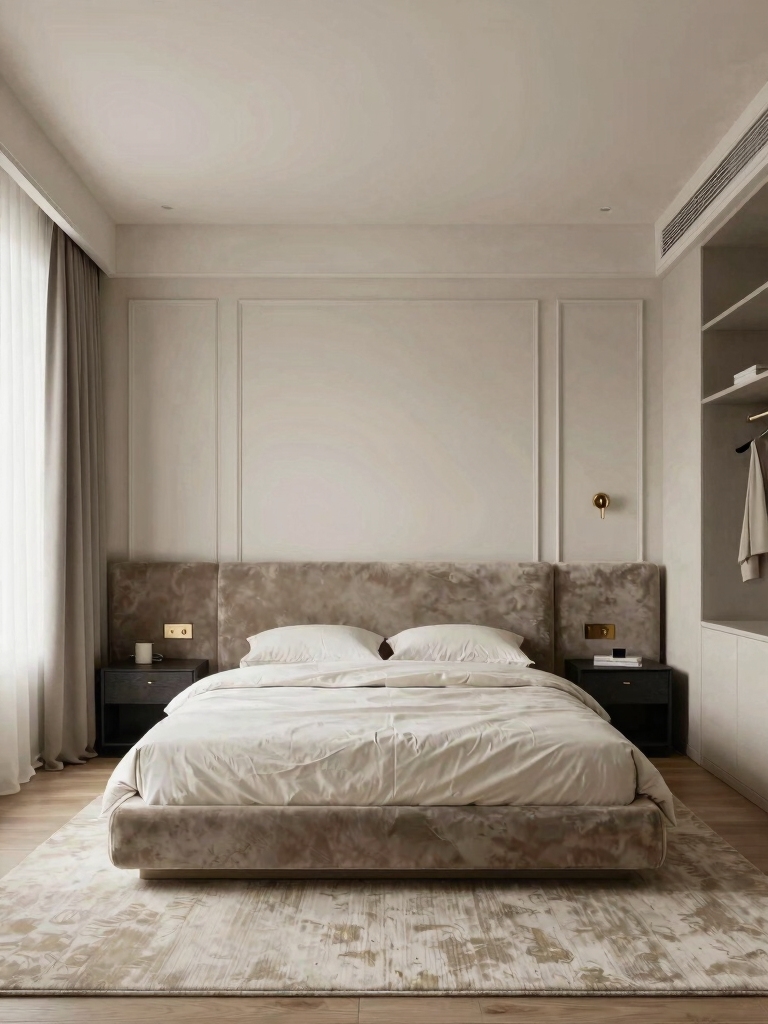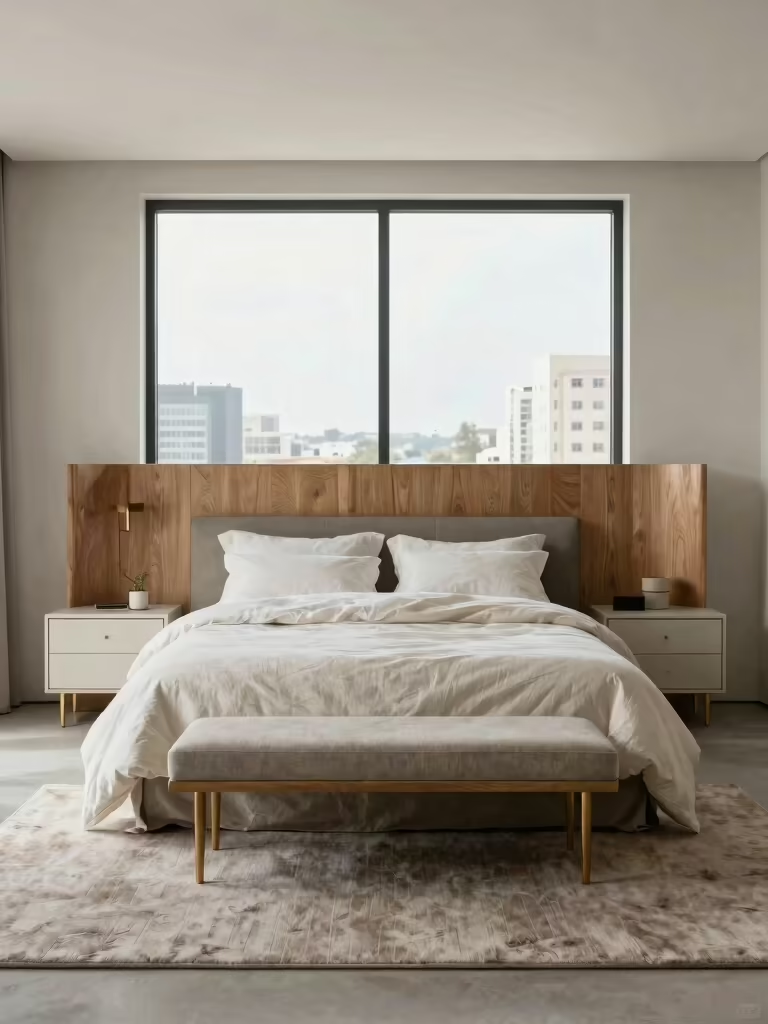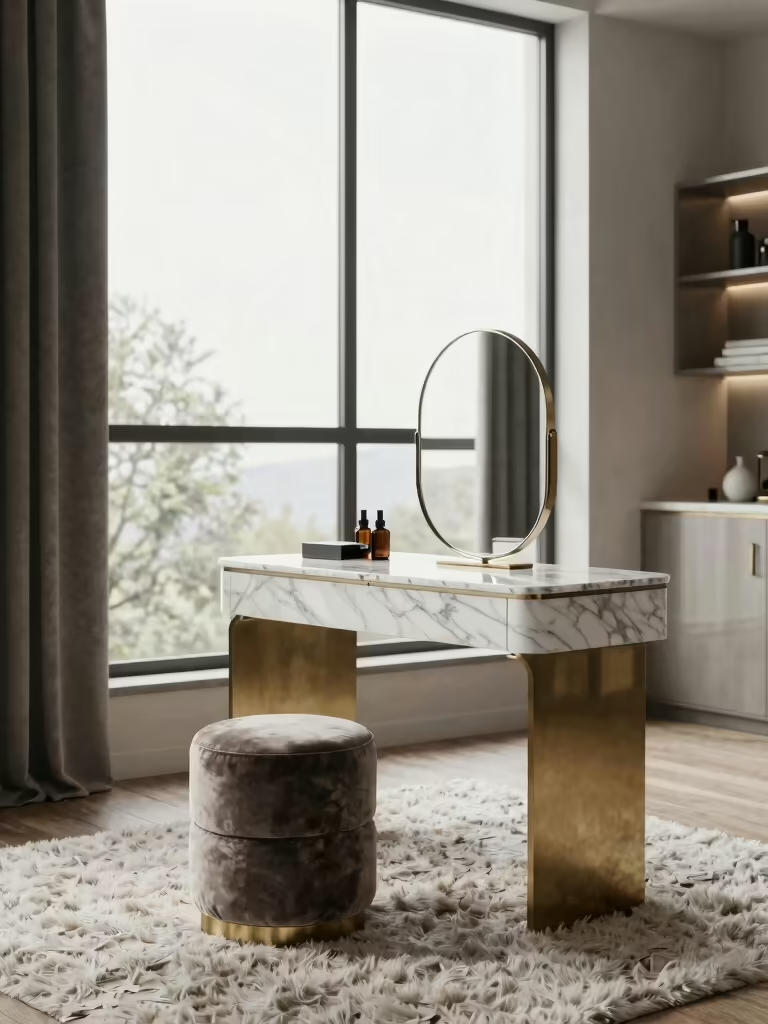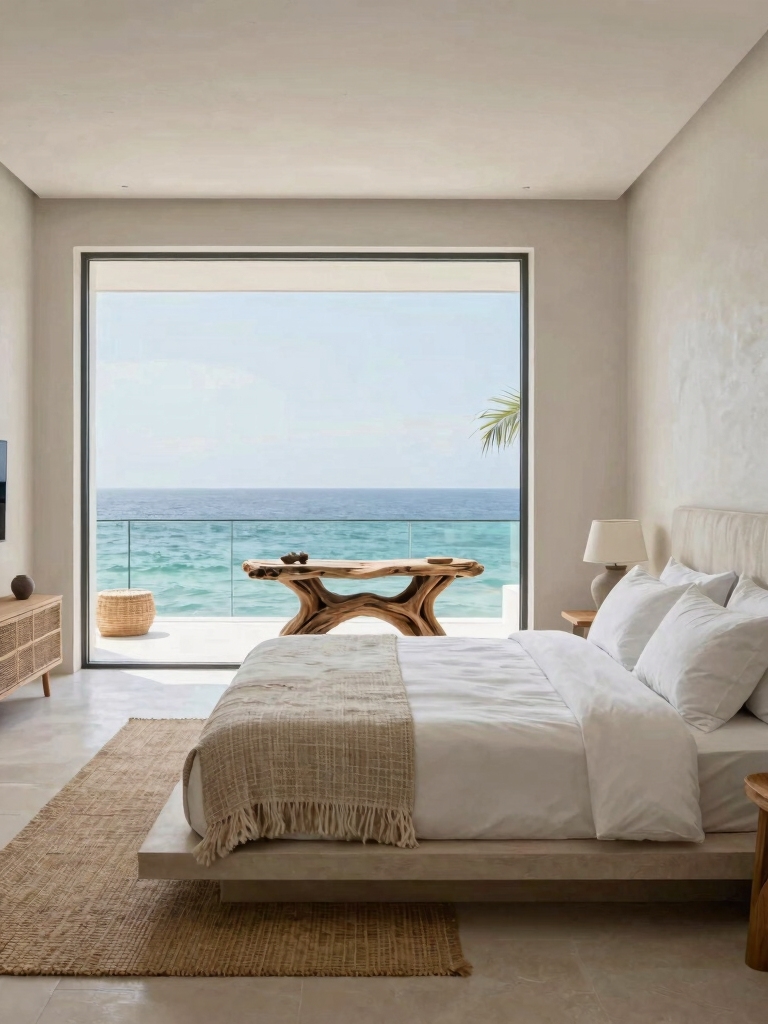

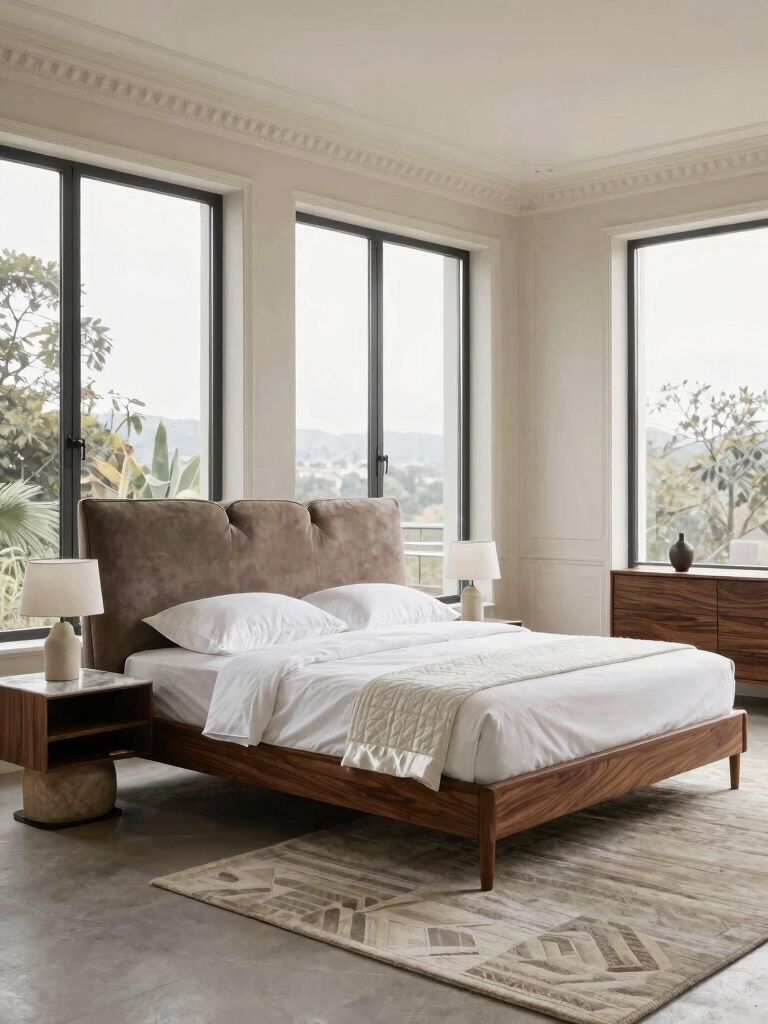
An expensive-looking bedroom and an expensive bedroom are two different things, and the gap between them is mostly know-how. The rooms that look like luxury aren’t the ones with the biggest budget. They’re the ones where a few high-impact moves are done right and everything cheap is hidden well.
These modern luxury bedroom ideas chase that look for far less than it suggests: a statement headboard that anchors the room, textiles that feel richer than they cost, hotel-style layered light, and a deep, moody palette that looks rich. Spend where the eye lands and save everywhere else, and a modest room can look like a suite.
Key Takeaways
- Spend on what the eye lands on: a statement headboard and good bedding sell the whole room.
- Buy luxe-feeling textiles, velvet, heavy linen, sateen, since texture looks expensive even when the price isn’t.
- Light it like a hotel: warm, layered, dimmable light is the cheapest luxury upgrade there is.
- Go moody and tonal; a deep, rich palette looks far more expensive than another safe white room.
Luxury Benchmarks on a Budget
Luxury on a budget comes down to knowing which details the eye treats as expensive, then putting your money only there. I tell clients to spend on the few high-impact anchors, good bedding, a real headboard, quality lighting, and go cheap, confidently, on everything else. A curated room with three excellent things beats a packed room of mediocre ones every time.
The tells of a cheap room are usually fixable for almost nothing: thin, shiny fabrics, a bare overhead bulb, mismatched plastic hardware, clutter on every surface. Swap the hardware for brushed brass at $15 to $40 a set, hide the clutter, warm the light, and dress the bed well, and the room jumps a whole tier.
What sells the luxury look is rarely one expensive thing; it’s the absence of the cheap tells, which is something you can engineer for the price of a few small swaps and an afternoon of editing. These decor ideas worth borrowing show where the high-impact swaps are.
Create a Statement Headboard That Defines the Room
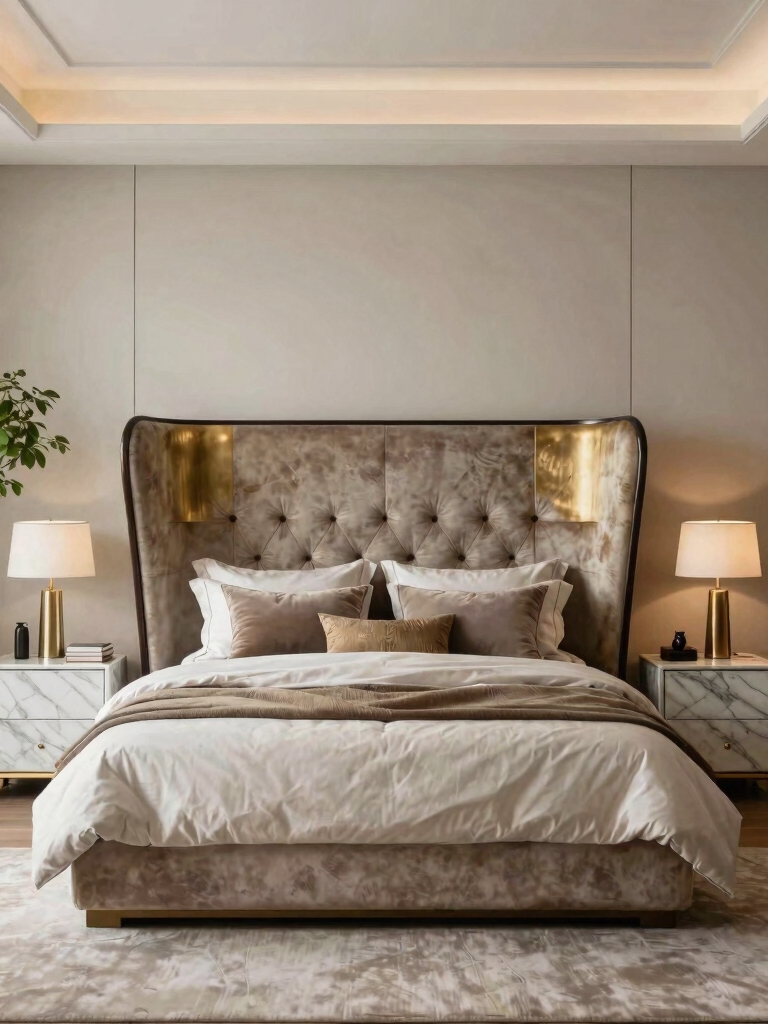
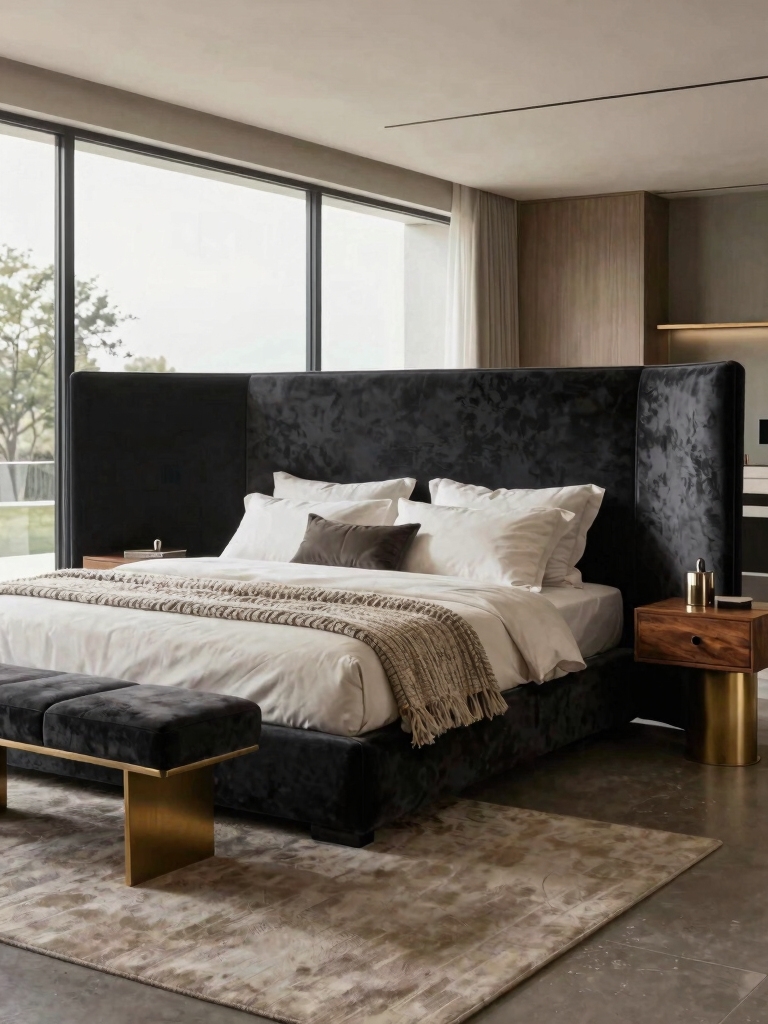
If you make one luxury move, make it the headboard. It’s the first thing the eye hits, it sets the scale and mood of the whole room, and a generous one instantly signals a designed space. A tall, upholstered or paneled headboard does more for the luxury feel than almost anything else you can add.
Go bigger than feels normal
You don’t have to buy an expensive one. A DIY upholstered headboard, plywood, foam, and a few yards of fabric, runs about $80 to $150 and looks like a custom piece. Go bigger than feels normal; an oversized headboard is one of the strongest luxury cues there is, since builder-grade rooms always skimp here.
Keep the lines clean and the fabric quality where you can. A heavy linen, a velvet, or a textured weave looks expensive even on a budget frame, and a simple shape stays current for years. Extend it wider than the mattress and mount it higher than feels obvious, and a basic bed suddenly carries the presence of something custom-made. Light it well, and the headboard becomes the anchor the rest of the room quietly arranges itself around.
💡Fastest Win
The single cheapest way to make a bedroom look expensive is to dress the bed properly and warm the light. Iron the linens, layer three textures, add a folded throw, then swap to 2700K bulbs on a dimmer. A plain room looks like a hotel suite before you’ve spent fifty dollars.
Choose Textiles That Feel Expensive
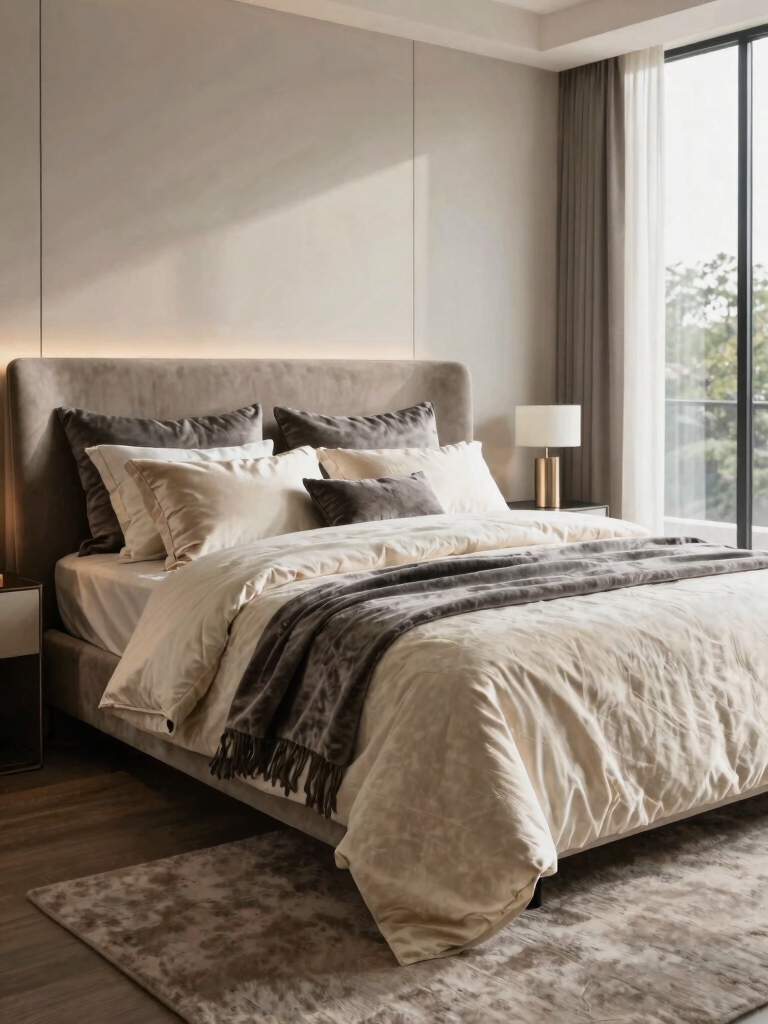
Textiles are where a room feels expensive or doesn’t, because texture is the one luxury signal you sense before you think. The good news is that the look is far cheaper than the designer price tag, as long as you choose the right materials and layer them well. Weight matters most. A heavy, matte fabric feels rich in the hand and drapes like money, while a thin, shiny one gives the whole game away no matter how nice the color is.
- Layer heavy linen, sateen, and a velvet or velvet-look throw so the bed has depth and weight, not thin shine.
- Stick to rich neutrals with one tonal accent so the layers feel collected and intentional.
- Add a chunky knit and a couple of textured cushions to build the layered hotel-bed look for well under a hundred dollars.
- Iron or steam the bedding and make the bed properly, since a crisp, layered bed is the single biggest luxury tell.
Layer Lighting for Hotel-Worthy Ambiance
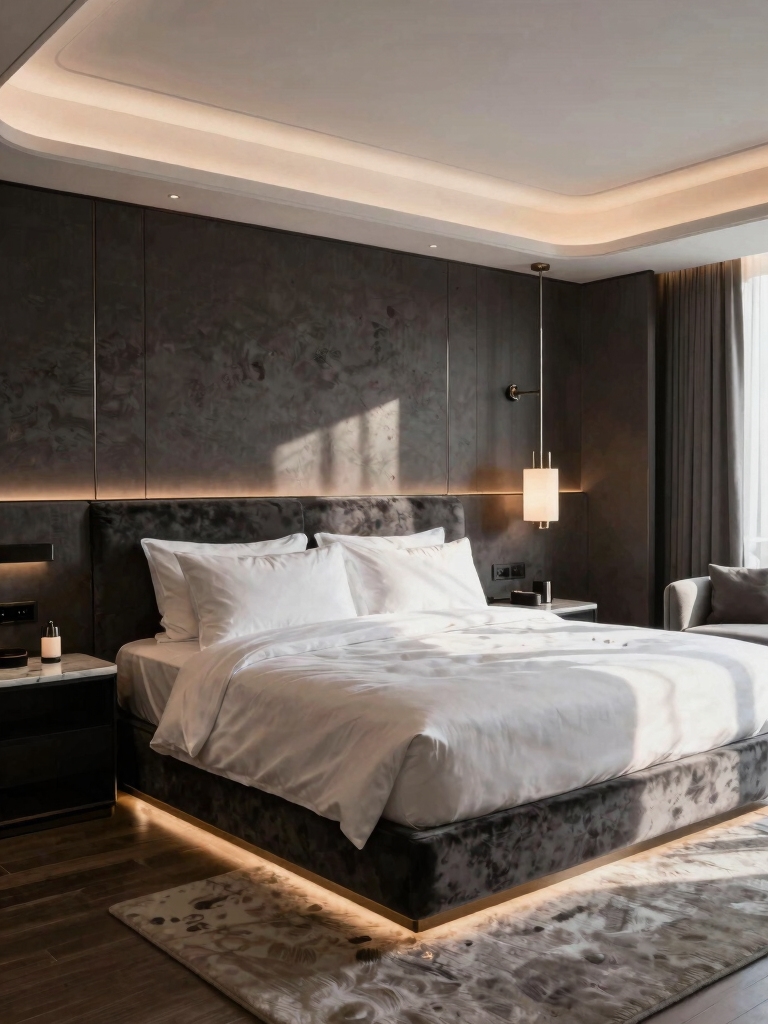
Hotel rooms feel luxurious largely because of the lighting, and it’s the cheapest upgrade you can copy at home. The secret is layers: never one bright overhead, always several warm, dimmable sources at different heights. That layered glow is what makes a plain room feel like a suite at night.
Build it up with a warm overhead on a dimmer, a pair of bedside lamps or sconces, and a hidden strip behind the headboard for that soft hotel wash. Keep every bulb warm, around 2700K, and put the key lights on dimmers for a few dollars each. These bedroom lighting ideas for mood walk through the layering.
- Run a soft LED strip behind the headboard for the indirect glow that looks instantly high-end.
- Flank the bed with matching lamps or sconces for the symmetrical, balanced, hotel-suite look that always reads as deliberate.
- Put the main lights on dimmers, a few dollars each, so the room shifts from bright to moody on cue.
Two things people assume about a luxury bedroom that hold them back:
❌ Myth: Luxury means spending a lot of money.
✅ Reality: It means spending it in the right places. A good headboard, dressed bedding, and warm light sell the look; everything else can be inexpensive and hidden well.
❌ Myth: A bright, all-white room looks the most high-end.
✅ Reality: Depth reads as luxury more reliably than white does. A moody, tonal palette with warm light and texture looks far more expensive than another safe, flat white room.
Build a Moody Palette That Reads Rich
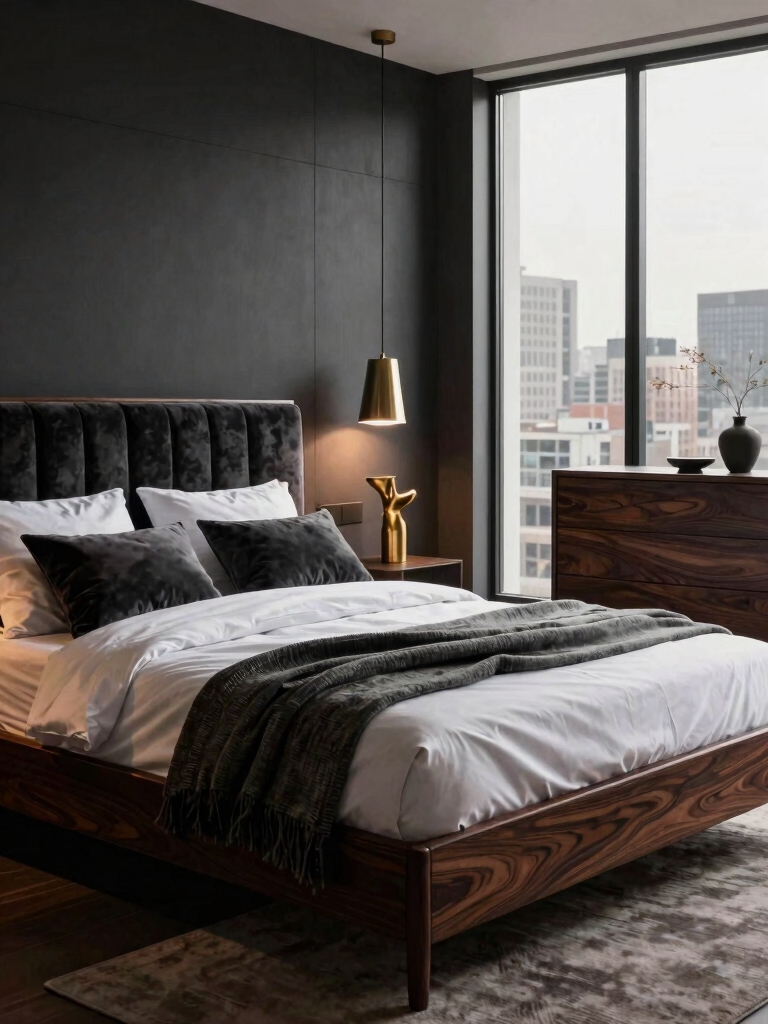
A deep, moody palette is one of the fastest ways to make a room look expensive, because richness and depth signal luxury where a flat, safe white looks builder-grade. Think charcoal, deep green, espresso, or a warm near-black on the walls or the bed wall, balanced so the room feels intimate instead of dark. The same square footage that looks plain in flat white suddenly feels considered and expensive once it’s wrapped in a deep, confident color.
Balance is the whole game. The trick is to pair the dark with warmth and texture so it feels rich, not gloomy. Layer in warm wood, brass, and tactile fabrics, and keep the lighting warm and low, so the depth comes across as cocooning. A gallon of a dramatic paint color runs about $50, which makes a moody feature wall the cheapest high-end move in the whole room.
Balance is everything with a dark palette. Keep one or two surfaces deep and let warm neutrals and good light carry the rest, so the room comes across as moody and luxe rather than cave-like. Test the color on the wall at night first, since deep shades shift a lot under lamplight, and these paint ideas to refresh a room help you choose.
Common Mistakes That Cheapen a Bedroom
Most rooms that miss the luxury mark do it in the same few ways, and I spot them in seconds. The biggest is shiny, thin fabric, the slippery bedding that catches the light wrong and quietly screams budget. Swap it for matte, heavier weaves. The second is the lonely overhead bulb, which flattens everything in the room. Layered warm light fixes that for almost nothing.
The other two are just as common. An undersized headboard, or none at all, leaves the bed looking unfinished, and clutter on every surface is the single fastest luxury-killer there is, since expensive rooms are always edited and calm. None of these cost much to undo. I tell clients to start with the bedding and the bulbs, because those two alone erase most of the cheap tells in one afternoon. Fix the obvious giveaways first, then chase the finer details.
Hide the Budget With Smart Storage
Nothing kills a luxury look faster than clutter, so the storage has to make the everyday mess disappear. Clear surfaces are a luxury signal all on their own, since high-end rooms are always edited and calm. The move is to build storage into the furniture so nothing has to sit out on display.
Lean on closed pieces and the spots that hide. A bed with drawers, a closed nightstand, a bench that opens, and the under-bed zone swallow the clutter that would otherwise cheapen the room. The aim is one home for everything that usually ends up scattered across the dresser and the floor, so the surfaces can stay bare and the eye has nothing busy to catch on.
A valet tray gathers the small daily stuff in one spot, and these storage ideas for hiding clutter keep the calm, expensive look intact.
Styling Tips That Sell the Luxury Look
The last ten percent is styling, and it’s where a budget room either convinces or doesn’t. I tell people to style with restraint: a few large, quality-feeling objects beat a scatter of small cheap ones every time. One oversized vase, a stack of two hardback books, a single piece of real art looks far richer than a crowded shelf of trinkets.
Borrow the hotel playbook for the finishing touches. A folded throw at the foot of the bed, a tray on the nightstand, fresh stems in a heavy vase, and symmetry wherever you can manage it, matching lamps, balanced art. Keep the palette of objects as tight as the wall colors, and the room looks deliberately composed, not accidentally furnished. That sense of intention is what really comes across as expensive.
Luxury Bedroom Questions, Answered
?How do I make my bedroom look expensive on a budget?
Spend only where the eye lands: a generous headboard, well-dressed bedding, and warm layered lighting. Hide the clutter, swap cheap hardware for brushed brass, and go moody with the palette. Three high-impact moves done well beat a roomful of mediocre upgrades.
?What makes a bedroom look high-end?
Scale, texture, and restraint. An oversized headboard, layered luxe-feeling fabrics, symmetry around the bed, clear surfaces, and warm, dimmable light are the cues the eye treats as expensive. A flat overhead bulb and clutter are the cues that signal cheap.
?What’s the single best upgrade for a luxe bedroom?
The bed. A statement headboard plus a properly layered, ironed set of bedding sells the whole room, since it’s the first and largest thing you see. Get the bed right and the rest of the room follows, often for very little money.
?Do dark walls really look more expensive?
Done right, yes. A deep, moody color with warm light and texture looks richer and more intentional than a safe white. The key is balance, keep one or two surfaces dark, add warm wood and brass, and light it well so it feels cocooning rather than gloomy.
?How do I get the hotel-bed look at home?
Layer it: a fitted sheet, a flat sheet, a duvet, then a folded throw and a few cushions in mixed textures. Iron or steam the top layers, keep the palette tonal, and make the bed every morning. The crisp, layered look is most of what makes a hotel bed feel luxurious.
Spend Smart, Look Expensive
Modern luxury isn’t about the budget; it’s about where you put it. A statement headboard, textiles that feel rich, hotel-style layered light, a moody palette, and hidden storage give you a room that looks far more expensive than it was. Spend on the few things the eye reads first and save, without apology, everywhere else.
Start with the bed, since it sells the whole room, then warm the light and deepen the palette from there. What’s the one cheap-looking detail in your bedroom pulling the whole thing down, and which of these moves would fix it fastest?