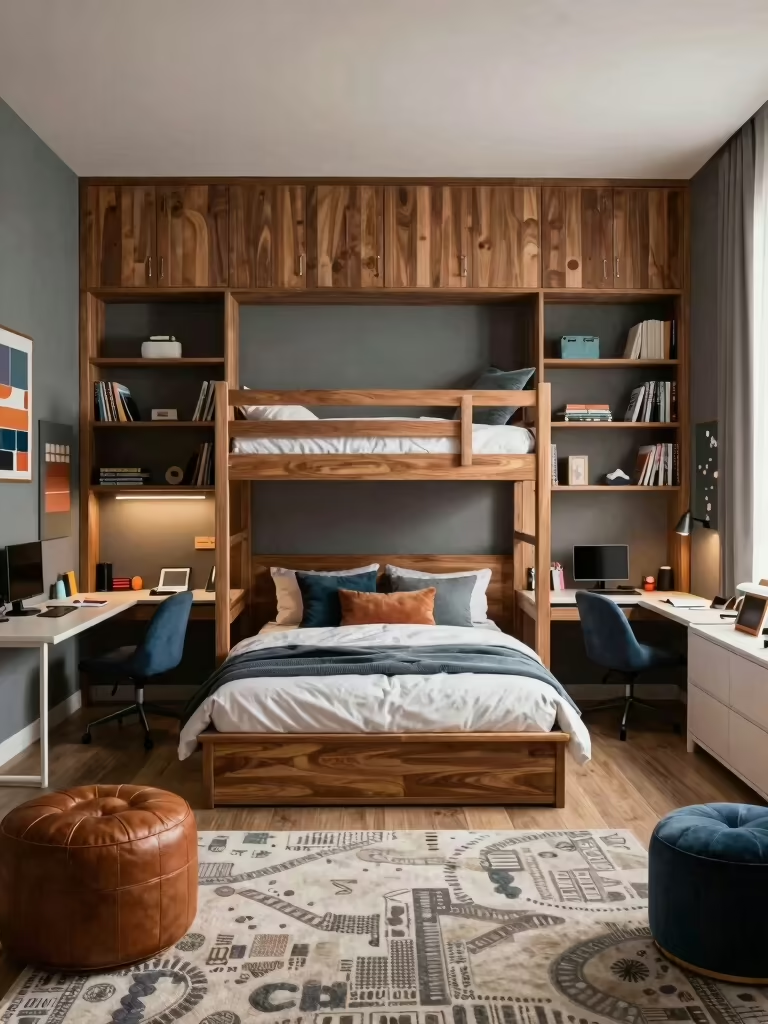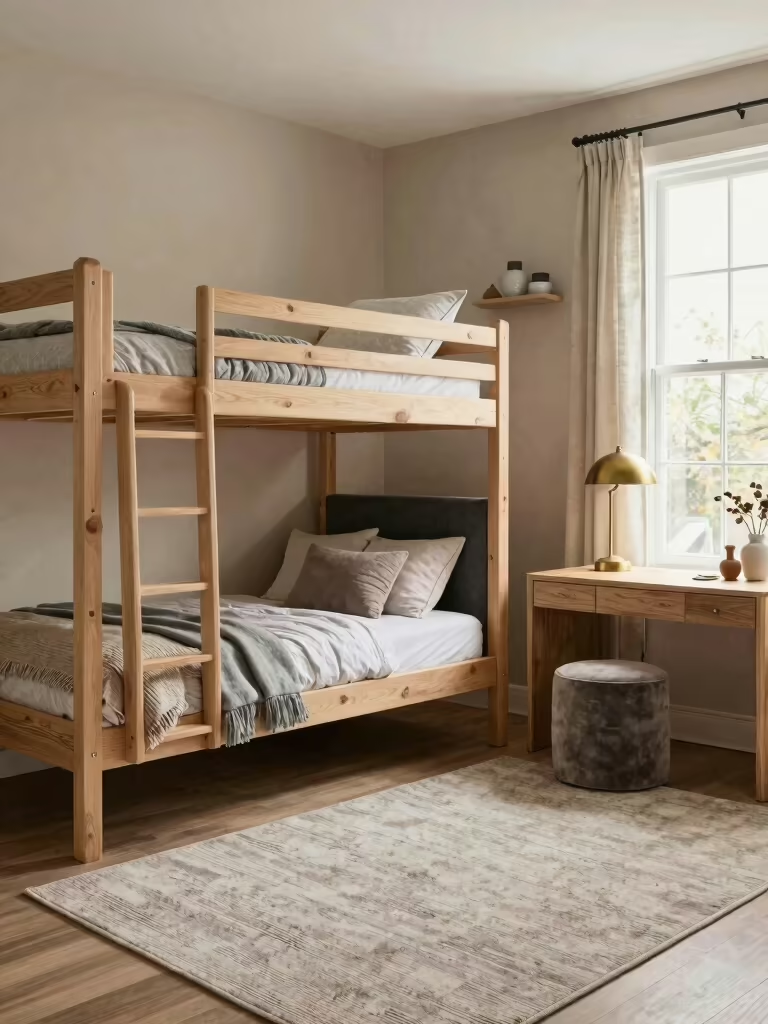

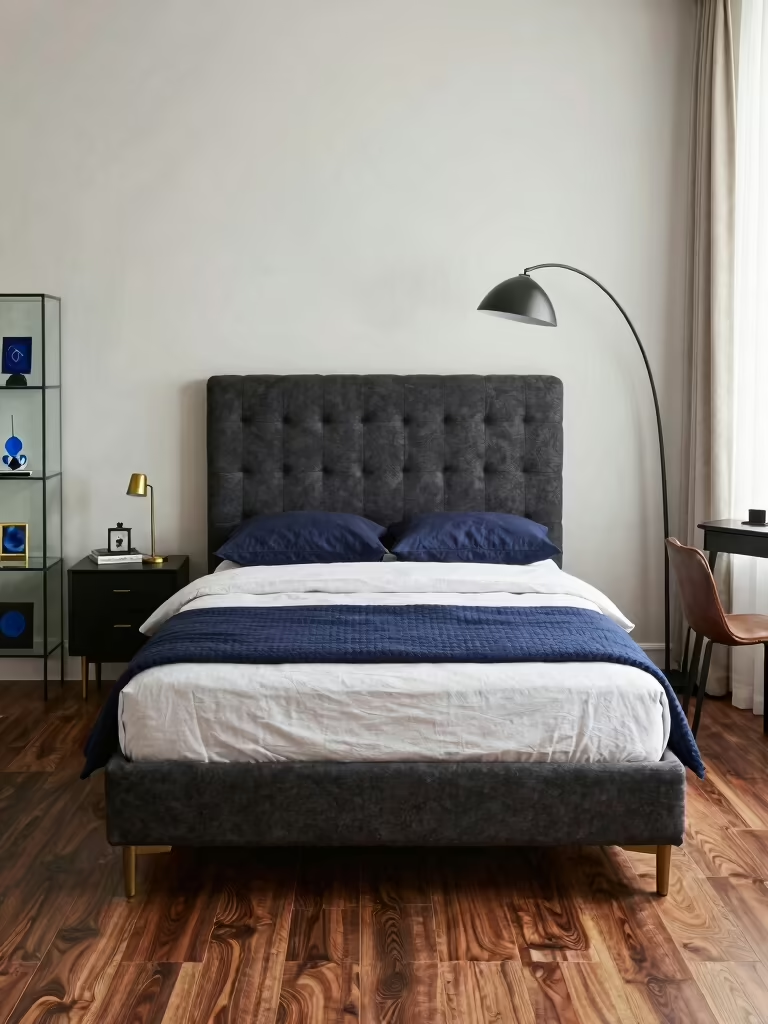
Walk into a boy’s room that actually works and the first thing you notice is what is missing: no clutter on the floor, no toys underfoot, no chaos. The boys’ rooms that stay livable are built on a few practical bones nobody really tells you about, safety, room to grow, and storage that keeps pace with the mess. These bedroom ideas for boys are the practical ones.
Below are 16 moves that make a boy’s room safe, flexible, and tidy without killing the fun. Most grow with him and lean on smart storage and clear zones, so the room works at six and still works at twelve.
The Bones of a Boy’s Room
| Priority | Why it matters | Start with |
|---|---|---|
| Safety | Rounded edges and anchored furniture | Anti-tip straps and a non-slip rug |
| Room to grow | The room changes as he does | Modular, adjustable pieces |
| Storage | Clutter sabotages everything | Bins, drawers, and labeled zones |
| Zones | Play, study, and sleep need limits | A rug or shelf to divide the space |
Start With Safety, Growth, and Storage
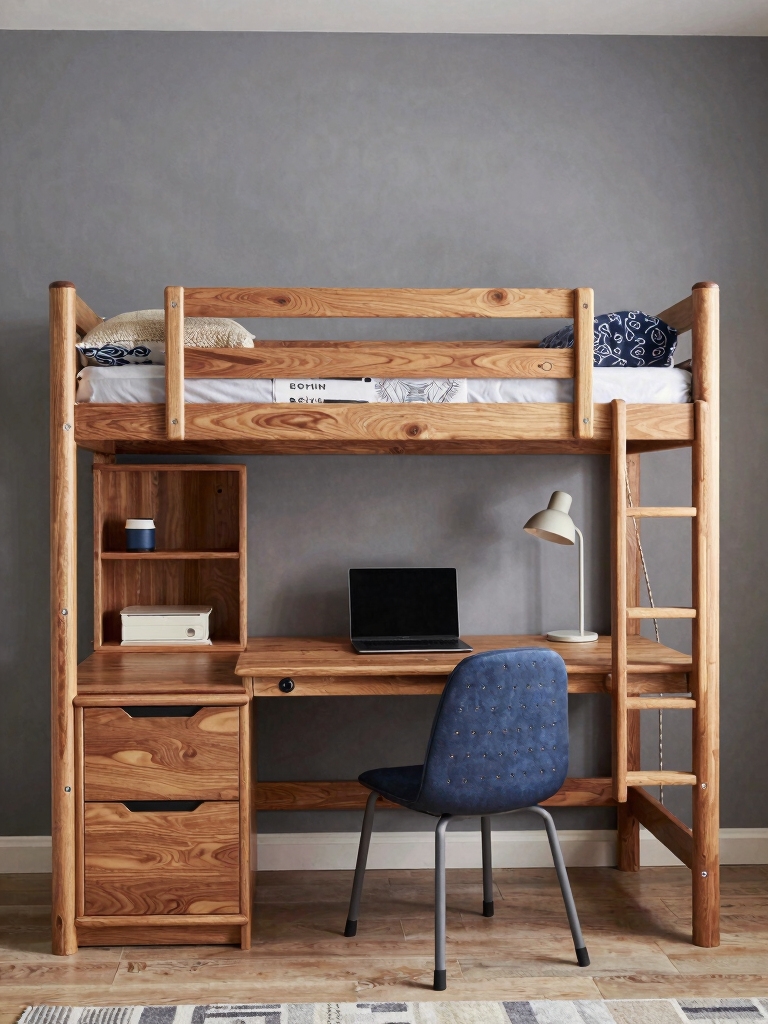
Before the fun decor, three practical things make or break a boy’s room: safety, the ability to grow with him, and enough storage to fight the clutter. The first thing I check in any kid’s room is whether the dresser is anchored. It almost never is. Get these right and the room stays livable for years. Skip them and you are redecorating constantly.
Safety first means anchored furniture and a soft landing. Anti-tip straps on anything tall (a few dollars, five minutes to fit), rounded corners, and a non-slip rug head off the most common bumps. For anything structural, like a loft or bunk, follow the maker’s weight and age ratings before you improvise.
- Anchor tall dressers and shelves to the wall with anti-tip straps
- A non-slip rug to soften falls and quiet the room
- Modular, adjustable furniture that grows with him
- Labeled bins so cleanup is something he can actually do
Maximize a Small Room’s Layout
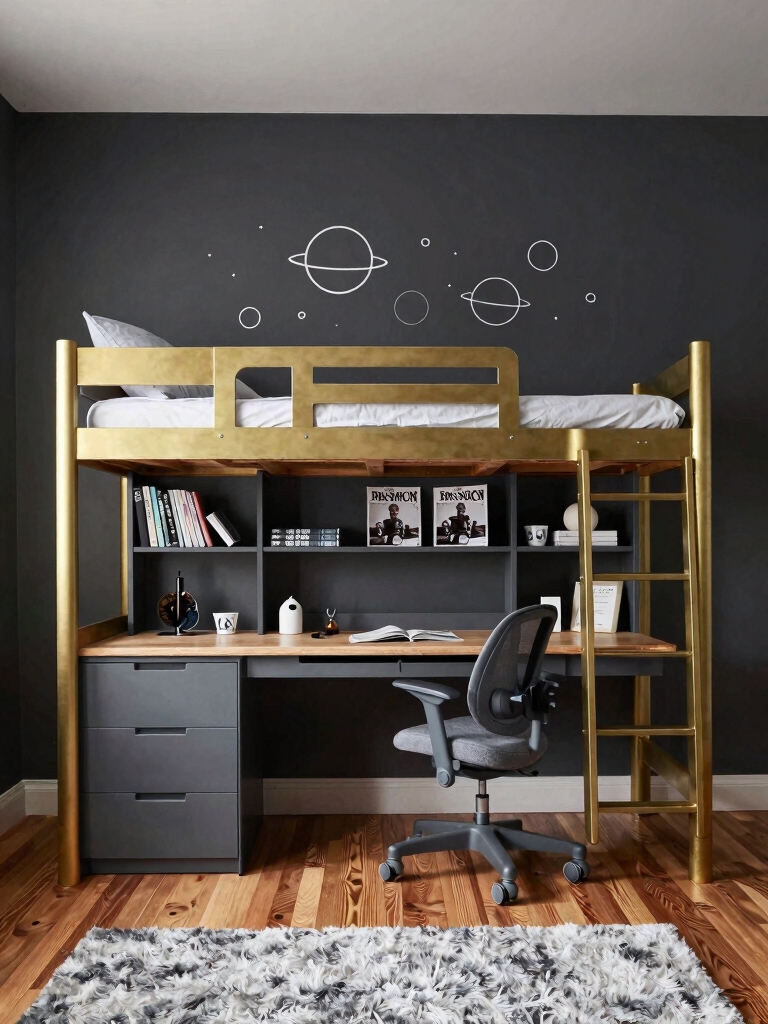
Boys’ rooms are often the smallest in the house, so layout matters most. The goal is simple: clear floor for play and clean paths between zones. Floor space is everything. Work it in this order:
- Push the bed to a wall or corner to free the center for play
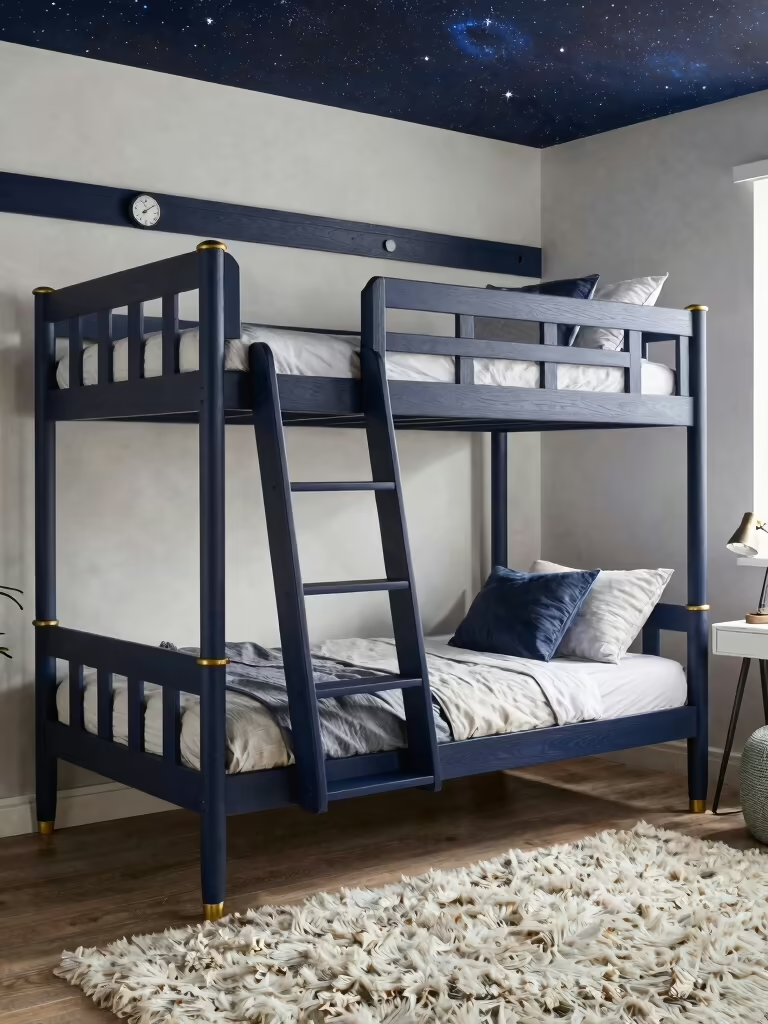
- Go vertical with a loft or bunk to reclaim floor
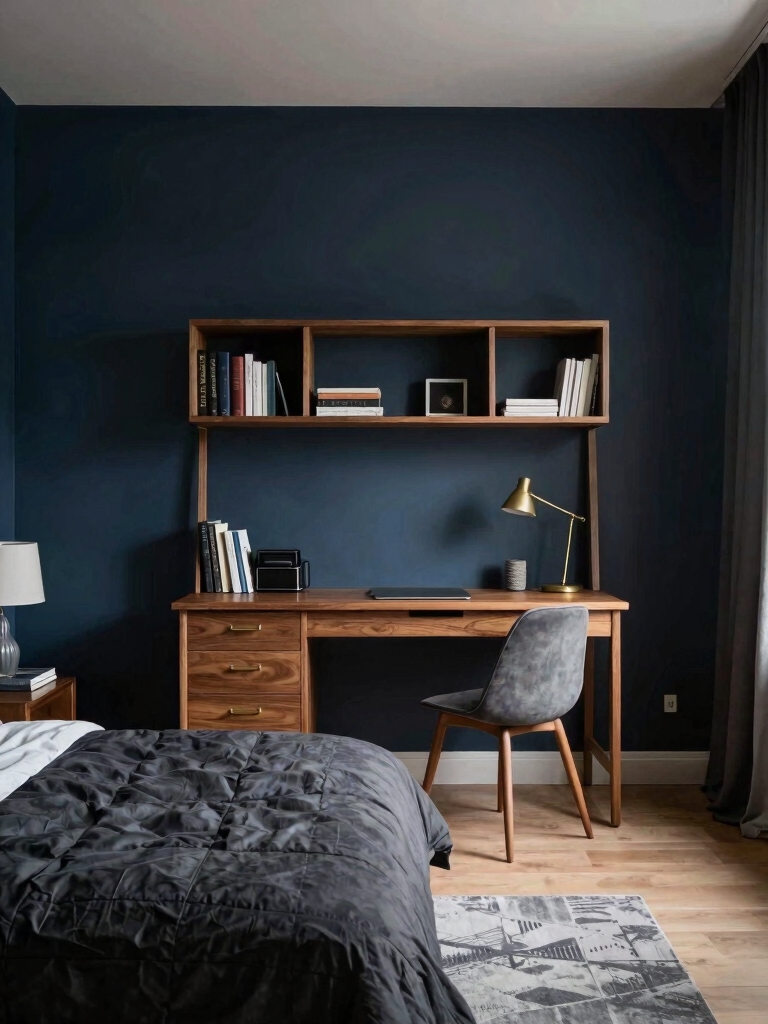
- Mount the desk on the wall so it floats above the floor
- Keep a clear path from the door to the bed and desk
- Leave open floor, since that is where a kid actually plays
ℹ️Good to Know
Furniture tip-overs send a young child to the ER every half hour or so in the US, and a dresser is the usual culprit. Anti-tip straps cost a few dollars and take five minutes to fit, and they are the single most important thing in a kid’s room.
Maximize Space With Multifunctional Furniture
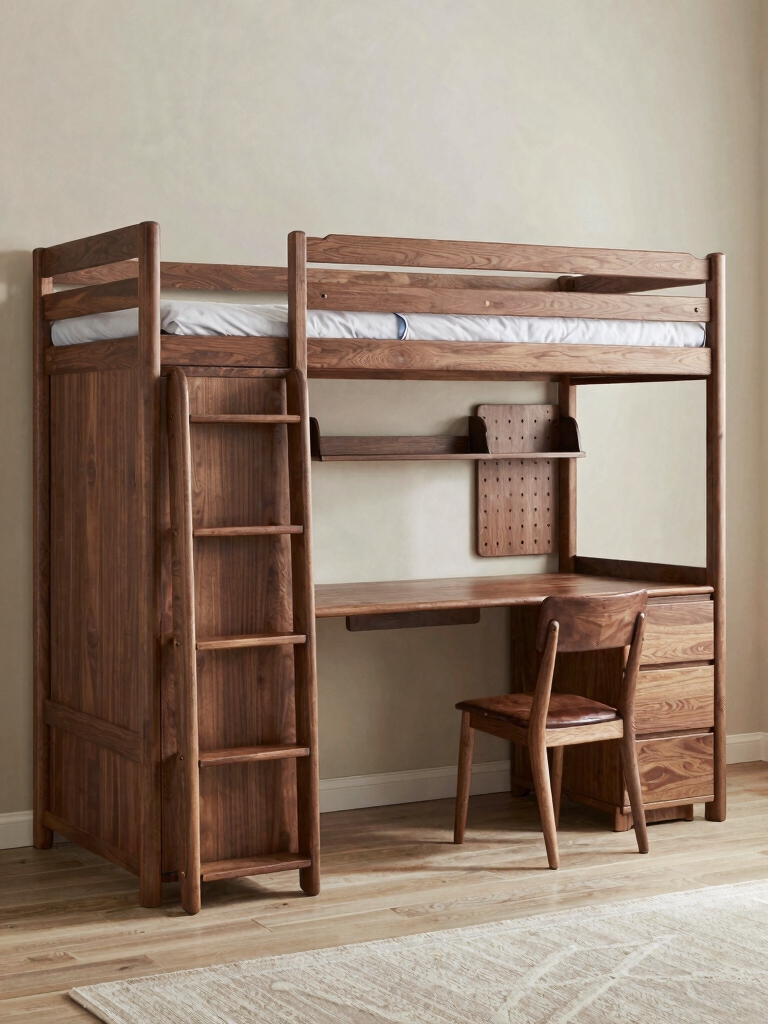
In a kid’s room, every piece should do at least two jobs. A bed with drawers absorbs a dresser, an ottoman hides bins and seats a friend, a loft puts a desk or play space underneath. Dual-function furniture is how a small room holds everything a growing boy accumulates. Make it work twice. Our a small room that works has more on the idea.
- A bed with built-in drawers to skip a dresser
- A loft bed with a desk or play zone beneath
- A storage ottoman or bench for toys and seating
- A wall desk that folds away when homework is done
Choose Bold but Calming Colors
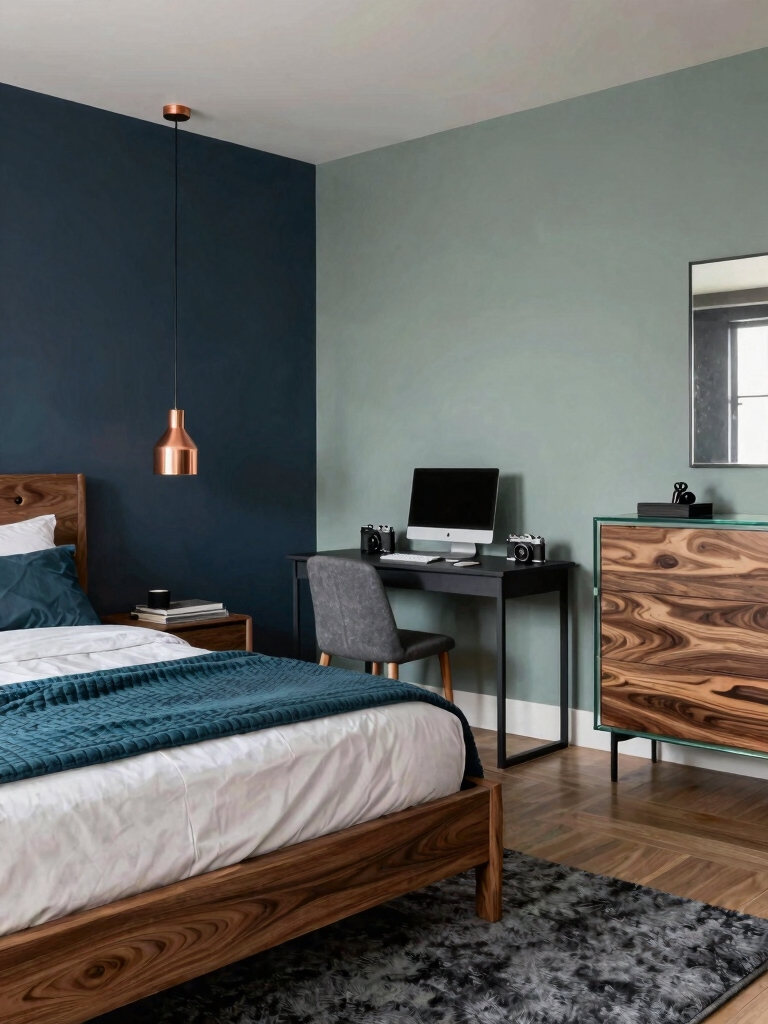
Boys often want bold, and a room he loves is a room he keeps tidy, so meet him partway. Anchor the room in a calm base, then let the bold come in through accents he can change as his tastes shift. That way the walls stay sane and his personality still shows. Let him pick the accents.
- A calm neutral or muted base on the walls
- Bold color in bedding, art, and accents he picks
- Removable decals or one accent wall for big personality
- A magnetic or chalkboard surface for ever-changing fun
🅰️Loft or bunk bed
Frees the floor underneath for a desk or play, best in a small or shared room. Follow the age and weight ratings, and keep the top bunk for older kids.
🅱️Low platform bed
Safer and easier for younger kids, with under-bed drawers for storage. Best for toddlers and early grade-schoolers not ready to climb.
Build In Clever Hidden Storage
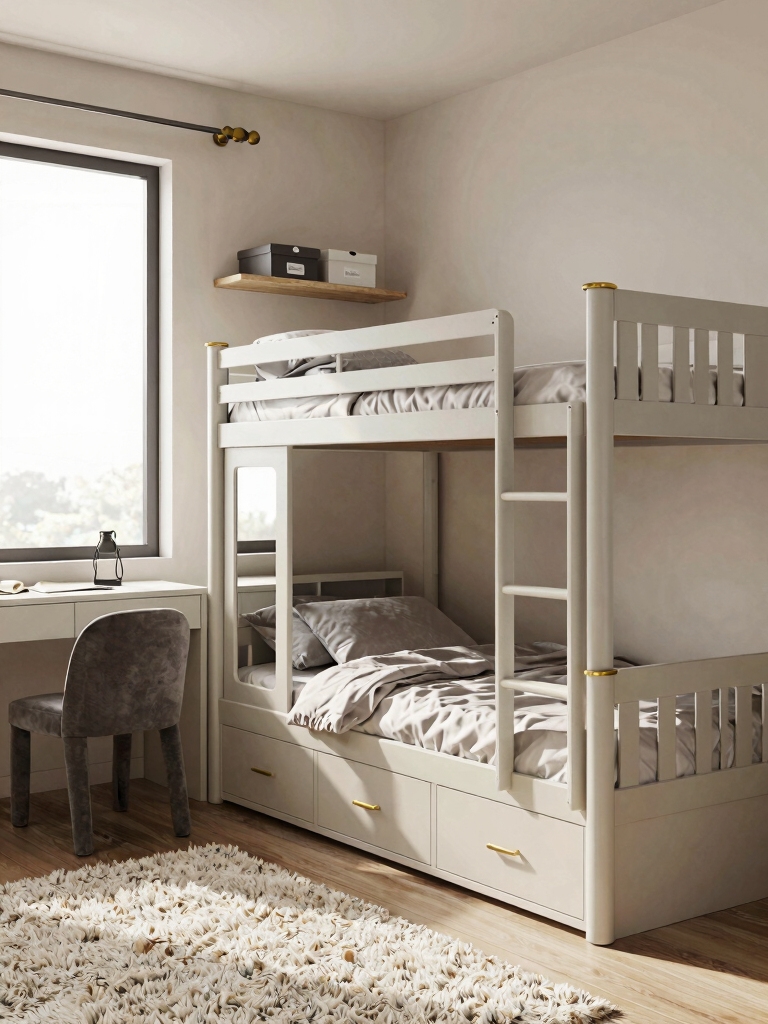
Storage is the difference between a boy’s room that stays tidy and one that is a permanent disaster. Make cleanup easy enough that he will actually do it. Easy wins, every time. Big open bins he can toss things into beat fussy systems he will ignore every time.
Easy beats tidy-looking
Use every hidden inch: under the bed, inside an ottoman, up the walls on shelves and hooks. Label zones with pictures or words so everything has an obvious home. For more ways to hide the overflow, our hidden storage helps.
Picture the room from his height for a second: if the hamper towers over him and the bins have lids he struggles with, the floor becomes the storage. Drop everything to his level, low hooks, open bins, reachable drawers, and a boy will surprise you. The expensive closet organizer is rarely the answer; a $25 set of stackable bins usually is.
Styling Tips That Grow With Him
Style a boy’s room so it can change without a full redo, because his interests will. Keep the big pieces neutral and timeless, and let the theme live in the cheap, swappable layers, bedding, posters, decals. When dinosaurs give way to basketball, you change a duvet and a few prints, not the furniture.
Let him have a say in the swappable stuff so the room feels like his. The split that works: he owns the accents, you own the bones. A pinboard, a shelf for his trophies and treasures, and art he chose give him ownership without locking the room into one phase.
Zone the Room for Play, Study, and Sleep
A boy’s room has to do three jobs at once, so dividing it into zones keeps it from becoming one big pile. A rug marks the play zone, a desk corner handles homework, and the bed stays for rest. Even in a small room, light boundaries tell him where each activity belongs. I have seen a single rug end the bed-jumping-during-homework problem on its own.
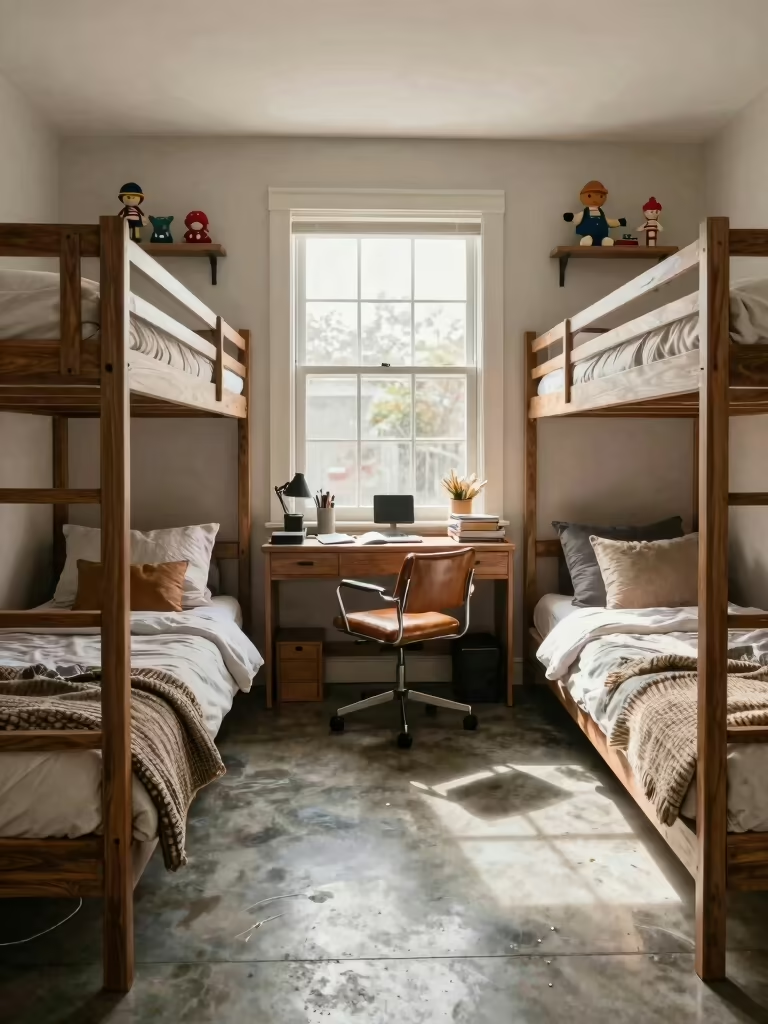
Use a rug, a low shelf, or a change in lighting to separate the zones without walls. A task lamp at the desk and a warm lamp by the bed reinforce the divide, and clear zones make cleanup faster since everything has a region it belongs to. For a shared setup, our a shared boys’ room goes further.
Give Him a Wall to Show Off
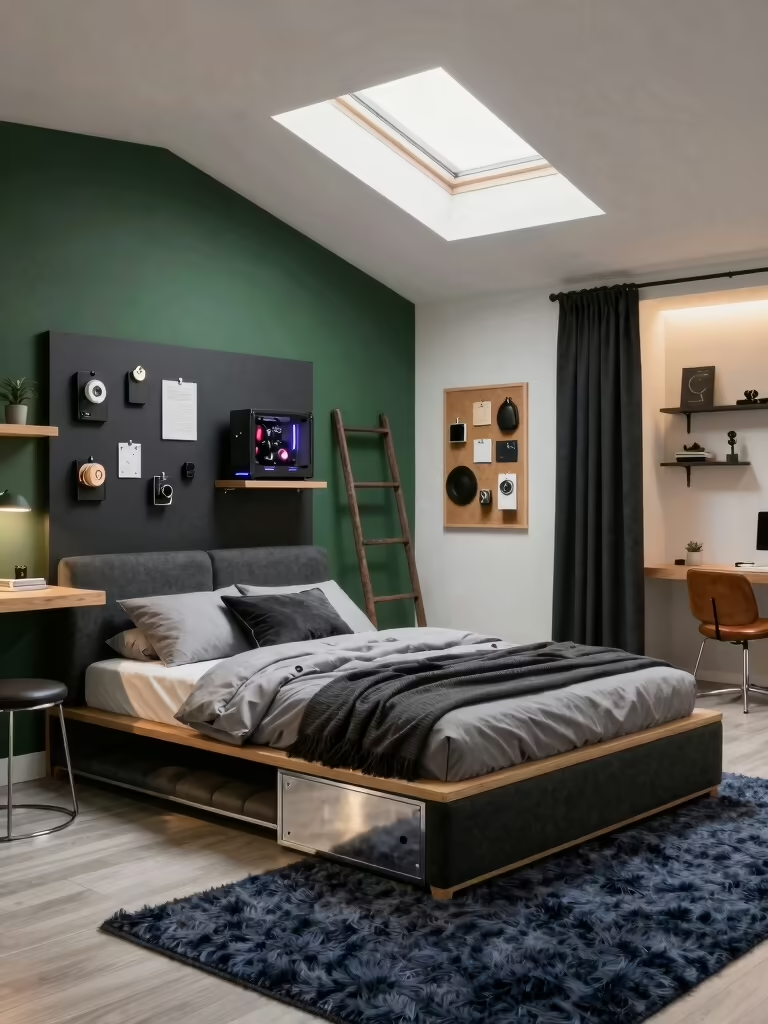
Kids care more about their room when it shows who they are, so give him a spot to display the stuff he is proud of. A pegboard, a picture ledge, or a row of clips on a wire turns his medals, models, and drawings into the decor. It costs almost nothing and it changes on its own as he does.
- A pegboard or wire with clips for medals and drawings
- A picture ledge for the models and trophies he is proud of
- A frame or two for the artwork he is most pleased with
- A small corkboard for tickets, photos, and keepsakes
Light It Well for Play and Homework
Kids’ rooms often get one harsh overhead and nothing else, which is wrong for both homework and winding down. Layer the light: a brighter, cooler task lamp at the desk for focus, plus warmer, softer light by the bed for sleep. The right light in each zone helps him switch gears.
Put the overhead on a dimmer if you can, and use warm bulbs by the bed so the room signals bedtime. A nightlight or low string lights help younger kids settle. For maybe $30 in a desk lamp and a warm bedside bulb, you fix the most common complaint kids have, that homework is hard to see and the room is too bright to wind down in.
Plan for the Years Ahead
The boys’ rooms that last are designed for the kid he is becoming as much as the one he is now. A toddler’s room and a tween’s look different, but the bones, a good bed, solid storage, a flexible desk, carry across. Buy those once, in neutral, and only the accents need to change.
Choose a desk and chair that adjust, a bed that lasts, and storage that scales. Spend on the durable bones and save on the themed layers, and you avoid a full redo every few years. For more grown-up ideas as he ages, our a room he’ll brag about is worth a look.
Make Room for Hobbies and Gear
Every boy ends up with gear, sports stuff, a gaming setup, building kits, art supplies, and it lands on the floor unless it has a home. Give it one. Give the current hobby a dedicated spot and the room stays usable. When the hobby changes, as it always does, the spot just gets repurposed for whatever comes next, so you reuse the same spot for whatever comes next.
- Wall hooks or a rack for sports gear and backpacks
- A bin or cart for the building kits and art supplies
- A cable-managed corner for a gaming or homework setup
- An open shelf to display the collection of the moment
Keep It Easy to Keep Clean
A boy’s room will only stay tidy if tidying is truly fast. Design for the five-minute cleanup. Open bins, low hooks, and a hamper he can actually reach turn cleanup from a battle into a quick toss-and-go. The easier you make it, the more likely it gets done without a fight.
Tie the reset to something he already does, brushing his teeth, picking tomorrow’s clothes, so it becomes part of the bedtime rhythm instead of a separate chore. Once it is a habit, the room never piles up to the point of a dreaded weekend sort-out. Keep the bar low: aim for tidy and leave spotless to the magazines.
Boys’ Bedroom Questions Parents Ask
?How do I make a small boy’s room work?
Free the floor and go vertical. Push the bed to a wall or use a loft, mount the desk on the wall, and lean on dual-function furniture like a drawer bed. Keep clear paths and open floor for play, and use bins and hooks a child can reach so cleanup actually happens.
?How do I decorate a boy’s room that he won’t outgrow in a year?
Keep the big pieces neutral and timeless, and put the theme in cheap, swappable layers, bedding, posters, removable decals. When his interests change, you swap a duvet and a few prints instead of the furniture. Buy the durable bones once and let the accents do the changing.
?What is the most important safety step in a kid’s room?
Anchor tall furniture to the wall. Tip-overs are a leading home injury for young children, and anti-tip straps cost a few dollars and take minutes. Add a non-slip rug, rounded corners, and follow weight and age ratings on any loft or bunk bed.
Build the Bones, Let the Fun Follow
The bedroom ideas for boys that nobody shows you are the unglamorous ones: anchor the furniture, plan for growth, build in easy storage, and zone the room so it can play, study, and sleep. Get those bones right and the fun, the color, the theme, the personality, slots in on top and changes as he does.
So start with the one that is missing most, usually the storage or the safety, and fix that first this weekend. Build the rest as he grows, and the room keeps working from toddler to tween without a full redo every couple of years.