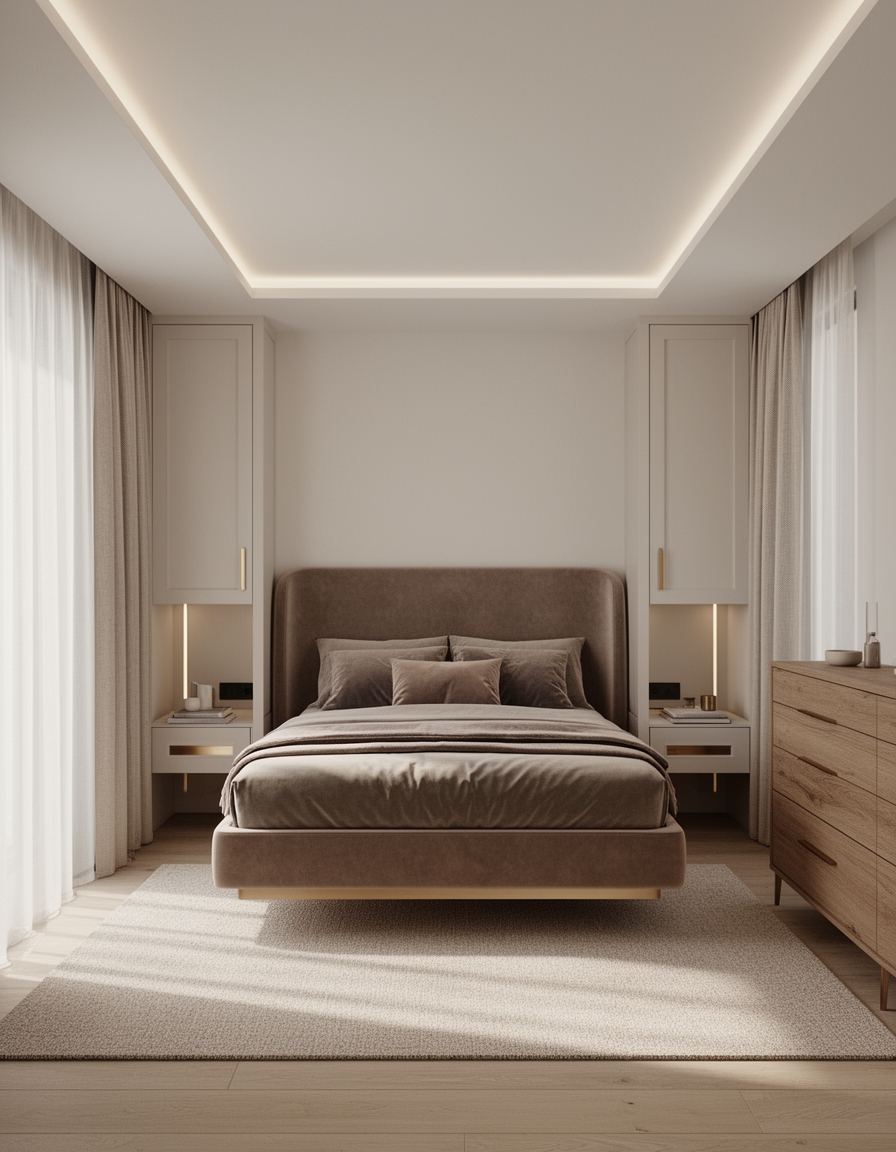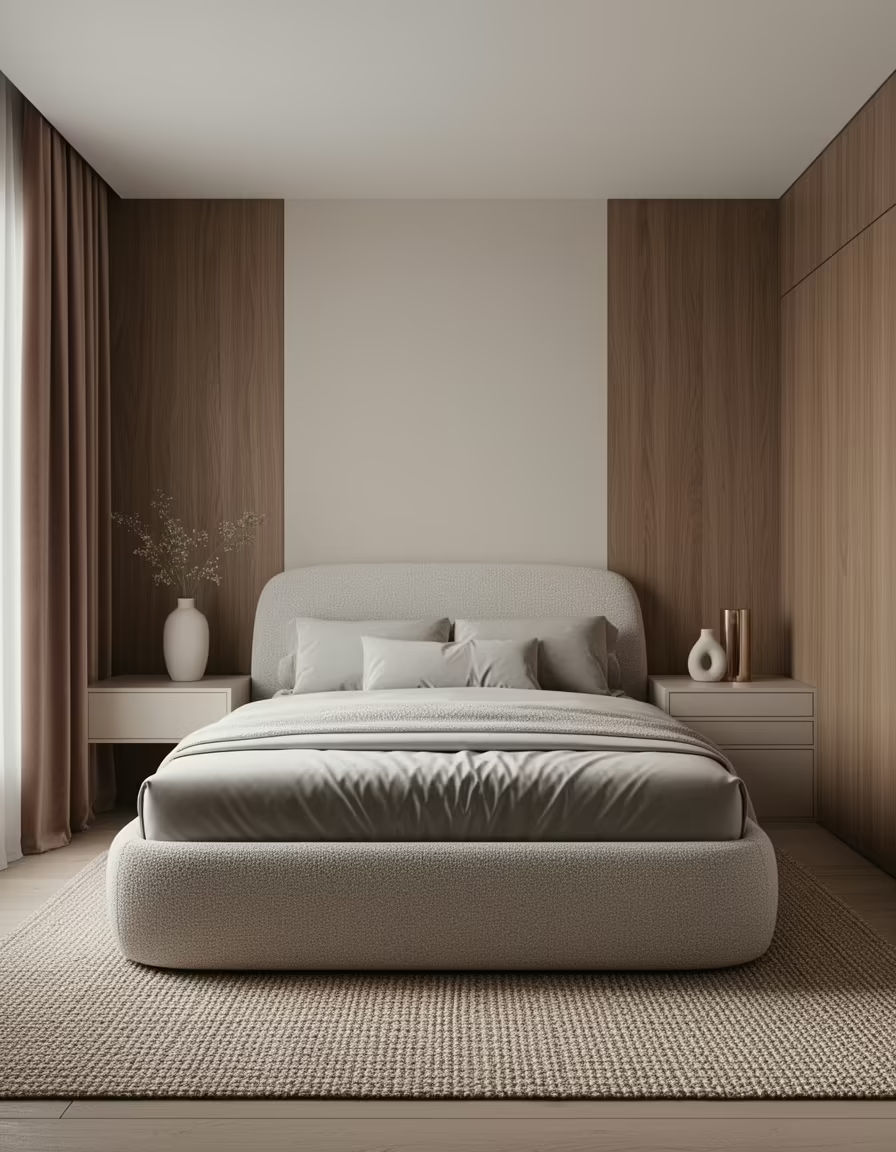

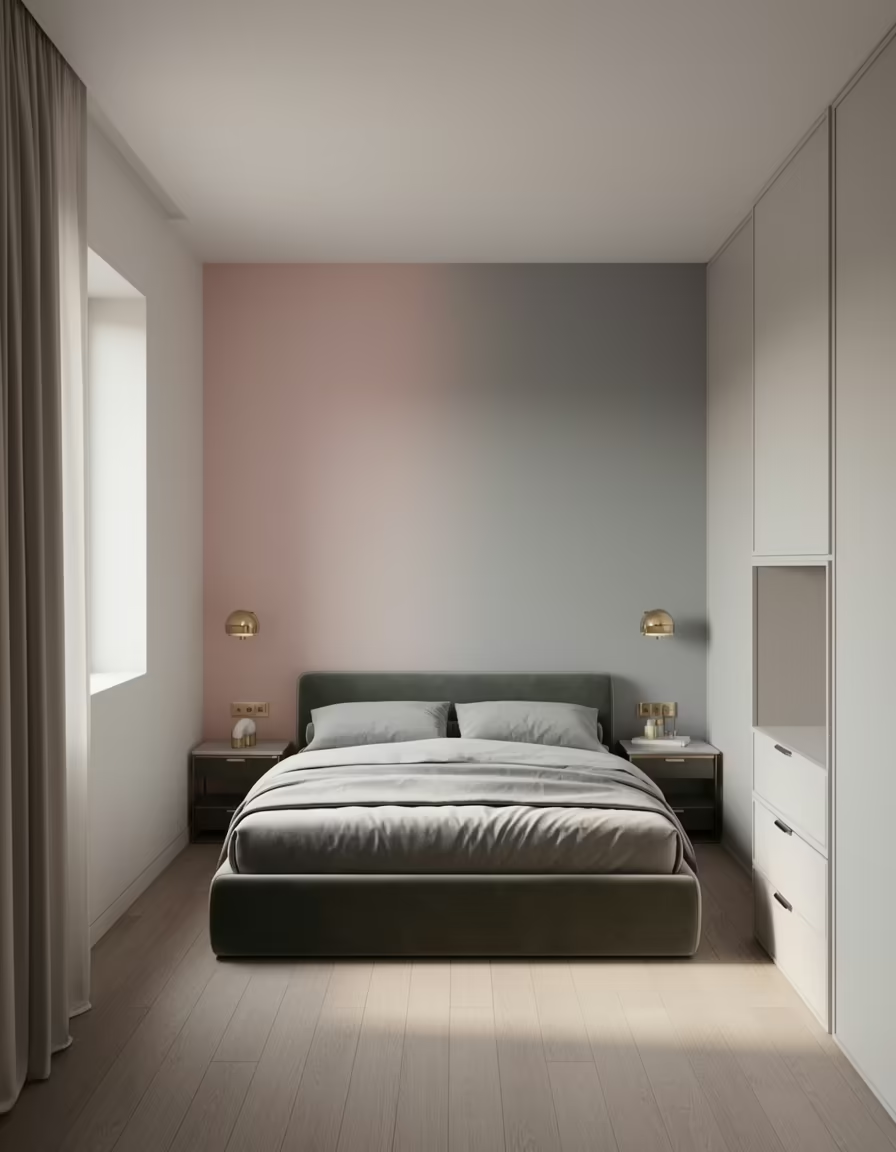
Paint is the cheapest way to change a small bedroom and the easiest to get wrong. A gallon of the right color can make a cramped room feel open and calm; the wrong shade, or the right one used the wrong way, can box it in tighter than before you started. The good news is that the rules for small-room paint are simple once you know them, and most cost the same as any other coat.
These ideas cover what actually changes how big a small bedroom feels: choosing colors that bounce light, painting the trim and ceiling to blur the room’s edges, picking a finish that reflects light well, and knowing when a dark, cozy room beats a pale one.
None of it needs more than paint and a free weekend, and the difference between a thoughtful color job and a careless one is the difference between a room that feels bigger and one that just feels painted.
The Short Version
Small-room paint comes down to a few moves: lean to lighter, warmer colors that bounce the light a small room is short on; paint the trim and ideally the ceiling the same shade as the walls so the eye stops reading hard edges and the room feels taller and wider; and choose a finish, usually eggshell or satin, that reflects a little light without showing every flaw.
Test any color in a sample pot on the actual wall before you commit, since paint shifts dramatically with a room’s light. And if your small room gets little sun, consider going the other way entirely, embracing a deep, cozy color that turns the lack of light into the whole point of the room.
Light Colors That Expand the Perception of Space
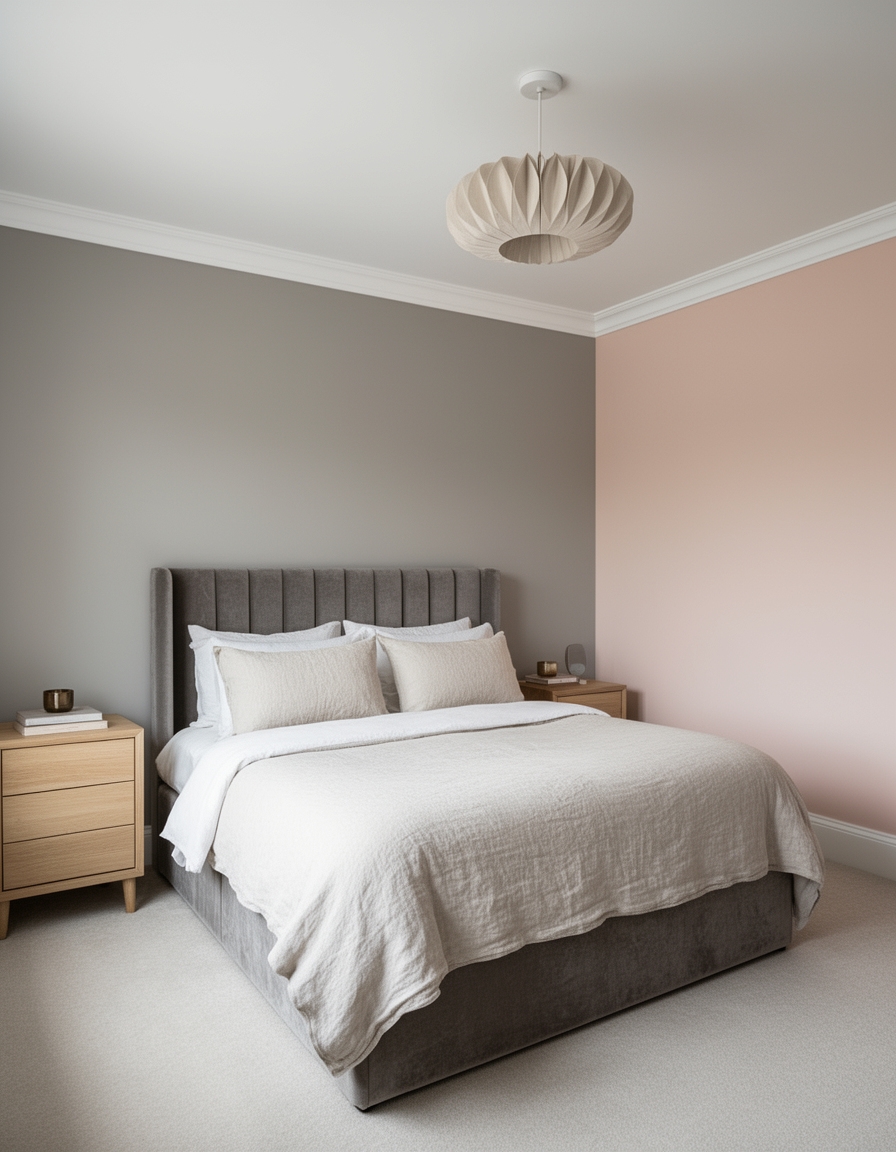
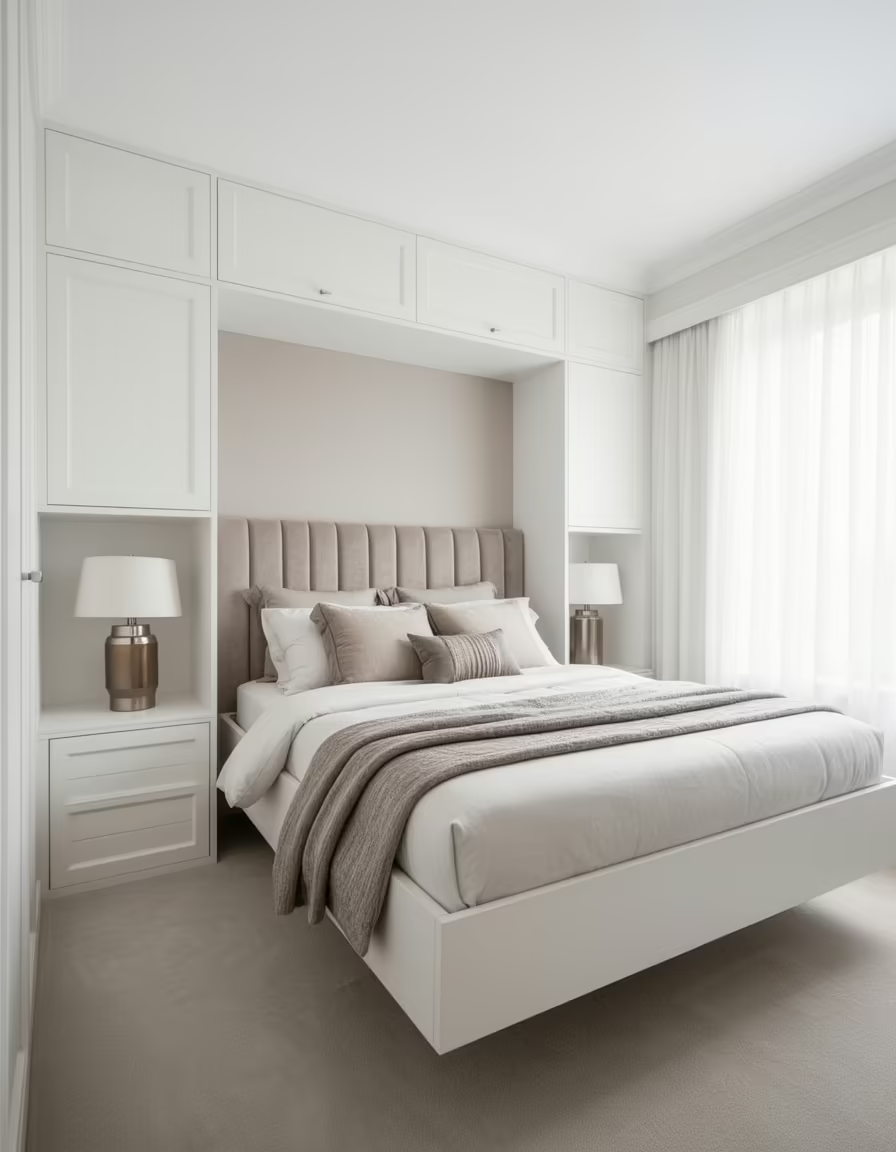
Light colors make a small room feel bigger for a simple reason: they bounce the available light around; a dark color would soak it up, so the walls seem to recede and the room looks more open. A pale shade with a high light-reflectance value does the heavy lifting, which is why soft whites, warm off-whites, and the palest neutrals are the safe backbone of almost any small bedroom that needs to feel larger.
Lean warm here. Push too stark and the room can turn cold. A bright blue-white looks crisp on the chip and turns chilly on the wall, while a white or neutral with a cream or greige base stays light and airy and feels calm, not clinical. The goal is a color that reflects light without draining the warmth out of the room. A small bedroom needs both at once.
- Choose a light color with a warm base, cream or greige, so it bounces light without feeling cold.
- Skip the stark blue-whites in a small room; they look chilly and flat under most bedroom light.
- Let the walls stay the lightest surface, and pull color into textiles with these color palette ideas.
Cozy Hues With Light and Depth
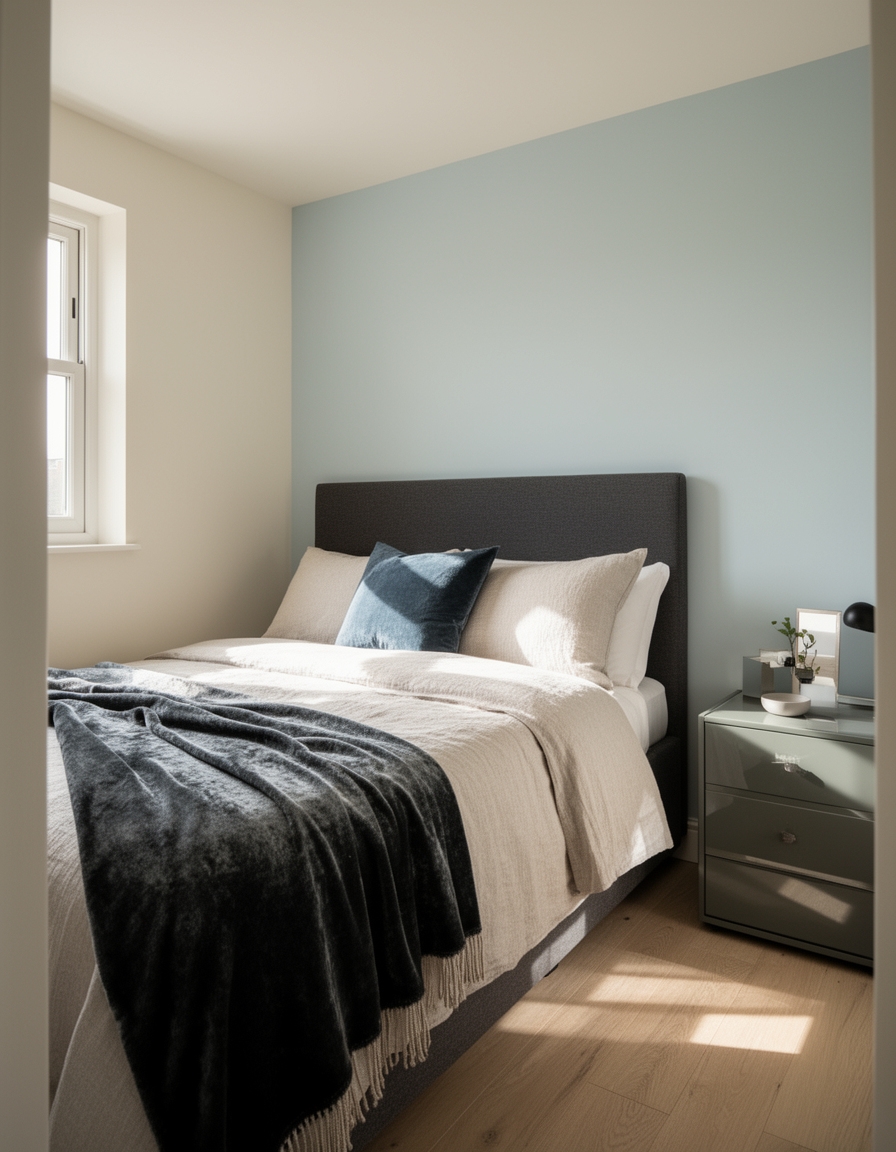
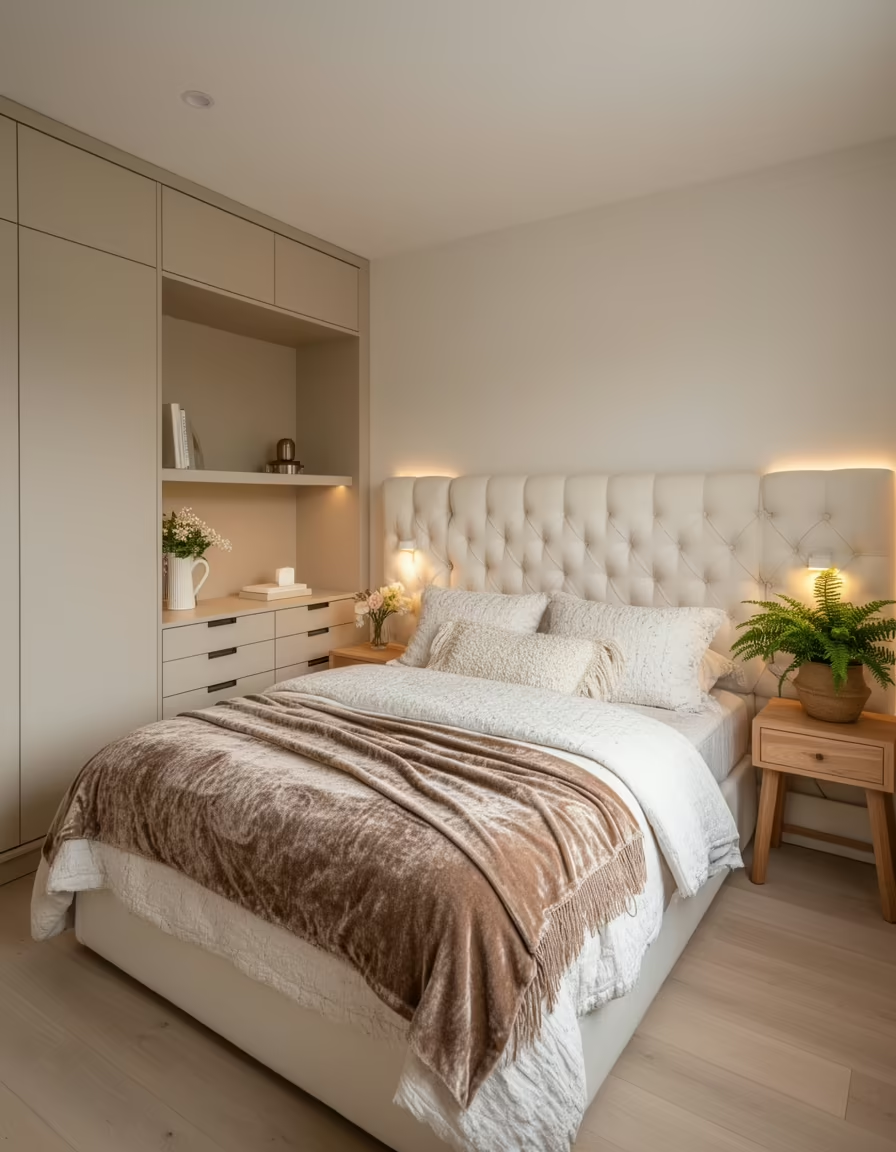
Light doesn’t have to mean flat. A small room gains richness when you build a little depth into the scheme, pairing a light wall with a slightly deeper tone in the same family, so there’s gentle contrast for the eye to follow without any harsh lines that chop the space up. Tone-on-tone is how you keep a small bedroom warm and dimensional while still letting it feel open. You want depth without hard lines.
- Pair a light wall with a deeper tone from the same color family for soft, space-friendly contrast.
- Keep the contrast gentle, since hard color breaks visually slice a small room into smaller pieces.
- Build depth with texture and tone, keeping loud color out of it, and lean on these decor ideas worth borrowing.
“The single most underused small-room paint move is painting the trim the same color as the walls. Contrasting white trim draws a hard frame around every door and window that tells the eye exactly how small the room is. Match the trim to the wall and those lines vanish, so the room reads as one larger, calmer surface. It costs nothing extra and does more than the color choice itself.”
Airy Neutrals for Small Spaces
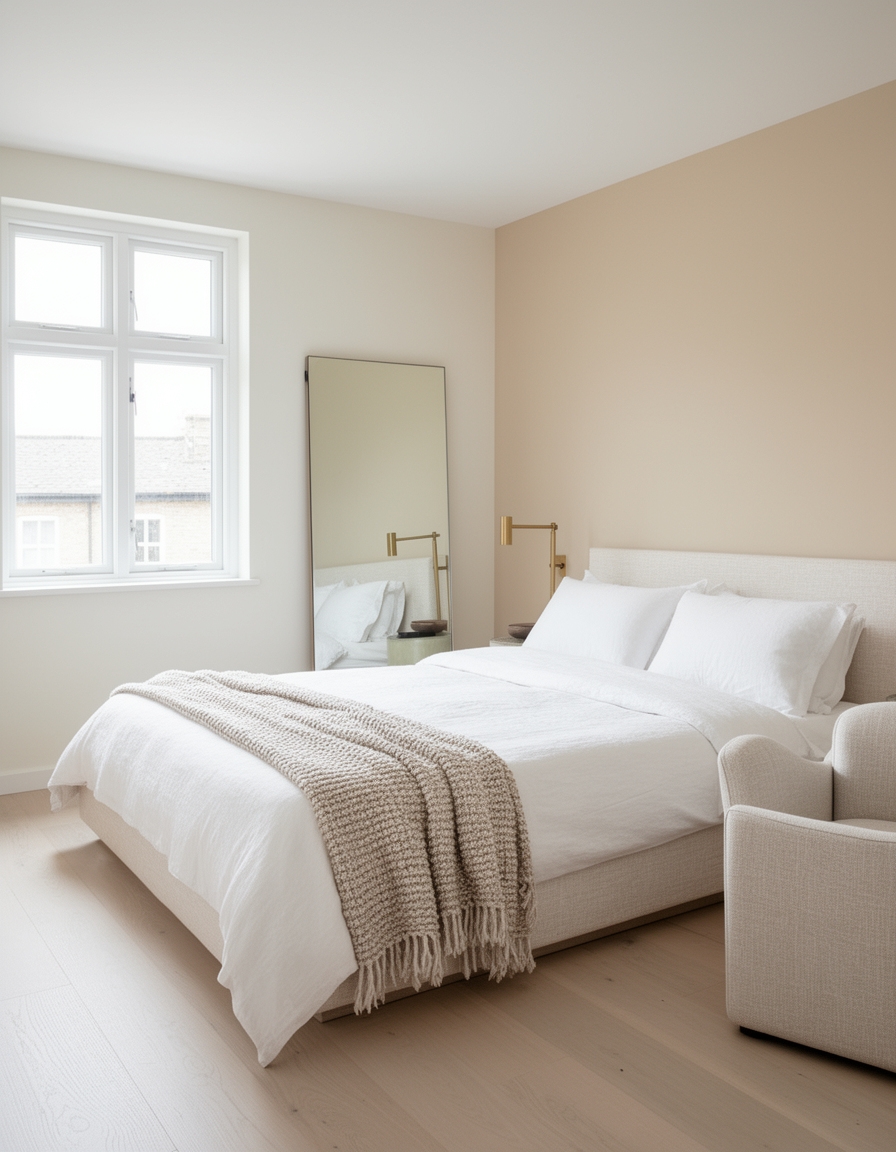
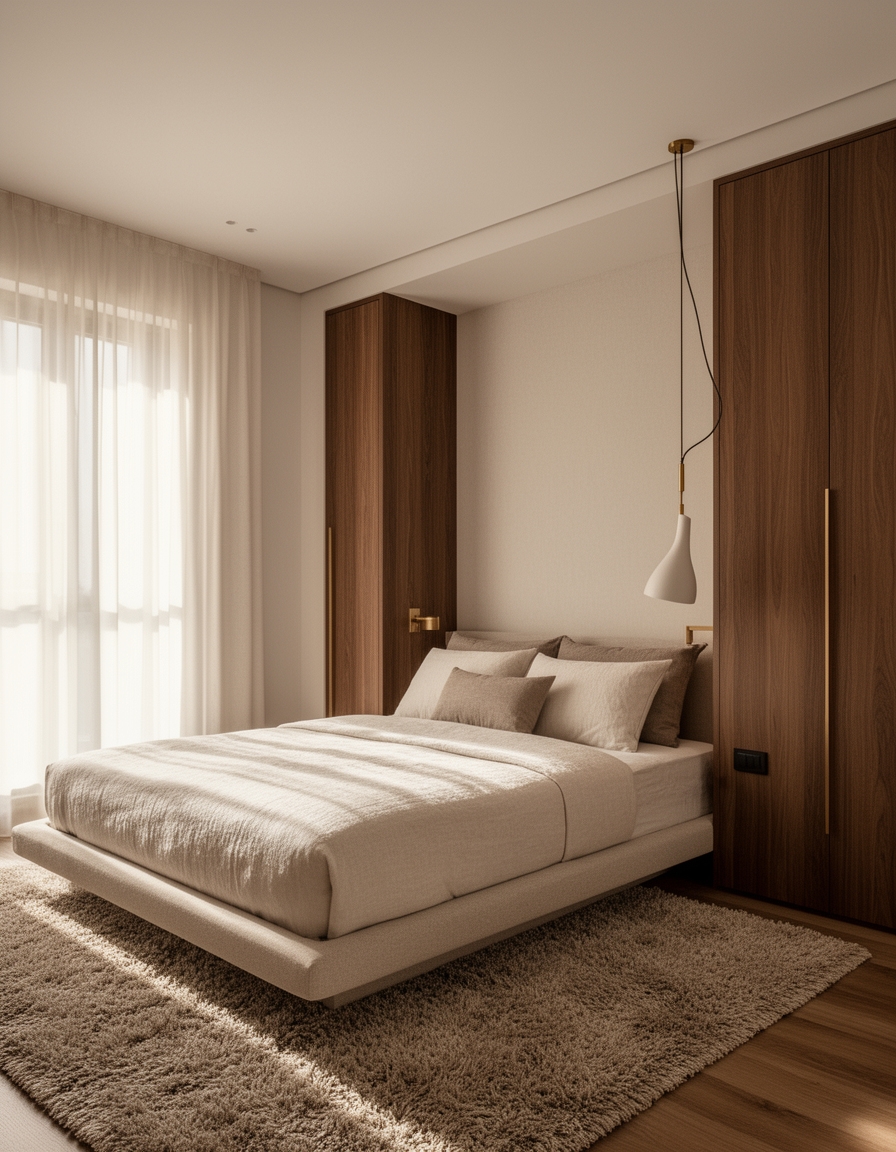
Airy neutrals are the reliable choice for a small bedroom because they stay quiet and let the room breathe. Soft whites, oatmeal, greige, and pale sand all stay light and open while bringing more warmth than a plain bright white, so the room feels calm and roomy at once. They also play nicely with any bedding or wood tone you add later, which keeps a small room from locking you into one look.
Match the trim and ceiling to the walls
Keep the neutral consistent across the surfaces so nothing breaks the flow. Painting the walls, trim, and ceiling in the same soft neutral, or close shades of it, blurs the lines where surfaces meet and tricks the eye into taking the room as one continuous, larger volume. The fewer hard color changes in a small room, the bigger it feels. Blur the seams. The box grows.
Then warm the neutral up with what you bring in. A pale, neutral shell is a backdrop, so let the wood tones, the linen, and a single soft accent do the warming, and the room stays light without ever feeling sterile. That balance of a quiet wall and warm layers is what these paint ideas to refresh a room are built around.
Reflective Finishes That Enhance the Space
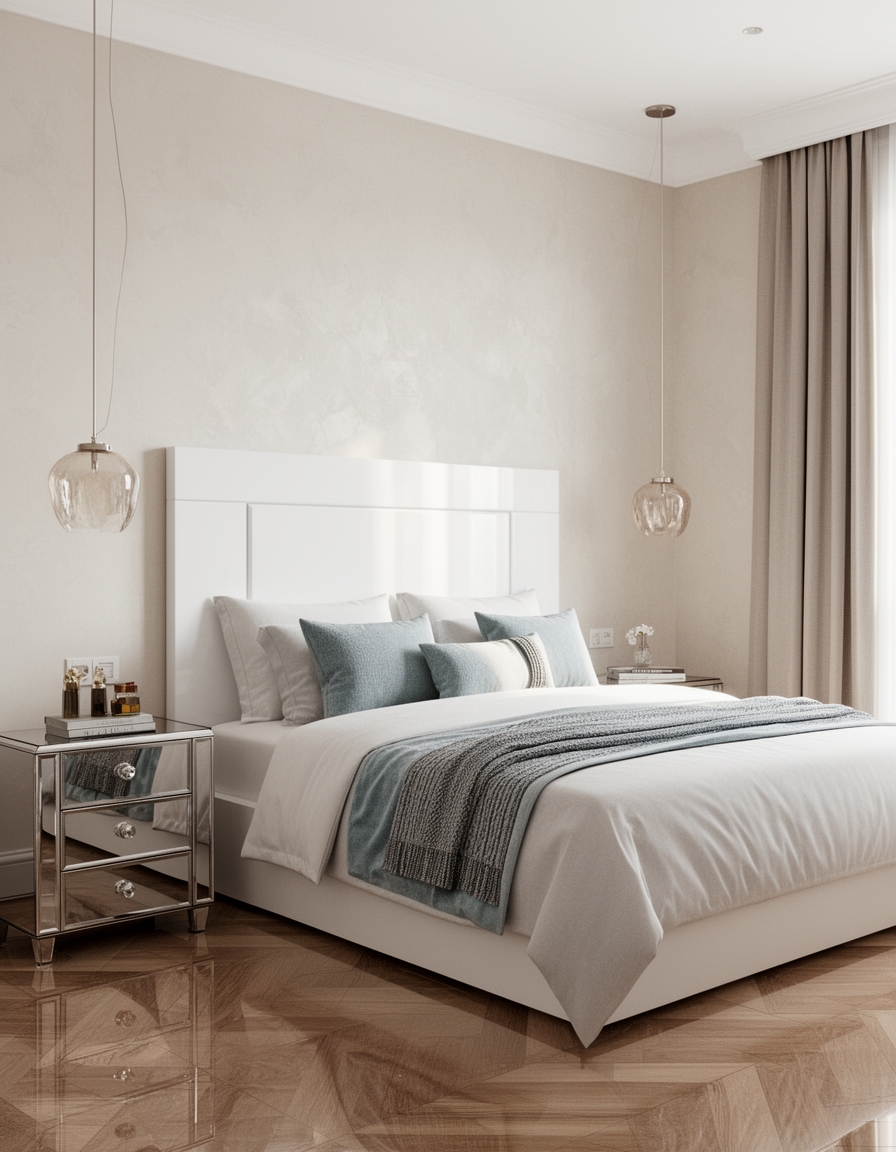
The finish, the sheen of the paint, matters as much as the color in a small room. A flat or matte finish soaks up light and hides wall flaws. A finish with a little sheen bounces light back and brightens the room. The trade-off is that shinier finishes show every bump. The right call depends on how good your walls are.
Eggshell or satin for most small rooms
For most small bedrooms, eggshell or satin is the sweet spot. It reflects enough light to lift the room and skips the glare and flaw-revealing shine of semi-gloss, so the walls brighten the space and still look soft. Save the higher gloss for the trim, where a satin or semi-gloss edge catches the light and adds a crisp, subtle line around the room.
Use a touch of real reflection where it counts. A satin-finished ceiling, a lacquered nightstand, or a metallic lamp base bounces light into the corners a matte room would leave dim, so the space feels lighter after dark. Keep the shine to accents, since a whole room of gloss tips from bright into harsh, and these layout ideas for small rooms help place the reflective pieces.
Two small-room paint myths worth dropping:
❌ Myth: Small rooms must be painted white.
✅ Reality: Light helps, but white is just one option. Warm neutrals and pale pastels bounce light just as well, and a dim room often looks better in a deep, cozy color than in a pale one that reads gray. The rule is to match the color to your light, not to default to white.
❌ Myth: Dark paint always makes a room feel smaller.
✅ Reality: Not in a low-light room. A deep color on every surface, walls, trim, and ceiling, dissolves the edges and makes a small dim room feel intimate and intentional. It’s contrast, not darkness, that shrinks a room; a uniform dark color actually blurs the boundaries.
Calming Soft Pastel Hues
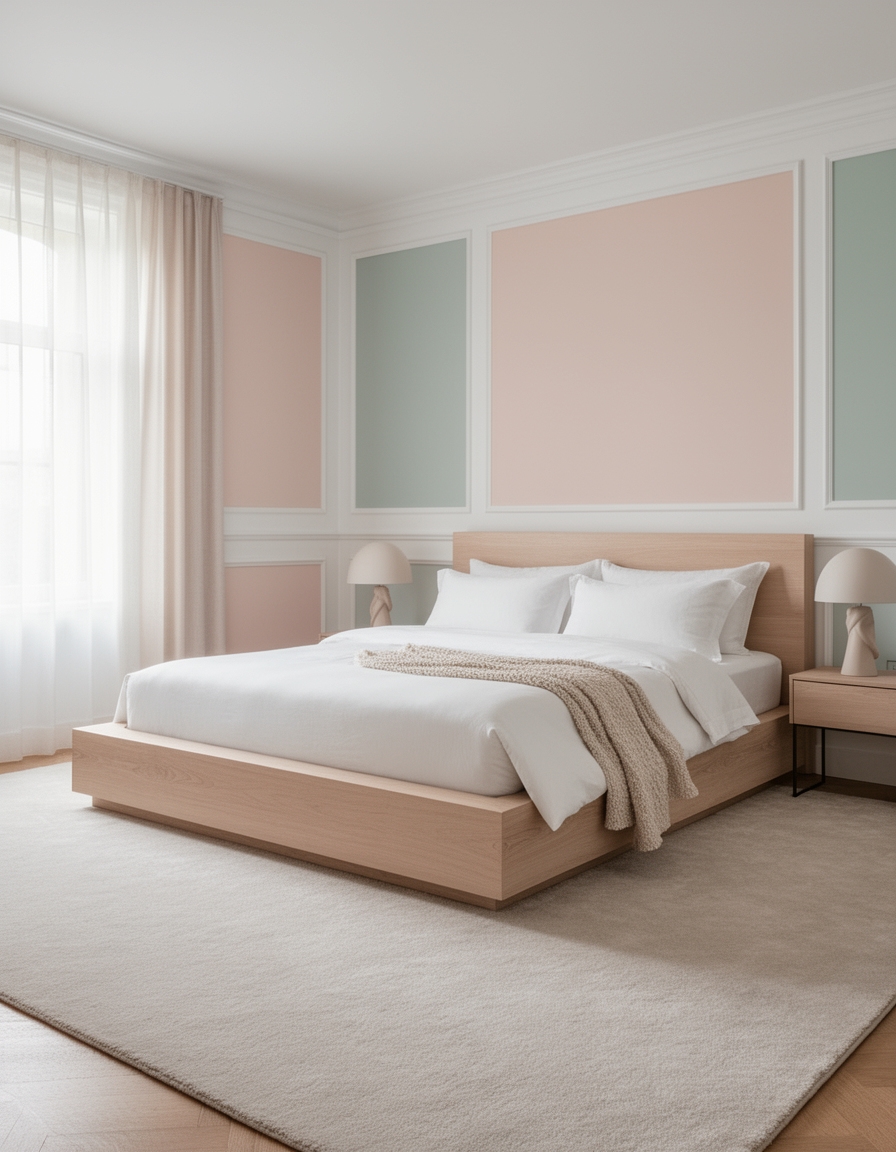
If plain neutrals feel too safe, soft pastels are the way to add color to a small room without shrinking it. A barely-there blue, a dusty sage, a pale blush, or a soft gray-green all carry the same light-bouncing benefit as a neutral while bringing a quiet personality, so the room feels considered rather than beige. The key is to keep the pastel pale and muted, since a saturated version of the same color would close the space right in.
- Choose muted, pale pastels, a whisper of sage or blue, that stay light enough to keep the room open.
- Run the pastel across all four walls so it lands as a calm, even wash. One accent wall just chops the room up.
- Match the undertone to your light: cooler pastels for sunny rooms, warmer ones for north-facing dim spaces.
Paint Tricks That Bend the Room
A few paint tricks change the apparent shape of a small room, not just its brightness. Painting the ceiling the same color as the walls, or even a shade lighter, erases the line where the wall stops and lifts the ceiling; carrying the wall color up and over a low ceiling can make a cramped room feel surprisingly lofty. The eye takes that blurred edge as more space.
Use direction to stretch the room where it’s tight. A color drawn up tall, walls and ceiling as one, lifts a low room, while keeping the trim the same shade as the walls removes the framing lines that otherwise announce exactly how small the room is. The fewer borders you paint, the larger and calmer the box feels, which is the whole logic behind matching everything in a small space.
When to Go Dark Instead
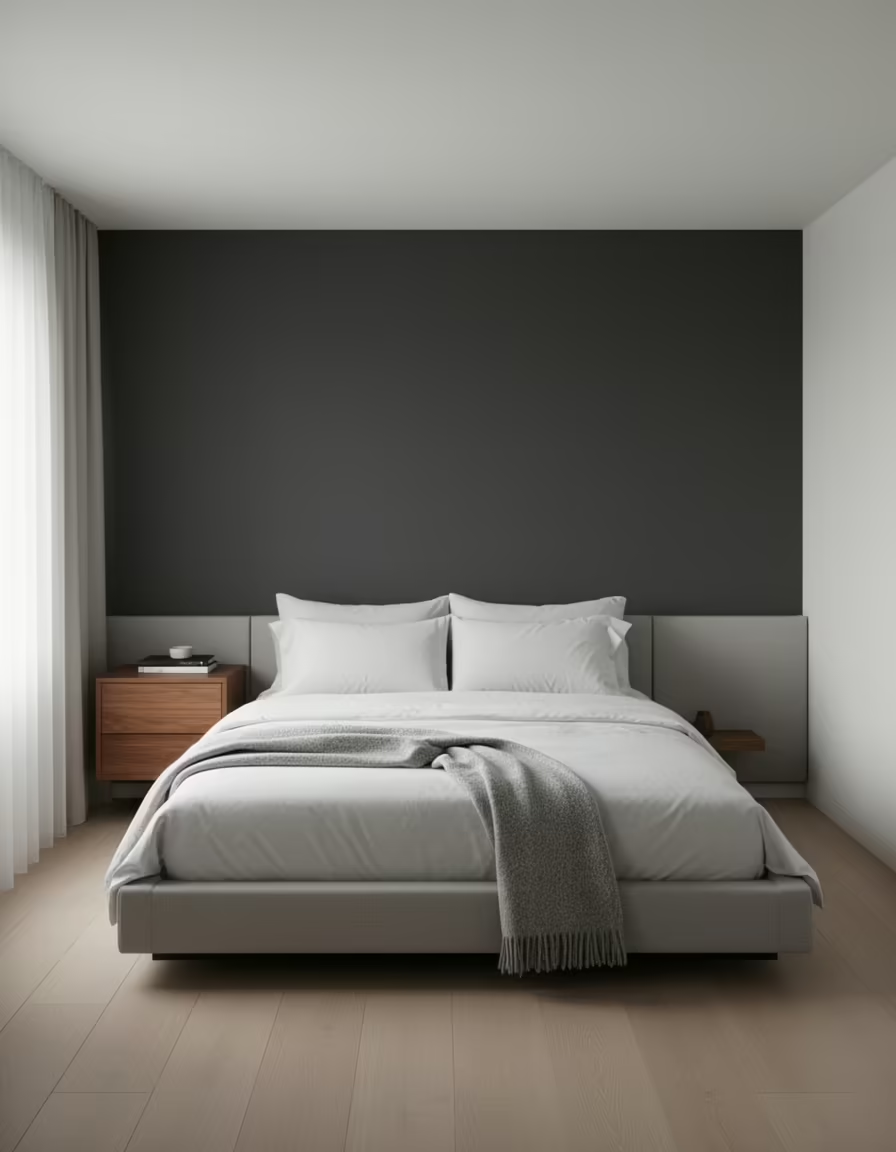
The light-equals-bigger rule has a famous exception: a small room with little natural light often looks better painted dark. Fighting a dim room with pale paint just turns it gray and sad, since there’s no sunlight to bounce, but leaning into the darkness with a deep charcoal, ink blue, or forest green turns the room into an intimate, cocoon-like retreat.
It feels deliberate and snug. I’ve watched a charcoal ceiling do more for a dark little room than three coats of white ever did. The walls recede into shadow and the room loses its hard edges entirely.
Go all in if you go dark, since a timid dark room is the worst of both. Paint the walls, trim, and ceiling the same deep shade so there are no contrasting lines to measure the room by, and let the corners dissolve into shadow. Add warm lighting and a few soft textures, and a tiny, dim bedroom becomes the moodiest, coziest room in the house. Pale paint could never pull that off in low light.
How to Test Paint Before You Commit
Paint colors lie on the chip, so the one step I never skip is testing the real color on the real wall. A sample pot runs about five to eight dollars, and a swatch takes two minutes to brush on. Painted big on two or three walls, it shows how the color shifts as the light moves across the day, far more than a tiny chip under store lighting can. The color that looked perfect in the aisle can turn green or gray in your room.
Live with the swatch for a day or two before you buy the gallons. Check it in morning light, in lamplight at night, and against your bedding and floor, because a small room gives a wrong color nowhere to hide. A coat dries in an hour or two, so even a careful test costs you a single evening. Ten dollars of samples save you from repainting a whole room and from wasting the gallons, roughly forty to sixty dollars each, on a color doomed from the start.
Small-Room Paint Questions, Answered
?What is the best paint color to make a small bedroom look bigger?
A light, warm-based neutral, a soft white, greige, or pale sand, bounces the most light and makes the walls recede. Skip stark blue-whites, which read cold, and keep the trim and ceiling the same shade so the edges blur. If the room gets little sun, a deep cozy color can actually work better than a pale one.
?Should I paint the ceiling and trim in a small bedroom?
Yes, ideally the same color as the walls or a shade lighter. Matching the trim and ceiling removes the contrasting lines that frame a room and announce its size, so the eye takes the whole space as one larger, taller volume. It’s the cheapest trick for making a small room feel bigger.
?What paint finish is best for a small bedroom?
Eggshell or satin for the walls. It reflects a little light to brighten the room without the glare of gloss or the flaw-revealing shine of semi-gloss, and it wipes clean. Save satin or semi-gloss for the trim, and choose a flatter finish only if your walls have bumps and dents you want to hide.
Paint It to Feel Bigger
Transforming a small bedroom with paint comes down to a handful of choices: lean to light, warm colors that bounce the room’s light, paint the trim and ceiling to match so the edges blur and the room feels taller, pick an eggshell or satin finish that reflects without glaring, and test the color on the real wall before you commit. Get those right and a cramped room opens up and calms down for the price of a couple of gallons.
And remember the exception: if your room is dark, stop fighting it and lean in with a deep, cozy color instead. Either way, the move that matters most is matching everything, walls, trim, and ceiling, so the room stops announcing its size and starts feeling like the calm, considered space you wanted all along.