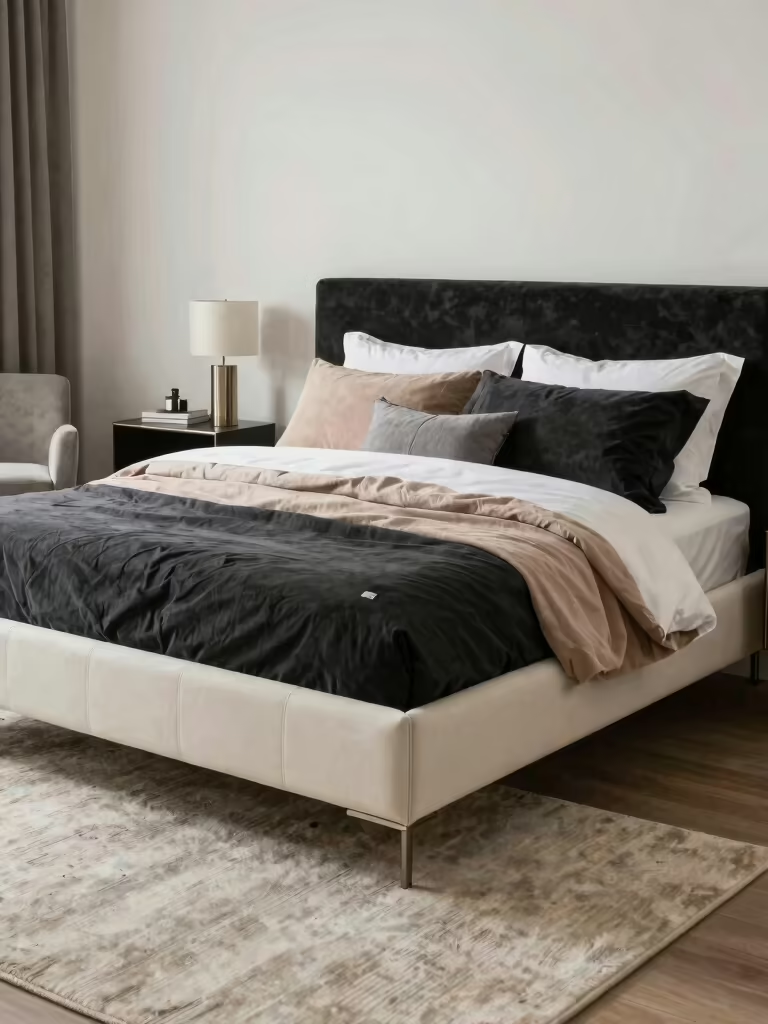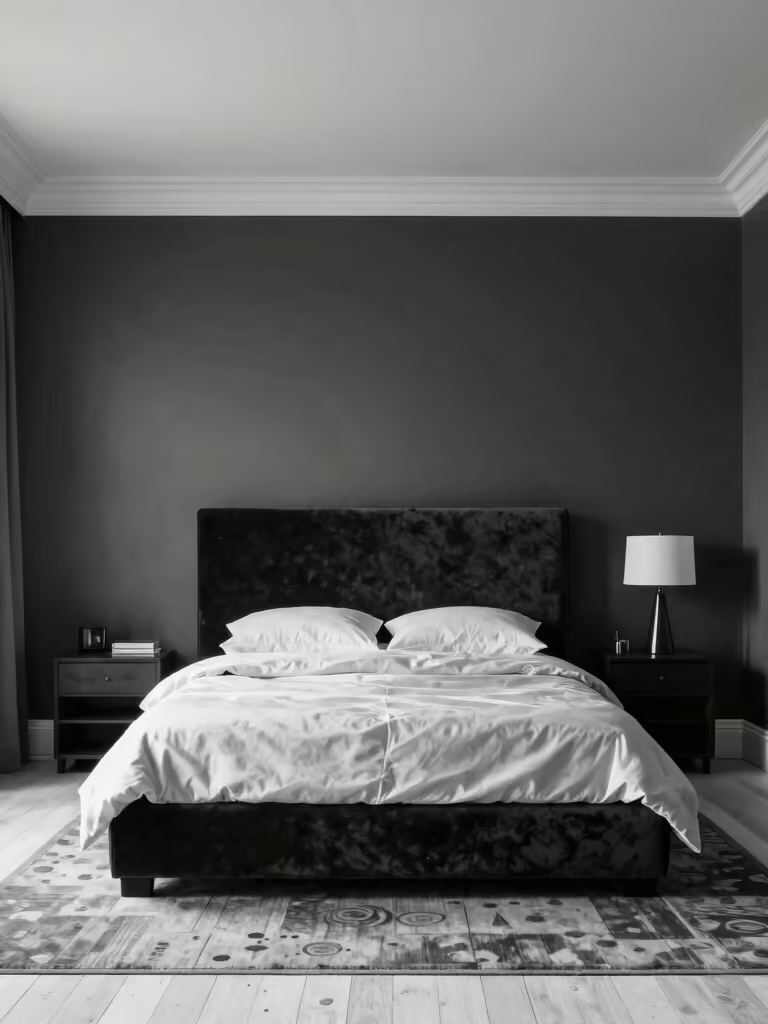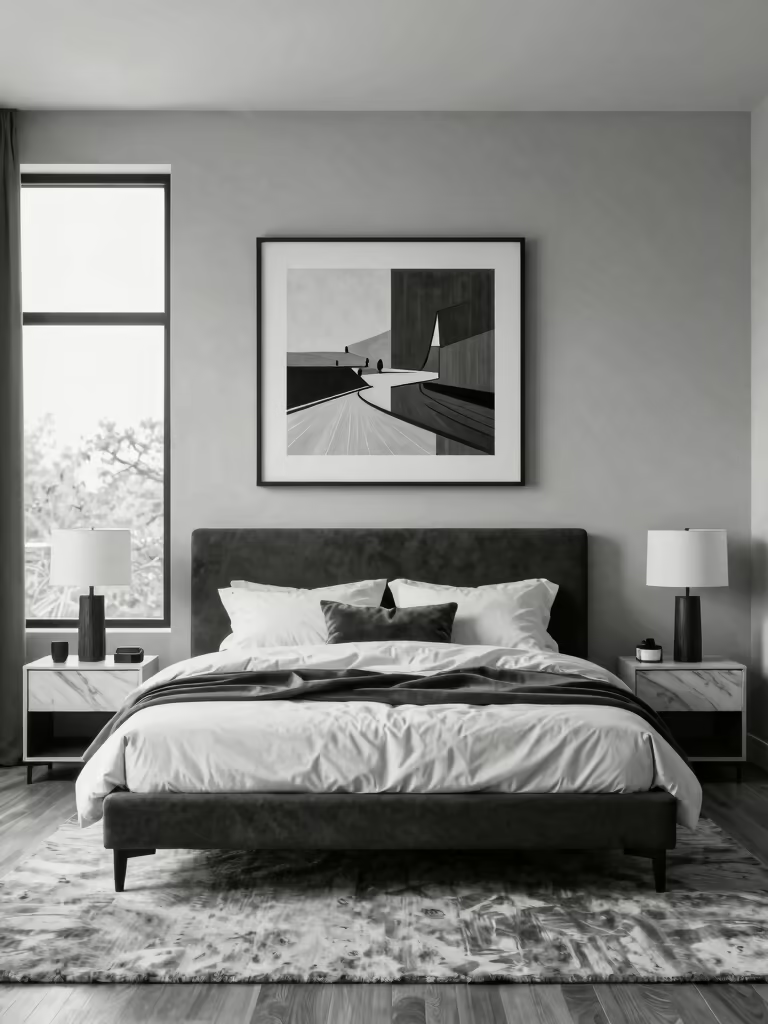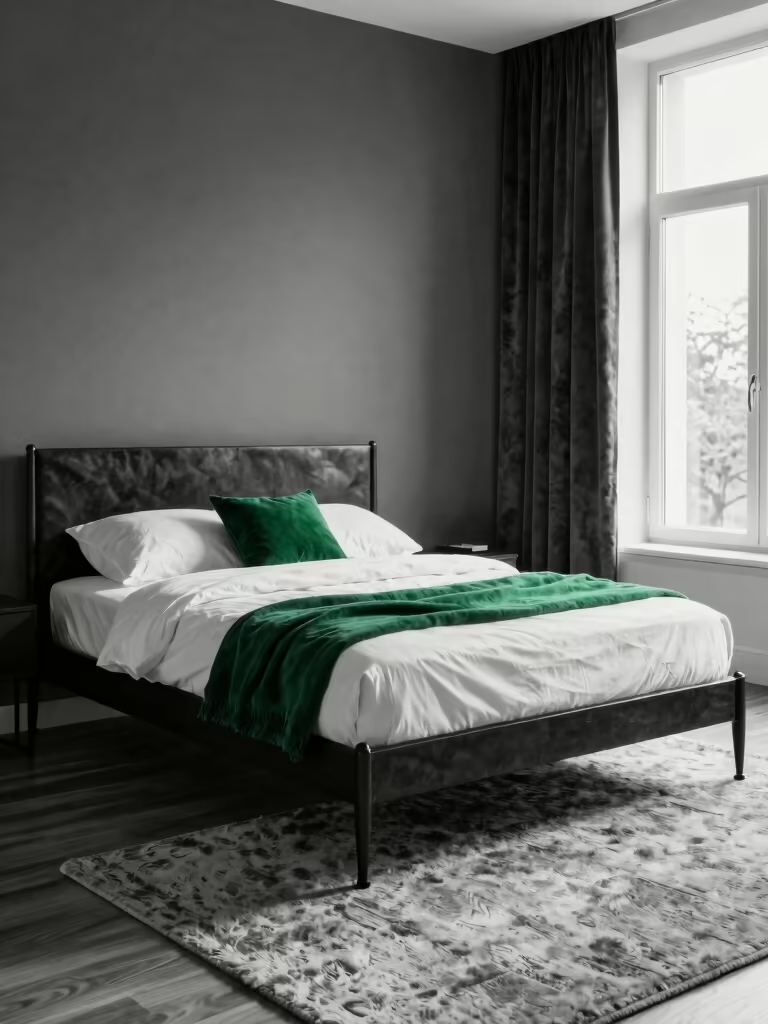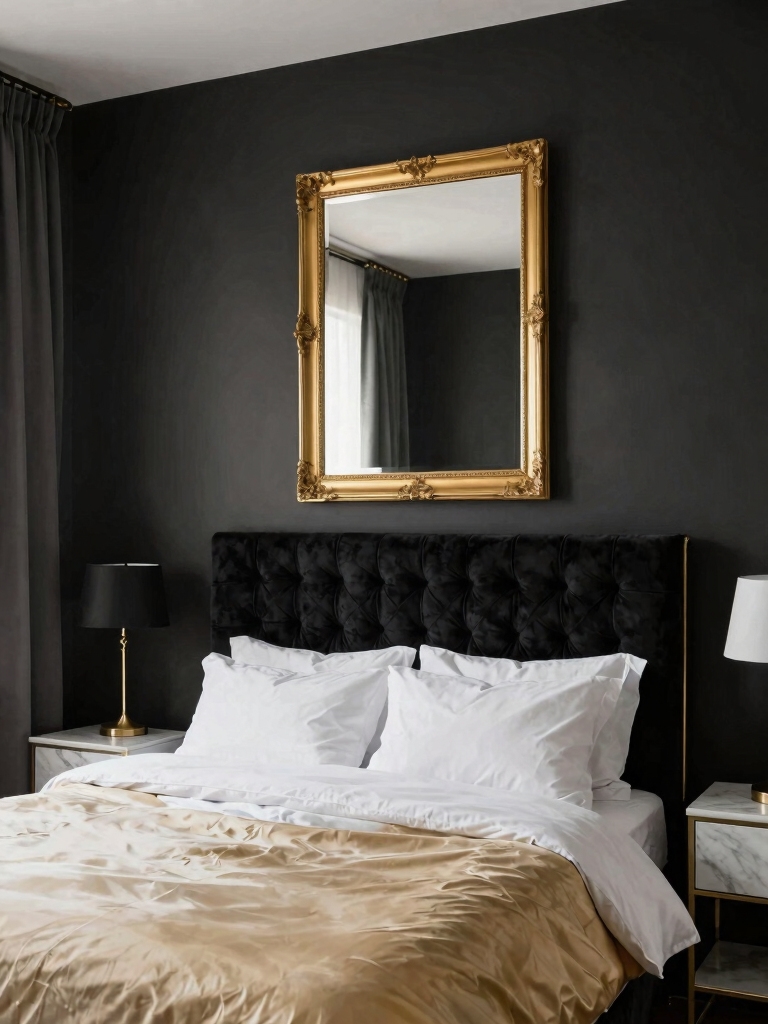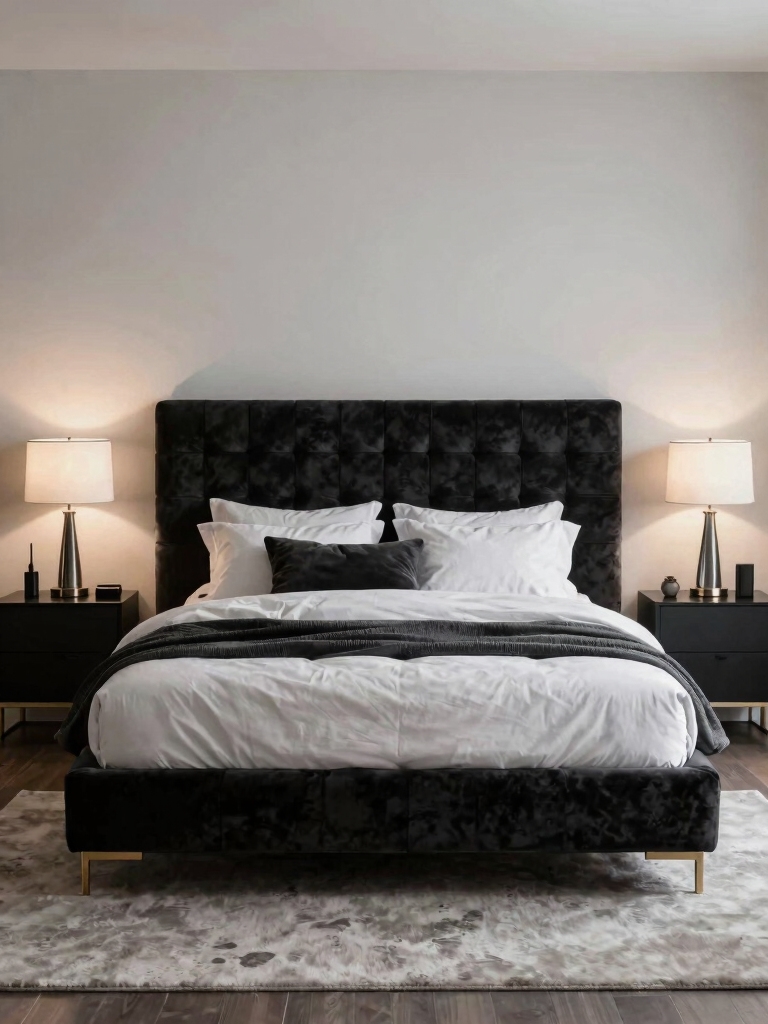

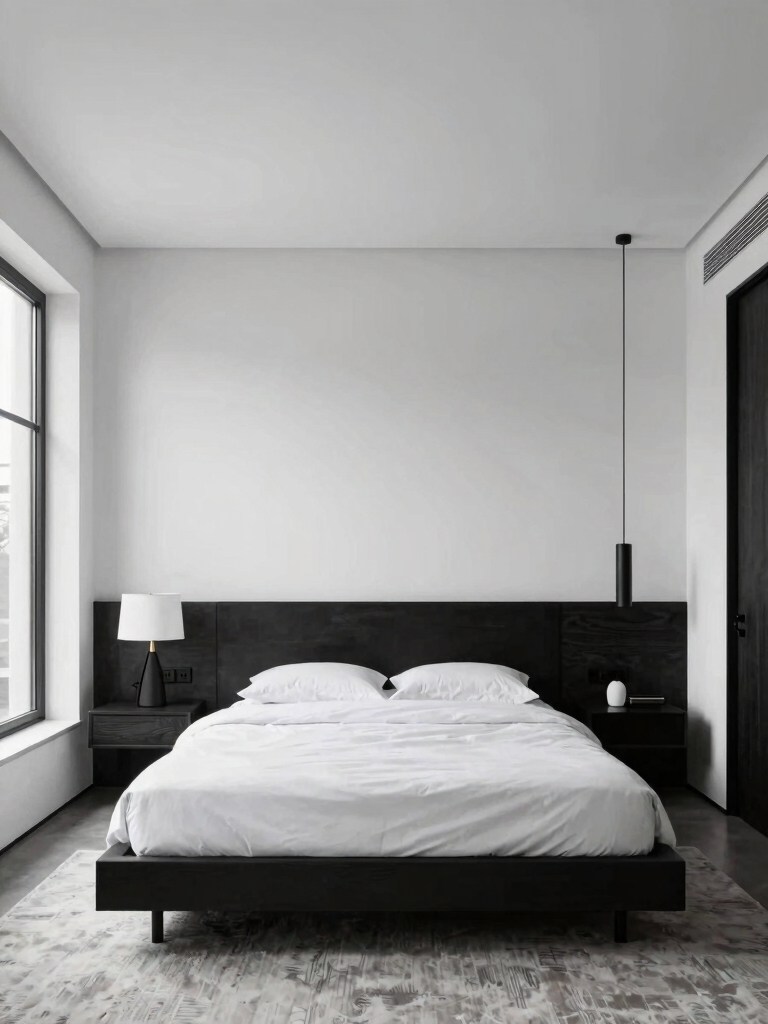
I’ll use crisp white walls and ceilings to open up your small bedroom while bold black accents add drama, and I’ll mix in reflective surfaces to double the light you get from those windows. Think compact, wall-mounted furniture and slim silhouettes to keep sightlines clean, with hidden storage to curb clutter. Subtle black-and-white accessories finish the look, and strategically placed mirrors boost daylight and depth. Curious what other room-saving tricks await? You’ll find them right after this.
How Black-and-White Expands Small Bedrooms
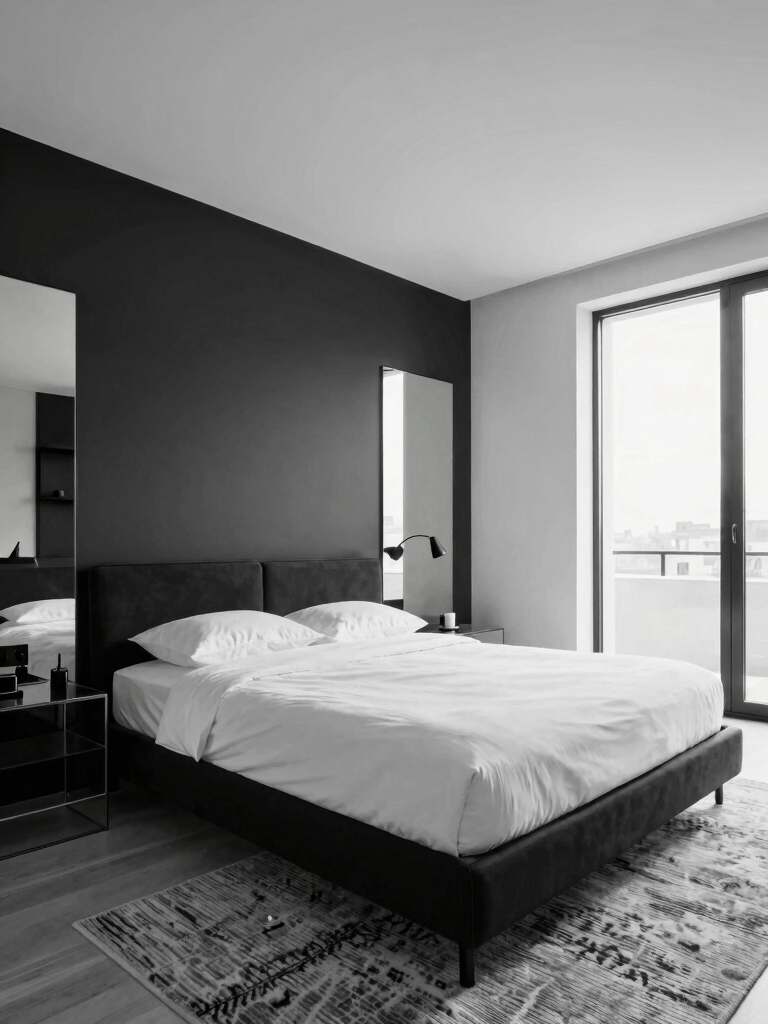
Black-and-white isn’t just a color scheme—it’s a magic wand for small bedrooms.
I’m showing you how contrast creates depth, depth creates order, and order makes rooms feel bigger. Use a dominant light tone, add bold accents, and let reflections multiply your space.
Keep clutter tiny, furniture slim, and patterns strategic. You’ll gain openness without sacrificing coziness or personality. The timeless black and white bedroom aesthetic offers inspiration that balances simplicity with striking style.
Start With White Walls and Ceilings for Openness
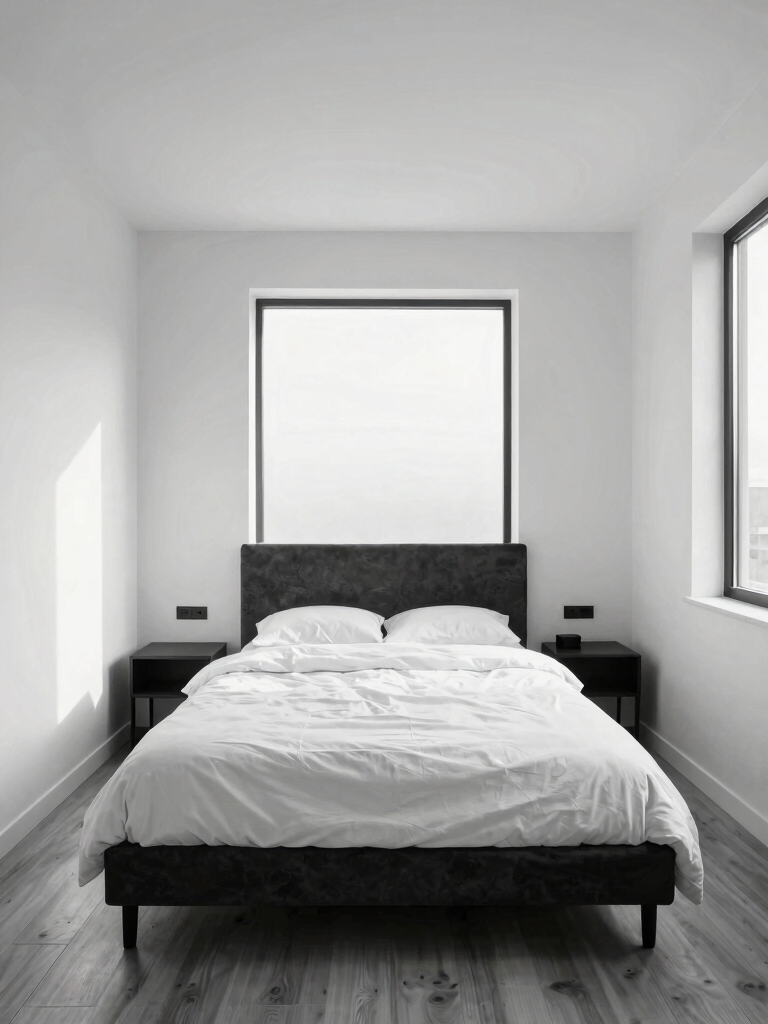
White walls bounce more light, so the room feels brighter and bigger from the moment you walk in.
Ceilings that read as continuous extend that openness, making every inch feel connected rather than boxed in.
Add reflective surfaces—polished floors, glass, or a glossy finish—and you amplify that sense of space without lifting a finger.
Incorporating natural warmth through wood accents balances the starkness of black and white, creating a cozy and inviting atmosphere.
White Walls Amplify Light
White walls bounce light around a room and make even a small space feel open, airy, and instantly less claustrophobic.
I notice how brightness shapes perception, not size.
Here’s how you’ll picture it:
- Walls glow softly, not glare
- Shadows stay minimal, depth preserved
- Ceiling fades into the background
- Space feels larger, calmer, more usable
Ceiling Continuity Improves Openness
Ceiling continuity is the secret sauce for openness: when the ceiling blends with white walls, the top of the room disappears, and the space feels suddenly taller and more breathable.
I keep lines clean, paint everything glossy white, and avoid chunky trim.
It’s practical, not precious: a seamless ceiling tricks the eye, enlarging small rooms without asking for fancy tricks.
Reflective Surfaces Enhance Space
Reflective surfaces bounce light around a room, so I start with white walls and ceilings to keep the canvas bright and honest.
- Mirror-backed furniture to double visual space
- Glossy finishes that catch every beam
- Light-colored textiles to soften glare
- Strategic reflections via art and hardware for perceived depth
Pair Bold Black Accents for Contrast
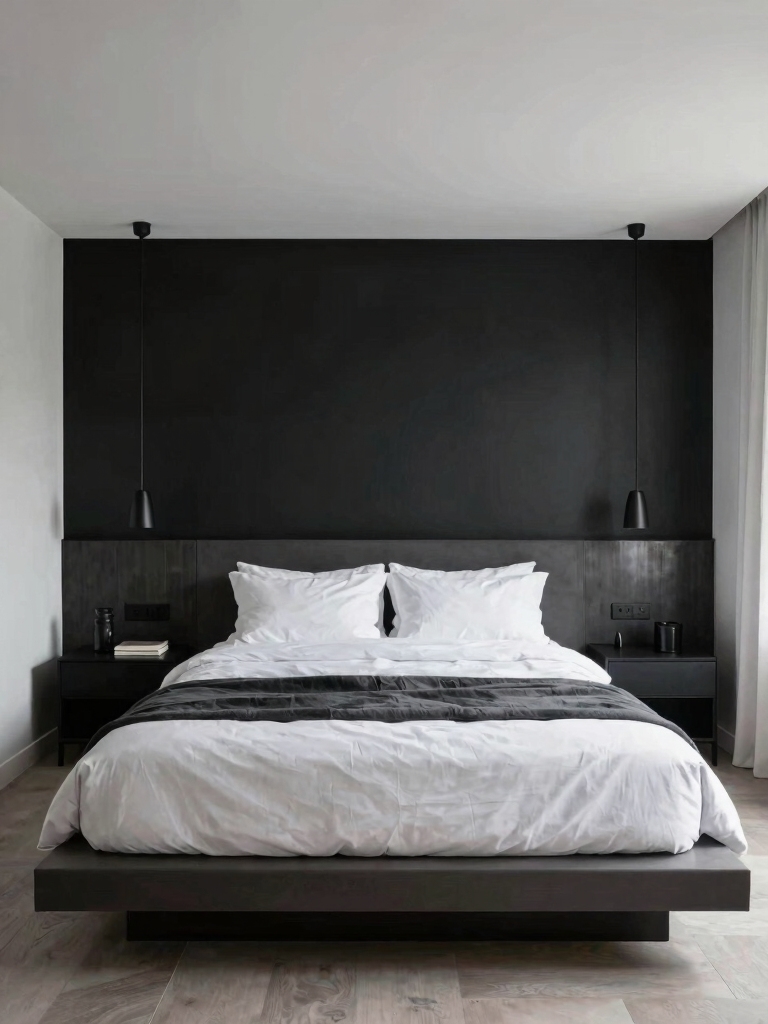
Bold black accents punch above their weight in a small bedroom, giving you that high-contrast drama without overdoing it.
I pair bold black with white surfaces to anchor the space, then sprinkle texture—matte lamps, woven textiles, crisp frames—for depth.
Keep things balanced: one statement piece, two supporting items, and plenty of breathing room for the eye.
Practical, witty, effortless.
Incorporating a black and white aesthetic is key to achieving a minimalist vibe without losing style.
Maximize Natural Light With Strategic Mirrors
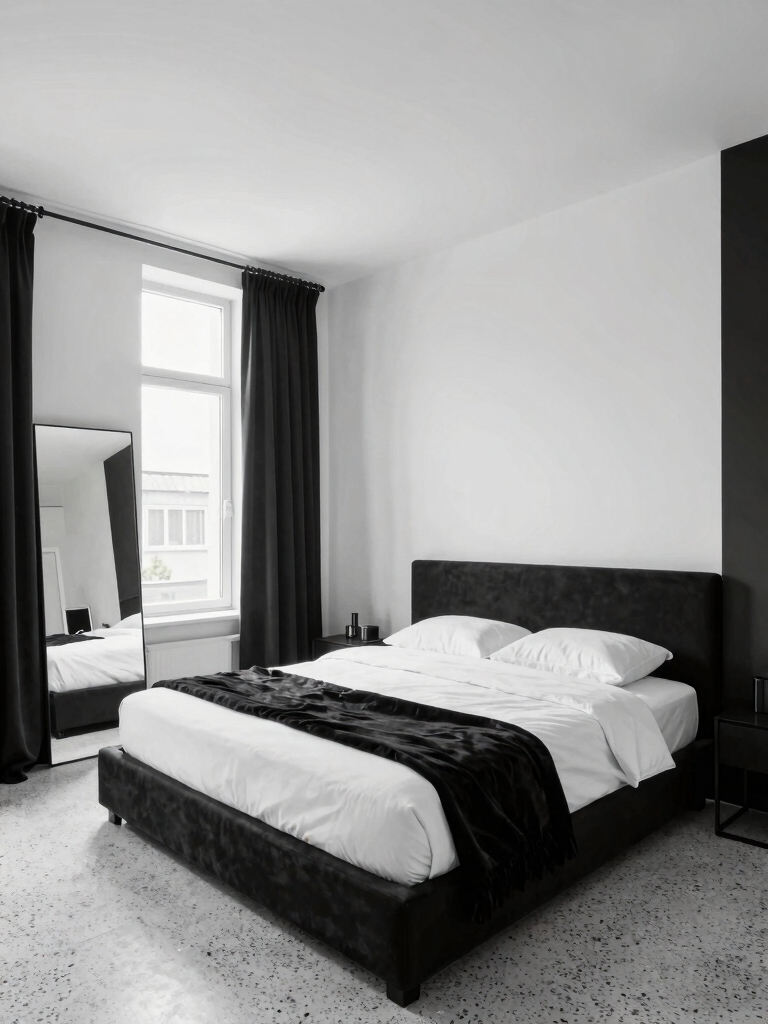
I’ll show you how mirrors can boost light flow and make a small room feel bigger.
Place them to catch daylight and bounce it around, not just for reflection but for real brightness.
With reflective surfaces subtly arranged, you’ll notice clearer sightlines and a brighter, more open vibe.
These renter-friendly mirror placements are perfect for creating clever bedroom solutions without permanent changes.
Mirrors For Light Flow
Mirrors aren’t just decor; they’re light machines. I translate clutter into glow by placing a tall mirror opposite a window, doubling daylight.
Here’s how I frame it:
- Reflective furniture boosts brightness
- Narrow panels widen narrow walls
- Skirted mirrors soften harsh corners
- Arched shapes soften angles, amplify airiness
Positioned For Daylight
Then angle smaller mirrors to bounce that glow deeper into the room.
I share a simple trick: align mirrors with windows, avoid clutter, and let light reflect without creating glare.
Work with angles, not effort, for brighter mornings.
Reflective Surfaces Advantage
Strategic reflective surfaces turn ordinary light into a room-welcoming glow, so think of mirrors and shiny panels as tiny solar panels for your décor.
I guide you:
- place a tall mirror opposite a window
- use a mirrored dresser to double brightness
- hang a glass chandelier for sparkle
- choose glossy walls to bounce daylight back
Choose Compact Furniture to Keep Sightlines Clear
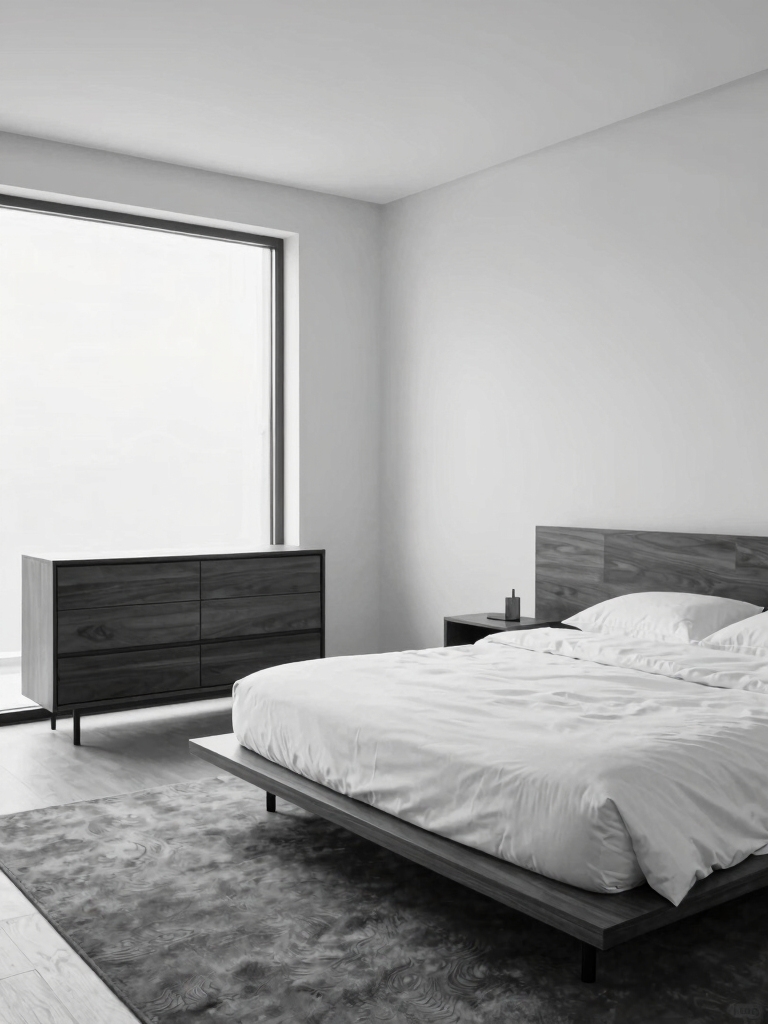
When you’re short on space, every inch counts, so I start by choosing compact furniture that keeps sightlines clear.
I pick slim profiles, multi-use pieces, and wall-mounted storage that doesn’t crowd the room. I avoid bulky silhouettes and chunky legs.
The goal is function with finesse—clean surfaces, open flow, and a bedroom that feels larger than it actually is.
In small rooms, creative kids bedroom solutions can also enhance coziness without sacrificing space.
Use Floating Pieces for Airy, Uncluttered Vibes
Floating pieces can make a tiny room feel instantly lighter and more open.
I’ll show you how they create airy space, keep sightlines clear, and guide the eye with clean, uncluttered flow.
Let’s talk about choosing slim, wall-anchored or low-profile pieces that seem to hover without sacrificing function.
Incorporating space-maximizing furniture is key to making the most of every inch in a small bedroom while maintaining style and comfort.
Floating Furniture Benefits
If you want a room that feels bigger without adding square footage, floating furniture is your best friend; it keeps the floor visible and the eye moving, which instantly airlifts a small bedroom.
1. Maximizes floor space
2. Reduces visual clutter
3. Mirrors light more effectively
4. Feels effortless and chic
I promise, this tiny tweak pays big, practical dividends.
Airy Space Illusion
Floating furniture isn’t just about saving square footage—it’s how you coax air into a room and keep clutter from crowding the vibes.
I’m chasing an airy feel by choosing floating shelves, a wall-mounted desk, and bed supports that vanish beneath the eye line.
With negative space, light travels, reflections bloom, and small rooms finally feel calm, open, and honest.
Uncluttered Visual Flow
When you want an airy, uncluttered vibe, switching to floating pieces does the heavy lifting for you—no clutter, just a clean line of sight.
- Lightweight shelves hover, drawing eyes upward
- Wall-mounted lighting frees floor space
- Slim profiles keep silhouettes simple
- Hidden storage maintains calm, not chaos
Floating essentials end visual noise and boost room scale.
Layer Light: Ceiling, Task, and Ambient
Layering light in a small bedroom isn’t a luxury—it’s a strategy.
I mix ceiling, task, and ambient layers so shadows don’t stalk the corners. Ceiling flush mounts brighten without consuming space; a slim task lamp handles bedside reading; warm ambient LEDs soften edges for a calm, bigger feel.
Keep cords tidy, switches reachable, and contrast high for crisp, practical chic. Incorporating a ceiling fan with integrated lighting can enhance airflow while adding another layer of illumination, perfect for small spaces seeking both style and function. This is a common tip in stylish bedroom fan ideas.
Textiles That Add Texture Without Bulk
5. Incorporating minimalist decor principles helps maintain a calm and uncluttered atmosphere.
Ceiling Tricks to Add Vertical Height
Ceiling tricks aren’t just for drama; they’re a smart way to add real vertical height without moving a single piece of furniture.
I start by imitating a sky, painting or wallpapering the ceiling in a pale, reflective tone.
Then I emphasize vertical lines with molding or tall, slim light fixtures.
Simple, bold, and surprisingly effective for a room that reads bigger.
Incorporating these techniques along with inspiring paint ideas can truly transform the feel of a small bedroom.
Built-In Storage That Blends Into Walls
I’ve shown how a pale, reflective ceiling can fake height; now I’ll keep that illusion smooth by hiding storage where it belongs: in the walls.
- Pick shallow units with recessed fronts
- Use frameless doors to vanish lines
- Tuck shelves behind slim panels
- Run hidden magnets for quick access
Built-ins feel spacious, not bulky, when discreet. Incorporating these clever bedroom ideas can help maximize small spaces without compromising style.
A Cohesive Black-and-White Gallery Wall
I keep frames varied but tonal, swapping busy art for clean silhouettes, so negative space breathes.
Mix textures—matte photos, glossy quotes—without shouting. Crisp spacing matters; avoid crowding.
It reads calm, purposeful, and instantly larger.
Monochrome Patterns That Read as One
Monochrome patterns can feel like a secret handshake for small spaces: bold enough to notice, quiet enough to coexist with other elements.
- I mix scale and contrast so the room reads as one visual note.
- I pair tight geometric prints with softer textures for balance.
- I repeat motifs across rug, bedding, and cushions.
- I keep color strictly black, white, and grayscale to maintain calm.
Slim-Profile Bed Frames to Breathe Space
Slim-profile bed frames are the secret to giving a small bedroom air to breathe.
I pick low, clean lines that tuck under decor rather than shout over it, freeing floor space for movement and color.
No bulky headboards mean more wall to display art.
Lightweight frames also feel less intimidating, easier to move, and stay quietly stylish with daily use.
Reflective Surfaces Beyond Mirrors for Sparkle
If you think sparkle only comes from a mirror, think again: there are plenty of reflective tricks that catch the eye without doubling as a bathroom cabinet.
- Metallic desk lamp that gleams softly
- Frosted glass pendant refracting morning light
- Chrome bedside tray catching a glint
- Snag-free acrylics on furniture for levity
Rug Placement to Define Zones Without Crowding
Rule of thumb: the right rug can zone a small bedroom without cramming the floor space.
I place a medium rug under the bed to anchor sleep, then add a lighter runner near a seating nook to define conversation areas.
Keep tones cohesive—black, white, and gray—while avoiding overload.
A defined flow feels bigger, balanced, and instantly usable.
Hidden Storage Under Seating and Beds
I’m Lyd, and I’m obsessed with hidden seating storage and under-bed organizers that actually work, not just look neat.
Imagine a couch hollow or a bed base that pulls out a tidy stash, so you can stash off-season gear, shoes, or blankets without the clutter.
We’ll explore built-in storage solutions, smart under-seat bins, and crisp labeling to keep everything visible and accessible.
Hidden Seating Storage
- Lift-up ottomans hide blankets and chargers.
- Storage benches store out-of-season clothes.
- Under-seat drawers grab toys and cables.
- Lift-top chairs double as compact workspaces.
Clever, practical, and quietly roomy.
Under Bed Organization
Under-bed storage isn’t just for seasonal clothes—it’s the stealthy sidekick of a tidy bedroom.
I swap out unused items for easy-access bins and shallow drawers, so clutter stays invisible yet reachable.
Raise awareness with labels, slide lids, and a simple weekly purge.
Tiny victories add up: extra floor space, calmer mornings, and a room that looks bigger than it is.
Built-In Storage Solutions
We’ve wrangled under-bed bins and labeled lids, but there’s more leveling up to do.
Built-in storage hides in plain sight, freeing floor space without shouting, “storage closet!”
Here’s how I keep it tidy:
- Lift-seat chests
- Platform drawers
- Hidden ottoman trunks
- Bench seats with hinged lids
Clean Window Treatments That Keep Lines Crisp
Clean window treatments can make a small room feel bigger, so I keep things simple: choose crisp, easy-to-clean fabrics and stay away from heavy layers.
I favor minimalist blinds or sheer panels that filter light without bulk. Avoid fussy ties or ruffles; opt for clean hems and recessed tracks.
Practical tip: choose neutral tones to maintain visual flow and maximize perceived space.
Black-and-White Accessories for Subtle Color Pops
Think of black-and-white accents as the quiet punctuation that highlights your color pops without shouting.
I’ll show you practical, monochrome pieces that kiss your decor with just enough contrast to wake things up.
Let’s pair subtle monochrome textures and shapes so your tiny room feels bigger, sharper, and effortlessly put-together.
Subtle Black-White Accents
Small bedrooms don’t need a loud color clash to feel polished—subtle black-and-white accents do the trick.
I keep it simple, inviting you to notice little contrasts that sharpen the vibe.
- White plaster lampshade with a thin black seam
- Black handles on pale drawers for instant sophistication
- Monochrome woven textiles that read calm
- Framed quotes in black ink on white mats
Try these cues tonight.
Pops With Monochrome Accessories
Monochrome accessories are the quiet power move that keeps a compact room looking polished without shouting color.
I’ll show you how tiny pops—think a black lamp, white vase, or charcoal throw—create depth without chaos.
You’ll mix textures, not muddle moods, letting pattern play peekaboo.
Practical, witty tips: balance, contrast, and a single statement piece per zone.
Done, effortlessly chic.
Linear vs. Zoned Layouts for Small-Space Living
Linear and zoned layouts are two practical paths for tiny rooms, and choosing between them often comes down to how you want to flow, not just how you squeeze furniture in.
I’ll show you how to pick—by vibe, not vanity.
1) Clear traffic routes
2) Distinct function zones
3) Visual anchors
4) Flexible furniture choices
Real Transformations: Before-and-After Ideas
Real transformations aren’t about miracle fixes; they’re about smart, doable tweaks that prove a room’s potential.
I’ve seen tiny spaces bloom with wall-mount shelves, under-bed storage, and a pop of bold black-and-white contrast.
Before-and-after magic is practical: reconfigure layouts, swap hardware, and trim clutter.
Readers, you’ll notice bigger feels, brighter mood, and a surprisingly calm, polished finish—without remodeling chaos.
Conclusion
You’ve got this, even in a compact space. Think of black-and-white as a polite middle ground: bold without shouting, crisp without cold. White walls widen, mirrors wink back extra light, and sleek furniture keeps sightlines graceful. If a room feels snug, add a sly pop of black like a quiet joke—subtle but satisfying. With careful scale, clean lines, and just-right accessories, small bedrooms can feel expansive, elegant, and effortlessly yours. Enjoy the calm, clever transformation.