
A mirror is the most undervalued piece in a bedroom. The right one does three jobs at once: it bounces light into a dark room, it makes a small space feel twice the size, and, framed well, it works as a piece of art on its own. The wrong one, or the right one hung badly, just reflects a cluttered corner and comes across as an afterthought.
These mirror ideas are about getting all three jobs out of the piece: sizing it to the wall, hanging it where it catches the light, choosing a frame that earns its spot, and using mirror to open up a tight room. A good mirror is one of the cheapest ways to change how a bedroom feels, as long as you place it with a little thought instead of just filling a bare wall.
Mirror Moves Worth Knowing
- Hang a mirror to bounce daylight: opposite or beside a window, so it doubles the light a room gets.
- Reflect something worth seeing, a view, art, a lamp, not a cluttered corner or a doorway.
- Size it to the wall and hang the center around 57 to 60 inches, the way you’d hang art.
- Use a large or mirrored-door piece in a small room to make the space feel noticeably bigger.
How Mirrors Enhance Bedroom Elegance
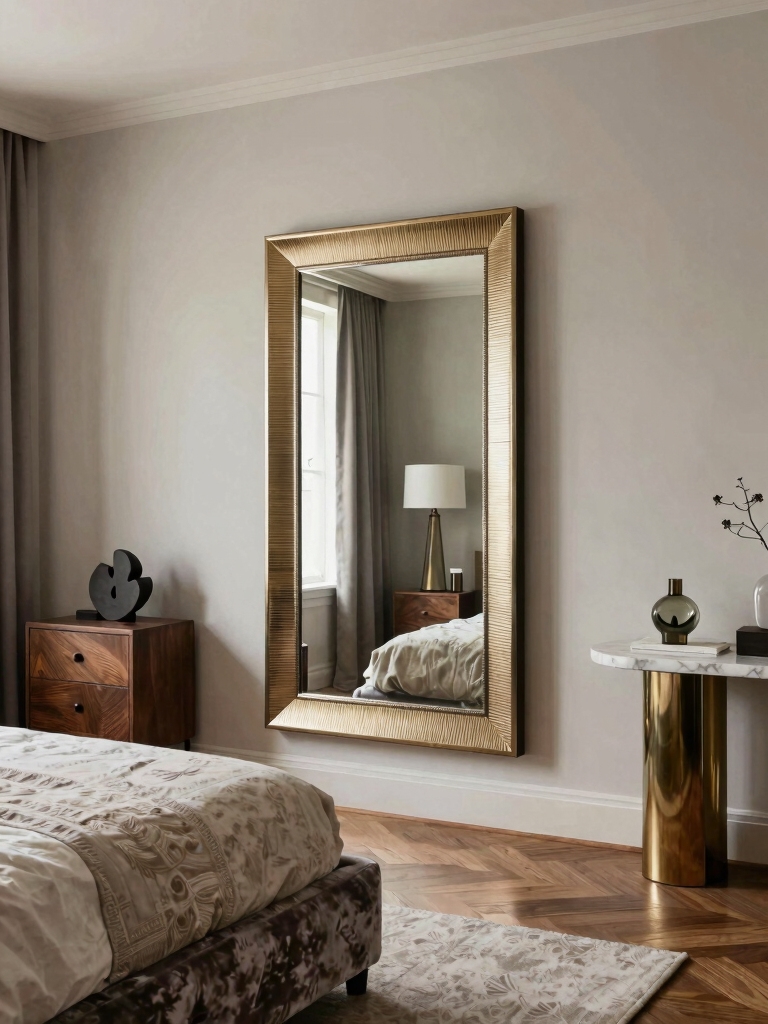
A mirror earns its place in a bedroom by doing several things a piece of art can’t. It throws light around, so a dim room brightens without a new lamp. It adds depth, so a small room reads larger. And the right frame turns it into a focal point that holds a wall on its own.
That combination of practical and pretty is why a single well-chosen mirror often does more for a bedroom than a whole gallery of prints. It’s the first thing I hang in a dark room. One mirror, and the place wakes up.
The catch is that a mirror only flatters a room when it reflects something worth seeing. Aimed at a window or a nicely made bed, it doubles the good part of the room; aimed at a pile of laundry or a blank hallway, it doubles that instead. So the elegance isn’t really in the mirror itself, it’s in what you point it at, which is the part most people never stop to think about before they hang one.
Mirror Size, Shape, and Placement
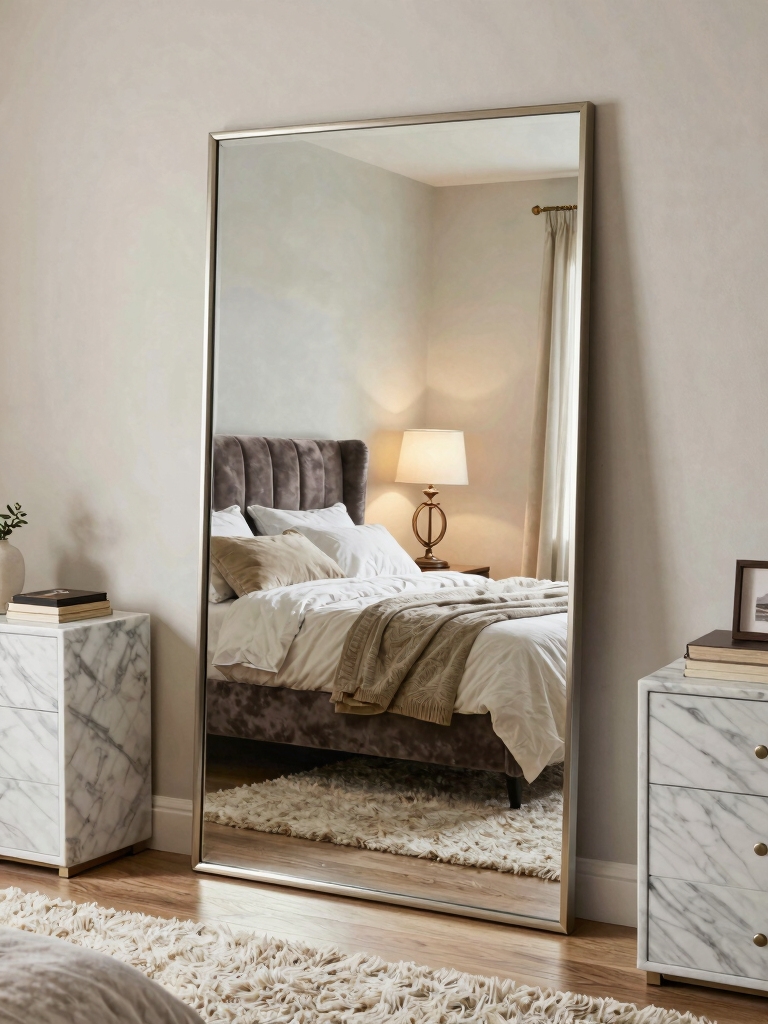
Size and placement decide whether a mirror looks deliberate or accidental. As a rule, a mirror should fill roughly two-thirds of the wall or furniture it sits above, so a small mirror floating on a big wall looks lost while a generous one anchors the space. Over a dresser, leave a hand’s width of frame on each side; on an open wall, go bigger than feels safe, since mirrors almost always look better large.
Hang it at the right height and match the shape to the spot. Center most mirrors around 57 to 60 inches from the floor, the same eye-level rule you’d use for art, and let the shape answer the room: a tall rectangle stretches a low ceiling, a round mirror softens a boxy wall, and a full-length piece earns its keep by the closet. Get the scale and height right and even a cheap mirror looks considered. Scale is the whole game.
- Fill about two-thirds of the wall or dresser so the mirror anchors rather than floats.
- Center it near 57 to 60 inches from the floor, the standard eye-level for hung pieces.
- Match the shape to the wall: tall to lift a ceiling, round to soften, and lean on these paint ideas to refresh a room behind it.
🅰️One large statement mirror
Best for impact and for bouncing the most light: a single oversized mirror anchors a wall, doubles the daylight, and reads as a focal point. Ideal over a dresser or leaning by a window.
🅱️A cluster of smaller mirrors
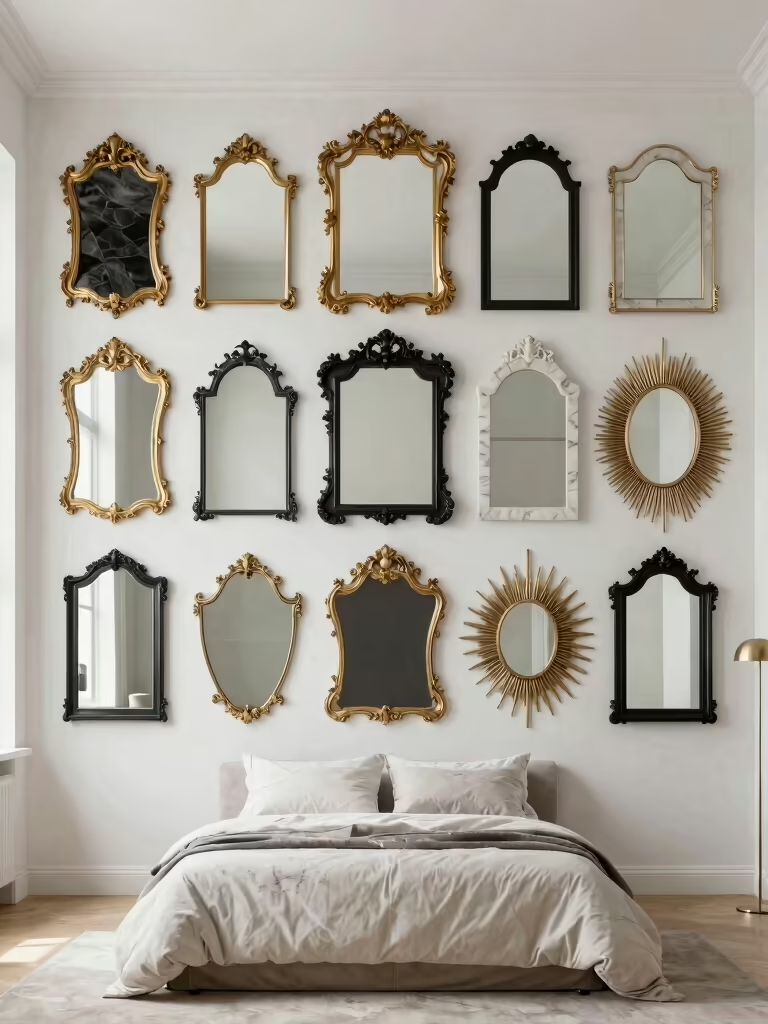
Best for character and for walls that can’t take one big piece: a gallery grouping of mixed shapes scatters light from several angles and adds personality. Keep the frames in one family so it reads collected.
Frames That Make a Design Moment
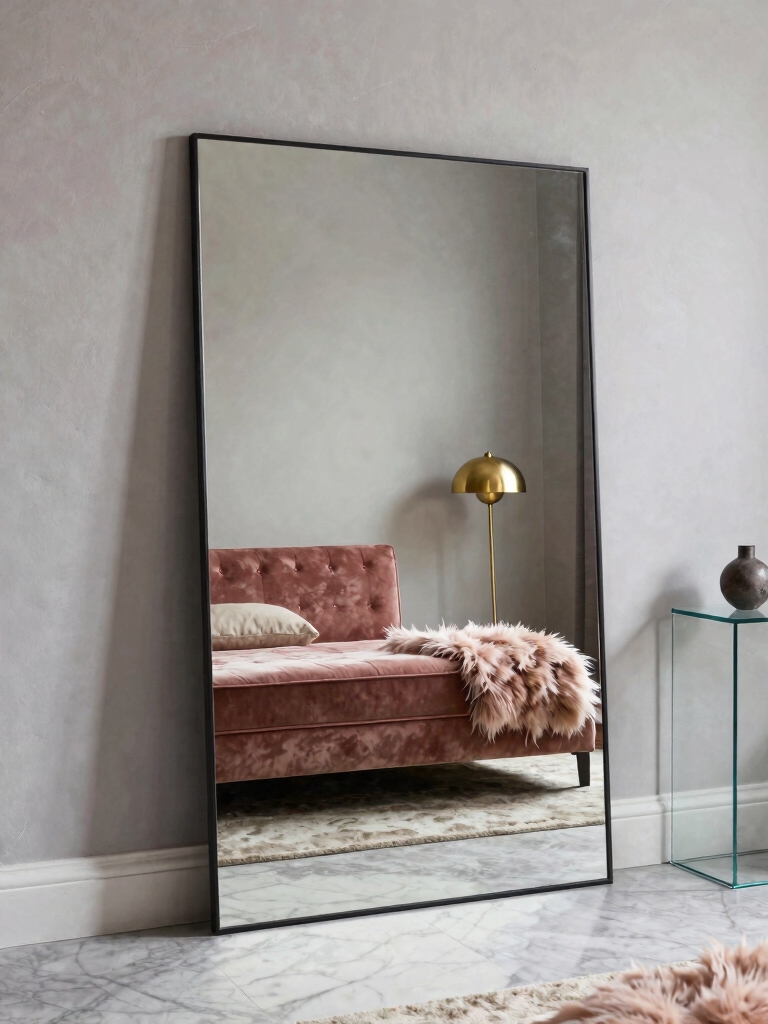
The frame is where a mirror stops being a utility and starts being decor. The same sheet of glass looks completely different in a thin black surround, a chunky carved wood frame, or a slim brushed-brass edge, so the frame is really the design decision. The glass is just glass. The frame is the choice. Pick it to echo the room’s other finishes, the metals, the wood tones, the overall mood, and the mirror joins the room instead of sitting apart from it.
Match the frame to the room’s finishes
Let the style match the feeling you want. A clean, frameless or thin-metal mirror feels modern and quiet; a carved or gilt frame brings age and warmth; a rattan or beaded surround leans relaxed and coastal. One framed mirror, often $80 to $300 depending on size and frame, can set the tone for a whole wall, which makes it a cheap way to add character.
When in doubt, treat the mirror like the room’s one piece of jewelry. In a calm bedroom, a single mirror with a bit of personality does more than a cluster of plain ones, because there’s nothing competing with it. Keep the rest of the wall quiet and let that one frame carry the moment, the way these decor ideas worth borrowing use a single standout.
Irregular Mirrors That Add Personality
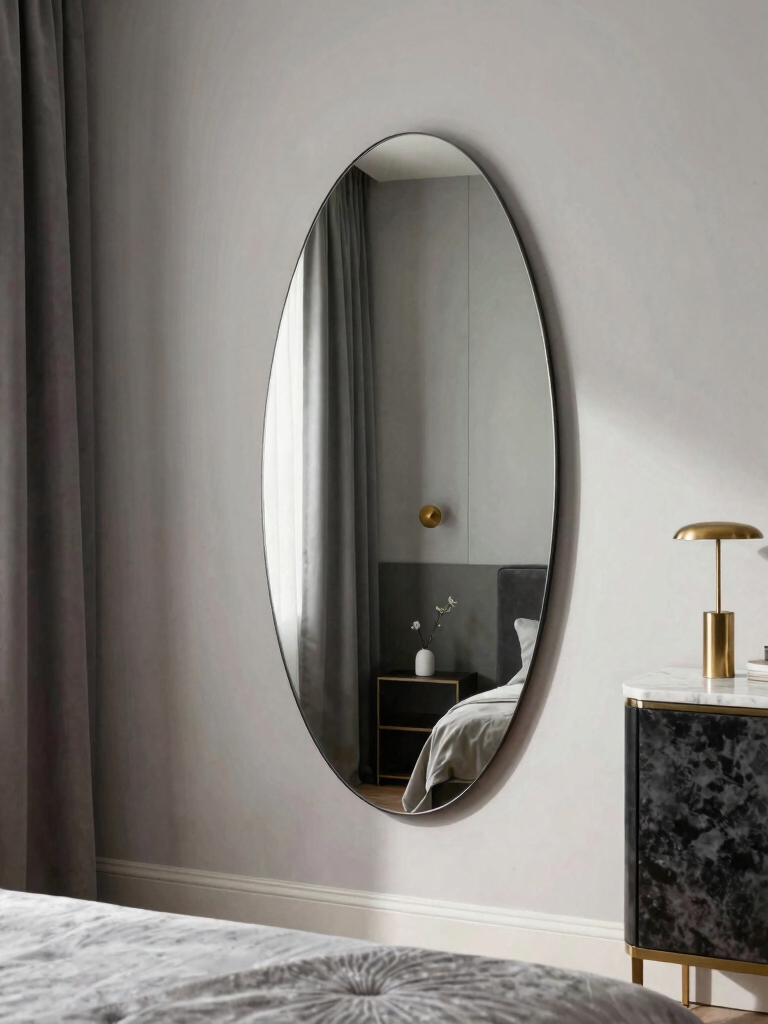
An irregular or organic-shaped mirror is the fastest way to give a bedroom a bit of personality. A wavy edge, an arch, an asymmetric silhouette, or a soft blob shape breaks up all the straight lines a bedroom is full of, so the mirror comes across as a deliberate, sculptural choice rather than a plain rectangle filling space. In a room of boxy furniture, that one curved or odd shape is what catches the eye. Straight lines get boring fast.
Keep it the standout and let everything else stay simple. An irregular mirror is loud enough on its own, so it works best on a quiet wall with calm furniture around it, where the shape can be the personality. Pair a bold shape with a restrained frame, or skip the frame entirely, and the silhouette does all the talking without tipping the room into busy.
Heads-Up
Before you hang a mirror, stand where you’ll see it most, the bed, the doorway, and check what it reflects. A mirror doubles whatever it faces, so aim it at a window, art, or a lamp, never a cluttered corner or a glaring overhead. The reflection matters more than the mirror itself.
Reflective Wardrobes That Enhance Space
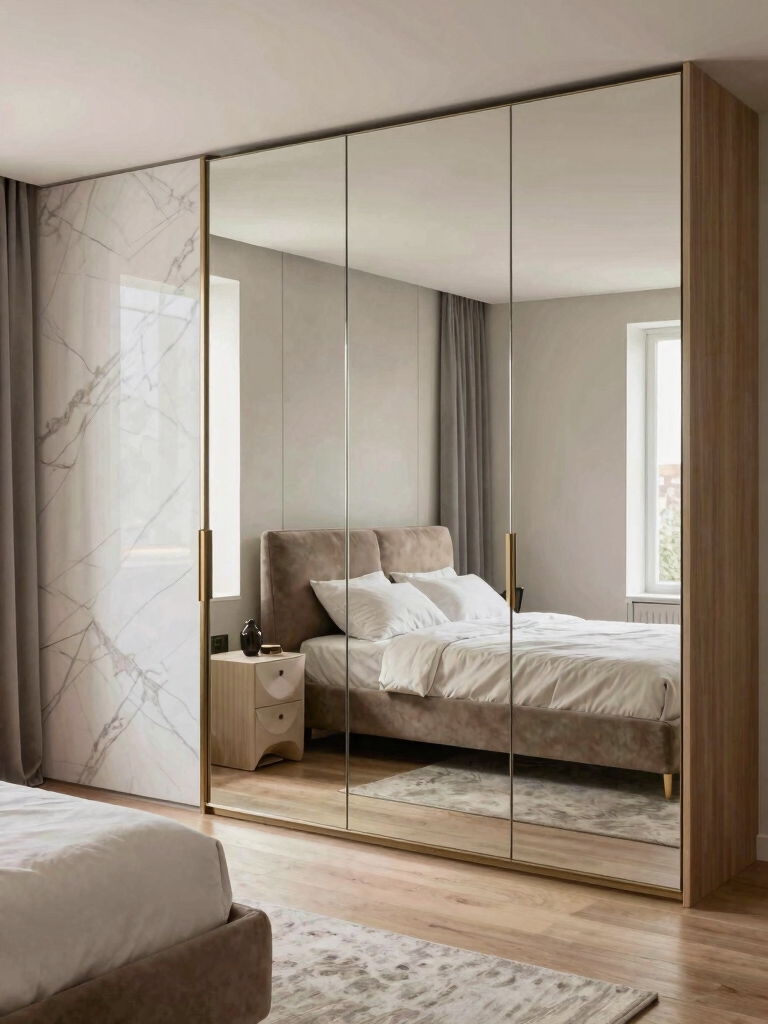
Mirrored wardrobe doors are the heavy hitter for a small bedroom, because they turn a necessary wall of storage into the thing that makes the room feel twice as big.
A full wall of mirrored sliding doors reflects the whole room back, doubling the visual space and the light at once, and it costs you nothing in floor since the wardrobe was going there anyway. It’s the single biggest space-stretching move a mirror can make. I push it on every small-bedroom client. The room looks half again as big the moment the doors go on.
- Choose mirrored sliding doors on a fitted wardrobe to double the room and skip the swing space.
- Add mirror panels to plain wardrobe doors as a cheap retrofit if you already have the closet.
- Keep the reflected view tidy, since a full mirror wall doubles whatever sits in front of it, and lean on these storage ideas for hiding clutter.
Where to Hang a Bedroom Mirror
Placement is where a mirror earns or wastes its potential, and a few spots reliably work. The best is opposite or beside a window, where the glass catches daylight and throws it deep into the room, which is the cheapest way to brighten a dark bedroom. Over a dresser is the classic working spot, doubling as a getting-ready mirror, and a full-length piece by the closet handles the outfit check without a separate stand.
Think about what each spot will reflect before you commit. A mirror facing a lamp or a candle multiplies the glow at night; one facing the door reflects people walking in, which some find unsettling; one facing a cluttered corner just doubles the mess. The spot I pick first is always the one that bounces light and lands on something nice, because a mirror is only as good as its reflection.
Make a Mirror Work Harder for Light
Beyond placement, a few tricks squeeze more light and depth out of a mirror. Lean a large floor mirror, often $80 to $250, against a wall near a window, and it bounces a wide column of daylight while adding a relaxed, gallery feel. Angle it slightly to throw the light where the room is darkest, usually a far corner, and a single piece can lift the whole room’s brightness.
Cluster small mirrors when one big piece won’t fit. A grouping of three or four mirrors of different shapes, hung like a gallery wall, scatters light from several angles and adds the same depth a large mirror would, with more character. Keep their frames in one family so the cluster looks collected, and you get the light-bouncing payoff even on a wall that can’t take a single oversized piece.
Mirror Mistakes That Undercut the Look
Even a beautiful mirror falls flat when a few simple things go wrong. Hanging it too high or too small tops the list: a mirror floating above eye level or lost on a big wall looks like an accident, so size it generously and bring the center down to around eye level. The fix costs nothing but a few minutes with a tape measure and a fresh nail.
Watch the reflection and the light source, too. A mirror pointed at a blank wall or a messy corner wastes its whole purpose, and one placed where it bounces a harsh overhead into your eyes turns an asset into a glare. Aim it at a window, a lamp, or something worth seeing, and hang it at the right height. Do that and a mirror quietly does everything you hoped it would, which is what makes it such good value in the first place.
Point It at Something Worth Doubling
A bedroom mirror reflects great taste only when you treat it as more than a place to check your outfit. Size it to the wall, hang it near eye level, choose a frame that suits the room, and, above all, point it at a window or something worth seeing, and a single mirror brightens the room, stretches the space, and adds a focal point all at once, for a fraction of what new furniture would cost.
If you take one thing from all this, let it be this: a mirror is only as good as its reflection. Get that right, and even an inexpensive mirror earns its wall every single day.