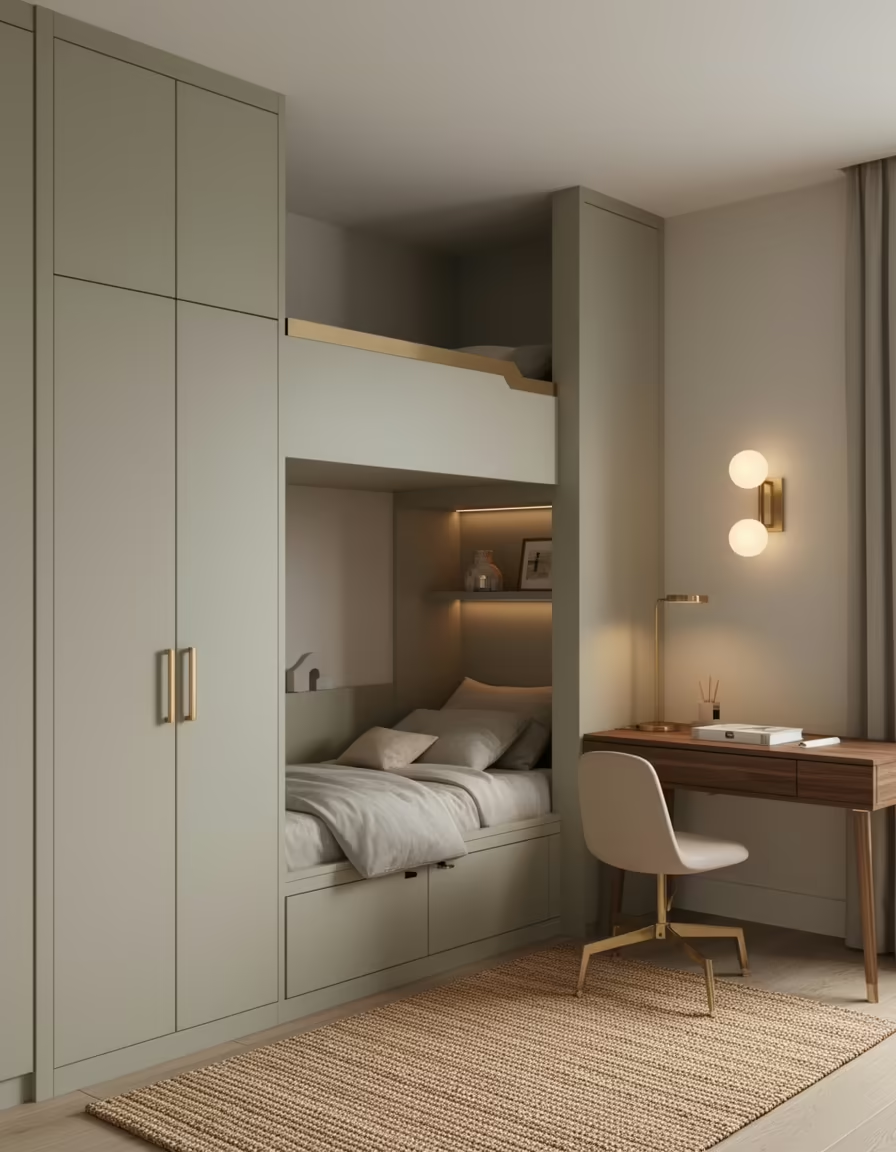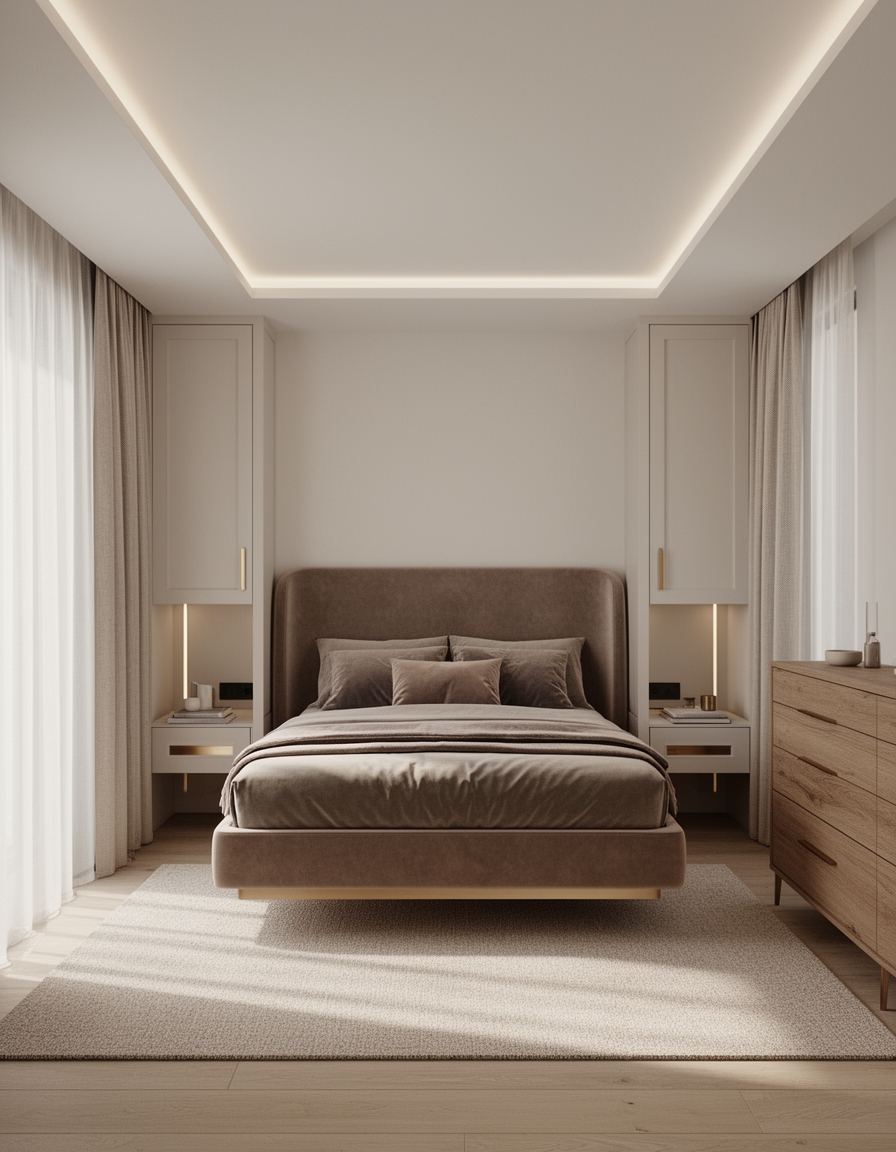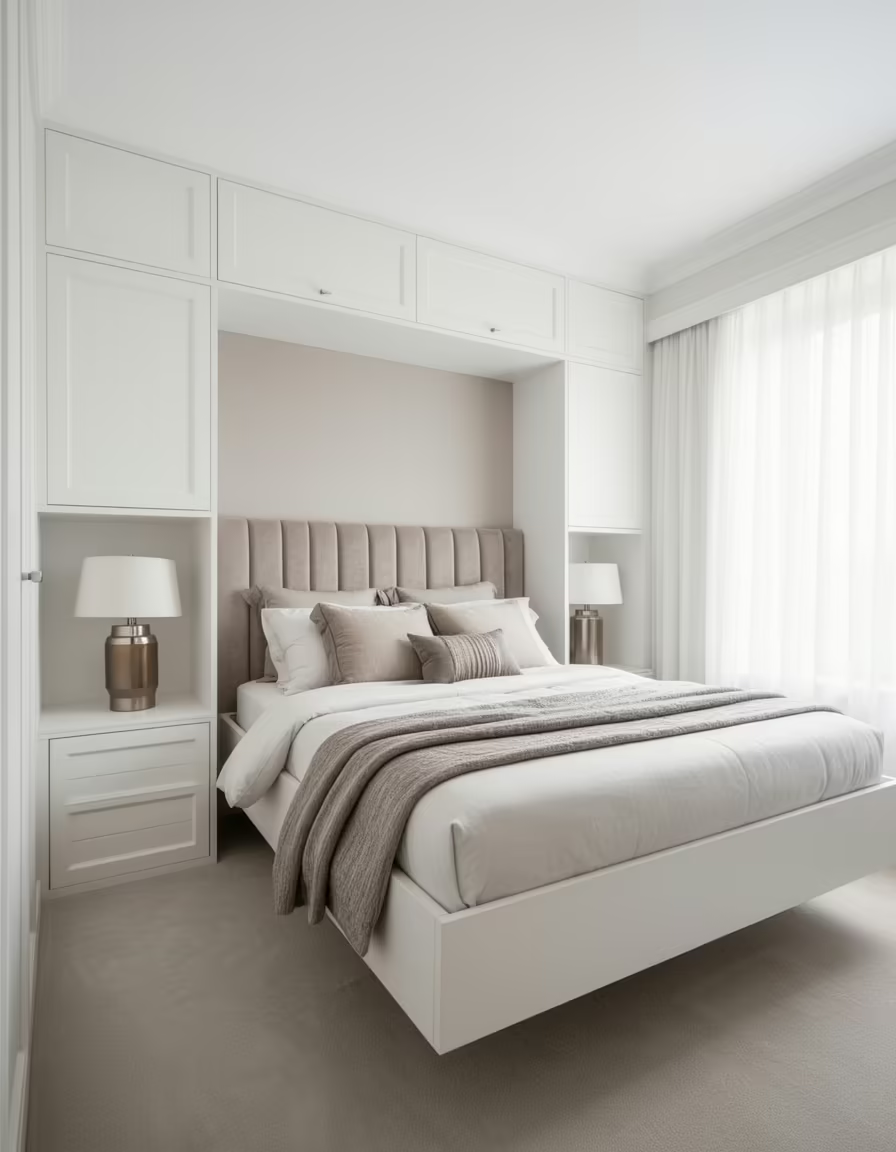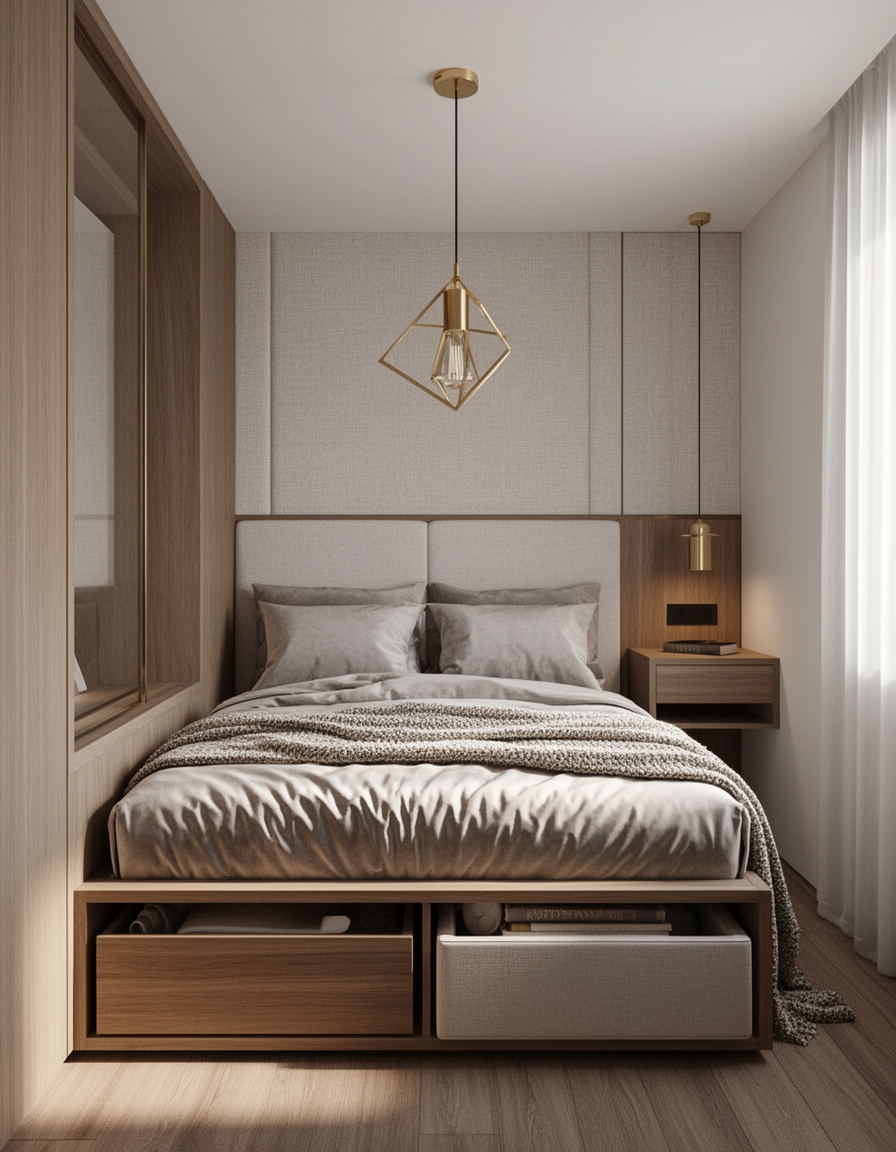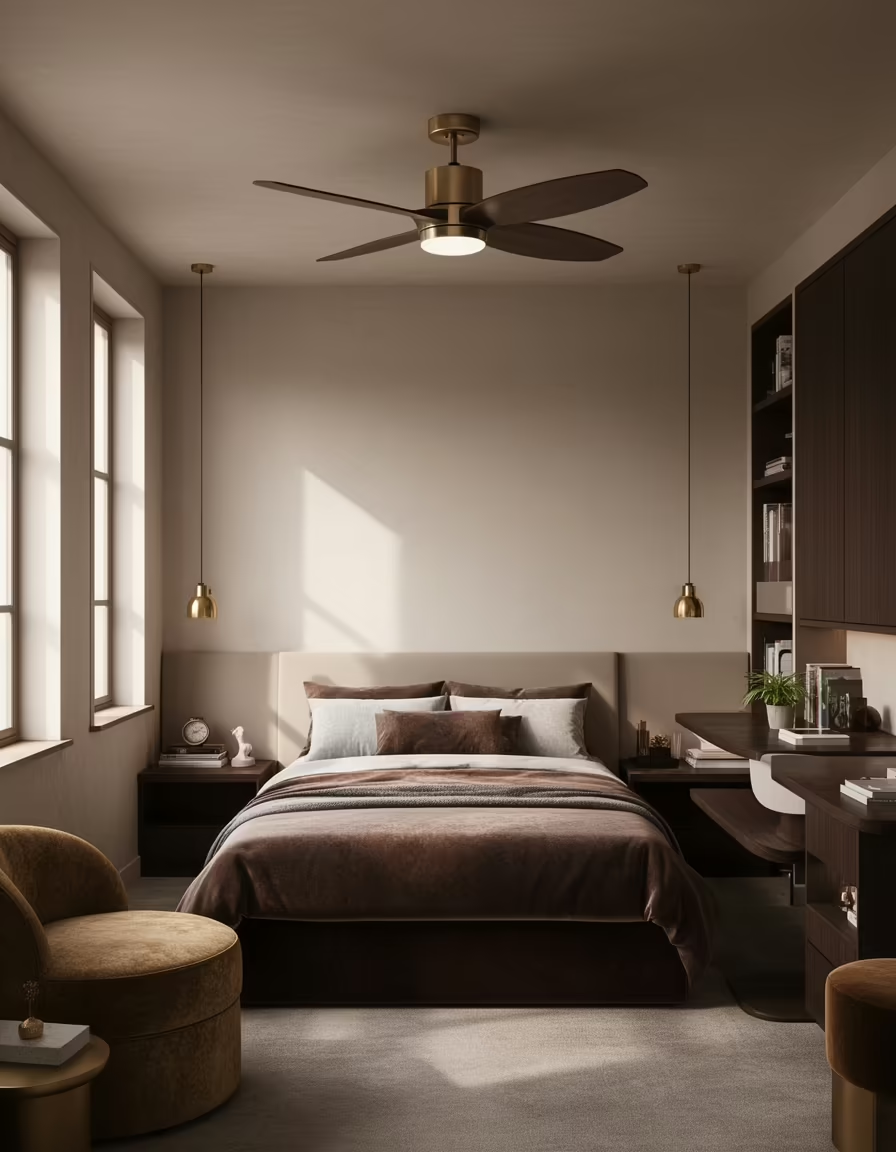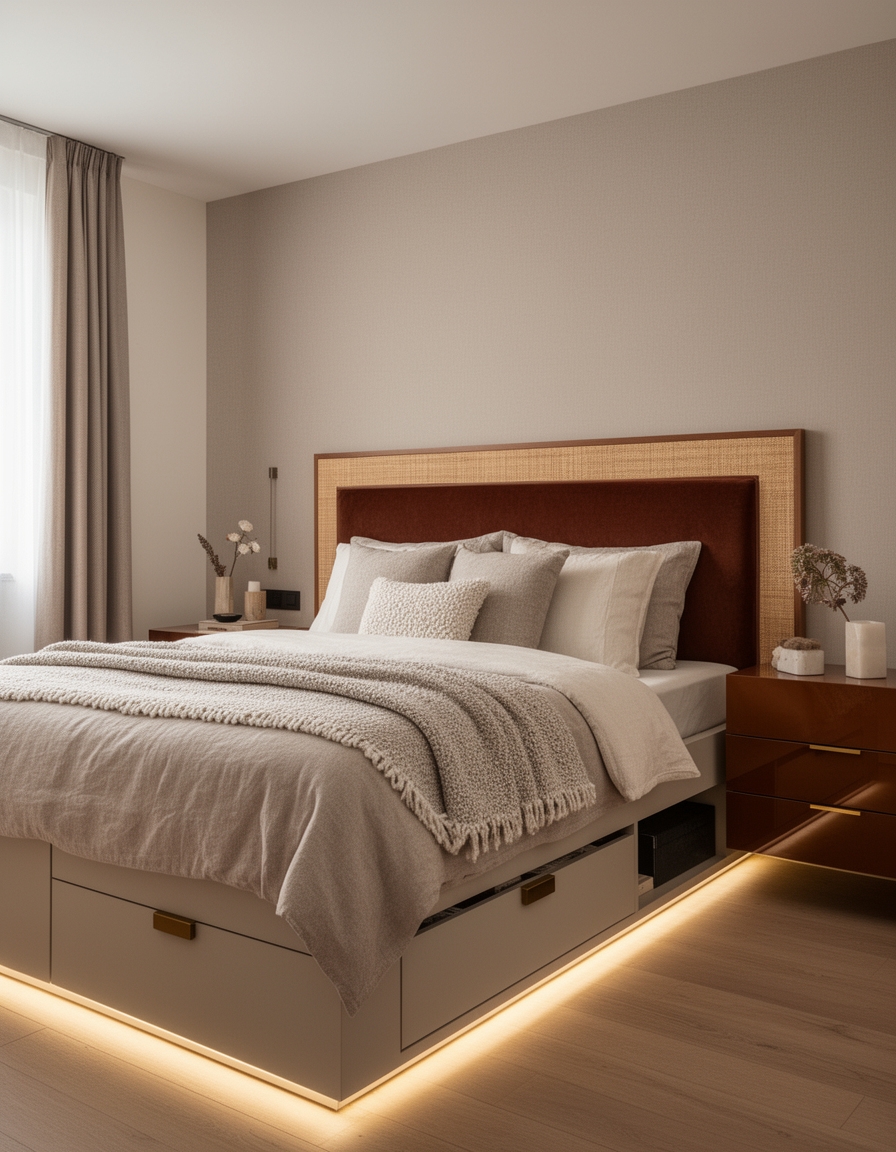

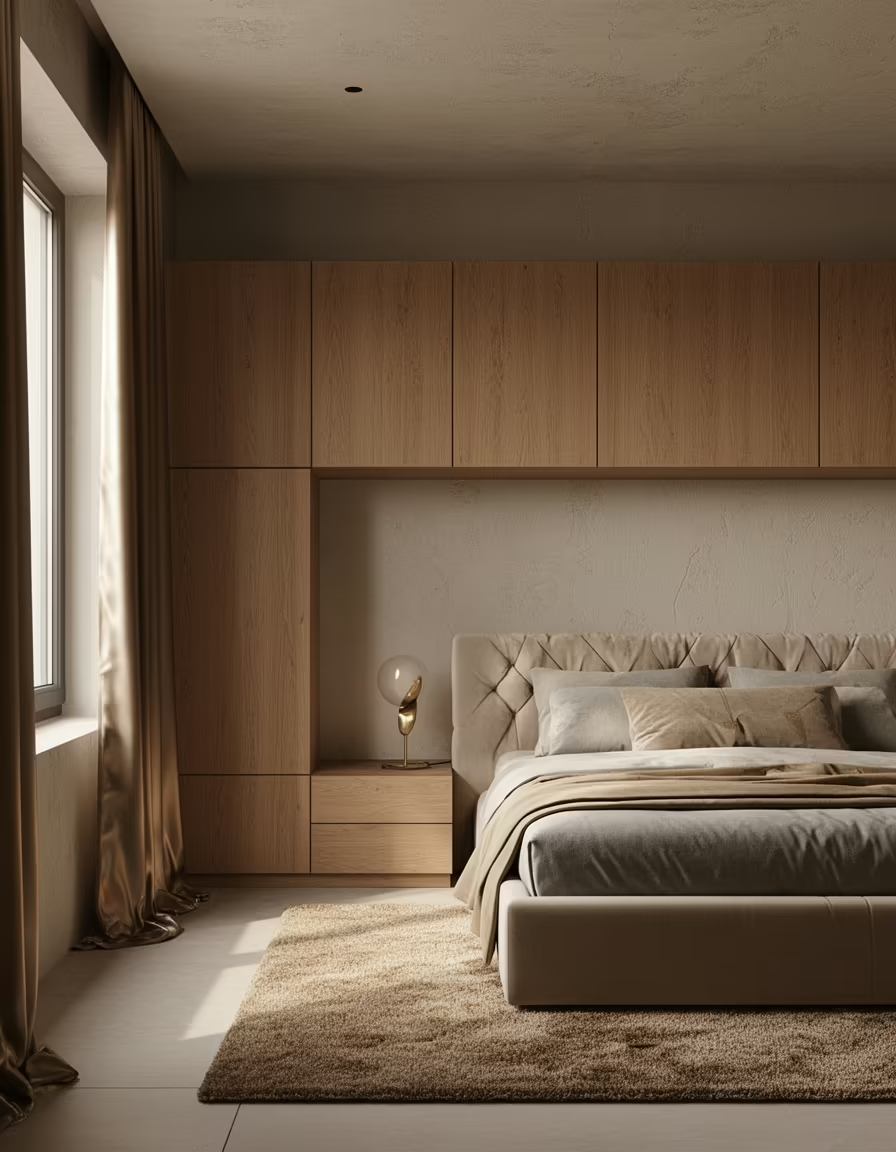
The best bedroom ideas for small rooms rarely come from cramming in more. The spaces that look most grown-up are usually the ones holding the least. When I help adults furnish a tight bedroom with taste, the work is mostly subtraction. One good lamp does the job of three, the bed earns its footprint, and the palette stays in its lane.
These ideas lean on restraint, scale, and a handful of pieces worth the spend, which is what separates a 90-square-foot room that feels deliberate from one that simply feels packed and apologetic about its size. Even a truly tiny bedroom can carry that polish. Lately the rooms I love most are the most edited.
Key Takeaways
- Edit before you add: pull everything out, then return only what earns its footprint, because fewer better pieces look more expensive than a room full of filler.
- Buy for scale: a slim 18-inch nightstand and a leggy bed frame keep sightlines open and the floor visible.
- Spend where it shows: built-ins, one large mirror, and warm layered light do more than another storage bin.
- Hold the palette tight: a single deep accent over steady neutrals makes a small room feel intentional and considered.
Maximize a Small Bedroom by Editing Before You Add
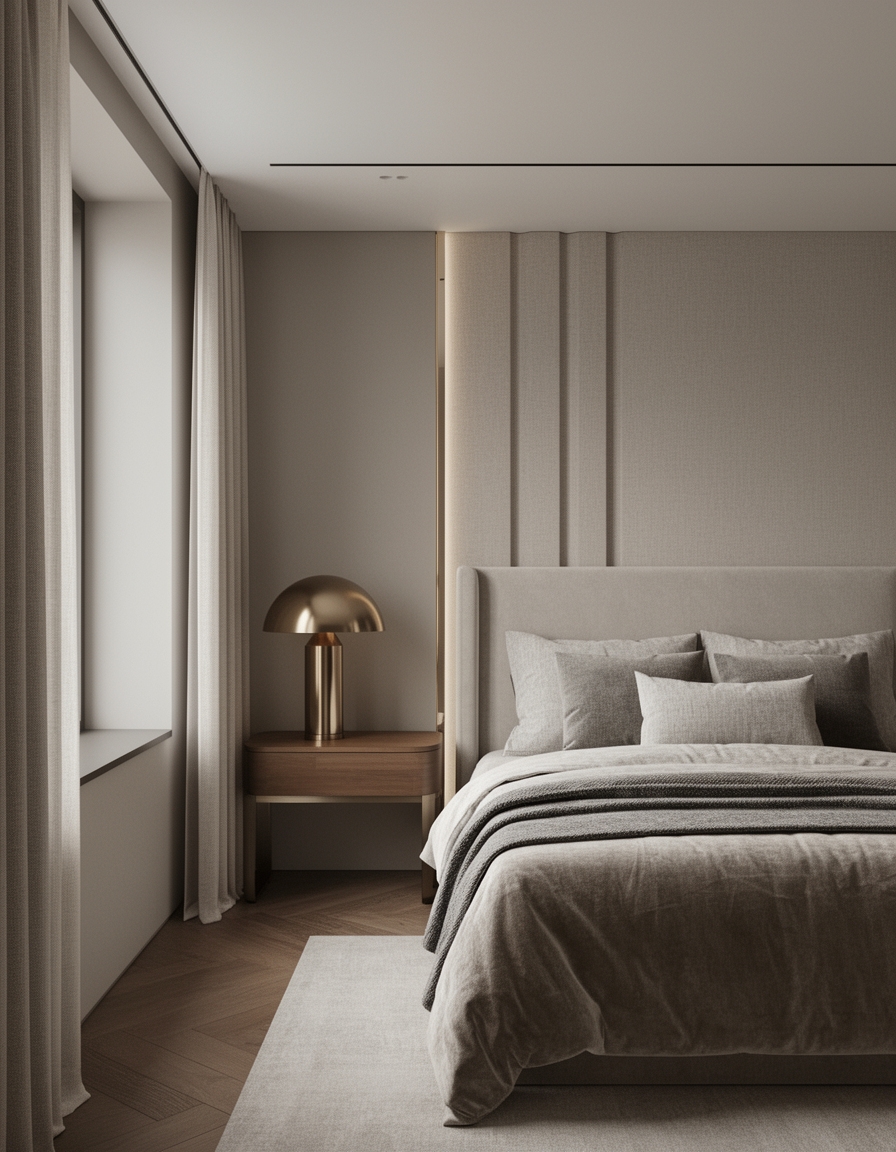
The most expensive-looking small bedrooms I walk into started nearly empty. Before anyone buys a thing, I measure the real constraints, the door swing, the window wall, where the outlets actually sit, then pull every non-essential out and look at the bare room.
The first grown-up bedroom I styled was for a client who’d just downsized from a four-bed house into a 100-square-foot room, and honestly, half her furniture didn’t make the cut. The room was better for it.
Keep less, choose better
Editing is the cheapest upgrade you already own. A room of fewer, better pieces feels calmer and more deliberate than one stuffed with bargains that each ask for attention. Decide what must stay, the bed, one seat, real storage, and what can go, the spare chair that only collects laundry, the third lamp nobody switches on.
Once you know what is earning its place, you can spend with intent. Sketch the room to scale, mark the door swing and the outlets, and you’ll plan the layout before you shop. That one habit is why a too-big dresser stays in the store. No hauling it home, no returning it two weeks later.
Free Up Usable Floor Space With a Lighter Footprint
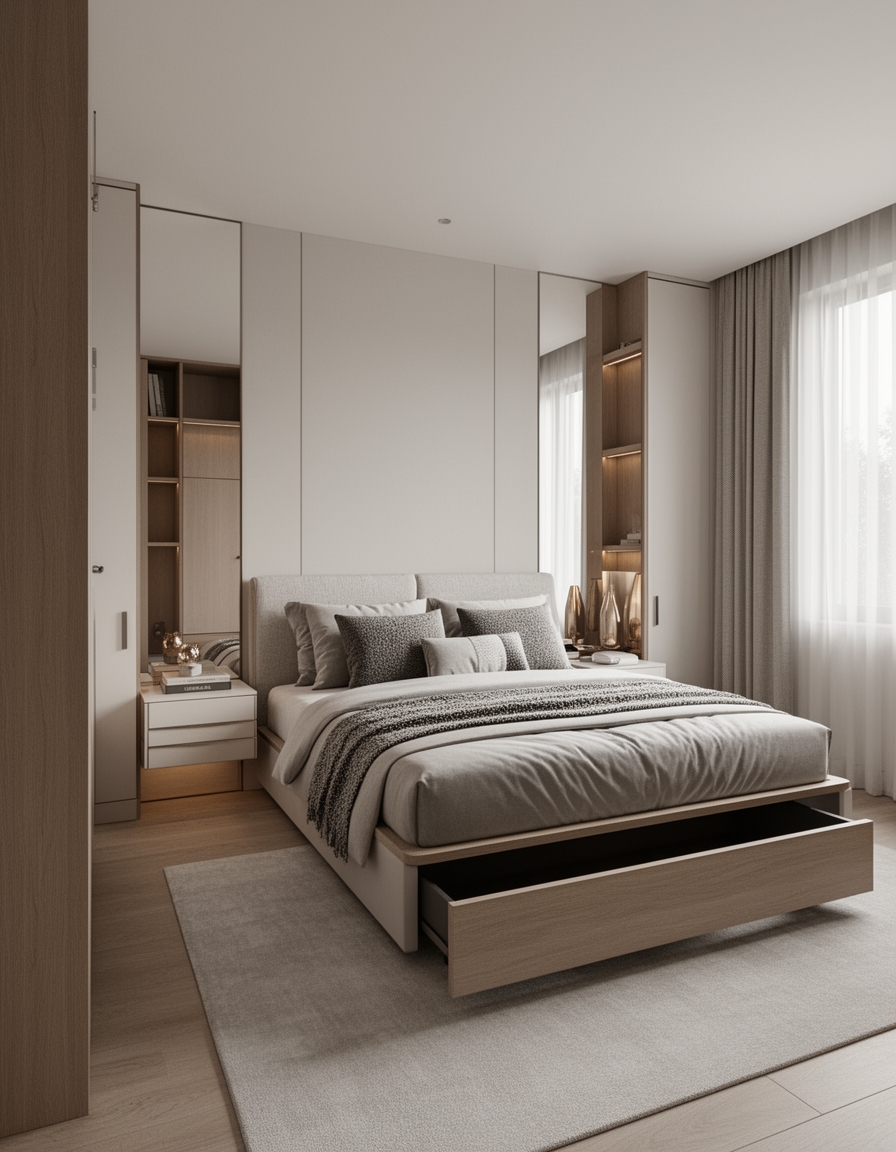
How much floor you can actually see matters more than your square footage. The more uninterrupted floor stays visible, the larger a small bedroom feels, so the goal is furniture that meets the ground lightly and leaves clear paths.
- Raise the bed on legs you can see under: a frame with 6 inches of clearance lets light and floor run beneath it, which fools the eye into seeing more room.
- Hold at least 18 to 24 inches of walking clearance on the lead side of the bed so you never have to shuffle past it sideways.
- Float the dresser against the shortest wall and skip the footboard, since an open foot of the bed keeps the line to the window intact.
- Pick a round or oval nightstand over a boxy one, because softer corners take up less visual room and spare your hips in a squeeze.
- Anchor the bed on a rug that runs at least 18 inches past the frame on the step-out sides; an undersized rug chops the floor into busy pieces.
Two ideas about small bedrooms that quietly steer people wrong:
❌ Myth: A small bedroom has to be all white to feel bigger.
✅ Reality: A deep, consistent color can make a tight room feel enveloping and intentional. Clashing tones are what actually shrink a space, so commit to one palette and let it wrap the walls, trim, and ceiling.
❌ Myth: More storage furniture means less clutter.
✅ Reality: Every extra piece eats floor and breaks the sightline, which only makes the room look busier. Built-ins and honest editing beat adding one more bin almost every time.
Efficient, Stylish Space Solutions That Earn Their Keep
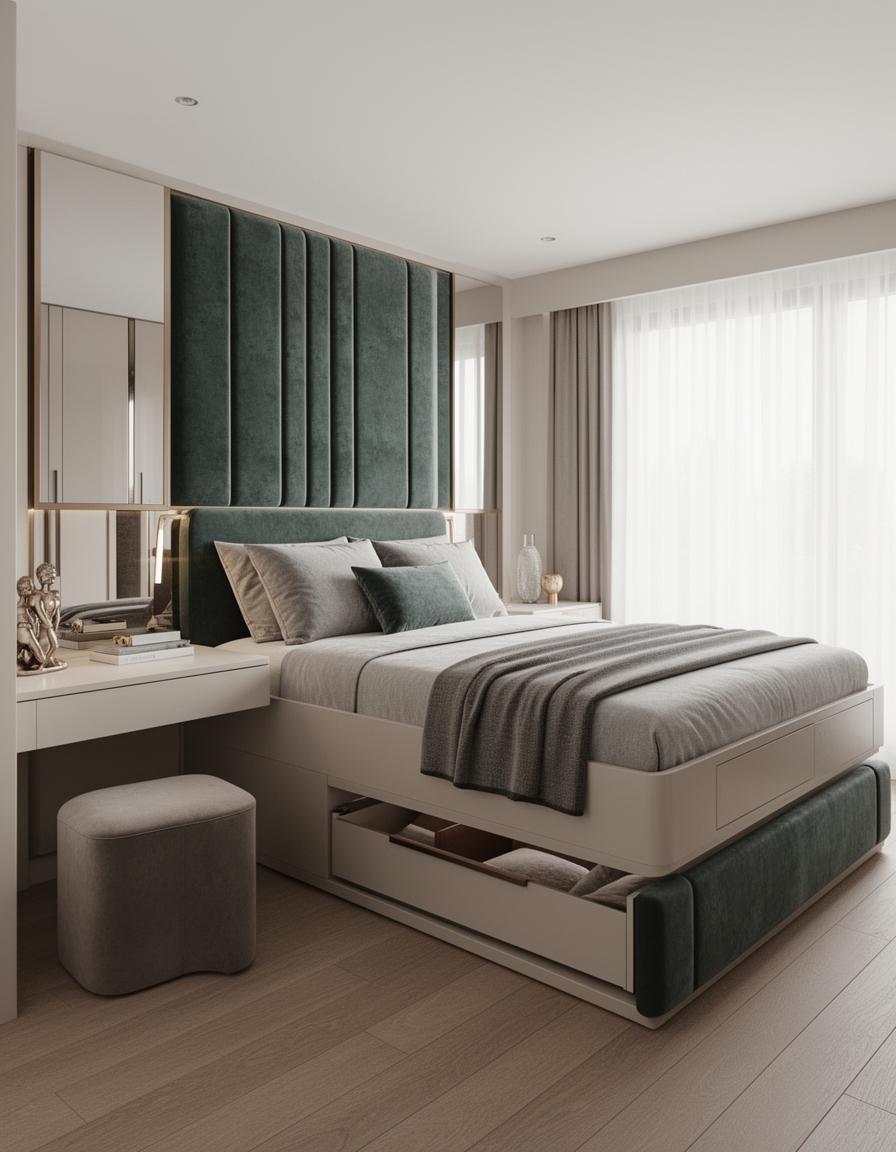
In a room this size, every piece should do two jobs without announcing it. A storage bench at the foot of the bed holds spare bedding and gives you somewhere to sit and lace your shoes. A narrow writing desk doubles as a vanity if you hang a mirror above it. The trap is gimmicky convertible furniture that does both jobs badly. Test how a piece works on an ordinary Tuesday morning, because the showroom demo will flatter anything.
Function you can feel, finish you can see
Taste shows up in the finish as much as the function. Given the same price, I’ll take one solid-wood nightstand with a real drawer over a flimsy three-tier cart every time, because the cart starts to wobble and look cheap within a season while the wood quietly ages well.
Warm metals, real wood, and a calm upholstery color carry a small room toward grown-up. For the look on a modest budget, copy the editing tricks in these small-room decor ideas worth stealing.
Light is the quietest space solution of all. A pair of plug-in wall sconces flanking the bed, roughly $40 to $90 each, clears both nightstands of lamps and frees the surface for a book and a glass of water.
Discreet Built-In Storage That Hides the Clutter
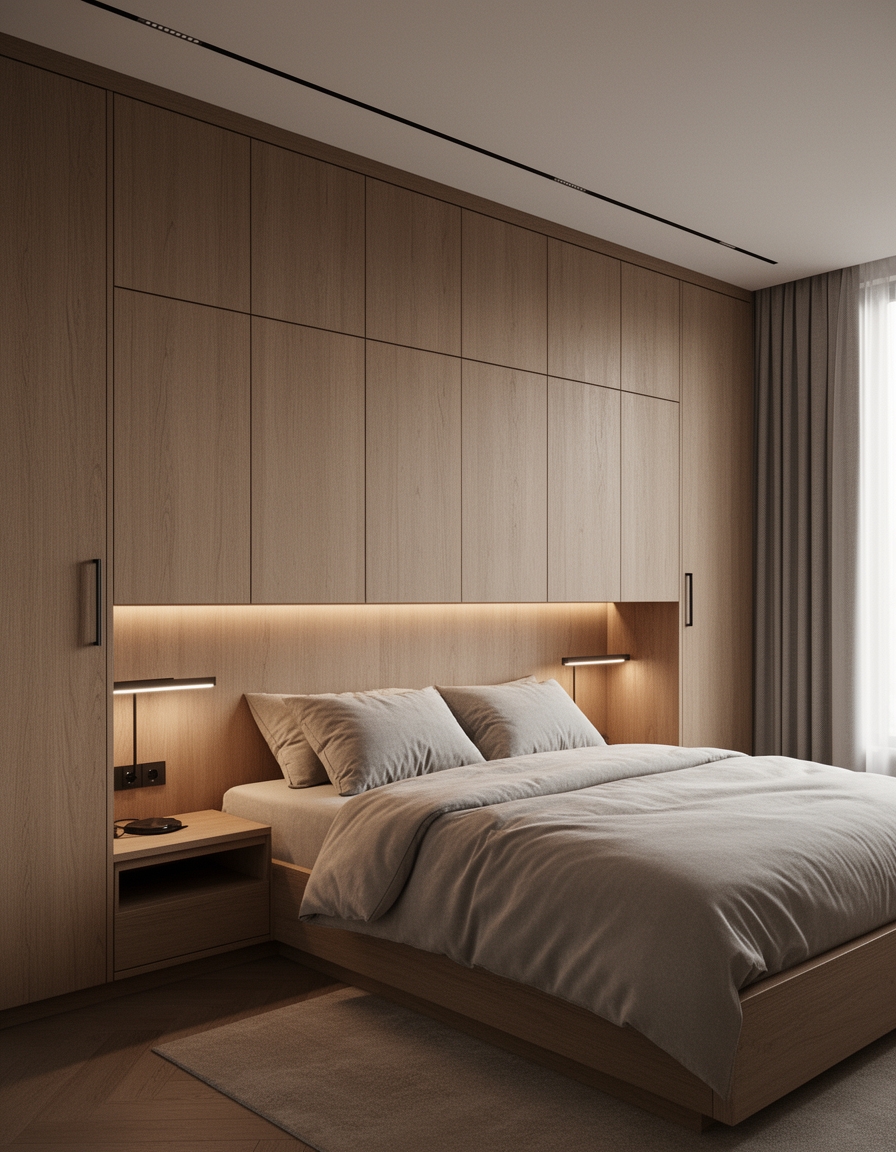
Clutter is what makes a small room feel smaller. The fix I push hardest is storage you don’t have to look at. Recessed shelves between studs, a headboard with a hidden cavity, drawers built into the bed base, all of it pulls the mess off the floor and out of sight. You walk in and the surfaces are clear, which the eye reads as calm.
Out of sight, off the floor
You don’t need a contractor for the discreet part. Swapping cheap wardrobe handles for soft-close drawers and brushed knobs, about $15 to $40 for a set and an afternoon, makes a flat-pack piece look closer to custom. Paint the inside of an open nook the wall color so it recedes instead of shouting.
If a full built-in isn’t in the cards, fake it: a run of matching lidded boxes on a high shelf keeps the off-season layers tidy. These small-bedroom storage ideas for hiding clutter go deeper on the disappearing-act approach.
In a small room, taste shows up as restraint. The pieces you choose to leave out shape it as much as the ones you keep.
Go Vertical: Storage That Climbs the Walls
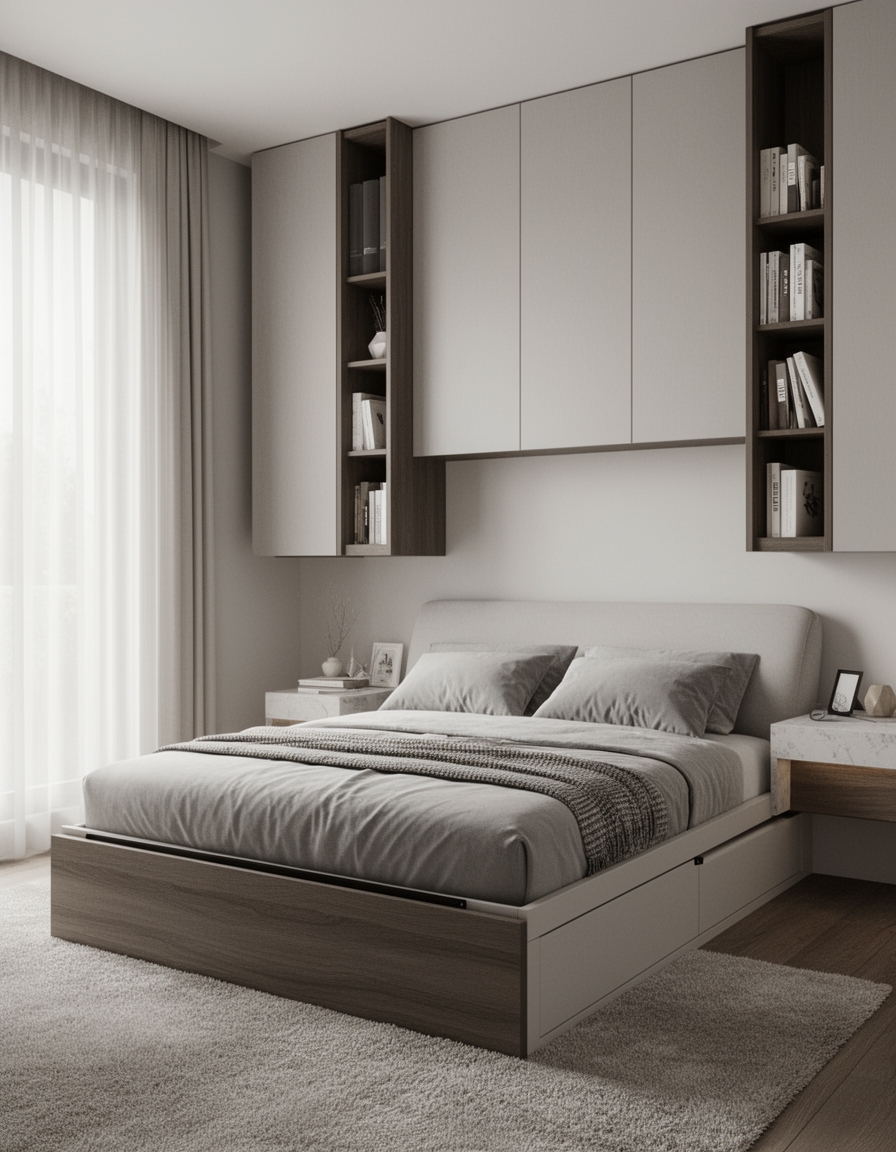
When the floor is spoken for, the only direction left is up, and a small bedroom usually has feet of unused wall above eye level. Drawing storage and the eye upward makes the ceiling feel higher and hands you room you didn’t know you had.
Height is free real estate. The grown-up version is restraint here too: tall and narrow beats wide and heavy, and one well-styled vertical run looks better than three crowded ones.
- Choose a tall, slim wardrobe that nearly meets the ceiling over a low wide one, since the vertical line stretches the wall and stores more in the same floor space.
- Mount picture ledges a foot above the dresser for books and small art, keeping the surface below clear.
- Hang curtains a few inches below the ceiling so the whole window line lifts; mounting them down at the frame keeps the wall feeling short.
- Use the back of the door for a slim hook rail or hanging organizer, the one bit of square footage almost everyone wastes. A proper wardrobe design worth the hype pays this back daily.
A Tasteful Palette Makes a Small Room Feel Considered
Color is where small bedrooms most often go wrong, usually by playing it too safe. Pale is not the only option. The all-white room meant to feel bigger often just feels thin and unfinished. A grown-up small room can carry depth, as long as the depth is consistent. Wrap the walls, trim, and ceiling in shades of one color and the corners blur, which makes the box feel larger and the whole space feel intentional.
If you want one move that pays off, it is a single deep accent against steady neutrals: a charcoal or deep olive headboard wall, oatmeal bedding, warm wood. The contrast gives the eye a place to land without breaking the room into pieces. Keep accent colors to two at most, repeated in a cushion, a lampshade, a spine of books, so the whole scheme feels collected.
Mirrors stretch that palette further by bouncing daylight and doubling the calmest view in the room. One large floor mirror, roughly $120 to $300, leaned opposite the window does more than three small frames, and these mirror ideas for doubling a small space show where to place it for the most light.
Budget Swaps That Punch Above Their Price
Taste isn’t a budget line, and most of the upgrades that make a small bedroom look considered cost very little. The money goes furthest on the things you touch and see every day. Think handles, light, and textiles. Another large piece of furniture, the kind the room can’t really hold anyway, almost never earns its price.
None of it needs a contractor. A weekend and a couple hundred dollars, spread across a few of these, changes the room more than a single big purchase would.
- Repaint one wall in a deep accent color for about $50 and an afternoon, the highest-impact change per dollar in any small room.
- Swap builder-grade knobs and pulls for brushed brass or matte black, roughly $15 to $40 a set, to lift a plain dresser instantly.
- Layer in two warm textiles, a tonal throw and a heavier curtain, to add depth without eating an inch of floor.
- Replace the overhead bulb with a warm 2700K one and add a small dimmer plug, under $25, so the light flatters the room at night.
Maintenance & Care: Keeping a Small Bedroom Serene
What I tell every client who worries the room will slide back into chaos is that a small bedroom only stays calm with a light, regular touch, since there’s no spare corner to absorb the overflow. A two-minute reset before bed, surfaces cleared and one drawer closed, does more than a big monthly purge. The room is small enough that mess shows immediately, which is actually the advantage: you catch it early.
Twice a year, edit again. Pull the off-season clothes, swap the throw, and be honest about what hasn’t earned its footprint since spring. A quick refresh of warm, layered light keeps the mood right as the evenings change, and these cozy lighting ideas for the perfect glow are the cheapest seasonal update going.
Taste Is Mostly What You Leave Out
A small bedroom rewards discipline more than any other room in the house. Edit hard, buy for scale, spend on the few things that show, and keep the palette honest. Do that and the square footage stops being the headline. The room starts to feel like a deliberate choice you made.
Start with one move this week, clearing the floor or swapping the handles, and let the rest follow. Bookmark this so you have the checklist on hand the next time you’re staring at a too-full room, and when you’re ready for the wall colors, these paint ideas for small rooms are the natural next step.