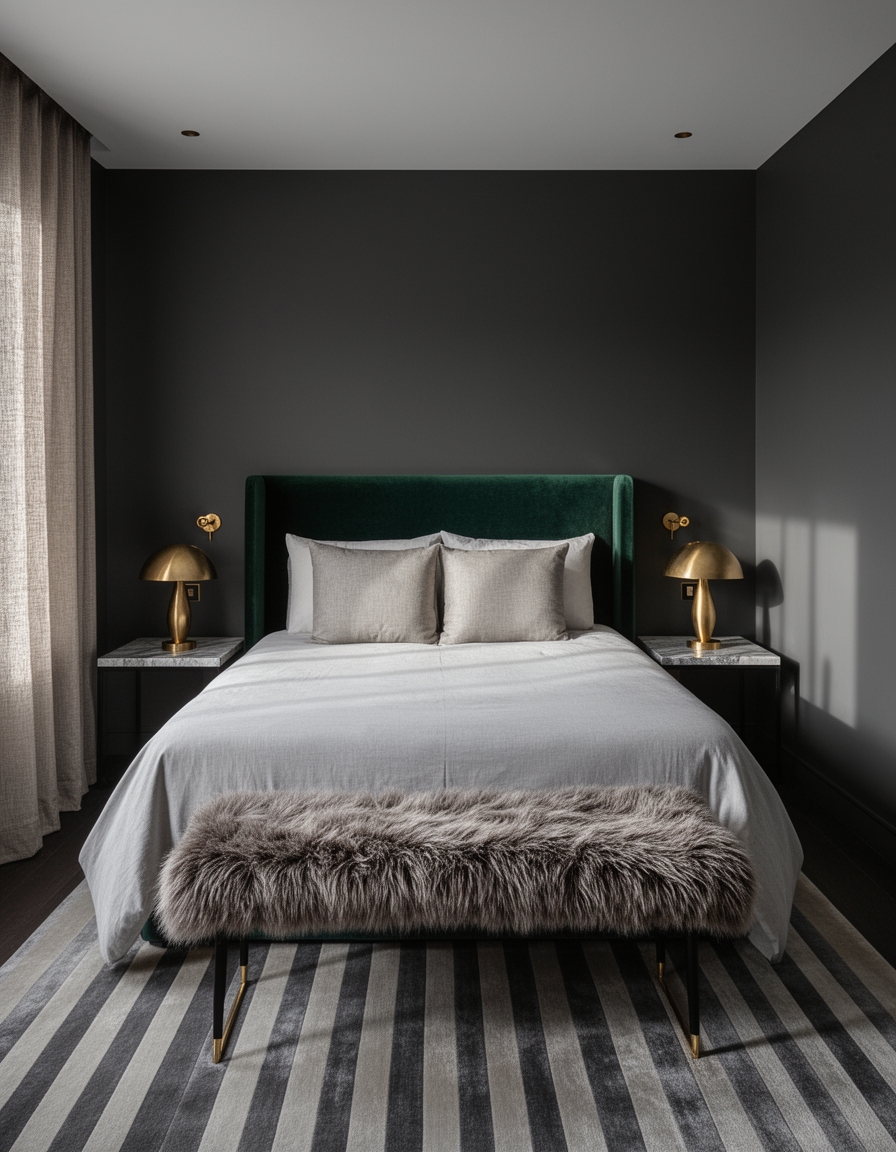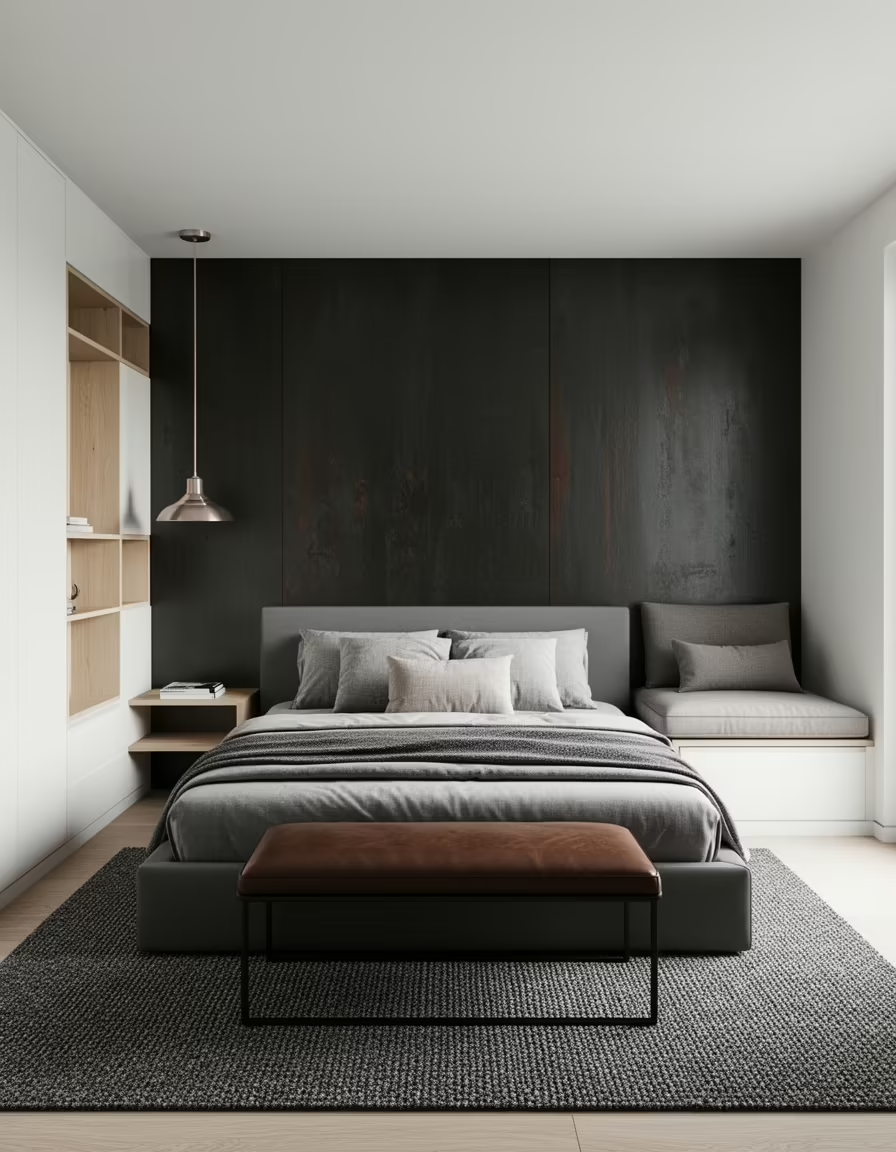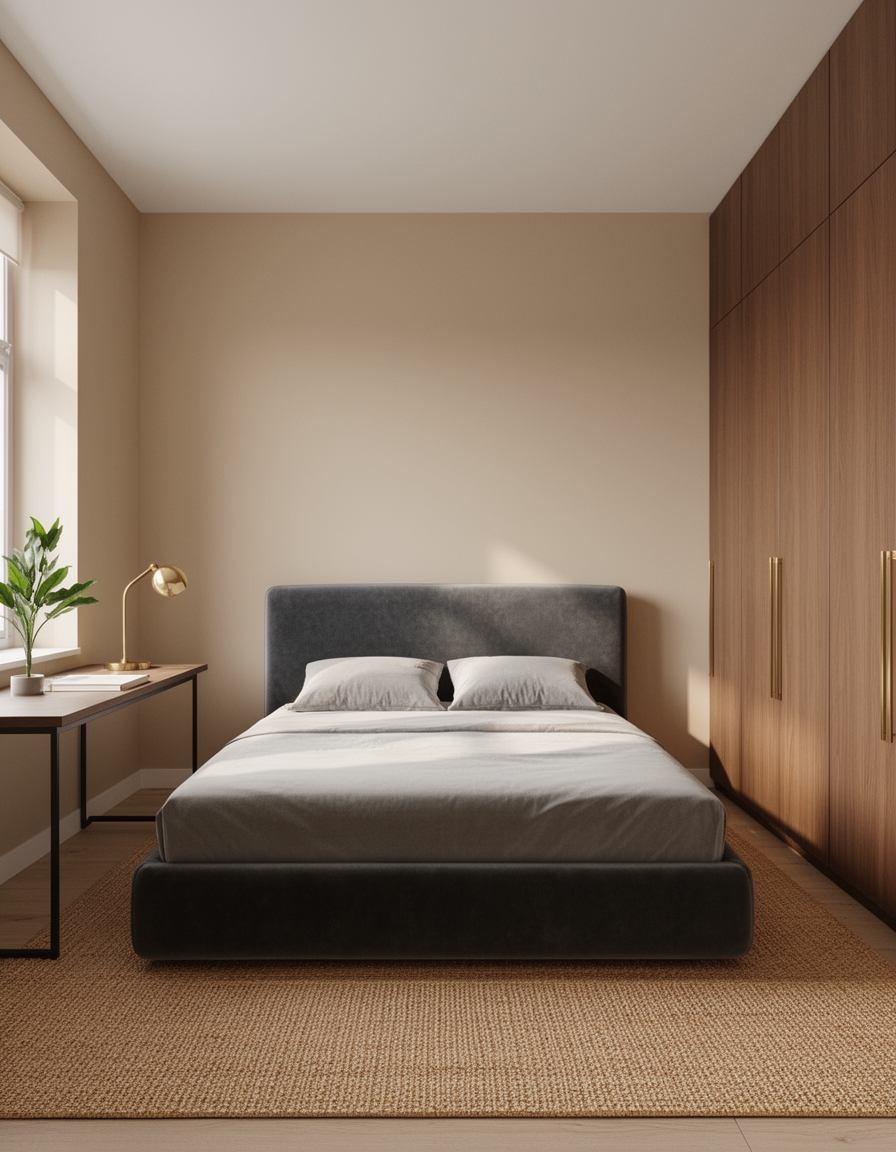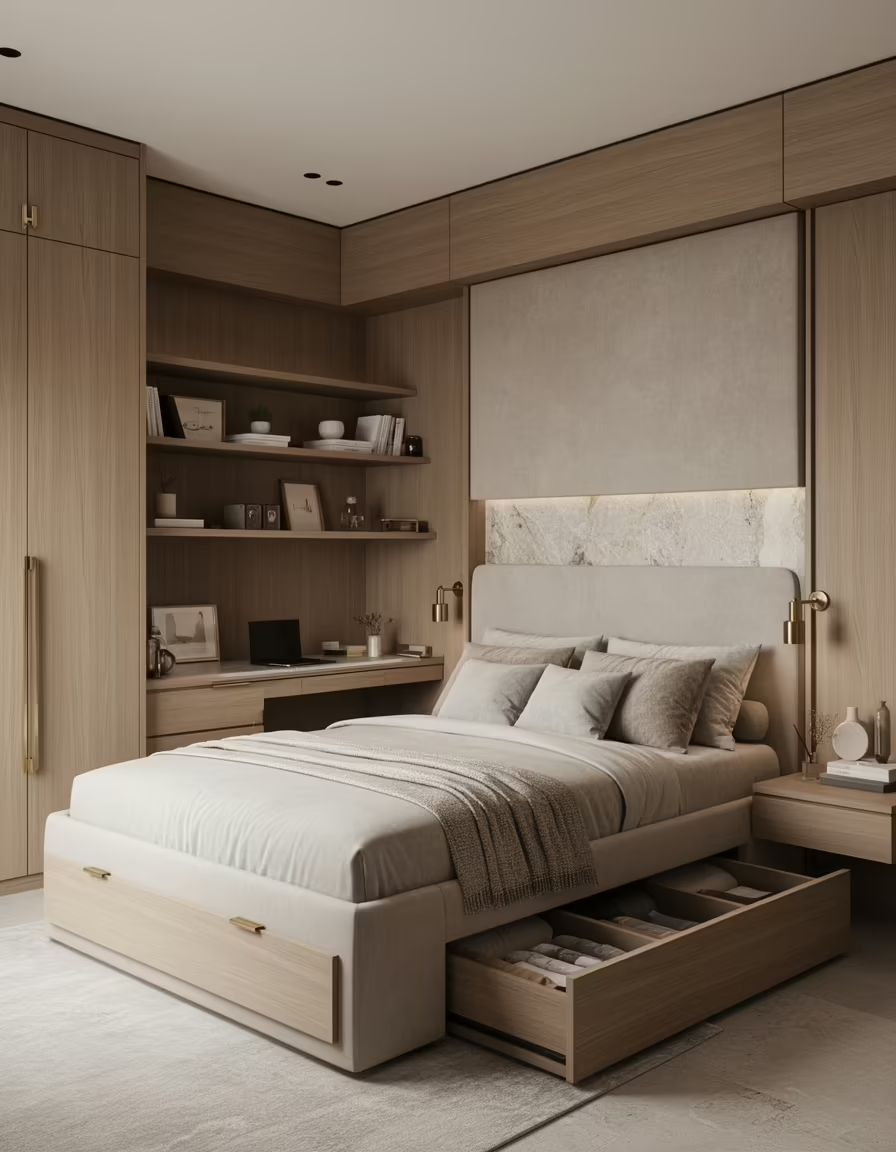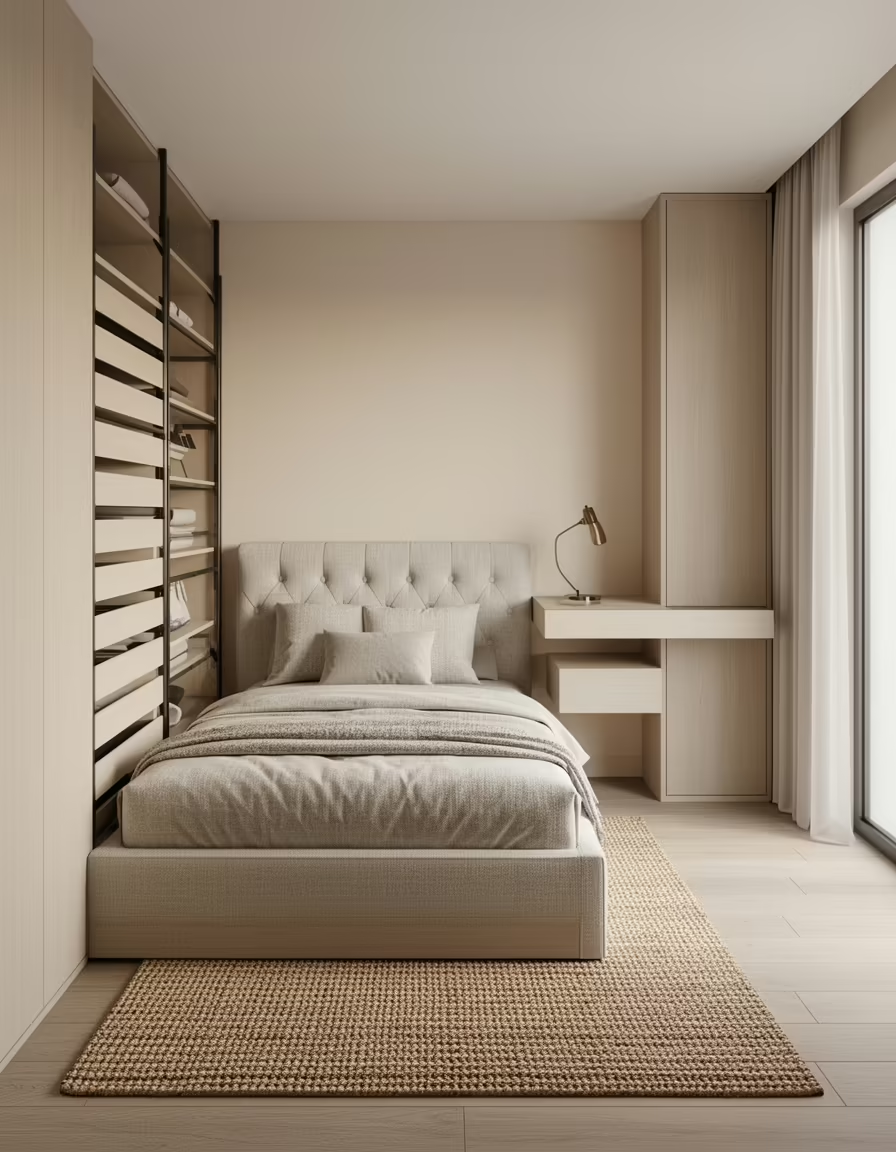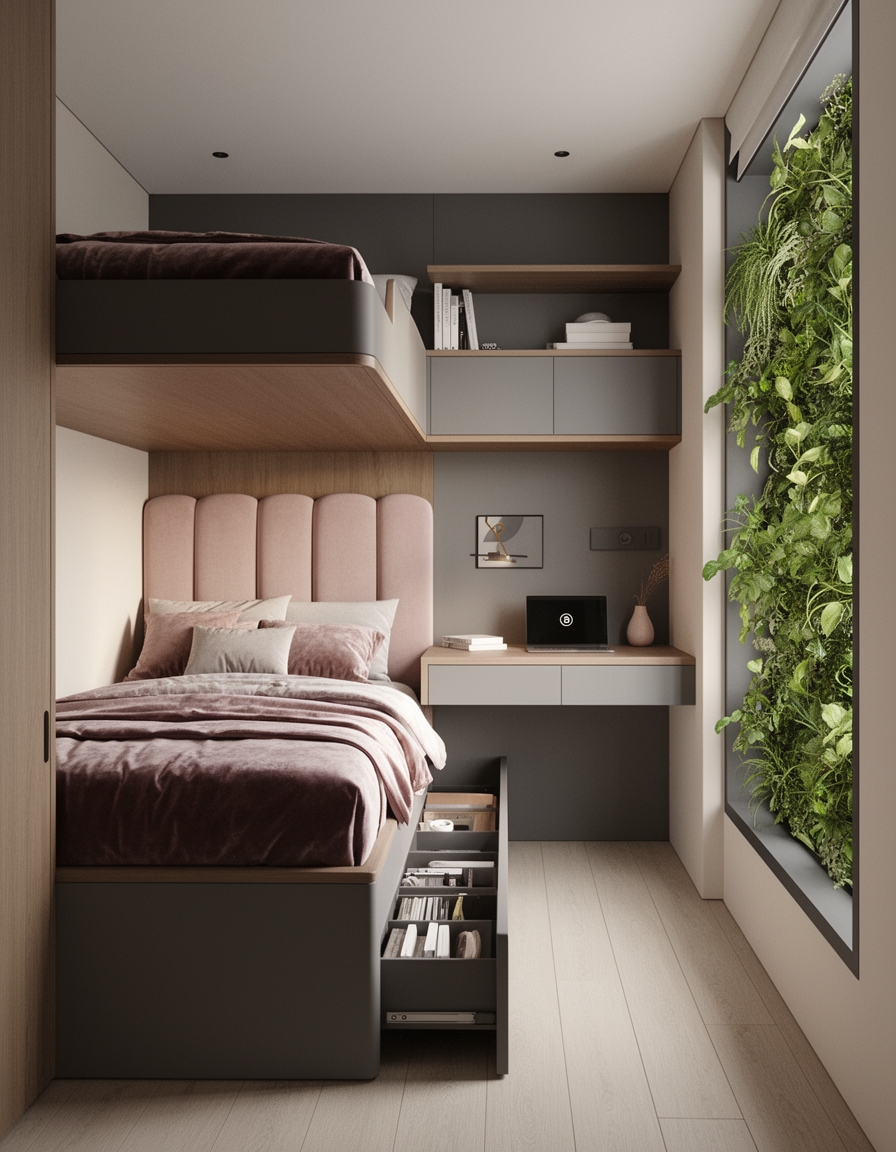

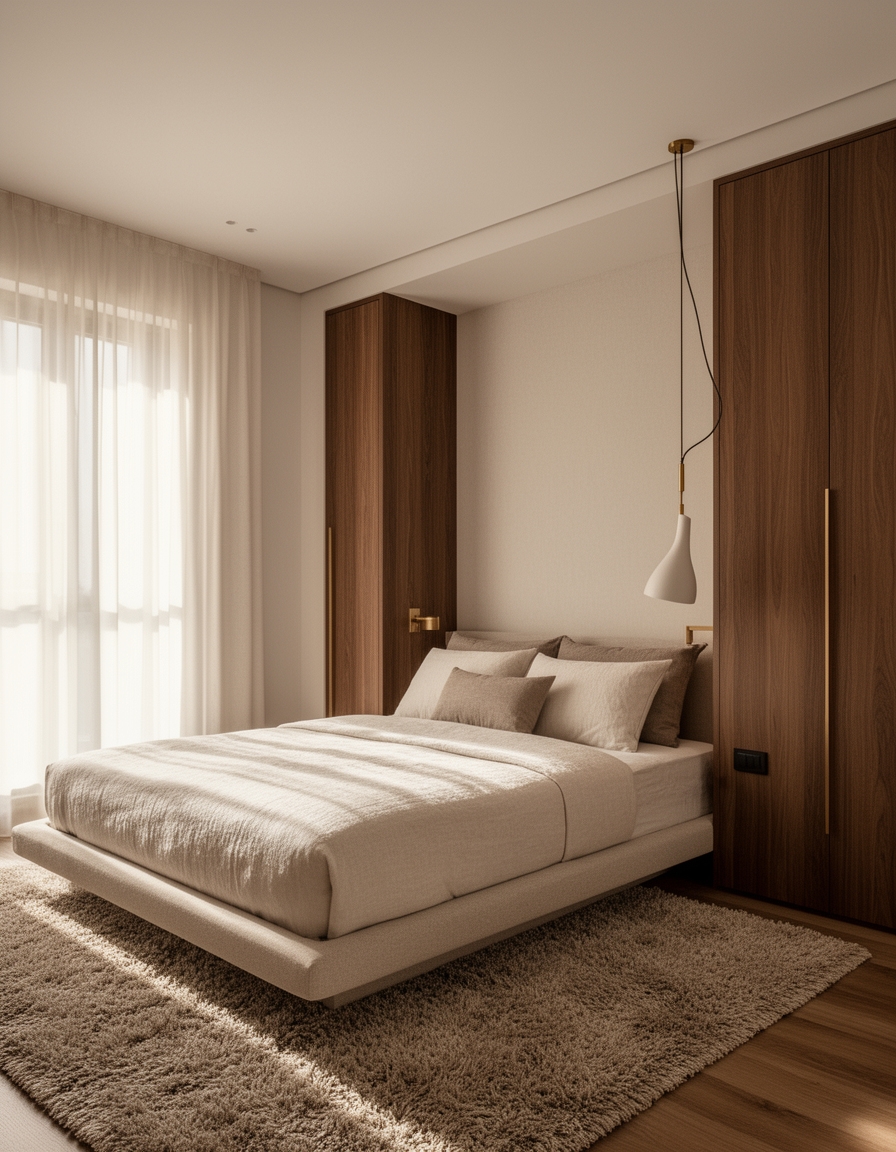
Can a small bedroom be cozy, cheap, and chic all at once? Honestly, yes, and a tight room actually makes it easier, since there is less square footage to spend money on. The whole game is knowing where to put your few dollars and where to save, so the room looks considered, never cheap.
These cozy, cheap, and chic small bedroom ideas start with a realistic budget and a plan, then walk through the light, storage, textile, and thrift moves that deliver the most coziness per dollar. Almost everything here costs less than a single piece of new furniture, and a lot of it is free.
Cozy, Cheap, Chic, the Plan
- Set a small budget and spend it on bedding and lighting, where coziness shows most.
- Save with paint, thrift finds, and DIY, which deliver chic for almost nothing.
- Keep it light and vertical so the small room feels open while staying warm.
Go Cozy and Budget-Friendly at Once
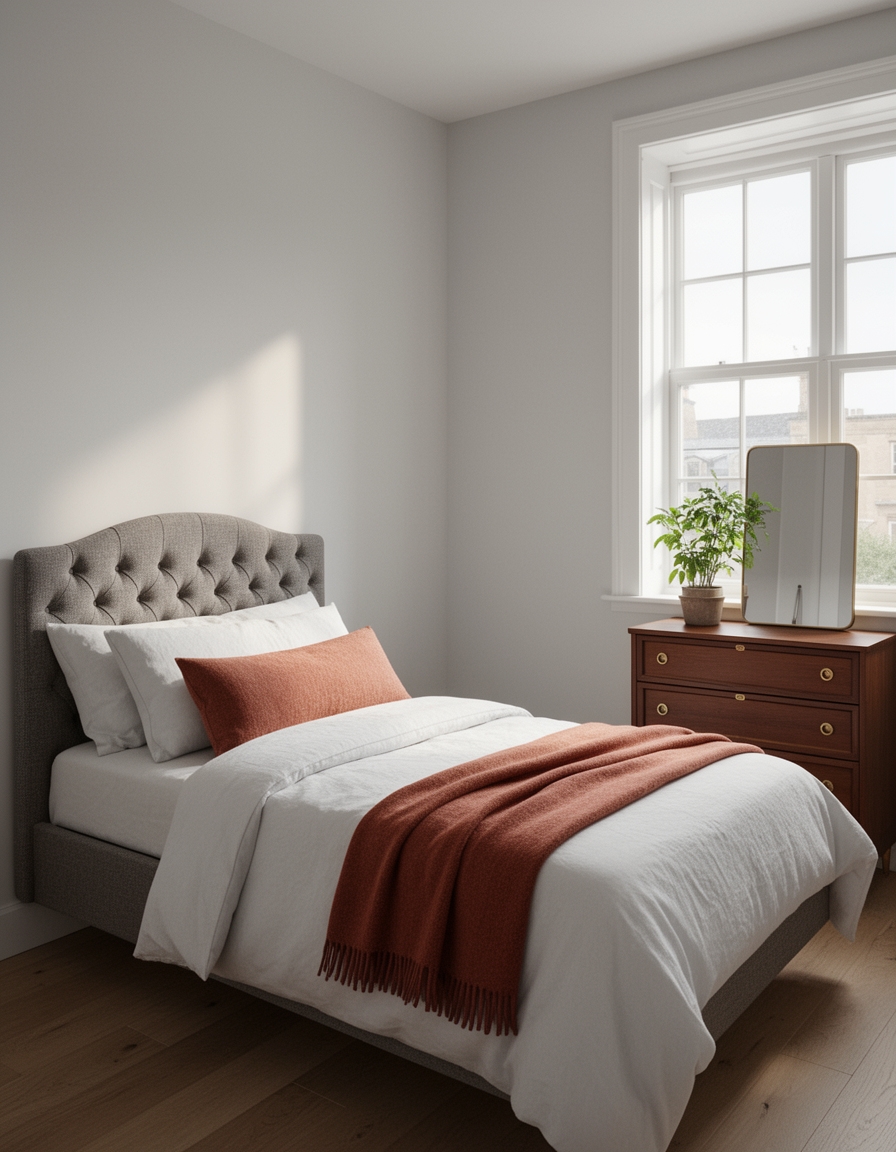
Cozy is mostly about texture and warmth, and both are cheap. A layered bed, a soft rug, warm light, and a couple of personal touches feel cozy whether they came from a designer shop or a thrift store. In a small room you need less of everything. The budget stretches further than it would in a big space.
The chic part comes from restraint and a consistent look, which also happen to be free. Pick one calm color story and stick to it, keep clutter down, and let a few good textures do the work. A warm, tidy, consistent room looks expensive even when almost nothing in it was.
Set a Realistic Budget for the Essentials
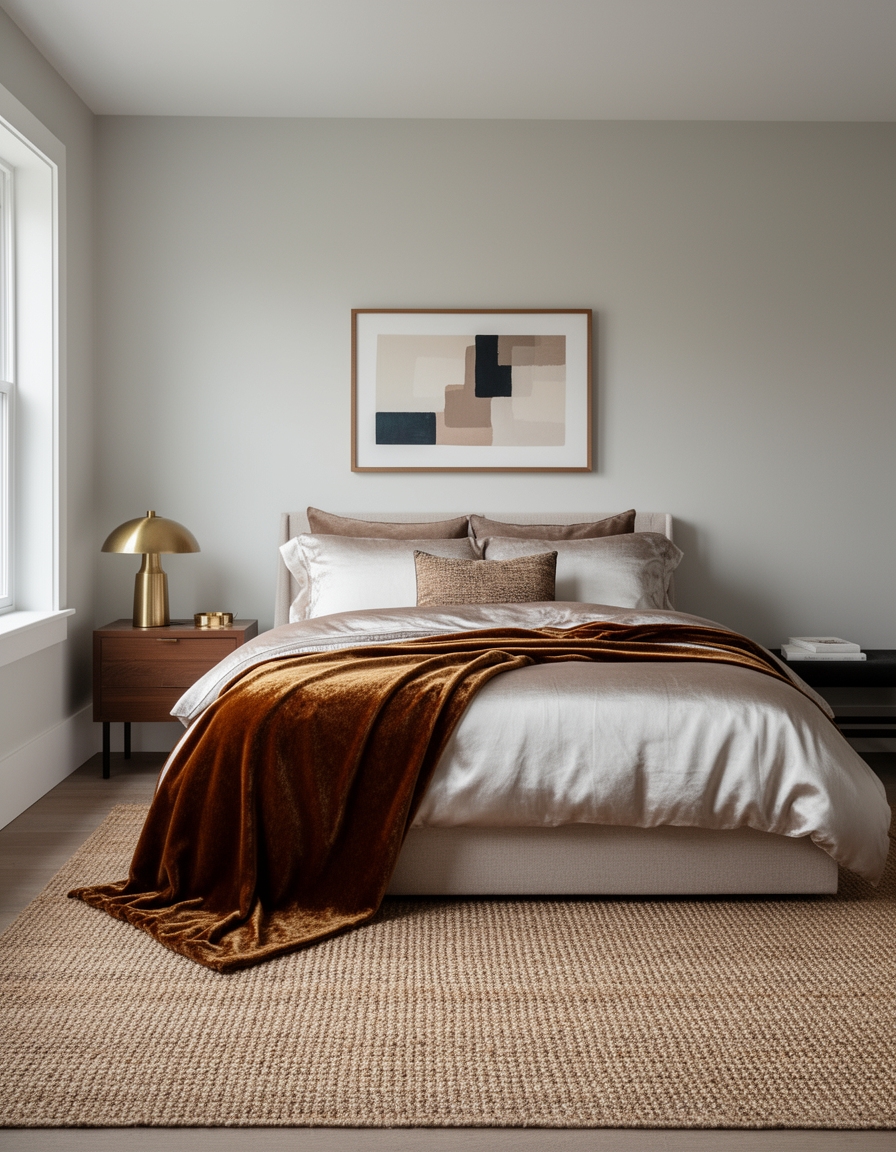
Before you buy anything, decide what you can spend and split it on purpose. A realistic small-room refresh can land anywhere from a hundred dollars to a few hundred, depending on what you already own. The goal is to put most of your money where it shows: the bed and the lighting, then stretch the rest with paint and secondhand finds.
A rough split that works: a little over half on bedding and a lamp or two, a chunk on a gallon of paint, and the rest on small textiles and decor. Spend where you touch and see most, save everywhere else. Write the number down before you shop so you do not drift past it one cushion at a time.
- Bedding and lighting: the bulk of the budget (~$80-150)
- Paint: about $40 for a gallon, huge visual payoff
- Textiles: a rug, a throw, cushions from sale or thrift
- Decor: keep it minimal, lean on free and DIY
🅰️Splurge a little
Bedding and lighting, the things you touch and see every day. A good duvet and a warm lamp make the whole room feel cozier and pricier.
🅱️Save hard
Art, decor, and accent furniture. Thrift, DIY, and paint deliver chic here for almost nothing, so there is no reason to buy new.
Measure and Sketch a Plan First
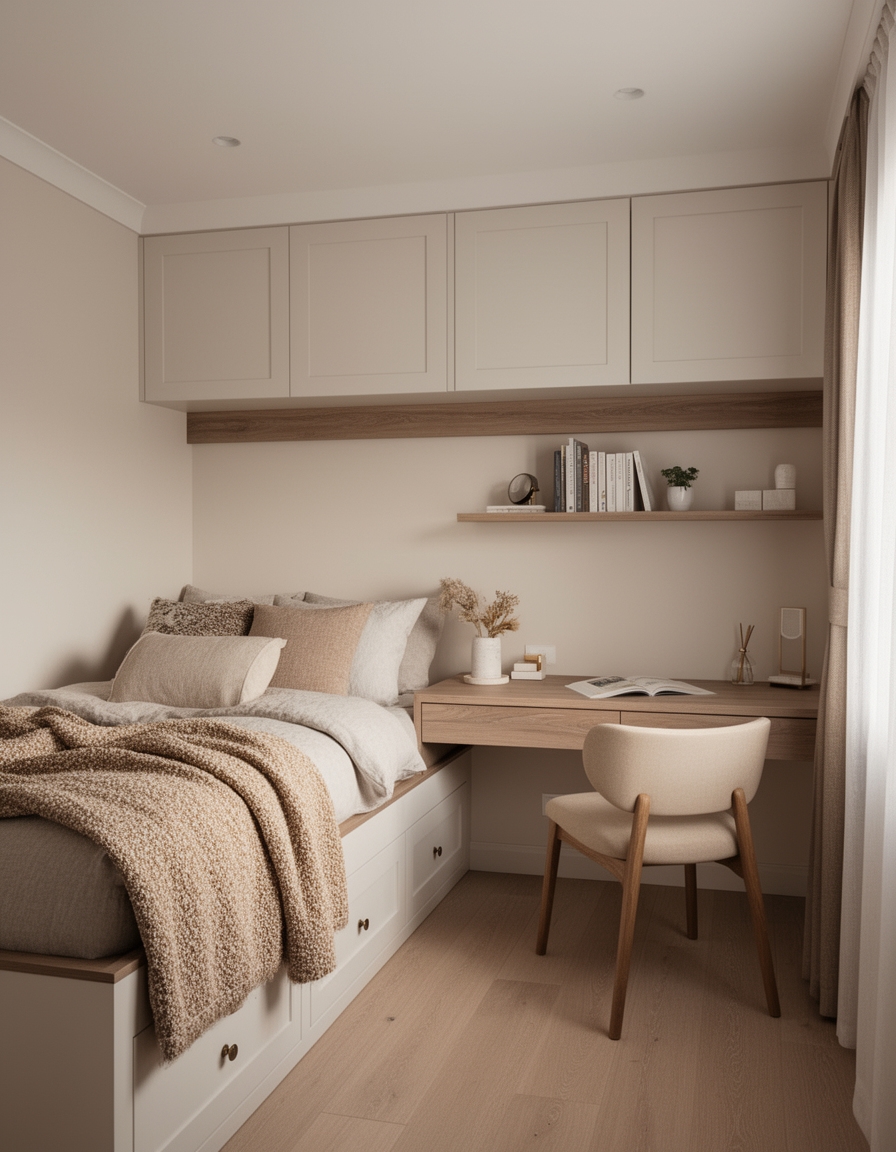
The cheapest tool in any small-room makeover is a tape measure and ten minutes. Measure the room and your furniture before you buy a single thing, because the most expensive mistake is a piece that fails to fit or blocks a door. A quick sketch on paper or your phone saves you from costly returns. Plan before you carry anything heavy.
Mark the windows, the door swing, and the outlets, then try the layout on paper before you move heavy things. This is where you spot that the bed fits better on the other wall, or that a tall shelf solves your storage for twenty dollars. Planning is free. It is the one step that keeps a cheap makeover from becoming an expensive redo.
Use Light Neutrals to Expand the Space
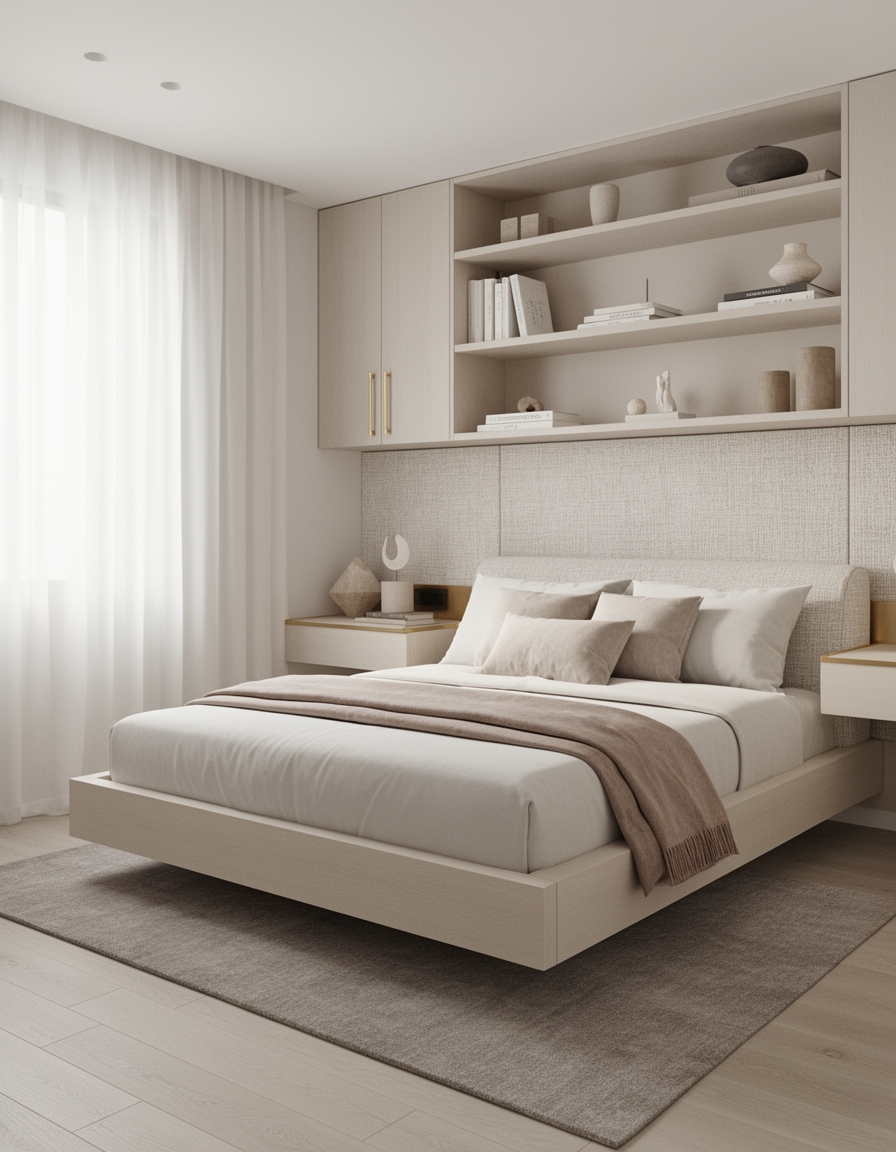
Nothing delivers more chic-per-dollar than paint, and light neutrals do double duty by making a small room feel bigger. For the price of a single can of paint you can transform the whole room. Do it in this order for the best result:
- Choose a warm white, soft greige, or pale tone for the walls
- Paint the trim close to the wall color so edges disappear
- Test a sample first, since light shifts color in a small room
- Add warmth back with wood tones and textiles for balance
- Keep one calm color story so the room looks pulled together
A small room is the easiest place to look expensive on a budget. There is less to buy, so the little you spend goes twice as far.
Lean on Vertical Storage Solutions
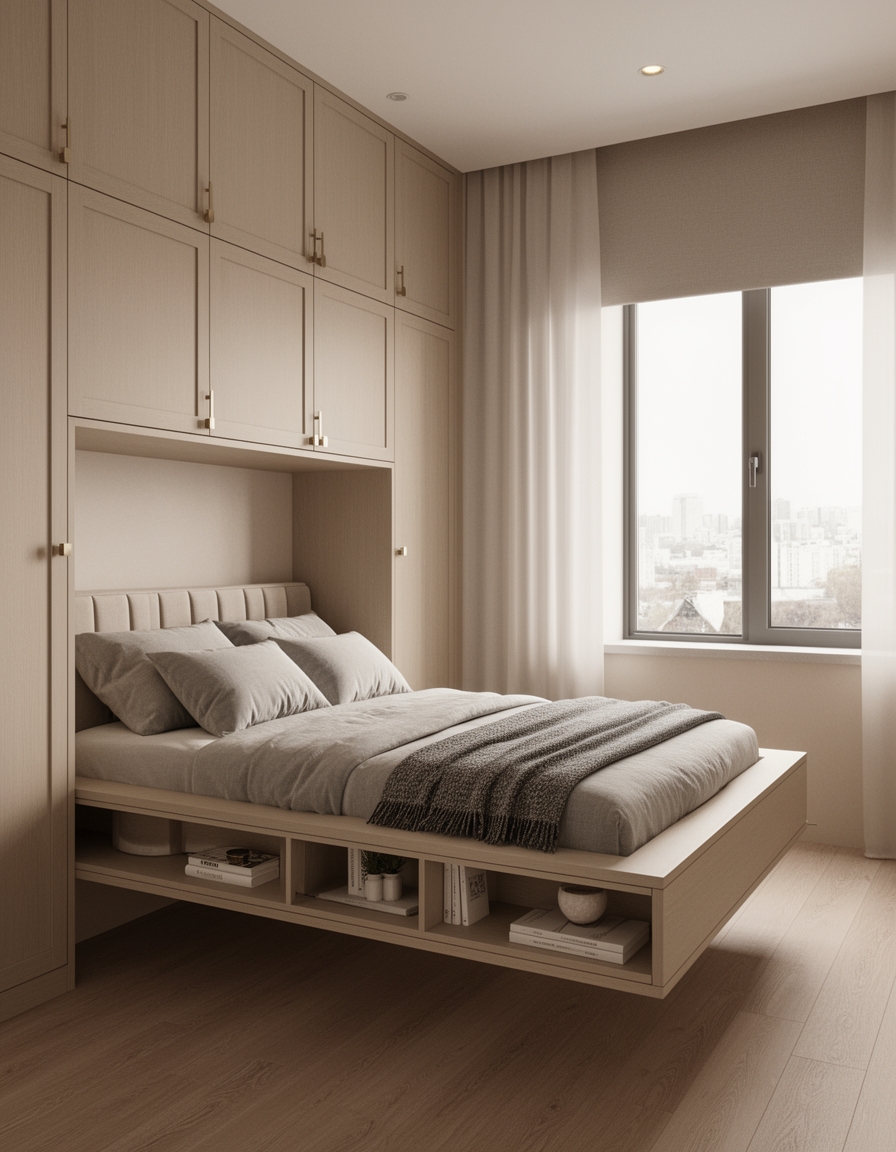
A cozy room falls apart the moment clutter creeps in, so cheap, vertical storage is what holds the look together. Floating shelves, wall hooks, and an over-door rack cost very little and pull your stuff up off the floor. An open floor is what keeps a small room feeling calm instead of crammed.
Climb the walls, free the floor
Built-ins are overkill here. A pair of ten-dollar floating shelves, a row of hooks, and a couple of pretty baskets handle most of a small room’s overflow for well under fifty dollars. Baskets hide clutter and add texture at once. That is the cozy-and-chic trick in one cheap object.
In a tight, cluttered room my go-to is a tall, narrow shelf and a few baskets, because it clears the floor for almost nothing and costs next to nothing. Our a small room that works goes deeper on stealing vertical space.
Layer Cheap Textiles for Instant Warmth
Textiles are the cheapest path to cozy, so this is where a little money goes a long way. A layered bed, a fitted sheet, a duvet, and a throw folded at the foot, looks rich for under a hundred dollars and feels even better. Add a soft rug and a cushion or two and the room turns warm almost instantly. Layers carry the whole look. None of it costs much.
Shop the sales and the basics ranges, where plain, good-quality bedding costs a fraction of the designer version and looks just as calm. Mix a couple of textures, a knit throw over smooth cotton, a woven cushion, for depth without spending more. Texture is the cheapest luxury a small room can have. It is also the easiest thing to swap later.
Shop Thrift and Secondhand for Chic
The chicest small rooms almost always mix in something old, because character comes from pieces with a bit of history. Thrift stores, marketplace listings, and yard sales are full of solid wood furniture, mirrors, and lamps for a fraction of retail. A little patience and maybe a coat of paint turns someone’s castoff into the standout piece in your room for ten or twenty dollars, the kind of find that makes guests ask where you got it.
- A solid wood nightstand or dresser to repaint
- A large mirror to bounce light, often cheap secondhand
- Lamps and baskets, which thrift stores always have
- Frames for free or DIY art, picked up by the box
Make Your Own Art and Decor
Wall art is shockingly expensive new and almost free to make, so a small room is the perfect place to DIY it. A few framed prints you ran off at home, a pressed-plant frame, a thrifted painting, or even a calm fabric remnant in a frame fills a wall with personality for the cost of the frames alone. One larger piece beats a scatter of tiny ones. Go big and simple.
Lean into simple, repeatable DIYs: a painted accent, a shelf styled with your own books and finds, a string of warm lights. None of it needs skill or much money, and the personal touch is exactly what makes a cheap room feel chic and personal. Homemade, done with a calm eye, comes across as curated.
Spend Smart on Cozy Lighting
Lighting is the one place worth a little of your budget, because it sets the whole cozy mood for cheap. Skip relying on the harsh overhead and add a warm bedside lamp and a string of fairy lights or a small floor lamp. Choose soft, warm-toned bulbs and a cheap dimmer or smart bulb, and the room glows instead of glares at night.
A thrifted lamp with a new shade, a clip light on a shelf, and warm bulbs together cost less than thirty dollars and do more for coziness than any single piece of decor. Layered, warm, low light is the difference between a small room that feels like a budget rental and a cozy little retreat.
Frame the Bed as a Cozy Nook
One free move makes a small bedroom feel intentional and snug: treat the bed as a little nook of its own. Push it into a corner, hang a simple fabric panel or a string of warm lights above it, and add a cushion or two against the wall. Suddenly the bed reads as a cozy retreat, the warm center of the room.
If you rent, skip the drill and use removable hooks for the fabric and lights, so nothing leaves a mark. A pair of wall-mounted reading lights or clip lamps frames the bed and frees the nightstands at the same time. For about twenty dollars in lights and a thrifted throw, the bed becomes the warm heart of the room, which is exactly the cozy-chic feeling you are after.
Keep It Tidy to Keep It Chic
Here is the free secret behind every chic small room: it is kept clear. With little square footage, clutter shows fast and undoes all the cozy work, so a quick daily reset is what protects the look. Give everything a home, keep surfaces mostly bare, and the cheap, cozy room you built actually stays that way past the first week.
- A two-minute nightly reset to clear surfaces
- Baskets and closed storage to hide the daily mess
- One in, one out, to keep clutter from building
- A single tray to corral small items in one spot
Cozy Budget Bedroom Questions
?How do I make a small bedroom cozy on a tight budget?
Lean on texture and warm light, both cheap. Layer the bed with a duvet and a throw, add a soft rug and a couple of cushions, and swap to warm bulbs with a bedside lamp. Those few moves cost under a hundred dollars combined and deliver most of the cozy feeling.
?Where should I spend and where should I save?
Spend on what you touch and see most: bedding and lighting. Save everywhere else with paint, thrift finds, and DIY art. A good duvet and a warm lamp are worth the money, while decor and accent furniture can almost always be thrifted or made for a fraction of retail.
?What is the cheapest way to make a small room look chic?
Paint and restraint. A single gallon of a light neutral, painted onto the walls and trim, transforms the room, and keeping a single calm color story makes it look considered. Chic is mostly consistency and a clear, uncluttered space, both of which cost nothing.
?Can I decorate a small bedroom for under $100?
Yes, if you already have the basics. Put around fifty dollars into bedding or a throw and cushions, twenty into a thrifted lamp and warm bulbs, and the rest into a gallon of paint or some DIY art. Focus the small budget on warmth and light and the room will feel transformed.
?How do I keep a budget room from looking cheap?
Keep it consistent and tidy. Stick to one calm palette, choose a few good textures over lots of cheap clutter, and keep surfaces clear. A small, warm, well-edited room looks intentional; a crowded one looks cheap no matter how much you spent.
Cozy and Chic Without the Price Tag
A small bedroom is the friendliest room to make cozy, cheap, and chic, because the tight footprint means your money and effort go further. Set a budget, spend it on bedding and lighting, save with paint, thrift, and DIY, and keep the whole thing light, warm, and clutter-free. That mix looks far pricier than it costs.
Start with the cheapest high-impact move, usually paint or a textile refresh, and try it before buying anything big. Build the rest as your budget allows, and you will end up with a warm, chic little room that nobody would guess came together for the price of one new chair.