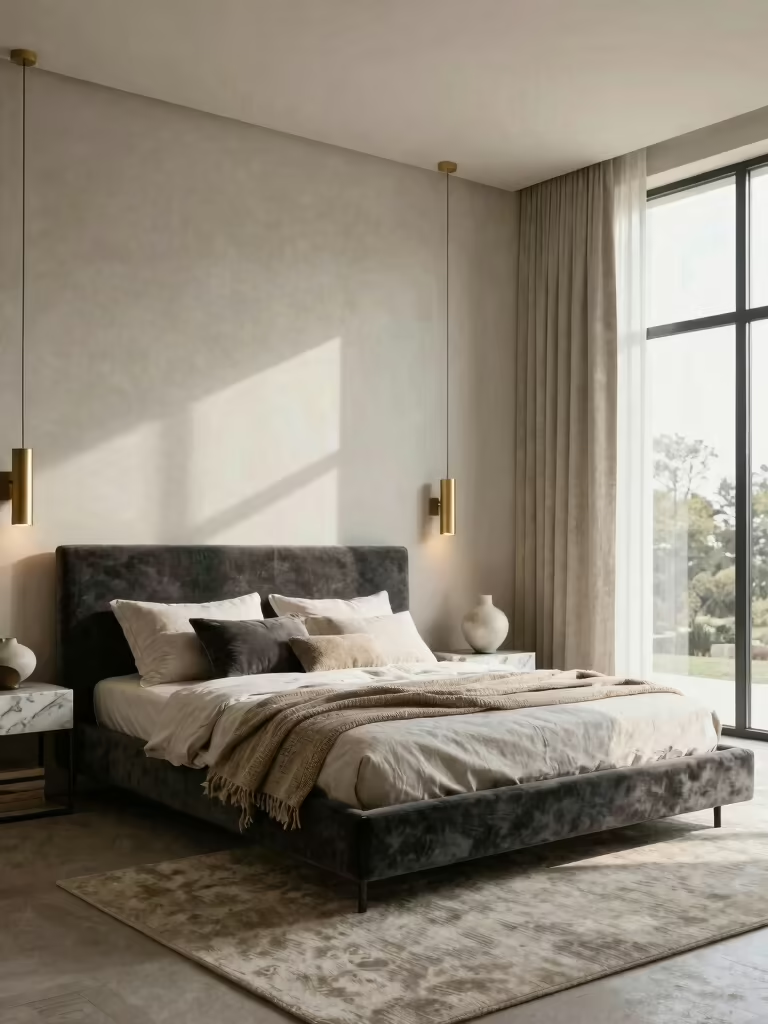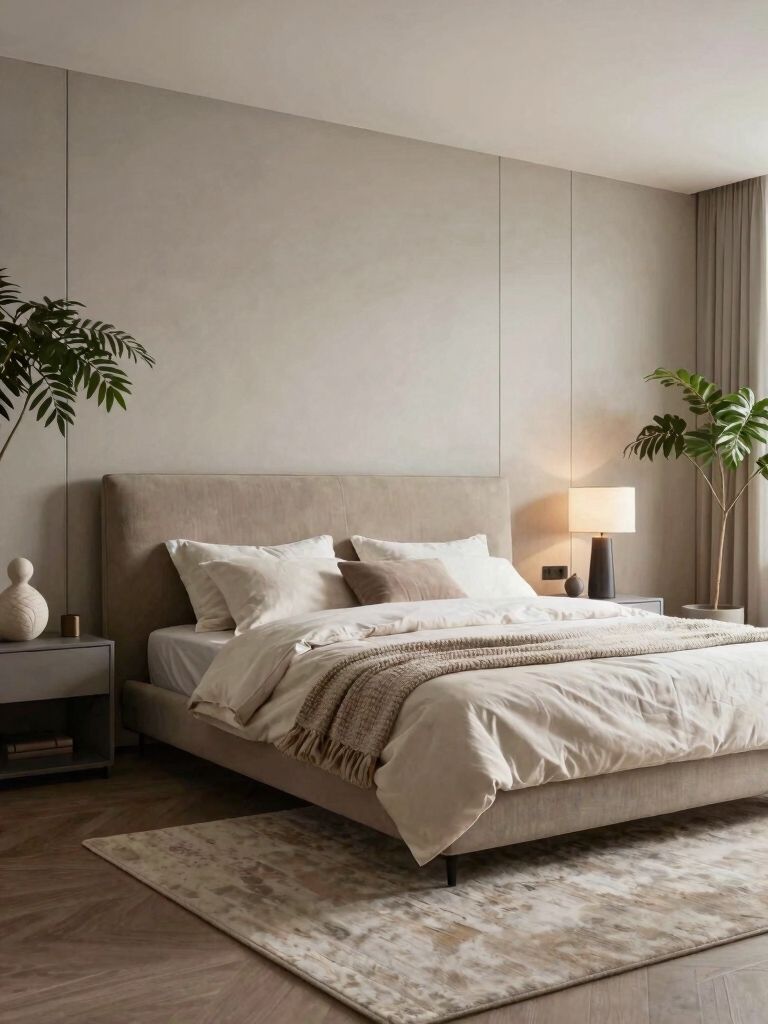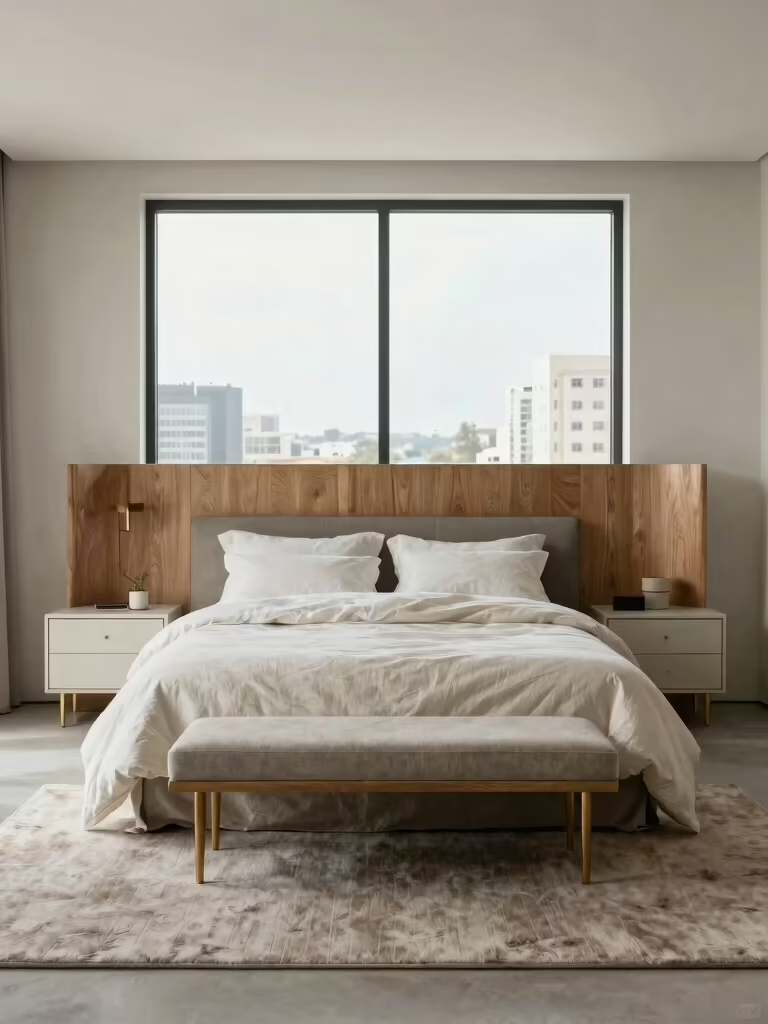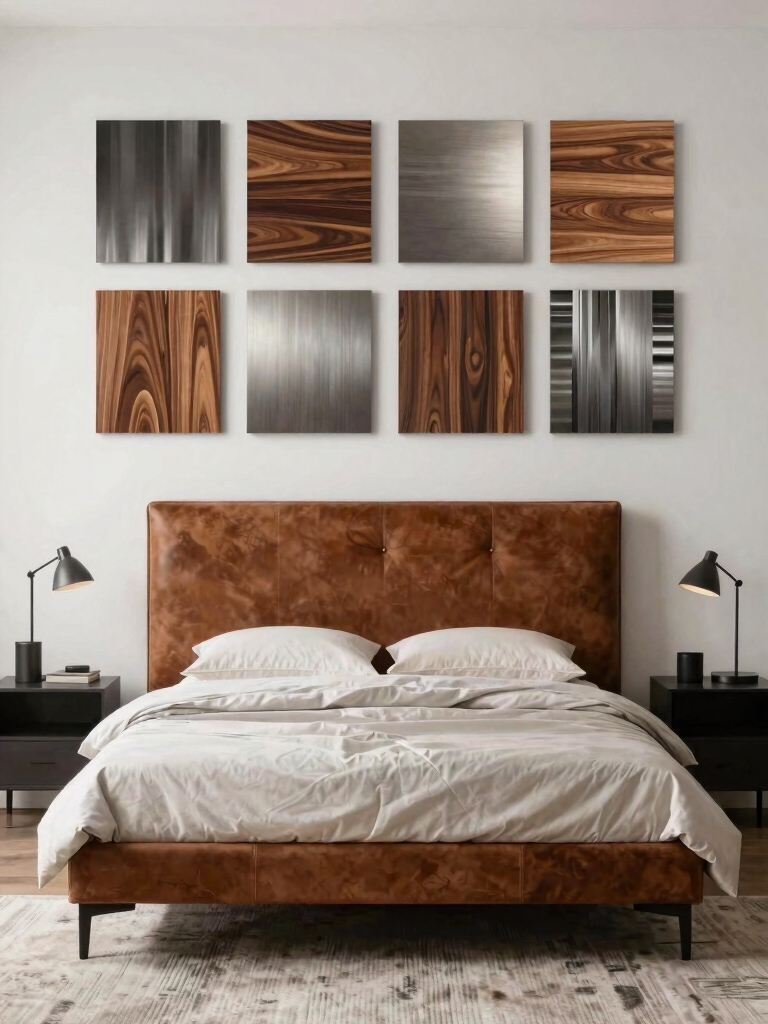

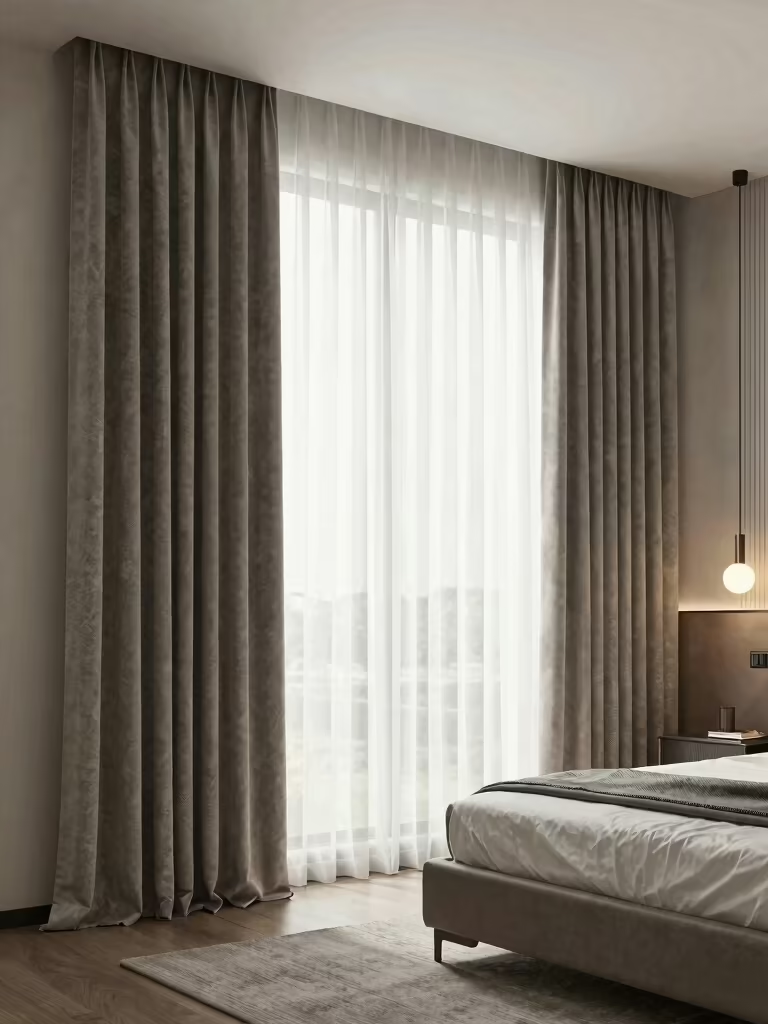
A modern master bedroom lives or dies on its lines, and curtains draw some of the longest lines in the room. Get them right and the whole space settles into something calm, tailored, and hotel-clean. Get them wrong and even a beautiful room looks unfinished, with short panels and flimsy rods undercutting everything else you spent money on.
These modern curtain ideas are about polish through restraint: a tight neutral palette, hardware that disappears, and layering that gives you precise control over light and privacy. We’ll cover hotel-style layers, single-panel minimalism, the textures that keep neutral from going flat, and the measuring rules that make off-the-shelf panels look custom. The look is quiet, and that quiet is the whole point.
The Modern Master Curtain Formula
- Keep the palette tight and neutral so the curtains feel like part of the architecture.
- Layer a sheer with a blackout-lined panel for full daytime light and full night-time dark.
- Choose clean hardware in matte black or brushed nickel and let it recede into the wall.
- Hang high and wide, then buy floor-length panels so the lines run unbroken.
- Add texture through the weave to keep a neutral scheme from looking flat.
Polished Master Bedroom Curtains
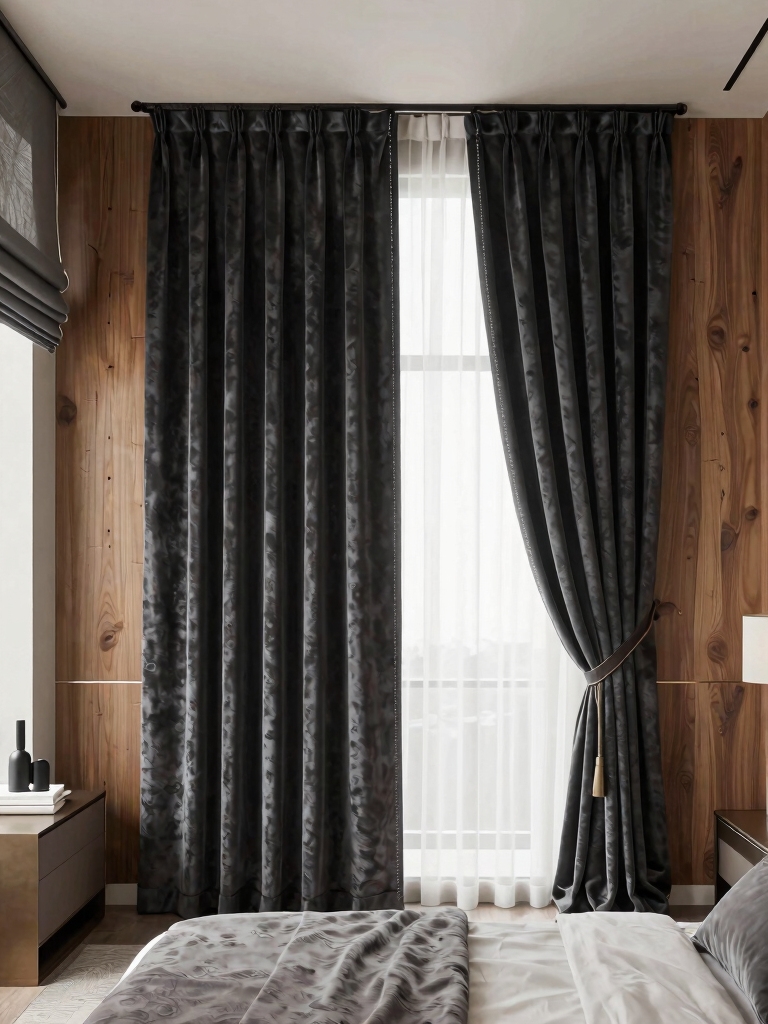
The polished look in a modern master comes from a few non-negotiables, and they’re all about discipline with your choices. A modern window wants clean hardware, a restrained palette, and panels that hang dead straight from a high, wide rod. Nail those foundations and a budget panel can pass for custom; miss them and the most expensive drapery still looks off. Here’s what the foundation actually requires.
- Pick a sturdy rod that won’t sag across a wide master window, and mount it into studs or solid anchors.
- Hold the palette to one or two neutrals that sit close to your wall color for a calm, built-in feel.
- Buy floor-length panels and steam them so they fall in straight, sharp folds from day one.
- Match the curtain’s undertone to the room, warm with warm, cool with cool, so nothing clashes.
Hotel-Worthy Curtain Layering
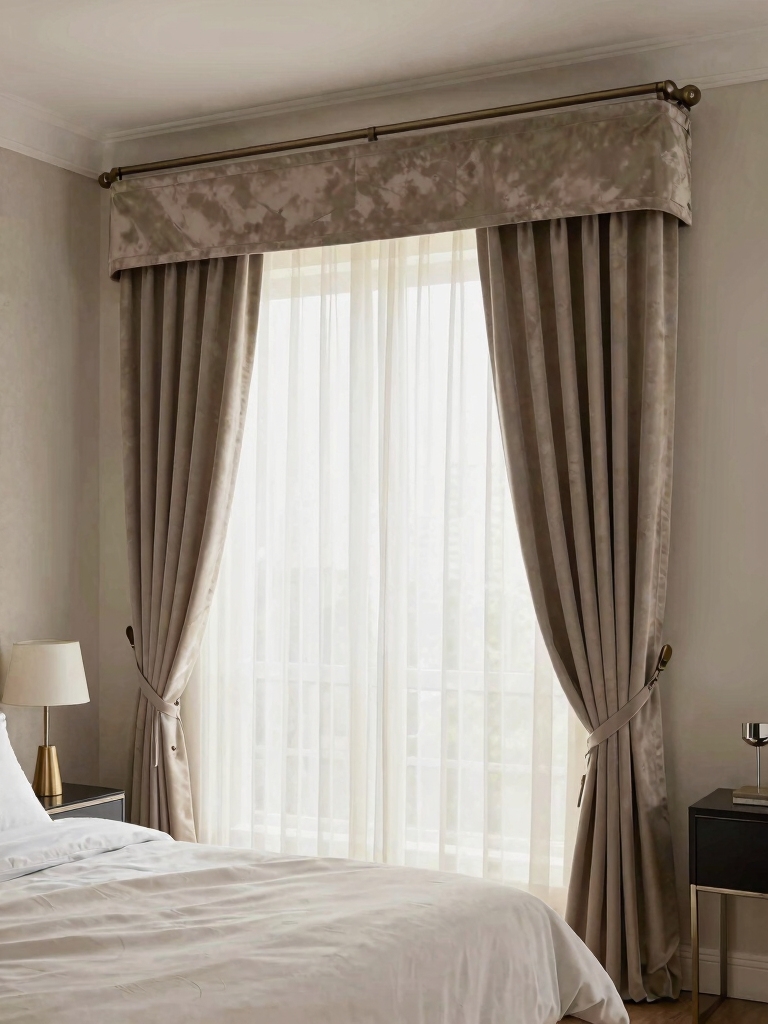
The reason a hotel room feels so resolved is the layering: a sheer for the day and a blackout drape for the night, both on clean tracks. You get bright, private mornings and a pitch-dark room for sleep, all from one window. Recreating that at home is straightforward once you know the order of the layers.
- Hang a light-filtering sheer closest to the glass for soft daytime light and privacy.
- Add a blackout-lined drape on the outer track to pull across for true darkness at night.
- Run both layers on a double rod or ceiling track so each moves independently.
- Keep both panels the same length and color family so the layered look stays clean and calm.
🅰️Single panel
Best on a narrow master window or beside a door; one panel pulled to the side reads clean and architectural with the least fabric.
🅱️Layered pair
Best on a wide master window where you want hotel-style control; a sheer plus a blackout pair handles day and night light precisely.
Simple, Elegant Curtain Design
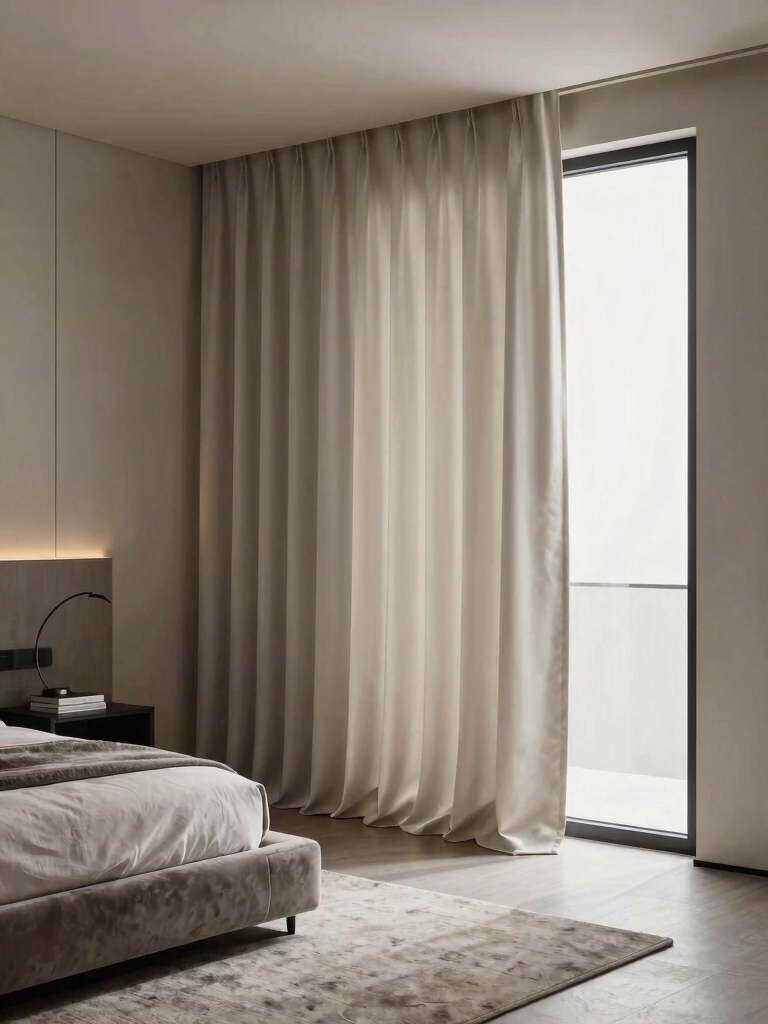
Modern rooms often look best with the least fabric that does the job, and a single well-hung panel can carry a whole window. One panel pulled to one side gives a clean, architectural line, especially on a narrower window where a full pair would feel fussy. The minimalism only works if the few details are right, so this is where precision pays off.
Let the hardware and the hang do the talking. A slim matte rod, simple rings or a hidden track, and a panel that drops straight to the floor give you a quiet, finished window with nothing extra. Skip heavy valances, swags, and tiebacks; modern polish comes from clean edges and good proportions. For the softer, moodier version of this same window, see my [bedroom curtain ideas for soft drama](bedroom-curtain-ideas-drama).
- Use one panel on a narrow window for a clean, asymmetric line.
- Choose a hidden track or slim rod so the hardware nearly vanishes.
- Avoid valances and tiebacks; let the straight drop be the whole detail.
Textured Fabrics That Add Warmth
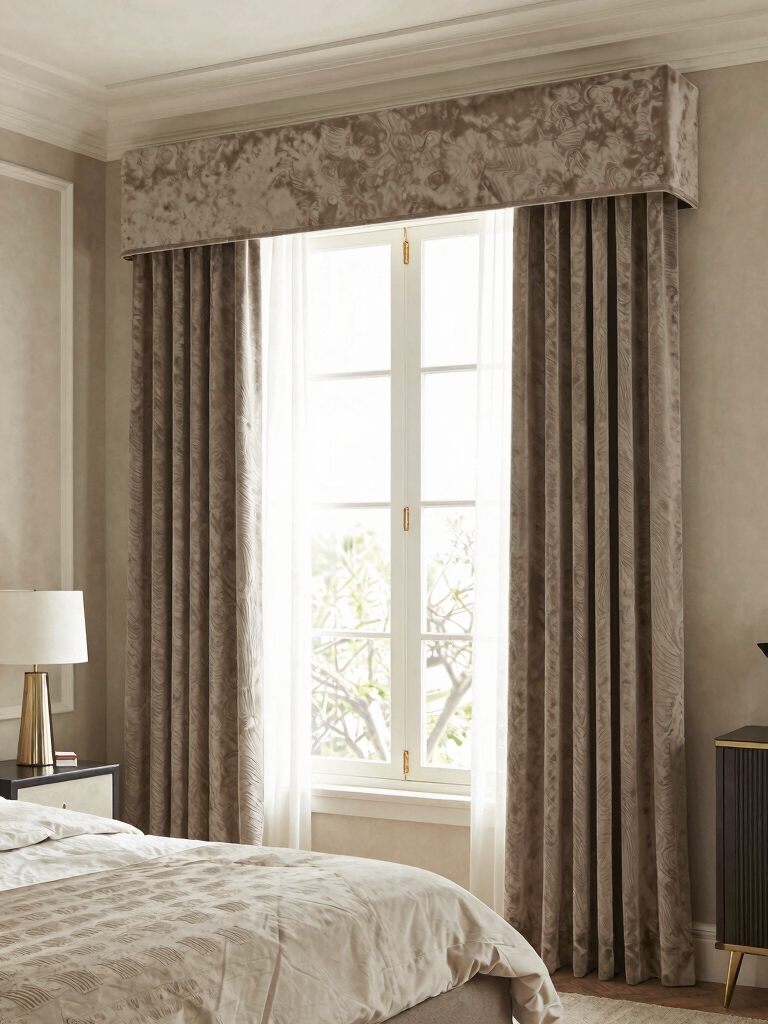
A neutral palette can drift toward cold and flat, and texture is what saves it. In a modern master, the warmth comes from the weave itself, so a nubby linen, a fine bouclé, or a matte cotton-blend adds depth while keeping the scheme quiet. The grain itself supplies the richness, and the room feels layered without a single bold hue. Reach for these textures to warm a neutral window.
- Choose a slubby linen for organic texture and a relaxed, modern drape.
- Try a bouclé or basket-weave panel where you want subtle, tactile depth.
- Use a matte cotton-blend for a smooth, tailored fall that still feels soft.
- Stay within one or two tones so the texture carries the interest.
📋Modern Master Curtain Checklist
- ✓A sturdy rod mounted high and extended past the frame on both sides
- ✓A light-filtering sheer for private, bright daytime light
- ✓A blackout-lined drape for true darkness at night
- ✓Floor-length panels in a quiet neutral, steamed to hang straight
- ✓Simple matte hardware with no valances, swags, or tiebacks
Tailored, Versatile Drapes
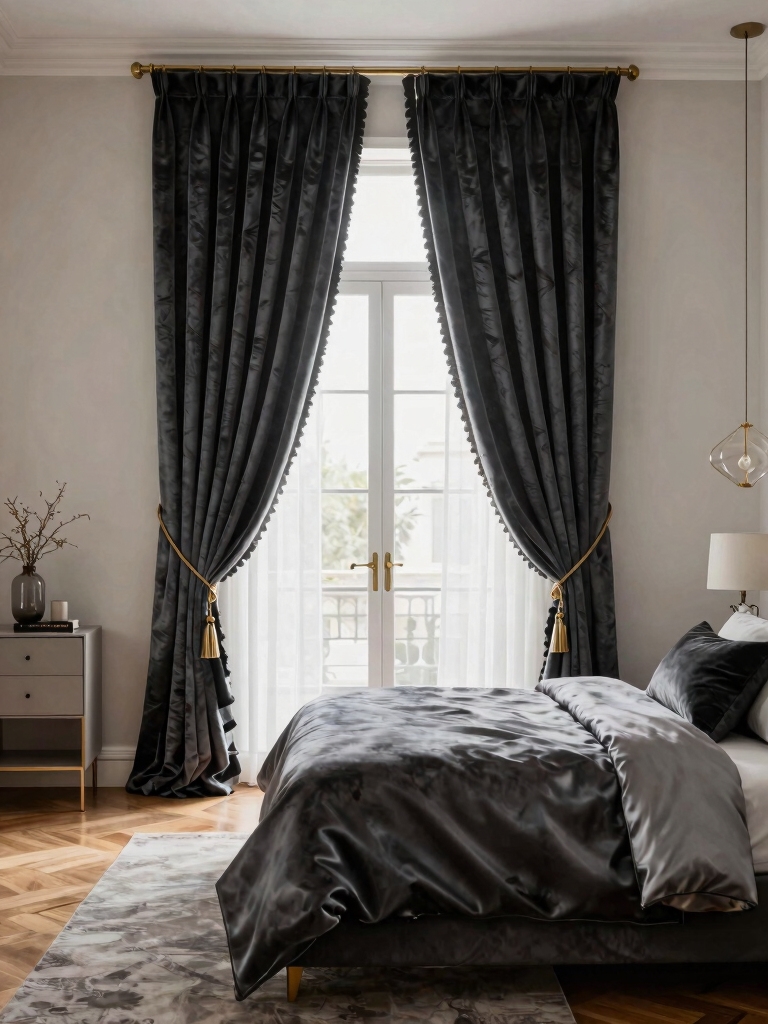
The most versatile modern drape is a tailored pinch- or pencil-pleat panel in a quiet neutral, because it suits almost any master and moves with you if you redecorate. The structured heading holds crisp, even folds whether the panel is open or closed, which is the detail that separates a tailored window from a bunched, casual one. Spend your attention on the heading and the fit; the rest follows.
Fit Is What Reads as Custom
Fit is what makes off-the-shelf look bespoke. Panels should be wide enough to total about two times the window so they stack into full folds, and long enough to just meet the floor without a gap or a heavy pool. A small custom touch, taking up the length or adding weights to the hem, costs little and signals money. These are the moves that quietly upgrade a standard panel.
A neutral tailored drape also future-proofs the room. When you change the bedding or the wall color, a soft greige or warm white panel still works, so you redecorate around it and keep the panels for years. That longevity is part of the modern appeal: buy once, hang it well, and let it anchor the room through several refreshes. For tying the palette together, see my [bedroom color ideas for any vibe](bedroom-color-ideas-vibe).
What to Expect From Modern Curtains
Set your expectations around control. A good layered setup gives you bright filtered mornings, total darkness for sleep, and a window that looks tailored at every hour. The curtains themselves stay supporting players here, framing the bed and the light rather than grabbing the eye, which is exactly what makes the room feel resolved.
Budget-wise, expect the hardware and the hang to matter more than the fabric label. A mid-priced panel on a solid, well-placed rod beats a designer fabric hung low and narrow every time. Figure roughly $20 to $60 per panel for a good ready-made drape, $25 to $80 for a sturdy rod wide enough for a master window, and another $15 or so for blackout lining.
The numbers stay modest. Plan to spend on the rod, the lining, and a few extra inches of length, and the finished window will look far above what the receipt suggests, because polish here is mostly technique, paid for in care, not cash.
Hardware and Heading Styles That Read Modern
The heading, the pleat style at the top of the panel, does more to date or modernize a curtain than the fabric. A ripple-fold or wave heading gives a continuous, soft S-curve that is the most contemporary look going, and it stacks back into a slim column when open. A simple grommet or a tailored single-pinch pleat also reads modern, while heavy goblet and box pleats lean traditional. Choose the heading first; it sets the whole character.
Pick hardware that stays out of the conversation. A slim rod in matte black or brushed nickel with plain end caps, not ornate finials, suits almost any modern master, and a recessed ceiling track disappears entirely for the cleanest result. If you want the wave look, you will need the matching track or a corded glider system, so confirm the hardware and heading work together before you order either.
Modern operation should feel as quiet as the look. Cordless wands, a discreet pull, or motorized tracks let the panels glide without dangling cords, which keeps the lines clean and is safer in a shared home. The draw style also affects how the panels stack: a one-way draw piles all the fabric on one side for a wide window, while a center split suits a symmetrical one. Match the mechanism to your window before you commit.
Color and Light in a Modern Window
Curtain color in a modern master should answer to the room’s light as much as to the wall swatch. A north-facing master gets cool, flat daylight, so a warm greige or soft ecru panel keeps the window from going gray and clinical. A bright south-facing room can carry a cooler stone or pale taupe without feeling cold. Read your light first. Then pick the neutral that flatters it.
Think about the curtain at night too, since that’s when a master really gets used. A blackout lining changes the color slightly and deepens it under lamplight, so check a sample after dark before committing. Warm bulbs will pull a neutral panel toward honey, while cool bulbs flatten it, which is one more reason to tune your bulbs to the feeling you are after at night.
Keep contrast low for the calmest modern result. Panels that sit a shade or two from the wall color melt into the architecture and make the window feel built-in, while a high-contrast panel turns into a hard frame that fights a quiet scheme. If you want a little definition, get it from texture or a barely-there tonal shift.
Common Modern Curtain Mistakes
The biggest mistake in a modern master is a fussy, dated heading on otherwise clean curtains. A goblet pleat, a ruffled top, or a swag valance fights every other modern choice you make, so it pulls the whole window backward in time. Stick to a wave, grommet, or single-pinch heading and the panels stay contemporary even in a budget fabric. The top of the curtain is where modern is won or lost.
The second slip is over-decorating the window. Swags, ruffles, busy prints, and shiny hardware all fight the clean lines a modern room is built on, so they crowd a window that wants to stay clean. Keep the palette quiet, the hardware simple, and the fabric textured and quiet, and the window stays calm. For the light layer that completes a modern bedroom, see my [bedroom lighting ideas for mood](bedroom-lighting-ideas-mood).
Quiet Curtains, Polished Room
A modern master window comes down to three decisions: a contemporary heading, layered sheers and blackout for light control, and quiet neutral fabric in a clean color match to the wall. Get those right and the hardware and the hang do the rest, on almost any budget.
Spend an evening deciding your heading style and your two layers before you shop, since those choices steer everything else. The fabric and the rod are the easy part once the structure is settled.