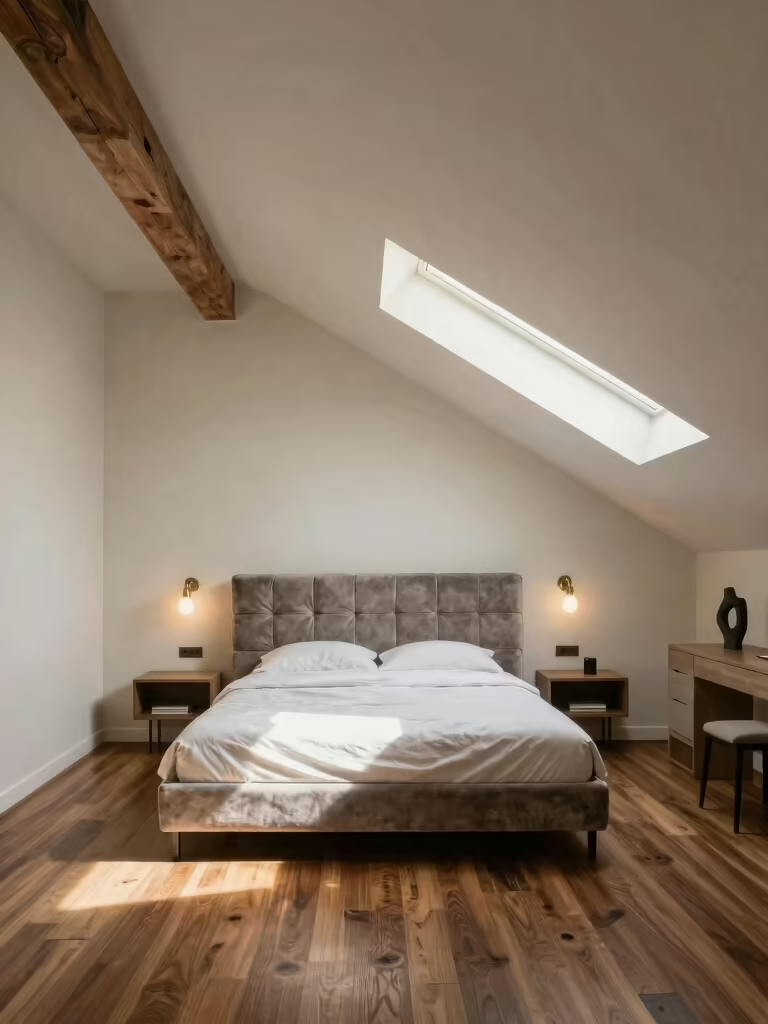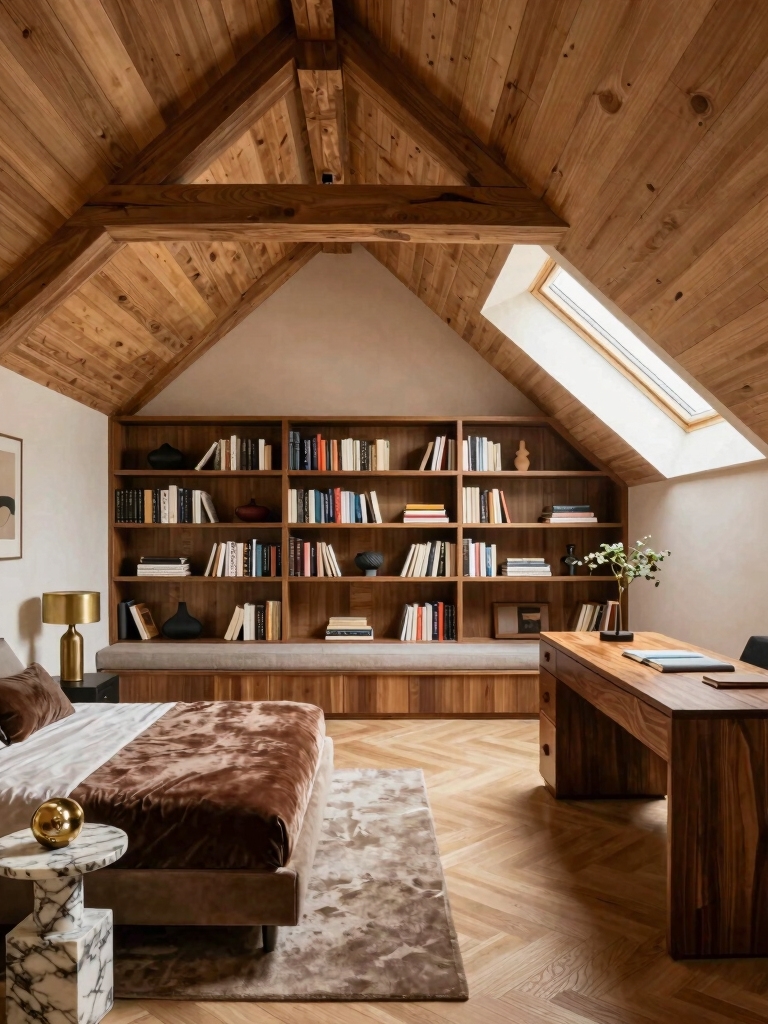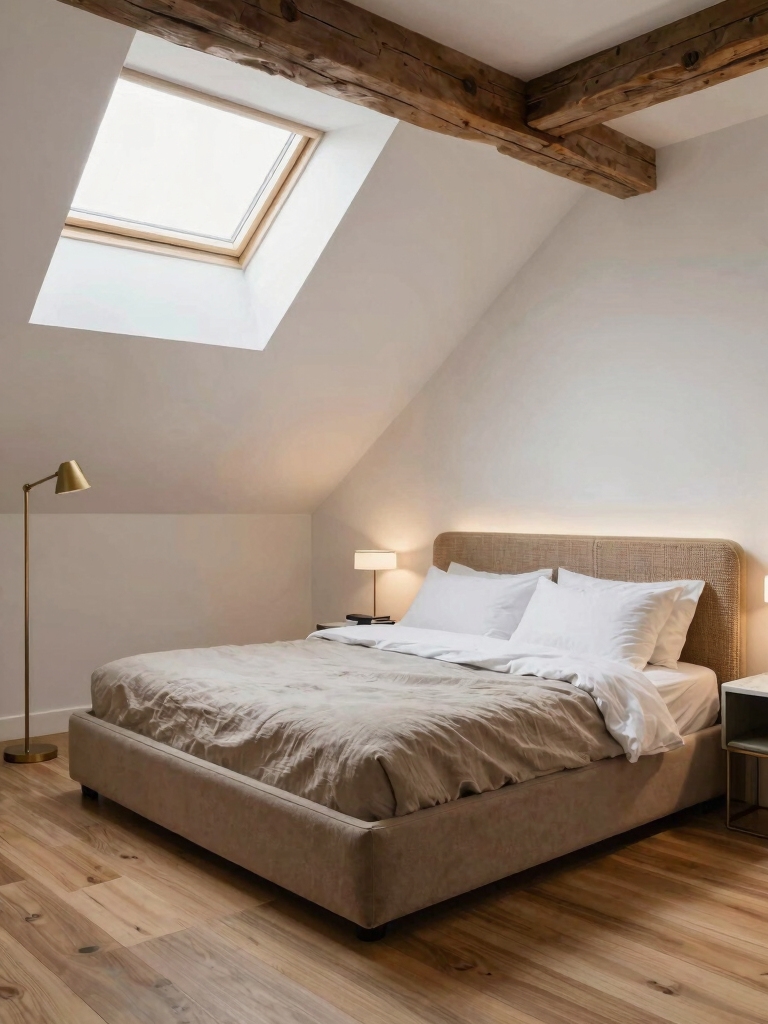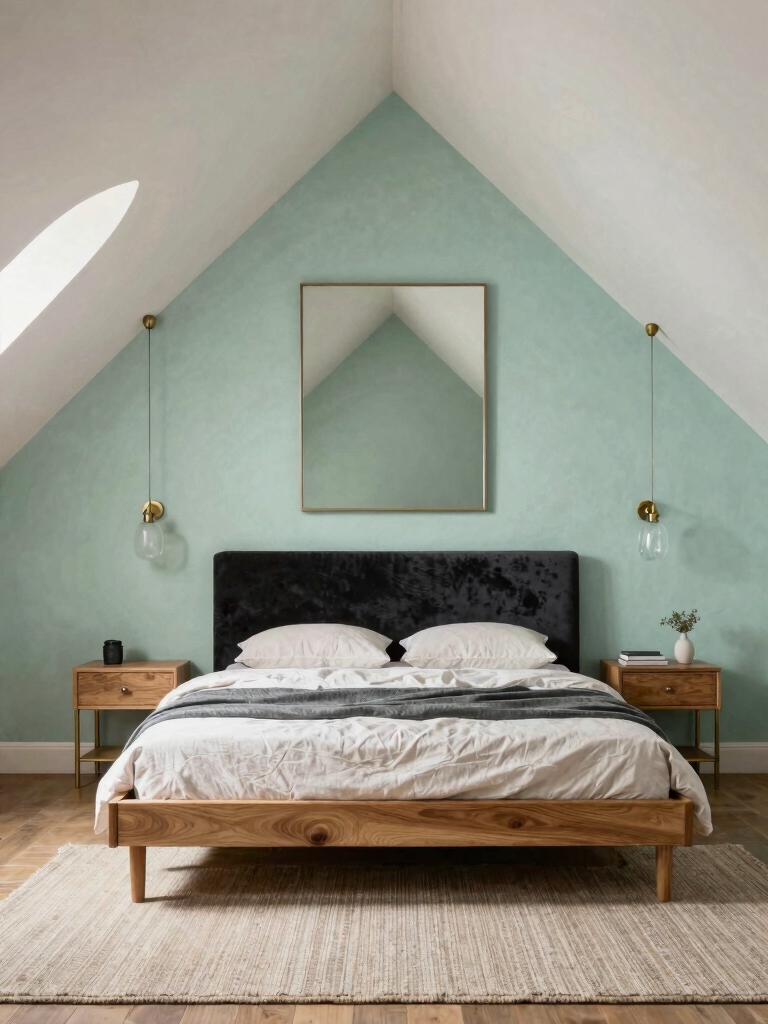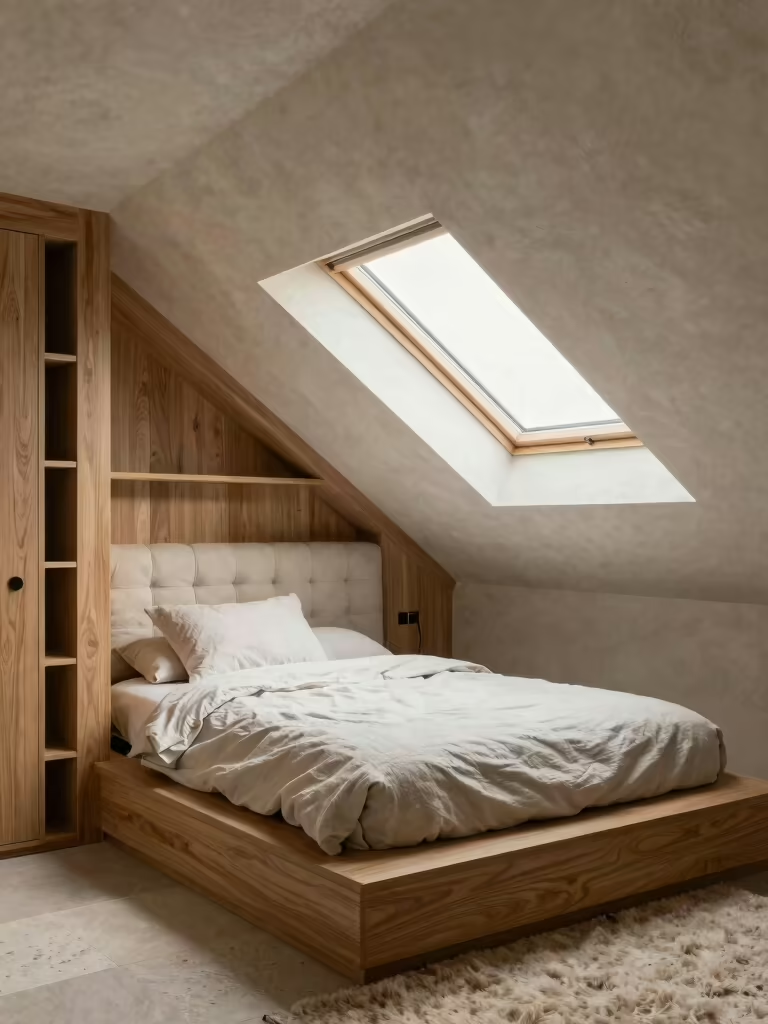

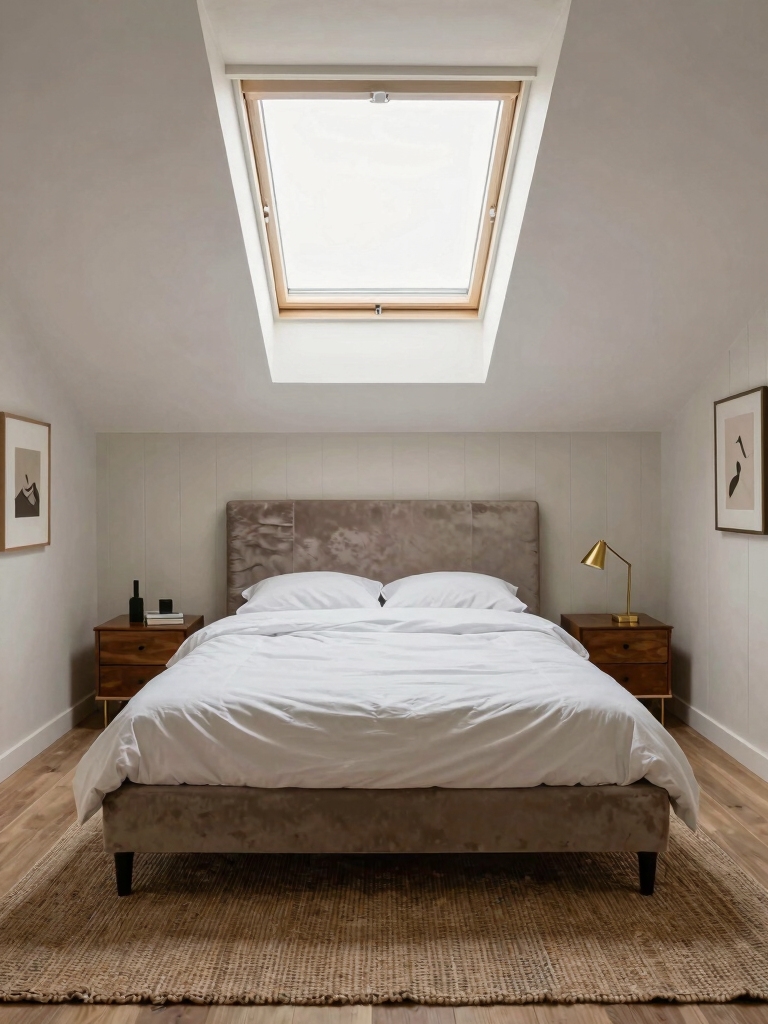
A low ceiling feels like a dealbreaker until you learn the handful of tricks that make a room feel taller than it measures. I’ve used the same four levers on every low room I’ve styled: vertical lines, the right mirror, pale surfaces, and low furniture, each quietly fooling the eye upward. None of them require raising the roof or spending much at all.
These attic bedroom ideas are built for the lowest, most stubborn ceilings, the rooms where you can’t stand up straight in half the space. We’ll work through the height illusions, the furniture that respects the slope, and the light that opens the room up, with rough costs so you can match the work to your budget.
Low-Ceiling Quick Answers
How do I make a low ceiling feel taller? Draw the eye up with vertical lines, hang curtains high, and keep the ceiling and walls a pale, continuous tone.
What furniture works under a low ceiling? Low-profile pieces: a platform bed, low dressers, and seating that sits below the slope so headroom stays open.
What’s the cheapest high-impact fix? Light paint plus a large mirror. For under fifty dollars the room looks brighter and noticeably taller.
Smart Attic Space Design for Low Ceilings
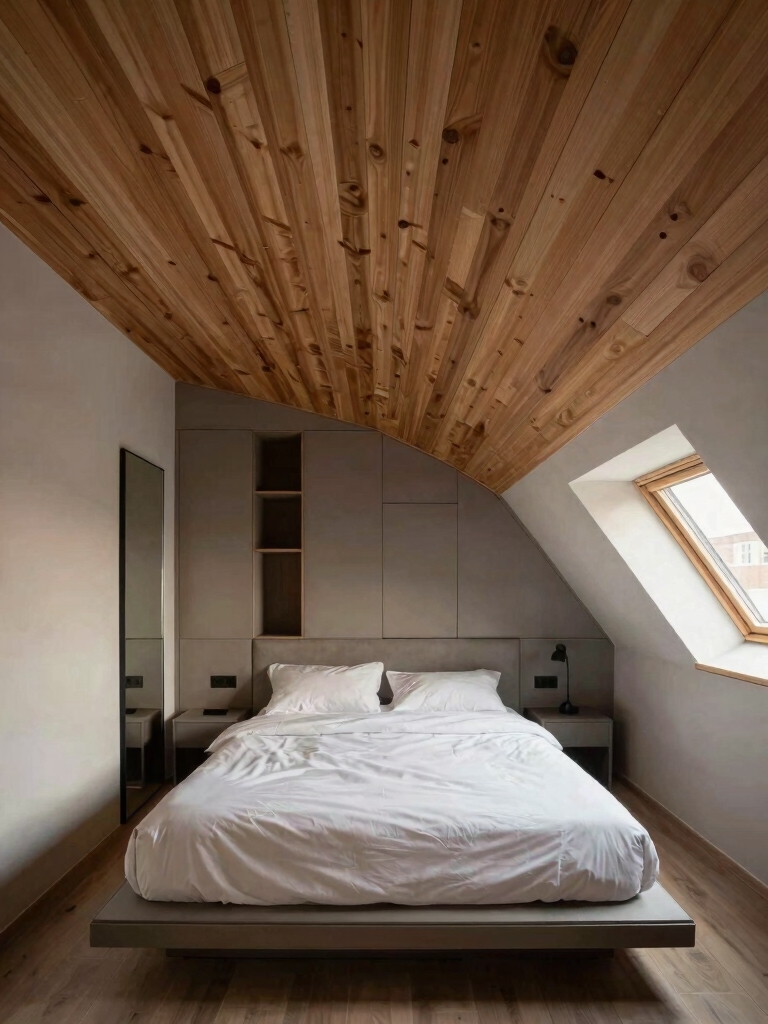
Rocking a low ceiling starts with one principle: lead the eye up and out, away from how low the ceiling sits. A few deliberate moves do most of the work, and they cost very little. Run through these before you buy anything.
- Add vertical lines with tall, narrow shelving, board-and-batten, or floor-length curtains to pull the eye upward.
- Hang curtains at the top of the wall, not the window frame, so the wall looks taller than it is.
- Keep the ceiling and walls one pale, continuous tone so the eye can’t find where the wall stops.
Expanding an Attic With Light
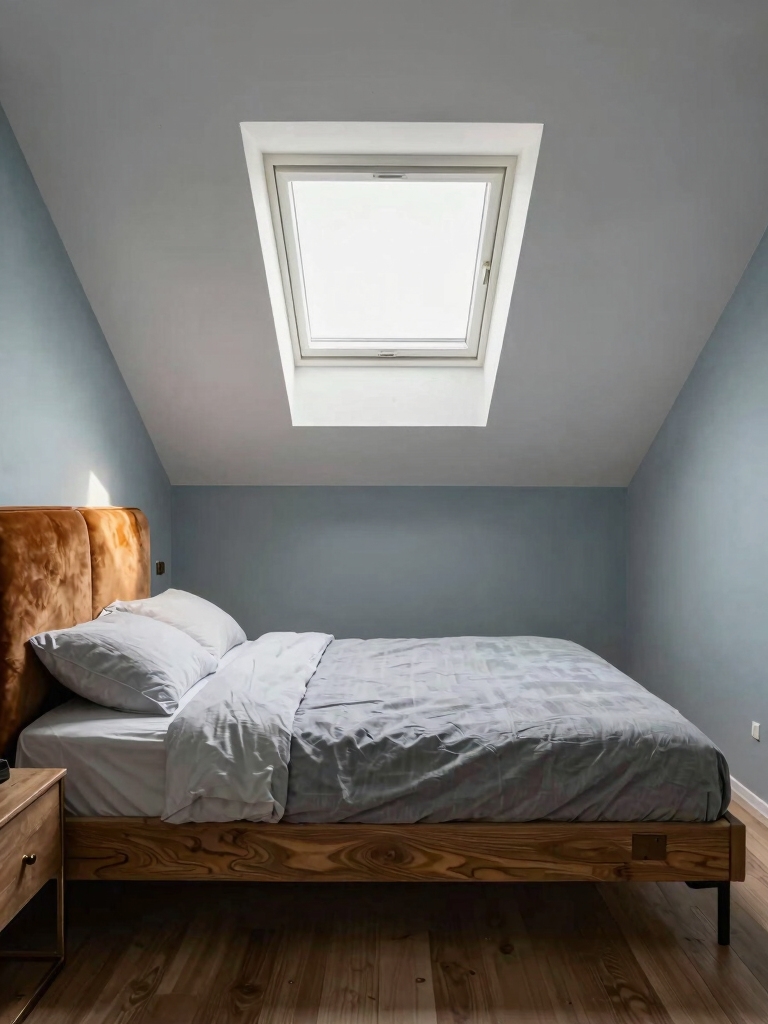
Light is the quickest way to make a low attic feel bigger, since brightness signals space. Pale, reflective surfaces bounce daylight into the corners, and a large mirror placed across from the window doubles both the view and the glow. A dim low room always feels smaller and more closed-in than it actually is.
Work with what daylight you have and add layers for the rest. Keep windows and skylights clear, use sheer shades that hold privacy while passing light, and add a couple of lamps for the dark hours. A 24-by-36 mirror runs $40 to $150 and earns its spot faster than almost any other piece. For more on opening up tight rooms, see my [small-room ideas that feel big](bedroom-ideas-for-small-rooms-feel-big).
- Hang one large mirror opposite the brightest window to double the light.
- Choose pale, slightly reflective finishes on walls and furniture to keep light moving.
- Keep window areas clear of bulky pieces so daylight reaches the back wall.
📋Make-It-Taller Checklist
- ✓Paint walls and sloped ceiling one pale, continuous tone
- ✓Hang curtains at the top of the wall, floor-length
- ✓Add a large mirror opposite the window
- ✓Choose low-profile furniture with visible legs
- ✓Aim warm light upward to wash the ceiling
Space-Efficient, Stylish Furniture Solutions
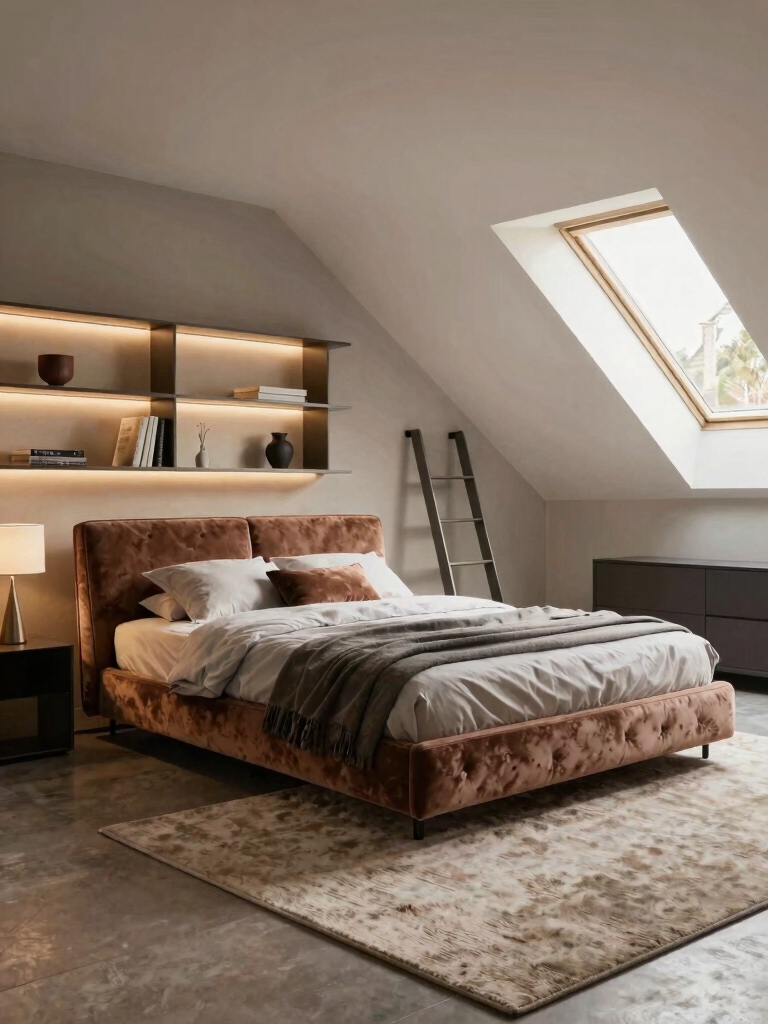
Under a low ceiling, the height of your furniture matters as much as the footprint. Low-profile pieces keep sightlines open and stop the room from feeling crowded at the top. A platform bed close to the floor, low dressers, and floor seating all leave more visual air above them, which is just what a low room needs. Keep everything low. Let the air live up top.
Match each piece to where the ceiling actually allows it. Tall items belong on the highest wall, while the low slopes take a bed, a bench, or storage you reach sitting down. Pieces with visible legs help too, since the glimpse of floor beneath them tricks the eye into reading more space.
Shop for double duty so the low footprint never feels limiting. A storage bed, a bench that opens, a nightstand with a drawer: each does two jobs without adding bulk. Hunting secondhand stretches the budget here, and older low-slung furniture often suits an attic better than tall modern pieces. My [angled-ceiling attic ideas](attic-bedroom-ideas-angled-ceilings-made) cover placement in detail.
Smart Vertical Storage Solutions
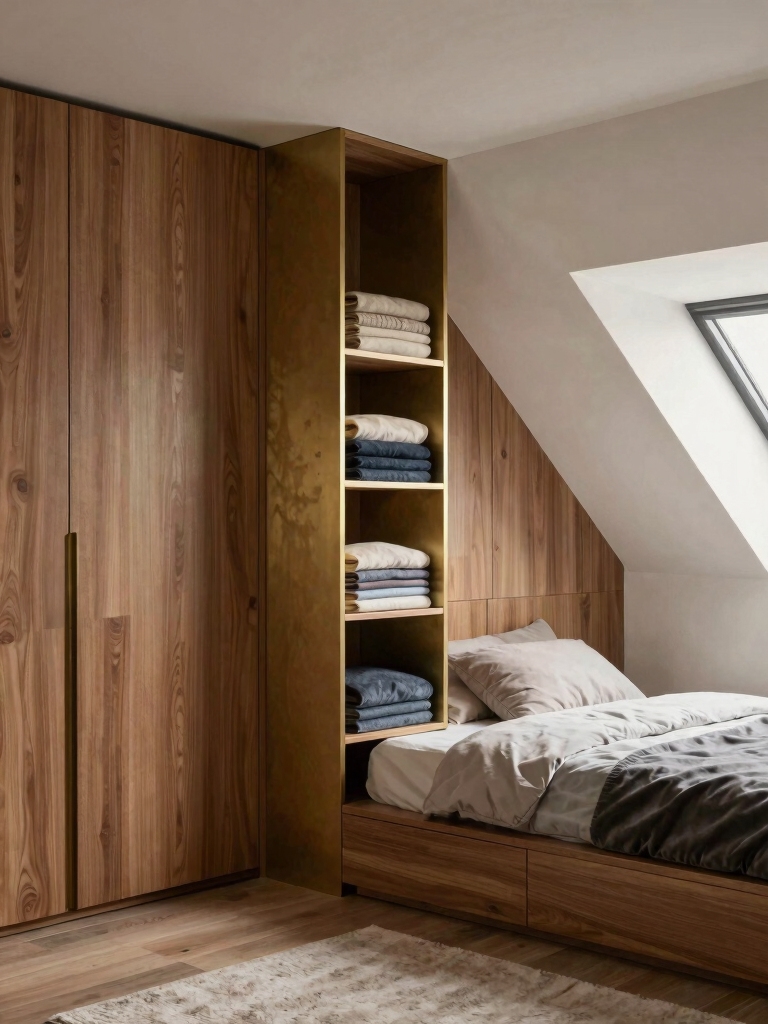
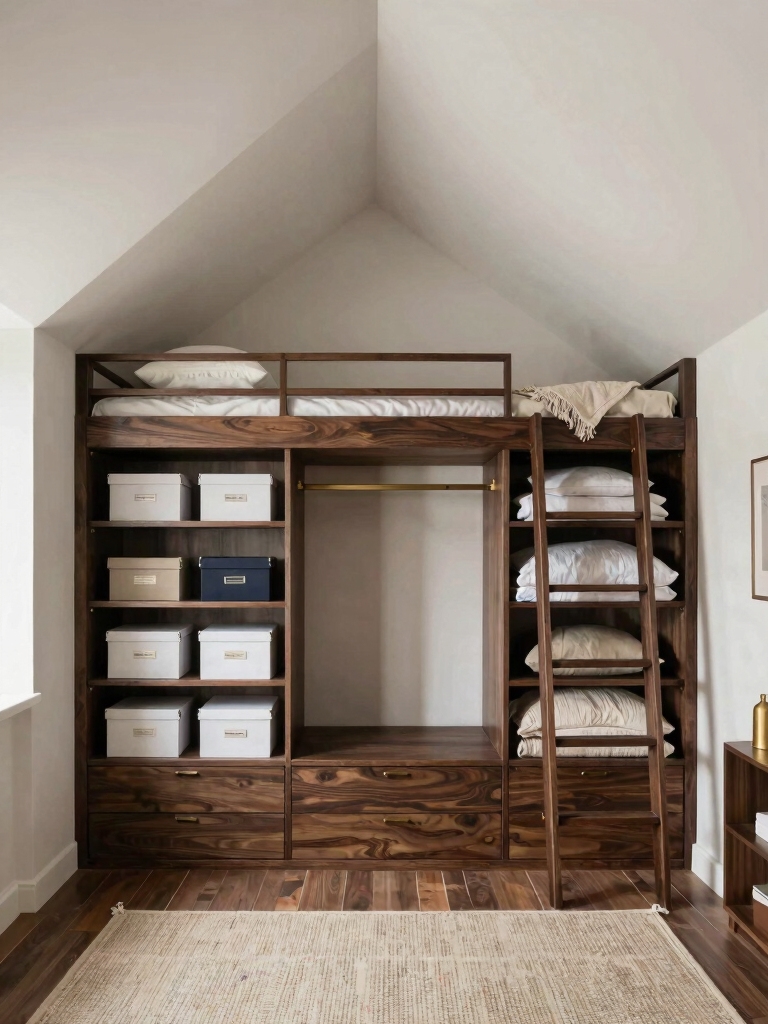
Low ceilings push storage toward the walls and the eaves, and that turns out to be an advantage. Tall, narrow shelving uses the height you do have on the full-height wall, while the low triangle under the slope hides drawers and bins where headroom doesn’t matter. Together they free the floor and keep the room feeling open.
Go Up, Then Into the Eaves
Keep the vertical storage calm so it lifts the eye instead of cluttering it. Matching baskets on open shelves, lidded boxes for the messy stuff, and a few hooks inside the closet door do a lot for little money. A set of low eave bins runs $15 to $50, and slim wall shelves cost about $20 to $60 each.
Build storage into the dead corners wherever you can. A bench seat under a window with drawers below, or cabinets fitted into a knee wall, claim space a freestanding piece would waste. For systems that hold up, see my [storage ideas that beat clutter](bedroom-storage-ideas-clutter) and [attic storage organizers approve of](attic-bedroom-storage-ideas-neat-approve).
🅰️Low platform bed
Best under a slope: sits close to the floor, leaves the most air above, and can hide drawers underneath.
🅱️Standard-height bed
Best only where the ceiling is full-height; under a slope it eats headroom and makes the room feel lower.
Cozy, Layered Attic Lighting
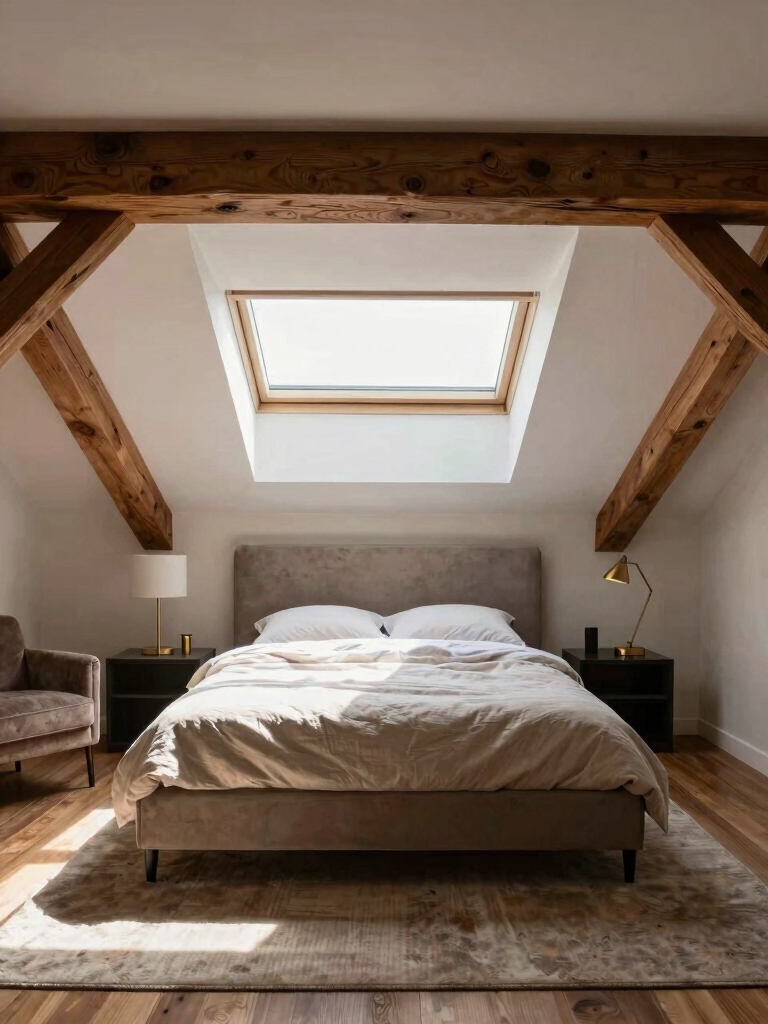
Lighting a low ceiling is about avoiding the one thing that flattens a room: a single bright fixture hanging down into your headspace. Skip the big pendant and layer light at lower heights instead. A bedside lamp, a wall sconce, and a strip of warm LED along an eave keep the glow soft and the headroom clear.
Aim light upward wherever you can, since washing the ceiling with glow makes it feel higher. Wall washers, uplighters, and recessed fixtures all push light up and out, which adds a sense of height a downward fixture kills. Keep every bulb warm, around 2700K, so the low room feels cozy rather than stark.
Put the main lights on a dimmer so the room can shift from bright to restful. A plug-in dimmer runs $15 to $25, and it changes how the whole space feels at night. For placement help under awkward ceilings, my [bedroom lighting ideas for mood](bedroom-lighting-ideas-mood) go deeper.
Color and Texture That Feel Taller
Color is a free height trick once you understand it. A pale, continuous tone on the walls and the sloped ceiling blurs the line where they meet, so the eye can’t measure exactly how low the ceiling is. Strong contrast near the peak does the opposite, drawing attention straight to the lowest point, so keep the big surfaces soft and tonal.
Texture lifts a low room without adding visual weight. Light, tactile materials like linen, wool, and pale wood keep the space breathing, while vertical patterns used sparingly nudge the eye upward. Skip heavy, dark, large-scale prints that press the ceiling down and make the room feel smaller.
Flooring plays into the illusion too. Wide planks laid to run the long way visually stretch the room, and a warm underlayment with a soft rug at the key zones adds comfort underfoot without raising the floor height. These quiet choices stack up into a room that feels far taller than the tape says.
Styling Tricks That Lift the Eye
A few finishing moves push the height illusion the last mile. Lean a tall mirror or a piece of vertical art against the full-height wall to add an upward line, and choose a slim, low headboard capped with a narrow shelf so the bed wall stays uncluttered. Hanging art a touch higher than usual also nudges the whole room’s eye line up.
Edit hard, because clutter is what makes a low room feel cramped fastest. Keep one surface clear, group small things into trays and baskets, and let a little empty space breathe near the peak. A low ceiling that’s calm and uncluttered always feels taller than a taller room stuffed full, which is really the whole secret to making these low-ceiling spaces rock.
Budget Makeovers That Punch Above Their Price
The best part of rocking a low ceiling is how cheap most of the wins are. The two highest-impact changes, light paint and a large mirror, come in under a hundred dollars together and change the room in an afternoon. Add a coat of pale color on the walls and slope, hang one mirror across from the window, and a cramped attic opens right up.
From there, stack small swaps that look far pricier than they cost. Floor-length curtains hung high for $30 to $60 draw the eye up, swapped hardware and a fresh lampshade refresh the room for pocket change, and a warm LED strip along an eave adds glow for $15 to $40. Each move is small. Together they look like a real makeover.
Spend where it counts and save everywhere else. A good low bed and one quality rug are worth real money since you use them daily, while baskets, art, and accent pieces look just as good secondhand. Spread the buys over a few paychecks and the room comes together looking considered, not rushed, for a fraction of a full redo.
Comfort and Upkeep Under a Low Ceiling
Low attics share the same climate quirks as any roof-top room, so comfort comes down to air and temperature. Warm air pools under the roof, so I lean on a fan and a cross-breeze between two openings to keep a low room sleepable through July, with light cotton layers on the bed for the stuffiest nights. Confirm the seals are tight before winter so the room holds heat.
Upkeep is light and worth keeping regular. Dust the high shelves and wash the bedding on a normal rotation so the room stays fresh, and recheck that any wall-mounted shelving is still firmly anchored every so often, since low rooms get bumped. These small habits keep a low-ceiling attic looking sharp and feeling taller long after the makeover.
Low-Ceiling Attic Questions, Answered
?How do you make a low-ceiling bedroom feel taller?
Lead the eye upward: vertical lines, curtains hung at the top of the wall, and a pale, continuous tone on walls and ceiling. A large mirror and warm light aimed upward add to the effect.
?What bed is best for a low-ceiling attic?
A low platform bed that sits close to the floor. It leaves the most air above it, can hide drawers underneath, and keeps headroom clear under the slope.
?Should the ceiling be a different color in a low attic?
Usually no. Painting the ceiling and walls the same pale tone blurs the line between them so the eye can’t tell exactly how low it is, which makes the room feel taller.
?What’s the cheapest way to make a low attic feel bigger?
Light paint and one large mirror, often under fifty dollars together. Add warm, upward-aimed light and clear the clutter, and the room looks brighter and noticeably taller.
Low Ceilings, Big Style
A low ceiling stops being a limit the moment you start working the height illusions. Lead the eye up with vertical lines and high curtains, keep the palette pale and continuous, choose low furniture, and wash the ceiling with warm light. None of it costs much, and together the tricks make a cramped attic read calm, bright, and surprisingly tall.
Pick the one trick that fixes your room’s worst pinch point, try it this week, and watch the ceiling seem to lift.