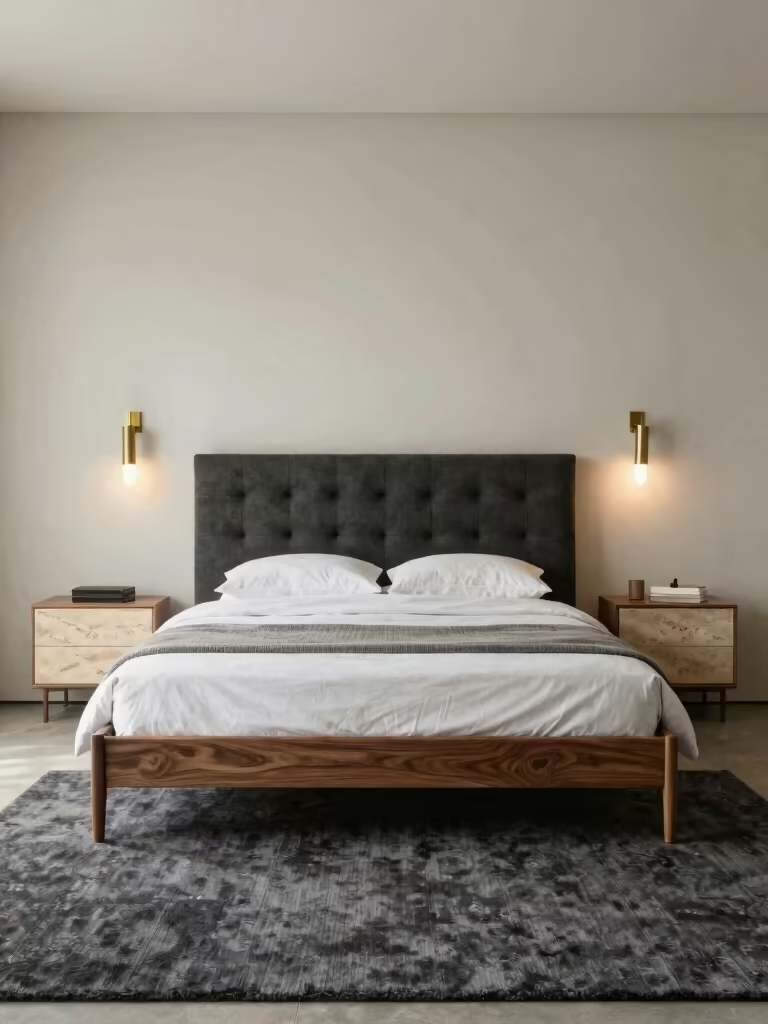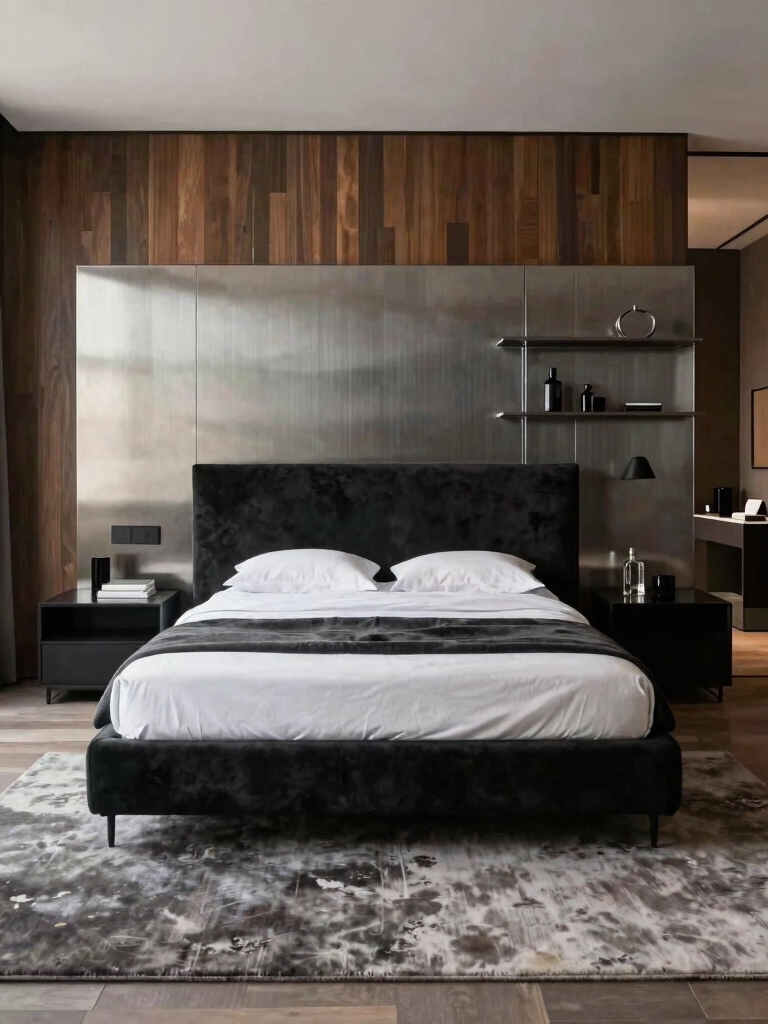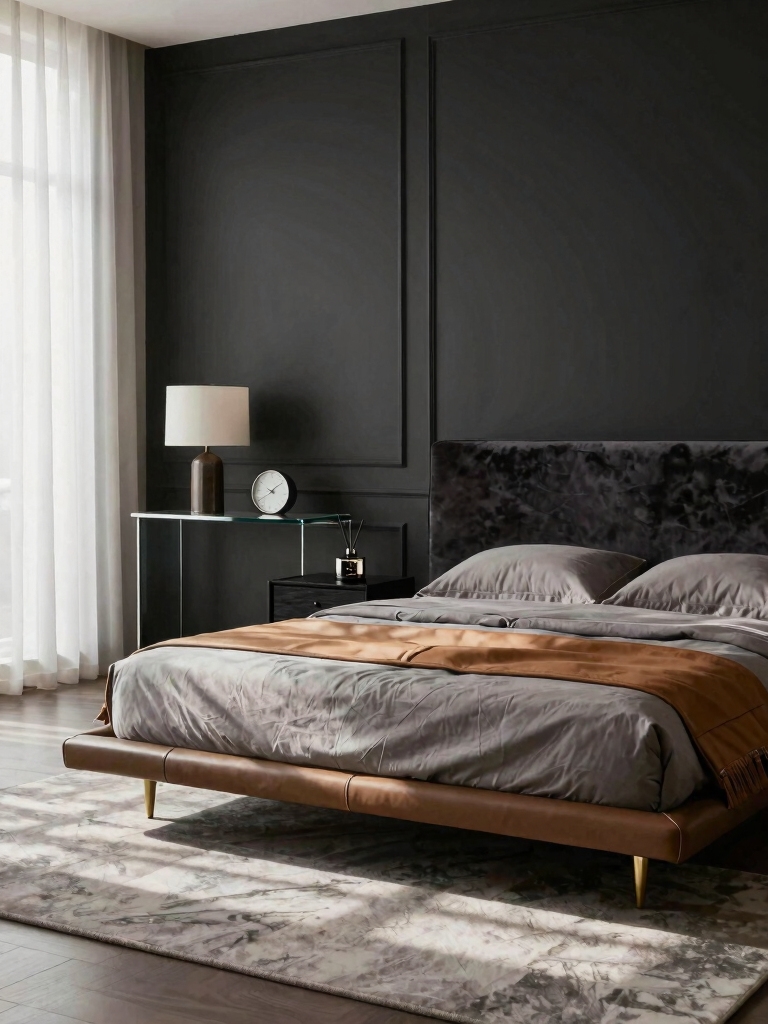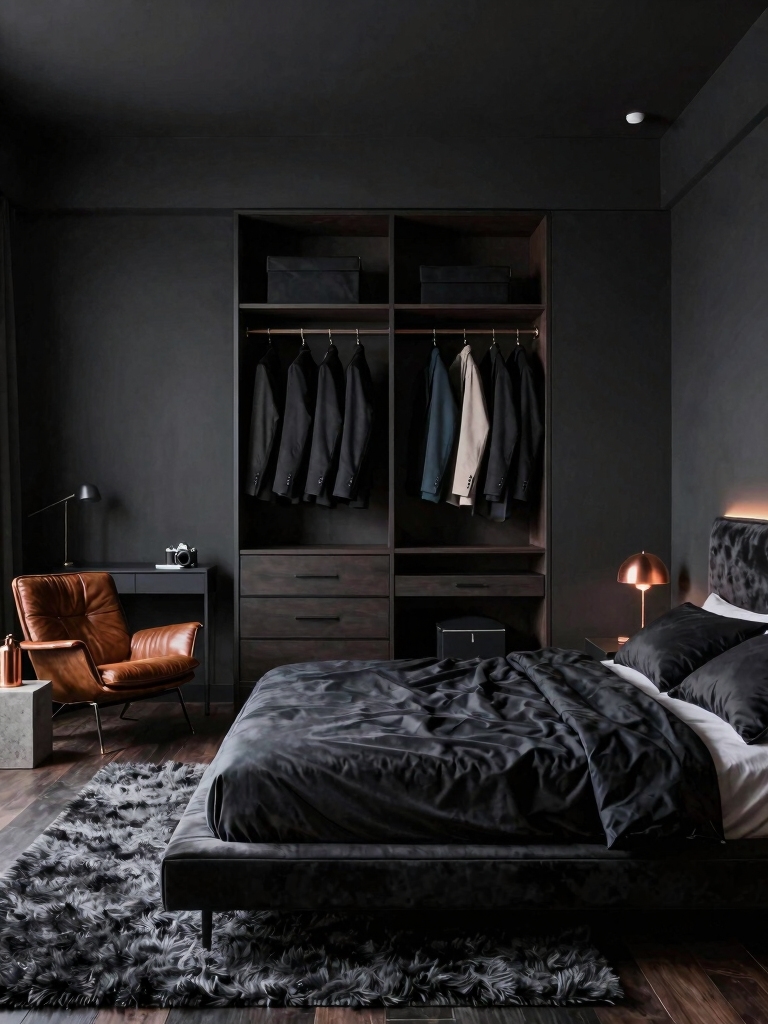

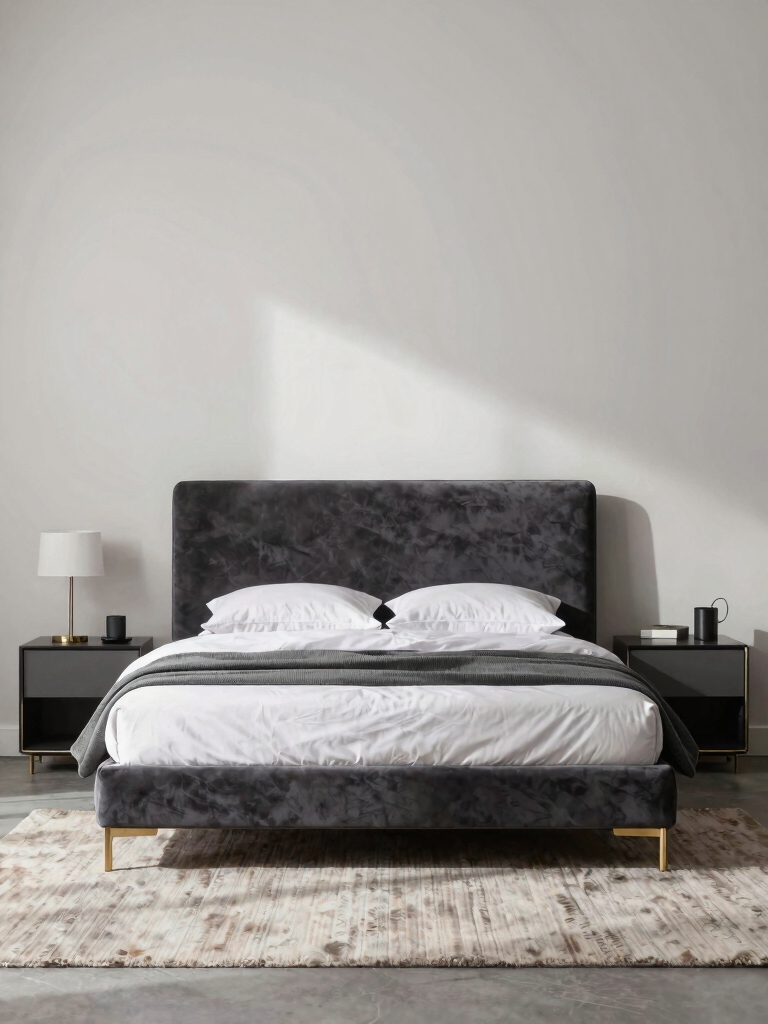
Sharp is a specific look, and it asks for more discipline than the word modern alone. A sharp small bedroom runs on contrast and clean edges: a dark wall against a pale floor, crisp lines, and a good amount of deliberate empty space. The sharpness lives in what you leave bare as much as what you put in.
A small room is the ideal place to try it, since there’s less to keep disciplined and every clean line counts double. These bedroom ideas for small rooms men gravitate toward a high-contrast palette, one strong hero piece, and storage that floats off the floor. Get those three right and a tight room turns crisp and intentional.
Key Takeaways
The sharp look is built on contrast and restraint. Pair a deep, dark surface with light walls or floors, keep edges clean and lines straight, and protect the empty space as carefully as the furniture. In a small room, negative space is a design choice, not a shortage.
Anchor the room with one hero piece, usually a statement headboard, then float the rest off the floor with wall-mounted nightstands and shelves. Crisp, layered lighting and a tight palette of two or three tones finish the look without crowding a single inch.
Define a Modern, Sharp, and Functional Bedroom
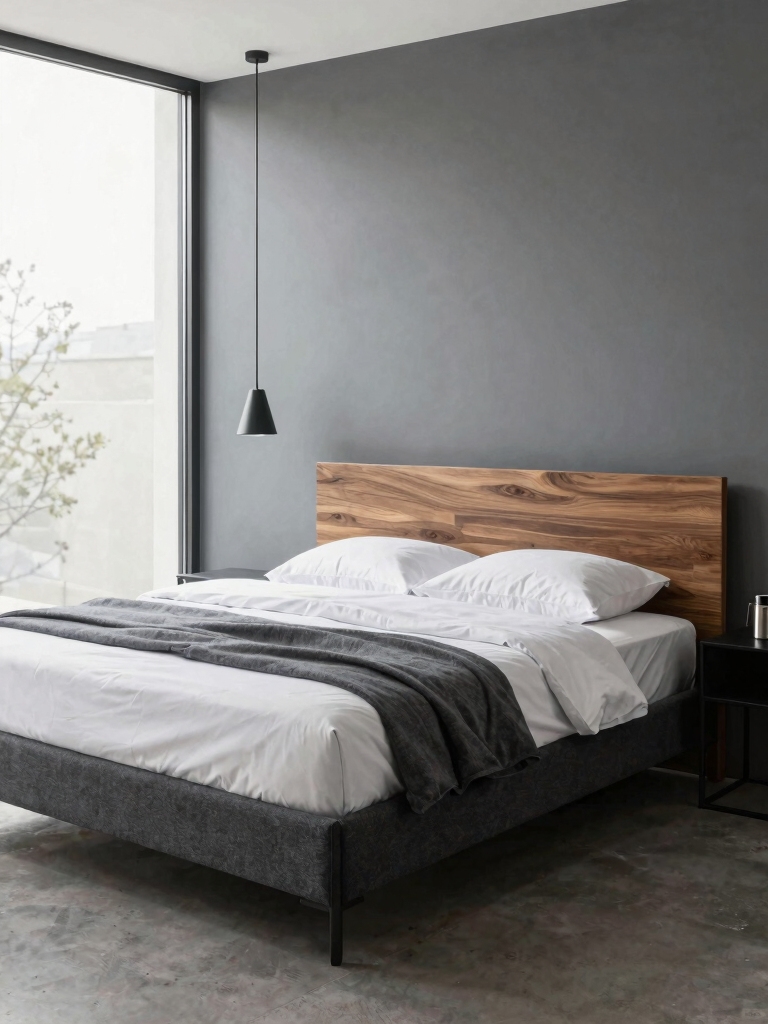
Before you buy anything, get clear on what sharp actually means here, because it’s easy to confuse with cold. Sharp is high contrast, straight lines, and breathing room, all working together so the eye lands on order. A small room delivers that fast, since there’s less square footage fighting the discipline. I tell clients to picture a clean architectural photo, then build toward that and keep the corners open. Restraint is the whole skill.
The functional half matters just as much. A sharp room that doesn’t work is just a showroom, so each piece still has to earn its footprint.
- Commit to high contrast: one deep, dark element against lighter walls or flooring so the room has snap.
- Keep every line straight and every edge clean, from the bed frame to the shelf brackets.
- Protect the open floor; a few feet of clear space is the point of the look, and it earns its keep.
- Limit the palette to two or three tones so nothing competes, the way you would when you plan a small-room layout.
Choose a Space-Efficient Bed Frame With Clean Lines
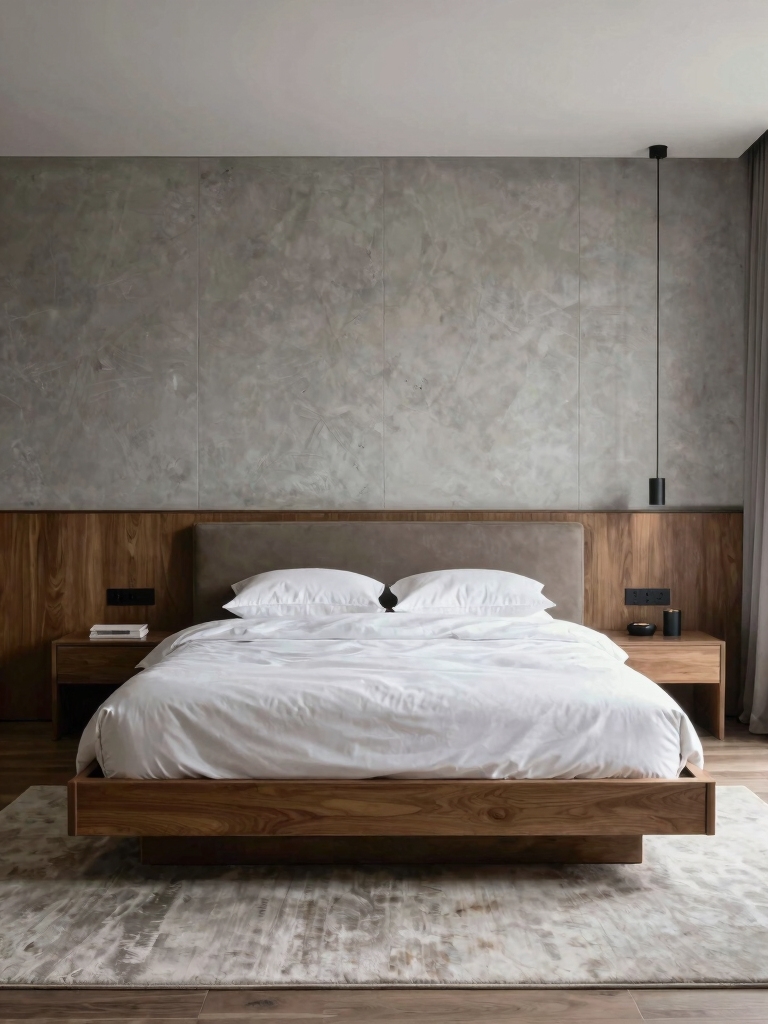
The bed sets the tone in any bedroom, and I always start a sharp room right here. The frame should be low, lean, and quiet. A slim metal or low platform frame keeps the visual weight down and lets the floor stay open, which makes the whole space feel bigger than it is. Skip the chunky upholstered surround; it fights the clean look and eats real inches you can’t spare in a small room.
Low, lean, and up off the floor
A space-efficient frame with built-in drawers earns its place twice. You get the lean silhouette and the storage at once, which is the whole game in a tight room. Expect to spend roughly $300 to $700 on a storage platform bed, and treat it as the anchor purchase everything else works around.
Raise it just enough to see daylight underneath, since a frame on visible legs or a floating base looks lighter than one that meets the floor. That sliver of shadow under the bed is a small trick that does real work in a sharp room.
“Designer’s note: in a sharp small room, spend on the hero piece and the lighting, then save everywhere else. A dramatic headboard and well-placed warm light do more for the look than a roomful of mid-range furniture ever will.”
Clever Storage That Keeps the Room Calm and Clear
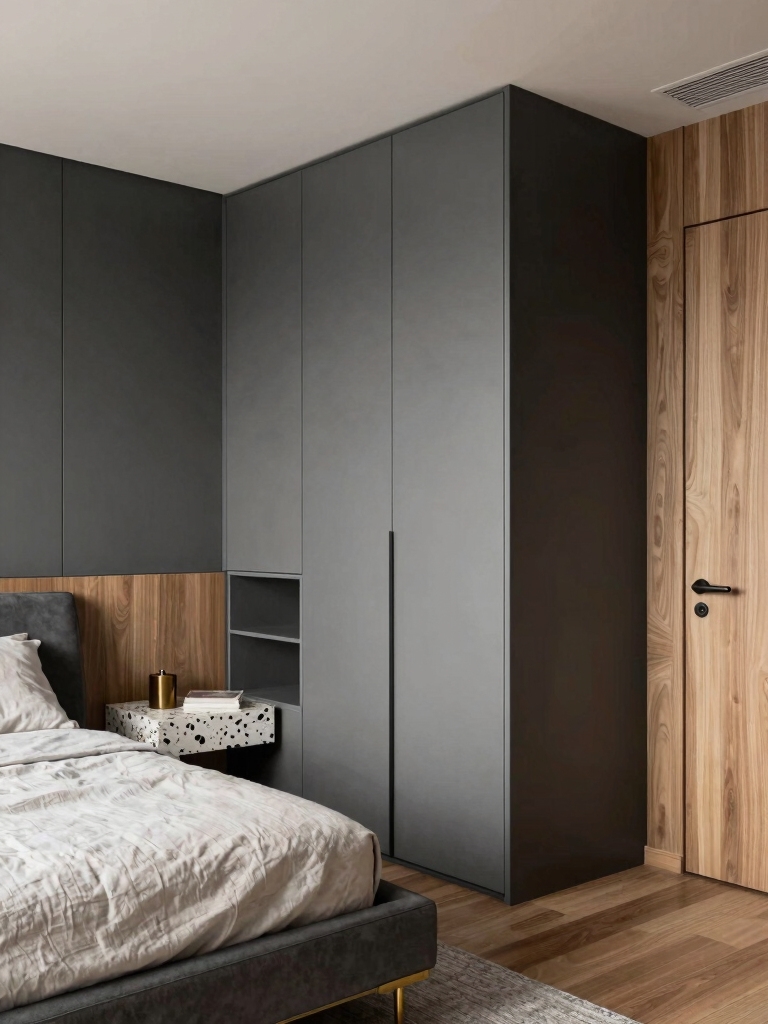
Clutter is the enemy of the sharp look, and the fix is storage that floats off the floor. Wall-mounted nightstands, floating shelves, and a slim wall cabinet keep your gear close while leaving the floor plane clean and uninterrupted.
When I floated the nightstands in one narrow room, the owner swore we’d added a foot of space. We hadn’t touched the footprint. We’d only cleared the floor underneath, and that unbroken plane is a big part of why a sharp room feels calm and larger than it measures.
Put the bulk of the storage behind closed fronts and keep open shelves to a strict minimum, since open shelving shows clutter within a week in a small room. A run of matching boxes on one high shelf handles the overflow while holding the clean line. For more of this disappearing-act approach, these storage ideas for hiding clutter go deeper.
Balance a Bold, Masculine Color Scheme
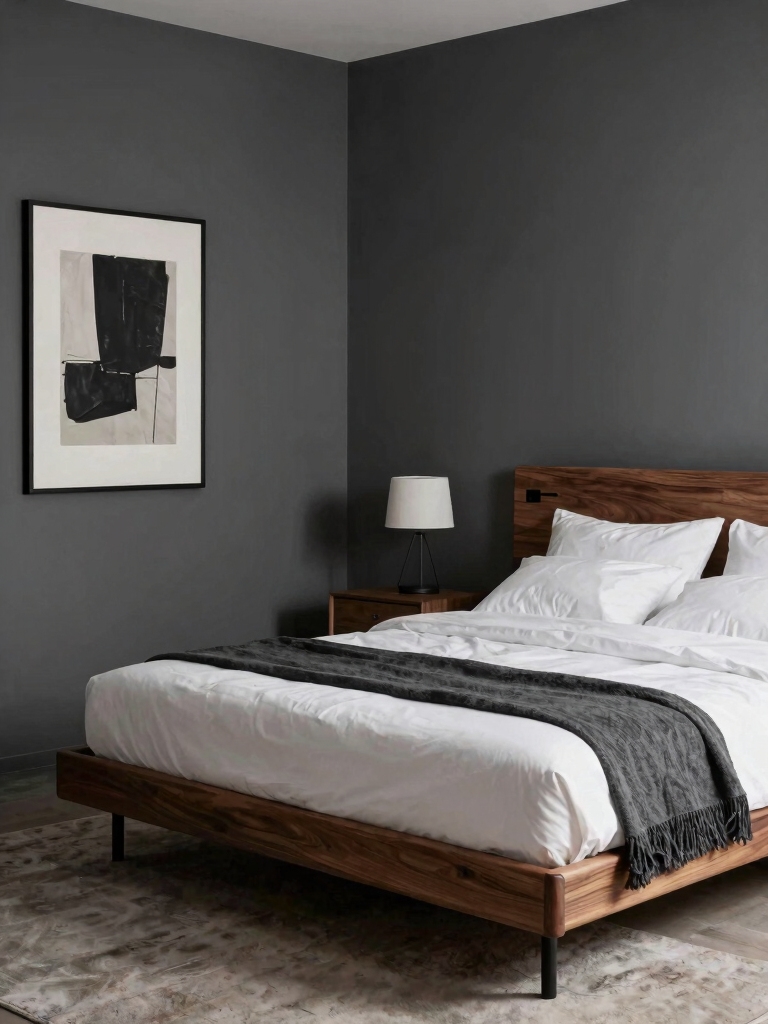
Bold color is what gives the sharp look its punch, and the trick is balance so it lands crisp instead of heavy. I pair one strong dark, charcoal, deep navy, or near-black, with a clean light tone and let the contrast between them carry the room. A small space can absolutely handle a dramatic wall, as long as the rest stays quiet.
One bold plane, everything else quiet
Keep the bold tone on one plane, usually the wall behind the bed, and hold everything else in the light or mid range. Add a single metal accent, brushed steel or matte black hardware, to sharpen the edges. A 50-dollar can of paint on that one wall is the cheapest dramatic change available, and these paint ideas for small rooms show how far it goes.
Watch the undertones so the scheme stays clean. The undertone slip is the one I see most in sharp rooms gone wrong, where a near-black wall that looked crisp under store lights turns muddy and faintly brown against warm-toned flooring once the evening comes in, which is exactly why a large swatch taped to the actual wall beats a tiny paint chip every single time. Look at it at night under your real bulbs before you commit.
The sharpest small rooms aren’t the most decorated. They’re the ones brave enough to leave space empty and let one strong piece carry the whole thing.
Warm, Layered, and Functional Lighting
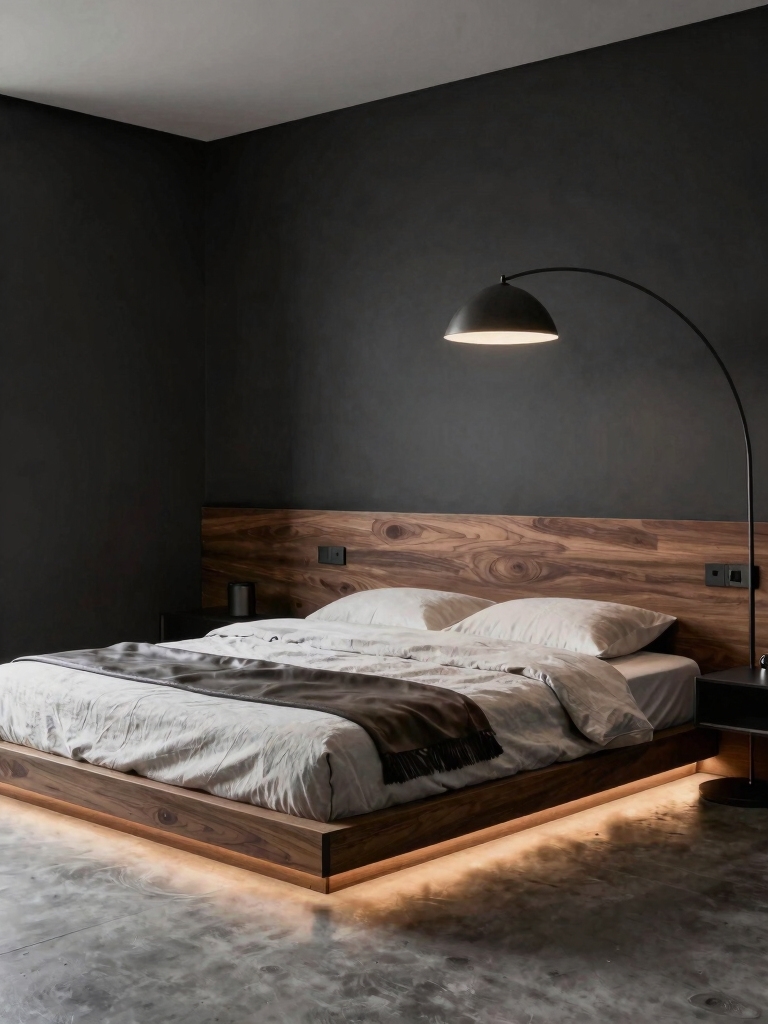
Lighting is what keeps a high-contrast room from going harsh, and the move is to layer warm sources at different heights. A single ceiling fixture flattens everything into one even wash, which is the last thing a contrast-driven room wants, so aim for three or four smaller sources at staggered heights that each carve out a pocket of warm light and let the dark surfaces fall into soft shadow in between. That is how the room stays sharp and inviting at once.
- Run a dimmable overhead as the base layer, then dial it down at night so the room never feels flat or clinical.
- Add wall sconces or a slim reading light beside the bed to clear the nightstand and throw light where you actually use it.
- Choose warm bulbs around 2700K so the dark palette stays inviting rather than cold under the contrast.
- Tuck an LED strip behind the headboard or under a floating shelf for a low glow that grazes the wall and shows off the texture. These cozy lighting ideas for the perfect glow cover the layering.
Pick One Hero Piece and Let It Lead
The single most effective move in a sharp small bedroom is choosing one hero piece and letting everything else stay quiet around it. Usually that hero is the bed wall, a statement headboard with a strong shape or texture, or the dramatic dark wall behind it. Pick the one thing the eye should land on, then resist the urge to give it competition.
This is where small rooms have an advantage. There’s only space for one focal point, so the decision makes itself, and the result looks curated instead of busy. I had a client agonize over a headboard and a big piece of art for the same wall; we chose the headboard, skipped the art entirely, and the room looked sharper for the restraint.
Once the hero is set, keep bedside decor to almost nothing, a lamp and a single object, and let the negative space frame the piece. A hero only works if it has room to be seen, and that empty space around it is doing real design work.
Negative Space: Decorate the Sharp Room Without Crowding
The hardest part of decorating a sharp room is knowing when to stop. Negative space is the look’s quiet engine, the empty wall and clear floor that let the strong pieces register, so decorating here means subtracting about as often as adding. I tell clients to decorate to roughly seventy percent and leave the rest open on purpose. That open stretch is what makes the dark wall and the lean bed land the way they should.
Pick a few pieces with intent and give each one space to be seen. One large piece of art on an otherwise empty wall, a single plant in a matte pot, a stack of good books. That’s a fully decorated sharp room. Crowd the same wall with a gallery grid and the contrast turns to noise within a week.
When clients want it warmer, I point them toward one more texture: a heavier throw, a wool rug, a wood tray. Texture decorates a sharp room without filling it. It softens the hard edges while holding the clean lines you worked for, and a small room makes this easy, since there’s only space for the things that earn it anyway.
Where People Get Stuck With the Sharp Look
A few practical points come up every time I plan a room like this, and they’re worth settling before you shop. The sharp look feels expensive but doesn’t have to cost much, since most of its power comes from contrast, restraint, and smart placement rather than pricey pieces.
Start with the wall and the bed, add layered light, and let the empty space do the rest. Most of the budget lives in those first two moves, and a confident dark wall plus a lean storage bed will carry a small room further than a cart full of accessories ever could. The questions below cover the things people get stuck on most.
Small Sharp Bedroom Questions, Answered
?How do you make a small men’s bedroom look sharp without it feeling cold?
Keep the contrast high but the lighting warm. A dark wall and clean lines give you the edge, while 2700K bulbs, a textured throw, and some wood tone keep the room from tipping into cold. The mix of sharp lines and warm light is what makes it inviting.
?What’s the one piece worth spending on?
The hero, usually a statement headboard or a storage platform bed. That single anchor sets the whole tone, so put the budget there and save on the wall-mounted nightstands and shelves, which can be inexpensive without hurting the look.
?How dark can I go in a small room?
Darker than most people expect, as long as you commit and balance it. One bold dark wall against lighter walls and floor reads dramatic, not cramped. Test a large swatch under your real bulbs first, since paint shifts a lot between daylight and night.
?How do I keep a sharp room from looking bare?
Lean on texture and light instead of clutter. A concrete-look lamp, a chunky knit throw, and a grazing LED behind the headboard add depth and warmth while keeping surfaces clear. Bare is the point, but texture stops it from feeling empty.
Sharp Is Mostly Restraint
A modern, sharp small bedroom comes down to contrast, clean lines, and the confidence to leave space empty. Set one bold wall, choose a lean bed, float the storage, layer warm light, and let a single hero piece lead. The discipline a small room forces on you is exactly what the sharp look needs.
Bookmark this and start with the bed wall, since that one decision sets the tone for everything else. Build out from there and a tight, ordinary room turns into one of the crispest spaces in the house.